Though 24.82 crore people escaped multidimensional poverty between 2013-14 and 2022-23, around 11.28% of the population still lives under poverty. (NITI Aayog)
Various programmes for eradication of poverty
MGNREGA- Wage employment.
PMAY (G & U)- Housing for all.
Pradhan Mantri Garib Kalyan Anna Yojana (Free food grains to 81 crore people).
Ayushman Bharat (PM-JAY)- World’s largest health insurance scheme.
DAY-NRLM- Self-help groups.
PM-Jan Dhan Yojana- Financial inclusion and bank account access.
Pradhan Mantri Kaushal Vikas Yojana (PMKVY)
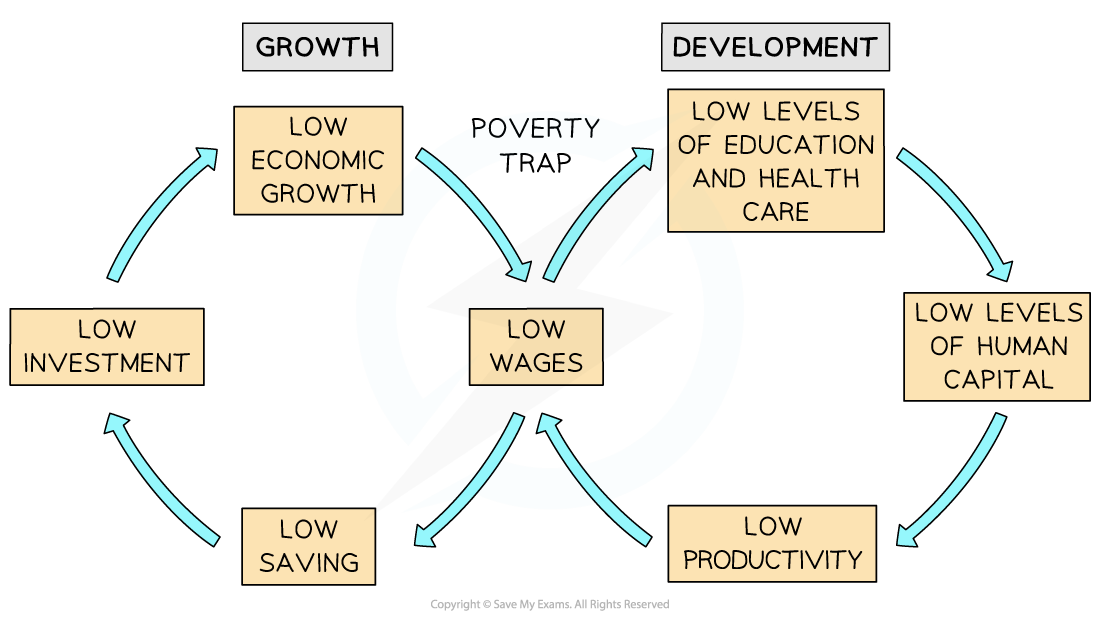
Reasons Behind the Persistence of Poverty
Jobless growth due to shift from agriculture to service led growth instead of manufacturing led growth. Eg- service sector contributes 55% of GDP but employs only 30% of workforce
Corruption in PDS
Ghost beneficiaries (10 lakh in Ayushman Bharat as per CAG)
Inclusion and exclusion errors
Low Agricultural Productivity-
Employs nearly 45% of the workforce, but it contributes only ~17% to the GDP.
Small and fragmented landholdings (86%) keep rural incomes at subsistence levels.
Over 90% of the Indian workforce is in the informal sector – lack social security and stable wages, leading to “working poverty.”
Social Stratification- Caste-based and gender-based discrimination.
96% manual scavengers are Dalits
Women own only 13% of land while forming 63% of agriculture workforce
Population Pressure (1.35 billion) strains public infrastructure, housing, and the job market.
Economic Inequality – richest 1% control more than 40% of total wealth, while the bottom 50% own merely 3% (Oxfam Report)
High Out-of-Pocket Expenditure (OOPE) in healthcare (40%) pushes “near-poor” families back into poverty.
Rural-Urban divide – Poor access to quality education and vocational training limits employability.
Regional disparities – BIMARU states lag behind southern states in human development indicators.
To bridge the remaining gap and achieve SDG-1, the government must move from Welfare to Empowerment (Capability Building) model of development.