UPSC IAS prelims 2022 will be held on June 5 in pen and paper mode. The IAS preparation is the interaction of important UPSC Syllabus topics. Check out the list of important topics for the UPSC prelims below and pave the way to score 110+.
Certain topics seem to be important for the UPSC prelims exam, but they are not asked in the exam. The UPSC primarily inquires about the context of current events. Ideally, UPSC asks about four aspects of a topic in one question with multiple options, with only one correct answer. Only those perplexing questions can be answered by the candidate who has a firm grasp on the subject. Candidates should balance their preparation in static General Studies topics and current affairs topics so that they can connect the two.
Prelims is an elimination round. Those who learn & analyze everything may get eliminated. It’s all about utilizing your subjective recognition rather than critically analyzing.
The syllabus for the prelims exam does not go into great detail about the topics. Candidates should understand the prelims’ demand by analyzing the UPSC syllabus and question papers concurrently. Overall preparation necessitates over a year of focused preparation in the right direction with the right strategy. Important Prelims exam topics are just the tip of the iceberg when it comes to the syllabus. Important topics guide will guide preparation in the right direction to sit for UPSC Mains 2022.
So, our highly experienced toppers’ teachers & mentors group has prepared the most trusted list of the most important topics.
Expect many questions in UPSC civil services Preliminary exam – 2022 (also in mains 2022). You need to prepare 4-5 points on each of these topics keeping in mind the nature of questions that were asked in Prelims 2020 & 2021.
Must Read Topics For Prelims 2022 (Static + Current Affairs & Combination of Both)
Polity
Electronic voting machine (EVM)
Balance of rights and duty
Recent amendments and Bills
One election- one nation- Amendments required
RPA 1951 and 1950
Office of the governor and discretionary powers
PESA Act, 1996
ETC.
Economy
Inflation (2 questions expected- conceptual)
Conceptual questions based on interlinking between fiscal policy, inflation, and monetary policy (2-3 questions)
– Geomorphology- landforms and major terminologies, origin and evolution of the earth, volcanism and earthquake, plate tectonics and continental drift theory – Oceanography – warm and cold currents, and rests other chapters.
Mapping
Indian Physical Map
Rivers: Pannchnad, Himalayan rivers(Ganga, Brahmaputra, Yamuna), Peninsular rivers(Damodar, Mahanadi, Godavari, Krishna, Kaveri, Periyar)- Tributaries b. North to the south alignment of mountains in Eastern ghat and Western ghat c. Major Cities in India
World Physical Map as well of various places & regions according to Current Affairs.
Government Schemes
Recent schemes on Agriculture, Vulnerable sections, MSMEs, Banking, ETC.
Science & Technology
Antimicrobial resistance (AMR)
Electric Vehicles
Dark Genome
Biotechnology
Assistant reproductive technique
Emerging technologies (5G, AI, Machine learning) & ETC.
Social Issues
Digital education issues
New acts and amendments (1-2 question)
ETC.
Environment
India State Forest Report (ISFR) 2021
Red sanders
Zero Budget Natural Farming
Heat Dome
Net Zero Producers Forum
Glasgow summit
National parks and wildlife sanctuaries, tiger reserves and wetlands (mapping)
Reports and indices (1 question)
Development induced displacement
Pollution related current affairs & Many other hot topics.
Security Issues
Reverse Engineering
Top defense dealers and importers
India’s missile program
Recent amendments in NIA, UAPA acts etc.
We have covered all these issues in both test series and current affairs. But if you can give special focus on these topics, you will definitely reap extra benefits.
Civil Services Preliminary Exam is the first phase of the Civil Services Exam but not necessarily the simplest. There is a wide difference between the syllabi of the Preliminary and Main Exam, the nature of questions, and consequently, the preparation strategy needs to be well thought out.
Despite the churnings happening around us, few fundamentals couldn’t be questioned at least about the UPSC exam. Much coveted UPSC civil service has always attracted the best talents from across India. Hence on the flip side heightens the competition. So, you have to strive hard. As a result, a focused and measured approach is always needed, and that too throughout the year.
Those who have already faced the exam would know it themselves. The importance & contribution of the Test series in fine-tuning the prep process.
-Civilsdaily’s majestic mentorship program. The Hindu Newspaper has acknowledged…
Presenting you a few highlights about our Prime Prelims Program 2023
Target UPSC 2023 (Prelims): There are no shortcuts. Only smart work with the most probable questions works for you. Expect many questions in UPSC civil services Preliminary exam – 2023 directly from our Prime Prelims Test Series. You need to revise the solved points provided with each of these tests keeping in mind the nature of questions that were asked in Prelims 2021 & 2022.
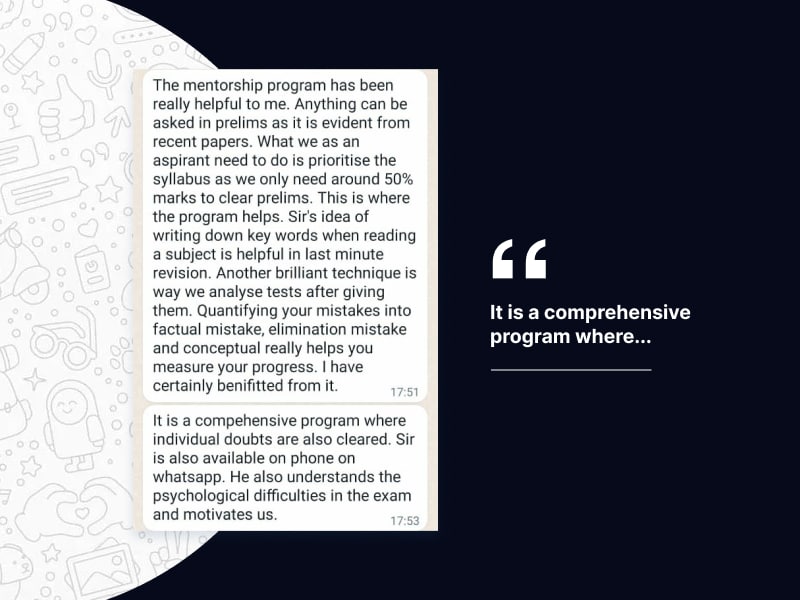
Students Views: How Santosh Sir’s Mentorship Leads to Success in Prelims
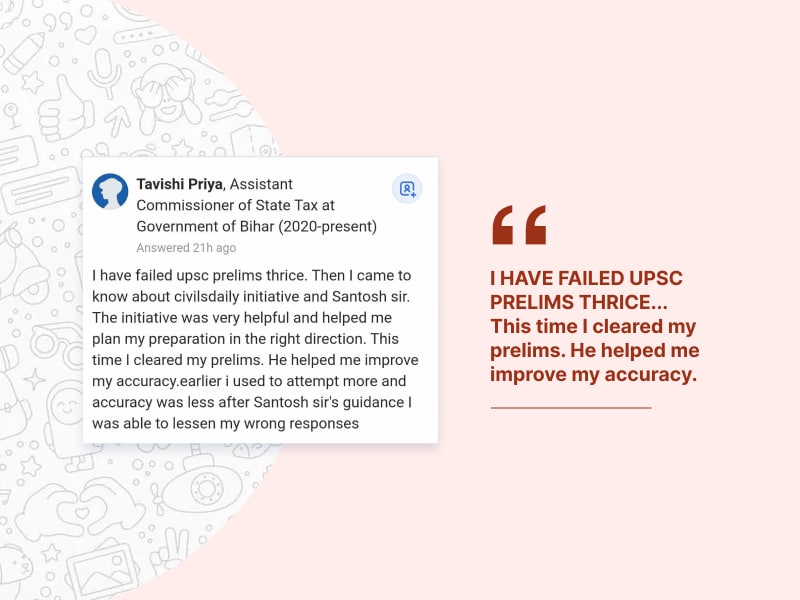
Our Students’ Testimonials.
WHAT ARE MAKING OUR PRIME PRELIMS TS-2023 DIFFERENT FROM OTHERS
1. Complete course revision with Test Paper-based time-plan
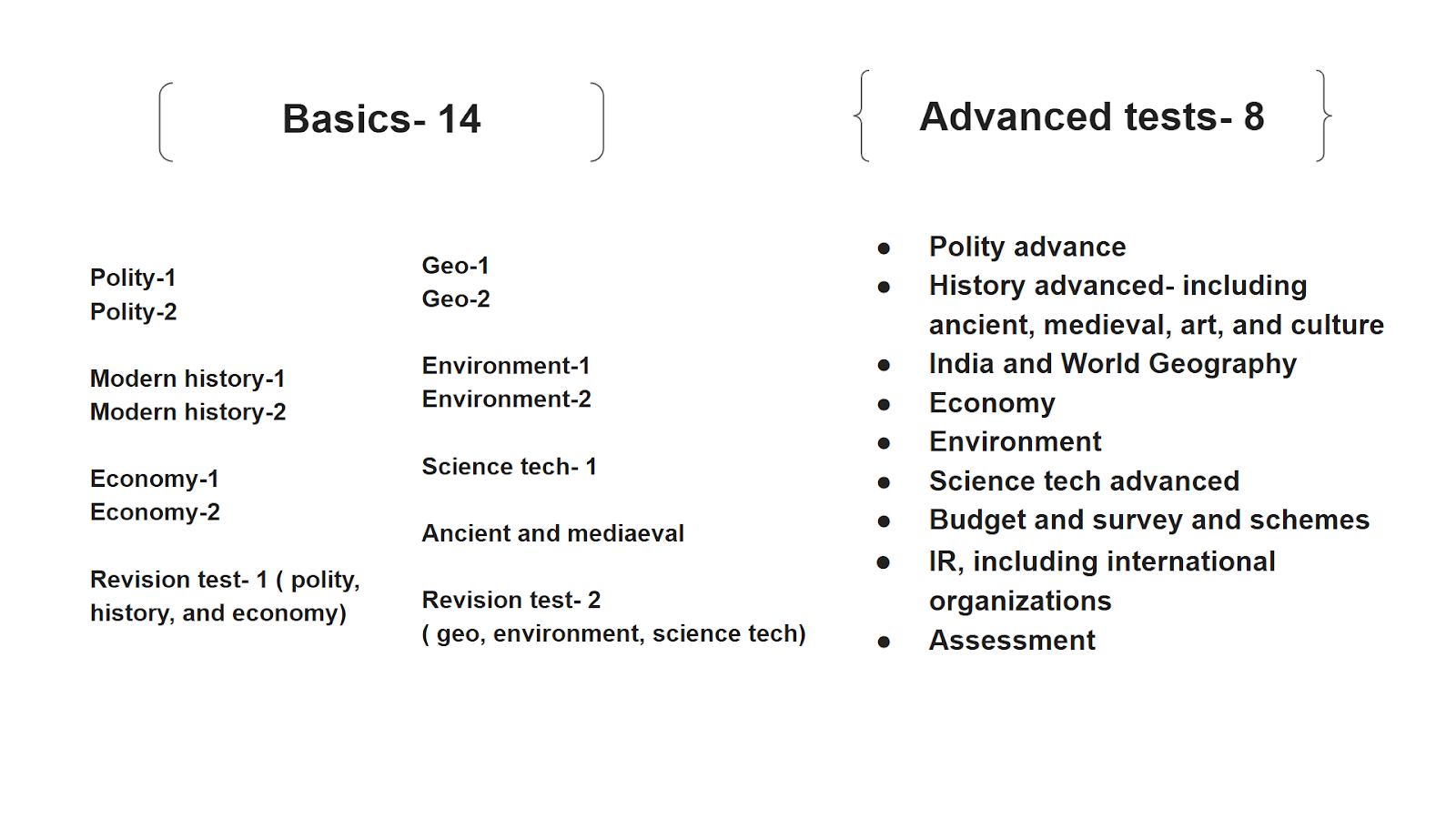
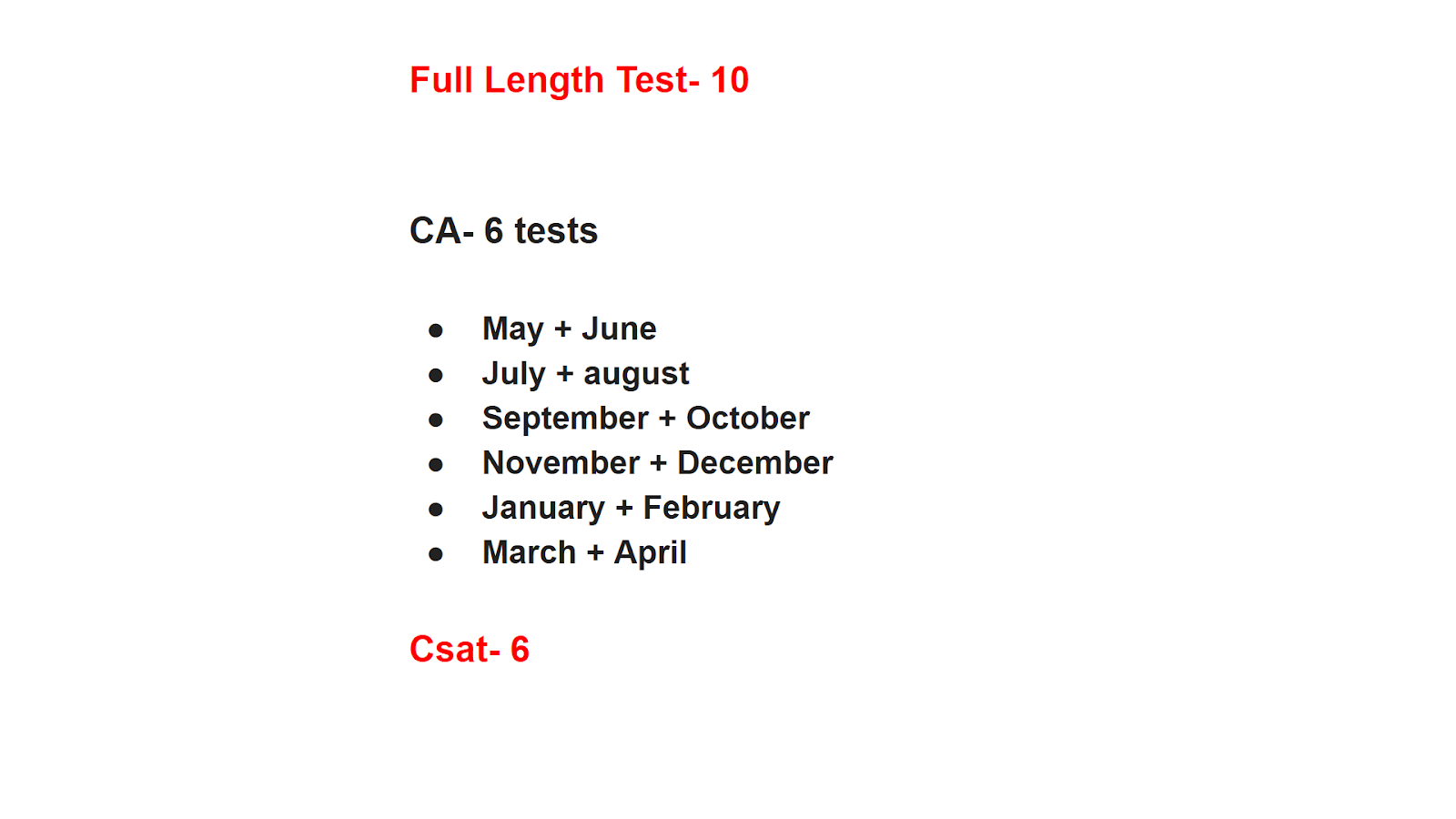
The complete course has 44 Test papers, to enhance the exam worthiness of an aspirant. Especially those who have their house (concepts) in order about the course/syllabus. The idea of solving tests or mock papers is with the intent to find out the gaps in our preparation. Sometimes they are also helpful for the mains or subjective type questions.
2. A holistic mix of Static – cum- Dynamic Test series
Course completion is what we care to establish with each finishing module. And this incorporates the aspect of Current affairs and Associated statics as well. Hence an aspirant gets a holistic mix of Static cum Dynamic elements featured in this course.
3. Mentor & Discussion help for 1-1
Civilsdaily Mentorship with tests is going to help an aspirant keep a track of the syllabus, which was earlier either glossed over or paid little attention to. Our Senior Mentors will be the person who would have the responsibility to ensure you end up with all the papers. Also, imparting valuable advice to stay rational and mindful.
Detailed Orientation session
Year-long mentorship till prelims and beyond
Mentor call after every 4 tests or one call/month
Bi-Weekly zoom sessions for doubts and discussions
24*7 Habitat group mentors support
Civilsdaily’s mentors are highly qualified, with at least 3+ years of mentorship experience and two UPSC-CSE Interviews under their belts. They are well-versed in the many stages of preparation. These mentors will assist you in developing both a comprehensive and micro schedule. They’ll put together a weekly program for you, complete with mentorship calls. This schedule will be created based on a thorough examination of the importance of subjects as well as the interconnection of topics to make it easier for students to grasp the material.
Our highly experienced mentors will guide you with the all-round strategy
of How to deal with unfamiliar MCQs by using TIKDAM (Intelligent Guessing)
How many questions you should attempt.
When to start coding on OMR sheet
How to focus on strong areas
4. All India Rankings
All India ranking factors are here to help you deal with the moments of truth vis-à-vis your preparation level. They give you the necessary nudge to focus back on evaluating the current state of preparation. Your mentor would have a lot more to focus on wrt the rankings you achieve.
5. Performance-based Aspirant Cohorts on Civilsdaily Habitat
At Civilsdaily, you would get a community always ready to deal with unexpected roadblocks. We aim to create a like-minded and similarly placed aspirant cohort. For a better discussion of tasks and problem-solving capabilities. So as a member of any Cohort, chat (responsibly) with other learners.
If you have a question, chances are, you’re not alone. Reach out in the discussion forum to ask for help from other learners taking this program.
6. CivilsDaily Habitat Sessions – Ask Anything
Were your queries about courses/syllabus / basic doubts would be addressed to keep you always on the move.
Throughout this course, you will learn about the techniques of time management, and the ability to find a static–dynamic convergence. Also, peace of mind about course completion under the guidance of a mentor.
The mentor would also provide a lot of reading material from time to time. But sometimes, you may need to look things up on your own for extra learning. Things change fast in our dynamic socio-political setup, so it is critical to do your own research so you can stay up-to-date on what is new.
What is there on Habitat?
An ecosystem for co-learning and active learning.
A highly motivated community to bring flexibility and consistency to your preparation.
After enrolling, you will receive a confirmation email with links to the tests and materials. These links are also available in the curriculum section of this course.
Facing any issues with test access post-enrollment?
Share your payment confirmation, name, email id, and contact number along with the issue that you are facing (with screenshots if possible) at dj@civilsdaily.com and cc it to hello@civilsdaily.com
We will resolve your issues in minutes.
This is what our students have to say about our mock tests…
Every year, a huge number of aspirants sit for the UPSC-CSE exam. Because the age limit is so relaxed, there have been multiple instances where working persons or people who already have a job also apply for the IAS ordeals.
Working aspirants’ biggest challenge is time management, which is critical for studying and taking care of one’s health while working a 9-hour shift.
The two most powerful warriors are time & a mentor’s guidance for a job holder.
We feel that. So, we made the best time managing mentorship, specifically for working professionals on how to break down the syllabus into small chunks, and develop an effective & workable study strategy for UPSC preparation.
Do You Know? We Provide India’s Best UPSC Mentorship Program Instantly.
The Hindu has acknowledged Civilsdaily’s Smash Mains Mentorship Program.
And Civilsdaily’s highly experienced teachers & mentors assure you that you can save up to 40 hours in a week provided you join our mentorship program. Making notes for UPSC-CSE is not only a difficult task but also confusing when you give it a try from current affairs. And realizing that particular pain point, we launch the much-coveted ‘Samachar Manthan’.
Can a Working Professional Clear UPSC with having a serious time crunch?
This is the most familiar & much-debated question that candidates have. The answer is yes,and why not? If you simply sidestep promiscuous reading habits & comes under prominent educators, you’re eligible to crack UPSC-CSE with a single-digit rank.
Examinees are often advised to devote 12 months to study for the civil service examinations. If you have limited time and still wish to pass the exam, you mustn’t waste time.
You can only make the best timetable for IAS preparation when you understand that time is crucial, so utilizing the time in the best possible way is the key. Time table is required to keep track of the time for preparation for the exam.
Is such time killing your dream? → 9 hours office, 1-hour in travel, 1 hour for washing and eating, 8 hours for sleep. This makes a total of 19 hours.
Time is left → 24 hours – 19 hours = 5 hours. Where to start, what to learn & revise in these 300 minutes.
How to complete syllabus, how to cover mock test series in such a short time!
Do you ever know that utilizing these 5 hours can bring such a difference that any working aspirant will beat a full-time one? Get Confused! Not to worry more. Get your personalized mentor here.
The desire to complete the course alone in its entirety is the major cause of most time mismanagement. Many applicants set out to cover the entire syllabus blindly only to discover later that many topics are simply too broad or that very few if any, questions are being asked from certain sections. A lot of time is wasted in this effort because those topics are required to be addressed differently, and the time saved on their coverage could have been better spent on other parts of the syllabus.
To tell the truth, if anyone can be your true torchbearer throughout your IAS journey, he is your mentor. Never deprive yourself of his priceless guidance.
Time mismanagement for any working professional is caused by a lack of understanding of how to divide time according to the priority and relevance of the syllabus, and because the syllabus is wide and often open-ended, it needs smart covering with a select few sources.
In that case, some specialized programs, you ought to think over.
To tell the truth, if anyone is your well-wisher throughout your IAS journey, he is none but a mentor. Never deprive yourself of his priceless guidance.
Since the IAS examination is one of the most insisting exams in India, it necessitates a full-time commitment in terms of hard work and study. However, there are working professionals who are occupied with their professions during the day and find it impossible to prepare for the IAS examination due to a lack of study time. Above are some UPSC preparation ideas for working people who want to follow their dream of passing the IAS exam, which may help them find time to study despite their hectic schedules.
Shubham had been aware of UPSC examinations from a young age. Shubham spent the starting 4 years of his school studies in his village and then moved to Patna for further studies. Shubham completed his B.Tech in civil engineering in 2014 from IIT Bombay. During his time at IIT Bombay, he was a very active student and used to play various sports. He was also the cultural secretary of his hostel. It was in the same institute that he finally, objectively decided to join Civil Services.
Path to Success
It took him 3 attempts to secure AIR 1 in UPSC examinations. What kept him going through the failures was the love & support of his family and friends.
Advice to Aspirants
Shubham urged aspirants to maintain a good friend’s circle, which would work as a great center for support & motivation.
Stay away from social media as much as possible, as it creates a lot of distractions.
During UPSC preparation proper time management is the only most important thing.
Strategy
In his 2019’s attempt, he took as many as 70-75 mock tests, and in 2020 prelims, he took 40-45 mock tests.
During his mains preparation, he used to take 1-hour mock tests daily and a full-length 3-hour mock test every third day. He says mock tests are a great way for analyzing strong and weak areas and work on them.
Speed is very crucial for cracking UPSC Mains Exam. You have approximately 10-11 mins for each question. Try to find which pen is comfortable for you.
Try to keep your answers on point and very precise. Focus on conveying your ideas other than just filling pages. Talking about his subjects, he told he had Anthropology as his optional subject in Mains.
His Vision
He wants to work for the holistic upliftment of Rural India, and improve the overall education & financial level of the people from such areas. He also wants to come up with a solution to manage the flood situation in Bihar.
Rank: 2
Mains
PI
Total
Jagruti Awasthi
859
193
1052
Background
IAS Jagriti Awasthi’s age is 24 years as of 2021. Her marital status is unmarried. She is a confident and dedicated person. Jagriti Awasthi’s education has been completed at Maulana Azad National Institute of Technology (MANIT), Bhopal. She was working in Bharat Heavy Electricals Limited (BHEL) before starting her UPSC preparation.
Path to success
It took her 2 attempts to secure AIR 2 in UPSC examinations.
Strategy
Initially, she studied for 8 to 10 hours. Eventually, she increased it to 10 to 12 hours, and about two months before the exam, she further pushed it to 12 to 14 hours.
She has managed to work positively on the study plan and has succeeded in it.
She prepared online study material and read the newspapers daily. She emphasized the optional subject which is sociology to gain maximum knowledge and high scores.
Rank: 3
Mains
PI
Total
Ankita Jain
839
212
1051
Background
Ankita Jain was born and brought up in Delhi. She did her B. Tech in Computer Science from Delhi Technological University. After completing her studies, she worked in Qualcomm Private Limited, Bangalore for 14 months. Later, she joined Defence Research and Development Organisation (DRDO) as a scientist through her GATE score. Afterward, Ankita Jain was posted at one of the prestigious posts of UPSC, Audit and Accounts Services in Mumbai, after securing a rank in the second attempt. She is married to Abhinav Tyagi who is an IPS officer. Her sister Vaishali Jain has also scored AIR 21 in the civil services examination 2020.
Path to success
Ankita’s success came in the fourth attempt. On the second attempt, she passed the exam. However, she didn’t get the desired rank. She joined the Indian Account Service and continued to prepare for the UPSC exam.
Advice to aspirants
Ankita says that before appearing for the exam, it’s crucial that one is familiar with the syllabus and has the basics clear. Ankita said that the failed attempts had helped her in understanding the exam pattern better.
Strategy
Her optional subject was philosophy.
She consistently studied at least 6 hours a day and studying NCERTs books till the 12th standard helped her in building the base knowledge.
She prepared with her sister, Vaishali Jain who scored AIR 21. Both the sisters claim to have shared notes and helped each other stay motivated throughout their journey.
Rank: 4
Mains
PI
Total
Yash Jaluka
851
195
1046
Background
Born in 1995 in Jharia, Jharkhand, Yash Jaluka at the age of 26 years cracked the civil services exam in the first attempt. He completed his initial schooling until class 8th from Jharia, and then shifted to Odisha, where he studied until the completion of class 10th. Yash did his 11th and 12th from Delhi Public School, Bokaro, Jharkhand. He then moved to Delhi and completed his bachelor’s in Economics from Kirori Mal College, University of Delhi, and got his Master’s degree from the Delhi School of Economics. Yash started his UPSC preparation right after completing his Masters’ course in 2019 and did not join any coaching. He took Economics optional for the UPSC CSE Main
Path to success
Juluka at the age of 26 years cracked the civil services exam on the first attempt.
Strategy
The preparation strategy followed by Yash allowed him to indulge in a minimum of 8 hours of preparation every day.
As a part of his strategy, he spent approximately 3-4 hours reading the newspaper diligently and ensuring that every single part of daily news was covered and notes based on the same were made instantly.
He also maintained proper notes on each topic, along with its historical background, and referred to one book for each subject.
Apart from this, the journals and monthly editorials in newspapers and current affairs magazines are the key sources that he considered during the course of his preparation.
Given below is a list of a few important UPSC books and sources that Yash referred to for prelims and mains preparation.
R.S Sharma’s Old NCERT for Ancient History
Class XI & XII NCERT
History of Medival India by Satish Chandra
A.L Basham – The Wonder that was India (for Buddhism and Jainism)
Indian Polity by Laxmikanth
How India sees the World by Shyam Saran (for static International Relations information)
Rank: 5
Mains
PI
Total
Mamta Yadav
855
187
1042
Background
Mamta Yadav was born in Basai, India, in 1996. She is an Indian Administrative Service officer by profession. She completed her education in a local Delhi school before enrolling at Delhi University’s Hindu College.
Path to success
This was her second attempt at UPSC Civil Services Examination. She took this exam for the first time in 2020 and received a Rank of 556. She began training for the Indian Railway Personnel Service after being selected.
Advice to aspirants
The most important thing would be that your optional subject should be something you love reading. If the subject does not appeal to you, it will be tough to maintain your excitement across numerous efforts. Because you’ve already spent 3 or 4 years studying it, choosing an optional from your graduation stream can assist.
Strategy
Mamta opted for Physics as the optional subject as she did her BSc in Physics Honours. She did self-study for the optional paper.
Learn to debunk all of the Civil Service preparation myths and misconceptions.
Not just gaining conceptual clarity but also being able to link it with the present scene is becoming increasingly important.
Begin with devising a comprehensive and integrated plan for the UPSC civil services prelims and mains examinations. Divide the year into 12 months by designating months to subjects that have a clear strategy.
Lastly, figure out how the test questions are phrased. This procedure necessitates a thorough examination of all prior years’ questions, with a keen eye on what has been asked and why.
Attempt as many questions as possible, then evaluate why your questions were incorrect and how you may have done better.
Meera completed her B Tech in Mechanical Engineering from Government Engineering College, Thrissur in 2016.She got a job in Bengaluru through campus selection. However, she had an inclination towards public service. She gave her first attempt in UPSC Civil Services Examination in 2017 without much preparation. The result was as expected – didn’t qualify. She quit her well-paying job and went back to Kerala to start her UPSC journey.
Path to success
In her second attempt, she qualified Prelims and Mains. Still, luck was not completely on her side. She missed the final selection by a narrow margin of 12 marks. Bad luck continued her in the third attempt too. This time she missed Prelims by just one mark. In her fourth attempt, she qualified Prelims, Mains, and Interview and landed as a UPSC Topper by securing All-India Rank 6!
Advice to aspirants
Meera says, “don’t blindly follow or copy any strategy. Know your strengths and weakness and prepare your own personalized study plan”.
Strategy
Meera believes in the importance of self-notes for success in the UPSC Civil Services Examination.
For each topic mentioned in UPSC Syllabus, Meera prepared her own notes using pen and paper.
Rank: 7
Mains
PI
Total
Praveen Kumar
848
193
1041
Background
He hails from Jamui in Bihar and belongs to a simple middle-class family. Praveen studied from Jamui in Bihar and wished to qualify for the Engineering Entrance Exam and become an engineer. He cleared JEE Main and went on to study in IIT Kanpur. However after he completed his B.Tech from such a prestigious institution, he did not wish to sit for job interviews but study for Civil Services Exam.
Path to success
He succeeded in his third attempt at UPSC which was in 2020.
Advice to aspirants
He found the problem in the first two attempts to be him following the strategy set by someone else. It was not working for him. He suggests that everyone should follow their own strategy depending on own capabilities and mental caliber.
Strategy
He followed a few books but read them thoroughly and made a separate strategy for Prelims, Mains and Interview.
He emphasizes reading newspapers and magazines to get connected with the entire globe at the same time.
He also suggests the candidates prepare separately for Prelims, Mains & Personality Test of UPSC CSE.
Rank: 8
Mains
PI
Total
Jivani Kartik Nagjibhai
858
182
1040
Background
After completing Class 12, Kartik cracked the JEE examination and landed admission in the prestigious Indian Institute of Technology (IIT) Mumbai in the Mechanical Engineering field. In his fourth year in college, Kartik Jivani decided to pursue a career as a civil servant and started preparing for the UPSC exam in 2016.
Path to success
He failed in his first attempt in 2017. However, after grinding it out for three years, Kartik was successfully able to crack the UPSC exam in his second attempt. He obtained a rank of AIR 94, thereby securing selection as an IPS officer. He reappeared the next year and climbed ten places to AIR 84.
Advice to Aspirants
He mentioned that reading for many sources won’t help you. You should pick one newspaper and one current affair from a coaching institute.
Strategy
To crack his exam, Kartik Jivani a 10-hour study regimen and did most of his UPSC preparation during at night.
Kartik has stated in the past that he chose smart work over hard work. He took guidance from several places and books.
He took Geography as his optional subject. He summarized his entire notes in around 50 pages.
Practice the elimination technique in the exam hall. To get better in this technique, solve a lot of mock tests before the exam day.
Rank: 9
Mains
PI
Total
Apala Mishra
816
215
1031
Background
Apala Mishra was born in the Uttar Pradesh district of Ghaziabad. Mishra attended school in Dehradun until the tenth grade, then moved to Delhi for grades eleven and twelve. She then graduated from the Army College of Dental Sciences in Hyderabad with a bachelor’s degree in dental surgery and went on to work as a dentist. Apala claimed that by the time she was in her final year of dentistry, she was leaning toward civil service because it provides a lot of work opportunities. Anthropology was her optional subject. She intends to work in the field of health, with a focus on women’s health.
Path to success
This was her third attempt at UPSC Examination. She could not clear prelims in her first two attempts.
Advice to Aspirants
She then devised a study schedule of 7-8 hours per day. She believes that coaching centres can help them, but they must study by themselves at the end of the date. “Balance your emotional and mental health because this exam will put your patience to the test. Have faith in yourself that you can succeed,” she says.
Strategy
She says that one should revise the basic books as many times as possible.
Practice a lot of MCQs & PYQs, and write as many mock exams as possible. When you don’t get a question, then make the answer a part of your notes, so that you don’t forget it.
One should go beyond the static portion, in the mains examination.
She studied for 7 to 8 hours every day and used a timer to keep track of how much time she spent on each topic.
She used the basic books as well during her preparation. Apart from that, she used Google and Youtube to find online study materials to help her understand topics that were not covered in the basic books.
Rank: 10
Mains
PI
Total
Satyam Gandhi
827
201
1028
Background
Satyam Gandhi was born in 1999 in the Samastipur district of Bihar. He completed his schooling at Kendriya Vidyalaya. He was an intelligent student from childhood. He was even topper in his 10th and 12th with a science background. Then for his graduation, he moved to Delhi. There he pursued Political Science at Dayal Singh College, Delhi University. In the third year of his graduation, he started his UPSC preparation. He worked on his subject and hence took Political Science International Relations as his optional subject.
Path to success
In the very first attempt, he secured 10th rank all over India.
Advice for aspirants
Satyam Gandhi does not believe in any single or set plan to clear UPSC. He believes that everyone should follow his or her plan. But before making a plan they should analyze the pattern for UPSC well. Remember to make shorter goals to accomplish.
Strategy
He emphasizes the importance of Economics, Polity, and Economics for the prelims preparation.
He took regular mock tests and test series to track your performance and amend your strategy.
He planned his time well. He divided his time into months, weeks, and daily targets to accomplish goals.
Moreover, he prepared a concise list of books for UPSC preparation. He evaluated his strengths and weaknesses.
He gave more time to weaker subjects like History and Ethics. He spends hours memorizing dates and events of historical background.
Rank: 11
Mains
PI
Total
Devyani Yadav
842
182
1024
Background
In 2014, Devyani graduated in Electronics and Instrumentation Engineering from the Goa Campus of BITS Pilani. Thereafter she took up a job in the private sector.
Path to success
Devyani Yadav, who secured an All India Rank (AIR) of 11 in 2020, attempted the exam four times before she was successful. She attempted the UPSC CSE for the first time in 2015 and again in 2016, however in both these attempts she was unable to clear the prelims. In 2017, she made progress and reached the interview stage but did not find her name in the final list. In 2018, her fourth attempt, she secured an AIR of 222 and was allotted to the Central Audit Department.
Advice to aspirants
“Being 100 percent honest with yourself while preparing is very important. No matter how many attempts you have given, approach each exam with a clear mindset. Overconfidence and under confidence should both be kept away from you,” says Devyani.
Strategy
Focus on limited resources while ensuring that you spend maximum time in revision.
Mock tests are a great way of self-evaluation. Devyani recommends solving a minimum of 40 tests before attempting the exam.
Striking a good balance between answering questions you are unsure about and completely unaware of is an important aspect. “I would attempt between 85 to 90 questions”, she says.
Various online portals are useful for aspirants.
Pick the last 10 years’ prelims paper and ensure that you go through them with a fine-tooth comb.
As much as content is important, remember that presentation is also a key aspect.
Make comprehensive notes in your own words. Optional paper requires extensive reading and making notes for that is prudent. However, content for general studies is readily available in note format, so you can skip it,” says Devyani.
Rank: 12
Mains
PI
Total
Mithun Premraj
845
179215
1024
Background
Mithun Premraj was a diligent student since childhood. After class 12, he studied medicine at the Jawaharlal Institute of Postgraduate Medical Education & Research (JIPMER) in Puducherry. He then received a diploma in public health from the Indian Institute of Public Health, New Delhi.
Path to success
He took the exam for the first time in 2016 after a year of preparation, but he failed. Three times, he also advanced to the interview round but failed. Finally, in the fifth attempt, he succeeded in 2020 and became an IAS officer by securing All India Rank 12.
Advice to aspirants
He says, “be confident, calm, and positive. If you find the topics difficult to understand you should join coaching.”
Strategy
He created a certain interest in the subject of Geography and thought of opting for it as an optional subject.
He motivated himself so that he doesn’t lack motivation in the middle of the preparation.
It is important to be in a stable position during the exam as when you rush in you make mistakes.
He Started from easy topics and gradually proceeded towards harder topics, made notes after completing each topic for understanding better, and revised and took practice tests to check his preparation.
He was born and brought up in Churu, Rajasthan. He completed his high school in the small district of Rajasthan, Churu. Later on, he went to college at BHU where completed his graduation in Mining Engineering and after that, he completed his Master’s in Sociology. He secured All India Rank 80 in the GATE exam. Gaurav Budania’s medium was Hindi. He gave his written exam in English and during the interview, he chose the option of Hindi language to answer.
Path to success
Gaurav is one of the lucky candidates who cleared the UPSC exam in the first attempt.
Advice for aspirants
According to him, hard work, the right strategy, maximum revision, making notes, practice answer writing, and a positive attitude are very important for success. Gaurav says that always keep the sources of your preparation limited and follow the strategy completely.
Strategy
Budania chose Anthropology as his optional subject.
He shared a special tip on how to choose the best optional subject, you just need to pay attention to your strengths and weaknesses, in that way you will be able to find out which subject you are good at.
According to Gaurav, he first saw the syllabus and then decided to go ahead with limited books.
For Mains, make notes and revise as many as you can.
According to him, by working hard in the right direction, you can get success in this exam on the very first attempt.
Rank: 14
Mains
PI
Total
Karishma Nair
834
187
1021
Background
Karishma Nair hails from the Palakkad district of Kerala. She has lived in Mumbai for the past 20 years, where she finished her education. She earned a B.Sc. in forensic science and spent a year in Delhi studying for the UPSC.
Path to success
This was her second attempt. She had made it to the interview round in her first attempt but couldn’t make it to the final list.
Advice to aspirants
Karishma believes in hard work, proper strategy, limited books, maximum revision, answer writing practice, and a positive attitude to clear the UPSC CSE exam. And do not stick to NCERT only, visit government websites also, and do value addition to your preparation,” she advised.
Strategy
She focused on reading newspapers daily, watched TV news channels, and studied the syllabus pattern thoroughly.
Karishma’s optional subject was Public Administration. According to her, one must choose their optional subject after analyzing their strengths and weaknesses.
She had a separate notebook in which she jotted down the significant themes from the sample papers that were vital for the examination and concentrated on them.
She advises that the final 2 months before the examination be spent taking as many fake exams as possible in order to assess one’s own performance.
Too many exams should not be taken before you are well-prepared, as low scores might lead to a loss of confidence.
Rank: 15
Mains
PI
Total
Ria Dabi
859
162
1021
Background
Ria Dabi who resides in Delhi has completed her Graduation in Political Science from Lady Sri Ram College, New Delhi.
Path to success
She cracked the UPSC Civil Service Exam 2020 in her first attempt and secured an all-India rank of 15.
Advice to aspirants
Ria Added that most aspirants make the mistake of collecting too many resources for the study which makes their preparation more confusing. So it’s always better to stick to the syllabus.
Strategy
She admits that she used to devote 10 hours per day and she started preparing for this exam just after she completed her graduation.
According to Ria, the key to success in the UPSC Exam is consistency in studies. The other things that are required for UPSC IAS Exam preparation are discipline, dedication, and patience.
Ria said she used to study fiction and do a painting to lower her stress.
She started her day by reading the newspaper. She took approx. 1.5 hours to read it. Special attention needs to be given to the editorial as this offers great material while writing the essay answers at a later stage.
If there is news about a specific event or occurrence, she tries to make a note of it and tries to find relevant information related to that event and collect them in her folder. This helps her in retaining information about that news.
And most importantly, she revisits the notes every few days so that it remains fresh in her mind.
The news articles that Ria usually cut and pastes in her folder are articles that include Newly launched government schemes, information about any summit or conference being held, articles about the environmental condition in the country and international relations, etc.
Rank: 16
Mains
PI
Total
Arth Jain
853
168
1021
Background
His hometown is Jabalpur where he was born and raised. He currently resides in the capital city, Delhi. Arth Jain completed his schooling at Sanskriti School, New Delhi. After this, he did Mechanical Engineering from IIT-Delhi. In the second year of his graduation, he decided to prepare for UPSC. He kept his optional subject mathematics.
Path to success
In 2019, he gave his first attempt at CSE. In this attempt, he was not even able to clear prelims. Rather than getting disappointed, he reflects on where he went wrong.
Advice to aspirants
“On exam day you should relax and have faith in yourself. You should not be busy revising your notes. Rather you should smile and say clearly yes I can do it”, he says.
Strategy
Arth Jain emphasizes the importance of revision. He says that everyone should at least revise each book three times rather than reading nine books at one time.
Every candidate should read the syllabus at least three times and then divide their time accordingly. They should give more importance to weaker subjects. Moreover, special importance should be given to optional subjects. One should give at least 50% of his time to his optional subject preparation.
According to Arth Jain, candidates should opt for the subject that is more scoring and which they find interesting.
Arth Jian divided the syllabus into different smaller goals. He set his daily and weekly targets. This gave him a clear roadmap.
You should also read answer sheets of previous year’s successful candidates. This will give you a clear idea of how to structure your answers
According to Arth Jain, everyone should give attention to this scoring subject. They should practice writing one to two essays daily.
For the interview, candidates should be ready for questions related to their DAF.
Rank: 17
Mains
PI
Total
Sarthak Agrawal
822
195
1017
Background
Sarthak was born in Old Delhi and after spending a few years, moved to Gurugram, Haryana. He completed his schooling at Delhi Public School, Vasant Kunj, and had scored 99.6% marks in class XII, and emerged as the CBSE topper for that year. He did BA (Hons) Economics from Sri Ram College of College (SRCC) Sarthak completed his master’s and did M Phil in Economics from Oxford University. At the time of his selection for UPSC, he was working at the World Bank as a Researcher in the Poverty and Equity Global Unit.
Path to success
He cracked the exam in his very first attempt with barely 5-6 months of preparation.
Advice to aspirants
“The strategy worked for me, but it may not for someone else. The idea should be to absorb insights from a variety of sources and use them to arrive at what makes the most sense for you”, he says. Finally, he would suggest not going with any preconceived notions in the ethics paper. It is one of the easiest papers to write, but the hardest to prepare. “Instead, if one spends plenty of time thinking deeply about the ethical issues that confront civil servants in India and develops an independent and innovative perspective on them, they should do well”, he says.
Strategy
He did not enroll in any coaching classes but referred to the study material that was available online on various reliable portals.
His strategy did not comprise making too many notes as that could have been a time taking procedure for him. He rather relied on reading things again and again to get a better understanding of them.
For prelims, he focused on reading newspapers more than reading any particular book. As for mains, he worked on his answer writing skills.
For prelims, he used a combination of common-sense, elimination, and intelligent guessing.
He consulted some free resources regularly — Live History India, Down to Earth, IndiaSpend, The Diplomat, PRS Legislative Research, and ORF publications.
Sarthak took many mock interviews to get a better understanding of how to present oneself and answer questions in front of the esteemed panelists.
He enrolled in a General Studies and essay test series 40 days before the Mains and ended up writing over 25 full-length exams. I received good feedback, some of which I incorporated.
He believes his approach to his optional subject Economics was different from those of others. He looked over undergraduate textbooks because he only had three months to study for the mains and a lot to cover. For his second Economics paper, he read academic literature on the economy and what is going on in various sectors.
Rank: 18
Mains
PI
Total
Radhika Gupta
838
179
1017
Background
She is a resident of Alirajpur, in Madhya Pradesh. Radhika completed her schooling in her hometown only and did B.Tech in Mechanical Engineering from GSITS, Indore. After the completion of her graduation, she started working with Honda Motors for a year. Later, she decided to quit her job in order to prepare for UPSC. She wants to work for the upliftment of tribal and women’s education.
Path to success
In the year 2019, Radhika appeared in the Civil Service exam for the first time. She got selected for the IRPS services. This was her second attempt.
Advice to aspirants
She stated, “If we rigorously study for 8 to 10 hours each day, that preparation is as fruitful as spending 14-15 hours. I have an interest in sports, hence I shell out a fixed amount of time to play table tennis every day. It helped me keep my mind rejuvenated during the preparation and also killed the monotony.”
Strategy
Radhika used to study for 9-10 hours and follow a timetable. She made sure she had time for her hobbies. However, she kept herself away from social media sites.
Radhika followed general books including Laxmikant for Indian Polity, Spectrum for Indian History, NCERTs for all subjects, and some online platforms.
For other main subjects, she relied on self-study. She chose Anthropology as an optional subject.
Shashwat Tripurari from Prayagraj, Uttar Pradesh, secured an all-India rank of 19 in UPSC Civil Services Examination 2020. Shashwat is an alumnus of IIT Delhi and passed out from the institute in 2018. He immediately started his preparation.
Path to success
This was his second attempt at UPSC Examination. Previously, he had cracked UPSC Civil Services 2019 in his very first attempt with an all-India rank of 78.
Advice to aspirants
He insists every aspirant should read the news daily, instead of just relying on monthly magazines.
Strategy
When Shashwat initially started his preparation, he started with the previous year’s question papers. This gave him a clear idea of which angles of a topic he must pay more attention to.
He followed this up by looking through the syllabus thoroughly. This allowed him to only study topics that UPSC mentions in its syllabus, instead of getting lost in a vast array of information. Stick to standard books only and keep your sources as limited as possible.
Initially, Shashwat had joined a coaching institute, but he soon realized self-study was the way to go for him. Since his initial year’s rank was quite good, he realized his strategy was favorable and made tweaks to his original plan to improve on the few areas where his marks could improve.
The first step he took was to work harder on his Anthropology Optional, which helped him pull his rank up.
Shashwat puts a lot of emphasis on reading the daily newspaper as the UPSC Civil Services Examination has gradually become very dynamic, including in the Preliminary Stage.
Rank: 20
Mains
PI
Total
P Srija
831
184
1015
Background
P Srija is a resident of Hyderabad who originally hails from Warangal. She is a graduate of the Osmania Medical College. As a medical professional, she had selected medical sciences as her optional.
Path to success
She cleared the exam on her first attempt.
Advice to aspirants
Her advice to aspirants is “don’t be too hard on yourself. Be practical and have a plan B”.
Strategy
She began by deciding on short-term and long-term timelines for her preparation. She started with her optional preparation first as the weightage is very high.
Along with her optional, she completed ethics too as the rest of the subjects are common to prelims and mains.
She emphasized the importance of economics and polity for prelims and mains both. These subjects also help us understand current issues better.
After she completed the main subjects including history and geography, she prepared the other minor ones.
She started practicing mocks four months before prelims by writing 1 mock every three to four days. Not just this, analyzing the scores on these tests is also very important.
For mains, answering writing can be started once we complete half of the syllabus. She also wrote answers to mains questions once in three to four days and timed herself.
For current affairs, she combined newspapers with insights IAS daily current affairs and monthly current affairs magazine.
Rank: 21
Mains
PI
Total
Vaishali Jain
835 6
177
1012
Background
Vaishali Jain has pursued her B. Tech from Delhi Technological University. There she was a gold medalist. She did her post-graduation in M. Tech from IIT Delhi. She was again a gold medalist there. Her optional was mechanical engineering.
Path to success
After M. Tech, she started preparing for UPSC. In 2019 she gave her first attempt. Unfortunately, she was not able to clear even prelims back then. This was her second attempt.
Advice to aspirants
“Your environment affects your thought process. If you live in an inspiring and motivating environment you can think and work better”, she says.
Strategy
According to Vaishali Jain, time management is crucial for your preparation. She gave her preparation an engineering thinking, she writes down how many hours is the demand and what is the supply for it.
She gave around 11-12 hours daily for preparation. According to her, if she set a higher time limit she would easily study for at least 9 hours efficiently.
According to Vaishali Jain, she has solved different papers to understand the exam pattern and question type nicely.
She said that she divided her syllabus into smaller targets. Hence she was able to achieve those small goals that combined and gave her big success.
She also emphasized the importance of exercise and yoga.
Rank: 22
Mains
PI
Total
Nitesh Kumar Jain
805
206
1011
Background
Nitish Kumar Jain belongs to Bihar. He holds a B.COM degree from the University of Calcutta, West Bengal. He had opted for commerce and accountancy as an optional subject in CSE 2019.
Path to success
He started his preparation in 2019. This was his second attempt.
Advice to aspirants
The key to success in this examination is to have faith in yourself and maintaining a positive attitude.
Strategy
He emphasized the importance of current affairs and reading newspapers.
He kept his sources limited and revised them multiple times.
He formed his preparation strategy around the UPSC syllabus and referred to it again and again.
Answer writing plays a crucial role in the Mains exam so he emphasized practicing mocks.
It is very important to remain conscious of your physical and mental health. He recommends spending some time with family and friends to reduce stress and regular exercise for maintaining health.
Rank: 23
Mains
PI
Total
Sadaf Choudhary
804
206
1010
Background
Sadaf, a native of Joya, a small town in the district along the National Highway, graduated from LSA Amroha with an Intermediate diploma. With a 10 CGPA on the board high school examination CBSE year 2010, she was the district’s top student. In 2012, she received a 91 percent on the CBSE Board Intermediate Exam. Following that, she passed the JEE Mains exam. She was accepted into NIT Jalandhar. From here, she earned her bachelor’s degree in Chemical Engineering. In 2016, she started working for an American bank and remained in Delhi until 2018. In the year 2018, she left her job. She began her preparation for the IAS on her own, without any coaching.
Path to success
She cleared the UPSC exam on her second attempt.
Advice to aspirants
She advises the candidates to also pick the subject of their own interests, which will add them a benefit. She asks aspirants to Remove all negative thoughts from their minds and focus on the task at hand.
Strategy
Sadaf’s optional subject was Political Science. She was always interested in the subject and that was a game-changer for her.
Separate files or notebooks can be kept for different subjects. Many people prefer files because they make it easier to add notes to a topic. This is especially useful when adding current-events-related news to a specific topic.
She admits when taking an exam as difficult as the UPSC, revision formed a crucial strategy of her preparation.
Rank: 24
Mains
PI
Total
Krishan Kumar Singh
801
209
1010
Background
IPS Krishan Former Manager in Reserve Bank of India, RBI. He graduated in Computer engineering. He has studied at Netaji Subhash Institute of Technology. Krishan belongs to Jaunpur, Uttar Pradesh.
Path to success
He cracked the UPSC CSE examination initially in 2018 with AIR 181 and then in 2020.
Advice to aspirants
He says, “If you have the potential and trust towards something, don’t quit even after failing, rather put more effort and prove your dedication and skills”.
Strategy
He chose Public administration & IR as his optional. The reasons being, “my comfort and compatibility with the subject, easy availability of material, and its scoring nature.”
Mr. Krishan said that the answer-writing is the most important section. The candidates must practice answer-writing for their Mains exam.
According to him, the 10 markers can be prepared at the end but the 15 and 20 markets require a lot of analysis and proper structure, so these should be prepared properly by giving adequate time.
He said that while writing the answers, one should write in paragraphs where each paragraph should represent a different cause, argument, or motive. It helps define the topic concisely and precisely.
You should include theoretical aspects in the applied papers i.e. section B of both the question papers. It balances your answer well.
Rank: 25
Mains
PI
Total
Vaibhav Rawat
814
195
1009
Background
Vaibhav Rawat is a native of Rajasthan and a graduate of the Institute of Technology – BHU (IT-BHU). He held the 7th rank in the All India Science Olympiad. He worked at Samsung R&D before attempting the UPSC Exams.
Path to success
This was his second attempt where he acquired the 25th rank.
Vaibhav Rawat opted for the Indian Foreign Services (IFS) as it was a passion to represent India on the world stage.
Advice to aspirants
Along with being well prepared for the exam, one must also focus on their own attitude. It is not enough to be well prepared with the subject knowledge at hand but also to be mentally prepared for the UPSC exams which will help immensely in the final interview.
Strategy
Understanding the requirements of the UPSC Syllabus is a key step. That way candidates can have an idea of what they can expect in the exams themselves.
In the UPSC Mains, mastering the art of answer writing is crucial as some of your characteristics will be assessed on the quality of the answers you will write.
It is highly recommended not to wait for the UPSC Prelims results in order to start preparing for the mains because the time gap between the two stages is not enough to practice answer writing. One must practice the same at the very beginning of the UPSC preparation.
One must remain motivated despite any setback that may come about, by giving their best no matter what. This way the candidates will be clear-headed and focused on their goals and that will help them immensely.
Civilsdaily Team is inviting you to a scheduled Zoom meeting. *Top 10 Important Points on How to Make Notes for UPSC in General || by Pravin Sir, Mentor of Senior IAS Toppers*Date & Time: *May 22, 2022 @04:00 PM (Start loggin in by 03:45 PM) India* Join Zoom Meeting https://us06web.zoom.us/j/82603823273?pwd=UWg4S0duNU1ZdlcvTlF4aWlFajExUT09 Meeting ID: 826 0382 3273
Passcode: 686422
Do You Know? what is making the webinar very special!1) Live Demo Notes 2) Most Authentic & Handy Source of Current Affairs.
Given the voluminous nature of the UPSC exam syllabus, it is almost impossible for a candidate preparing for UPSC to expect a complete revision of all textbooks and the entire syllabus right before the examination; however, revision is critical to scoring well and passing the examination. As a result, most aspirants rely on self-made notes for quick revision during exam days to overcome this challenge.
Making notes is an important part of UPSC preparation because it is part of active learning. One cannot expect to pass the UPSC examination unless he prepares his notes and regularly revises them. Take any UPSC topper from any year, and you will find that almost all of them used note-taking as part of their UPSC preparation strategy.
To assemble self-trust and confidence to yield the positive results sooner, join this free live webinar conducted by Civilsdaily’s Senior IAS toppers’ mentor to get certain value-added insights on ‘Effectively Note-Making’ spontaneously.
Webinar Details:
Grasp the opportunity to get exceptionaltips on ‘what is the best strategy for note-making from current affairs’, and ‘how to write fantastic or above-average answers by presenting with a clear structure stuffed with the most relevant current affairs. This entire webinar is free. All aspirants are wholeheartedly welcome to attend to enhance their current affairs notes.
Strategies & Approaches of note-making, in This Free Live Webinar by Pravin Sir!
Notes making is quite often confused with writing everything down on paper or digital devices. So, ‘How to make effective notes from current affairs’, ‘How our mentees make notes’, ‘How our mentorship program helps thousands of toppers’, will be the main point of this webinar, with live note-making examples.
Best, authentic, minimum source of current Affairs for UPSC-CSE prelims &Mains Preparation. Do’s & Dont’s, How to remake ‘Recognition of information’ into ‘recall, analyze & express’. Will also be discussed thoroughly.
Whether your answers ought to reflect the editorial standards of The Hindu! What should be the foolproof strategy of note-making from current affairs? What points ought to be included in your notes!
How toppers prioritize momentum mover content and content over structure. ‘How to fix your static answer writing structure, improved with the current affairs’-is going to display here.
How to create a basic conceptual framework of the current affairs answer before committing anything to paper. Implications of overstretching your imagination.
How to fetch maximum score in the ‘Essay’ paper linking current affairs examples to enhance your marks in total.
What is the difference between ‘Opinion-based current affairs’ & ‘Current issues with Fact-based’ questions will also be discussedthoroughly in this webinar?
How & where to link the answer, replete with current affairs charts/maps/diagrams, etc., will help to get extra 0.25-0.5 marks across 80 questions of GS papers.
If the question is in two parts,sticking to the word limit, how to address the demand of each part & understand current affairs demands. What is the way to enclose also any critical analysis you should have within the subheading?
How to enhance writing patterns, where to take mock regularly, how many mock tests are fit, and Why our on-demand ‘Samachar Manthan’ online program is getting enrolled as a hot cake Etc. will be discussed in this live webinar.
Many Other untold secrets of coverage of the current affairs syllabus for Prelims & mains with 1-1 mentorship program’, is that the syllabus can be covered 100%. The most brilliant of candidates will testify that even their coverage of the syllabus was not completely 100% without the proper guidance of CD’s senior IAS mentors when it’s time to deal with current affairs notes-making.
About Pravin Sir:
Pravin sir is a mentor with CivilsDaily for nearly 4+ years and is now Working as a Mentor Head in Civilsdaily Mains Guidance Program. He has done with 6 attempts of UPSC CSE with, written multiple mains and two UPSC interviews, PSIR as an optional, CAPF Interview 2017.
“Show me a successful individual and I’ll show you someone who had real positive influences in his or her life. I don’t care what you do for a living—if you do it well I’m sure someone was cheering you on or showing the way. A mentor.”-Civilsdaily.
-Do You Know?
Every year, almost 15 Lakhs serious aspirants fill the form of UPSC-CSE.
Approximately, 90% of candidates sit for the exam.
Vacancy is announced between 700 and 800.
As per the above data, there is a chance of clearing for an aspirant is 0.00054% if he/she gives a try without the guidance of an experienced mentor. On the other hand, this chance% increases from 0.00053 to 80%, if CD’s core mentorship is registered.
Yes, the UPSC-CSE is one of the prestigious examinations in the country as well as worldwide. IAS stands for the INDIAN ADMINSTRATATIVE SERVICES examination and it is conducted every year by UPSC. If you dream to work for Indian administrative services and serve the nation, you should start your preparation way before while being in the college. Since college studies also need enough time, this becomes a challenge to prepare for the IAS examination as well.
You need to know how to prepare for the UPSC exam either without hampering your present job or without hampering the college course. This sounds pretty much tough though everything is possible with a proper plan and hard work.
And to fulfill your dream of becoming an IAS or IPS, you will very much need a toppers‘ mentor’s guidance.
–CD’s On-demand Mentorship Program is acknowledged by the best newspaper.Civilsdaily Hall Of Fame (Our Mentees)
Why do you need a mentor’s guidance?
How to understand & memorize the gigantic syllabus! Our toppers echoed hundreds of times that to understand the UPSC syllabus is to get your work half done. And without having a mentor, learn the same by heart infers to look for a needle in a haystack.
‘Pattern Analysis’. UPSC is the most dynamic in nature. So, the most important step is to analyze the pattern of the exam. Find ‘Do’s & ‘Don’ts’. Here, also a mentor, only a mentor can show you the right direction.
There is a wide difference between the syllabi of the Preliminary and Main Exam, the nature of questions, and consequently, the preparation strategy needs to be well thought out.
How to take Mock Tests with a Pinch of Salt! How to read & revise PYQs. ‘What to read & what not to read’ all these aspects remain at a topper’s mentor’s fingertips.
After having passed from the phase of prelims, Thousands of aspirants are very much familiar with the butterflies in the stomach at this point. Knowing the unpredictability of this journey, many believe that only hard work can make them luckier. But shockingly, even after working with all their might,90% of them remain very much clueless about their “strategy” being right or wrong.
One of the musts is to choose the right sources for preparation. How to read newspapers example: “The Hindu’, etc. Best, authentic, minimum materials for UPSC-CSE Preparation are suggested by experienced mentors.
And the last but not the least. ‘How to choose an optional subject’, ‘How to maintain time & stress’, ‘How to prepare current affairs’, Etc. only a mentor can give you the best suggestion along with a great piece of advice.
And we feel proud & satisfied that we have been mentoring thousands of UPSC aspirants who have already fulfilled their dreams of IAS, IPS, and so on.
Our dedicated mentorship has been acknowledged by the most UPSC prominent newspaper ‘The Hindu’.
What to do!
Civilsdaily’s mentors are highly qualified, with at least 3+ years of mentorship experience and two UPSC-CSE Interviews under their belts. They are well-versed in the many stages of preparation. These mentors will assist you in developing both a comprehensive and micro schedule. They’ll put together a weekly program for you, complete with mentorship calls. This schedule will be created based on a thorough examination of the importance of subjects as well as the interconnection of topics to make it easier for students to grasp the material.
Do join us if you have made up your mind about clearing UPSC-CSE on your very 1st attempt.
This is what our students say about our Allround Core Mentorship…
Feel Free to Join the amazing Ask Me Anything open book session & consult your UPSC Mains’ trial for more satisfactory performance.
Civilsdaily Team is inviting you to a scheduled Zoom meeting. *Super 100 UPSC Mains: 2023 Year long Program || By Senior IAS Mentor Swatantra Dantre*Date & Time: *May 18, 2022 @07:00 PM (Please login by 06:45 PM) India* Join Zoom Meetinghttps://us06web.zoom.us/j/84607414160?pwd=bkFQTGJYWTVVcGtlcldJd1FxS1VWQT09 Meeting ID: 846 0741 4160
Grasp the opportunity to get exceptionaltipson ‘what is the best strategy for UPSC-Mains’, and ‘how to write fantastic or above-average answers by presenting with a clear structure. This entire webinar is free. All aspirants are wholeheartedly welcome to attend.
Strategies & Approaches, in This Free Live Webinar by Swatantra Sir!
Best, authentic, minimum materials for UPSC-CSE Mains Preparation. Do’s & Dont’s, How to remake ‘Recognition of information’ into ‘recall, analyse & express’.
Whether your answers ought to reflect the editorial standards of The Hindu! What should be the foolproof strategy? What subject to pick up first to start your Mains Preparation!
How toppers prioritize speed over content, and content over structure. How to fix your answer writing structure, improve the content
How to create a basic conceptual framework of the answer before committing anything to paper. Implications of overstretching your imagination.
How to fetch maximum score in both ‘Essay’ & ‘Ethics’ papers to enhance your marks in total.
What is the difference between ‘Opinion-based’ & ‘Fact-based’ questions will also be discussedthoroughly in this webinar?
How & where to present the answer, replete with a Map/diagram/flowchart/, It will help to get extra 0.25-0.5 marks across 80 questions of GS papers.
If the question is in two parts,sticking to the word limit, how to address the demand of each part. What is the way to enclose also any critical analysis you should have within the subheading?
How to enhance writing patterns, where to take mock regularly, how many mock tests are fit, Etc. will be discussed in this live webinar.
The untold secret of coverage of the Mains syllabus is that the syllabus can be covered 100%. The most brilliant of candidates will testify that even their coverage of the syllabus was not completely 100%.
Swatantra sir is a mentor with Civilsdaily for nearly 2+ years and is now working with Sukanya Rana Ma’am in the Civilsdaily Mains Guidance Program. His experience ofscoring 110+ in all the 6 Prelims exams,coupled with scoring 135+ marks in ethics and essay papers and attending the interview twice, makes him an appropriate guide to address this compulsory matter.
Civilsdaily Team is inviting you to a scheduled Zoom meeting.
How to clear UPSC-CSE 2023 in the very 1st Attempt by studying Only 5 hrs per day! | Megha Gupta, UPSC 2017 Ranker Date & Time: May 16, 2022 @07:00 PM (Login 06:45 PM Onwards) India
Grasp the opportunity to get exceptional tips on ‘what is the best strategy for UPSC-CSE for working professionals’, and ‘how to prepare in holistic manner’. This entire webinar is free. All aspirants are wholeheartedly welcome to attend.
Strategies & Approaches, in This Free Live Webinar by Megha Ma’am!
1. The UPSC preparation process is divided into four stages. What should you focus on during each phase? How to manage time & control stress during every preparation phase. How to utilize holidays! will be discussed effectively.
2. Working examinees’ largest challenge is time management, which is critical for studying and taking care of one’s health while working a 9-hour shift. So, how to break down the syllabus into small chunks, and develop an effective & workable study strategy for UPSC preparation will also be discussed.
3. Our step-by-step 5-hour learning plan.How to complete syllabus, how to cover mock test series in such a short time! Other toppers’ time-management skills are also discussed.
4. Avoid errors that cost you a chance. How do you get your preparation off to a good start? What is one of the good sources for current affairs? is going to be discussed here.
5. The advantages of being a UPSC aspirant while working. What distinguishes you from the other competitors?
6. Studying judiciously. How can you save time by using the Civilsdaily App/website to acquire aggregated information?
7. Rest other untold many more essential tips that a working professional must know from our previous working topper.
About Megha Gupta Ma’am
Megha Gupta is a core mentor with CivilsDaily for a couple of years. She is a Graduate from NIT, Bhopal. She cleared UPSC-CSE 2017, with AIR 674. She is highly experienced in clearing UPSC-CSE Exam in the very 1st attempt as working as a professional.
Civilsdaily Team is inviting you to a scheduled Zoom meeting. *How to best utilise 120 mins in Prelims 2022 exam || Shubham Jatte, Mentor @Civilsdaily IAS*Date & Time: *May 13, 2022 @07:00 PM (start login 06:45 PM onwards) India*
Seize the opportunity to get infallible tipson ‘How to face prelims MCQs on the real ground’, and ‘What is the best exam hall mindset’, & ‘How to use Self Mastery to avoid silly mistakes. This exclusive webinar is free. All aspirants are wholeheartedly welcome to attend.
Unavoidable Tips in This Free Live Webinar by Shubham Sir!
What is the importance of having a real exam hall mindset? How should it be your attitude! How to stay focused on the question paper with full of concentration. Best, authentic, Do’s & Don’t, to retain all essential pieces of information for UPSC-Prelims.
How to avoid silly mistakes? They’re nobody’s enemy but yours own. So, how to stay fully concentrated over the question papers, will also be discussed.
What & how should be your All round strategy for both the papers in UPSC Prelims 2022? To stay emotionally firm in the exam hall is mandatory to give your best on the OMR sheets. The most appropriate firsthand strategy is going to be discussed here.
How many questions you ought to attempt! What should you focus on while attempting MCQs with full of confidence? It’s yourself over whom you have to hold control. So, how to establish a 120 minutes-relationship between questions & you are the foremost thing you should never ignore.
What are those 5 magical principles that exist behind the Elimination-techniques? Our toppers used to utilize & implement these 5 magical principles that proved miracles to maintain consistency of approach.
When is the accurate time to start marking in the OMR sheet? So, even a single second fetch an optimistic attitude in your approach, will be disclosed in this webinar.
About Subham Jatte Sir:
Subham sir is a mentor with CivilsDaily for nearly 3+ years and is now working with other senior mentors of the Civilsdaily UPSC Guidance Program. He has mentored more than 2500+ Aspirants with his huge experience of cracking 4 Mains in UPSC-CSE. He also identifies himself as a certified teacher by preference. He is also known for his love for writing and sharing the best success mantras with aspirants.
The importance of care work is now widely acknowledged and covered in various international commitments such as the SDGs. However, the investment in the care economy has not matched the pace.
What is the care economy?
The care economy includes child care, elder care, and care for people who are ill or disabled and in need of assistance. That care is provided by home-based businesses, care centers, and individuals who work in the homes of those they care for.
The 2019 ILO report ‘A Quantum Leap for Gender Equality’ identified unpaid care work as the biggest impediment to women’s formal employment, as it engaged 21.7% of women between 18-54 years of age, as opposed to 1.7% of men.
A medium-term plan to increase public investment in care economy infrastructure offers India a credible instrument to meet multiple policy objectives.
Care work and Care Economy
A system that consists of activities and relationships involved in meeting the physical, emotional, and psychological aspects of care — remains an integral but undervalued component of economies all over the world, ensuring the welfare of communities. Care work can be direct or indirect, paid or unpaid, short-term (maternity needs) or long-term (care for the disabled and elderly).
Why is there an increasing demand for care work?
Individualization– The trend towards a culture of individualization from collectivism will lead to a higher proportion of dependent people.
Demographic Transition- The proportion of elderly people in the population is rising slowly.
Climate change- Climate change has caused water scarcity and rural food distress which increases care burden on women and children.
The ILO estimates that doubling investment in care relative to 2015 levels would generate 117 million additional jobs by 2030.
According to the International Trade Union Confederation (2019), an investment of 2% GDP in care in India would create 11 million jobs, of which 32.5% would be garnered by women.
The relational nature of care also implies that these jobs are less likely to be automated.
What is the significance of the care economy?
Employment- An analysis by the Women’s Budget Group (2019) showed that if an additional 2% of the GDP was invested in the Indian health and care sector, 11 million additional jobs could be generated, nearly a third of which would go to women.
Greater investment in care services can create an additional 300 million jobs globally, many of which will be for women.
Development- This will help increase female labor force participation and advance Sustainable Development Goal (SDG) 8.
Lifting burden from women- A combination of childcare infrastructure and parental leave policies will offset the burden on women to facilitate higher maternal employment to population ratio.
Reducing Income inequalities- India’s average female daily wage was 59 % of the male wage in 1993-94 and improved to 72 %in 2018-19.
Gender-inclusive economic growth- Women’s unpaid work is valued at 3.1% of GDP in India. Recognizing AWWs, ANMs, ASHAs and domestic help (amongst others), as formal sector workers would allow their economic contribution to be counted in the GDP
Prevention of “occupational downgrading”- It will help women become less likely to end up with lower pay when looking for flexibility, or part-time roles owing to care work responsibilities.
What is the status of care services?
Women’s unpaid work is valued at 3.1% of GDP in India.
In recent years, South Asian countries such as India and Bangladesh have begun investing in physical infrastructure which would improve the provision of care services indirectly.
India’s Economic Survey 2018-19 anticipates three major shifts in public policy, auguring increased attention to the care economy-
Declining working-age population- It has called for suitable regional policies to accommodate inter-State migrant labor, increasing the retirement age in a phased manner, and provisioning pensions and other types of retirement benefits.
Declining school-going population- It has shifted the focus of the National Education Policy 2019 on the merger and consolidation of existing elementary schools and emphasizes on quality of school education.
An increase in healthy life expectancy has also called attention to developing geriatric care in public health.
Maternity leave- India offers 26 weeks of maternity leave, against the ILO’s standard mandate of 14 weeks.
Child care- India has a long history of mandating the provision of creches in factories and establishments but there is limited information on its actual implementation.
Gaps in the current policies?
Unorganized/ Informal sector- The maternity leave coverage extends to only a tiny proportion of women workers in formal employment in India, where 89% of employed women are in informal employment.
Paternity Leave- While increasingly being recognized as an enabler for better balance work and family responsibilities, it is not provided in many countries, including India.
Access to quality and affordable care- Quality Services such as childcare, elderly care and care for people with disabilities is a challenge workers with family responsibilities face globally.
Implementation gaps- While India has a long history of mandating the provision of crèches in factories and establishments, there is limited information on its actual implementation.
Domestic Workers- According to the Government’s 2019 estimates, 26 lakh of the 39 lakh domestic workers in India are female. They also face challenges in accessing decent work.
Way Forward
Comprehensive care policies– Policies that meet SDGs and can be rooted in ILO’s ‘Decent Work Agenda’ principles that begin with recognizing the value of unpaid care work, reducing the drudgery of work, redistributing responsibilities of care work between women and men, remunerating care workers, and representing their concerns.
Strategic Action Plan- In consultation with the relevant stakeholders, the government needs to conceptualize a strategy and action plan for improved care policies, care service provisions and decent working conditions for care workers.
Public good- Care work should be viewed as a collective responsibility and public good.
Investment- Investing in a combination of childcare infrastructure and parental leave policies will have higher maternal employment to population ratio.
Increase spending- India spends less than 1% of its GDP on the care economy; increasing this percentage would unfurl a plethora of benefits for workers and the overall economy.
5 R framework- The ILO proposes a 5R framework for decent care work centered around achieving gender equality. It urges on Recognition, Reduction of unpaid care work, Redistribution of unpaid care work, Rewarding care workers and decent work and Representation in social dialogue and collective bargaining.
Conclusion
Comprehensive care policies demand increased state involvement in investing, formalizing, and regulating the care economy. In addition to providing care benefits, national accounts should also be sensitive to the contribution of unpaid care to economic growth. Gender-sensitive budgeting, satellite accounts, and tax policy are some of the ways in which economic policy can acknowledge and reward care work. Finally, the state would be an important arbiter in engaging with care workers to realize and expand their rights


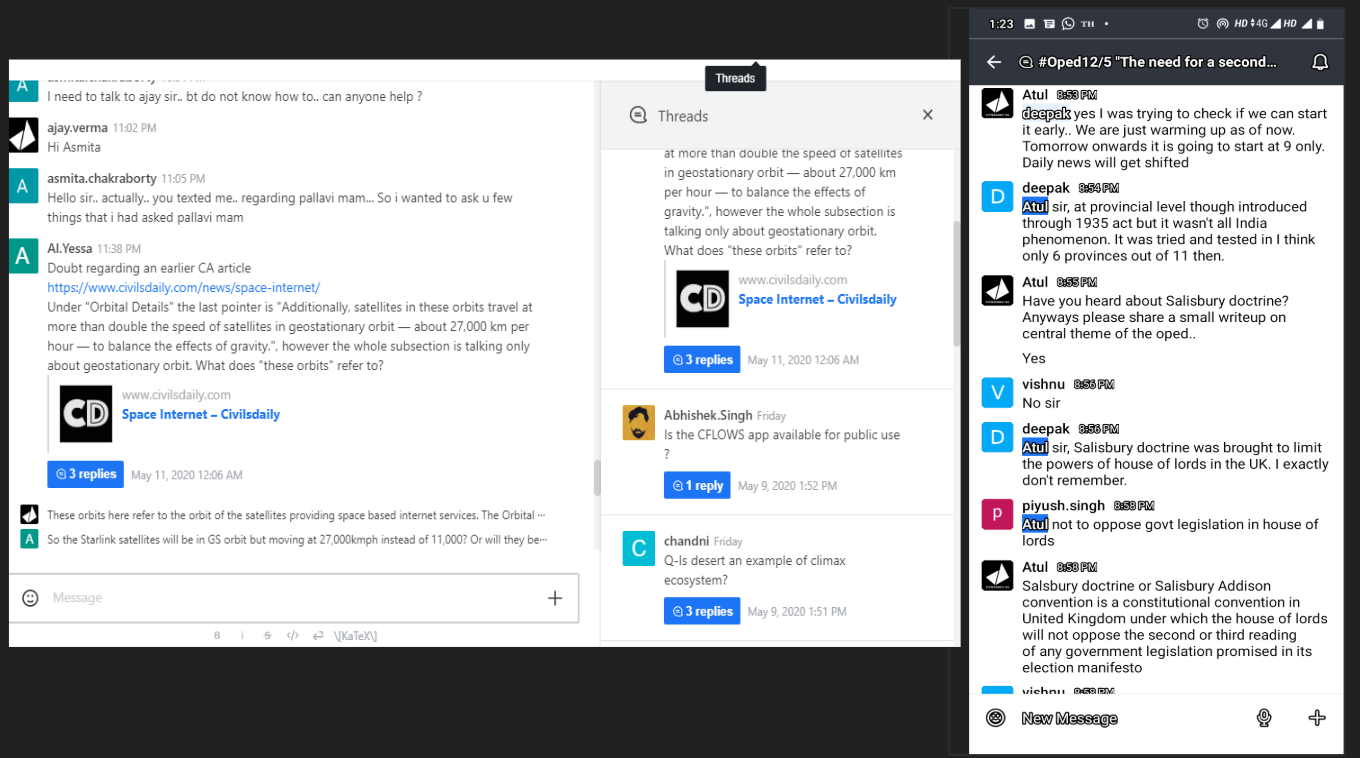 Habitat – Desktop and Mobile view