💥Mains Ready By December. Smash Mains & Smash PYQ Admissions Open

GS Paper: GS1-01.Indian Culture- Salient aspects of Art Forms, Literature and Architecture from ancient to modern times.

  • Festival in news: Harela Festival

    Villagers across Uttarakhand celebrated Harela, a festival of greenery, peace, prosperity and environmental conservation.

    Harela Festival

    • Harela means ‘day of green’ and is celebrated in the month of Shravan (the fifth month of the Hindu lunar calendar) to worship Lord Shiva and Goddess Parvati.
    • People across Uttarakhand, especially the Kumaun region, associate greenery with prosperity.
    • The seeds of five to seven types of crops —  maize, til (sesame), urad (black gram), mustard, oats —  are sown in donas (bowl made of leaves) or ringalare (hill bamboo baskets) nine days before the festival.
    • They are harvested on the ninth day and distributed to neighbours, friends and relatives.
    • The flourish of the crops symbolizes prosperity in the year ahead.
    • People make clay statues of Lord Shiva and Goddess Parvati, known as Dikare, and worship them a day before the festival.
    • Harela is also linked to the Barahnaza system (12 types of crops), a crop diversification technique followed in the region.

    Answer this PYQ in the comment box:

    Q.Consider the following pairs:
    Tradition: State
    1. Chapchar Kut: festival Mizoram
    2. Khongjom Parba ballad: Manipur
    3. Thang Ta dance: Sikkim
    Which of the pairs given above is/are correct?

    (a) 1 only
    (b) 1 and 2
    (c) 3 only
    (d) 2 and 3

  • Places in news: Kesaria Buddhist Stupa

    The world-famous Kesaria Buddha stupa in east Champaran district of Bihar is waterlogged following floods in some parts of the district after heavy rainfall in the catchment areas of river Gandak in neighbouring Nepal.

    Kesaria Stupa

    • The Kesaria stupa, located about 110 km from the State capital Patna, has a circumference of almost 400 feet and stands at a height of about 104 feet.
    • The first construction of the nationally protected stupa is dated to the 3rd century BCE.
    • It is regarded as the largest Buddhist stupa in the world and has been drawing tourists from across several Buddhist countries.
    • The sputa’s exploration had started in the early 19th century after its discovery led by Colonel Mackenzie in 1814.
    • Later, it was excavated by General Cunningham in 1861-62 and in 1998 an ASI team led by archaeologist K.K. Muhammad had excavated the site properly.
    • The original Kesaria stupa is said to date back to the time of emperor Ashoka (circa 250 BCE) as the remains of an Ashokan pillar was discovered there.

    In the accounts of foreign travellers

    • The stupa mound may even have been inaugurated during the Buddha’s time, as it corresponds in many respects to the description of the stupa erected by the Licchavis of Vaishali to house the alms bowl the Buddha has given them.
    • Interestingly, Chinese travellers Fa-Hien (5th century CE) and Hiuen Tsang (7th century CE), who travelled to India, also mention this stupa and the legend of Buddha and the Licchavis, in their records.
    • While Fa-Hien talks of a pillar erected at the site, Hiuen Tsang mentions the stupa itself.

    Try answering this question from CS Mains 2016:

    Q.Early Buddhist Stupa-art, while depicting folk motifs and narratives successfully expounds Buddhist ideals. Elucidate.

  • Sainath awarded 2021 Fukuoka Prize

    Noted journalist P. Sainath has been selected as one of the three recipients of the Fukuoka Prize for 2021.

    Fukuoka Prize

    • The Fukuoka Prize is given annually to distinguished people to foster and increase awareness of Asian cultures, and to create a broad framework of exchange and mutual learning among the Asian people.
    • The Prize was established in 1990 by the city of Fukuoka in Japan and the Fukuoka City International Foundation.
    • The Grand Prize has earlier been awarded to Muhammad Yunus from Bangladesh, historian Romila Thapar, and sarod maestro Amjad Ali Khan. Eleven Indians have received the Fukuoka Prize so far.
    • 115 people from 28 countries and areas have received the Prize in the past 30 years.

    Citation for the award

    • In a statement issued Mr. Sainath was described as a “very deserving recipient of the Grand Prize of Fukuoka Prize”.
    • The Secretariat noted his work for creating a new form of knowledge through his writings and commentaries on rural India and for “promoting civil cooperation”.
  • National Maritime Heritage Complex

    In order to showcase the maritime heritage and history of India, a National Maritime Heritage Complex (NMHC) will be developed in the Lothal region of Gujarat.

    National Maritime Heritage Complex

    • It is to note that the National Maritime Heritage Complex will be made within the ASI site of Lothal that is located 80 km away from Ahmedabad in Gujarat.
    • The project, once completed, will be made an international tourist destination in India where people from across the countries can take a look at the maritime heritage of India from ancient to modern times.
    • The government is aiming to showcase this via an edutainment approach where the latest technology would be adopted to spread awareness.
    • The development will be done in an area expanding 400 acres.
    • The complex will have many offerings including National Maritime Heritage Museum, Heritage Theme Park, and Light House Museum.

    About Lothal

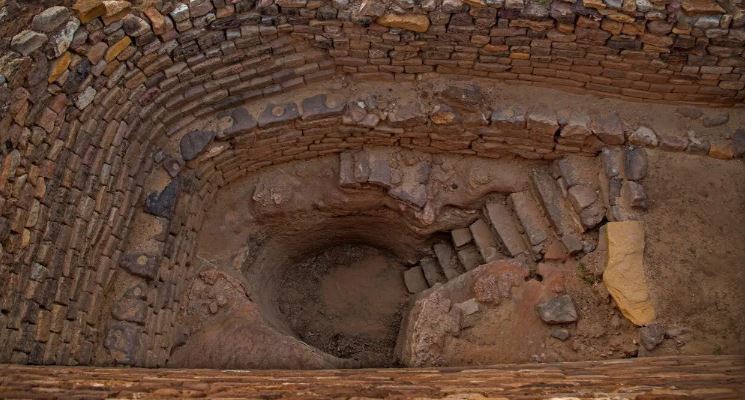
    • Lothal was one of the southernmost cities of the ancient Indus Valley Civilization located in Gujarat.
    • Construction of the city began around 2200 BCE.
    • According to the ASI, Lothal had the world’s earliest known dock, which connected the city to an ancient course of the Sabarmati river on the trade route between Harappan cities in Sindh and the peninsula of Saurashtra.
    • Lothal was a vital and thriving trade Centre in ancient times, with its trade of beads, gems, and valuable ornaments reaching the far corners of West Asia and Africa.
    • The techniques and tools they pioneered for bead-making and in metallurgy have stood the test of time for over 4000 years.
    • The Lothal site has been nominated as a UNESCO World Heritage Site, and its application is pending on the tentative list of UNESCO.

    Answer this question from CSP 2019 in the comment box:

    Q. Which one of the following is not a Harappan site?

    (a) Chanhudaro

    (b) Kot Diji

    (c) Sohgaura

    (d) Desalpur

  • New geometrical lines discovered in Thar Desert

    Using satellite observations and field visits, two independent researchers from France have identified eight sites around Jaisalmer in the Thar Desert, that show linear features resembling geoglyphs.

    What are geoglyphs?

    • Geoglyphs are large, un-explained geometrical patterns on land usually proposed to be man-made features.
    • The largest concentration of geoglyphs is reported from southern Peru, covering an area of about 1,000 square km.
    • A new paper published notes that the identified geoglyphs in the Thar Desert cover an area of about 6 square km.

    Boha Geoglyphs in Thar

    • The authors’ main area of interest was Boha, a small village 40 km to the north of Jaisalmer where they noticed a series of concentric and linear features.
    • They named these features Boha geoglyphs and suggested that the features could be at least 150 years old.
    • It is however conceivable that they were built at the beginning of the British colonial period, in the middle of the 19th century.

    How are they patterned?

    • The Boha geoglyphs are clearly manmade as the main unit is a giant spiral, but they have been eroded due to the cars running over the lines lately.
    • So, they are clearly not formed by weathering or another natural phenomenon.”
    • The observed features might have been formed naturally, but degraded over time due to both natural and human-related causes.

    Degraded over time

    • The rocky terrain is home to a typical weathering feature, especially over the iron-rich sandstone and shale beds.
    • Here, extreme aridity and high temperature lead to slow geochemical translocation of minerals for centuries, such that the heavier minerals like iron and manganese move away from the lighter minerals.
    • This lead to the gradual formation of alternate bands of harder and softer mineral concentrations.
    • With time the areas with softer materials get slowly eroded, while the harder ones stand out, producing the typical concentric or box-like geometric features.
  • Places in news: Pandav Leni Complex

    The Archaeological Survey of India (ASI) has found three more caves in the Trirashmi Buddhist cave complex, also known as Pandav Leni, near Nashik, Maharashtra.

    Answer this PYQ first, in the comment box:

    Q.There are only two known examples of cave paintings of the Gupta period in ancient India. One of these is paintings of Ajanta caves. Where is the other surviving example of Gupta paintings?

    (a) Bagh caves

    (b) Ellora caves

    (c) Lomas Rishi cave

    (d) Nasik caves

    Pandav Leni Complex

    • The Pandav Leni Complex or Nasik Caves are a group of 23 caves carved between the 1st century BCE and the 3rd century CE.
    • Also called Trirashmi Buddhist caves, this complex was first documented in 1823 by Captain James Delamaine and is now an ASI- protected site.
    • Though additional sculptures were added up to about the 6th century, it is a major landmark of changes in Buddhist devotional practices.
    • Most of the caves are viharas except for Cave 18 which is a chaitya of the 1st century BCE.
    • The style of some of the elaborate pillars or columns, for example in caves 3 and 10, is an important example of the development of the form.
    • The “Pandavleni” name sometimes given to the Nasik Caves has nothing to do with the characters Pandavas, characters in the Mahabharata epic.
    • Other caves in the area are Karla Caves, Bhaja Caves, Patan Cave, and Bedse Caves.
  • Reclining Buddha and his various other depictions in art

    On this Buddha Jayanti, Buddha Purnima, or Vesak — India’s largest statue of the Reclining Buddha was to have been installed at Bodh Gaya. The ceremony has been put off due to Covid-19 restrictions.

    The Reclining Buddha

    • A reclining Buddha statue or image represents The Buddha during his last illness, about to enter Parinirvana, the stage of great salvation after death that can only be attained by enlightened souls.
    • The Buddha’s death came when he was 80 years old, in a state of meditation, in Kushinagar in eastern Uttar Pradesh, close to the state’s border with Bihar.

    Answer this PYQ from CSP 2014 in the comment box:

    Q.Lord Buddha’s image is sometimes shown with a hand gesture called ‘Bhumisparsha Mudra’. It symbolizes-

    a) Buddha’s calling of the Earth to watch over Mara and to prevent Mara from disturbing his meditation

    b) Buddha’s calling of the Earth to witness his purity and chastity despite the temptations of Mara

    c) Buddha’s reminder to his followers that they all arise from the Earth and finally dissolve into the Earth and thus this life is transitory

    d) Both the statements ‘a’ and ‘b’ are correct in this context

    Significance of the position

    • Buddha is lying on his right side, his head resting on a cushion or relying on his right elbow, supporting his head with his hand.
    • After the Buddha’s death, his followers decide to build a statue of him lying down.
    • It is a popular iconographic depiction in Buddhism and is meant to show that all beings have the potential to be awakened and be released from the cycle of death and rebirth.

    Connection with Gandhara Art

    • The Reclining Buddha was first depicted in Gandhara art, which began in the period between 50 BC and 75 AD, and peaked during the Kushana period from the first to the fifth centuries AD.
    • Since the Buddha was against idol worship, in the centuries immediately following his Parinirvana (483 BC), his representation was through symbols.
    • As the devotional aspect subsequently entered Buddhist practice, however, iconographic representations of The Buddha began.

    Try this question from CS Mains 2016:

    Q.Early Buddhist Stupa-art, while depicting folk motifs and narratives, successfully expounds Buddhist ideals. Elucidate.

    Reclining Buddha outside India

    • In Sri Lanka and India, the Buddha is mostly shown in sitting postures, while the reclining postures are more prevalent in Thailand and other parts of southeast Asia.
    • There are several statues of the Reclining Buddha in China, Thailand, Japan, Indonesia, and Malaysia.
    • The largest in the world is the 600-foot Winsein Tawya Buddha built-in 1992 in Mawlamyine, Myanmar.
    • In the late 15th century, a 70-meter statue of the Reclining Buddha was built at the Hindu temple site of Baphuon in Cambodia’s Angkor.
    • The Bhamala Buddha Parinirvana in Pakistan’s Khyber Pakhtunkhwa province, which dates back to the 2nd century AD, is considered the oldest statue of its kind in the world.

    Reclining Buddha in India

    • Cave No. 26 of the UNESCO World Heritage Site of Ajanta contains a 24-foot-long and nine-foot-tall sculpture of the Reclining Buddha, believed to have been carved in the 5th century AD.
    • It shows the Buddha reclining on his right side, and behind him are two sala trees.
    • At the base of the sculpture are his begging bowl, a water pitcher and walking stick.
    • While his disciples are shown sitting in mourning, celestial beings are shown on top, rejoicing in anticipation of the Buddha’s arrival in heaven.

    Mediation Buddha 

    Sanchi Stupa and Bharhut Stupa: This is part of the aniconic phase of early Buddhist iconography. In early Buddhist art, the empty seat or empty throne symbolized the presence of the Buddha without depicting him in human form.


    Back2Basics: Mudras of Buddha

    Dharmachakra Mudra

    • It is also called as the gesture of ‘Teaching of the Wheel of Dharma’ that describes one of the most important moments in the Buddha’s life as he performed the Dharmachakra mudra in his first sermon in Sarnath after he attained enlightenment.
    • It is performed with the help of both the hands which are held against the chest, the left facing inward, covering the right facing outward.

    Dhyan Mudra

    • It is also known as Samadhi or Yoga Mudra.
    • It is performed with the help of two hands, which are placed on the lap and place the right hand on the left hand with stretched fingers (thumbs facing upwards and other fingers of both the hand resting on each other.)
    • This is the characteristic gesture of Buddha Shakyamuni, Dhyani Buddha Amitabh and the Medicine Buddha.

    Bhumisparsa Mudra

    • This gesture is also known as ‘touching the Earth’, which represents the moment of the Buddha’s awakening as he claims the earth as the witness of his enlightenment.
    • It is performed with the help of the right hand, which is held above the right knee, reaching toward the ground with the palm inward while touching the lotus throne.

    Varada Mudra

    • This mudra represents the offering, welcome, charity, giving, compassion and sincerity.
    • It is performed with the help of both the hands in which palm of right hand is facing forward and fingers extended and left hand palm placed near centre with extended fingers.

    Karana Mudra

    • It signifies the warding off of evil which is performed by raising the index and the little finger, and folding the other fingers.
    • It helps in reducing sickness or negative thoughts.

    Vajra Mudra

    • This gesture denotes the fiery thunderbolt that symbolises the five elements—air, water, fire, earth, and metal.
    • It is performed with the help of right fist and left forefinger, which is placed by enclosing the erect forefinger of the left hand in the right fist with the tip of the right forefinger touching (or curled around) the tip of the left forefinger.

    Vitarka Mudra

    • It signifies the discussion and transmission of the teachings of the Buddha.
    • It is performed by joining the tips of the thumb and the index fingers together while keeping the other fingers straight, which is just like the Abhaya Mudra and Varada Mudra but in this mudra the thumbs touch the index fingers.

    Abhaya Mudra

    • It is a gesture of fearlessness or blessing that represents the protection, peace, benevolence, and dispelling of fear.
    • It is performed with the help of right hand by raising to shoulder height with bent arm, and the face of palm will be facing outward with fingers upright whereas the left hand hanging down while standing.

    Uttarabodhi Mudra

    • This denotes the supreme enlightenment through connecting oneself with divine universal energy.
    • It is performed with the help of both the hands, which are placed at the heart with the index fingers touching and pointing upwards and the remaining fingers intertwined.

    Anjali Mudra

    • It is also called Namaskara Mudra or Hridayanjali Mudra that represents the gesture of greeting, prayer and adoration.
    • It is performed by pressing the palms of the hands together in which the hands are held at the heart chakra with thumbs resting lightly against the sternum.
  • Appointments to the Kalakshetra Foundation

    The Central government has appointed 12 eminent artists and musicians to the board of the prestigious institution.

    Kalakshetra Foundation

    • It is an arts and cultural academy dedicated to the preservation of traditional values in Indian art and crafts, especially in the field of Bharatanatyam dance and Gandharvaveda music.
    • Based in Chennai, India, the academy was founded in January 1936 by Rukmini Devi Arundale and her husband George Arundale.
    • Under Arundale’s guidance, the institution achieved national and international recognition for its unique style and perfectionism.
    • In January 1994, an Act of the Parliament of India recognized the Kalakshetra Foundation as an “Institute of National Importance.”

    Who was Rukmini Devi Arundale?

    • Devi (1904 –1986) was an Indian theosophist, dancer, and choreographer of the Indian classical dance form of Bharatanatyam, and an activist for animal welfare.
    • She was the first woman in Indian history to be nominated a member of the Rajya Sabha.
    • The most important revivalist of Bharatanatyam from its original ‘sadhir’ style prevalent amongst the temple dancers, the Devadasis, she also worked for the re-establishment of traditional Indian arts and crafts.
    • She espoused the cause of Bharata Natyam which was considered a vulgar art.
    • She ‘sanitised’ and removed the inherent eroticism of Sadhir to make it palatable to Victorian British morality and Indian upper-caste elites.

    Back2Basics: Bharatanatyam

    • Bharatanatyam previously called Sadhir Attam is a major form of Indian classical dance that originated in Tamil Nadu.
    • It is one of the oldest classical dance traditions in India.
    • It has been nurtured in the temples and courts of southern India since the ancient era.
    • It is one of eight forms of dance recognized by the Sangeet Natak Akademi (the others being Kathak, Kuchipudi, Odissi, Kathakali, Mohiniyattam, Manipuri, and Sattriya).
    • The word Bharata is a mnemonic, consisting of “bha”–”ra”–”ta”.
    • According to this belief, bha stands for bhava (feelings, emotions), ra stands for raga (melody, framework for musical notes), and ta stands for tala (rhythm).
  • 6 UNESCO heritage sites added in India

    Six sites have been added to India’s tentative list of UNESCO world heritage sites.

    Which are the 6 sites?

    1. Ganga ghats in Varanasi
    2. Temples of Kancheepuram in Tamil Nadu
    3. Satpura Tiger Reserve in Madhya Pradesh
    4. Maratha military architecture in Maharashtra
    5. Hire Bengal megalithic site in Karnataka and
    6. Bhedaghat-Lametaghat of Narmada Valley in Madhya Pradesh

    [1] Ghats of Varanasi

    • The Ganges riverfront of Varanasi, Uttar Pradesh, has been vying for the UNESCO tag for several years now.
    • The Ganga river with its riverfront ghats also fulfil the criteria of Cultural Landscapes as designated in Article 1 of the Convention and specifically that of a cultural landscape/
    • It retains an active social role in contemporary society closely associated with the traditional way of life, and in which the evolutionary process is still in progress.

    [2] Temples of Kanchipuram

    • Synonymous with spirituality, serenity, and silk, the temple town of Kanchipuram in Tamil Nadu, is dotted with ancient temples that are architectural marvels and a visual treat, states incredibleindia.org.
    • Situated on the banks of River Vegavathi, this historical city once had 1,000 temples, of which only 126 (108 Shaiva and 18 Vaishnava) now remain.
    • Its rich legacy has been the endowment of the Pallava dynasty, which made the region it’s capital between the 6th and 7th centuries and lavished upon its architectural gems that are a fine example of Dravidian styles.

    [3] Satpura Tiger Reserve

    • Located in Madhya Pradesh, the Satpura National Park is home to 26 species of the Himalayan region including reptiles, and 42 species of Nilgiri areas.
    • It is the largest tiger-occupied forest and also has the largest tiger population.
    • The website also states the place has more than 50 rock shelters with paintings that are 1500 to 10,000 years old.

    [4] Maratha Military Architecture in Maharashtra

    • There are 12 forts in Maharashtra dating back to the era of the 17th-century Maratha king Chhatrapati Shivaji.
    • They are namely Shivneri (the birthplace of Shivaji); Raigad (the capital fort rebuilt for the coronation of the Maratha king), Torna (the first fort of the Maratha empire), Rajgad, Salher-Mulher, Panhala, Pratapgad, Lohagad, Sindhudurg, Padmadurga (Kasa), Vijaydurg and Kolaba.
    • This highlight how the formation of Military Landscape in the form of hill and sea forts as a response to hilly terrain in the area is of outstanding universal value.

    [5] Megalithic site of Hire Benkal

    • The 2,800-years-old megalithic site of Hire Benkal in Karnataka is one of the largest prehistoric megalithic settlements where some funerary monuments are still intact.
    • The granite structures are burial monuments that may also have served many ritual purposes.
    • Due to the extremely valuable collection of Neolithic monuments, the site was proposed for recognition.

    [6] Bhedaghat-Lametaghat in Narmada Valley- Jabalpur

    • Bhedaghat, often referred to as the Grand Canyon of India, is a town in the Jabalpur district, around 25 km from Jabalpur.
    • It is known for its marble rocks and their various morphological forms on either side of the Narmada River which flows through the gorge states whcunesco.org.
    • It has also been observed that the magical marble mountains assume different colours and even shapes of animals and other living forms as one moves through them.
    • Several dinosaur fossils have been found in the Narmada valley, particularly in Bhedaghat-Lametghat area of Jabalpur. In 1828, the first Dinosaur fossil was collected from Lameta Bed by William Sleeman.
    • River Narmada narrows down on its way through marble rocks and plunges in a waterfall giving out the appearance of a smoke cascade.
  • Shigmo Festival of Goa

    The Shigmo or the Goan Carnival celebrations may be terminated this year due to rising covid cases.

    Try this PYQ from CSP 2017:

    Q.Consider the following pairs:

    Traditions                                            Communities

    1. Chaliha Sahib Festival              —          Sindhis
    2. Nanda Raj Jaat Yatra                —          Gonds
    3. Wari-Warkari                            —          Santhals

    Which of the pairs given above is/are correctly matched?

    (a) 1 only

    (b) 2 and 3 only

    (c) 1 and 3 only

    (d) None of the above

    What is Shigmo or Shigmotsav?

    • Shigmo is the celebration of a ‘rich, golden harvest of paddy’ by the tribal communities of Goa.
    • Agricultural communities including the Kunbis, Gawdas and Velips celebrate the festival that also marks the onset of spring.
    • Shigmo celebrations last over a fortnight in the months of Phalgun-Chaitra months of the Hindu calendar that correspond with March-April every year.

    Various activities in celebrations

    • The festival begins with ‘Naman’ that is the invocation of the local folk deities on the village ‘maand’ or the village stage.
    • It is held to the beats of percussion instruments like the Ghumat, Dhol, Mhadle and Tashe by the male folk.
    • This is called the ‘romta mell’ that moves from one village to another.
    • The celebration is replete with traditional, colourful costumes, mythological installations, painted faces and costumes of various hues.
    • Folk dances like Ghodemodini (a dance of equestrian warriors), Gopha and Phugadi are among the many dances performed by the participating communities.