Mains Ready By December. Smash Mains & Smash PYQ Admissions Open

GS Paper: GS2-18.Bilateral, regional and global groupings and agreements involving India and/or affecting India’s interests.

  • India and Australia

    Context

    India and Australia, which share common values and interests, must work together with resolve to shape the economic and strategic environment so that it continues to support collective security and prosperity.

    India-Australia ties: A background

    • The ties are a Comprehensive Strategic Partnership full of practical, tangible actions that strengthen ties and benefit the region.
    • India and Australia are a small group of countries to hold annual leaders’ summits and biennial 2+2 talks involving foreign and defence ministers.
    • The defence forces of both the countries are undertaking more complex activities together, such as in Exercise Malabar with the US and Japan.
    • We coordinate closely on maritime domain awareness.
    • This year both countries deployed P-8 surveillance aircraft to each other’s territories for joint patrols.
    • Australia has also committed to a package of partnership initiatives in our update to the India Economic Strategy.
    • Cooperation on climate and sustainability: India and Australia have great potential to cooperate on climate and sustainability.

    Why India matters to Australia

    • Securing supply chain: India’s economy, manufacturing capabilities and talent ensure it will play a key role in securing supply chains and restarting post-pandemic growth.
    • Balance of power: Its military has the capacity and capability to respond to natural disasters, help stabilise an uncertain region and contribute to an effective balance of power.
    • Technological and scientific capabilities: Its technological and scientific capabilities are gateways to a cleaner and more sustainable world.
    •  Commitment to democracy: Most of all, India’s people have the optimism, the commitment to democracy, the drive and the goodwill to make our region safer, freer and better.

    Vision for open, inclusive and resilient Indo-Pacific region

    • As the bilateral relationship deepens, both the countries must begin to work more together with others in the region.
    • Responding to humanitarian crises and natural disasters: There is enormous potential in the Indian and Pacific oceans, where we each have vital interests in combating climate change, illegal fishing and people smuggling and responding to humanitarian crises and natural disasters.
    •  Australia has a vision for an open, inclusive and resilient Indo-Pacific region.
    • It is a vision for a region that is more integrated rather than divided, where trade and investment flow freely based on agreed rules and treaty commitments, where disputes are resolved through dialogue in accordance with international law, and where a strategic culture that respects the rights of all states, big and small, prevails.
    • It is a vision that Australia share with partners like ASEAN, and partners like India.
    • Whether through joint activities with like-minded countries, or the support of regional and multilateral architecture, Australia is ensuring the region has options and balance.

    Conclusion

    India and Australia’s interests don’t just align, they are inextricably entwined. Expect this relationship to grow and prosper, our cooperation to deepen.

    UPSC 2023 countdown has begun! Get your personal guidance plan now! (Click here)

  • In Sri Lankan crisis, a window of economic opportunity

    Context

    The commonality between Sri Lanka and the southern parts of India remains a less-emphasised yet significant aspect of India-Sri Lanka relations.

    Crisis in Sri Lanka and relief provided by India

    • The present economic crisis in Sri Lanka has pushed it closer to India for immediate relief.
    • India, as part of its ‘Neighbourhood First’ policy, has extended support to the people of Sri Lanka in the form of aid (close to $3.5 billion) to help secure Sri Lanka’s food, health and energy security by supplying it essential items such as food, medicines, fuel and kerosene.
    • The latest in the series was the signing of an agreement on June 10 between the Government of Sri Lanka and the Export-Import Bank of India for a $55-million short term Line of Credit to facilitate the procurement of urea for paddy crop in the ongoing ‘Yala’ season.
    • On its part, Tamil Nadu decided to provide aid of ₹123 crore, comprising 40,000 tonnes of rice, 137 types of life-saving drugs and 500 tonnes of milk powder.

    Sri Lanka-India sub-regional context

    • During his second term as Prime Minister, Mr. Wickremesinghe while delivering a lecture in Chennai, in August 2003, called for the development of the south India-Sri Lanka sub-region as a single market.
    • Such a market would provide more opportunities for the economic growth of both countries.
    • In 2016 he highlighted the fact that the five Indian southern States, with a total population of 250 million, had a combined gross state domestic product of nearly $450 billion; with the addition of Sri Lanka’s $80 billion GDP, the sub-region would have a $500 billion economy, having an aggregate population of around 270 million.

    Challenges

    • Possibility of greater economic collaboration: Whether this bonhomie can lead to greater economic collaboration between Sri Lanka and south India, not necessarily Tamil Nadu alone, given the historical baggage, is anybody’s guess.
    • Baggage of history: Some sections of the Sinhalese still hold the view that India had been a threat to Sri Lanka and it can still be a threat to them.
    • The manner in which the Rajapaksa regime unilaterally scrapped in February 2021 a tripartite agreement signed in 2019 with India and Japan for the development of Colombo’s East Container Terminal was a reflection of the historical baggage.
    • This perception can be traced to history when Sri Lanka was invaded by rulers of south India who humbled the Sinhala kings.
    • In the aftermath of the 1983 anti-Tamil pogrom, the support provided by the Indian government to Tamil rebels only strengthened this perception.
    • Modest investment in Sri Lanka’s development: Despite India’s open willingness to take part in the development of Sri Lanka after the civil war, the scale of its involvement has been modest.
    • Incomplete projects due to lack of political will: After the cancellation of the tripartite agreement, India was later provided with projects such as the West Container Terminal, the Trincomalee oil tank farm and a couple of renewable projects, there were several proposals that envisaged India’s participation but did not see the light of day.
    • Another project, a collaboration between NTPC Limited and the Ceylon Electricity Board, was cancelled.
    • Other projects too such as the development of the Kankesanthurai harbour and the expansion of the Palaly airport in Jaffna, both envisaging Indian participation, would have become a reality had there been show of political will from the other side.
    • The project of building a sea bridge and tunnel, connecting Rameshwaram to Talaimannar, remains on paper.

    Way forward

    • Infrastructure development: Even now, there is enormous scope for collaboration between the two countries in the area of infrastructure development.
    • Cross-border energy trade: The economic crisis has revived talk of linking Sri Lanka’s electricity grid with that of India.
    • If this project takes off, the first point of interconnectivity on the Indian side will most likely be in Tamil Nadu.
    • India has cross-border energy trade with Bangladesh, Nepal, Bhutan and Myanmar.
    • Facilitating people-to-people interaction: The apprehension in the minds of sections of the Sinhalese majority about India being a threat can be dispelled only by facilitating greater people-to-people interaction, including pilgrimages by monks and other sections of Sri Lankan society to places of Buddhist importance not only in north India but also in the south (Andhra Pradesh).

    Conclusion

    Much more will have to be done but the opportunity created by the current circumstances should be utilised to bring Indian and Sri Lankan societies closer — a prerequisite to achieving an economic union between Sri Lanka and the southern States of India.

    UPSC 2023 countdown has begun! Get your personal guidance plan now! (Click here)

  • China to host BRICS Virtual Summit

    Chinese President Xi Jinping will host a virtual summit of the leaders of the BRICS countries. PM Modi is expected to join.

    Why in news?

    • China is keen for the grouping to explore expansion and include new developing country members.
    • Under the “BRICS Plus” format, the forthcoming summit is also expected to be attended by leaders of invited emerging countries.

    What is BRICS?

    • BRICS is an acronym for the grouping of the world’s leading emerging economies, namely Brazil, Russia, India, China and South Africa.
    • The BRICS Leaders’ Summit has convened annually. It does not exist in form of an organization, but it is an annual summit between the supreme leaders of five nations.

    Its inception

    • On November 30, 2001, Jim O’Neill, a British economist who was then chairman of Goldman Sachs Asset Management, coined the term ‘BRIC’ to describe the four emerging economies of Brazil, Russia, India, and China.
    • He made a case for BRIC on the basis of econometric analyses projecting that the four economies would individually and collectively occupy far greater economic space and become among the world’s largest economies in the next 50 years or so.

    How it has formed?

    • The grouping was formalized during the first meeting of BRIC Foreign Ministers on the margins of the UNGA in New York in September 2006.
    • The first BRIC Summit took place in 2009 in the Russian Federation and focused on issues such as reform of the global financial architecture.

    Who are the members?

    • South Africa was invited to join BRIC in December 2010, after which the group adopted the acronym BRICS. South Africa subsequently attended the Third BRICS Summit in Sanya, China, in March 2011.
    • The Chairmanship of the forum is rotated annually among the members, in accordance with the acronym B-R-I-C-S.
    • The importance of BRICS is self-evident: It represents 42% of the world’s population, 30% of the land area, 24% of global GDP and 16% of international trade.
    • The five BRICS countries are also members of G-20.

    Also read

    [Burning Issue] BRICS and its relevance in today’s world


    Back2Basics: BRICS Plus

    • The BRICS outreach to Africa began at the last summit hosted by South Africa, in 2013. It has picked up momentum now but African leaders want more.
    • They need big loans from the New Development Bank (NDB) for their infrastructure projects.
    • China introduced the “BRICS Plus” format at the Xiamen summit last year by inviting a few countries from different regions.
    • South Africa emulated it, arranging the attendance of top-level representation of five nations of its choice: Argentina, Jamaica, Turkey, Indonesia and Egypt.
    • The precise role of “BRICS Plus” countries will take time to evolve but an immediate benefit is the immense opportunities it provides for networking among leaders.


    UPSC 2023 countdown has begun! Get your personal guidance plan now! (Click here)

  • What is the I2U2 Initiative?

    The US administration has named the new grouping as “I2U2” — “I” for India and Israel and “U” for the US and UAE. This was earlier referred as West Asian Quad.

    What is the news?

    • US President Joe Biden will host a virtual summit with PM Modi, Israel PM Naftali Bennett and UAE President Mohammed bin Zayed Al Nahyan during his visit to West Asia from July 13 to 16.

    I2U2 Initiative

    • Following the Abraham Accords between Israel and the UAE, I2U2 was founded in October 2021 to address marine security, infrastructure, and transportation challenges in the region.
    • It was known as the ‘International Forum for Economic Cooperation’at the time.
    • At that time, UAE had referred to the new grouping as the ‘West Asian Quad’.

    What makes this deal outstanding?

    • UAE forming sharing desk with Israel is no easy deal. Arab sentiments against Israel and their proposition for Anti-Semitism are well known.

    Significance of the initiative

    • I2U2 seeks to empower the partners and encourages them to collaborate more closely, resulting in a more stable region.
    • India is seen as a large consumer market as well as a large producer of high-tech and highly sought-after items in the United States.
    • This has led India to enhance its relationship with Israel without jeopardising its ties with the UAE and other Arab states.

    Back2Basics: Abraham Accords

    • The Israel–UAE normalization agreement is officially called the Abraham Accords Peace Agreement.
    • It was initially agreed to in a joint statement by the United States, Israel and the United Arab Emirates (UAE) on August 13, 2020.
    • The UAE thus became the third Arab country, after Egypt in 1979 and Jordan in 1994, to agree to formally normalize its relationship with Israel as well as the first Persian Gulf country to do so.
    • Concurrently, Israel agreed to suspend plans for annexing parts of the West Bank. The agreement normalized what had long been informal but robust foreign relations between the two countries.


    UPSC 2023 countdown has begun! Get your personal guidance plan now! (Click here)

  • India-Iran Relations

    Context

    Iran’s Foreign Minister Hossein Amir-Abdollahian’s three-day visit to India, last week, was the first ministerial-level visit from Iran since Ebrahim Raisi assumed the Iranian presidency in August last year.

    Chabahar Port - A Rethink is Needed | Vivekananda International Foundation

    Background

    • Bilateral relations between India and Iran span millennia marked by meaningful interactions.
    • Both countries shared borders until 1947 and share several common features in their language, culture and traditions.
    • The diplomatic links were established on 15th March 1950, when both countries signed a Treaty of Friendship and Perpetual Peace.
    • However, Iran’s joining of Baghdad pact in 1954 and the Cold War politics prevented both countries from having closer relations until the 1990s.
    • Islamic Revolution of 1979, hostage of US diplomats, Iran-Iraq War and Tehran’s support for Hezbollah and Hamas among others resulted in a range of political and economic sanctions, leading to Iran being isolated at a global level
    • In the 1990s, both countries’ interests converged around energy, Central Asia and security, mostly around the Pakistan-Afghan region.
    • This resulted in the signing of ‘The Delhi Declaration’, which provided the vision of the countries’ defence and strategic partnership and “Tehran Declaration”, which set forth the areas of possible cooperation

    India-Iran relations: A shared vision for equitable, pluralistic and co-operative international order

    • The “Tehran Declaration” signed during former Prime Minister Atal Bihari Vajpayee’s visit to Iran affirmed the shared vision of the two countries for an “equitable, pluralistic and co-operative international order”.
    • It recognised then Iranian President Mohammad Khatami’s vision of a “dialogue among civilisations” as a paradigm of international relations based on principles of tolerance, pluralism and respect for diversity.
    • Advancing the standing in global order: Two decades later, as India strengthens new partnerships within its regional vision centred on the Indo-Pacific, both countries remain driven by the goals of advancing their standing at the regional and global level.
    • Both are keen to project themselves as independent strategic actors determined to play a role in shaping a new multipolar order in their shared Eurasian neighbourhood and also at the global level.

    Why does India need Iran?

    • Energy security: Conventionally, for energy security
    • Iran is amongst India’s top oil suppliers
    • Strategic importance: Since the 1990s, Iran’s importance has become ‘strategic’
    • Security reasons: Iran’s cooperation is critical for India’s security given that
    • Pak supports terrorism in India
    • Influence in Afghanistan: India’s influence in Afghanistan is marginal.
    • Countering Pakistan: India needs Iran to moderate Pak’s influence in West Asia
    • Iran is a leader in the Muslim world.
    • Access to Afghanistan and Central Asia

    Significance of Iran for India

    • Geopolitical logic in relations: The sanctions imposed by the US on Iran after it withdrew from the nuclear deal in 2018 may have virtually destroyed India-Iran trade, especially India’s energy imports from Iran, but the geopolitical logic underpinning relations between the two countries remains firm.
    • Land bridge to Central Asia and Eurasia: Iran has sought to leverage its crossroad geographical location straddling the Persian Gulf and the Caspian Sea, India has come to see it as its land bridge to Central Asia and Eurasia.
    • INSTC: Despite the difficulties posed by decades of American sanctions, Iran has, along with India, Russia and a few other countries in the Eurasian region, continued to work on the multi-modal International North-South Transport Corridor (INSTC).
    • During Raisi’s visit to Moscow, the two sides had pledged to redouble their efforts to build the railway line between Iran’s Caspian port of Rasht and Astara on the Iran-Azerbaijan border.
    • Alternative Caspian Sea Route: The activation of an alternative Caspian Sea route speaks volumes about the positive outlook of Iran, India and Russia on this corridor despite a variety of geopolitical challenges.
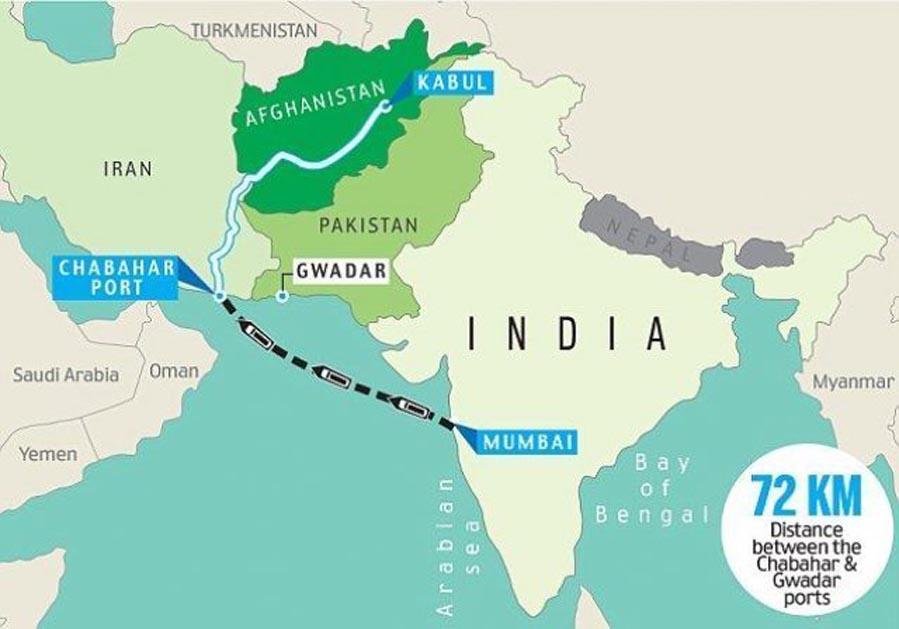
    • Iran’s Chabahar port, where India is developing two berths that it will lease for commercial operations for 10 years, is also a story of perseverance in the ties between the two countries.

    Irritants in Indo-Iran ties

    • India’s relations with Saudi Arabia, US and Israel:  Growing Saudi-India-US-Israel relations have irked Iran.
    • In retaliation, Iran, for the first time, has linked the plight of Muslims in Gaza, Yemen, and Bahrain, with those in Kashmir
    • Iran-Pak-China ties: Warming Iran-Pak-China ties have annoyed India.
    • Sluggish Chabahar port development: Slow Chabahar port development has annoyed Iran.
    • China-Iran strategic partnership:
      • An economic and security partnership deal between Iran and China was recently made public, creating a global alarm, especially for India and the US.
      • The foundation for this deal was laid during Chinese President Xi Jinping’s visit to Iran in 2016
      • The draft agreement involves Chinese investments worth $400 billion into the Iranian economy over 25 years.
      • Of this, $280 billion will be allocated for the oil and gas sector and the remaining funding will be for other core sectors like banking, telecommunications, ports and railways.
      • In return, China would get a steady supply of Iranian oil at a heavily discounted rate during the same period.
      • This deal creates a win-win situation for both countries.
      • It lifts Iran’s sanction-hit economy and helps China set a firm foothold in the Middle East.

    US sanctions:

    • Iran’s aim to develop nuclear weapons has come under strong criticism from Trump Administration since the beginning.
    • Thus, the US has withdrawn from the Iran nuclear deal in 2018 after it was signed in 2015 and imposed unilateral sanctions on Iran.
    • The US’ sanctions and aggressive policies have created a situation of economic and geostrategic uncertainty.
    • Indian investors are wary of having businesses in Iran for the fear of the US.
    • Also, India deviated from the policy of not abiding by unilateral sanctions by ceasing to purchase Iranian oil.
    • Due to this, Iran did not back India’s bid to mobilise international support against Beijing’s aggression in the Ladakh.

    Other issues:

    • Iran is against India’s decision to abrogate Article 370 and 35A.
    • It has called on India and Pakistan to show restraint and prevent the killing of innocent Kashmiris, revealing possible close ties between Pakistan and Iran.
    • Iran also voiced against “extremist Hindus and their parties” during the 2020 Delhi riots.
    • Apart from these issues, Iran also sidelined India’s ONGC from exploration rights at its Farzad B Gas field, stating that it will engage the company at a later date.

    Way forward

    • As India is treading a fine line in balancing relations with the US, China and Iran while striving to augment its political influence in West Asia, embracing one country over the other is not an option for India.
    • Therefore, a multilateral foreign policy is a way forward.
    • India must retain its involvement in the Chabahar port development because of the geostrategic significance.
    • In the immediate term, India should improve its multi-alignment credentials to absorb investments into the port projects from the public and private sector, boost maritime cooperation among littoral countries to enhance the transit of goods, and foster regional partnership for the Chabahar port development.
    • Based on the mutual geostrategic and energy interests, India could collaborate with Japan under the Asia-Africa Growth Corridor.
    • Japan’s participation would enhance the multilateral characteristics of the transit hub in the region, unlike the China-owned Gwadar port. This will further enhance multilateral investments to solidify regional economic partnerships that enable the sustainability of the port.
    • Also, India needs to evolve a better strategy on Iran beyond waiting to see how the US may react, beyond having to issue a clarification in response to Iran’s sudden provocations and beyond allowing voids of partnerships that China may fill.
    • In order to do so, India must create a new alliance of countries having similar geostrategic interests, which are also facing issues with US’ unrealistic and aggressive foreign policy strategy and China’s expansionistic policies.

    Conclusion

    While the revival of the nuclear deal could give a fillip to India’s economic ties with Iran, India’s interests in continental Asia will be served well by heeding to the calls for developing a long-term roadmap for bilateral relations.


  • Back in news: India- ASEAN Relations

    The Foreign Minister of Myanmar is unlikely to be part of the 24th ASEAN-India Ministerial summit.

    What is the news?

    • Myanmar’s absence is the souring ASEAN-Myanmar.
    • This is after the coup that overthrew the Aung San Suu Kyi government in Myanmar.
    • This shows India’s concern over the junta in Myanmar which has refused to enter into a negotiation

    What is ASEAN?

    • ASEAN is a political and economic union of 10 member states in Southeast Asia.
    • It brings together ten Southeast Asian states – Brunei, Cambodia, Indonesia, Laos, Malaysia, Myanmar, the Philippines, Singapore, Thailand and Vietnam – into one organisation.
    • It was established on 8th August 1967 in Bangkok, Thailand with the signing of the Bangkok Declaration by the founding fathers of the countries of Indonesia, Malaysia, Thailand, Singapore, and the Philippines.
    • The preceding organisation was the Association of Southeast Asia (ASA) comprising of Thailand, the Philippines, and Malaysia.
    • Five other nations joined the ASEAN in subsequent years making the current membership to ten countries.

    India-ASEAN Relations: A Backgrounder

    • Look-East Policy in 1992 gave an upthrust to India -ASEAN relation and helped India in capitalizing its historical, cultural and civilizational linkages with the region.
    • India entered into a Free Trade Agreement (FTA) in goods with the region in 2003 which has facilitated the bilateral trade which now stands at approximately USD 76 Billion.
    • Further, the launch of Act East Policy in 2014 has added a new vigour to India-ASEAN relations.

    Significance of ASEAN to India

    • ASEAN’s centrality in India’s foreign policy – A cohesive, responsive, and prosperous ASEAN is central to India’s Indo-Pacific Vision and India’s Act East Policy and contributes to Security and Growth for All in the Region (SAGAR).
    • Economic – ASEAN is the one of the largest market in the world comparative to the EU and North American markets.
      • It’s also the 4th most popular investment destination globally.
    • Investment opportunities for Indian businesses – Cost of production is lower in Laos, Cambodia, and Myanmar, which means that Indian firms can gain significantly by investing in these countries.
    • Countering China – Cooperation between India and ASEAN is crucial to counter China’s power projection in the region. Both have territorial and border issues with China, disputes over the South China Islands and waters for ASEAN and over land boundaries for India.
    • Integration with regional and global supply chains – Increasing engagement with ASEAN is pivotal to facilitate India’s integration with regional and global supply chain movements.
    • North-East development – Connectivity projects with the ASEAN nations keeping Northeast India at the centre can ensure the economic growth of the land-locked north-eastern states.
      • Collaboration with the ASEAN nations is necessary to counter insurgency in the Northeast, combat terrorism, etc.
    • Maritime security – The Indian Ocean carries 90% of India’s trade and its energy sources. Presence of choke points such as the Malacca strait makes the South-East Asian region significant for countering traditional and non-traditional maritime threats like piracy and terrorism.
    • Indian Diaspora – About 9-8% of the population in Malaysia and Singapore is of Indian origin, in Myanmar-4% and Indonesia about 0.5%.

    Areas of Cooperation

    • Economic Cooperation – ASEAN is India’s 4th largest trading partner.
      • India signed FTA in goods in 2009 and an FTA in services and investments in 2014 with ASEAN.
      • India has a Comprehensive Economic Cooperation Agreement (CECA) with various countries of the ASEAN region which has resulted in concessional trade and a rise in investments.
    • Political Cooperation – ASEAN-India Centre (AIC) was established to undertake policy research, advocacy and networking activities with organizations and think-tanks in India and ASEAN.
      • Delhi Dialogue – Annual Track 1.5 event for discussing politico-security and economic issues between ASEAN and India.
    • Financial Assistance – India provides financial assistance to the ASEAN nations through various mechanism like ASEAN-India Cooperation Fund, ASEAN-India S&T Development Fund and ASEAN-India Green Fund.
    • Connectivity – India has been undertaking several connectivity projects like India-Myanmar-Thailand Trilateral (IMT) Highway and the Kaladan Multimodal Project.
      • India is also trying to establish a Maritime Transportation Agreementwith ASEAN and also Plans for a Railway link between New Delhi in India to Hanoi in Vietnam.
    • Socio-Cultural Cooperation – Programmes to boost People-to-People Interaction with ASEAN are organized, such as inviting ASEAN students to India, Special Training Course for ASEAN diplomats, Exchange of Parliamentarians, etc.
    • Defence Cooperation – Joint Naval and Military exercises are conducted between India and most ASEAN countries.
      • Vietnam has traditionally been a close friend on defense issues, Singapore is also an equally important partner.
    • Maritime Cooperation – adopted Delhi Declaration and decided to identify Cooperation in the Maritime Domain as the key area of cooperation under the ASEAN-India strategic partnership.
      • India is developing its maiden deep-sea port in a strategically located Sabang port in Indonesia.

    REGIONAL COMPREHENSIVE ECONOMIC PARTNERSHIP (RCEP) AGREEMENT

    • RCEP is a Free Trade Agreement (FTA) that has been signed between 15 countries including the 10 ASEAN members, China, Japan, South Korea, Australia, and New Zealand.
      • RCEP was first proposed in 2011 with an aim to create a consolidated market for the ASEAN countries and their trade partners.
      • RCEP now forms the world’s largest trade bloc, covering over 2.2 billion people and accounting for 30% of the world’s economy.
    • Though India was a part of the RCEP’s negotiations, it dropped out in November 2019, citing significant outstanding issues that remain unresolved.

    Reasons behind India pulling out of RCEP

    • Trade imbalance with RCEP members – India’s trade deficit with RCEP countries has almost doubled in the last five-six years.
    • Chinese Angle – From a geopolitical perspective, RCEP is China-led or is intended to expand China’s influence in Asia. India has already signed FTA with all the countries of RCEP except China.
    • Signing of RCEP can lead to cheaper products from China flooding the Indian market.
    • Lack of adequate protection for domestic industries – India’s proposals for strict Rules of Origin (to prevent routing of products from non-RCEP countries) and an Auto-trigger mechanism to impose tariffs when imports crossed a certain threshold which were not accepted.
    • Lack of Service component – Most developed RCEP countries where India can export services, have been unwilling to negotiate wide-ranging disciplines in services that can create new market access for trade in services in this region.
    • Concerns by local industries – A large number of sectors including dairy, agriculture, steel, automobiles, etc had expressed serious apprehensions on RCEP citing dominance of cheap foreign goods would dampen its business.
    • India’s FTA experience – India’s FTAs has generally led to greater imports than exports, giving rise to high trade deficits with FTA partners like South Korea, Japan, and ASEAN.

    Possible Implications of India not joining RCEP

    Protectionist image – Withdrawal from RCEP along with other recent measures like call for self-reliance under Atmanirbhar Abhiyan, etc can be perceived as India taking a protectionist stance in terms of trade policy.

    Lost opportunity for India’s export sector – RCEP was envisaged to strengthen Asian supply chains, bring in investments and boost the member countries’ competitiveness in global markets.

    Effect on bilateral ties with RCEP countries – There are concerns that the decision will hamper India’s bilateral trade with RCEP member countries as they would be inclined to bolster trade within the bloc.

    Lost opportunity in securing a position in the post COVID world: RCEP is expected to help member countries emerge from the economic devastation caused by the pandemic through access to regional supply chains.

    Arguments for reviewing India’s decision

    • Global Economic Stagnation due to Covid-19 pandemic – RCEP can serve as a bulwark in containing the free fall of the global economy and re-energising economic activity.
      • RCEP presents a unique opportunity to support India’s economic recovery, inclusive development, and job creation even as it helps strengthen regional supply chains.
    • Economic Realism – India should deter seeing RCEP only from the Chinese perspective.
      • India can draw inspiration from Japan & Australia, as they chose to bury their geopolitical differences with China to prioritise what they collectively see as a mutually beneficial trading compact.
    • Strategic Need – RCEP’s membership is a prerequisite to having a say in shaping RCEP’s rules, which is necessary to safeguard India’s interests and the interests of several countries that are too small to stand up to the largest member, China.
    • As the summary of the final agreement shows, the pact does cover and attempt to address some issues that India had flagged, including rules of origin, trade in services, movement of persons. Therefore, this makes the case of India to review its decision and look RCEP through the lens of economic realism.

    Challenges in India-ASEAN Relations

    • China factor – India’s effort in this regard is meagre when compared to China’s dominance in the region
      • China’s assertive military, political and economic rise, as well as the South China Sea disputes have divided ASEAN without unanimity amongst them.
    • Economic challenges – India has an unfavourable balance of trade with the ASEAN nations.
    • RCEP deal – India walking out of RCEP can become a sticking point between India and ASEAN, since India’s domestic market was considered a key element in the RCEP negotiations.
      • India has not signed RCEP for various reasons like non-transparency in RCEP, RCEP’s non-accounting of India’s service sector relaxations, etc.
      • By not signing the RCEP India also lose access to new market opportunities created in East Asia.
    • Slow development in Bilateral relations – Many bilateral deals with these nations are yet to be finalised, leading to the halting of various aspects of diplomatic ties.
    • Delayed projects – Though India has committed to many connectivity projects, they have not been completed at the rate on par with China
      • China, on the other hand, through its BRI, is able to gain the trust of these countries.

    India’s pulling out of the RCEP deal shows the limitations of the ties with the ASEAN nations. Maintaining cordial ties, both bilaterally and multilaterally with these nations is essential for both India’s economic and security interests.

    South-East Asian nations are looking at India to take on a greater role for the economic integration of the region and for ensuring an open and inclusive Indo-Pacific. Many of the members of the ASEAN perceive India as a much-needed counterbalance to China.

    Way Forward

    • An alternative economic corridor based multimodal connectivity such as Mekong-India Economic Corridor may be promoted, which will connect Indian coast with unexplored Southeast Asian coast and beyond.
      • Strengthening land, air, and sea linkages will enhance people-to-people flows, as well as boost business, investment, and tourism.
      • With China having three times more commercial flights than India to Southeast Asia, improving air connectivity between India and ASEAN countries should also be high on the agenda.
    • India has proposed setting up of an ASEAN-India Network of Universities (AINU) to enhance our educational ties.
    • India can become the military partner after the Atma Nirbar Bharat, Make in India projects are successfully implemented.
      • No ASEAN country has close military ties with China as they never trusted China for military alliance.
    • Concept of QUAD must be expanded to include the ASEAN countries and become a QUAD+ arrangement.
      • Vietnam and Indonesia have expressed a positive note on QUAD in the region.
    • Digital technologies – Given the reluctance of ASEAN states to take help from Chinese giants in the field (due to concerns regarding China’s ability to own data), Indian IT sector may take some advantage.
    • Strengthening cultural connect – Tourism can be further encouraged between India and the ASEAN with some creative branding by the two sides.

    Failure of South Asian Association for Regional Cooperation (SAARC) has made India look outside South Asia towards countries of Southeast Asia for economic and political cooperation.

    The ASEAN region has become strategically important for India due to its growing importance in the world politics. And for India to be a regional power as it claims to be, continuing to enhance its relations with ASEAN in all spheres must be a priority.

  • [pib] BIMSTEC Technology Transfer Facility (TTF)

    The Union Cabinet chaired by the PM has approved a Memorandum of Association (MoA) by India for the establishment of the BIMSTEC Technology Transfer Facility (TTF).

    What is BIMSTEC?

    • The BIMSTEC formed in 1997 is an international organisation of seven South Asian and Southeast Asian nations, housing 1.73 billion people and having a combined gross domestic product of $3.8 trillion (2021).
    • The BIMSTEC member states – Bangladesh, Bhutan, India, Myanmar, Nepal, Sri Lanka, and Thailand – are among the countries dependent on the Bay of Bengal.
    • Leadership is rotated in alphabetical order of country names. The permanent secretariat is in Dhaka, Bangladesh.
    • A BIMSTEC free trade agreement is under negotiation (c. 2018), also referred to as the mini SAARC.

    What is BIMSTEC TTF?

    • The agreement was signed by the BIMSTEC member countries at the 5th BIMSTEC Summit held at Colombo, Sri Lanka on 30th March, 2022.
    • The main objectives of the BIMSTEC TTF are to coordinate, facilitate and strengthen cooperation in technology transfer among the BIMSTEC Member States.
    • It aims to promote the transfer of technologies, sharing of experiences and capacity building.
    • The TTF shall have a Governing Board and the overall control of activities of the TTF shall be vested in the Governing Board.
    • The Governing Board shall consist of one nominee from each Member State.

    Expected outcomes

    The expected outcomes of the BIMSTEC TTF are:

    • Databank of technologies available in BIMSTEC Countries,
    • Repository of information on good practices in the areas of technology transfer management, standards, accreditation, metrology, testing and calibration facilities,
    • Capacity building, sharing of experiences and good practices in development, and
    • Transfer and use of technologies among BIMSTEC countries.


    UPSC 2023 countdown has begun! Get your personal guidance plan now! (Click here)

  • China wants a larger BRICS to challenge the existing international order

    Context

    A virtual meeting of BRICS+ foreign ministers was held on May 20 in which the ministers of Brazil, Russia, India, China, and South Africa (BRICS) were joined by representatives from Argentina, Egypt, Indonesia, Kazakhstan, Nigeria, the UAE, Saudi Arabia, Senegal, and Thailand.

    About BRICS

    • BRICS is an acronym for the grouping of the world’s leading emerging economies, namely Brazil, Russia, India, China and South Africa.
    • The BRICS Leaders’ Summit is convened annually.
    • It does not exist in form of organization, but it is an annual summit between the supreme leaders of five nations.
    • The grouping was formalized during the first meeting of BRIC Foreign Ministers on the margins of the UNGA in New York in September 2006.
    • The first BRIC Summit took place in 2009 in the Russian Federation and focused on issues such as reform of the global financial architecture.
    • South Africa was invited to join BRIC in December 2010, after which the group adopted the acronym BRICS.
    • South Africa subsequently attended the Third BRICS Summit in Sanya, China, in March 2011.
    • The Chairmanship of the forum is rotated annually among the members, in accordance with the acronym B-R-I-C-S.

    What are the factors leading to the expansion of BRICS?

    • Ukraine war and hardened Western positions: The disruption in the international order, heightened by Russia’s invasion of Ukraine and the hardening of Western positions, are leading to the making of competitive plurilateral fora.
    • Russia and China have decided that this is an opportune time to expand BRICS and challenge the domain of the G7 by including members from the G20. 
    • China is challenging Western influence over countries and wants to use BRICS to that end.
    • China is taking the lead and setting the agenda for BRICS expansion.
    • The New Development Bank associated with BRICS, expanded membership in 2021, admitting Bangladesh, the UAE, Uruguay and Egypt
    •  This shows the Chinese determination for an expansion process on its watch.

    Criteria and the process of inducting new members into BRICS and challenges

    • Prioritise G20 members: The first likely criteria will be to prioritise G20 members.
    • Among the recent guests of the BRICS+ virtual meeting, Argentina, Indonesia and Saudi Arabia would qualify for this category.
    • From among Mexico, Indonesia, Korea, Turkey and Australia (MIKTA), only Indonesia was invited.
    • Thus, China, backed by Russia, is creating cleavages to choose its friends from among the G20 and beyond
    • Emerging economy: Another criteria which could come up would be an emerging economy status and adherence to BRICS objectives.
    • The push for setting criteria is actually a battle to choose partners who are more amenable to the individual members of the current BRICs.
    • Russia and China would prefer to have Indonesia, Kazakhstan, Saudi Arabia, UAE and Argentina excluding Egypt since it is a close ally of the US.
    • Brazil would have a say on including Argentina – the two countries have a longstanding rivalry in Latin America.
    • If Argentina is excluded, it may unravel the G20 membership criteria for inclusion in the BRICS.
    • South Africa has views on Nigeria and, particularly, Egypt. Being a member of G20 gives it leadership in Africa.
    • Being in the BRICS gave it heft as the African representative.
    • If Nigeria and Egypt are admitted, South Africa would no more be the African representative in the BRICS.
    • New Development Bank membership: The UAE and Egypt could utilise their membership of NDB as a qualifier.
    • There could be an easier consensus on Indonesia because India is unlikely to oppose it as its relationship has been improving politically, even if not economically.
    • On Kazakhstan, the decision would be that of Russia and China and how they deal with the other Central Asian countries.
    • China may also back Iran and Malaysia but then Indonesia may feel a loss of uniqueness.
    • A consensus with Brazil and South Africa for members from their regions will be critical.

    Way forward for India

    • Membership of the UAE and Saudi Arabia: The UAE and Saudi Arabia are two countries with whom India has rapidly enhanced its engagement and are good contributors to development.
    • Having them in the BRICS could be of advantage to India.
    • Both countries have a longstanding relationship with the US, but seek to diversify and would not be averse to joining BRICS.
    • Avoid BRICS expansion on Chinese terms: China, backed by Russia, is hastening the process of expansion of BRICS as part of its strategic challenge to the international order and to collect middle powers around them.
    • India needs to ensure that expansion is not on Chinese terms and that the countries admitted are equally receptive to India.
    • Bilateral engagement with them should see this perception built up.
    • Consultations on criteria and members must be strong.
    • Leverage ISBA: IBSA may act as a phalanx within BRICS to prevent China from running away with the expansion agenda over the views of other members.

    Conclusion

    Since Russia is simply with Chinese priorities, it’s time for the IBSA trilateral of democracies within BRICS to assert itself.

    UPSC 2023 countdown has begun! Get your personal guidance plan now! (Click here)


    Back2Basics: What is the fundamental difference between ISBA, BRICS and BASIC?

    • IBSA is between three democracies – India, Brazil and South Africa wanting to engage in deeper economic aspects and discuss security related issues.
    •  BASIC includes Brazil, South Africa, India and China.
    • These three expressions of multilateralism steer clear from articulating the softer aspects of foreign policy like refugee rights or human rights invoking the ‘sovereignty’ clause with domestic political sanctity paramount.
    • BRICS comprises Brazil, Russia, India, China and South Africa.
    • Russia is a democracy with its political spectrum anchoring around an individual.
    • China is a socialist country, successful by implementing economic reforms that do not agree with the basic tenets of socialism/communism.
  • Lessons from the Ukraine crisis price shock

    Context

    The Russia-Ukraine conflict, now more than three months old, will cause major, long-term shifts in the global energy and commodity trade.

    Factors responsible for high prices

    • Ukraine war: Western sanctions on Russia and efforts of European nations to diversify their energy supplies are already causing market distortions and high prices.
    • Crude oil prices are at their highest level since 2014; the price of LNG is at its highest ever, fertiliser and food are up and markets for several other commodities such as nickel have been disrupted.
    • Expensive commodities are already causing distress in India’s neighbourhood, for example, in Sri Lanka and Pakistan.
    • Insufficient investment: Insufficient investment in oil and gas production in preceding years resulted in high prices, and shortages were being felt.
    • A number of European investors, such as Norway’s sovereign wealth fund, announced they would no longer invest in traditional fuels — oil, gas, coal.
    • Natural gas is used as a feedstock for fertiliser.
    • An energy shock is then inevitably followed by a food price shock.

    Future trends

    1] Strained EU-Russia relations will distort prices

    • In the immediate term, the EU is trying to source its raw materials — most critically oil and natural gas, but also fertiliser, agricultural goods and metals — from non-Russian sources.
    • This will cause distortions and price spikes for those commodities in the global market, as can already be seen in the natural gas market, up 300 per cent in the last year.

    2] Sanctions are unlikely to achieve the desired political outcome

    • The US and its allies are quick to impose sanctions — and these are rarely withdrawn, if ever.
    • Iran has been under US sanctions since 1979, and the same with Venezuela for over a decade.
    • In both cases, sanctions have failed to achieve the desired political outcome.
    • As Russia is much better placed than either of those two countries to weather sanctions, the restrictions are likely to remain for a long while.

    3] Emerging world unwilling to align with West on sanctions

    • The high price of energy and the resulting inflation shows why much of the emerging world is unwilling and unable to align with the West on the current sanctions.
    • Russia is 11 per cent of the global landmass and among the world’s top five producers and exporters of oil, gas, fertiliser and other critical commodities like nickel.
    • It is too big to be replaced as a supplier.
    • In emerging economies, it can fan public anger and political unrest, as was seen in Tunisia and other Arab countries from 2010 on.

    4] Larger emerging economies will disregard sanction

    • Larger emerging economies such as China, India and Brazil will disregard sanctions on their key economic interests, particularly food, fertilisers and energy.
    • Specifically for India, its dependence on these essentials is unlikely to reduce meaningfully over the next 15-20 years.

    Way forward for India

    • Collaborate with other economies: In the immediate future, the India should collaborate with other similar economies to ensure that Russia doesn’t get locked out of global commodity markets.
    • Work on insulating the supply chains: For the long term, it must work on insulating its supply chains from global political crises.

    Conclusion

    India needs to brace for the price shock emanating from the distortion caused by the shift in the energy policies of Europe. At the same time, India needs to collaborate with other similar economies to ensure that Russia doesn’t get locked out of global commodity markets.

    UPSC 2023 countdown has begun! Get your personal guidance plan now! (Click here)

  • FATF and Pakistan’s position on its ‘Grey List’

    Pakistan which continues to face an economic crunch from the Financial Action Task Force (FATF), is hoping for some respite in the form of its removal from the FATF’s ‘grey list’.

    What is the FATF?

    • The FATF is an international watchdog for financial crimes such as money laundering and terror financing.
    • It was established at the G7 Summit of 1989 in Paris to address loopholes in the global financial system after member countries raised concerns about growing money laundering activities.
    • In the aftermath of the 9/11 terror attack on the US, FATF also added terror financing as a main focus area.
    • This was later broadened to include restricting the funding of weapons of mass destruction.
    • The FATF currently has 39 members.

    Working of FATF

    • The decision-making body of the FATF, known as its plenary, meets thrice a year.
    • Its meetings are attended by 206 countries of the global network.
    • It includes members, and observer organisations, such as the World Bank, some offices of the UN, and regional development banks.

    Functions of FATF

    • The FATF sets standards or recommendations for countries to achieve in order to plug the holes in their financial systems and make them less vulnerable to illegal financial activities.
    • It conducts regular peer-reviewed evaluations called Mutual Evaluations (ME) of countries to check their performance on standards prescribed by it.
    • The reviews are carried out by FATF and FATF-Style Regional Bodies (FSRBs), which then release Mutual Evaluation Reports (MERs).
    • For the countries that don’t perform well on certain standards, time-bound action plans are drawn up.
    • Recommendations for countries range from assessing risks of crimes to setting up legislative, investigative and judicial mechanisms to pursue cases of money laundering and terror funding.

    What are the Black List and the Grey List?

    • The words ‘grey’ and ‘black’ list do not exist in the official FATF lexicon.
    • They however designate countries that need to work on complying with FATF directives and those who are non-compliant.
    1. Black List: The blacklist, now called the “Call for action” was the common shorthand description for the FATF list of “Non-Cooperative Countries or Territories” (NCCTs).
    2. Grey List: Countries that are considered safe haven for supporting terror funding and money laundering are put in the FATF grey list. This inclusion serves as a warning to the country that it may enter the blacklist.

    Consequences of being:

    (1) In the grey list:

    • Economic sanctions from IMF, World Bank, ADB
    • Problem in getting loans from IMF, World Bank, ADB and other countries
    • Reduction in international trade
    • International boycott

    (2) In the black list:

    • High-risk jurisdictions subject to call for action
    • Countries have considerable deficiencies in their AML/CFT (anti-money laundering and counter terrorist financing) regimens
    • Enhanced due diligence
    • Members are told to apply counter-measures such as sanctions on the listed countries

    Note: Currently, North Korea and Iran are on the black list.

    Pakistan and FATF

    • Pakistan, which continues to remain on the “grey list” of FATF, had earlier been given the deadline till the June to ensure compliance with the 27-point action plan against terror funding networks.
    • It has been under the FATF’s scanner since June 2018, when it was put on the Grey List for terror financing and money laundering risks.
    • FATF and its partners such as the Asia Pacific Group (APG) are reviewing Pakistan’s processes, systems, and weaknesses on the basis of a standard matrix for anti-money laundering (AML) and combating the financing of terrorism (CFT) regime.

    Why is Pakistan on the grey list?

    • Pakistan has found itself on the grey list frequently since 2008, for weaknesses in fighting terror financing and money laundering.
    • It never addressed concerns on the front of terror financing investigations and prosecutions targeting senior leaders and commanders of UN-designated terrorist groups.
    • However, now steps had been taken in this direction such as the sentencing of terror outfit chief Hafiz Saeed, prosecution of Masood Azhar and seizure of their properties.
    • India meanwhile, a member of FATF, suspects the efficacy and permanence of Pakistani actions.

    Steps taken by Pakistan

    • Pakistan is currently banking on its potential exclusion from the grey list to help improve the status of tough negotiations with the International Monetary Fund to get bailout money.
    • Pakistan is now making a high-level political commitment to the FATF and APG to address its strategic AML/CFT deficiencies.


    UPSC 2023 countdown has begun! Get your personal guidance plan now! (Click here)