Mains Ready By December. Smash Mains & Smash PYQ Admissions Open

GS Paper: GS2-18.Bilateral, regional and global groupings and agreements involving India and/or affecting India’s interests.

  • Explained: China’s Relation with Africa

    africa

    Introduction

    • China’s Minister of Foreign Affairs, Wang Yi, embarked on a diplomatic tour across four African nations—Egypt, Tunisia, Togo, and the Ivory Coast.
    • Marking his 11th annual visit to Africa, Wang Yi’s trip aimed at bolstering economic and security cooperation, aligning with the outcomes of the China-Africa Leaders Dialogue and setting the stage for the ninth Forum on China-Africa Cooperation (FOCAC) in 2024.

    China’s FM Visit: Key Objectives

    • Implementation of Dialogue Outcomes: Execute initiatives from the China-Africa Leaders Dialogue, focusing on industrialization, agricultural modernization, and talent development support.
    • Peace Mediation in Gaza: In Egypt, Wang Yi expressed China’s global mediation intentions, urging an “immediate and comprehensive ceasefire” in Gaza.

    Historical Significance of Sino-African Relations

    • Roots in Cold War Era: Sino-African relations date back to the 1950s, with China supporting African liberation movements during the Cold War.
    • FOCAC Initiatives (2000): The first Forum on China-Africa Cooperation in 2000 marked a shift towards diplomacy, investment, and trade, evolving into a robust partnership.
    • Belt and Road Initiative (2013): China’s Belt and Road Initiative strengthened ties with 52 African countries, making China Africa’s largest trading partner.

    China’s Objectives in Africa

    • Resource Access: Securing key resources, with Africa supplying 90% of global cobalt, platinum, and 75% of coltan, crucial for China’s tech industry.
    • Geopolitical Influence: Leveraging Africa’s role as the largest bloc in the UN General Assembly to support China’s stances on issues like the South China Sea.
    • Yuan Strengthening: Encouraging Africa to trade in the Chinese currency (RMB) for economic advantages and debt restructuring.
    • Commercial Opportunities: Utilizing Africa’s markets for Chinese exports, benefiting from a young population and a cost-effective labor force.

    Impact on Africa

    • Investment, Trade, and Development Aid: Africa receives vital investment, trade benefits, and development aid from China, fostering a ‘win-win partnership.’
    • Infrastructure Development: Chinese-built infrastructure and industrial parks contribute to employment opportunities, making ‘Made in Africa’ a reality.
    • Agricultural Advancements: Chinese support in advancing hybrid crops enhances Africa’s agricultural sector.
    • Non-Interference Approach: China’s non-interference policy in development aid garners trust, contrasting with Western practices and offering African nations autonomy.

    Challenges and Controversies

    • Debt Trap Concerns: Some view Chinese investments as potentially leading to debt traps, although not all African nations have poorly managed their debt.
    • Authoritarian Leverage: China’s ‘non-interference’ stance may empower authoritarian regimes in Africa, raising concerns about governance and political stability.

    Conclusion

    • Wang Yi’s African tour signifies China’s commitment to strengthening its multifaceted partnership with the continent, addressing mutual concerns, and laying the groundwork for collaborative ventures in the years to come.
  • What are Labour Rules for Workers abroad?

    Introduction

    • The governments of Uttar Pradesh and Haryana, in collaboration with the National Skill Development Corporation (NSDC), have initiated the recruitment of around 10,000 workers for employment in Israel, primarily for construction roles.
    • These workers are being recruited to address employment challenges and offer an opportunity for overseas employment.

    Labour Laws: International Practices

    • ILO Conventions: International labor standards are governed by conventions of the International Labour Organisation (ILO).
    • India’s Non-Ratification: India has not ratified these conventions, while Israel ratified the Migration for Employment Convention (Revised), 1949, in 1953.
    • Action against Misleading Propaganda: The 1949 convention calls for action against misleading propaganda related to emigration and immigration.

    Emigration Rules

    • Registration Requirement: Workers going to conflict zones or regions lacking sufficient labor protections are required to register on the Ministry of External Affairs’ ‘e-migrate’ portal.
    • Exclusion of Israel: However, Israel is not on the list of countries covered by this requirement, despite ongoing violence in certain areas.

    Opposition and Legal Concerns

    • Conflict Zone Concerns: Central trade unions argue that sending workers to a region of conflict goes against the principles of bringing back citizens from such zones.
    • Political Motivation: They assert that the government’s move is politically motivated and aimed at pleasing Israel.
    • Service Charges: Trade unions highlight that the Emigration Act prohibits the collection of service charges exceeding ₹30,000 from workers.
    • High Recruitment Costs: In the case of recruitment for Israel, workers are required to pay a significant fee to the NSDC, as well as cover other expenses, adding up to nearly ₹1 lakh.
    • Violating Emigration Act: This paid recruitment in a conflict zone facilitated by governments is seen as a violation of the Emigration Act, 1983.

    Way Forward

    • ILO’s Outlook: The ILO’s World Employment and Social Outlook: Trends 2024 report highlights rising global unemployment rates in 2024.
    • Migration Policy: Countries are urged to design sensible migration policies and skill development initiatives to support and develop local labor markets.
    • Education and Training: Strengthened education and training systems are also recommended in countries with growing labor resources.

    Conclusion

    • The recruitment of workers for employment in Israel has sparked legal concerns and opposition from trade unions.
    • These concerns center on the Emigration Rules, paid recruitment in a conflict zone, and the need for strengthened labor protections.
    • International labor standards and the demographic transition of countries with excess labor resources are important considerations in the context of overseas employment.
  • A revival of the IMEC idea amid choppy geopolitics

    What Is The Suez Canal? For Kids, 48% OFF

    Central Idea:

    The article discusses the growing relevance of the India-Middle East-Europe Economic Corridor (IMEC) in light of the Yemen conflict and its impact on the shipping industry’s confidence in the Suez Canal. The author highlights the potential challenges and geopolitical considerations for IMEC, emphasizing its significance for trade, infrastructure, and strategic partnerships.

    Key Highlights:

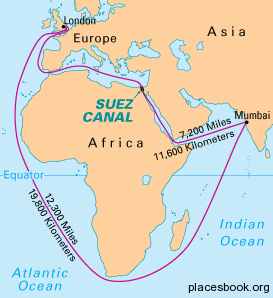
    • Shippers are considering alternative routes around Africa due to concerns about the Suez Canal’s reliability amid the Yemen conflict.
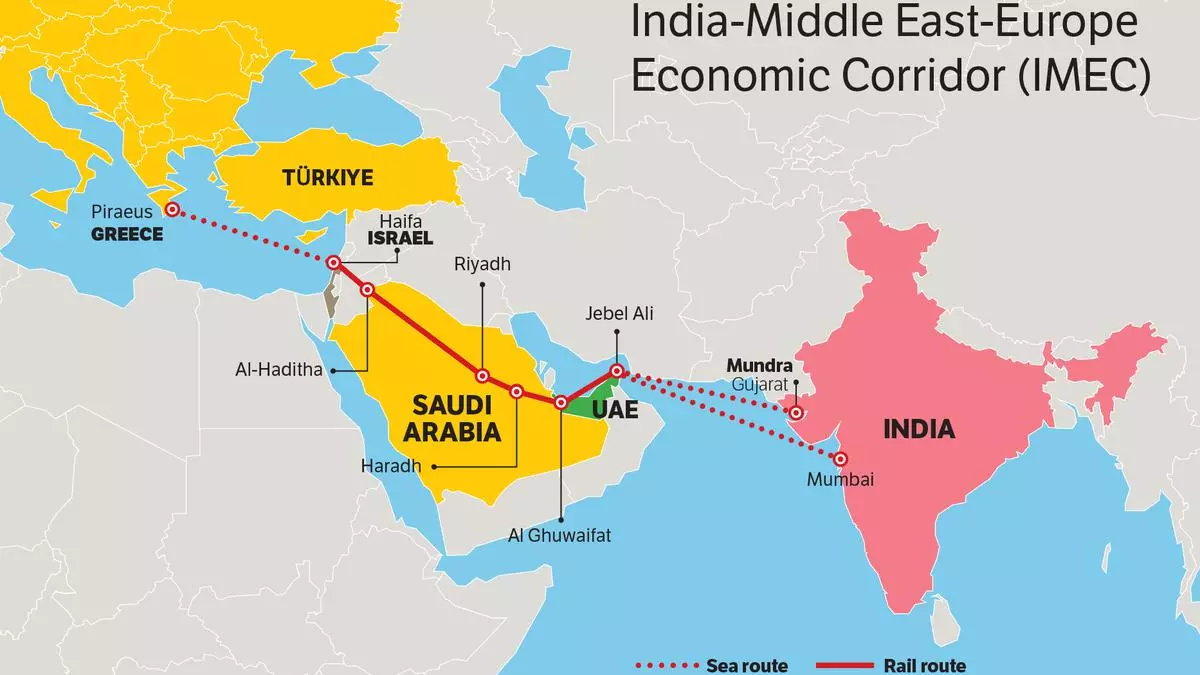
    • IMEC gains importance as a viable alternative, connecting Saudi Arabia to Israel and potentially transforming trade routes.
    • Challenges include geopolitical complexities, opposition from the Arab Street, and alternative proposals by countries like Turkey.
    • Existing rail projects in the Middle East, such as Etihad Rail and GCC Railway, align with IMEC’s objectives, targeting ports like Fujairah and Jebel Ali.
    • Hydrogen pipelines and containerization through rail and road are proposed components of IMEC, contributing to decarbonization and efficient trade.

    Key Challenges:

    • Geopolitical hurdles, especially after the Gaza war, may impact the implementation of IMEC.
    • Opposition from the Arab Street and concerns about major trade links between Saudi Arabia and Israel pose challenges.
    • Turkey’s proposed alternative route and its exclusion from IMEC could complicate regional dynamics.
    • The uncertain political landscape and potential changes in U.S. leadership raise questions about the project’s future.
    India-Middle East-Europe Economic Corridor: A passage of possibilities -  Frontline

    Key Terms/Phrases:

    • India-Middle East-Europe Economic Corridor (IMEC).
    • Suez Canal.
    • Yemen conflict.
    • Gaza war.
    • Geopolitics.
    • Containerization.
    • Hydrogen pipelines.
    • Rail freight corridors.
    • Decarbonization.
    • Strategic partnerships.

    Key Quotes:

    • “The Yemen conflict has seen an alarming erosion in the shipping industry’s confidence in the Suez Canal.”
    • “Critics of IMEC say the Arab Street would simply not allow any major trade link between Saudi Arabia and Israel.”
    • “Turkey, which has been explicitly left out of IMEC, has already been expressive about its irritation.”
    • “IMEC will be the sort of project that would sync with a business-focused Trump if he were to become President of the U.S. again.”

    Key Statements:

    • The Yemen conflict has raised concerns about the reliability of the Suez Canal, prompting consideration of alternative routes like IMEC.
    • Geopolitical challenges and opposition from the Arab Street may impact the realization of IMEC.
    • The exclusion of Turkey and uncertainties in U.S. leadership pose additional complexities for the project.

    Key Examples and References:

    • Etihad Rail and GCC Railway as existing rail projects aligning with IMEC.
    • The Gaza war’s impact on the potential meeting for stakeholders to flesh out IMEC details.
    • The Adani stake in Haifa port and its potential role in capacity expansion, drawing parallels with the Colombo deepwater container terminal.

    Key Facts/Data:

    • The India-Middle East-Europe Economic Corridor (IMEC) aims to connect Al Haditha in Saudi to Haifa in Israel.
    • Containerization through rail and road in IMEC is highlighted as a significant aspect for India’s trade goals.
    • IMEC promises to cut delivery schedules by 40%, emphasizing efficiency in trade.

    Critical Analysis:

    • The article critically evaluates the geopolitical challenges and potential impediments to the successful implementation of IMEC.
    • It discusses the impact of recent conflicts and political developments on the project’s feasibility.
    • The inclusion of hydrogen pipelines and containerization as components of IMEC is analyzed in the context of global trends and India’s logistics goals.

    Way Forward:

    • Advocate for addressing geopolitical hurdles and building consensus among stakeholders for IMEC.
    • Consider potential modifications to the project to accommodate geopolitical sensitivities, such as involving Turkey.
    • Emphasize the importance of IMEC in the context of global trade, decarbonization, and efficiency, especially with changing political landscapes.
    • Ensure that key stakeholders, including the U.S., European nations, and Saudi Arabia, remain committed to the project’s financing and implementation.
    • Explore opportunities for collaboration and financing models, drawing from successful templates like the United States International Development Finance Corporation funding for the Colombo deepwater container terminal.
  • Chabahar Port: India’s Gateway to Central Asia via Iran

    chabahar

    Introduction

    • External Affairs Minister S. Jaishankar’s recent visit to Iran featured crucial discussions with Iranian Minister of Roads and Urban Development, aiming to establish a long-term cooperation framework for the strategically vital Chabahar port.

    Chabahar Port: A Strategic Gem

    • Location: Chabahar Port is strategically positioned at the mouth of the Gulf of Oman in Iran.
    • Deepwater Port: It stands as Iran’s first deepwater port, holding a pivotal position on global oceanic trade routes.
    • Geographic Positioning: Situated west of Iran’s border with Pakistan, it competes with China’s Gwadar Port, located to the east.
    • Strategic Importance: Chabahar Port holds immense strategic importance for both Iran and India.
    • Mitigating Western Sanctions: It allows Iran to mitigate the impact of Western sanctions.
    • Alternative Trade Route: For India, it offers an alternative trade route, bypassing Pakistan’s restrictions on land access for trade with Afghanistan and Central Asia.

    India’s Engagement with Chabahar

    • Initiating Ties: India’s engagement with Chabahar dates back to 2002 when discussions commenced between Iranian and Indian officials.
    • Strategic Cooperation: A roadmap for strategic cooperation was signed during President Khatami’s 2003 visit to India, with Chabahar as a key project.
    • Counteracting BRI: The project gained prominence for India as it sought alternative trade routes amid China’s Belt and Road Initiative (BRI) and the development of Gwadar Port in Pakistan.
    • Access to Central Asia: Chabahar’s significance further escalated with India’s ambitions to access Central Asia and Russia.

    Development of Chabahar Port

    • Two Distinct Ports: Chabahar Port comprises two distinct ports: Shahid Beheshti and Shahid Kalantari.
    • Indian Investment: India’s primary investment is directed towards the Shahid Beheshti port.
    • Trilateral Agreement: In April 2016, India, Iran, and Afghanistan signed a trilateral agreement.
    • Rapid Development: India’s Shipping Ministry rapidly worked towards developing the port.
    • Operational Milestones: In December 2017, the first phase of Shahid Beheshti port was inaugurated, facilitating the movement of Indian wheat to Afghanistan.
    • IPGL’s Role: India Ports Global Limited (IPGL) played a pivotal role in the port’s operations.
    • Phased Expansion: The Shahid Beheshti port is undergoing development in four phases, ultimately reaching a capacity of 82 million tons per year with 32 jetties.

    Challenges and Delays

    • Geopolitical Hurdles: Geopolitical complexities, particularly Iran’s relationship with the US, have contributed to project delays.
    • US-Iran Relations: The fluctuating US-Iran relationship has posed challenges, especially after the US withdrew from the Joint Comprehensive Plan of Action (JCPOA) in 2018.
    • Sanctions Impact: India faced challenges in finding international suppliers under sanctions.
    • Afghanistan Dynamics: The situation in Afghanistan also affected India’s relations with Kabul but gradually improved.
    • Recent Developments: In 2022, India reopened its embassy in Kabul and allocated funds for the Chabahar port project.
    • Continued Wheat Exports: India plans to send 20,000 metric tonnes of wheat to Afghanistan through the port in 2023.

    Future Outlook

    • US-Iran Ties: The pace of Chabahar port development remains tied to US-Iran relations and regional dynamics.
    • Ongoing Challenges: Challenges include susceptibility to American sanctions, uncertainties in Afghanistan, and compatibility with the Belt and Road Initiative (BRI).
    • Strategic Diplomacy: Active diplomacy, efficient implementation, and operations are vital for overcoming these challenges and maintaining Chabahar’s status as a viable transit hub and a crucial link between Iran and India.
  • Explained: India-UAE Relations

    India-UAE Relations

    Introduction

    • PM Modi recently highlighted the strength of India-UAE relations at the Vibrant Gujarat Summit 2024.
    • Bilateral discussions were held with UAE President Sheikh Mohammed bin Zayed, who was the Chief Guest.

    India-UAE Relations: Historical Context

    India-UAE relations have seen significant milestones:

    • India-UAE CEPA: Effective since May 1, 2022, this agreement has slashed tariffs on over 80% of products, facilitating duty-free access for 90% of Indian exports to the UAE. Non-oil trade surged to $50 billion from May 2022 to April 2023, with a $100 billion target by 2030.
    • IMEC: The UAE is vital to the India-Middle East-Europe Economic Corridor (IMEC), offering an alternative to China’s Belt and Road Initiative.
    • I2U2 Group: Comprising India, UAE, Israel, and the U.S., this group promotes technological and private-sector cooperation in water, energy, and transportation.
    • Rupee-Dirham Agreement: The Reserve Bank of India and the Central Bank of the UAE have established a framework for using local currencies in cross-border transactions, reducing dependence on the U.S. Dollar.
    • Cultural Exchange: The UAE’s tolerance is evident with the construction of the BAPS Hindu Mandir in Abu Dhabi, the first temple of its kind.

    Significance of India-UAE Relations

    These relations hold immense strategic, political, economic, and cultural importance:

    [A] Strategic Significance:

    • Security Concerns: Amid conflicts in the Middle East, the India-UAE alliance enhances both nations’ security, including fighting piracy and terrorism.
    • Energy Security: The UAE is India’s sixth-largest crude oil exporter, playing a key role in India’s Strategic Petroleum Reserves Program.

    [B] Political Significance:

    • Multilateral Reforms: The UAE supports India in various international platforms.
    • Counterbalancing China’s Regional Dominance: India’s strengthened relations with the UAE help offset China’s growing presence in the region.
    • Engagement with Regional Alliances: Enhanced India-UAE relations could pave the way for India’s membership in organizations like the OIC and a free trade agreement with the GCC.

    [C] Economic Significance:

    • Remittances: The UAE is a major source of remittance inflows to India.
    • Trade and Investments: The UAE is India’s third-largest trade partner, with substantial investments in various sectors.
    • Access to the African Market: Relations with the UAE facilitate India’s entry into the African market.

    [D] Cultural Significance:

    • Safeguarding Indian Diaspora Interests: A robust relationship protects the interests of the large Indian expatriate community.
    • Boosting India’s Soft Power: Positive relations enhance India’s soft power in the Middle East.

    Challenges to India-UAE Relations

    • Trade Restrictions: The UAE’s Non-Tariff Barriers (NTBs), including SPS measures and TBT, have affected Indian exports, particularly in sectors like poultry and processed foods.
    • Chinese Economic Influence: China’s “Cheque Book Diplomacy” overshadows Indian enterprises in the UAE.
    • Kafala Labour System: Harsh conditions for immigrant laborers, passport confiscation, and delayed wages pose significant issues.
    • Financial Aid to Pakistan: Concerns arise due to the UAE’s substantial financial assistance to Pakistan.
    • Iran-Arab Dispute: Balancing ties with the UAE and Iran amid their conflict is a diplomatic challenge.

    Way Forward

    • Clarity in Non-Tariff Barriers (NTBs): Establish transparent NTB practices for smoother trade relations.
    • Comprehensive Strategic Dialogue: Initiate high-level dialogues to address strategic, defense, and political issues.
    • Harmonization with UAE’s ‘Vision 2021’: Collaborate in emerging sectors to reinforce economic ties.
    • Joint Ventures in Technology and Innovation: Encourage collaborations in cutting-edge technology.
    • Healthcare Cooperation: Collaborate in healthcare research and public health initiatives.
  • World Economic Forum (WEF) Summit at Davos

    Introduction

    • The World Economic Forum (WEF) has begun its annual summit in Davos, Switzerland.

    World Economic Forum (WEF)

    • Headquartered in Geneva, Switzerland, WEF is an international not-for-profit organization, focused on bringing the public and private sectors together to address the global political, social, and economic issues.
    • It was founded in 1971 by Swiss-German economist and Professor Klaus Schwab in a bid to promote global cooperation on these most pressing problems.
    • The first meeting of WEF was held more than five decades ago in Davos, which has been the home of the annual gathering almost ever since, also becoming the shorthand for the event.

    Purpose and Essence of the WEF

    • Bringing Stakeholders Together: The WEF gathers leaders from business, government, and civil society to address global challenges and brainstorm solutions.
    • Scope Expansion: Initially focusing on European firms catching up with US management practices, the WEF’s scope broadened to encompass economic and social issues.

    Annual Meeting in Davos

    • Membership: In 1975, the WEF introduced a membership system for the world’s top 1,000 companies.
    • Global Diplomacy: Davos serves as a backdrop for international diplomacy, offering leaders a conducive environment to defuse tensions and engage in critical discussions.
    • Historic Meetings: Notable meetings in Davos have included North and South Korea’s first ministerial-level talks and discussions on German reunification.
    • Birth of the G20: The idea for the G20, comprising 20 countries and initially focusing on global finance, emerged from discussions at the WEF in 1998.

    Funding and Davos’s Serene Environment

    • WEF Funding: The WEF is primarily funded by partnering corporations, typically global enterprises with annual turnover exceeding $5 billion.
    • Davos Setting: Davos’s tranquil surroundings provide an ideal backdrop for the WEF’s mission to foster a more prosperous global economy.

    Beyond Discussions: WEF’s Impact

    • Global Rankings: The WEF publishes influential global rankings and indices, such as the Global Competitiveness Report and the Global Gender Gap Report.
    • Significance: WEF Summit serves as a dynamic platform where leaders and stakeholders converge to address pressing global issues, fostering cooperation and innovation on a grand scale.
  • ICJ: Doing Justice without power

    Introduction

    About the International Court of Justice (ICJ)

    Details
    Role Principal judicial organ of the United Nations (UN).
    Establishment Established in June 1945 by the Charter of the United Nations, began work in April 1946.
    Predecessor Successor to the Permanent Court of International Justice (PCIJ) established by the League of Nations.
    Inaugural Sitting Held its first sitting at the Peace Palace in The Hague, Netherlands, in February 1922.
    Seat Located at the Peace Palace in The Hague, Netherlands.
    Jurisdiction ICJ’s jurisdiction requires consent from both parties involved in a dispute. Its judgment is final and binding.
    Judges Comprises 15 judges elected to nine-year terms by the UN General Assembly and Security Council.
    Official Languages  English and French.
    India’s Representation Four Indians have been members of the ICJ, including Justice Dalveer Bhandari, R S Pathak, Nagendra Singh, and Sir Benegal Rau.
    Notable Indian Cases at ICJ
    • Trial of Veer Savarkar (1910) for extradition to Britain from France at the Permanent Court of Arbitration (PCA)
    • Right of Passage over Indian Territory (Portugal v. India, culminated 1960).
    • Appeal Relating to the Jurisdiction of the ICAO Council (India v. Pakistan, culminated 1972).
    • Trial of Pakistani Prisoners of War (Pakistan v. India, culminated 1973).
    • Aerial Incident of 10 August 1999 (Pakistan v. India, culminated 2000).
    • Obligations concerning Negotiations relating to Cessation of the Nuclear Arms Race and to Nuclear Disarmament (Marshall Islands v. India, culminated 2016).
    • Kulbhushan Jadhav (India v. Pakistan, culminated 2019).

    Enforcement Challenges

    • Binding Rulings: ICJ decisions are legally binding, but they lack enforcement mechanisms, relying on the UN Security Council (UNSC) to enforce judgments.
    • Political Influence: Enforcement often falls victim to the politics of UNSC’s permanent members, as seen in potential vetoes by the US, Israel’s strong ally.

    Challenges to Efficacy

    • Non-Participation: Powerful states may refuse to participate in ICJ proceedings, making compliance difficult. For instance, Russia declined to submit to the court’s jurisdiction during Ukraine-Russia conflict hearings.
    • Bureaucratic Delays: The ICJ’s slow bureaucratic process leads to years-long trials and judgments, making justice delayed justice denied.

    ICJ’s Relevance

    • Expanding Jurisdiction: The ICJ now handles diverse international law areas, including human rights and environmental violations, furthering the participation of states through dispute settlement clauses.
    • Successful Reparations: The court’s rulings on reparations, such as Uganda’s payment to the Democratic Republic of the Congo, demonstrate its impact.
    • Advisory Role: The ICJ’s advisory opinions contribute to peaceful conflict resolution, as seen in its opinions on nuclear weapons and the Israeli-Palestinian wall.

    Niche Position

    • Amid New Courts: Despite the emergence of new international courts and tribunals, the ICJ maintains a unique place in international judicial adjudication.
    • Fragmentation Concerns: Coexisting courts raise concerns about potential contradictions in rulings and the fragmentation of international law.
    • Guardian of World Order: The ICJ serves as a last resort when diplomacy fails, safeguarding the interests of the World Court.

    Conclusion

    • The ICJ, with its rich history and evolving role in international law, faces challenges in enforcing its rulings and ensuring swift justice.
    • However, its expanding jurisdiction, successful reparations, and advisory role in peaceful conflict resolution demonstrate its continued relevance.
    • Striking a balance between centralization and decentralization in international judicial adjudication will be crucial to upholding the integrity of the World Court.
  • Social Media row between India and Maldives over Tourism

    maldives

    Introduction

    • Trigger: PM Modi’s social media posts promoting tourism in Lakshadweep led to a contentious exchange between Maldivian politicians, government officials, and Indian social media users.
    • Context: The posts highlighted Lakshadweep’s beauty but did not mention the Maldives or other island nations.
    • Maldivian Reaction: Following PM Modi’s posts, some Maldivian social media users, including government officials, responded with offensive and derogatory comments targeting Indians and the Prime Minister.

    Escalation of the Issue

    • Sensational Headlines: Local Maldivian news websites sensationalized the issue, falsely claiming that India was campaigning against Maldivian tourism.
    • Government Officials’ Involvement: High-ranking Maldivian officials engaged in the social media dispute, exacerbating the situation.

    Maldivian Social Media Campaign

    • #VisitMaldives Hashtag: In response to India’s promotion of Lakshadweep, Maldivian officials and supporters pushed the ‘#VisitMaldives’ hashtag, featuring local resorts and beaches.
    • Territorial Claims: Some Maldivian users falsely claimed that Lakshadweep is not Indian territory but belongs to the Maldives.

    Accusations Against India

    • Alleged Competition: Maldivian social media users accused India of trying to compete with the Maldives as a tropical vacation destination.
    • Racist Remarks: The posts led to a range of racist comments against Indians and Indian tourists.

    Maldives’ Dependency on Tourism

    • Significant Indian Tourist Numbers: Indians form a large group of tourists visiting the Maldives, with over 200,000 travelers in 2023.
    • Economic Impact: Tourism is crucial for the Maldives, accounting for over 28% of its GDP.

    Indian Response

    • Boycott Calls: Some Indian users called for a boycott of Maldivian hotels and resorts.
    • Highlighting Bilateral Cooperation: Others emphasized India’s assistance to the Maldives and aspects of bilateral cooperation.
    • Celebrity Support: Bollywood celebrities and Indian sportspersons initiated a ‘Visit Lakshadweep’ campaign in response to the controversy.

    Roots of Anti-India Sentiments

    • Historical Campaign: Anti-India sentiments have been present since the ‘India Out’ campaign, which started in 2020 and was promoted by former president Abdulla Yameen Abdul Gayyoom.
    • Muizzu Government’s Stance: The current Maldivian government, under President Mohamed Muizzu, has been fulfilling campaign promises, including withdrawing Indian military personnel from the Maldives.

    Criticism Within the Maldives

    • Opposition’s Stance: Not all in the Maldives support the government’s stance, with some politicians and diplomats criticizing the derogatory comments.
    • Lack of Diplomatic Experience: Critics argue that some government officials lack experience and understanding of diplomacy.

    Maldivian Government’s Reaction

    • Official Statement: The Maldives’ Ministry of Foreign Affairs issued a statement distancing the government from the derogatory remarks.
    • Cyber Attack Suspicions: Following the incident, several Maldivian government websites, including the foreign ministry, were suspected to be under cyber-attack.

    Conclusion

    • Surprise and Disappointment: The incident has surprised many in India and the Maldives, given the history of diplomatic support and cooperation.
    • Unlikely to Affect Relations: Analysts believe the conduct of a few individuals is unlikely to impact broader India-Maldives bilateral relations.
    • Need for Diplomatic Sensitivity: The episode underscores the importance of maintaining respectful and diplomatic communication between neighboring countries.
  • Suspending the Free Movement Regime: India’s Border Policy with Myanmar

    Free Movement Regime

    Central Idea

    • On January 2, the Indian government announced plans to scrap the Free Movement Regime (FMR) along the Myanmar border.
    • Residents in border areas, previously able to cross freely, will now require visas.

    About Free Movement Regime

    • Initiated in the 1970s, the FMR allowed people living within 16 km of the India-Myanmar border to travel up to 16 km into the other country without a visa.
    • India shares a 1,643 km-long border with Myanmar, which passes through the States of Arunachal Pradesh (520 km), Nagaland (215 km), Manipur (398 km), and Mizoram (510 km).
    • This regime recognized the deep-rooted familial and ethnic connections between communities on either side of the unfenced border.
    • The FMR was last revised in 2016, aligning with India’s Act East policy. However, it was suspended in Manipur since 2020 due to the COVID-19 pandemic.

    Reasons for the Policy Shift

    • Security and Illegal Activities: The FMR has been under scrutiny for facilitating illegal immigration, drug trafficking, and insurgency.
    • Refugee Influx Post-Coup: Following Myanmar’s military coup in February 2021, over 40,000 refugees entered Mizoram, and around 4,000 entered Manipur, exacerbating security concerns.
    • Local Government Stance: Manipur’s Chief Minister urged the Ministry of Home Affairs to cancel the FMR and complete border fencing, linking ethnic violence in the state to the free movement across the border.

    Implications of Scrapping the FMR

    • Impact on Local Communities: Ending the FMR could significantly affect the daily lives of border residents, who depend on cross-border access for various needs.
    • Cultural and Social Disruption: The policy change might strain the cultural and social fabric of communities with shared ethnicities across the border.

    Way forward

    • Border Fencing: The government plans to fence about 300 km of the border, with a tender expected soon.
    • Regulatory Revisions: Experts suggest refining the FMR to better regulate movement while maintaining cross-border ties.
    • Infrastructure and Trade: Enhancing infrastructure and formalizing trade at designated entry points could mitigate some negative impacts.
    • Community Engagement: Involving border communities in decision-making is crucial for effective and sensitive border management.

    Conclusion

    • Balancing Security and Community Needs: The decision to end the FMR requires a nuanced approach that considers both national security and the rights of border communities.
    • Diplomatic Engagement: Strengthening diplomatic relations with Myanmar is key to managing this transition effectively.
    • Future Challenges: As India navigates this policy change, it faces the challenge of securing its borders while respecting the socio-economic realities of border populations.
  • Genocide Convention invoked in Israel-Palestinian War

    Central Idea

    • South Africa has petitioned the International Court of Justice (ICJ) to declare Israel in breach of the 1948 Genocide Convention.

    Genocide Convention, 1948

    Details
    Full Name Convention on the Prevention and Punishment of the Crime of Genocide
    Adoption Date December 9, 1948
    Primary Aim To prevent and punish the crime of genocide
    Definition of Genocide Acts committed with intent to destroy, in whole or in part, a national, ethnical, racial, or religious group
    Key Provisions Includes killing or causing harm to members of a group, deliberately inflicting destructive conditions, imposing measures to prevent births, and forcibly transferring children
    Punishable Acts Genocide, conspiracy, incitement, attempt, and complicity in genocide
    Implementation and Enforcement States must enact legislation to give effect to the Convention’s provisions and provide penalties for perpetrators;

    Genocide recognized as a crime under international law

    Historical Context Created post-Holocaust and World War II as a global commitment against atrocities
    Legal Framework Impact Established legal basis for defining and prosecuting genocide, influencing international criminal law
    India’s Involvement Ratified by India on August 27, 1959;

    Principles incorporated into India’s domestic legal system

    South Africa’s Stance and Actions

    • Preventive Obligation: Following its application to the ICJ, South Africa stated its obligation to prevent genocide, seeking urgent provisional measures to halt violence in Gaza.
    • Israel’s Response: Israel has strongly condemned South Africa’s accusations, terming them as “blood libel.”
    • Potential Impact of ICJ Ruling: Even if the ICJ issues provisional measures, Israel, like Russia in the Ukraine case, may choose to ignore them.

    Historical Roots of South Africa’s Position

    • Longstanding Criticism of Israel: South Africa has a history of criticizing Israel, including suspending diplomatic relations and expressing solidarity with Palestine.
    • Colonialism and Empathy for Palestine: South Africa’s own history of colonialism and apartheid has fostered empathy towards the Palestinian cause.
    • Influential Figures: Leaders like Nelson Mandela have historically supported Palestinian rights.
    • Resistance to Western Influence: South Africa’s stance is partly influenced by a desire to resist Western-dominated worldviews, evident in its approach to global issues like the Russia-Ukraine conflict.

    Economic and Political Considerations

    • Trade Relations with Israel: Despite being Israel’s largest African trading partner, South Africa has maintained its support for Palestine.
    • Shift in African Nations’ Stance: While many African countries have softened their stance towards Israel, South Africa remains steadfast due to the ANC’s anti-discrimination roots and resistance to Western hegemony.

    Conclusion

    • Balancing Trade and Ideology: South Africa’s actions reflect a complex interplay of historical empathy, political ideology, and economic considerations in its foreign policy.
    • Global Implications: This move at the ICJ underscores the ongoing tensions in international relations, particularly in the context of the Israeli-Palestinian conflict and broader geopolitical dynamics.