💥Join UPSC 2027,2028 Mentorship (July Batch) + XFactor Notes & Microthemes PDF

GS Paper: GS3-19.Disaster and Disaster Management.

  • Lightning not a Natural Disaster: Centre

    light

    Central Idea

    • A senior government official stated that lightning deaths can be prevented through education and awareness, and thus, the government is against declaring it a natural disaster.

    Why discuss this?

    • State Demands: States like Bihar and West Bengal have requested that lightning-related deaths be considered natural disaster, making victims eligible for compensation from the State Disaster Response Fund (SDRF).
    • Increased fatalities: According to the National Crime Records Bureau, lightning caused 2,880 deaths in 2021, accounting for 40% of all accidental deaths from “forces of nature.”

    What is Lightning?

    Lightning is a rapid and powerful discharge of electricity in the atmosphere, often directed towards the Earth.

    • Genesis: Lightning discharges occur in giant, moisture-bearing clouds that are several kilometers tall.
    • Ice Crystal Formation: Water vapor in the clouds condenses into small ice crystals as temperatures drop below 0°C.
    • Electron Release and Collision: Collisions between ice crystals generate a release of electrons, leading to a chain reaction and the formation of a positive and negative charge within the cloud.
    • Types: Lightning can occur within clouds (inter-cloud and intra-cloud) or between the cloud and the ground (cloud-to-ground).

    Intensity of Lightning Strikes

    • Voltage and Amperage: A typical lightning flash can reach around 300 million volts and 30,000 amps, significantly higher than household current.
    • Comparisons: Household current is 120 volts and 15 amps, highlighting the immense power of lightning.

    Mitigating Lightning Incidents

    • Early Warning System: India has established an early warning system for lightning, saving numerous lives.
    • Focus on Rural Areas: Over 96% of lightning deaths occur in rural areas, necessitating mitigation and awareness programs targeted at these communities.
    • Deployment of Protection Devices: Low-cost lightning protection devices need to be deployed more widely, especially in rural areas.
    • Lightning Action Plans: States are encouraged to develop and implement lightning action plans, similar to heat action plans, to mitigate lightning-related risks.
    • International Centre for Excellence: Efforts are underway to establish an international center for excellence in lightning research to enhance detection and early warning systems.


  • Monsoon havoc in India: How floods can be a valuable resource

    floods

    What is the news?

    • The monsoon season in India this year brought about unprecedented changes, with Mumbai and New Delhi experiencing the onset of rains on the same day after a gap of 61 years.

    ” Floods are acts of God but flood losses are largely acts of man”

    Central idea

    • The events of heavy rainfall and subsequent flooding are occurring in various parts of India leading to significant loss of lives, damage to land, and financial losses. This highlighting the inadequacy of India’s hydro-infrastructure for effective flood management and calls for a shift in mindset towards conserving flood flows as a valuable resource

    Floods in India: A recurring challenge

    • Frequency: India experiences floods on a recurring basis, with at least one major flood event occurring each year. This indicates that floods are not isolated incidents but rather a consistent challenge.
    • Loss of Lives: Floods in India lead to the loss of lives, with an average of 1,600 lives being lost annually, according to the National Disaster Management Authority. The loss of human lives highlights the severity and recurring nature of the flood challenge.
    • Damage to Land: Floods affect a significant area of land in India, impacting approximately 75 lakh hectares. This demonstrates the recurrent impact of floods on agricultural land, leading to crop damage and agricultural losses.
    • Financial Losses: Floods in India cause substantial financial losses, with damages estimated at Rs 1,805 crore. These losses encompass damages to crops, houses, and public utilities, further highlighting the recurring challenge and the need for effective management strategies.

    Flood management measures

    Structural Measures:

    • Storage Reservoirs: These reservoirs are constructed to store excess water during high-flow periods and release it gradually, reducing flood peaks. They also serve as a water source for irrigation, electricity generation, and other purposes.
    • Embankments: These structures, also known as levees, act as barriers to prevent floodwaters from encroaching on vulnerable areas such as agricultural lands, cities, and industries.
    • Diversions: This measure involves redirecting excess water away from heavily populated or susceptible areas to less vulnerable regions, helping to minimize the impact of flooding.

    Non-Structural Measures:

    • Flood Forecasting and Warning Systems: These systems use data analysis, weather monitoring, and hydrological modeling to provide advance warnings about potential flood events. They enable timely evacuation of people and movable assets, reducing the risk to life and property.
    • Flood Plain Zoning: This measure involves regulating the use of floodplains by restricting human activities and developments in flood-prone areas. By delineating zones based on flood risk, it helps minimize vulnerability and losses associated with floods.

    How floods can be a valuable resource?

    • Water Storage: Floods can serve as a valuable resource for water storage. By conserving and capturing floodwaters, the excess water can be stored in reservoirs or other storage facilities. This stored water can then be used for various purposes during dry periods, including irrigation, drinking water supply, and industrial needs.
    • Drought Mitigation: Conserving flood flows can help mitigate the impact of droughts. By storing excess floodwaters, the saved water can be utilized to partially address water scarcity during drought periods, providing relief to agriculture, communities, and ecosystems that rely on water availability.
    • Groundwater Recharge: Floods contribute to the replenishment of groundwater aquifers. The infiltration of floodwaters into the soil helps recharge underground water reserves, ensuring a sustained supply of groundwater for various uses even after the flood event subsides.
    • Ecological Benefits: Floods support ecosystems and promote biodiversity. The article mentions that floods bring essential nutrients, sediments, and organic matter to wetlands and riverine habitats, which nourish the ecosystems and support diverse flora and fauna.
    • Hydropower Generation: Controlled release of floodwaters can be harnessed for hydropower generation. By utilizing the energy of flowing water, floods can be a valuable resource for producing renewable energy through hydropower projects

    Why India needs to upgrade its hydro-infrastructure?

    • Inadequate Infrastructure: India’s hydro-infrastructure is currently inadequate for effective flood management. The existing infrastructure, such as storage reservoirs, embankments, and diversions, is not sufficient to address the challenges posed by floods.
    • Insufficient Storage Space: The storage space created in major river basins, such as the Ganga and the Brahmaputra, is inadequate for the available flows. This indicates a need to enhance storage capacity to effectively manage floodwaters and maximize their utilization.
    • Managing Variabilities: With changing rainfall patterns and intensities due to climate change, the variability of water flows in rivers will increase. Upgrading the hydro-infrastructure is seen as crucial to effectively manage these increasing variabilities and address the resulting challenges of floods and droughts.
    • Conservation of Flood Flows: The potential value of conserving flood flows for drought mitigation. Upgrading the hydro-infrastructure would enable the conservation of unutilized flood flows, which can then be stored and utilized during dry periods to partially mitigate droughts.
    • Water Security and Resilience: Upgrading the hydro-infrastructure is important for ensuring water security and resilience. It allows for improved water management, including storage, distribution, and utilization, which can reduce dependence on erratic monsoon patterns and enhance the country’s ability to cope with water-related challenges.
    • Environmental Considerations: An upgraded hydro-infrastructure should incorporate environmental considerations. This includes preserving ecological flows, minimizing disruptions to ecosystems, and promoting sustainable water management practices.

    Way forward: Towards comprehensive flood management

    • Shift in Focus: Shifting attention and efforts from flood control to flood management. This involves adopting a comprehensive approach that encompasses structural and non-structural measures, as well as integrating environmental considerations.
    • Upgrading Hydro-Infrastructure: Upgrading the existing hydro-infrastructure includes increasing storage capacity, improving embankments, and constructing new reservoirs. Upgrades should address the inadequacies of the current infrastructure and consider the potential for conserving flood flows.
    • Conserving Flood Flows: By safely storing and utilizing excess floodwaters, damages caused by floods can be reduced, and the saved water can be utilized to partially mitigate droughts. This requires the development of storage facilities and infrastructure to capture and store floodwaters during high-flow periods.
    • Integrated Approach: There is need for an integrated approach to flood management. This involves combining structural measures with non-structural measures such as flood forecasting, warning systems, and floodplain zoning. Integration should also consider environmental considerations and the preservation of ecological flows.
    • Learning from International Experiences: Learning from international experiences in flood management. This includes evaluating the performance of flood control measures, studying integrated approaches, and understanding how other countries have balanced flood management objectives with environmental concerns.
    • Community Engagement and Awareness: Raising awareness about flood risks, promoting community preparedness, and involving local communities in early warning systems and evacuation plans.
    • Policy and Governance: There is need for robust policies and governance mechanisms to support comprehensive flood management. This includes incorporating climate change adaptation strategies, promoting multi-stakeholder collaboration, and ensuring environmental safeguards.
    • Investment and Resource Allocation: Allocating adequate resources and funding for flood management initiatives. This involves securing financial support for infrastructure upgrades, research and development, capacity building, and community resilience programs.

    Conclusion

    • It is imperative for India to recognize flood flows as a valuable resource and implement measures that conserve water for subsequent use and water security. By adopting a comprehensive approach, upgrading hydro-infrastructure, and leveraging a mix of structural and non-structural measures, India can effectively mitigate the impacts of floods while ensuring sustainable water management for the future.

    Also read:

    The lesson from a monsoon-battered North India: Time to be prepared

  • The lesson from a monsoon-battered North India: Time to be prepared

    monsoon

    What is the news?

    • Last weekend, parts of North India witnessed heavy rains that triggered flash floods and left a trail of destruction, tragically it resulted in at least 50 reported deaths. Himachal Pradesh was the worst affected. Several places in Haryana, Punjab and Himachal Pradesh reported record rainfall.

    Central idea

    • Last weekend, North India faced a calamity as torrential rains triggered flash floods and wreaked havoc across the region. Understanding the factors that led to this catastrophe is crucial in developing effective strategies to mitigate the impact of such extreme weather events in the future.

    Fundamental characteristics of monsoon rainfall in the region

    • Concentrated Timeframe: Monsoon rainfall in the region is not evenly distributed throughout the year. Instead, it occurs within a specific timeframe. All the seasonal rainfall (about 80-100 cm) falls within 130-150 hours, which is a relatively short period.
    • Heavy Rain Contribution: The heavy rains play a significant role in contributing to the overall seasonal precipitation. Half of the seasonal rainfall (40-50 cm) occurs in only 30-40 hours.
    • Runoff: When heavy rains occur, most of the rainwater drains away as runoff, particularly when the soil is already wet. This indicates that a substantial amount of rainfall does not get absorbed into the ground but flows off as surface runoff.

    Factors attributed to the Heavy Downpour in north India

    • Active Monsoon and Moisture Influx: An active monsoon season with strong winds in the lower air layers brought in moisture from the Bay of Bengal and the Arabian Sea. These moisture-laden winds contributed to the heavy rainfall in the region.
    • Atmospheric Forcing and Eastward Moving Troughs: Large-scale atmospheric forcing, in the form of outflows in the upper layers of the atmosphere, moved eastward through mid-latitude troughs. These troughs directed the flow of moisture towards the Himalayan region, exacerbating the intensity of the rainfall.
    • Orographic Uplift and Steep Terrain: The steep terrain of the Himalayas, combined with orographic uplift, played a significant role in intensifying the precipitation. When air masses encounter the mountains, they are forced to rise, resulting in enhanced rainfall.
    • Synoptic Conditions and Moisture Intrusion: The synoptic conditions during the period were conducive to heavy rainfall. The monsoon was active, with strong moist easterly winds entering the region. Additionally, there was moisture intrusion from the North Arabian Sea, further augmenting the rainfall.

    Increasing Trend of Extreme Rainfall

    • Tripled Number of Extreme Rainfall Events: Recent studies indicate that the number of extreme rainfall events, defined as rainfall exceeding 15 cm in 24 hours, has tripled in many parts of the country.
    • Prolonged Duration of Rainstorms: The duration of rainstorms has also tripled, indicating that rainfall events are lasting longer, potentially leading to higher rainfall accumulation.
    • Decreased Number of Rainy Days and Hours: The total number of rainy days and hours during the monsoon season has decreased. This means that when it does rain, it tends to be in the form of heavy downpours rather than spread out over more frequent but lighter rainfall events.
    • Regional Variation: Central India has been particularly affected by the increasing trend of extreme rainfall events, with a significant rise in both frequency and intensity.
    • Himalayan Region Prone to Extreme Rainfall: The Himalayan region, with its complex topography and varied weather patterns, is prone to extreme rainfall events. Studies indicate that 65 percent of areas in the region show a positive trend in the frequency of daily rainfall extremes.

    Impact of Arctic Warming on Monsoon Climate

    • Increased Frequency of Blocking Highs and Mid-latitude Troughs: Arctic warming has been observed to influence the monsoon climate through changes in mid-latitude circulation. As the Arctic warms and sea ice recedes, there is growing evidence of an increased frequency of blocking highs and deep mid-latitude troughs. These atmospheric patterns can affect weather systems and contribute to extreme rainfall events during the monsoon season.
    • Influence on Circulation Patterns: Observations and models suggest that Arctic warming can alter circulation patterns, including the movement of air masses, pressure systems, and wind patterns. These changes can have cascading effects on the monsoon climate, including the transport of moisture and atmospheric conditions that contribute to heavy rainfall events.
    • Impact on Monsoon Dynamics: The warming of the Arctic and subsequent changes in circulation patterns can affect the dynamics of the monsoon. This can lead to shifts in moisture inflow, atmospheric stability, and the timing and intensity of rainfall during the monsoon season.
    • Potential for Future Changes: As Arctic warming continues; it is expected that the impacts on the monsoon climate will persist and potentially intensify. This suggests that the influence of Arctic warming on the monsoon may contribute to further changes in extreme precipitation patterns and associated impacts in the future.

    Way forward: Mitigation Strategies for Flooding

    • Robust Early Warning System: Implement a comprehensive early warning system that utilizes meteorological observations, including Doppler weather radar and high-resolution numerical weather prediction models. Advanced technologies like artificial intelligence and machine learning can aid in interpreting the data, enhancing the accuracy and timeliness of alerts.
    • Continuous Monitoring and Flood Warning Systems: Continuously monitor rainfall patterns, river levels, and deploy an advanced flood warning system. This integrated approach allows for timely response and evacuation plans to safeguard vulnerable communities.
    • Flood Risk Maps: Develop flood risk maps incorporating topography, historical flood data, and hydrological modeling. These maps can identify high-risk zones and guide targeted actions to enhance preparedness and resilience.
    • Climate-Resilient Infrastructure: Improve and maintain climate-resilient infrastructure, including robust drainage systems and channels, to prevent waterlogging and minimize flood damage.
    • Land Use Planning and Zoning Regulations: Implement effective land use planning and zoning regulations, designating flash flood-prone areas as non-residential or restricted zones to mitigate potential risks.
    • Protection and Restoration of Natural Ecosystems: Prioritize the protection and restoration of natural ecosystems such as forests and wetlands. These natural buffers can absorb rainfall and reduce runoff, mitigating the intensity of floods.
    • Public Awareness Campaigns: Conduct widespread awareness campaigns to educate individuals on flood response and preparedness. Encourage actions such as evacuation planning, first aid knowledge, and reliance on credible sources of information during emergencies

    Conclusion

    • Recognizing the escalating threat of extreme precipitation events and implementing proactive measures are pivotal in improving India’s resilience to climate-induced disasters. Building resilience is crucial to safeguarding vulnerable communities and ensuring a sustainable future for the nation.

    Also read:

    [Burning issue] Urban Floods in India

  • Urban Deluge due to rising Yamuna Level in Delhi

    yamuna flood

    Central Idea

    • The Yamuna River in Delhi is experiencing it’s highest-ever water levels, causing concerns and necessitating emergency actions.
    • Heavy rainfall in northwest India, including the Yamuna basin states, and increased water release from the upstream Hathnikund Barrage in Haryana are contributing to the unprecedented water levels.

    Unprecedented Water Levels and Emergency Response

    • Delhi’s Yamuna River is currently flowing at the highest-ever recorded level in the city.
    • Delhi CM has written to Union Home Minister, requesting controlled water release from the Hathnikund Barrage to manage the situation.
    • The water release from the barrage, typically around 352 cusecs during non-monsoon months, reached a peak of 3.59 lakh cusecs due to heavy rainfall in northwest India.

    Importance of Water Release

    • Impact of Upstream Water Release: The water level in the Yamuna River in Delhi is determined by the release of water upstream from the Hathnikund Barrage.
    • Regulation of Water Flow: The barrage acts as a regulator and can only control the amount of water released downstream and to canals.
    • Flooding Concerns: Failure to release water from the upstream can lead to increased flooding in areas upstream, including Haryana.

    Potential Consequences of Water Accumulation

    • Increased Flooding: Failure to regulate the water levels in the Yamuna River can result in severe flooding in Delhi and surrounding areas.
    • Infrastructure Damage: High water levels pose a risk to infrastructure, including roads, buildings, and public utilities.
    • Displacement of Residents: Excessive flooding can force people to evacuate their homes, leading to displacement and potential humanitarian challenges.

    Addressing the Emergency

    • Controlled Water Release: Controlled water release from the Hathnikund Barrage can mitigate the flooding risks.
    • Collaboration and Coordination: Cooperation between Delhi and Haryana authorities, as well as with central government agencies, is essential to manage the situation effectively.
    • Monitoring and Emergency Preparedness: Continuous monitoring of water levels, timely communication, and preparedness to handle any evacuation or relief efforts are crucial during this emergency situation.

    Conclusion

    • The unprecedented water levels in the Yamuna River in Delhi demand immediate attention and coordinated efforts to prevent further damage and protect affected communities.

    Also read:

    [Sansad TV] Perspective: Urban Deluge (Floods)

  • Strengthening Disaster Risk Reduction: G20’s Role and Priorities

    Central Idea

    • The G20 nations, representing a population of 4.7 billion people, are exposed to significant risks from natural disasters and face substantial vulnerabilities. In the World Risk Index, four G20 countries are among the top 10 most vulnerable nations. The economic impact of disasters in the G20 countries alone amounts to an estimated annual average loss of $218 billion. It is imperative to prioritize disaster risk reduction measures to mitigate these losses and protect development gains.

    G20’s Role in Driving Global Goals

    • Platform for International Cooperation: The G20 provides a platform for international cooperation and collaboration among the world’s major economies. It brings together leaders from diverse nations to discuss global challenges, share best practices, and coordinate efforts to address common goals.
    • Influence and Economic Power: The G20 nations represent a significant share of the global economy, accounting for approximately 85% of global GDP and two-thirds of the world’s population. Their collective influence and economic power give them the capacity to drive global initiatives and mobilize resources to address pressing issues.
    • Promoting Policy Coherence: The G20 promotes policy coherence by fostering dialogue and coordination among its member nations. Through discussions, agreements, and joint statements, the G20 seeks to align policies and actions to address global challenges, including those related to disaster risk reduction.
    • Innovative Financing Mechanisms: The G20 has the ability to explore and promote innovative financing mechanisms for global goals. This includes mobilizing financial resources from governments, multilateral institutions, capital markets, insurance companies, philanthropies, and communities. By maximizing the impact of financial resources, the G20 can support initiatives related to disaster risk reduction and other priority areas.
    • Advancing International Frameworks and Agreements: The G20 plays a vital role in advancing international frameworks and agreements related to disaster risk reduction. For instance, the G20 can support the implementation of the Sendai Framework for Disaster Risk Reduction, which provides a global roadmap for reducing disaster risks and enhancing resilience.
    • Sharing Best Practices and Lessons Learned: Through the G20 platform, member countries can share best practices, experiences, and lessons learned in disaster risk reduction. This exchange of knowledge and expertise contributes to the development of effective strategies, policies, and approaches that can be replicated and scaled up globally.
    • Driving Innovation and Research: The G20 can drive innovation and research by promoting investment in research and development related to disaster risk reduction. This includes supporting scientific advancements, technological innovations, and data-driven approaches that enhance understanding, preparedness, and response to disasters.
    • Influencing Global Agendas: As major economies, the G20 nations have significant influence on global agendas. By prioritizing and advocating for specific issues, such as disaster risk reduction, the G20 can shape global discourse, policies, and actions, mobilizing international attention and resources towards addressing these challenges

    The vulnerability of G20 countries to disasters

    • Geographic Location: Several G20 countries are located in regions prone to specific hazards. For instance, countries like Japan, Indonesia, Mexico, and Turkey are situated in seismically active zones, making them vulnerable to earthquakes and tsunamis. Coastal nations, including the United States, China, India, Brazil, and Australia, face the risks of tropical cyclones, storm surges, and coastal flooding.
    • Climate Extremes: G20 countries experience a wide range of climate-related hazards. For instance, Canada and Russia face risks associated with extreme cold, while Australia and Brazil are susceptible to wildfires and droughts. Heatwaves and heavy rainfall leading to floods pose significant risks in countries like India, Germany, and South Korea.
    • Population Density: Several G20 countries have high population densities, increasing their vulnerability to disasters. The concentration of people and infrastructure in urban areas amplifies the potential impacts of hazards such as earthquakes, floods, and storms. Cities like Tokyo, Mexico City, Mumbai, Istanbul, and Shanghai face unique challenges due to their large populations and exposure to multiple hazards.
    • Infrastructure and Urbanization: Rapid urbanization and inadequate infrastructure planning can exacerbate vulnerability to disasters. Poorly constructed buildings, inadequate drainage systems, and improper land use practices can heighten the impacts of hazards. G20 countries with rapid urban growth, such as China and India, face challenges related to resilient urban development.
    • Socioeconomic Factors: Socioeconomic factors such as poverty, inequality, and limited access to resources can increase vulnerability to disasters. Countries with significant disparities in wealth distribution, such as India, Brazil, and South Africa, often face challenges in adequately addressing disaster risks and providing timely response and recovery.
    • Environmental Degradation: G20 countries also grapple with environmental degradation, which can exacerbate vulnerability to disasters. Deforestation, soil erosion, and loss of wetlands and natural buffers diminish the ability of ecosystems to mitigate and absorb the impacts of hazards. This is particularly relevant for countries like Brazil, Indonesia, and Russia, which are home to ecologically sensitive regions

    India’s Leadership in Disaster Risk Reduction (DRR)

    • Initiating a New Workstream in G20: India has taken a proactive step by initiating a new workstream within the G20 focused on disaster risk reduction. This highlights India’s recognition of the importance of international collaboration and concerted efforts to address disaster risks at a global level.
    • Five Priorities Outlined in the Working Group: In the first meeting of the G20 working group on disaster risk reduction, India put forth five priorities to guide the group’s efforts. These priorities include universal coverage of early warning systems, emphasis on disaster and climate-resilient infrastructure, improving financing frameworks, enhancing response capabilities, and applying ecosystem-based approaches to disaster risk.
    • Transforming Disaster Financing: India has spearheaded efforts to transform the way governments finance disaster risk reduction. Recognizing the limitations of traditional budget allocations, India has explored innovative financing tools and mechanisms. This includes creating reserve funds, dedicated lines of credit, and leveraging global resources to support disaster-resilient infrastructure development.
    • Targeted Efforts to Reduce Losses: India has made targeted efforts to reduce losses from disasters through comprehensive risk management strategies. By focusing on areas such as flood risk management, India has implemented measures to minimize the impacts of extreme weather conditions, protect lives, and enhance disaster preparedness.
    • Coalition for Disaster Resilient Infrastructure (CDRI): India and the United States currently co-chair the Coalition for Disaster Resilient Infrastructure. The CDRI aims to promote investments in resilient infrastructure and foster international collaboration to enhance disaster resilience globally. India’s leadership in this coalition reflects its commitment to driving resilience-building efforts.
    • Implementation of Sendai Framework: India has aligned its disaster risk reduction efforts with the Sendai Framework, a global framework for DRR. The 10-point agenda outlined by India’s Prime Minister after the adoption of the Sendai Framework guides the country in the implementation of comprehensive DRR strategies.

    Key Themes for Future Action

    • Reimagining Financing for Disaster Risk Reduction: Explore innovative financing tools, including reserve funds, dedicated lines of credit, and global resource mobilization. While green financing has gained momentum, greater attention should be given to disaster risk financing, especially for countries like India with increasing capital expenditure.
    • Differential Strategies for Extensive and Intensive Risks: Develop targeted approaches to reduce losses from frequent but moderate impact events (extensive risks) such as heatwaves, lightning, floods, and landslides. These events accumulate significant losses and necessitate specific risk reduction measures.
    • Convergence of Disaster Risk Reduction and Climate Change Adaptation: Integrate efforts to address both disaster risk reduction and climate change adaptation. Analytical and implementation capacities for disaster risk reduction should support climate change adaptation, ensuring synergies between flood management structures and adaptation efforts.
    • Priority Access to Early Warning Systems: Early warning systems, such as cyclone early warnings, should be treated as global public goods, accessible to all populations irrespective of their economic strength. The G20 can lead by example, setting up mechanisms to ensure universal access to early warning systems in line with the UN Secretary General’s initiative.
    • Multi-tiered and Multi-sectoral Effort: Disaster risk reduction requires an integrated approach across levels and sectors. Integration from local to global levels and horizontal collaboration across sectors will enhance readiness to manage unknown risks, considering the interlinkages and interdependence of the world

    Need for Convergence of Disaster Risk Reduction and Climate Change Adaptation

    • Shared Risks and Drivers: Both DRR and CCA address risks associated with natural hazards and climate change impacts. Disasters are often exacerbated by climate change, while climate change can intensify the frequency and severity of disasters. Converging efforts allows for a comprehensive and integrated approach to address these shared risks and underlying drivers.
    • Synergies in Solutions: DRR and CCA strategies share common elements and can leverage synergies in their solutions. For example, building disaster-resilient infrastructure can contribute to climate change adaptation by considering future climate scenarios. Similarly, nature-based solutions, such as protecting and restoring ecosystems, can provide benefits for both disaster risk reduction and climate resilience.
    • Efficiency and Resource Optimization: Converging DRR and CCA efforts allows for the efficient use of resources, avoiding duplication and maximizing the effectiveness of interventions. Instead of implementing separate and parallel initiatives, integrated approaches can streamline efforts, optimize funding, and improve overall outcomes.
    • Integrated Risk Management: Combining DRR and CCA enables a holistic approach to risk management. By integrating climate projections, vulnerability assessments, and disaster risk assessments, decision-makers can develop comprehensive risk management strategies that address both current and future risks.
    • Co-benefits for Sustainable Development: Integrating DRR and CCA contributes to sustainable development goals. By reducing disaster risks and enhancing climate resilience, communities can protect livelihoods, preserve ecosystems, ensure food security, and promote social well-being. This integrated approach aligns with the broader agenda of sustainable development.
    • Policy and Institutional Integration: Convergence of DRR and CCA necessitates policy coherence and institutional coordination. Aligning strategies, frameworks, and institutions responsible for DRR and CCA facilitates better integration of risk reduction and adaptation measures. This coordination strengthens governance structures and enhances implementation effectiveness.
    • Adaptive Capacity Building: Addressing the interconnected challenges of disasters and climate change requires enhancing adaptive capacities at various levels. By combining efforts, stakeholders can work collaboratively to build capacities for disaster response, early warning systems, community engagement, and climate-resilient practices, thereby enhancing overall resilience.

    Conclusion

    • Disaster preparedness has been a priority of India for last few years. India has taken significant steps in transforming disaster risk reduction financing and targeted loss reduction efforts. Chairing the Coalition for Disaster Resilient Infrastructure alongside the United States, India’s commitment to disaster preparedness is reflected in the creation of a new workstream under the G20. By leveraging their economic power, promoting policy coherence, and fostering international cooperation, the G20 can contribute to building a safer, more resilient, and sustainable world.

    Also read:

    India’s G20 Presidency and Disaster Risk Management


  • India’s G20 Presidency and Disaster Risk Management

    Central Idea

    • The endorsement of a new working group on disaster risk reduction by the G20, under India’s presidency, presents an opportunity to prioritize disaster risk financing and achieve the targets set by the Sendai framework for 2030. The increasing occurrence of natural and human-made catastrophes globally has highlighted the need for competent financial risk management and insurance.

    The Need for Disaster Risk Financing

    • Recent years have witnessed a surge in both natural and human-made catastrophes worldwide. Disasters not only exacerbate poverty and hinder development but also generate social polarization.
    • Lack of competent financial risk management and insurance has allowed risks to proliferate, causing havoc in society and the economy. Annual disaster losses have a significant impact on low-income economies

    The Role of the G20 in Strengthening Financial Risk Management

    • Enhancing Risk Understanding and Integration: The G20 can support countries in enhancing their understanding of disaster risks and integrating them into government planning and budget processes. This includes promoting the development and dissemination of risk assessment tools, methodologies, and best practices.
    • Strengthening Regulation and Supervision in the Insurance Industry: Effective regulation, legislation, and supervision are crucial for the insurance industry to play a proactive role in managing disaster risks. The G20 can facilitate dialogue and cooperation among regulators and policymakers to establish robust frameworks that ensure fair and transparent insurance practices
    • Facilitating Public-Private Partnerships: Public-private partnerships are essential for managing and financing disaster risks effectively. The G20 can foster an enabling environment for partnerships between governments, private sector entities, and financial institutions.
    • Shifting from Ex-post to Ex-ante Financing Mechanisms: Traditionally, financial resources for disaster response, recovery, and reconstruction have been mobilized after an event occurs (ex-post financing). The G20 can advocate for a shift towards ex-ante financing mechanisms, where financial resources are pre-arranged and readily available to respond to disasters.
    • Encouraging Investment in Disaster Risk Reduction: There is a scarcity of investment in a development-oriented approach that focuses on reducing disaster risks. The G20 can promote investment in disaster risk reduction by raising awareness about the benefits of resilience-building measures and creating incentives for both public and private sectors to allocate resources towards risk reduction initiatives.

    What is Disaster Risk Reduction Working Group (DRRWG)?

    • The Disaster Risk Reduction Working Group is a newly endorsed working group within the G20 that focuses on disaster risk reduction.
    • It serves as a platform for member countries to collaborate and share knowledge on effective strategies for managing and reducing disaster risks.
    • It aims to address key components of comprehensive financial management strategies for disaster risks, including risk assessment, insurance coverage, financial assistance, and risk transfer mechanisms.

    Facts for prelims

    What is Coalition for Disaster Resilient Infrastructure (CDRI)?

    • The CDRI is an international coalition of countries, UN agencies, multilateral development banks, the private sector, and academic institutions that aim to promote disaster-resilient infrastructure.
    • Its objective is to promote research and knowledge sharing in the fields of infrastructure risk management, standards, financing, and recovery mechanisms.
    • It was launched by the Indian PM Narendra Modi at the 2019 UN Climate Action Summit in September 2019.
    • CDRI’s initial focus is on developing disaster-resilience in ecological, social, and economic infrastructure.

    Significance of the Disaster Risk Reduction Working Group (DRRWG)

    • Knowledge Sharing and Collaboration: The DRRWG provides a platform for member countries to share knowledge, experiences, and best practices in disaster risk reduction. It facilitates collaboration and learning from diverse approaches and methodologies employed by different nations.
    • Harmonization and Standardization: The DRRWG promotes harmonization and standardization of definitions, methodologies, and data collection practices related to disaster risk assessment and financing. This improves comparability and enables better analysis and benchmarking of disaster risks across different regions.
    • Access to International Markets: By harmonizing definitions and methodologies, the DRRWG helps countries improve access to international (re)insurance markets. Standardized approaches and better data quality enhance the confidence of insurers and reinsurers, facilitating the availability of insurance coverage and risk transfer mechanisms.
    • Comprehensive Financial Management Strategies: The DRRWG aims to address all key components of comprehensive financial management strategies for disaster risks. Comprehensive strategies enhance countries’ abilities to manage and reduce disaster risks effectively.
    • Investment in Disaster Risk Reduction: The DRRWG emphasizes the importance of investment in disaster risk reduction initiatives. By providing screening criteria for disaster-resilient investments and entities, the DRRWG helps guide investment decisions toward reducing risks and building resilience.
    • Global Resilience Building: The efforts of the DRRWG contribute to global resilience-building against disasters. By fostering cooperation, sharing expertise, and promoting best practices, the DRRWG strengthens the collective capacity of member countries to mitigate, manage, and recover from disasters, ultimately enhancing global resilience.

    How India can guide G20’s disaster management initiatives?

    • Setting the Agenda: India, as the G20 president, can prioritize disaster management on the agenda of G20 meetings and discussions. By emphasizing the importance of disaster resilience and risk reduction, India can ensure that member countries address these issues at the highest level of international cooperation.
    • Knowledge Sharing and Capacity Building: India can lead efforts to facilitate knowledge sharing and capacity building among G20 member countries in the field of disaster management. This can involve organizing workshops, training programs, and conferences to promote the exchange of best practices, lessons learned, and innovative approaches.
    • Policy Advocacy: India can advocate for policy measures that strengthen disaster management capabilities. This includes encouraging the adoption of robust regulatory frameworks, promoting risk-based approaches, and supporting the integration of disaster risk reduction into national development plans and policies.
    • Financial Commitments: As the G20 president, India can encourage member countries to allocate financial resources towards disaster risk reduction and resilience-building initiatives. By highlighting the economic and social benefits of such investments, India can mobilize support for increased funding and financing mechanisms for disaster management.
    • Public-Private Partnerships: India can promote partnerships between governments and the private sector to enhance disaster management efforts. By fostering collaboration and sharing expertise, technologies, and resources, India can facilitate the development of innovative solutions and strengthen resilience across sectors.
    • International Cooperation: India can leverage its position as G20 president to strengthen international cooperation in disaster management. This involves collaborating with other international organizations, regional bodies, and stakeholders to coordinate efforts, share data and information, and foster a collective response to global disaster risks.

    Conclusion

    • Prioritizing disaster risk financing within the G20, under India’s presidency, presents an opportunity to convert intentions into investment opportunities. India’s experience in dealing with natural disasters positions it to lead in disaster risk management.

    Get an IAS/IPS ranker as your personal mentor for UPSC 2024 | Schedule your FREE session and get the Prelims prep Toolkit!

    Also Read:

    Disasters at Himalayan Region (Uttarakhand)
  • Places in news: Nathu La

    nathu la

    Several people have been killed and many others are feared trapped under snow after a massive avalanche near Sikkim’s Nathu La Mountain pass.

    Nathu La Pass

    Location Sikkim, on the border between India and China
    Altitude 4,310 meters (14,140 ft)
    Importance Historical Silk Route
    Trade Reopened in 2006 for border trade between India and China
    Restrictions Only for Indian and Chinese nationals with a valid visa
    Connectivity Connects the Indian state of Sikkim with the Tibet Autonomous Region of China
    Military importance Strategic importance in the Sino-Indian War of 1962
    Tourism Restricted due to the sensitive nature of the region
    Weather Harsh and unpredictable, with heavy snowfall in winter months
    Border dispute The pass was closed by China after the 1962 war and was reopened only after the Chinese president visited India in 2003.


    How has it been at the centre stage of India-China disputes?

    • Sino-Indian War: In 1962, Nathu La pass was a battleground between the Indian and Chinese armies during the Sino-Indian War. The conflict resulted in casualties on both sides, with China ultimately capturing the pass.
    • Skirmishes in 1967: In 1967, there were several minor skirmishes between the Indian and Chinese armies near Nathu La pass. The conflict was resolved through diplomatic negotiations.
    • Standoff in 2017: In 2017, there was a 73-day-long standoff between the Indian and Chinese armies near the Doklam plateau, which is close to Nathu La pass. The dispute was over the construction of a road by China in the disputed area. The standoff ended with both sides agreeing to disengage.
  • States demand that ‘Lightning’ be declared a Natural Disaster

    Central idea: A few states have requested lightning to be declared a natural disaster due to the high number of deaths caused by it in the country.

    Why discuss this?

    • Around 2,500 people die every year due to lightning.
    • Present norms consider cyclones, droughts, earthquakes, fires, floods, tsunamis, hailstorms, landslides, avalanches, cloudbursts, pest attacks, frost, and cold waves as disasters covered under the State Disaster Response Fund.
    • Deliberations are necessary as it is a policy issue.

    What is lightning?

    • Scientifically, lightning is a rapid and massive discharge of electricity in the atmosphere some of which is directed towards earth.
    • The discharges are generated in giant moisture-bearing clouds that are 10-12 km tall.
    • The base of these clouds typically lie within 1-2 km of the Earth’s surface, while the top is 12-13 km away.
    • Temperatures in the top of these clouds are in the range of –35° to –45°C.

    Its formation

    • As water vapour moves upward in the cloud, the falling temperature causes it to condense.
    • As they move to temperatures below 0°C, the water droplets change into small ice crystals.
    • They continue to move up, gathering mass until they are so heavy that they start to fall to Earth.
    • This leads to a system in which, simultaneously, smaller ice crystals are moving up and bigger crystals are coming down.
    • Collisions follow and trigger the release of electrons, a process that is very similar to the generation of sparks of electricity.
    • As the moving free electrons cause more collisions and more electrons, a chain reaction ensues.
    • This process results in a situation in which the top layer of the cloud gets positively charged, while the middle layer is negatively charged.
    • The electrical potential difference between the two layers is huge, of the order of a billion to 10 billion volts.
    • In very little time, a massive current, of the order of 100,000 to a million amperes, starts to flow between the layers.

    Types of lightning

    • Broadly, there are three forms of lightning:
    1. Inter-cloud
    2. Intra-cloud
    3. Cloud-to-ground
    • It is the cloud-to-ground form of lightning that kills humans, as well as animals and livestock, and can substantially damage property.
    • While the Earth is a good conductor of electricity, it is electrically neutral.
    • However, in comparison to the middle layer of the cloud, it becomes positively charged.
    • As a result, about 15%-20% of the current gets directed towards the Earth as well.
    • It is this flow of current that results in damage to life and property on Earth.

    How intensely does it strike?

    • A typical lightning flash is about 300 million volts and30,000 amps.
    • To put it in perspective, household current is 120 volts and 15 amps.
    • A flash of lightning is enough to light a 100-watt incandescent bulb for about three months.

    Why does lightning kill so many people in India?

    • The reason for the high number of deaths is due to people being caught unawares and more than 70% of fatalities happened due to people standing under isolated tall trees.
    • About 25 per cent of the people were struck in the open.
    • Also, lightning is the direct promulgation of climate change extremities.

    Mitigating lightning incidents

    • Lightning is not classified as a natural disaster in India.
    • But recent efforts have resulted in the setting up of an early warning system that is already saving many lives.
    • More than 96% of lightning deaths happen in rural areas.
    • As such, most of the mitigation and public awareness programmes need to focus on these communities.
    • Lightning protection devices are fairly unsophisticated and low-cost. Yet, their deployment in the rural areas, as of now, is extremely low.
    • States are being encouraged to prepare and implement lightning action plans, on the lines of heat action plans.
    • An international centre for excellence on lightning research to boost detection and early warning systems is also in the process of being set up.
  • G20: SUMups To Tackle Global Natural Disasters

    Central Idea

    • The concept of SUMups, a hypothetical bundling of complementary start-ups globally that work on some aspect of managing natural disasters. There are some of the innovative technologies developed by these start-ups and how they can be combined to develop more effective disaster management solutions.

    Background: The Rising Frequency and Impact of Natural Disasters Globally

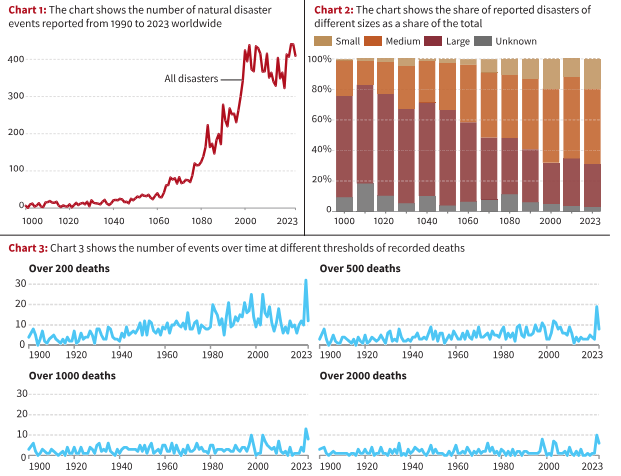
    • Increasing Frequency and Severity of Natural Disasters: Globally, natural disasters have become increasingly common and the severity of their impact is worsening.
    • FAO Report: According to the FAO’s report, there were 360 natural disasters per year in the 2010s that resulted in at least 10 deaths, affected 100 or more people, led to homelessness or injury, and required a declaration of a state of countrywide emergency and an appeal for international assistance.
    • Comparison of Natural Disasters: This number is significantly higher than the 100 events recorded in the 1980s and the 90 events recorded in the 1970s.
    • Frequency of Climate, Weather, and Hydrology-related Disasters: Furthermore, climate, weather, and hydrology-related disasters are becoming more frequent, while geophysical and biological emergencies are not, with the exception of Covid-19.
    • Global Impact of Natural Disasters: The impact of these natural disasters is global, affecting countries across the world in various ways, including forest fires, heat and dust storms, and floods.
    • The Need to Improve Disaster Response and Mitigation Efforts: As a society, it is important to recognize that natural disasters will continue to pose a threat and we need to improve our ability to respond and mitigate their effects.
    • Measures Being Taken to Address the Issue of Natural Disasters: Fortunately, there are measures being taken to address this issue, including research into improving disaster response systems and the development of new technologies to aid in disaster preparedness and relief efforts.

    Disaster Prevention Technologies

    • The disaster prevention technologies developed by start-up
    • CERD-AR: CERD-AR developed an Augmented Reality (AR) application that gamifies the animations of disasters and provides disaster prevention drills to prepare people for evacuation and reaction in ultra-realistic settings.
    • A Palo Alto-based start-up One Concern: One Concern built a digital twin of the world by analyzing satellite images to predict natural disasters. The platform combines Artificial Intelligence, Machine Learning (AI/ML), and supercomputers to develop seismic and flood technology for real-time prediction of flooding and assess the risk associated with various events.

    Emergency Response and Reconstruction Technologies

    • Garuda Aerospace: Garuda Aerospace deployed drones in Turkey for surveillance in the affected earthquake areas to identify trapped victims.
    • HW Design Labs: HW Design Labs developed IoT innovations that support disaster response teams in planning their operations effectively through deep penetrating ground sensing radars, wireless connectivity solutions, advanced tracking, and navigation services.

    Emergency Communication Technologies

    • MyResQR: This start-up provides emergency communication between victims and stakeholders. The smart QR code manages information and triggers SOS during emergencies by enabling first responders like ambulance services, hospital staff, and other emergency response teams.

    Way Ahead

    • The SUMups represent an opportunity to combine innovative disaster management technologies from start-ups globally to address the Sustainable Development Goals for the whole world, such as building resilient infrastructure and zero hunger.

    Conclusion

    • The Startup20 Engagement Group of G20 can enable many such SUMups that can help deal with the increasing frequency, intensity, and complexity of natural disasters in the future. Sharing ideas and collaborating globally can help us all become better prepared and equipped to tackle these events. The article emphasizes that the sharing of ideas can be a powerful tool for solving complex problems, and the development of SUMups is a step in the right direction for improving disaster management worldwide.

    Mains Question

    Q. What is the concept of SUMups? Discuss the innovative technologies developed by start-ups in the areas of disaster prevention.


    Are you an IAS Worthy Aspirant? Get a reality check with the All India Smash UPSC Scholarship Test

    Get upto 100% Scholarship | 900 Registration till now | Only 100 Slots Left


  • ISRO releases Landslide Atlas of India

    landslide

    The Indian Space Research Organisation (ISRO) recently released the Landslide Atlas of India to identify landslide hotspots in the country.

    What are Landslides?

    • Landslides are natural disasters that occur in mountainous terrains where soil, rock, geology, and slope conditions are conducive.
    • A landslide is the sudden movement of rock, boulders, earth, or debris down a slope.
    • They can be triggered by natural causes such as heavy rainfall, earthquakes, snowmelting, and undercutting of slopes due to flooding.
    • They are extremely hazardous, posing a threat to human and animal lives, damaging property, roads, and bridges, disrupting communication lines, and snapping power lines.
    • Landslides are broadly classified based on the type of materials involved, the type of movement of the material, and the type of flow of the material.

    Why do they occur?

    • Landslides are natural disasters that occur mainly in mountainous terrains due to conducive conditions of soil, rock, geology, and slope.
    • Heavy rainfall, earthquakes, snow-melting, and undercutting of slopes due to flooding can trigger landslides.
    • Anthropogenic activities such as excavation, cutting of hills and trees, excessive infrastructure development, and overgrazing by cattle can also cause landslides.

    Factors contributing

    • The main factors that influence landslides include lithology, geological structures like faults, hill slopes, drainage, geomorphology, land use and land cover, soil texture and depth, and weathering of rocks.
    • Rainfall variability pattern is the single biggest cause for landslides in India, with the Himalayas and the Western Ghats remaining highly vulnerable.

    India’s vulnerability to landslides

    • India is considered among the top five landslide-prone countries globally, where at least one death per 100 sq. km is reported in a year due to a landslide event.
    • Approximately 12.6% of the country’s geographical land area (0.42 million sq km) is prone to landslides, with 66.5% of landslides reported from the North-western Himalayas, 18.8% from the North-eastern Himalayas, and 14.7% from the Western Ghats.

    Risks in specific states          

    • Mizoram recorded the highest number of landslide events in the past 25 years, with 12,385 events, of which 8,926 were recorded in 2017 alone.
    • Nagaland and Manipur also reported a high number of landslide events during the 2017 monsoon season.
    • Uttarakhand and Kerala reported the highest number of landslides, with Uttarakhand experiencing 11,219 events since 1998, and Kerala making inhabitants significantly vulnerable to fatalities, despite fewer events.

    Classification and Mapping of Landslides

    • Landslides are broadly classified based on the type of materials involved, type of movement, type of flow of the material, and whether they spread laterally.
    • The Landslide Atlas of India maps landslides mainly based on events and seasons.
    • The National Remote Sensing Centre (NRSC) used a landslide database created from 1998 to 2022 using aerial and high-resolution satellite images.