💥Join UPSC 2027,2028 Mentorship (July Batch) + XFactor Notes & Microthemes PDF

GS Paper: GS1-14.Important Geophysical phenomena such as earthquakes, Tsunami, Volcanic activity, cyclone etc.,

  • Inclusive Climate Leadership: Engaging All Parties for a Sustainable Future

    Climate

    Central Idea

    • In recent weeks, a growing movement has emerged to remove Minister Sultan Al Jaber, the President-Designate of COP28 and CEO of the Abu Dhabi National Oil Company, from his position. As representatives of climate-vulnerable developing nations like Bangladesh and the Maldives and as the leaders of the Climate Vulnerable Forum, underscore the urgency of the climate challenge. They argue that their economies have suffered staggering climate-related losses, amounting to $500 billion in the last two decades alone.

    Campaign to Unseat the President-Designate of COP28

    • CEO of Abu Dhabi National Oil Company (ADNOC): Sultan Al Jaber serves as the CEO of ADNOC, which is a national oil company. Critics argue that his role in an oil company creates a conflict of interest, as the fossil fuel industry is a significant contributor to greenhouse gas emissions and climate change.
    • Concerns about Clean Energy Transition: Some argue that as the CEO of ADNOC, Sultan Al Jaber may not prioritize or advocate for a rapid and ambitious transition away from fossil fuels to renewable energy sources. They believe that his leadership in COP28 could hinder progress in achieving global climate goals.
    • Advocacy for Inclusive Approach: Those calling for his removal argue for a more inclusive approach to COP28 leadership, with a focus on engaging a broader range of stakeholders, including voices from climate-vulnerable countries and civil society, to ensure a more balanced representation and decision-making process.
    • Conflict of Interest and Lack of Impartiality: The campaign contends that Sultan Al Jaber’s position as the head of ADNOC raises concerns about conflicts of interest and impartiality in decision-making regarding climate policy and the transition to clean energy.

    Sultan Al-Jaber’s Contributions in Advancing Clean Energy Solutions

    • Leadership in Renewable Energy: Sultan Al-Jaber has played a pivotal role in leading Masdar, a renewable energy company that has made substantial investments in solar and wind projects. Through Masdar’s initiatives, significant progress has been made in expanding renewable energy capacity and reducing dependence on fossil fuels.
    • Barakah Nuclear Power Plant: As part of the UAE’s clean energy efforts, Sultan Al-Jaber oversaw the opening of the Barakah nuclear power plant. This facility generates 6 gigawatts of clean power, further diversifying the country’s energy mix and reducing carbon emissions.
    • Tripling Global Renewable Energy Capacity: Sultan Al-Jaber, in collaboration with the International Renewable Energy Agency (IRENA), has championed the goal of tripling global renewable energy capacity by 2030. This ambitious target demonstrates his commitment to advancing the transition to clean energy on a global scale.
    • Practical Solutions for Clean Energy: Under Sultan Al-Jaber’s guidance, Masdar and IRENA have signed an agreement aimed at tripling global renewable energy capacity. This partnership focuses on implementing practical solutions and driving tangible results in clean energy deployment.
    • Advocacy for Clean Energy Investments: Sultan Al-Jaber has been an advocate for attracting investments in clean energy infrastructure. By promoting partnerships with sovereign wealth funds and multilateral development banks, he has sought to secure the necessary financial support for scaling up clean energy projects worldwide.
    • Vision for the Abu Dhabi National Oil Company: Sultan Al-Jaber envisions transforming the Abu Dhabi National Oil Company into the Abu Dhabi Clean Energy and Grid Company by 2030. This transition highlights his commitment to steering a fossil fuel-dependent economy towards a cleaner and more sustainable energy future.
    • Global Financial Reform: Sultan Al-Jaber has voiced support for global financial reform, including reforms within the International Monetary Fund. His advocacy underscores the recognition that financial systems must align with the goals of combating climate change and promoting sustainable development.

    How Debt is posing As a Significant Impediment?

    • Unsustainable Debt Burden: Many developing nations, including those represented by Bangladesh and the Maldives, face significant debt burdens that hinder their ability to invest in clean energy infrastructure and climate adaptation measures. These debts often become increasingly unpayable, exacerbated by climate damages caused by emissions originating from other countries.
    • Financial Instability: The burden of unsustainable debt creates financial instability, limiting the fiscal capacity of developing nations to allocate resources towards climate-related initiatives. This instability further undermines their ability to attract investments in clean energy and impairs their overall economic development.
    • Limited Access to Finance: High levels of debt restrict developing countries’ access to affordable financing for clean energy projects. International financial institutions and private lenders may be hesitant to provide loans or invest in these countries due to their precarious debt situations, leading to a lack of financial resources necessary for transitioning to renewable energy sources.
    • Risk Perception: Unsustainable debt levels increase the perception of risk associated with investing in clean energy projects within these countries. Potential investors may view such projects as financially unstable or uncertain, further deterring crucial investment in renewable energy infrastructure.
    • Inability to Prioritize Climate Adaptation: Mounting debt obligations divert limited resources away from crucial climate adaptation efforts. Developing countries, particularly those most vulnerable to climate change, struggle to allocate sufficient funding to build resilient infrastructure, enhance disaster preparedness, and implement necessary adaptation measures.
    • Need for Collective Approach: The debt problem and its implications for clean energy investment and climate adaptation require a collective approach. Addressing the debt issue at a global level is essential to ensure that developing nations have the necessary financial support and space to prioritize sustainable development and climate action.
    • De-risking and Insurance Solutions: Sovereign wealth funds and multilateral development banks (MDBs) can play a significant role in de-risking restructured debts and insuring climate bonds. By providing financial mechanisms that reduce the perceived risk associated with investing in debt-ridden countries, these institutions can unlock clean energy investments and facilitate climate adaptation efforts.
    • Global Financial Reform: Tackling the debt impediment also necessitates global financial reform. Reforming international financial systems, including initiatives within institutions like the International Monetary Fund, can address the structural barriers that perpetuate unsustainable debt burdens and hinder sustainable development efforts.

    Climate

    Facts for prelims

    Major Positive Outcomes of COP27 Summary of COP26
    • Agreement on the establishment of a loss and damage fund
    • Reaffirmation of the commitment to increase funding for adaptation
    • Launch of the first report by the High-Level Expert Group on the Net-Zero Emissions Commitments of Non-State Entities
    • Introduction of the Executive Action Plan for the Early Warnings for All initiative
    • Presentation of master plans to accelerate decarbonization in major sectors
    • Launch of the Food and Agriculture for Sustainable Transformation (FAST) initiative
    • Inadequate reduction commitments by developed countries
    • Exhaustion of a significant portion of the global carbon budget
    • Political disputes over the phasing out of coal
    • Doubts regarding developed countries’ ability to meet commitments

    The Crucial Role of Finance in Enabling Clean Energy Transitions

    • Scaling Up Clean Energy Infrastructure: Adequate financing is crucial for scaling up clean energy infrastructure in both developed and developing countries. Investment in renewable energy projects, such as solar and wind power plants, is essential to transition away from fossil fuels and reduce greenhouse gas emissions.
    • Technology Development and Deployment: Finance plays a pivotal role in supporting the research, development, and deployment of innovative clean energy technologies. Investment in research institutions and initiatives facilitates the advancement of technologies like energy storage, carbon capture, and renewable energy integration into existing grids.
    • Access to Affordable Financing: Developing countries, in particular, require access to affordable financing options to facilitate their clean energy transitions. International financial institutions, governments, and private investors can contribute by providing loans, grants, and favorable investment conditions to ensure affordability and accessibility of clean energy technologies.
    • Climate Adaptation and Resilience: Financial resources are necessary for implementing climate adaptation measures and building resilience against climate change impacts. This includes developing climate-resilient infrastructure, improving disaster preparedness, and supporting vulnerable communities affected by climate-related events.
    • Capacity Building and Technical Assistance: Finance is crucial for capacity building initiatives and providing technical assistance to developing countries. This support helps enhance local expertise and knowledge in clean energy project development, management, and operation.
    • Mobilizing Climate Finance: Mobilizing climate finance is essential to fulfill the commitments made under international agreements like the Paris Agreement. Developed countries have committed to providing financial assistance to developing countries for mitigation and adaptation efforts, including the Green Climate Fund and other climate finance mechanisms.
    • Socially Responsible Investing: Finance plays a role in promoting socially responsible investing, where investors consider environmental, social, and governance (ESG) factors in their investment decisions. By allocating funds to clean energy projects and divesting from fossil fuels, investors can contribute to the transition towards a low-carbon economy.

    Way ahead

    • Strengthen International Cooperation: Enhance collaboration and dialogue among nations, fostering a spirit of unity and shared responsibility in addressing the challenges of climate change. Strengthen international platforms like the United Nations Framework Convention on Climate Change (UNFCCC) and its Conference of Parties (COP) to facilitate meaningful discussions and decision-making.
    • Ambitious and Equitable Commitments: Encourage all nations to enhance their commitments to greenhouse gas emissions reduction in line with the goals of the Paris Agreement. Emphasize the principle of common but differentiated responsibilities, ensuring that developed countries take the lead while providing support to developing nations for their clean energy transitions.
    • Mobilize Climate Finance: Scale up financial resources dedicated to climate change mitigation and adaptation, particularly in developing countries. Developed nations should fulfill their commitment to provide $100 billion per year in climate finance, while exploring innovative financing mechanisms and private sector engagement.
    • Technology Transfer and Capacity Building: Facilitate the transfer of clean energy technologies from developed to developing countries, accompanied by capacity-building initiatives to enhance local expertise. Encourage knowledge sharing, technology partnerships, and the establishment of research and development centers to foster innovation in clean energy solutions.
    • Support Vulnerable Communities: Prioritize the needs of vulnerable communities, particularly those in climate-sensitive regions, by allocating resources for climate adaptation and resilience-building efforts. Ensure that climate finance reaches those most affected and that local communities are actively involved in decision-making processes.
    • Mainstream Climate Considerations: Integrate climate considerations into policymaking across sectors, including energy, transportation, agriculture, and urban planning. Foster collaboration between governments, businesses, and civil society to develop and implement climate-friendly policies and practices.

    Climate

    Conclusion

    • The leaders representing the most climate vulnerable developing nations urge American and European parliamentarians to embrace inclusivity. Collaborative and united action, with finance at the core, is vital for a successful COP28. Together, we must work tirelessly to save our planet and secure a sustainable future for all.

    Also read:

    India’s Possible Role in facilitating Loss and Damage Fund


  • Cyclone Biparjoy and its Naming

    Cyclone Biparjoy
    PC: windy.com

    Central Idea: A cyclonic storm, named Biparjoy, has developed in the Arabian Sea.

    Cyclone Biparjoy

    • It was stationed about 850 km west of Goa and 900 km southwest of Mumbai.
    • The cyclone is predicted to gain in strength over the next three days and develop into a very severe cyclonic storm by June 13.
    • It would result in squally weather with wind speeds reaching 35-45 kmph along the coastline of Karnataka, Goa, and Maharashtra
    • The IMD has not yet predicted any major impact on countries adjoining the Arabian Sea, including India, Oman, Iran, and Pakistan.

    How it was named?

    • Origin of Cyclone Biparjoy’s Name: ‘Biparjoy’ was suggested by Bangladesh and the word means ‘disaster’ or ‘calamity’ in Bengali. The next cyclone after Biparjoy will be named ‘Tej’ based on India’s suggestion.
    • Rotational Basis for Naming: The naming of cyclones is done by countries on a rotational basis, following certain existing guidelines.
    • Responsibilities of RSMCs and TCWCs: Worldwide, there are six regional specialized meteorological centers (RSMCs) and five regional Tropical Cyclone Warning Centers (TCWCs) mandated for issuing advisories and naming of tropical cyclones.
    • IMD’s Role: IMD is one of the six RSMCs providing tropical cyclone and storm surge advisories to 13 member countries under the WMO/Economic and Social Commission for Asia-Pacific (ESCAP) Panel.
    • Naming Authority of IMD: RSMC, New Delhi, is also mandated to name the tropical cyclones developing over the north Indian Ocean, including the Bay of Bengal and the Arabian Sea.
    • Guidelines for Naming: Some rules are to be followed while naming cyclones, such as being neutral to politics, religious beliefs, cultures, and gender, avoiding offensive or cruel names, and keeping the name short and easy to pronounce.
    • Next Cyclone Name: After Bangladesh, the next cyclone will be named ‘Tej’ based on India’s suggestion.

    Cyclones in the Arabian Sea: A quick recap

    • Frequency of Cyclones: It is not rare for cyclones to develop in the Arabian Sea. There are fewer cyclones compared to the Bay of Bengal, but it is not uncommon.
    • Favorable Months: June is one of the favorable months for the formation of cyclones in the Arabian Sea.
    • Factors Influencing Cyclone Formation: Cyclones form due to low-pressure systems over warm waters. The Bay of Bengal is slightly warmer, but the Arabian Sea is also getting warmer due to climate change, leading to an increase in cyclones.
    • Coriolis Effect and Weather Systems: In a depression or low-pressure situation, the air blows in an anticlockwise direction in the northern hemisphere, influenced by the Coriolis Effect.

    Role of Climate Change

    • Historical data indicates that the frequency of extremely severe cyclonic storms has increased over the Arabian Sea since 1990, while it has remained the same over the Bay of Bengal.
    • A 2021 study highlighted the increasing intensity, frequency, and duration of cyclonic storms in the Arabian Sea.
    • The warming is indicated by the nearly tripled accumulated cyclone energy, reflecting the extent of warming in recent years.

    Back2Basics:

    Tropical Cyclones
    Definition Intense circular storm over warm oceans with low pressure, high winds, and heavy rain.
    Formation Conditions Warm sea surface temperatures, anticlockwise rotation of low-level air, favorable atmospheric conditions.
    Conducive Periods April-May and October-December.
    Movement and Moisture Cyclones move northwest, gather moist air, and intensify.
    Requirements for Cyclogenesis Warm sea temperatures, atmospheric instability, high humidity, Coriolis force, low-level disturbance, low vertical wind shear.
    Sea temperatures Temperature of at least 28°C.
    Atmospheric instability Allows vertical air movement.
    Role of Coriolis Force Required for low-pressure center formation.
    Low vertical wind shear Maintains cyclone structure.


  • 50th anniversary of World Environment Day

    world environment day plastic

    Central Idea

    • Plastics have become an integral part of human life, despite their adverse environmental impact.
    • World Environment Day (5th June) serves as a reminder of our responsibility to address plastic pollution.

    Why in news?

    • 50th Anniversary of World Environment Day: The day, led by UNEP since 1973, marks its 50th anniversary this year.
    • Global Platform for Environmental Outreach: World Environment Day has grown into the largest global platform for environmental outreach.
    • Theme- #BeatPlasticPollution: This year’s World Environment Day focuses on the urgent need to combat plastic pollution.

    World Environment Day 2023

    Date June 5th
    Theme (2023) Ecosystem Restoration
    Host Country (2023) Pakistan
    Established World Environment Day was established in 1972 by the United Nations at the Stockholm Conference on the Human Environment
    Purpose To raise awareness and promote action for environmental protection
    Importance Platform for global environmental campaigns and initiatives
    Activities Various activities are organized worldwide, such as tree planting, clean-up drives, and educational programs
    Previous Themes Previous themes have focused on topics like biodiversity, air pollution, plastic pollution, and more
    Organized by United Nations Environment Programme (UNEP)

    Plastic pollution and the need for Solutions

    • Plastic pollution is a pressing global issue that requires immediate attention.
    • Over 400 million tonnes of plastic are produced annually, with less than 10% being recycled.
    • Plastic pollution negatively affects ecosystems and poses risks to human health.

    Understanding Plastic Pollution

    platic environment day

    • Versatile Nature of Plastics: Plastics are synthetic materials capable of being shaped and molded according to requirements.
    • Types of Plastics: Commodity plastics, such as PET, HDPE, PVC, LDPE, PP, and PS, dominate global production.
    • Identification Codes and Different Properties: Plastics can be identified by their resin identification codes (RIC) and possess distinct properties.

    Environmental impact of plastics

    • Plastics have revolutionized various industries but raise significant environmental concerns.
    • Plastics have a slow decomposition rate, leading to the persistence of plastic waste.
    • Microplastics, including primary and secondary types, accumulate in various environments.

    Health risks and toxic chemicals

    • Microplastics contain toxic chemicals that pose risks to human health.
    • Bisphenol A (BPA) in microplastics can have detrimental effects on human health.

    Worst examples of Plastic Pollution

    • The Great Pacific Garbage Patch is a vast collection of plastic and microplastic waste.
    • It was formed due to converging ocean currents and is situated in the North Pacific Ocean.
    • It covers a surface area of 1.6 million sq km, with smaller patches in other oceans.

    Actions against Plastic Pollution

    • Urgency for Collective Action: Plastic pollution necessitates collective efforts and immediate action.
    • World Environment Day’s Reminder of Responsibility: World Environment Day serves as a reminder of our responsibility to address plastic pollution.

    Way forward

    • Plastic Recycling: Advanced recycling technologies offer new ways to efficiently recycle plastic waste.
    • Promoting Circular Economy Models: Embracing circular economy principles can reduce plastic waste and promote sustainable resource usage.
    • Education and Awareness Campaigns: Spreading awareness and educating the public about the impact of plastic pollution can drive behavioral change.
    • Collaboration between Industries and Governments: Cooperation between industries and governments is essential to develop comprehensive strategies for tackling plastic pollution.
  • Role of Evapotranspiration in Earth’s Dynamic Processes


    evapotranspiration

    Central Idea:  Evapotranspiration is a key process in Earth’s dynamic systems, impacting the movement of water and nutrients, influencing the water cycle, and providing crucial information for farmers to manage irrigation and water resources effectively.

    Understanding Evapotranspiration

    • Definition: Evapotranspiration refers to the movement of water from terrestrial surfaces into the atmosphere and is a crucial part of the planet-wide water cycle.
    • Water cycle and its connection to evapotranspiration: Evapotranspiration is an amalgamation of evaporation (water loss from soil) and transpiration (water movement and loss by plants), both of which contribute to the overall movement of water in the water cycle.
    • Breakdown of the term: Evapotranspiration encompasses the movement of water upward through plants and its subsequent loss into the air from exposed plant parts.

    Factors affecting Evapotranspiration

    • Rate of evapotranspiration: Several factors impact the rate of evapotranspiration, including solar radiation, day length, soil moisture levels, ambient temperature, wind conditions, and the amount of water vapour already present in the air.
    • Insolation and its effect: The intensity of solar radiation directly affects the rate of evapotranspiration, as it provides the energy needed to evaporate water from terrestrial surfaces.
    • Role of day length: The length of the day, soil moisture content, ambient temperature, wind patterns, and the moisture content of the air all contribute to the rate at which evapotranspiration occurs.

    Historical significance of evapotranspiration

    • Origin and age of the term: The term “evapotranspiration” has been in use for at least 86 years and was initially published with a hyphenated form.
    • Contribution of Charles Warren Thornthwaite in 1944: Thornthwaite, an American climatologist, defined and popularized the term “evapotranspiration” in 1944.
    • Relevance for farmers in estimating water needs for crops: Even today, evapotranspiration remains significant for farmers who utilize it to estimate the amount of water required to irrigate their crops effectively.

    Back2Basics: Water Cycle

    • The water cycle, also known as the hydrological cycle, is the continuous movement and circulation of water on, above, and below the Earth’s surface.
    • Stages of the Water Cycle include:
    1. Evaporation: The process by which water changes from a liquid state to a gaseous state, rising into the atmosphere.
    2. Condensation: The cooling of water vapor in the atmosphere, causing it to change from a gaseous state back to a liquid state, forming clouds.
    3. Precipitation: When condensed water droplets combine and fall from the atmosphere as rain, snow, sleet, or hail.
    4. Runoff: The movement of water on the Earth’s surface, flowing into streams, rivers, lakes, and eventually into the oceans.
    5. Infiltration: The process by which water seeps into the ground and becomes groundwater.
    6. Transpiration: The release of water vapor from plant surfaces into the atmosphere.


  • Enhancing Agricultural Research and Development for Climate Resilience

    Central idea

    • Recently the G-7 Summit 2023 held in Japan highlighted the urgent need to address climate change and set ambitious targets for reducing greenhouse gas emissions.  India has the largest workforce (45.6 per cent in 2021-22) engaged in agriculture amongst G20 countries faces significant challenges.  To mitigate the impact and ensure food and nutritional security, policymakers must prioritize agricultural research, development, education, and extension (ARDE).

    Facts for prelims

    • At the Hiroshima Summit 2023, the G7 nations stressed that the peak for global Green House Gas (GHG) emissions should be reached by 2025.
    • They committed to an “Acceleration Agenda” for G7 countries to reach net-zero emissions by around 2040 and urged emerging economies to do so by around 2050.
    • China has committed to net zero by 2060 and India by 2070
    • World Meteorological Organisation (WMO) has forecast that global near-surface temperatures are likely to increase by 1.1°C to 1.8°C annually from 2023 to 2027.

    Importance of ARDE

    • ARDE, which stands for Agricultural Research, Development, Education, and Extension, plays a crucial role in addressing the challenges faced by the agriculture sector, particularly in the context of climate change.
    • Climate Resilience: Through research and development efforts, scientists and experts can identify crops and varieties that are more tolerant to changing climatic conditions, such as drought, heatwaves, or extreme rainfall. This enables farmers to adapt and minimize the negative impacts of climate change on crop yields and agricultural productivity.
    • Resource Efficiency: By focusing on research and innovation, it aims to optimize the use of key resources like water, soil, and energy. This includes the development of precision farming techniques, efficient irrigation systems, soil management practices, and sustainable pest and disease control methods. Such advancements help conserve resources, reduce input costs, and minimize the environmental footprint of agriculture.
    • Enhanced Productivity: This involves developing high-yielding crop varieties, improving agronomic practices, and disseminating knowledge and best practices through education and extension programs. By adopting these advancements, farmers can increase their yields, improve crop quality, and contribute to food security and economic growth.
    • Sustainable Agriculture: ARDE focuses on reducing reliance on chemical inputs, minimizing soil degradation, preserving biodiversity, and promoting organic farming. Through research and education, it supports the transition towards more sustainable and environmentally friendly agricultural systems, ensuring the long-term viability of the sector.
    • Innovation and Technology Adoption: By investing in research and development, it facilitates the discovery and dissemination of cutting-edge technologies, such as precision agriculture, genetic engineering, biotechnology, and smart farming solutions. These advancements help farmers improve efficiency, reduce losses, and enhance profitability.
    • Knowledge Transfer and Capacity Building: They focus on disseminating research findings, best practices, and agricultural knowledge to farmers, rural communities, and agricultural stakeholders. By strengthening the knowledge base and building capacity, ARDE empowers farmers with the skills and information necessary to make informed decisions and improve their farming practices.

    India’s challenges in adapting to climate change

    • Vulnerability to Extreme Weather Events: India is highly susceptible to extreme weather events, including cyclones, floods, droughts, and heatwaves. These events can cause significant damage to infrastructure, agriculture, and livelihoods, impacting the overall resilience of communities.
    • Water Scarcity and Stress: Climate change exacerbates water scarcity in many regions of India. Changes in rainfall patterns, melting glaciers, and rising temperatures affect water availability for agriculture, domestic use, and industries. This poses challenges for irrigation, drinking water supply, and overall water management.
    • Agriculture and Food Security: The agricultural sector is crucial for India’s food security and rural livelihoods. However, climate change poses risks to crop yields, productivity, and quality. Erratic rainfall, increased pests and diseases, and extreme temperature fluctuations can impact crop growth and food production, leading to food security challenges.
    • Coastal Vulnerability: India has a long coastline, making it highly vulnerable to sea-level rise, coastal erosion, and storm surges. Coastal regions face threats to infrastructure, settlements, agriculture, and ecosystems. Climate change-induced sea-level rise also increases the risk of saltwater intrusion, affecting freshwater sources and agriculture in coastal areas.
    • Health Impacts: Climate change influences the spread of vector-borne diseases like malaria and dengue, as well as heat-related illnesses. Rising temperatures and changing rainfall patterns can affect the distribution of disease vectors and impact public health systems, particularly in vulnerable communities with limited access to healthcare.
    • Biodiversity Loss and Ecosystem Disruption: Climate change poses risks to India’s rich biodiversity and ecosystems. Habitats, wildlife, and fragile ecosystems like coral reefs and mangroves face threats from changing temperatures, altered rainfall patterns, and habitat loss. This can disrupt ecological balance and affect natural resources vital for human well-being.
    • Infrastructure Resilience: India’s infrastructure systems, including transportation networks, energy grids, and urban settlements, face challenges in adapting to climate change impacts. Infrastructure vulnerabilities can lead to disruptions in services, increased costs for repairs and maintenance, and hindered economic growth.
    • Socio-economic Inequalities: Climate change impacts can exacerbate existing socio-economic inequalities in India. Vulnerable communities, such as small farmers, tribal populations, and marginalized groups, are disproportionately affected by climate risks due to their limited resources, lack of access to information, and inadequate adaptive capacities.

    Policy Reforms for Climate Resilience

    • National Climate Change Adaptation Strategy: Developing a comprehensive national strategy focused on climate change adaptation is essential. This strategy should identify priority sectors, vulnerable regions, and specific adaptation measures.
    • Mainstreaming Climate Considerations: Integrating climate change considerations into sectoral policies and plans is vital. This includes incorporating climate resilience into agriculture, water management, urban planning, infrastructure development, and coastal zone management policies.
    • Strengthening Institutional Frameworks: Establishing robust institutional frameworks and coordination mechanisms for climate adaptation is necessary. This includes enhancing the capacity of relevant government departments, local authorities, and institutions to implement adaptation measures effectively.
    • Building Climate Information Systems: Developing and strengthening climate information systems includes improving meteorological services, climate monitoring networks, early warning systems, and climate data management. Accessible and reliable climate information helps policymakers, communities, and sectors plan and respond to climate risks effectively.
    • Promoting Nature-Based Solutions: Encouraging nature-based solutions can enhance climate resilience. This involves conserving and restoring natural ecosystems such as forests, wetlands, and mangroves, which provide crucial ecosystem services. Nature-based solutions contribute to flood control, water regulation, carbon sequestration, and biodiversity conservation, thereby improving resilience to climate change.

    Addressing Funding and Allocation Imbalance

    • Scaling Up Experiments: To address climate change challenges effectively, increased funding allocation for ARDE is essential. While there has been an increase in total expenditure on ARDE, research intensity (ARDE as a percentage of agri-GDP) has declined. It is crucial to allocate more funds to scale up experiments and innovations in sustainable agriculture.
    • Sector-wise Allocation: The current allocation of ARDE shows a skewed distribution towards crop husbandry, neglecting sectors like soil, water conservation, forestry, animal husbandry, dairy development, and fisheries. This imbalance needs correction to promote holistic agricultural research and development.

    Conclusion

    • As global temperatures rise and climate change impacts intensify, addressing remaining gaps in agricultural research and development becomes imperative. Increased investment in ARDE, realignment of expenditures and policies, and a focus on sustainable farming practices are essential to build climate resilience in India’s agriculture sector. By prioritizing these measures, India can secure food and nutritional security while mitigating the challenges posed by climate change.

    Get an IAS/IPS ranker as your personal mentor for UPSC 2024 | Schedule your FREE session and get the Prelims prep Toolkit!

    Must read:

    Food security and Climate change: The Interlink


  • Slowing of Overturning Circulation in Antarctic

    overturning

    Central Idea

    • Recent research indicates that the Antarctic overturning circulation, a global network of ocean currents, is slowing down at a faster rate than previously predicted.
    • The overturning circulation is crucial for redistributing heat, carbon, and nutrients, and maintaining Earth’s climate stability and deep-ocean oxygen levels.

    What is Overturning Circulation?

    • The overturning circulation (OC) refers to the large-scale circulation pattern in the global ocean, involving both surface and deep currents.
    • It is a network of ocean currents that plays a crucial role in redistributing heat, carbon, and nutrients around the globe.
    • It is driven by the sinking of dense, cold, oxygen-rich water from the ocean surface to the deep ocean and the rising of less dense water in different regions.

    How does it work?

    • It operates on a global scale and involves the sinking and rising of water masses driven by density differences.
    • Cold, dense water sinks in certain regions, while warmer, less dense water rises in other areas, creating a continuous flow of water.

    Key components and processes

    • Antarctic Bottom Water: Cold, dense water forms near Antarctica and sinks to the ocean floor, spreading northward along the seafloor.
    • North Atlantic Deep Water: Another dense water mass forms in the North Atlantic and sinks to great depths.
    • Thermohaline Circulation: Temperature and salinity differences drive the sinking and rising of water masses, influencing the overturning circulation.
    • Deep Ocean Currents: Once the dense water sinks, it flows along the deep ocean basins, connecting various regions of the world ocean.

    Observing and studying the OC

    • Monitoring the overturning circulation is challenging due to its vast scale and complex dynamics.
    • Observations include ship-based measurements, moored instruments, floats, satellites, and numerical models.
    • Scientists use a combination of measurements and simulations to understand the behavior and changes in the overturning circulation.

    Importance of the Overturning Circulation

    • Heat redistribution: The overturning circulation helps regulate Earth’s climate by transporting heat from the equator to the poles and vice versa.
    • Assist carbon cycle: It plays a vital role in redistributing carbon dioxide and other greenhouse gases, impacting the global carbon cycle.
    • Nutrient cycling: The circulation also facilitates the transport of nutrients, affecting marine ecosystems and productivity.

    Consequences of a Slowing OC

    • Climatic changes: A slowdown in the overturning circulation can have significant consequences for Earth’s climate and marine ecosystems.
    • Nutrient disruption: It can disrupt the transport of heat, carbon, and nutrients, leading to changes in regional and global climate patterns.
    • De-oxygenation: Reduced oxygen supply to the deep ocean can affect deep-sea marine life and potentially lead to shifts in species distribution.

    Impact of Melting Antarctic Ice

    • Melting Antarctic ice disrupts the formation of Antarctic bottom water, a key component of the overturning circulation.
    • Freshening of surface waters due to melt-water makes them less dense and less likely to sink, slowing down the circulation.

    Future Outlook

    • Antarctica’s ice loss is expected to continue and accelerate with global warming.
    • Anticipated freshening due to increased ice loss will prolong the slowdown and further decrease deep-ocean oxygen levels.
    • The consequences of the slowdown extend beyond Antarctica, affecting the global ocean, climate change, and sea level rise.
    • Urgent action to reduce greenhouse gas emissions is necessary to address these issues.

    Way forward

    • Intensify efforts to reduce greenhouse gas emissions.
    • Implement measures to mitigate ice loss from Antarctica and address the freshening of surface waters.
    • Promote scientific research and monitoring to understand and respond to the ongoing changes.
    • Raise awareness about the importance of the overturning circulation and its impact on climate and marine ecosystems.


    Get an IAS/IPS ranker as your personal mentor for UPSC 2024

  • Alarming Decline in Antarctic Sea Ice: A Harbinger of Global Concerns

    Antarctic

    Central Idea

    • The recent record-breaking drop in Antarctic Sea ice extent on February 19 has raised significant concerns about the impacts of global warming. This worrying trend, accompanied by rising global temperatures, poses a threat to coastal cities and has far-reaching consequences for weather patterns and underwater ecosystems. As sea ice continues to melt and global sea levels rise, urgent action is needed to address the environmental challenges presented by this alarming decline.

    Melting Sea Ice and Rising Sea Levels: A worrying trend

    • Over the past six years, the Antarctic Sea ice cover has witnessed substantial declines, resulting in a rise in global sea levels.
    • NASA reports that meltwater from Antarctic ice accounts for approximately one-third of the global average sea level rise since 1993.
    • The sea ice extent in 2023 has often been notably lower than the levels seen in 2022, which had the second-lowest summer sea ice extent in Antarctica.
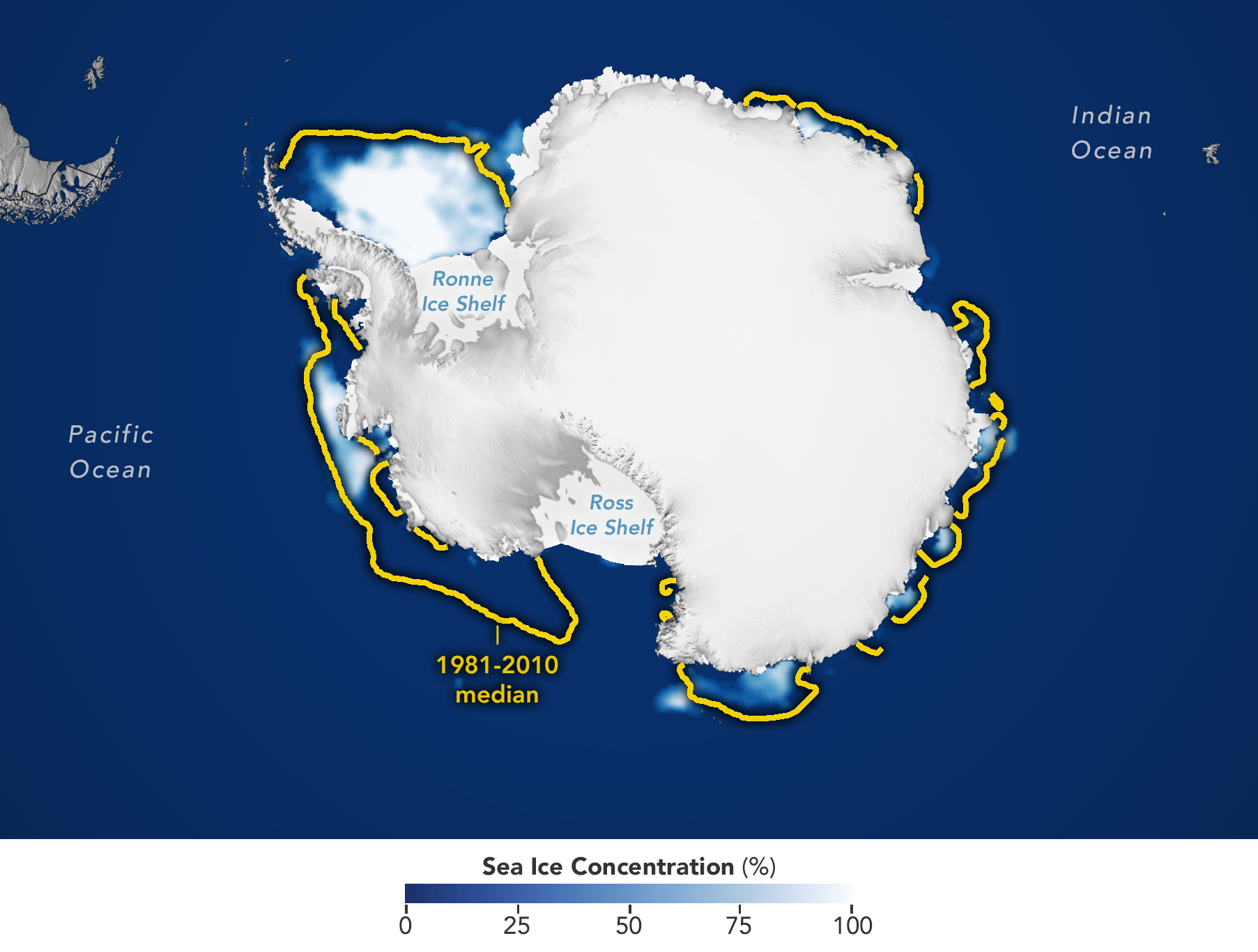
    • The Antarctic Sea ice extent as of May 21, 2023, has significantly shrunk compared to the median extent between 1981 and 2010
    • The April temperature in the Antarctic region in 2023 was 0.93°C higher than the 1910-2000 average for that month, marking the second-highest increase in the millennium.

    Antarctic

    Impact decline in Antarctic Sea ice on Global Weather and Ecosystems

    • Weather Pattern Alterations: The Southern Ocean, surrounding Antarctica, plays a crucial role in transferring heat from the atmosphere to the global oceans. Increased melting of Antarctic sea ice introduces cold, fresh water into the ocean, disrupting the circulation patterns of hot, cold, fresh, and salty water globally. This alteration in temperature and density can subsequently affect weather patterns, including wind patterns, precipitation, and storm formation.
    • Oceanic Currents and Nutrient Flows: Changes in water temperature and density due to melting sea ice can disrupt oceanic currents and nutrient flows. These currents are vital for distributing heat, nutrients, and oxygen across the world’s oceans. The disturbance in these flows can have cascading effects on marine ecosystems, impacting the distribution and availability of nutrients for various organisms.
    • Impact on Underwater Ecosystems: Sea ice serves as a critical habitat for various organisms, including algae, krill, and other marine life. Diminishing sea ice reduces the availability of food and alters the feeding patterns and reproductive cycles of species dependent on these ecosystems. This disruption can have significant consequences for the entire Antarctic food chain, affecting species such as whales, seals, penguins, and seabirds.
    • Altered Albedo Effect: The decline in sea ice coverage reduces the Earth’s albedo effect. Albedo refers to the ability of a surface to reflect sunlight back into space. Sea ice has a high albedo, meaning it reflects a significant portion of incoming solar radiation. As sea ice diminishes, darker ocean water absorbs more solar radiation, leading to increased warming and amplifying the overall warming trend.
    • Feedback Loops: The impacts of melting sea ice create feedback loops that exacerbate the effects of climate change. For example, as sea ice melts, more heat is absorbed by the ocean, further accelerating the melting process. These feedback loops contribute to the amplification of warming trends and the intensification of associated environmental changes.

    Facts for prelims

    What is ice-albedo feedback cycle?

    • The ice-albedo feedback cycle, also known as the snow-ice albedo feedback, refers to a positive feedback mechanism that amplifies the effects of global warming. It involves the interaction between ice or snow cover and solar radiation.
    • The albedo of a surface refers to its ability to reflect sunlight. Ice and snow have high albedo values, meaning they reflect a significant portion of incoming solar radiation back into space.
    • This reflection helps to cool the Earth’s surface. However, when ice or snow melts, it reveals darker surfaces beneath, such as dark ocean water or land, which have lower albedo values. These darker surfaces absorb more solar radiation, leading to increased warming
    • The ice-albedo feedback cycle operates in both polar regions, but it is particularly significant in the Arctic and Antarctic regions, where extensive ice and snow cover exist.
    • The reduction in sea ice extent and the melting of glaciers and ice sheets contribute to this feedback mechanism, accelerating the warming trend and exacerbating the impacts of climate change.

    Understand this way: How do the ice-albedo feedback cycle operate?

    • Initial Warming: Due to various factors, including greenhouse gas emissions, the Earth’s temperature increases, leading to the melting of ice and snow cover.
    • Reduced Albedo: As ice and snow melt, the reflective white surface is replaced by darker surfaces with lower albedo values. These surfaces absorb more solar radiation rather than reflecting it back into space.
    • Increased Heating: The absorption of more solar radiation by darker surfaces results in increased heating of the Earth’s surface and atmosphere.
    • Further Melting: The increased heating leads to more melting of ice and snow, further reducing the overall ice and snow cover.
    • Amplification of Warming: With less ice and snow cover, more heat is absorbed, contributing to a positive feedback loop. The amplified warming results in further ice and snow melt, creating a cycle of increasing temperatures.

    Impact of Rising Sea Levels on coastal communities around the worldwide

    • Increased Flooding and Erosion: As sea levels rise, coastal areas are more susceptible to storm surges, high tides, and extreme weather events. This puts low-lying regions, including coastal cities and communities, at greater risk of inundation, property damage, and displacement of residents.
    • Coastal Infrastructure Vulnerability: Increased flooding and erosion can lead to the degradation and loss of critical infrastructure, disrupting transportation, energy supply, and essential services. This vulnerability can have substantial economic, social, and public safety implications.
    • Threat to Freshwater Resources: Rising sea levels can infiltrate freshwater sources and contaminate underground aquifers, particularly in coastal regions where freshwater and saltwater interfaces occur. This intrusion of saltwater can compromise drinking water supplies, agricultural irrigation, and ecosystems dependent on freshwater resources, exacerbating water scarcity issues.
    • Displacement of Communities: As coastal areas become uninhabitable due to sea-level rise and increased flooding, communities may face the prospect of forced relocation. This displacement can result in the loss of homes, cultural heritage, and livelihoods, leading to social disruption, economic challenges, and psychological impacts on affected populations.
    • Ecological Impacts: Coastal ecosystems, including mangroves, coral reefs, and wetlands, provide critical habitats, buffer against storms, and support biodiversity. Rising sea levels can inundate and degrade these ecosystems, leading to the loss of valuable ecological services, increased vulnerability to coastal hazards, and reduced coastal resilience.
    • Economic Consequences: The impacts of sea-level rise and coastal flooding can disrupt tourism, fishing, and shipping industries, leading to economic losses, job displacements, and decreased productivity. Additionally, the costs of coastal protection measures and infrastructure adaptations to rising sea levels can place a significant burden on local economies and governments.

    Way Forward

    • Strengthening International Cooperation: Collaborate at global forums to address climate change and its impact on Antarctica, emphasizing the need for reduced emissions and sustainable practices.
    • Enhanced Monitoring and Research: Invest in further research to understand the dynamics of melting sea ice, its impact on ecosystems, and potential mitigation strategies.
    • Promoting Sustainable Practices: Encourage sustainable practices and responsible tourism in the Antarctic region to minimize human impact on the fragile ecosystem.
    • Climate Resilience Planning: Develop robust climate resilience plans for coastal cities and communities, considering rising sea levels and potential threats posed by diminishing sea ice.
    • Raising Public Awareness: Educate the public about the consequences of melting Antarctic sea ice, fostering a collective sense of responsibility and encouraging individual actions to mitigate climate change.

    Conclusion

    • The alarming decline in Antarctic sea ice poses grave threats to global sea levels, weather patterns, and underwater ecosystems. Urgent action is required to mitigate climate change, reduce greenhouse gas emissions, and promote sustainable practices. Through international collaboration, research, and public awareness, we can strive to protect the Antarctic region and safeguard coastal communities worldwide from the impacts of melting sea ice. The time to act is now, as the consequences of inaction will be felt by future generations.

    Get an IAS/IPS ranker as your personal mentor for UPSC 2024 | Schedule your FREE session and get the Prelims prep Toolkit!

    Must read:

    Oceans absorb 90% of human-induced planet warming: Study
  • Antarctic Sea Ice Cover at Record Low

    antarctic

    Central Idea

    • Sea ice in Antarctica reached its smallest area on record in February for the second consecutive year, continuing a decade-long decline.

    Ice cover decline: Key data

    (1) Square km decline

    • The European Union’s Copernicus Climate Change Service (C3S) provided the figures, highlighting the significant decrease in Antarctic sea ice.
    • On February 16, the ocean surface covered by ice around Antarctica shrank to 2.09 million square kilometers (800,000 square miles), the lowest level since satellite records began.

    (2) Warming trends

    • Both the North and South poles have experienced significant warming, with temperatures rising by approximately 3 degrees Celsius compared to late 19th-century levels, three times the global average.
    • Arctic sea ice has been diminishing by about 3 percent per year since the late 1970s, while sea ice in Antarctica has remained relatively constant with large annual variations.

    (3) Regional variances and vulnerabilities

    • Recent ice cover reduction during the southern hemisphere summer has been most pronounced in West Antarctica, which is more vulnerable to the impacts of global warming compared to East Antarctica.
    • Antarctica witnessed its first recorded heatwave in 2020, with temperatures 9.2 degrees Celsius above the mean maximum. Unusual temperature spikes have been observed in various parts of Antarctica.
    • The Arctic has also experienced significant declines in sea ice, with the record minimum sea ice extent occurring in 2012.

    Impact of declining Ice Cover

    • Global sea level rise: Melting ice in Antarctica contributes to rising sea levels worldwide.
    • Disruption of ecosystems: Declining ice cover disrupts habitats and food sources for ice-dependent species.
    • Increased warming: Less ice reflects sunlight, leading to more heat absorption and further ice melting.
    • Changes in ocean circulation: Declining ice cover can disrupt currents and impact global climate patterns.
    • Release of stored carbon: Melting ice releases trapped carbon, potentially affecting marine ecosystems and contributing to climate change.
    • Amplification of global warming: Reduced ice cover creates a positive feedback loop, exacerbating climate change.
    • Disruption of biodiversity and food chains: Changing ice conditions impact species relying on ice algae and affect the overall Southern Ocean ecosystem.

    Future projections

    • The Intergovernmental Panel on Climate Change (IPCC) predicted with high confidence that the Arctic Ocean would become practically ice-free in September at least once by mid-century.
    • The decreasing trends in both Arctic and Antarctic sea ice highlight the urgent need to address climate change and its impact on the Polar Regions.


    Get an IAS/IPS ranker as your personal mentor for UPSC 2024

  • Cyclone Mocha developing in Bay of Bengal

    cyclone

    Central Idea: The Indian Meteorological Department (IMD) has warned of a developing cyclonic or low-pressure area in the Bay of Bengal. It would be named Cyclone Mocha (pronounced ‘Mokha’).

    What is a cyclone and how are they formed?

    • A cyclone is a low-pressure system that forms over warm waters.
    • Warm seas present ripe conditions for the development and strengthening of cyclones.
    • The air rises and blows in an anticlockwise direction around the low in the northern hemisphere and in a clockwise direction in the southern hemisphere.
    • As warm air rises and cools, water vapour condenses to form clouds and this can lead to rains.
    • Cyclones can cause significant impacts on life and property, including storm surge, flooding, extreme winds, tornadoes and lightning.

    Requirements for a Cyclone to form

    There are six main requirements for tropical cyclogenesis:

    1. Sufficiently warm sea surface temperatures
    2. Atmospheric instability
    3. High humidity in the lower to middle levels of the troposphere
    4. Enough Coriolis force to develop a low-pressure centre
    5. A pre-existing low-level focus or disturbance
    6. Low vertical wind shear

    How are cyclones named?

    • Cyclones that form in every ocean basin across the world are named by the regional specialized meteorological centres (RSMCs) and Tropical Cyclone Warning Centres (TCWCs).
    • The IMD names the cyclones developing over the north Indian Ocean after following a standard procedure.
    • In 2000, a group of nations called WMO/ESCAP decided to start naming cyclones in the region.
    • After each country sent in suggestions, the WMO/ESCAP Panel on Tropical Cyclones (PTC) finalized the list.
    • This cyclone will be named Mocha (Mokha), a name suggested by Yemen after the Red Sea port city, which is known to have introduced coffee to the world over 500 years ago.

    Why is it important to name cyclones?

    • Adopting names for cyclones makes it easier for people to remember, as opposed to numbers and technical terms.
    • It’s easier and less confusing to say “Cyclone Titli” than remember the storm’s number or its longitude and latitude.
    • Apart from the general public, it also helps the scientific community, the media, disaster managers etc.
    • With a name, it is also easy to identify individual cyclones, create awareness of its development, rapidly disseminate warnings to increase community preparedness etc.


    Get an IAS/IPS ranker as your personal mentor for UPSC 2024 | Schedule your FREE session and get the Prelims prep Toolkit!

  • Understanding Temperature Anomalies

    temperature

    Central idea: Global warming does not mean that each month or each year will be warmer than the previous month or the previous year.

    What is Temperature Anomaly?

    • This is a measure of how much the actual temperature deviates from the long-term average temperature for a particular location and time period.
    • Anomalies are calculated by taking the difference between the actual temperature and the long-term average temperature, and then averaging this difference over a specified period.
    • The anomalies are due to land-ocean-atmosphere processes that dynamically determine the weather and climate.
    • It is a useful tool for understanding changes in climate over time, as they allow scientists to compare temperatures from different time periods and locations.
    • For example, a temperature anomaly of +2°C in a particular region in a given year means that the temperature in that region was 2°C higher than the long-term average for that region and time period.

    Why study this?

    • Long-term trend: By analyzing temperature anomalies over time, scientists can identify long-term trends in climate change and predict future changes.
    • Track extreme weather event: These are also used to monitor extreme weather events such as heatwaves, droughts, and floods, which can have significant impacts on human health, agriculture, and natural ecosystems.

    Recent context: Second warmest March on record

    • The fact that March 2023 was the second warmest March on record suggests that the planet is experiencing long-term warming.
    • It is a clear indication of the impact of human activities on the planet.
    • The burning of fossil fuels and deforestation have led to an increase in greenhouse gases, which trap heat in the Earth’s atmosphere and contribute to global warming.
    • This warming trend is expected to continue and worsen in the coming years, leading to more extreme weather events, sea level rise, and other negative impacts on the planet.

    What does this mean for local weather?

    • The second warmest March on record can have significant impacts on local weather patterns.
    • As mentioned earlier, the warming over the northwest to the west of India caused cooler than normal weather over Mumbai and excess pre-monsoon rains over the northwest.
    • On the other hand, Kerala and Odisha experienced scorching heatwaves.
    • These weather anomalies can have serious implications for agriculture, water resources, and public health.

    Implications

    • Crop yields decline: This can be affected by extreme weather events, and changes in precipitation patterns can lead to water shortages or flooding.
    • Heatwaves: This can cause heat stress and other health problems, particularly for vulnerable populations such as the elderly and young children.


    Get an IAS/IPS ranker as your personal mentor for UPSC 2024 | Schedule your FREE session and get Prelims prep Toolkit!