Mains Ready By December. Smash Mains & Smash PYQ Admissions Open

GS Paper: GS2-03.Separation of Powers between different organs, dispute redressal mechanisms and institutions

  • “Constitutionally guaranteed judicial independence is a prerequisite of democracy”. Comment.

    Judicial independence refers to the freedom of judges from external pressures – political, or popular – enabling them to uphold the Constitution and rule of law without fear or favour.

    Constitutional Guarantee of Judicial Independence

    Separation of Powers (Article 50) – Directive to separate judiciary from the executive.

    Security of Tenure (Articles 124(4), 217) – Judges can be removed only through impeachment.

    Financial Autonomy (Article 112, 125) – Judicial salaries and pensions are charged on the Consolidated Fund.

    Appointment Process (Articles 124-147) – The Collegium system, evolved through Second Judges Case (1993), protects against executive dominance.

    Power of Judicial Review (Articles 13, 32, 226) – Enables courts to strike down unconstitutional laws or actions.

    Contempt of Court Powers (Article 129, 215) – Protects the dignity and authority of courts.

    Judicial independence as a prerequisite of democracy

    An independent judiciary safeguards rule of law over rule by power, ensuring that all state actions remain within constitutional limits.

    Courts act as guardians of the Constitution by protecting citizens’ fundamental rights from legislative or executive encroachment. Eg- Shreya Singhal case invalidating Section 66A of IT Act

    Maintains Separation of Powers and prevents concentration of power.

    In a democracy based on constitutional supremacy, courts act as a bulwark against populist or authoritarian tendencies. Eg- Basic Structure Doctrine.

    Ensures Accountability of the Government through judicial review (Articles 13, 32, 226). Eg- NJAC Judgment

    Upholds Constitutional Morality by progressive interpretation of laws. Eg- Sabrimala Verdict

    Prevents Executive Overreach – Independent courts can strike down arbitrary laws or actions (Indira Gandhi v. Raj Narain, 1975).

    Ensures Peaceful Resolution of Disputes – A credible judiciary provides non-violent conflict resolution, strengthening democratic stability.

    “There is no better test of the excellence of government than the working of its judicial system.” – Lord Bryce
  • “The growth of cabinet system has practically resulted in the marginalisation of the parliamentary supremacy.” Elucidate.

    The Cabinet system, a legacy of the British parliamentary model, is based on the principle of collective responsibility of the executive to the Legislature. However, the growth of the Cabinet system has concentrated power in the hands of the Prime Minister and Council of Ministers.

    Cabinet System Marginalising Parliamentary Supremacy

    Party Whip curtails independence of MPs, limiting free deliberation.

    Ordinance Power (Articles 123 & 213) bypasses legislative scrutiny.

    Prime Ministerial Supremacy due to centralisation of authority in PMO.

    Decline of Private Members’ Bills – The last such Bill was passed in 1970.

    Weak Legislative Scrutiny – Increasing absenteeism, fewer sittings, and guillotining of Demands for Grants.

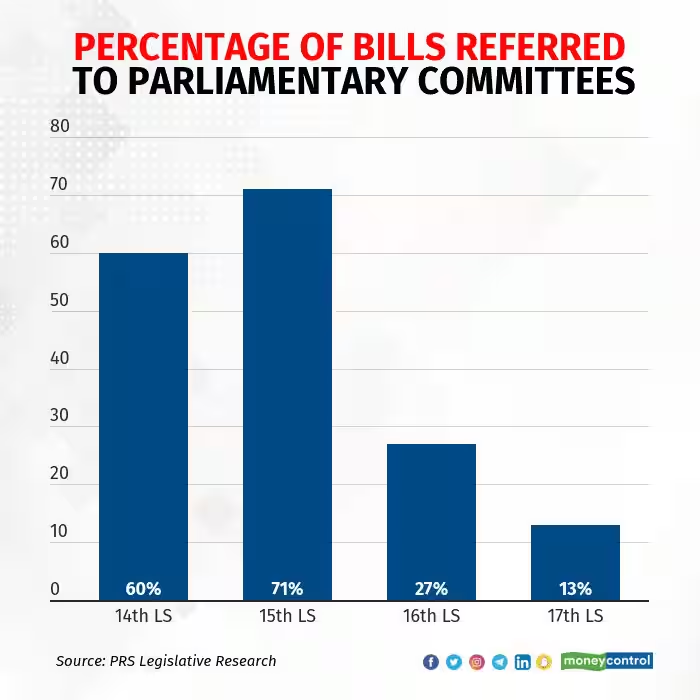
    Decline of parliamentary Committees have weakened executive accountability.

    Coalition Politics results in bargaining politics instead of genuine legislative oversight.

    However, parliamentary control over executive can also be seen

    Executive Accountability – collective responsibility to Parliament under Article 75(3).

    Financial Oversight – Finance committees scrutinise government expenditure. Eg- PAC review of GST framework

    Budgetary Control (Art. 112) through Demands for Grants, and Appropriation Acts.

    Opposition’s Role – Eg- Farm Laws withdrawal.

    Role in Foreign Policy – Eg- debate on Civil Nuclear Deal with the US.

    Way Forward

    Publish Annual Parliamentary Calendar (NCRWC)

    Adopt Shadow Cabinet Model of UK, to institutionalise constructive opposition oversight.

    Allocate fixed time for Private Members’ Bills and Questions.

    Mandatory referral of Bill to Committees (UK system)

    “Parliament is the keystone of the democratic arch.” – Harold Laski

    For a resilient democracy, Parliament must function as the centre of deliberation and control, not as a department of the executive.