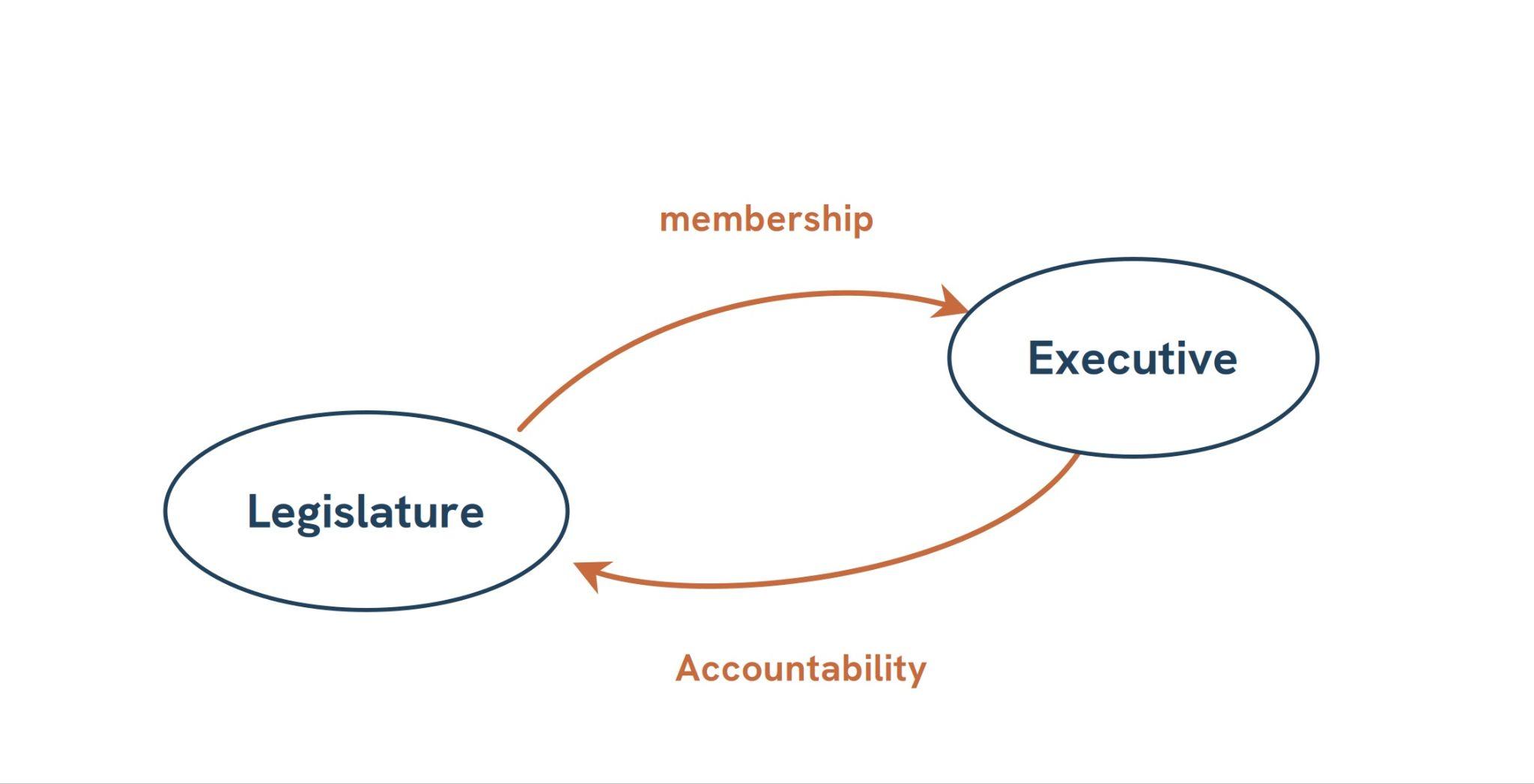
The Parliament of India is the supreme instrument of democratic accountability. Under Article 75(3) of the Constitution, the Council of Ministers is collectively responsible to the Lok Sabha
Parliament ensuring accountability of the executive
Question Hour – Enables MPs to question ministers and expose administrative lapses
Zero Hour – Allows MPs to raise urgent matters of public importance without prior notice.
Adjournment and Censure Motions – Hold the executive accountable on specific issues of public or national concern.
No-Confidence Motion – Tests the majority support of the government and can lead to its fall if lost.
Budgetary Control (Articles 112-114) – power of the purse by approving or rejecting demands for grants.
Cut Motions to reduce or disapprove government expenditure, signalling disapproval of policy.
Parliamentary Committees
Public Accounts Committee (PAC) – Examines CAG reports and ensures post-audit accountability (e.g., 2G and coal scam scrutiny).
Estimates Committee – Evaluates government expenditure efficiency.
DRSCs) in-depth scrutiny of ministries.
Joint Parliamentary Committees (JPCs) – Eg- Waqf Amendment Bill
Parliamentary Privileges – Allow MPs to speak freely and fearlessly, enhancing deliberative accountability.
Issues with parliamentary form of government
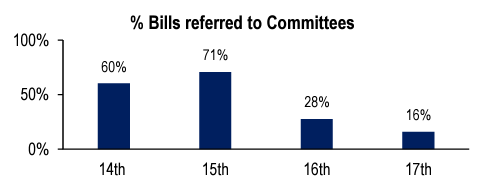
Decline in the number of sittings- The 17th Lok Sabha sat for only 55 days
Frequent Disruptions and Adjournments due to protests and unruly behavior, leading to wasted time and resources.
Low Productivity- Eg- the 2023 winter session saw significant disruptions, resulting in the suspension of over 140 MPs and hindering legislative business.
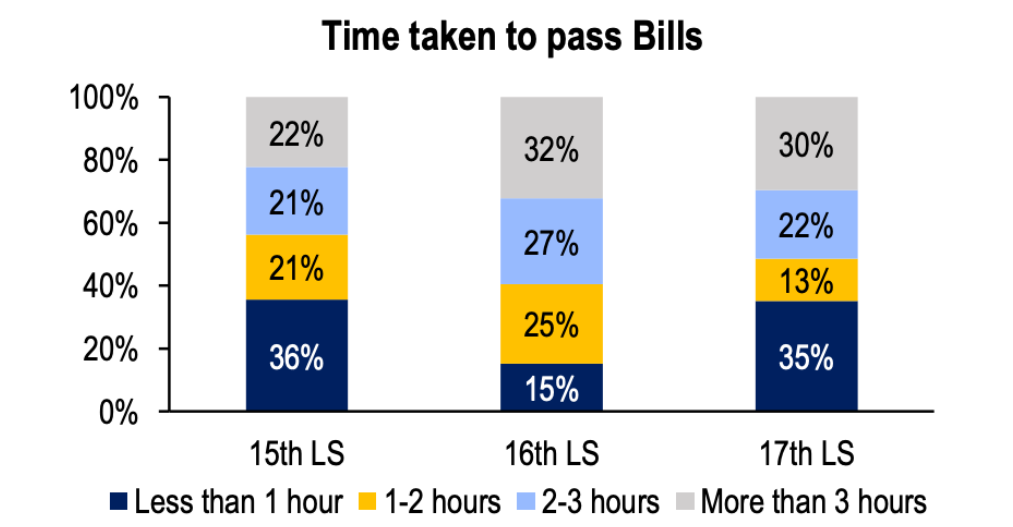
Inadequate Discussion- 58% of the Bills were passed within two weeks of their introduction in 17th LS. Eg- J&K Reorganisation Bill, 2019, and the Women’s Reservation Bill, 2023 were passed within two days
About 31% of the total functioning time in Lok Sabha, and 32% in Rajya Sabha was spent on discussions other than legislation and budgets. Eg- President’s Address to Parliament, matters of public importance, and trust votes.
Between 2019 and 2023, about 80% of the Budget was passed without discussion, and in 2023, the entire Budget was approved without debate.
Rise Legislation through Ordinances bypassing the usual legislative process.
Along with ‘maximum governance, there needs to be ‘maximum accountability’, which must start with an empowered and effective Parliament.