The report, ‘Dependency and Depopulation? Confronting the Consequences of a New Demographic Reality’, released by McKinsey Global Institute, provides a detailed comparative analysis of demographic dynamics in developed (first wave) and developing (later wave) countries.
IMPORTANT: What is Demographic Transition Theory?
Demographic transition describes changes in birth and death rates and population age structure as societies develop economically and technologically.
Stage 1: High birth and death rates result in a stable population.
Stage 2: Decline in death rates due to improved healthcare and sanitation, causing rapid population growth.
Stage 3: Falling birth rates slow population growth, influenced by urbanization and access to contraception.
Stage 4: Low birth and death rates lead to a stable or aging population, reflecting advanced development.
Key Highlights of the McKinsey Report
Two-thirds of humanity now live in countries with fertility rates below the replacement level of 2.1 children per family.
Age structures are shifting from pyramids to obelisks, with a growing elderly population and a shrinking youth demographic.
Populations in some major economies are projected to decline by 20%-50% by 2100 (UN).
The global support ratio (working-age individuals per senior aged 65 or older) is projected to decline from 6.5 today to 3.9 by 2050.
In India, the ratio will fall from 10 workers per senior in 1997 to 4.6 in 2050 and just 1.9 by 2100, similar to Japan’s current levels..
Consumption Patterns in India:
India’s share in global consumption is projected to rise from 9% today to 16% by 2050, while shares of advanced economies are expected to remain flat or decline.
By 2050, the share of consumption by seniors aged 65 and older will rise from 8% to 15%, reflecting changing consumer demographics.
The percentage of hours worked by seniors is projected to increase from 2.9% to 5.4% by 2050 under current trends.
About India’s Diminishing Demographic Dividend
India has 33 years to fully capitalize on its demographic dividend before its support ratios align with those of advanced economies.
From 1997 to 2023, India’s favorable demographics added 0.7 percentage points per year to its GDP per capita growth.
This contribution is expected to shrink to 0.2 percentage points per year through 2050 as the population ages.
India’s support ratio (working-age individuals per senior) is projected to decline significantly, creating greater dependency on fewer workers to support older populations.
By 2050, there will be only 4.6 workers per senior, down from 10 workers per senior in 1997.
India’s GDP per capita is currently 18% of the World Bank’s high-income threshold, emphasizing the need for faster economic progress to “get rich before it gets old.”
Increasing labor force participation, particularly among women, and improving worker productivity are critical to sustaining economic growth.
Despite rapid progress, India’s worker productivity remains at $9 per hour, significantly lower than the $60 per hour average in high-income countries.
PYQ:
[2012] Consider the following specific stages of demographic transition associated with economic development:
Low birth-rate with low death rate
High birth-rate with high death rate
High birth-rate with low death rate
Select the correct order of the above stages using the codes given below:
The sex ratio at birth in Haryana, which reached a peak of 923 in 2019, declined to 910 in 2024, marking an eight-year low.
What is the present sex ratio in India?
As of January 2025, the sex ratio at birth in India is approximately 933 females per 1,000 males.
World Bank
Why Historically has there been an Imbalance in the Sex Ratio in India?
Historically, India has faced a skewed sex ratio primarily due to cultural preferences for male children, leading to practices such as female foeticide. The sex ratio was recorded at 943 females per 1,000 males during the 2011 Census. Factors contributing to this imbalance include:
Cultural Preference for Sons: Societal norms often favour male children, viewing them as economic assets while daughters are seen as financial burdens due to dowry practices.
Female Foeticide: The availability of prenatal sex determination technologies has led to sex-selective abortions, contributing to the skewed ratio.
Economic Factors: Families may prefer fewer children and opt for sons to secure lineage and support in old age.
What are the Government Initiatives to Improve the Sex Ratio?
The Indian government has implemented several initiatives aimed at improving the sex ratio:
Beti Bachao Beti Padhao Campaign: Launched in 2015, this campaign focuses on preventing female foeticide and promoting the welfare of girls.
Pre-Conception and Pre-Natal Diagnostic Techniques Act (PNDT Act): Enforced to curb sex-selective abortions and promote gender equality.
Financial Incentives: Programs such as providing financial assistance at the birth of a girl child (e.g., Rs 21,000) encourage families to value daughters.
Education and Awareness Programs: Efforts are made to improve female education and reduce dropout rates among girls, which are crucial for long-term improvements in gender equality.
Way forward:
Strengthen Law Enforcement and Monitoring: Ensure strict implementation of the PCPNDT Act with increased vigilance and swift action against violations.
Address Cultural and Economic Barriers: Launch targeted campaigns to challenge patriarchal norms, promote gender equality, and incentivise families to raise daughters.
Mains PYQ:
Q Why do some of the most prosperous regions of India have an adverse sex ratio for women? Give your arguments.(UPSC IAS/2014)
The National Mental Health Programme (NMHP) is a flagship initiative by the Government of India aimed at addressing the growing mental health challenges in the country.
About National Mental Health Programme (NMHP):
Details
Initiated in 1982 and restructured in 2003, the NMHP aims to modernize mental health facilities and upgrade psychiatric wings in medical institutions.
Features and Signficance
The program has 3 components:
1. Treatment of mentally ill
2. Rehabilitation
3. Prevention and promotion of positive mental health.
Aims and Objectives
Prevention and treatment of mental and neurological disorders and their associated disabilities.
Use of mental health technology to improve general health services.
Application of mental health principles in total national development to improve quality of life.
Structural Mandate
The District Mental Health Programme (DMHP), based on the Bellary Model, focuses on community mental health services at the primary healthcare level, spanning 716 districts.
DMHP provides outpatient services, counselling, psycho-social interventions, and support for severe mental disorders.
Priority given to mental morbidity and treatment.
Primary healthcare services at village and sub-center levels.
Services at the Primary Health Center (PHC) and District Hospital levels.
Facilities at Mental Hospitals and Teaching Psychiatric Units.
Back2Basics: The Mental Healthcare Act, 2017
It replaced the Mental Healthcare Act, 1987, which was criticized for failing to recognize the rights of mentally ill individuals.
It ensures the Right to Access to Healthcare and aims to ensure the rights and dignity of those with mental illness.
It decriminalized suicide, stating that attempts are presumed to be under severe stress and shall not be punished.
According to NFHS-5, 97% of women and 97.5% of men are aware of modern contraceptives, yet the burden primarily falls on women, with female sterilisation being the most prevalent.
What are the current trends in contraceptive decision-making among Indian couples?
Dominance of Female Sterilization: As of the latest reports, female sterilisation accounts for 37.9% of total sterilizations, while male sterilisation through vasectomies remains critically low at just 0.3%.
Decline in Male Sterilization: The use of male sterilization has been steadily decreasing over the past three decades.
Data from the National Family Health Survey (NFHS) show that the percentage of vasectomies has remained stagnant at around 0.3% in both NFHS-4 (2015-16) and NFHS-5 (2019-20), reflecting a broader trend of declining male participation in family planning.
Government Targets Not Met: The National Health Policy 2017 aimed to increase male sterilization to at least 30%, a target that remains unmet, indicating systemic issues within the family planning framework.
How does societal perception impact men’s involvement in family planning?
Perception of Burden: Many men view vasectomy as an undue burden, fearing loss of wages and questioning their masculinity. Women often echo this sentiment, believing that men should not be “burdened” by sterilization responsibilities due to their economic roles.
Lack of Awareness: There is a widespread lack of awareness regarding the benefits and safety of vasectomies, compounded by misconceptions about their effects on libido and masculinity. This misinformation contributes to low acceptance rates among men.
Cultural Norms: Traditional gender roles reinforce the notion that women should handle family planning, leading to a lack of male engagement in reproductive health discussions.
What strategies can be implemented to promote shared responsibility in contraceptive use? (Way forward)
Education and Awareness Campaigns: Initiatives should focus on educating both genders about reproductive health and shared responsibilities through school programs and community workshops. Early sensitization can help normalize discussions around male sterilization.
Conditional Cash Incentives: Increasing financial incentives for men who opt for vasectomies can encourage participation. Evidence from Maharashtra suggests that cash incentives have led to higher rates of vasectomy acceptance among rural men.
Training Healthcare Providers: Enhancing training for healthcare workers on no-scalpel vasectomies can improve service delivery, particularly in rural areas with limited access to skilled practitioners.
Public Awareness Campaigns: Drawing lessons from countries like South Korea and Brazil, India can implement mass media campaigns to reshape societal attitudes towards male contraceptive responsibility, emphasising the safety and simplicity of vasectomies compared to female sterilization procedures.
Policy Implementation with Concrete Steps: The government should ensure that policies are actionable, with clear steps outlined to achieve targets related to male participation in family planning efforts.
Mains PYQ:
Q Discuss the main objectives of Population Education and point out the measures to achieve them in India in detail. (UPSC IAS/2021)
Q) Public health system has limitations in providing universal health coverage. Do you think that private sector can help in bridging the gap? What other viable alternatives do you suggest? (UPSC CSE 2015)
Q) The increase in life expectancy in the country has led to newer health challenges in the community. What are those challenges and what steps need to be taken to meet them? (UPSC CSE 2022)
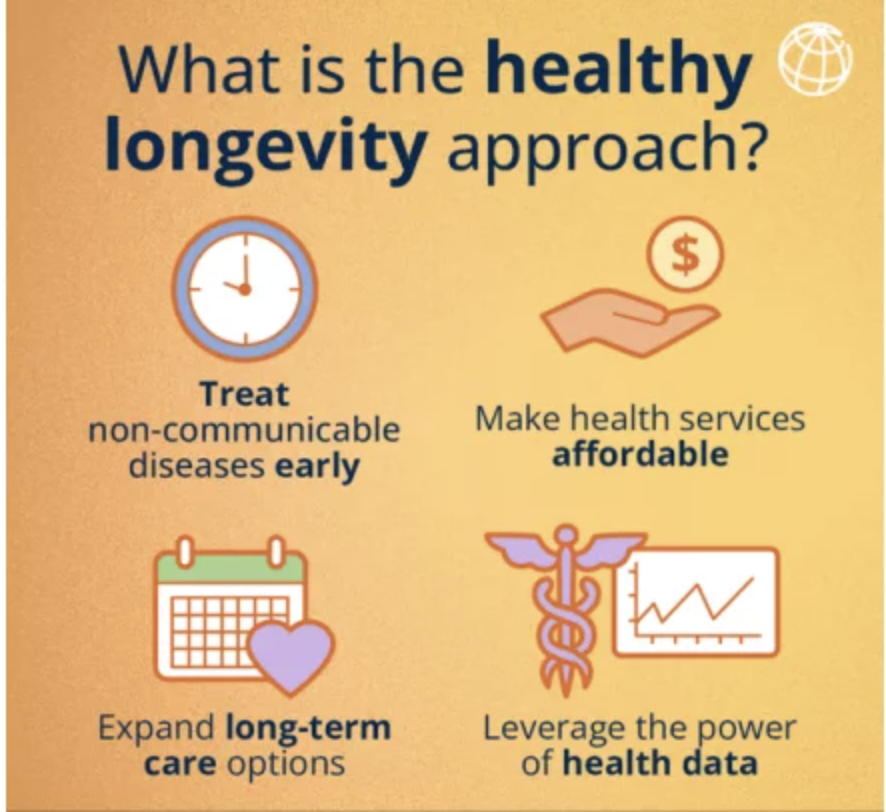
India’s Public Health System needs to focus on preventing and controlling non-communicable diseases like hypertension, diabetes, cardiovascular diseases, stroke, and cancer. These diseases affect people of all income levels, but the poor and old aged population is the most vulnerable.
In this scenario, Health Longevity is an evidence-based approach to help countries define prioritized, costed interventions and policy changes to save and extend people’s lives. According to World Bank, investing in healthy longevity could save 150 million lives in low- and middle- income countries.
Today’s editorial emphasizes the issues related to the health sector in India especially with respect to Non-communicable diseases.
_
Let’s learn!
Why in the News?
The World Bank publishes an important and forward-thinking report on a key issue affecting people’s well-being. The report is Unlocking the Power of Healthy Longevity: Demographic Change, Non-communicable Diseases, and Human Capital, released in Washington D.C. in September 2024.
Key Findings of the Report:
● Aging and NCD Burden: Global aging is accelerating, with non-communicable diseases (NCDs) causing over 70% of deaths, especially in low- and middle-income countries. ● Potential Life Savings: Investing in healthy longevity could save 150 million lives and significantly improve productivity and economic growth by 2050. ● Life-Course Health Investments: Addressing health from maternal to elderly care, with a focus on NCD prevention, is essential for promoting healthier aging populations. ● Gender and Social Equity: Women, who often bear caregiving responsibilities and live longer with NCDs, require targeted health and social protections to ensure equity in aging.
Issues related to the Elderly Population in India:
Size of Elderly Population: India has the second-largest elderly population in the world, with approximately 140 million people aged 60 years and above.
Growth Rate: The elderly population is growing at a rate nearly three times higher than India’s overall population growth, indicating a significant demographic shift.
Aging Population Challenge: This rapidly aging population places considerable pressure on health services, social systems, and the economy.
What are the Disease Concerns in India?
Rise in Non-Communicable Diseases (NCDs): India is witnessing an increasing burden of NCDs, including heart disease, diabetes, cancer, and chronic respiratory diseases, which are now the leading causes of death.
Health Risks for the Elderly: As the elderly population grows, the prevalence of age-related diseases and NCDs is expected to surge, straining healthcare systems.
Impact on Public Health: The health challenges are compounded by the underdeveloped infrastructure for treating chronic diseases, particularly in rural areas.
Issues related to Hospital Expenses in India:
Rising Healthcare Costs: Medical expenses for elderly care, especially for chronic diseases and long-term care, are escalating. Private hospitals often charge exorbitantly, making healthcare unaffordable for many elderly individuals.
Inaccessibility of Healthcare: The elderly often face challenges in accessing healthcare facilities due to geographic and economic barriers, leading to delays in diagnosis and treatment.
Catastrophic Health Expenditure: Many elderly people, particularly in lower-income segments, face catastrophic health expenses that can push them into poverty. Even with government schemes, the out-of-pocket expenses remain high.
Steps taken by the Indian Government:
● National Programme for Health Care of the Elderly (NPHCE): This program aims to provide comprehensive healthcare services specifically tailored for older adults. ● National Social Assistance Programme (NSAP): Aimed at providing financial assistance to the elderly who are below the poverty line. ● Maintenance and Welfare of Senior Citizens Act, 2007: This act mandates maintenance and welfare provisions for senior citizens. ● Atal Vayo Abhyuday Yojana (AVYAY): A scheme focused on promoting the welfare of senior citizens through various support services. ● Elderline: A national helpline established to assist elderly individuals in accessing information and services related to their needs
Efficacy of Social Security Schemes:
Limited Coverage: India’s social security schemes, including pensions and health insurance, often do not adequately cover the elderly, especially those in lower income brackets or rural areas.
For example: Public health schemes like Ayushman Bharat aim to provide health insurance to underprivileged populations, but the coverage and access remain limited for the elderly.
Vulnerable Groups: The elderly in India, particularly those without formal employment or savings, remain highly vulnerable to financial distress from healthcare expenses and lack sufficient social security support.
Way forward:
Enhance and Expand Social Security Coverage: Strengthen existing social security schemes like Ayushman Bharat to ensure comprehensive health insurance and pension coverage for elderly populations, particularly in rural and low-income areas. This can help alleviate financial strain from healthcare costs.
Invest in Geriatric Healthcare Infrastructure: Improve healthcare facilities and services for the elderly, focusing on chronic disease management and accessible healthcare, especially in rural areas. This includes training healthcare workers in geriatric care and increasing the availability of affordable long-term care options.
For many years, International NGOs (INGOs) have promoted donor-driven agendas that have frequently caused harm to local communities.
Case Study: Africa and Bolivia
Tanzania and Kenya (Africa): In these regions, INGO-led conservation efforts, often backed by Western donors, displaced indigenous Maasai communities from their ancestral lands. These interventions were justified as conservation projects but disregarded local rights and livelihoods, leading to social and economic harm for the Maasai.
Bolivia (Cochabamba): Water privatization, supported by INGOs and international donors, restricted access to basic water resources, sparking widespread public outcry.
The privatization, part of broader neoliberal reforms, was later reversed due to local resistance, revealing the negative effects of donor-driven agendas on essential public services.
What are the Historical roots of Gender Imbalance?
Colonial Policies: British colonial land reforms in the 18th and 19th centuries, especially among land-owning castes, exacerbated female infanticide due to several socio-economic factors linked to inheritance, property rights, and the structure of agrarian society.
Post-Independence Malthusian Fears: Following independence, fears of overpopulation dominated Western perceptions of India, and INGOs, influenced by these Malthusian concerns, promoted population control measures.
Note: Malthusian concerns originate from the ideas of Thomas Malthus, an 18th-century British scholar. In his 1798 work, An Essay on the Principle of Population, Malthus argued that population growth would outpace food production, leading to widespread famine, disease, and societal collapse.
Role of INGOs in Worsening Gender Imbalance in India
Population Control Focus: INGOs such as the Ford Foundation, Rockefeller Foundation, and Population Council were instrumental in introducing sex-determination technologies, particularly between the 1950s and 1980s, by directing significant funds towards these efforts while sidelining other public health needs.
Influence in Institutions: INGOs embedded themselves in key Indian institutions such as AIIMS and the International Institute for Population Sciences (IIPS), shaping the direction of research and policy towards population management.
For example, Sheldon Segal of the Population Council worked closely with the Indian Health Ministry to prioritize family planning over other pressing health concerns like tuberculosis and malaria.
Promotion of Sex Selection: Doctors, influenced by the donor-driven agendas of INGOs, began promoting sex-determination technologies like amniocentesis under the pretext of reducing “unnecessary fecundity.”
Impact of Sex Determination Technology
Introduction and Spread: Sex determination technologies, such as amniocentesis and ultrasound, Initially intended for detecting fetal abnormalities, they were quickly co-opted for sex selection, leading to a significant increase in female foeticide.
Census data reveals a steady decrease from 943 girls per 1,000 boys in 1951 to 927 girls per 1,000 boys by 1991. The sharpest fall occurred between 1971 and 1991, coinciding with the spread of these technologies.
Regional Variations: States with easier access to sex-determination tests, such as Punjab and Haryana, experienced the steepest declines in their child sex ratios.
By 2001, Punjab’s ratio had dropped to 876 girls per 1,000 boys, while Haryana’s fell to 861.
Missing Girls: A 2006 study published in The Lancet estimated that sex-determination technologies contributed to the loss of 10 million female births in India between 1980 and 2010, with approximately 500,000 female foetuses aborted annually during this period.
Way forward:
Strengthen Legal Enforcement and Awareness: Enforce stricter penalties for illegal sex determination practices and raise public awareness to shift societal norms that value male children over female children, promoting gender equality at all levels.
Focus on Holistic Public Health and Gender Policies: Redirect INGO and government efforts toward comprehensive health programs, prioritizing women’s health, education, and economic empowerment, rather than solely focusing on population control.
After decades of steady increases in human life expectancy due to advancements in medicine and technology, recent trends suggest that these gains are starting to slow down, according to a new study.
The Key Findings of the Study:
Slowing of Life Expectancy Gains: After decades of rising life expectancy due to medical and technological advancements, the pace of these increases has slowed significantly. The study suggests that human life expectancy has nearly plateaued, with dramatic extensions unlikely without breakthroughs in anti-aging medicine.
Regional Analysis: The study analyzed life expectancy data between 1990 and 2019 from regions with the longest life spans, such as Australia, Japan, and Sweden.
Even in these regions, life expectancy increased by only 6.5 years on average over the 29-year period.
Challenges of Radical Life Extension: Researchers found that while people live longer due to improvements in healthcare, the human body’s aging process—marked by the declining function of internal organs—limits life span. Even if diseases like cancer and heart disease are eliminated, aging itself remains a barrier.
Low Probability of Reaching 100: The study estimates that girls born in the longest-living regions have only a 5.3% chance of reaching 100 years, while boys have a 1.8% chance. Thus, despite medical advancements, reaching 100 years remains rare without interventions to slow aging.
Aging as the Primary Barrier: Researchers argue that extending average life expectancy dramatically will require breakthroughs that slow the aging process rather than just better treatments for common diseases.
Some experimental drugs, like metformin, have shown potential in animal studies, but human trials are needed.
India’s Present Status:
Lower Life Expectancy: As of 2024, India’s average life expectancy is around 70 years, In contrast, countries like Japan and Switzerland boast life expectancies exceeding 83 years.
Healthcare Advancements: While India has made significant progress in combating infectious diseases and improving maternal and child health, chronic illnesses and lifestyle diseases (such as heart disease and diabetes) are emerging as leading causes of death.
What Needs to Be Done: (Way forward)
Focus on Anti-Aging Research: India must invest in research on aging and regenerative medicine, exploring ways to slow down the aging process rather than just treating diseases.
Strengthening Healthcare Systems: Expanding access to quality healthcare and preventive medicine to manage age-related diseases can enhance the quality of life in later years, even if life expectancy does not rise dramatically.
Policy Support for Longevity Research: There is a need for policies supporting medical research into life-extension technologies, including drug trials and clinical studies focused on aging.
Public Health Interventions: Improved public health measures targeting lifestyle diseases (obesity, diabetes) and better management of age-related conditions can enhance life span and overall well-being.
Mains PYQ:
Q The increase in life expectancy in the country has led to newer health challenges in the community. What are those challenges and what steps need to be taken to meet them? (UPSC IAS/2022)
India’s healthcare since globalization has improved greatly, and is globally recognized due to skilled professionals, effective policies, and strong institutions which draw patients from over 147 countries.
Economic implications of being a preferred Medical Destination:
Foreign Exchange Savings: India saves billions in foreign exchange as fewer Indians need to travel abroad for advanced medical treatments.
Revenue Generation: The influx of international patients generates over $9 billion annually, contributing to economic growth.
Job Creation: The medical tourism sector creates employment opportunities in healthcare, hospitality, transportation, and pharmaceuticals.
Cost-Effective Treatments: India’s affordable yet high-quality medical services attract patients globally, further boosting the economy.
What are the challenges?
Shortage of Healthcare Professionals
Current Shortage: India is estimated to be short of around 600,000 doctors, leading to a doctor-patient ratio of approximately 0.7 doctors per 1,000 people, which is significantly lower than the World Health Organization’s recommended ratio of 1 doctor per 1,000 people.
Future Demand: By 2030, the demand for healthcare professionals in India is expected to double, driven by an ageing population and the increasing burden of non-communicable diseases.
Inadequate Public Healthcare Spending
Low Expenditure: As of 2021-22, India’s public healthcare expenditure stood at 2.1% of GDP, which is significantly lower than that of many developed countries, For instance, countries like Japan and France spend about 10% of their GDP on healthcare, while the United States spends 16.9%.
Comparison with Neighbors: Even neighbouring countries like Bangladesh and Pakistan allocate over 3% of their GDP to public healthcare.
Unequal Access to Healthcare
Urban-Rural Disparity: There is a stark disparity in healthcare access between urban and rural areas. Rural regions often lack basic healthcare facilities, leading to limited access to quality services for a significant portion of the population.
Healthcare Infrastructure: India’s healthcare infrastructure is inadequate to meet the growing demands of its population. For instance, India has one of the lowest per capita bed counts in the world, with only about 0.5 hospital beds per 1,000 people, compared to the OECD average of 4.7 beds per 1,000 people.
High Out-of-Pocket Expenditure
Financial Burden: Approximately 75% of healthcare expenditure in India is borne out-of-pocket by individuals and families.
Need for a Strong Vision (Way forward)
“Heal in India” Initiative: The Prime Minister’s vision of “Heal in India” emphasizes positioning India as a global healthcare leader. This initiative is not merely a slogan but a strategic approach to enhance India’s reputation as a preferred medical destination.
Youth Engagement: Inspiring the youth to pursue careers in healthcare is crucial for sustaining growth in this sector. By encouraging innovation and entrepreneurship among young Indians, the country can ensure a robust healthcare system.
Investment in Public Healthcare: Increase public healthcare spending to improve infrastructure, especially in rural areas, and bridge the urban-rural disparity.
Focus on Medical Device Manufacturing: Promote domestic production of medical devices under the “Make in India” initiative to reduce dependency on imports.
Mains PYQ:
Q Appropriate local community-level healthcare intervention is a prerequisite to achieve ‘Health for All’ in India. Explain. (UPSC IAS/2018)
The Census Act, 1948 ought to be revised to mandate the inclusion of caste enumeration as a regular part of the Census process, incorporating specific questions in the questionnaire to gather this data systematically, rather than leaving it subject to discretionary decisions by the Union executive.
Why a Caste Census?
Social Relevance: Caste remains a significant social determinant in India, influencing access to opportunities, resources, and representation. A caste census is essential to understand and address caste-based inequalities and social stratification accurately.
Policy Formulation: Constitutionally mandated policies such as reservations in education, employment, and legislative bodies rely on caste-based data to ensure effective implementation. Detailed enumeration helps in identifying beneficiaries, preventing misclassification, and ensuring equitable distribution of benefits.
Administrative Precision: Detailed caste-wise data is crucial for administrative purposes, including planning and allocation of resources. It helps in targeting development programs and policies for specific caste groups based on their socio-economic status and needs.
Historical Context: India has a history of caste-based discrimination and marginalization. A caste census provides empirical evidence of existing disparities, enabling the government and civil society to design interventions aimed at promoting social justice and equality.
The arguments against caste Census
Social Divisiveness: Critics argue that emphasizing caste through a census could perpetuate social divisions and caste identities. They fear that highlighting caste differences could exacerbate tensions and hinder national unity.
Administrative Complexity: Conducting a caste census is seen as administratively challenging due to the sheer number of caste groups in India, estimated to be thousands, many of which are region-specific. Critics argue that accurately enumerating and categorizing these castes could pose logistical difficulties and lead to inaccuracies.
Political Implications: There are concerns that caste-based data could be misused for electoral gains and political manoeuvring. Critics argue that caste enumeration might lead to demands for increased reservations and create further divisions along caste lines in political representation and decision-making processes.
How an attempt at caste Census failed
Constitutional Mandate: The Constitution of India provides for reservations in education (Article 15(4)) and public employment (Article 16(4)) for OBCs. Enumerating OBCs in the Census is essential to effectively implement these constitutional provisions and ensure accurate representation.
Policy Implementation: Detailed caste-wise data is necessary for effective policy formulation and implementation related to reservations, social justice, and welfare schemes targeting OBC communities. It helps in identifying deserving beneficiaries and avoiding wrongful inclusions or exclusions.
Judicial Imperative: The Supreme Court of India, in various rulings like Indra Sawhney case (1992), has underscored the importance of accurate caste data for upholding reservation policies and ensuring social justice. The court has emphasized the need for periodically revising the OBC list based on updated census data.
Local Governance and Representation: Post the 73rd and 74th Amendments to the Constitution, which introduced reservations for OBCs in local bodies (panchayats and municipalities), accurate caste data at the local level is crucial for fair representation and effective governance.
How an attempt at caste Census failed
Poor Design and Execution: The Socio-Economic and Caste Census (SECC)-2011, conducted through Union Ministries of Rural Development and Urban Development, lacked the expertise and experience needed for sociological surveys
Legal and Administrative Challenges: The SECC-2011 was not conducted under the Census Act, 1948, which meant it lacked the legal framework and procedural clarity required for a comprehensive census.
Way forward:
Amendment of Census Act: Amend the Census Act, 1948, to explicitly include caste as a parameter for enumeration. This legal revision will provide a clear mandate and framework for conducting a comprehensive caste Census, ensuring adherence to standardised procedures and data collection methodologies.
Expert Involvement and Public Consultation: Engage sociological and anthropological experts to develop a detailed list of caste categories specific to each state. Publish the draft list online for public review and feedback, facilitating transparency and accuracy in caste enumeration.
Mains PYQ:
Q Caste system is assuming new identities and associational forms. Hence, the caste system cannot be eradicated in India.” Comment. (UPSC IAS/2018)
PYQ Relevance: Q Define potential GDP and explain its determinants. What are the factors that have been inhibiting India from realizing its potential GDP? (UPSC IAS/2020) Q Besides the welfare schemes, India needs deft management of inflation and unemployment to serve the poor and the underprivileged sections of society. Discuss. (UPSC IAS/2022)
Mentor comment: The Indian economy needs to generate over 25 million jobs in the next five years to employ all the currently unemployed. Despite the Narendra Modi government’s claim of an 8% GDP growth rate last year, job creation has not kept pace. Although the unemployment rate for those aged 15 and above decreased from 4.2% in 2021 to 3.1% in 2023, this improvement is insufficient. In the 2024 general election, the Bharatiya Janata Party lost its majority, forming a coalition with parties holding different economic views due to the job market setback.
Let’s Learn!
__
Why in the news?
The Modi government claimed 8% GDP growth last year, but this has not translated into adequate job creation, as shown by current unemployment rates.
Inequality gap is widening
Rising Wealth Inequality: In the past two decades, the gap between the rich and the poor has significantly widened. Official statistics reveal that 1% of India’s population now owns 40% of the country’s wealth.
K-shaped Economic Inequality: The term “K-shaped” inequality describes the phenomenon where income and consumption for a few are rising, while for the majority, it is declining.This has been particularly evident over the past decade under BJP central rule.
Income Inequality: The World Inequality Report 2022 highlights that India is one of the most unequal countries globally, with the top 10% and top 1% of the population earning 57% and 22% of the national income, respectively. Meanwhile, the bottom 50% see their share reduced to 13%.
Tax Burden on the Poor: About 64% of the total Goods and Services Tax (GST) revenue in India is contributed by the bottom 50% of the population, whereas only 4% comes from the top 10%.
Healthcare as a Luxury: Many Indians struggle to access necessary healthcare, with 63 million people (nearly two every second) pushed into poverty each year due to healthcare costs.
Food Security and Nutrition: According to “The State of Food Security and Nutrition in the World, 2023,” around 74% of India’s population cannot afford a healthy diet, and 39% fall short of a nutrient-adequate diet.
Global Hunger Index 2023: India’s 2023 Global Hunger Index score is 28.7, categorized as “serious” on the GHI Severity of Hunger Scale.
Cause of inequality:
Structural economic factors: India has struggled to shift its large agricultural workforce towards more productive and better-paying jobs in the formal economy. The economic boom has primarily benefited the top 10-20% while leaving the poor behind.
Policy shocks disproportionately impacting the informal sector: Demonetization, GST implementation, and COVID-19 lockdowns have severely disrupted livelihoods and employment for India’s large informal economy, exacerbating inequality
Uneven distribution of wealth and income: The richest 1% of Indians now own over 40% of the country’s wealth, while the bottom 50% possess only 3% of the wealth. This wealth concentration at the top has accelerated in recent decades.
Lack of effective wealth redistribution: Measures like wealth taxes on the super-rich and greater investment in social welfare, healthcare, and education have been lacking, perpetuating the inequality cycle.
Growth could slip because of
Heavy Reliance on Government Expenditure: The recent GDP growth has been driven significantly by a large Budget deficit and massive government capital expenditure rather than structural investments in key sectors like industry, agriculture, and services.
Lack of Structural Investments: Structural investments in the industrial, agricultural, and service sectors are crucial for sustainable economic growth. The absence of significant investments in these sectors means that the foundational aspects of the economy remain weak, potentially hindering long-term growth.
Historical GDP Growth Decline: The GDP growth rate has shown significant declines in the past, such as falling from 8% to 3.8% in the fourth quarter of 2019-20. This trend indicates a vulnerability in maintaining high growth rates, especially without addressing underlying economic issues.
Fiscal Deficit Concerns: A significantly large Budget deficit to fund government expenditure can lead to concerns about fiscal sustainability.
Global Economic Conditions: The global economic environment, including factors such as inflation, interest rates, and geopolitical tensions, can impact India’s growth prospects.Any adverse changes in the global economy could further strain India’s growth trajectory.
Sectoral Weaknesses: Weaknesses in key sectors such as manufacturing, agriculture, and services can drag down overall economic growth.
Way forward:
Support for SMEs and Informal Sector: Given that 92% of jobs in agriculture and 73% of jobs in industry and services are in the unorganised sector, policies aimed at supporting small and medium enterprises (SMEs) and the informal sector are crucial.
Agricultural Reforms and Rural Development: Focusing on modernising agriculture through technology, better irrigation, crop diversification, and improving rural infrastructure can boost productivity and incomes in rural areas.
Education and Skill Development: Investing in education and skill development is essential to equip the workforce with the necessary skills for the evolving job market.


![[2nd July 2024] The Hindu Op-ed: Glossing over unemployment, its high electoral price](https://www.civilsdaily.com/wp-content/uploads/2024/07/2-july-1568x882.jpg)