💥Join UPSC 2027,2028 Mentorship (August Batch) + XFactor Notes & Microthemes PDF

GS Paper: Poverty & Hunger

  • [6th September 2024] The Hindu Op-ed: The Food Security Act has revamped the PDS

    [6th September 2024] The Hindu Op-ed: The Food Security Act has revamped the PDS

    PYQ Relevance:

    Q What are the salient features of the National Food Security Act, 2013? How has the Food Security Bill helped in eliminating hunger and malnutrition in India? (UPSC IAS/2021)

    Q How far do you agree with the view that the focus on the lack of availability of food as the main cause of hunger takes the attention away from ineffective human development policies in India? (UPSC IAS/2018)

    Q Food Security Bill is expected to eliminate hunger and malnutrition in India. Critically discuss various apprehensions in its effective implementation along with the concerns it has generated in WTO. (UPSC IAS/2013)

    Mentor comment: A significant portion of the population lives below the poverty line, limiting access to nutritious food. Increasing population pressures food availability, despite a large agricultural workforce. While food production is sufficient, distribution is often inequitable, leading to shortages in certain regions. A substantial amount of food is lost during production, storage, and distribution, exacerbating scarcity. Problems in the Public Distribution System (PDS) include leakages, diversion of grains, and the presence of fake ration cards. In today’s editorial we will be addressing food security in India requires a multi-faceted approach, focusing on enhancing distribution systems and ensuring equitable access to food for all citizens.

    _

    Let’s learn!

    Why in the News?

    As per National Sample Survey (NSS) data, PDS leakages at the all-India level were 41.7% in 2011-12.

    • However, some states like Bihar, Chhattisgarh, and Odisha had initiated PDS reforms between 2004-05 and 2011-12, leading to reduced leakages.
    About the National Food Security Act (NFSA) of 2013:

    • The NFSA provides subsidized food grains to about two-thirds of India’s population. It provides food grains to two categories of beneficiaries:
    Antodaya Anna Yojana (AAY) households.
    Priority Households (PHH).       (75% of rural and 50% of urban populations are eligible for these benefits.)
    • The NFSA requires state governments to set up grievance redressal mechanisms, including call centers, helplines, and nodal officers. Each district is also required to have a District Grievance Redressal Officer (DGRO).
    • Though the Indian Constitution does not have any explicit provision regarding the right to food, the fundamental right to life enshrined in Article 21, includes the Right to live with human dignity, which may include the right to food and other necessities.
    • Hence, this Act marked a shift in India’s approach to food security, moving from a welfare model to a rights-based model.

    What are the issues around Public Distribution System (PDS) Leakages?

    PDS leakages refer to the portion of rice and wheat released by the Food Corporation of India (FCI) that does not reach consumers.

    • Leakage Estimates and Comparison: National Sample Survey (NSS) – based estimates show higher leakages (54% in 2004-05, declining to 42% in 2011-12).
      • Indian Human Development Survey (IHDS)-based estimates indicate lower leakages (49% in 2004-05, declining to 32% in 2011-12) suggesting better performance in capturing actual PDS usage.
      • The IHDS is considered a more reliable source for PDS purchases compared to the NSS due to its focused methodology.
    • Expanded PDS by States: Some states provide PDS grain to non-NFSA beneficiaries, increasing the overall leakage estimate. (leakages estimated to be 22%)
    • Mismatch in Timing: NSS and FCI data operate on different reference years (agricultural year vs. financial year), which can affect the synchronization of data and lead to discrepancies in leakage estimates.
    • Measurement Errors: NSS data relies on a 30-day recall period for consumption, which may lead to under-reporting and measurement errors, potentially inflating leakage estimates.
    Do you know why IHDS data is considered more reliable?
    • IHDS surveys are designed specifically to address human development issues.
    • IHDS employs a mixed recall period for consumption, which enhances accuracy in reporting.
    • IHDS can synchronize its data collection periods more effectively with the agricultural year, reducing mismatches.

    Way Forward: 

    • Although PDS is a vital social policy tool, it faces threats from experimental innovations like cash transfers and biometric authentication, which may undermine its effectiveness. 
    • Instead of pursuing these measures, the government should focus on expediting the delayed Census to prevent the exclusion of over 100 million people and consider including more nutritious items like pulses and edible oil in the PDS.

    https://www.thehindu.com/opinion/lead/the-food-security-act-has-revamped-the-pds/article68610659.ece

  • A case of people versus Population    

    Why in the news? 

    Since 1989, July 11 has been designated as World Population Day, marking the global population surpassing the five billion mark.

    About Malthus Theory of Population

    • Thomas Malthus’ Theory of Population, proposed in 1798, posited that population growth would outpace food production, leading to widespread famine and poverty.
    • He believed population grows exponentially while food production increases linearly. However, advancements in agriculture and technology have prevented the catastrophic outcomes he predicted.

    Present Scenario

    • Population Growth and Food Production: Despite significant population growth, currently estimated at 8.1 billion globally, advancements in technology and agriculture have enabled food production to keep pace. This disproves Malthus’ prediction of widespread famine due to population outstripping food supply.
    • India’s Demographics: India, the most populous nation with 1.44 billion people, has seen its annual population growth rate fall below 1%, with a total fertility rate (TFR) of 2, just below the replacement level. Economic growth has surged, with per capita GDP increasing sixfold from $400 to $2,400 over the past 27 years.
    • Poverty Reduction and Challenges: The percentage of Indians living below the poverty line has decreased from 43% to 11%. However, significant disparities persist, with certain states like Uttar Pradesh, Bihar, Madhya Pradesh, and Jharkhand accounting for 83% of the nation’s poverty. Climate change remains a critical challenge, disproportionately affecting poorer populations.

    Changes in India

    • Population : Population Growth has Increased from 1 billion to 1.44 billion (44% increase). The Annual population growth rate decreased from nearly 2% to below 1%. Total Fertility Rate (TFR) has declined from 3.4 to 2, below the replacement level of 2.1.
    • Economic Indicators: Per Capita GDP has rose sixfold from $400 to $2,400, signifying substantial economic growth. And percentage of people living below the multi-dimensional poverty line decreased from 43% to 11%.
    • Life Expectancy: Increased from 61 years to 70 years, indicating improvements in healthcare and living standards.

    Impact of Climate Change on Population

    • Increased Vulnerability of the Poor: Climate change disproportionately affects poorer populations in developing countries like India. Inadequate housing, infrastructure, and resources make these communities more susceptible to the adverse effects of extreme weather events, such as floods, droughts, and heatwaves.
    • Agricultural Disruption: Unpredictable weather patterns and extreme climate conditions disrupt agricultural productivity, leading to food insecurity. This particularly impacts rural populations who depend on farming for their livelihoods, exacerbating poverty and malnutrition.
    • Migration and Displacement: Climate change-induced events, such as rising sea levels and severe weather, force people to migrate from their homes. This internal displacement puts additional strain on urban areas and exacerbates existing social and economic challenges, leading to overcrowding and increased competition for resources.

    Agenda of Global South Population 

    • Economic Growth and Poverty Eradication: Developing nations in the Global South prioritize economic growth to reduce poverty and improve living standards. The focus is on sustainable development, ensuring that economic progress is not compromised while addressing the immediate needs of their populations. India’s aim to achieve zero poverty within the next decade exemplifies this priority.
    • Sustainable Development and Climate Responsibility: The Global South advocates for a balanced approach to climate change, emphasizing the need for developed countries (with higher historical emissions) to take greater responsibility. The G-20 New Delhi Declaration (2023) highlights the importance of the circular economy, resource efficiency, and extended producer responsibility in achieving sustainable development without hindering economic growth.

    A Pathway for the Most Populous Nation (Way Forward) 

    • Balancing Economic Growth and Environmental Sustainability: India must continue prioritizing economic growth to alleviate poverty and improve living standards while integrating sustainable practices. Emphasizing circular economy principles, resource efficiency, and extended producer responsibility can help decouple economic growth from environmental degradation.
    • Reducing Poverty and Inequality: Targeted efforts to address regional disparities and uplift impoverished populations are crucial. Programs focusing on education, healthcare, and infrastructure development, particularly in states with high poverty levels like Uttar Pradesh, Bihar, Madhya Pradesh, and Jharkhand, are essential to ensure inclusive growth.
    • Climate Change Mitigation and Adaptation: India should implement strategies to mitigate climate change impacts, such as investing in renewable energy, enhancing disaster resilience, and promoting sustainable agriculture. While striving for net-zero emissions by 2070, India must ensure that climate actions do not compromise its economic growth and poverty eradication goals.

    Mains PYQ: 

    Q Critically examine whether growing population is the cause of poverty OR poverty is the mains cause of population increase in India. (UPSC IAS/2015)

  • Education ‘remains the most effective contraceptive

    Why in the news? 

    India’s current population of 1.4 billion is projected to peak at 1.7 billion by 2064, then stabilize at 1.53 billion by 2100, as fertility rates decline below replacement level.

    What does the United Nations speak on Indian demographics?

    • India overtook China as the world’s most populous country. UN estimates project India’s population to peak at 1.7 billion around 2064, then settle at 1.53 billion by 2100.
    • Population growth is slowing, with the total fertility rate dipping below the replacement level of 2.1.

    What do the National Family Health Surveys (NFHS) observed recently?

    • Association with Education: There is a significant correlation between levels of education and unmet needs for family planning among married women in India, highlighting the importance of education in addressing reproductive health issues.
    • High Demand for Family Planning: There remains a notable demand for family planning services, particularly among young women aged 15-24, indicating ongoing challenges in meeting reproductive health needs effectively across different age groups.

    Challenges faced by a deprived section of society                           

    • Limited Access to Family Planning Services: Women from disadvantaged backgrounds often face barriers in accessing contraceptives and family planning services due to social norms, lack of education, and cultural taboos surrounding contraception.
    • Teenage Pregnancies and Early Marriages: High rates of teenage pregnancies and early marriages contribute to health risks for young women, exacerbated by limited awareness about sexual and reproductive health rights and options.
    • Social Stigma and Cultural Norms: Deep-rooted societal attitudes and stigmas surrounding sexual activity, contraception, and abortion hinder open discussions and access to comprehensive sexual education and healthcare services, particularly for unmarried individuals.

    What can India do to improve social conditions?

    • Enhancing Education and Awareness: Increase access to comprehensive sex education in schools and communities to empower young people with knowledge about contraception, family planning, and reproductive health rights.
    • Addressing Cultural Norms and Stigma: Challenge societal taboos and misconceptions surrounding contraception and sexual activity through culturally sensitive communication and advocacy efforts.
    • Expanding Healthcare Access: Ensure equitable access to affordable and quality healthcare services, including reproductive health services, particularly in rural and underserved areas.
    • Reforming Legal Frameworks: Reform laws and policies related to reproductive rights and access to safe abortion services to ensure women have autonomy over their reproductive decisions and can access safe and legal abortion services without unnecessary restrictions.

    Steps taken by the government related to health: 

    • Ayushman Bharat Pradhan Mantri Jan Arogya Yojana (AB PM-JAY): This scheme aims to provide health coverage to over 500 million people, offering a cover of Rs. 5 lakh per family per year for secondary and tertiary care hospitalization. Over 4.68 crore cards have been issued under the scheme.
    • Comprehensive Primary Health Care (CPHC) through Ayushman Bharat-Health and Wellness Centres (HWCs): Launched in February 2018, this initiative aims to provide an expanded range of services closer to the community, including care for non-communicable diseases, palliative and rehabilitative care, oral, eye and ENT care, and mental health services.
    • Pradhan Mantri Swasthya Suraksha Yojana (PMSSY): This scheme, launched in 2003, aims to correct regional imbalances in the availability of affordable/reliable tertiary healthcare services and also to augment facilities for quality medical education in the country. Under this, new AIIMS are being set up and existing medical colleges are being upgraded

    Way forward: 

    • Integrated Approach to Education and Healthcare: Implement integrated programs that combine comprehensive sex education in schools with improved access to healthcare services, ensuring young people are empowered with knowledge and resources for reproductive health.
    • Community Engagement and Advocacy: Foster community dialogues and advocacy campaigns to challenge cultural norms and stigma around reproductive health, promoting open discussions and awareness-building initiatives across all demographics.

    Mains PYQ:

    Q Demographic Dividend in India will remain only theoretical unless our manpower becomes more educated, aware, skilled and creative.” What measures have been taken by the government to enhance the capacity of our population to be more productive and employable? (UPSC IAS/2016)

  • Make the poor richer without making the rich poorer

    Why in the News? 

    Since the Congress Party released its Election Manifesto ’Nyay Patra’, the word ‘redistribution’ has dominated the election discourse.

    Arguments against the redistribution of wealth:

    • Against the fair mean: Wealth redistribution stems from a ‘zero-sum’ thought to reduce economic disparity. However, this approach conflates the process of acquiring wealth with the outcome, potentially penalizing even those who acquired their wealth through fair means.
    • Hindrance to Economic Growth: Implementing confrontational policies to make the rich poorer can hinder investments and trigger capital flight, which is essential for economic growth. Economic growth is necessary for increasing the overall economic pie and improving prosperity for all.

    Measures needed to reduce Inequality:

    • On Wealth and Inheritance Taxes: Wealth and inheritance taxes are seen as potentially punitive measures that may not effectively address economic inequality. The government needs to focus on fixing systemic issues rather than penalizing the wealthy.
    • On Policies: Economic growth is emphasized as crucial for addressing inequality. Policies should prioritize investment and avoid hindrances that might deter capital flow.
    • Job Creation and Labour Market Policies: Jobless growth and imbalance in capital-labour relations contribute to inequality. Labor market-focused policy incentives, such as employment-linked schemes and promoting labor-intensive activities, are proposed to rebalance this skew.
    • Overhaul of the taxation structure: The taxation system is criticized for burdening the poor and middle class disproportionately compared to corporations. There’s a call for an overhaul of the taxation structure to ensure fairness and simplicity, with a focus on lowering the tax burden for the common person.
    • Social Welfare Programs: Social welfare programs are deemed essential to provide a safety net for the poor until they can benefit from economic growth. Funding for such programs can come from a combination of faster growth, efficient tax collection, and welfare delivery mechanisms.

    Steps taken by the Government:

    • For addressing Social Inequality
        • Deen Dayal Upadhyaya Grameen Kaushalya Yojana (DDU-GKY) and Deendayal Antyodaya Yojana- National Urban Livelihoods Mission (DAY-NULM): These schemes aim to create additional employment opportunities in both rural and urban areas.
        • Mahatma Gandhi National Rural Employment Guarantee Act (MGNREGA): This scheme provides a legal guarantee for 100 days of employment per year to rural households
        • Pradhan Mantri Awas Yojana: This scheme provides affordable housing to the urban and rural poor
    • For improving Financial Inclusion
        • Atal Pension Yojana: This pension scheme targets the unorganized sector and private sector employees without pension benefits
        • Pradhan Mantri Jan Dhan Yojana: This scheme aims to provide universal access to banking facilities for all households
    • For enhancing Access to Basic Necessities
      • Pradhan Mantri Ujjwala Yojana: This scheme provides LPG connections to women from Below Poverty Line (BPL) households
      • Swachh Bharat Mission: This program focuses on providing toilets for every household and cleaning India’s cities and villages

    Conclusion: The Indian government implements schemes to reduce inequality. For example targeting financial inclusion, health protection, and economic development to reduce inequality. Beneficiaries include rural and urban poor, low-income families, and women from Below Poverty Line households.

    Mains PYQ:

    Q Can the vicious cycle of gender inequality, poverty, and malnutrition be broken through the microfinancing of women SHGs? Explain with examples. (UPSC IAS/2021)

  • How to tackle malnutrition effectively


    Urgent action needed as acute malnutrition threatens the lives of millions of vulnerable children

    Central Idea:

    The article discusses the intricate relationship between nutritional deficiencies, particularly iron deficiency, and certain disorders like anaemia. It emphasizes the two-way impact of nutrition and health, citing examples such as iron deficiency anaemia, Vitamin A, and zinc deficiency. The article highlights the challenges in addressing malnutrition and the importance of government interventions like Anaemia Mukt Bharat and Large-Scale Food Fortification (LSFF).


    Key Highlights:

    • Nutritional deficiencies, especially iron deficiency, can result from both poor dietary choices and underlying health conditions like celiac disease or infections.
    • The article underscores the inter-generational impact of malnutrition, stating that anaemic mothers often give birth to anaemic babies.
    • Government programs such as Anaemia Mukt Bharat and the Mid-day Meal Scheme aim to address nutritional deficiencies, but effective implementation remains a challenge.
    • The shift from traditional, balanced diets to processed and sugar-laden alternatives is contributing to nutritional deficiencies.
    • About 46% of South Asia’s population lacks access to an affordable balanced diet, with India facing challenges in ensuring a nutrient-adequate diet for its citizens.
    • Large-Scale Food Fortification (LSFF) is proposed as a crucial strategy to enhance ongoing efforts, aligning with micronutrient supplementation and behavioral change measures.


    Key Challenges:

    • Effective implementation of government programs like Anaemia Mukt Bharat and the Mid-day Meal Scheme.
    • Lack of access to an affordable balanced diet for a significant portion of the population.
    • Misgivings and resistance among beneficiaries regarding the appearance and texture of fortified foods.
    • The need for an intensive information, education, and communication (IEC) campaign to address misconceptions and build trust.
    • India lags behind in adopting universal food fortification, despite success in iodised salt under the National Iodine Deficiency Disorders Control Programme.


    Key Terms:

    • Anaemia Mukt Bharat (AMB)
    • Micronutrient deficiencies
    • Large-Scale Food Fortification (LSFF)
    • Iodised salt
    • Nutrient-adequate diet
    • Information, education, and communication (IEC) campaign


    Key Phrases:

    • “Two-way relationship between nutritional deficiencies and certain disorders.”
    • “Malnutrition caused by micronutrient deficiency has inter-generational impacts.”
    • “Challenges of effective implementation persist.”
    • “Dietary patterns have shifted from seasonal and varied foods to processed and sugar-laden alternatives.”
    • “46% of South Asia’s population lacks access to an affordable balanced diet.”


    Key Quotes:

    • “The burden of malnutrition is complex and needs to be addressed through multiple interventions.”
    • “The onus seems to be on people to recognize that reducing consumption of processed foods is a crucial step towards ensuring better health outcomes.”
    • “Food fortification may not be the ideal remedy. However, it is a vital first step.”
    • “Awareness is critical to the acceptance of fortified foods among the targeted beneficiaries.”


    Key Statements:

    • “Consistent intake of food lacking in essential micronutrients can lead to iron deficiency anaemia and impair immunity.”
    • “LSFF, when aligned with micronutrient supplementation programs, diet diversity promotion, and measures to induce behavioral change has immense potential.”


    Key Examples and References:

    • Adoption of iodised salt under the National Iodine Deficiency Disorders Control Programme in 1992.
    • The success of LSFF in other countries with universal food fortification.
    • Government programs like Anaemia Mukt Bharat and the Mid-day Meal Scheme as interventions.


    Key Facts and Data:

    • About 46% of South Asia’s population lacks access to an affordable balanced diet.
    • 74% of India’s population could not afford a healthy diet, and 39% fell short of a nutrient-adequate one.
    • The article mentions data from The State of Food Security and Nutrition in the World, 2023.


    Critical Analysis:

    The article effectively highlights the complexities of malnutrition, providing a comprehensive view of the two-way relationship between nutrition and health. It emphasizes the need for multifaceted interventions and addresses challenges in implementation and awareness. The proposal of LSFF as a strategy is substantiated by referencing successful past programs like iodised salt. The article uses clear language, making it accessible to a wide audience.


    Way Forward:

    • Strengthening implementation of existing government programs.
    • Increasing awareness through intensive IEC campaigns.
    • Focusing on the affordability and accessibility of a balanced diet.
    • Emphasizing the importance of reducing the consumption of processed foods.
    • Urging timely adoption and alignment of Large-Scale Food Fortification to enhance ongoing initiatives.


  • Providing clean water to all

    4 Ways to Provide Clean Water | Healing Waters International


    Central Idea: The Jal Jeevan Mission, launched by Prime Minister Narendra Modi in 2019, has made significant strides in providing tap water to rural households in India, with a focus on addressing diverse regional challenges. The mission aims to ensure clean water access to every rural household, promoting health, hygiene, and overall well-being. The approach is characterized by a commitment to inclusivity, community involvement, and sustainable development.

    Key Highlights:

    • Tap water provided to 73% of rural households, benefiting over 14 crore households.
    • Diverse strategies employed, including insulated pipes, multi-village schemes, and community water purification plants.
    • Notable improvements observed in areas such as reduced migration, minimized human-animal conflicts, and revived celebratory events.
    • Impact extends beyond clean water provision to encompass safety, health, and environmental benefits.
    • Studies indicate potential reduction in infant deaths, prevention of diarrhoeal deaths, and significant economic savings.

    Key Challenges:

    • Infrastructural challenges due to diverse terrains and geographical variations.
    • Customizing solutions for different regional needs.
    • Ensuring sustainability and community involvement in the long term.

    Key Terms:

    • Jal Jeevan Mission: Government initiative aimed at providing tap water to rural households.
    • Sabka Saath, Sabka Vikas, Sabka Vishwas aur Sabka Prayas: Guiding principle emphasizing inclusive development.
    • Nal Jal Mitra: Initiative empowering villagers with skills for maintaining water supply systems.

    Key Phrases:

    • “No one is left behind”: Core theme emphasizing inclusivity.
    • “Elixir of life”: Reference to the importance of water for well-being.

    Key Quotes:

    • “The growth story of the Jal Jeevan Mission is not confined to data; changes can be seen on the ground.”
    • “True development is not just about infrastructure; it is about bringing in a sense of community.”

    Key Statements:

    • The mission focuses on long-term, regular access to quality water for every rural household.
    • Community involvement, especially of women and youth, is integral to the mission’s success.

    Key Examples and References:

    • Kyarkuli Bhatta in Uttarakhand, Kusumdih in Jharkhand, and Chandpur in Maharashtra cited as examples of positive changes due to the mission.
    • Studies by Dr. Michael Kremer and the World Health Organization provide evidence of the mission’s positive impact.

    Critical Analysis:

    The Jal Jeevan Mission has made commendable progress in addressing rural water needs. The tailored approach to diverse challenges, inclusion of communities, and the focus on holistic development contribute to its success. Continuous monitoring, transparency, and data-driven decision-making are strengths. Challenges lie in sustaining community involvement and ensuring long-term infrastructure stability.

    Way Forward:

    • Continue prioritizing community involvement and inclusivity.
    • Strengthen monitoring mechanisms for long-term sustainability.
    • Emphasize skill development for rural communities to ensure self-reliance in maintaining water supply systems.
    • Explore innovative solutions for regions with unique challenges.
  • Gini Coefficient: A Deeper Dive into the SBI Income Inequality Report

    Gini Coefficient

    Introduction

    • A recent report by the State Bank of India (SBI) has illuminated a significant decline in income inequality in India over the past decade.
    • This report, which analyzes taxpayer data, indicates a substantial reduction in the Gini coefficient, a widely accepted measure of income inequality.

    What is the Gini Coefficient?

    • The Gini Coefficient, often referred to as the Gini Index or Gini Ratio, is a measure of income or wealth inequality within a specific population, region, or country.
    • It assigns a numerical value between 0 and 1.
    • 0 represents perfect income or wealth equality (everyone has the same income or wealth), and 1 signifies perfect inequality (one person or household has all the income or wealth, and everyone else has none).
    • To calculate the Gini Coefficient, income or wealth data is typically arranged in ascending order, from the poorest to the richest individuals or households.
    • A Lorenz curve is plotted, which is a graphical representation of the actual income or wealth distribution. It compares the cumulative income or wealth of the population to the cumulative share of the population.
    • The Gini Coefficient is calculated by measuring the area between the Lorenz curve and the line of perfect equality. This area is then divided by the total area under the line of perfect equality.

    Gini Coefficient and Income Inequality

    • Gini Coefficient: The Gini coefficient measures income inequality, ranging from 0 (perfect equality) to 1 (perfect inequality).
    • Reported Decline: The Gini coefficient has dropped from 0.472 in 2014-15 to 0.402 in 2022-23, marking a nearly 15% reduction in income inequality.

    Examining Income Inequality across Employment Types

    • Taxpayer Data Limitation: The SBI report focuses on taxpayer data, potentially excluding a significant portion of income earners.
    • Significant Majority below Tax Threshold: Approximately 80% of income earners earn less than ₹2.5 lakh per annum, the minimum taxable amount.

    A Closer Look at the Gini Coefficient

    • Preliminary Analysis: Data from the 2017-18 and 2022-23 Periodic Labour Force Surveys (PLFS) is analyzed to evaluate changes in income inequality among various employment categories.
    • Gini Coefficient Trends: While the Gini coefficient decreases slightly from 0.4297 to 0.4197, the changes are minimal.
    • Disaggregated Gini: The Gini coefficient falls for regular wage and casual wage workers but rises for the self-employed, though the shifts are modest.

    Uncovering Income Polarization

    • Beyond the Gini Coefficient: Income polarization becomes evident when examining the top 10% compared to the bottom 30% of income earners.
    • Divergence in Income Growth: The top deciles witnesses’ faster income growth (around 7.23%) compared to the bottom 20% and even the third decile. In contrast, the bottom decile experiences the slowest growth (approximately 1.67%).
    • The 90/10 Ratio: The ratio of incomes between the 90th percentile (top 10%) and the 10th percentile (bottom 10%) rises from 6.7 in 2017-18 to 6.9 in 2022-23, indicating increased income disparity.
    • Variation among Employment Types: The 90/10 ratio falls for wage earners but significantly increases for the self-employed, particularly among top earners.

    Analyzing the Changes

    • Preliminary Assessment: While this analysis offers initial insights, further research is needed to comprehensively understand these trends.
    • Impact of Women’s Participation: The rise in women’s labor force participation, primarily in low-paid self-employed roles, may explain the increased polarization among income earners.
    • Tax Data Limitations: Taxpayer data might not capture the pace of inequality reduction among the broader population.
    • Complex Inequality Dynamics: Reduction in the Gini coefficient conceals income divergence, and future growth may either mitigate or exacerbate this disparity.

    Conclusion

    • The SBI report’s revelation of declining income inequality in India is a positive development.
    • However, a deeper examination of income distribution across employment types and deciles unveils a more complex picture.
    • Income polarization, particularly among the self-employed, challenges the overarching narrative of reduced inequality.
  • Dream destination, nightmarish journey

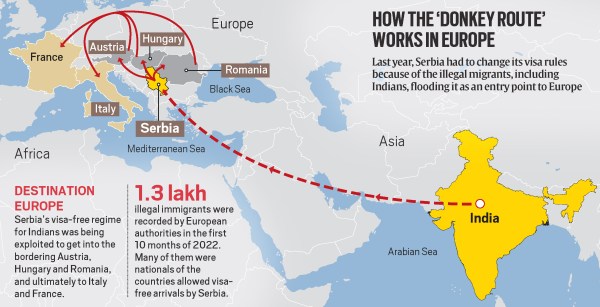
    Donkey routes: En route Europe, how Indians visit several countries to  create 'travel history' | Explained News - The Indian Express


    Central idea 

    The grounding of a chartered plane in France reveals the desperate and perilous journeys of Indian migrants seeking illegal routes to the U.S. and Canada. It emphasizes the role of agents, tragic incidents, and the necessity for international collaboration to address the root causes and dismantle illegal immigration networks, highlighting the human cost of such endeavors.

    Key Highlights:

    • A chartered plane from the UAE to Nicaragua, carrying 303 Indians, was grounded in France for a human trafficking probe.
    • The flight was hired by a non-European client, and passengers were possibly trafficked, leading to a French investigation.
    • The passengers claimed they boarded willingly, and the flight was eventually forced to return to Mumbai.
    • Gujarat and Punjab have high numbers of illegal Indian migrants to the U.S. and Canada, often taking risky “donkey routes.”

    Key Challenges:

    • Lack of opportunities in Gujarat pushes people to seek better prospects abroad, leading to illegal migration.
    • Human trafficking networks operate, exploiting the desperation of individuals seeking a better life.
    • The dangers of “donkey routes” involve traversing various countries with lenient visa policies, risking lives in harsh conditions.

    Key Terms and Phrases:

    • Donkey routes: Illegal migration paths involving multiple countries with lenient visa policies.
    • Human trafficking: Exploitative practices involving illegal transportation of individuals.
    • Chartered flight: Private aircraft hired for specific travel purposes.
    • Asylum seekers: Individuals seeking protection and refuge in a foreign country.

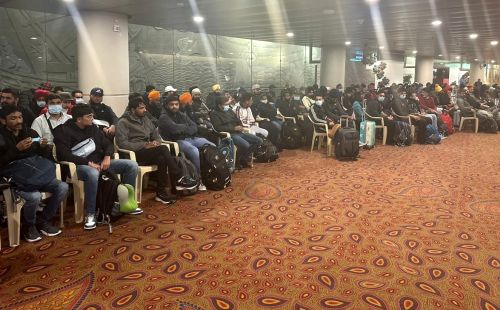
    Plane grounded in France lands in Mumbai

    Key Quotes:

    • “The French authorities had received a tip-off and took it very seriously.”
    • “The episode has once again called attention to the staggering number of Indians who migrate illegally to the U.S. or Canada.”
    • “People don’t find any opportunities here. There are no well-paying jobs and sometimes no jobs at all.”

    Anecdotes:

    • Two passengers seeking asylum in France carried multiple passports and a substantial amount of money.
    • Families taking extreme risks, like freezing to death near the U.S. border or drowning in attempts to cross rivers.

    Key Statements:

    • French authorities stopped exploring human trafficking angle after passengers claimed they boarded willingly.
    • Gujarat Police cracking down on agents facilitating illegal immigration through donkey routes.

    Key Examples and References:

    • Shashi Kiran Reddy, a Hyderabad-based agent, behind the chartered flight facilitating illegal immigration.
    • Instances of families freezing to death near the U.S. border or drowning while attempting to cross rivers.

    Critical Analysis:

    • Lack of opportunities and frustration in Gujarat and Punjab contribute to the high number of illegal migrants.
    • The existence of human trafficking networks highlights the exploitation of individuals seeking better prospects.

    Way Forward:

    • Address root causes like lack of opportunities and corruption to discourage illegal migration.
    • Strengthen efforts to dismantle human trafficking networks, collaborating with international agencies.
    • Enhance awareness about legal migration pathways and associated risks to deter individuals from choosing illegal routes.
  • Nutrition, Not Hunger Should Be the Priority

    Nutrition

    Context

    • The fountainhead is a 16-year-old German and Irish organization, which measures and ranks countries on a hunger index at the global, regional, and national levels, but not at the sub-national level where some Indian states fare better. The Global Hunger Index’s (GHI) stated aim is to reduce hunger around the world. But its methodology focuses disproportionately on less than five-year-old’s.

    Problematic methodology of GHI

    • Mixing the hunger and nutrition: In common parlance, hunger and nutrition are two different things. Hunger is associated with food scarcity and starvation. It produces images of emaciated people holding empty food bowls.
    • Wrong data collection methods: GHI uses childhood mortality and nutrition indicators. But its preamble states “communities, civil society organizations, small producers, farmers, and indigenous groups shape how access to nutritious food is governed.”
    • Irony of food grain availability: This suggests that GHI sees hunger as a food production challenge when, according to the FAO, India is the world’s largest producer and consumer of grain and the largest producer of milk; when the per capita intake of grain, vegetables and milk has increased manifold. It is, therefore, contentious and unacceptable to club India with countries facing serious food shortages, which is what GHI has done.

    Data according to the latest National Family Health Survey Report

    • Comparative state level data collection: The sensational use of the word hunger is abhorrent given the facts. But there is no denying that in India, nutrition, particularly child nutrition, continues to be a problem. Unlike the GHI, the National Family Health Survey (NFHS) does a good job of providing comparative state-level data, including the main pointers that determine health and nutrition.
    • Crucial health parameters included: NFHS provides estimates of underweight, (low weight for age), stunting (low height for age) and wasting (low weight for height). These conditions affect preschool children (those less than 6 years of age) disproportionately and compromise a child’s physical and mental development while also increasing the vulnerability to infections.
    • Undernourishment is included: Undernourished mothers (attributable to social and cultural practices,) give birth to low-birth-weight babies that remain susceptible to infections, transporting their handicaps into childhood and adolescence. NFHS includes undernourishment parameter.

    Why nutrition is the best indicator of health?

    • Link between nutrition and disease: There are links between the nutritional status of young children with the post-neonatal phase when children suffer from acute respiratory infections and diarrhoeal diseases. Sanitation and hygiene require much more work.
    • Diet and food intake is important: Professor V Subramanian at the Harvard Chan School of Public Health writes, “There is a need to declutter the current approaches to child undernutrition by keeping it simple. I advise against a disproportionate focus on anthropometry (body measurements); instead, the need is to have a direct engagement with actual diet and food intake.”

    Nutrition

    How to overcome the child nutrition challenge?

    • Improving the breast feeding: The first child nutrition challenge relates to breastfeeding. The WHO and UNICEF recommend that breastfeeding should be initiated within the first hour of birth and infants should be exclusively breastfed for the first six months. According to NFHS 5, in India, the percentage improvement of children who were exclusively breastfed when under six months, rose from 55 per cent in NFHS 4 to 64 per cent in NFHS 5. That is progress, but it is not enough. By not being breastfed, an infant is denied the benefits of acquiring antibodies against infections, allergies and even protection against several chronic conditions.
    • Better nutritional practice: The second issue relates to young child feeding practices. At root are widespread practices like not introducing semi-solid food after six months, prolonging breastfeeding well beyond the recommended six months and giving food lacking in nutritional diversity. NFHS 5 shows that the improvement has been marginal over the last two reports and surprisingly, states like Maharashtra, Rajasthan, Assam, UP and Gujarat are at the tail end.
    • Continuation of nutrition programmes: Almost one dozen nutrition programmes have been under implementation since 1975. Several more have been added of late, but most beneficiaries of these food distribution programmes are kids attending anganwadis or schools, adolescents, and pregnant and lactating mothers. This must continue but new-Borns, infants, and toddlers need attention too. Monitoring weight is an indicator, not a solution.
    • States must be encouraged: States should be urged to examine the NFHS findings to steer a new course to improve the poshan practices for the youngest and the most vulnerable sections of society.
    • Better child rearing practices: Helping mothers to better the lives of their infants and toddlers right inside the home by measuring and demonstrating how much diet, food intake and child-rearing practices matter.

    Nutrition

    Conclusion

    • We should lose no more time over the GHI rankings, which are distorted and irrelevant. India has successfully overcome much bigger problems reduced maternal and child mortality, improved access to sanitation, clean drinking water and clean cooking fuel. Our focus should be on nutrition rather than hunger.

    Mains Question

    Critically analyze the India’s hunger problem in light of Global Hunger Index. What are initiatives of Government of India to overcome hunger and nutrition challenge?

    UPSC 2023 countdown has begun! Get your personal guidance plan now! (Click here)


  • Reality Check on India’s Hunger Index Rank

    Hunger

    Context

    • For the second time in two years, the Ministry of Women and Child Development rejected the Global Hunger Index (GHI) that ranked India 107 among 121 countries. India was accorded a score of 29.1 out of 100 (with 0 representing no hunger), placing it behind Sri Lanka (66), Myanmar (71), Nepal (81) and Bangladesh (84). It referred to the index as “an erroneous measure of hunger”.

    All you need to know about Global Hunger Index

    • Annual report: The GHI is a peer reviewed annual report that endeavours to “comprehensively measure and track hunger at the global, regional, and country levels”. Authors of the report primarily refer to the United Nations’ Sustainable Development Goal 2(SDG 2) that endeavours to achieve ‘Zero Hunger’ by 2030.
    • Four Indicators: According to them, the report attempts to “raise awareness and understanding of the struggle against hunger”. The GHI score is computed using four broad indicators under nourishment (measure of the proportion of the population facing chronic deficiency of dietary energy intake), child stunting (low height for age), child wasting (low weight for height) and child mortality (death of a child under the age of five).

    Why these four Indicators are considered?

    • To acknowledge undernourishment: As per the authors, it provides a basis to measure inadequate access to food and is among the lead indicators for international hunger targets, including the UN SDG 2. Child stunting and mortality, offers perspective about the child’s vulnerability to nutritional deficiencies, access to food and quality of nutrition.
    • To address urgent requirement of nutrition: Since children (especially below five) are at a developmental age there is a greater and urgent requirement for nutrition with results particularly visible. This forms the basis of assessing nutritional requirement among children. Adults are at a sustainable age they are not growing but rather subsisting on nutrition for healthy survival. And lastly, on the same rationale, child mortality indicates the serious consequences of hunger.
    • Uses data provided by Government: It explains that while FAO uses a suite of indicators on food security, including two important indicators — prevalence of undernourishment and prevalence of moderate or severe food insecurity. The GHI only uses the data obtained through food balance sheets based on data reported by member countries, including India.
    • Shows a picture of food supply chain: A food balance sheet provides a comprehensive picture of the pattern of a country’s food supply during a specified reference period. It lists down the source of the supply and its utilisation specific to each food category.
    • Takes into account three child specific indicators: On why the GHI uses three child specific indicators out of the four to calculate hunger for a country’s population, the website explains, By combining the proportion of undernourished in the population(1/3 of the GHI score) with the indicators relating to children under age five (2/3of the GHI score), the GHI ensures that both the food supply situation of the population as a whole and the effects of inadequate nutrition within a vulnerable subset of the population are captured.
    • International recognition: A Senior Policy Officer at the GHI said that, “All four indicators used in the calculation of the global hunger are recognised by the international community, including India, and used for measuring progress towards the UN SDGs.”

    Hunger

    What are the Objections of Government of India?

    • Very small sample size of the Index: As per the Ministry for Women and Child Development, the report lowers India’s rank based on the estimates of the Proportion of Undernourished (PoU) population. It elaborates that the U.S. Food and Agriculture Organisation (FAO) estimate is based on the ‘Food Insecurity Experience Scale (FIES)’ survey module conducted using the Gallup World Poll that bears a sample size of 3,000 respondents being asked eight questions. It stated that the data represented a miniscule proportion for account of India’s size.
    • Counter assertion by India’s dietary supply is increasing: It countered the assertions in the report pointing to India’s per capita dietary energy supply increasing year on year due to enhanced production of major agricultural commodities in the country over the years.
    • Index doesn’t reflect the actual ground reality: According to the Ministry, the report is not only disconnected from ground reality but also chooses to ignore the food security efforts of the Central government especially during the pandemic.
    • Efficient PMGKAY: The Union Cabinet through the Pradhan Mantri Garib KalyanAnn Yojana (PMGKAY) provisioned an additional 5 kg ration per person each month in addition to their normal quota of food grains.

    Hunger

    What are the Government efforts to address the hunger issue so far?

    • The Midday Meal Scheme: The Midday meal is a school meal programme in India designed to better the nutritional standing of school-age children nationwide.
    • The programme supplies free lunches on working days for children in primary and upper primary classes in government, government aided, local body, Education Guarantee Scheme, and alternate innovative education centres, Madrasa supported under Sarva Shiksha Abhiyan, and National Child Labour Project schools run by the ministry of labour.
    • Serving 120 million children in over 1.27 million schools and Education Guarantee Scheme centres, the Midday Meal Scheme is the largest of its kind in the world.
    • PM-POSHAN: The name of the scheme has been changed to PM-POSHAN (Pradhan Mantri Poshan Shakti Nirman) Scheme, in September 2021, by MoE (Ministry of Education), which is nodal ministry for the scheme.
    • The Central Government also announced that an additional 24 lakh students receiving pre-primary education at government & government-aided schools would also be included under the scheme by 2022.

    Hunger

    Conclusion

    • No country becomes great by dwarfing its people. India has certainly improved its poverty and hunger problems but there is still lot of ground yet to cover. Global hunger index may have exaggerated the India’s hunger issue but hunger problem in India is real if not substantial.

    Mains Question

    Q.Explain the methodology used by global hunger index report and India’s objection to it. What are the initiatives of government to reduce the hunger problem in India?

    UPSC 2023 countdown has begun! Get your personal guidance plan now! (Click here)