The World Bank defines e-governance as the use by government agencies of information technologies that can transform relations with citizens, businesses, and other arms of government.
E-Governance – multifarious interactions for ensuring transparency and accountability.
Government to Citizen (G2C)
UMANG, DigiLocker – Online service access.
CPGRAMS – Grievance redressal & feedback.
MyGov, Jan Bhagidari – Citizen participation.
Aadhaar-DBT, PM-KISAN – Direct benefit transfers.
Government to Business (G2B)
MCA21, GSTN, NSWS – Digital compliance & licensing.
GeM Portal – Transparent procurement.
Invest India, Ease of Doing Business Dashboard – Single-window clearance.
Government to Government (G2G)
PRAGATI, e-Office – Inter-departmental coordination.
PFMS – Fund tracking & financial accountability.
Government to Employee (G2E)
SPARROW – Online performance appraisal.
iGOT-Karmayogi – Capacity building & training.
e-Office, HRMS – Paperless workflow.
Interactive service model
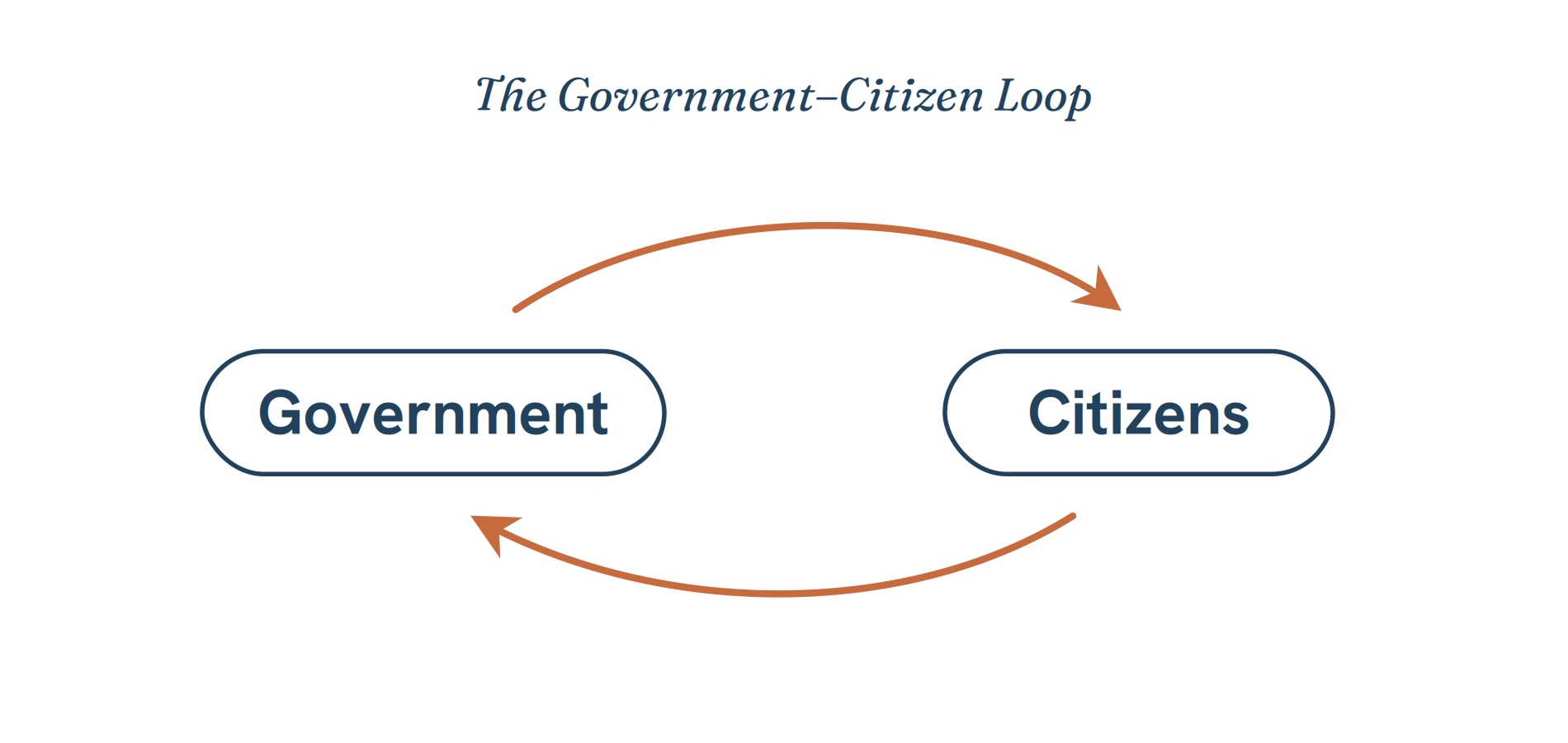
Role of the ‘Interactive Service Model’ of e-Governance
Citizen-Centric Governance: Shifts from departmental silos to integrated, citizen-focused service delivery. Eg- Sakala (Karnataka) – time-bound, transparent service guarantee.
Bridging Government-Citizen Gap: through digital and doorstep access to services. Eg- MPeSeva in Madhya Pradesh.
Participative and Responsive Governance through two-way interaction between citizens and government. Eg- MyGov portal.
Trust-Based Model of Governance through transparency and proactive disclosure of information. Eg- Jan Soochna Portal (Rajasthan) – real-time public data access.
Transparency and Accountability in Service Delivery: Enables real-time grievance tracking and service feedback loops. Eg- CPGRAMS, UMANG, GeM Portal.
Ensures zero tolerance to corruption through traceable digital transactions. Eg- DBT has saved
Empowered and Informed Citizens to shape governance outcomes. Eg- Open Government Data Portal, NDAP.
From Ad hoc to Whole-of-Government Approach: Promotes integrated and citizen-centric service delivery.
Challenges in Implementing the Interactive Service Model
Digital Divide: Only 43% of rural households have internet access (NFHS-5, 2021), limiting inclusivity.
Digital Literacy: Merely 10% of rural population is digitally literate (NSSO data, 2022).
Data Privacy and Security Risks: Eg- CoWIN data leak.
Institutional Resistance to adopt open data and feedback-based systems.
Multiple portals without integration and interoperability hinder seamless user experience.
Exclusion and inclusion errors in digital systems reduce trust in e-services. Eg- authentication errors in Aadhaar-linked DBT or ration delivery.
Weak Common Service Centre (CSC) Infrastructure: poor connectivity, limited equipment, and untrained staff
Lack of People-Centric Governance: Most government websites are only in English, not in vernacular languages, excluding non-English users.
Way Ahead
Strengthening Digital Infrastructure: Extend optical fibre connectivity under BharatNet to all Gram Panchayats.
Promote citizen digital engagement and training through PMGDISHA and Digital India initiatives.
Embedding Digital Literacy in Education: Integrate e-literacy programmes like e-Kidz and IT Clubs in school curricula.
Business Process Reengineering (2nd ARC): Simplify procedures, ensure platform integration, and promote seamless inter-departmental coordination.
Leverage 4th Industrial Revolution Technologies: Use AI, IoT, and blockchain for predictive governance and smart delivery systems.
This can transform e-Governance into a trust-based, citizen-driven, and participatory governance model.