Supermarkets are organised retail chains that procure, store and distribute fruits, vegetables and other food items through integrated, modern supply chains.
Role of Supermarkets in supply chain management
Direct Procurement from Farmers – Eg- Big Basket & Reliance Retail procure directly from FPOs.
Standardisation, Grading & Sorting improves quality consistency. Eg- Walmart trains farmers on GAP (Good Agricultural Practices).
Efficient Logistics & Inventory Management – Eg- use of real-time inventory tracking, forecasting tools, barcoding/RFID
Cold Chain infrastructure reduces losses of perishable goods like fruits
Contract Farming, buy-back arrangements ensure stable demand and price security for farmers. Eg- PepsiCo in Punjab (Potato farming)
Value Addition – Supermarkets invest in cut vegetables, ready-to-cook items etc – increases shelf-life of products.
Diverse products– Gives greater choice for consumers and promotes crop diversification.
Challenges faced by supermarkets
Lack of infrastructure – Eg- cold storage can only accommodate about 11% of the country’s total produce.
Poor forward and backward linkages – Eg- Only 13% mandis digital.
Fragmented landholdings – 86% farmers are small and marginal – prevents economy of scale
Regulatory Hurdles – APMC monopoly and interstate movement regulations complicate direct buying from farmers.
Organised retail remains concentrated in metro and Tier-1 cities, with limited rural coverage
Low investment – Private investment <1% Agri-GDP.
Supermarkets eliminating intermediaries
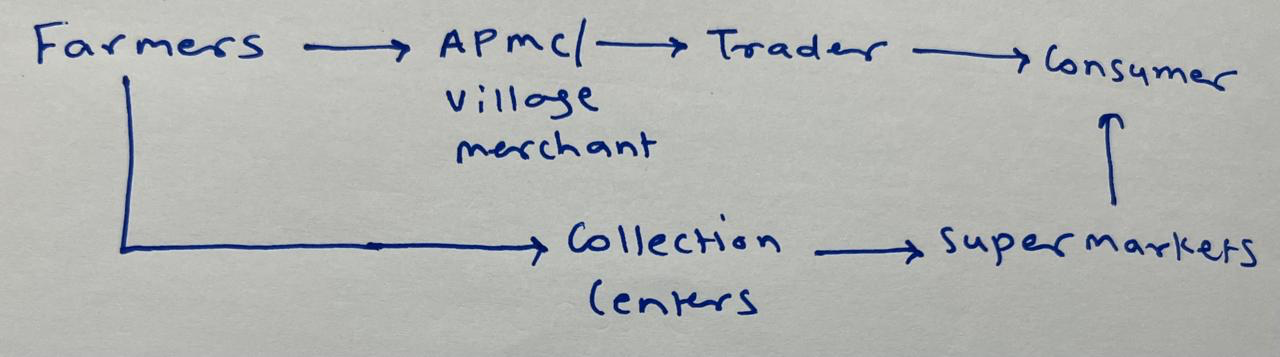
Enhancing efficiency of supply chain and doubling farmers income requires FPO strengthening, cold-chain expansion and adoption of Model contract Farming Act.