Coastal Erosion refers to breaking down and carrying away of materials by sea. As per National Centre for Coastal Research, about 33.6% of Indian coast is eroding.
Causes
Natural Causes
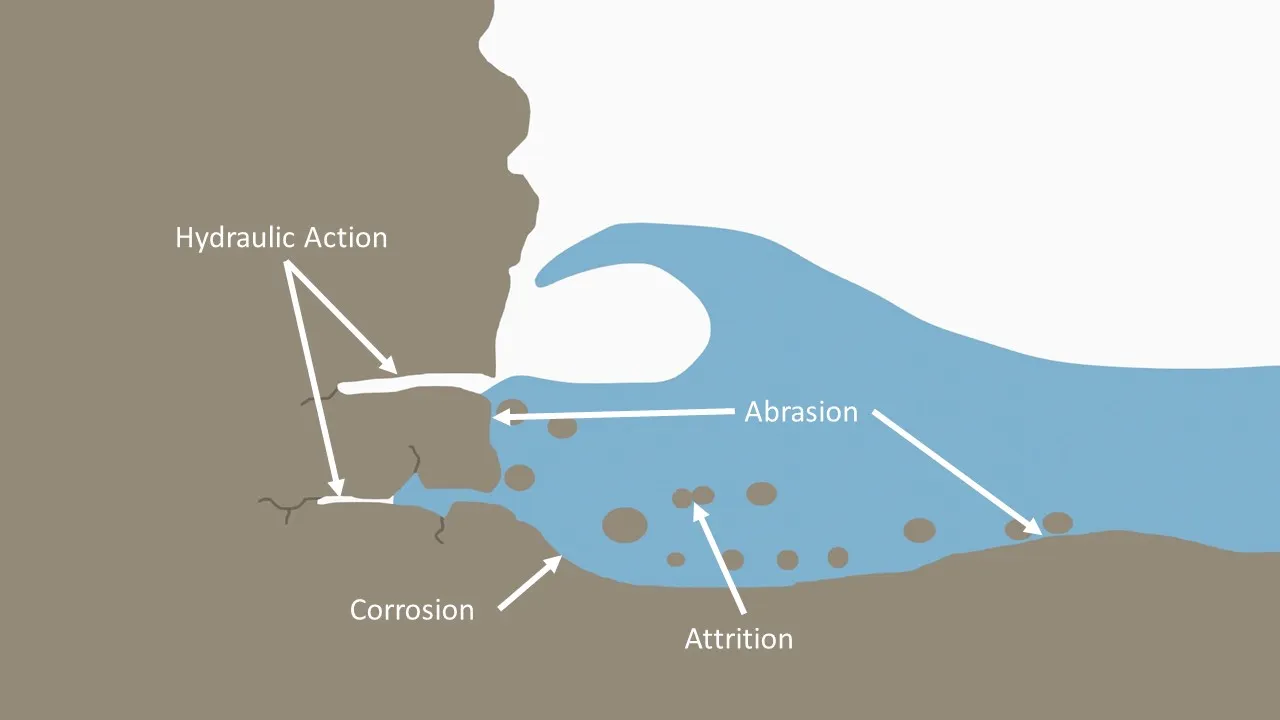
Cyclones and Storm Surges erode dunes and beaches. Eg- Bay of Bengal cyclone belts.
Climate-induced Sea-Level Rise submerges low-lying coasts. Eg- Sundarbans delta witnessing shoreline retreat.
Strong tidal flow and seasonal currents disturb sediment balance. Eg- West coast monsoonal erosion.
Loss of Natural Buffers – depletion of coral reefs, dunes or seagrass beds reduces wave dissipation. Eg- Reef loss around Lakshadweep.
Anthropogenic Causes
Construction of Ports, Breakwaters and Jetties interrupt sediment transport, causing erosion downdrift. Eg- Ennore and Puducherry coastlines.
River Damming – Dams reduce sediment supply reaching deltas and beaches. Eg- Shrinkage of Godavari and Narmada deltas.
Sand Mining removes beach sediment. Eg- Severe erosion hotspots in Kerala.
Coastal Land Reclamation increases erosion by altering the shoreline. Eg- Reclaimed coasts around Mumbai.
Destruction of Mangroves eliminates natural wave barriers.
Pollution and Ecosystem Degradation reduce shoreline stability. Eg- Coral mortality in Gulf of Mannar.
Effect
Effects on Environment
Loss of Coastal Habitats – Eg- Mangrove loss in the Sundarbans.
Saltwater Intrusion – degrade freshwater ecosystems. Eg- Salinisation of Andhra Pradesh coastal farmlands.
Loss of natural buffers heightens storm-surge and monsoon flooding risk. Eg- Erosion-induced flooding in Kerala’s low-lying coast.
Effects on Economy
Damage to Infrastructure – Roads, bridges and coastal installations become unstable due to subsidence. Eg – Road collapse incidents in Uttar Kannada (Karnataka).
Loss of Productive Land – Eg- Farmland abandonment in Tamil Nadu erosion belts.
Threat to critical infrastructure – Eg- offshore oil plants and windmills
Effects on Society
Displacement of Coastal Communities due to Shrinking shorelines
Loss of Livelihoods – Fishing communities lose landing points and fish stocks.
Saline intrusion reduces drinking water availability and increases contamination risks.
Loss of Cultural Heritage – Eg- Threats to traditional coastal temples in Tamil Nadu.
Available coastal Management Techniques
Hard Engineering Measures
Seawalls to block wave attack.
Groynes – Trap sand and widen beaches. Eg- Puducherry groyne field.
Breakwaters – Offshore barriers that reduce wave energy. Eg- Chennai port.
Revetments – Sloped rock armour to absorb wave impact.
Soft Engineering Measures
Ecological Restoration of Mined Coasts– Eg – Puducherry’s beach nourishment project.
Dune Stabilisation – Planting grasses and fencing dunes.
Mangrove Restoration – Eg- MISHTI-based efforts in Sundarbans.
Coral and Seagrass Restoration – Eg- Andaman reef rehabilitation.
Beach cleanliness drives – Eg- Blue Flag Certification
Integrated Coastal Zone Management (ICZM)
Sediment Budgeting in Coastal Planning to ensure river-to-coast sediment flow is maintained.
Ecosystem-Based Coastal Planning – Combines geomorphology, ecology and socio-economic factors. Eg- ICZM projects in Gujarat, Odisha, West Bengal.
Regulatory Tools (CRZ Norms) – no-development zones and hazard mapping reduce vulnerability.
Coastal Management Information System (CMIS) to collect nearshore coastal data for planning, designing, and maintaining coastal protection structures
Early Warning Systems – INCOIS alerts for timely action.
Coastal erosion in India requires integrated, science-based and community-driven management