Biodiversity refers to the variety and variability of life forms within a given ecosystem, region, or the entire planet. India is recognized as one of the world’s 17 mega-biodiverse countries, hosting 7-8% of the world’s recorded species on just 2.4% of the global land area.
Biodiversity in India
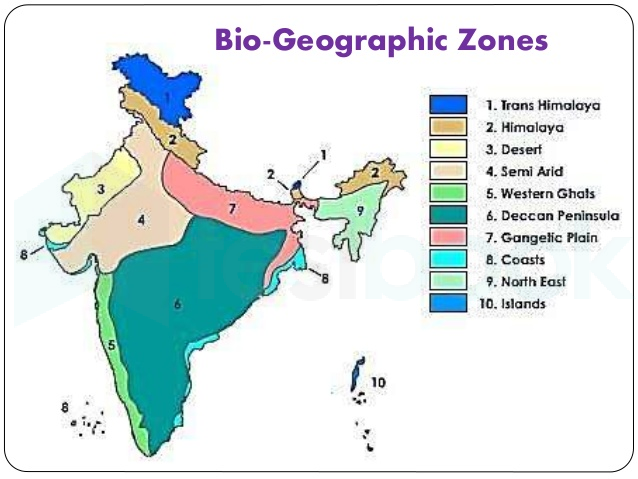
Biogeographic Diversity – Presence of 10 distinct biogeographic zones based on climate, relief and ecology.
Ecosystem Diversity – Eg- Mangroves of Sundarbans, coral reefs of Lakshadweep, alpine meadows of Himalaya.
Species Richness – Over 47,000 plant species and 1,00,000+ animal species (ZSI & BSI estimates).
Endemism – India ranks fifth in reptiles and seventh in amphibians. Eg- Lion-tailed macaque in Western Ghats, Nilgiri tahr in Nilgiris.
Biodiversity Hotspots – Four global hotspots lie partly in India due to high endemism and threat levels. Himalaya, Indo-Burma, Western Ghats-Sri Lanka, Sundaland (Nicobar).
Altitudinal Variation – Eg- Tropical sal forests in foothills vs alpine rhododendrons in upper Himalaya.
Agricultural Diversity: India’s share of global crop diversity is 44%, compared to the world average of 11%
Biological Diversity Act, 2002
Objectives
Conservation of Biological Diversity
Sustainable Use of Biological Resources
Benefit Sharing with Local Communities
Role of Biological Diversity Act, 2002 in Conservation of Flora and Fauna
Provides legal Backing to implement Convention on Biological Diversity (CBD).
Three-Tier Institutional Mechanism – Establishes NBA, SBBs, and BMCs for decentralised biodiversity governance.
Access Regulation to prevent bio-piracy. Eg- Foreign companies need NBA approval for bio-resource use.
Access and Benefit Sharing (ABS) – Ensures fair and equitable sharing of benefits with local communities.
Protection of Traditional Knowledge – Eg- Kani tribe benefit-sharing from Jeevani drug in Kerala.
People’s Biodiversity Registers (PBRs) by Biodiversity Management Committees – Legal documentation of local flora, fauna and traditional practices.
Creation of National, State and Local Biodiversity Funds for conservation activities.
Challenges in Implementation
Weak Enforcement – Only ~2.78 lakh PBRs completed.
Lengthy approvals and compliance burden deter research.
Low Awareness of ABS rights among Local Communities
Limited Coordination Between Agencies
Insufficient Protection of Digital Sequence Information (DSI)
Biological Diversity Act, 2002 is a cornerstone of biodiversity governance in India.