“The greatest corruption is the corruption of duty.” – Edmund Burke
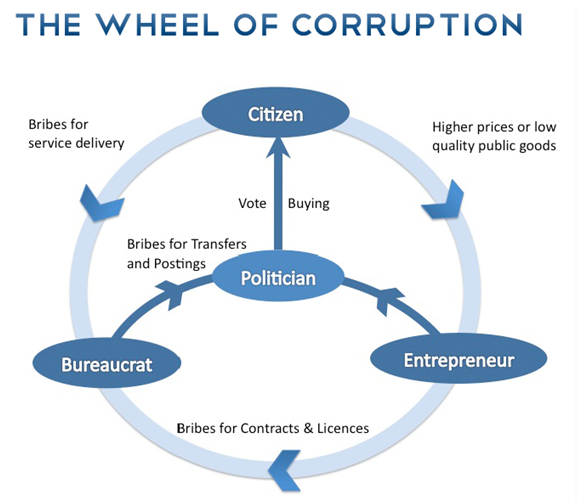
Conventionally, corruption is viewed as the “misuse of public office for private gain,” however, in a broader ethical sense, omission (failing to act) is as damaging as commission (acting wrongly).
Non-performance of duty as form of corruption
Theft of Public Salary- Taking a salary while deliberately avoiding work is “financial fraud” against the taxpayer. Eg- “Ghost employees” in various municipal bodies
Creation of “Induced” Corruption- Deliberate delays (Red Tapism) are often used to force citizens to pay “speed money.”
Violation of the Right to Life- Eg- delay in safety audits leading to Mundra building tragedy.
Delays in project clearance lead to Policy Paralysis- High economic “opportunity cost.” Eg- delays in environmental clearances in PPP projects
Inaction is a betrayal of the “fiduciary duty” owed to the citizens. Eg- Police officers failing to register an FIR in SC, ST atrocity cases.
Wastage of Resources- Eg- food grains roting in FCI godowns while tribal populations suffer from malnutrition.
When officials don’t work, citizens lose faith in democracy and turn to extra-constitutional means for justice. Eg- rise of “vigilante justice”
Moral hazard – Inaction normalises irresponsibility.
Facilitates exploitation. Eg- Labour inspectors not enforcing minimum wage laws.
Ways to Curb Corruption and Non-Performance
Code of Ethics & Code of Conduct. (2nd ARC)
Implementation of Citizens’ Charters- Eg- SAKALA (Karnataka Guarantee of Services Act)
Giving legal backing to Social Audits
Leveraging Technology. Eg- Faceless Income Tax Assessment
Strengthening the Lokpal and Lokayuktas to investigate “maladministration” and “neglect”
Independent Commission Against Corruption – “Hong Kong Model”
Performance-linked accountability. Eg- 360 degree feedback
A culture of active responsibility, diligence and accountability is needed to deal with the menace of corruption.