The RTI Act, 2005, is celebrated as the “Sunshine Legislation” aims to promote “informed citizenry” and transform bureaucratic culture from “secrecy and command” to “transparency and answerability.”
RTI as a Tool for Citizen Empowerment
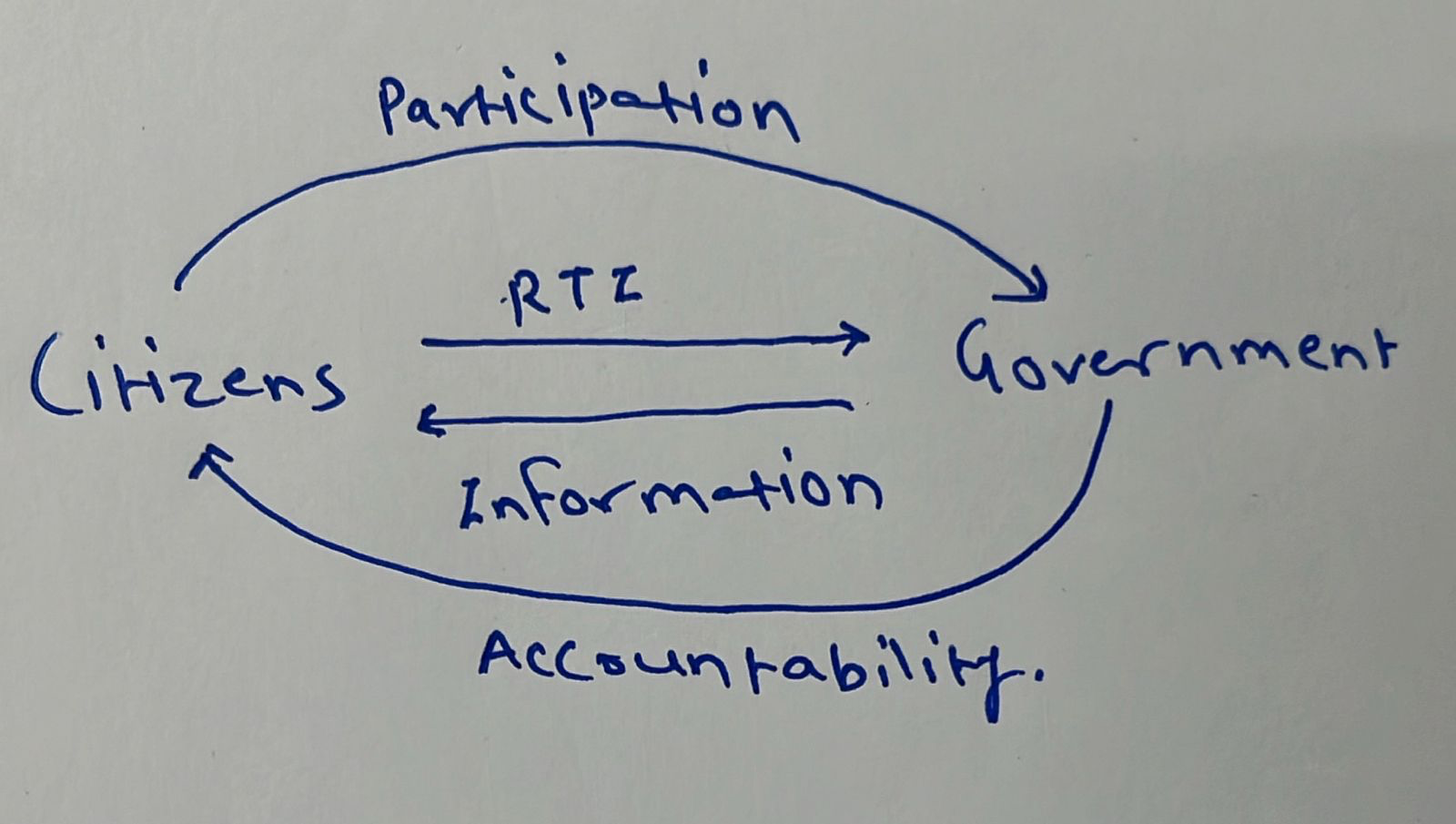
Rights based approach
Voice to voiceless
Informed political participation
Protection of Human Rights (RTI on custodial deaths or condition of prisons)
Bridge to Other Rights (Right to food under NFSA)
RTI redefining accountability
From vertical to horizontal accountability – direct accountability to citizens.
Ending “Bureaucratic Anonymity”- Eg- RTI makes file notings public, ensuring accountability of specific officers taking decisions.
From discretionary secrecy to mandatory disclosure – reverses the presumption of secrecy to presumption of openness. Eg- Adarsh Housing Scam exposure
From reactive to proactive accountability – Section 4 mandates suo motu disclosure, making accountability continuous.
From procedural to outcome accountability – Citizens question not just rules but results.
From internal audit to social audit – People become auditors of governance. Eg- MKSS in Rajasthan used Jan Sunwai to expose fake work entries in MGNREGA.
From elite oversight to mass oversight – Every citizen becomes a watchdog.
From episodic scrutiny to real-time scrutiny – Continuous public monitoring through RTI queries.
From moral accountability to legal accountability – Failure to disclose invites penalties.
From opacity-based power to transparency-based legitimacy – Authority now depends on openness. Eg- 2G Spectrum and Coal Scams exposure
Issues
Over 4 lakh appeals are pending.
Chronic Vacancies in Commissions
Clash with OSA and DPDP Act
Legislative Dilution (2019 Amendment)
Safety and Threats to Activists (over 150 activists killed)
Poor Record Management
To ensure that the RTI Act does not become a “dead letter” law, the focus must shift from mere legal compliance to a culture of proactive transparency.