The N-E region comprising eight states and connected to the Indian mainland by a small Silghuri Corridor (Chicken Neck – 23 km width) has been facing the problems of insurgency for over 5 decades.
Major challenges to internal security and peace process in North-Eastern states
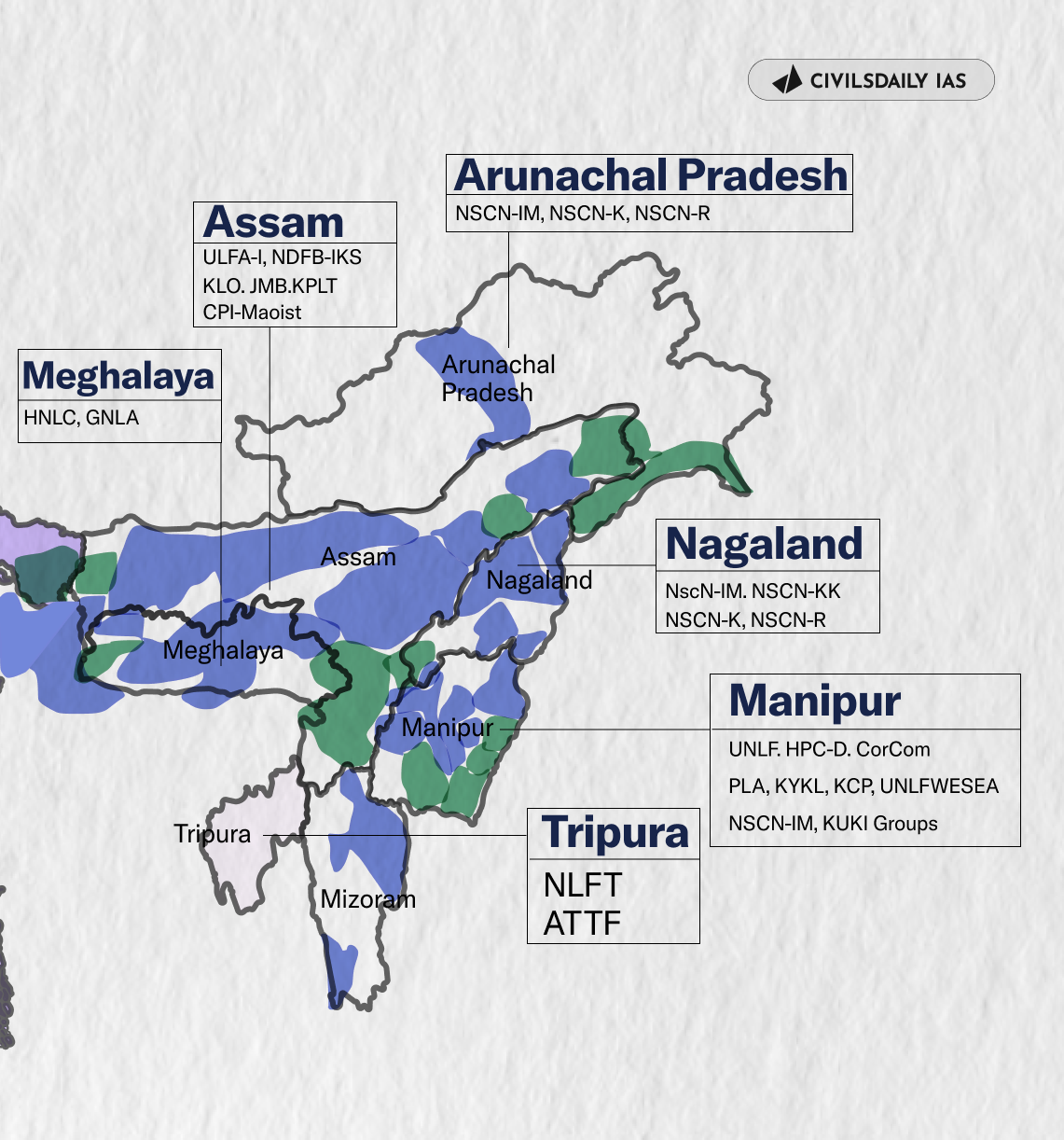
Cross-Border Dynamics– Porous Indo-Myanmar borders enable arms, insurgent movement, and illegal trade.
“Tyranny of distance” – Policy attention from New Delhi remains inadequate due to geographic remoteness and low political representation of the region.
Ethnic divisions – Eg- deepening Meitei-Kuki-Zo divide post-2023 riots in Manipur
Weak peace processes – Talks with 30+ insurgent groups in Manipur and Nagaland continue without breakthroughs
Protracted insurgencies and splintering of groups reduce prospects for a single comprehensive settlement. Eg- NSCN splits (IM/NK/R).
Poor governance and developmental deficit sustain grievance and provide recruitment ground.
Drug trafficking, illegal timber/mineral extraction and extortion fund insurgents and fuel local conflict. Eg- proximity to Golden Traingle
Demographic stress – Large-scale illegal Bangladesh-origin immigration create social tensions and political mistrust. Eg- in Assam
High Violence– In 2024, NE India experienced 266 insurgency-related incidents, causing 258 deaths and displacing 60,000 people.
External factors
China – Territorial claims in Arunachal Pradesh and support to insurgent groups
Bangladesh – Anti-India shift post coup and growing Pakistan-China influence
Myanmar – destabilised border post ‘Spring Revolution’
Map of major peace accords
2015 – Naga Framework Agreement for an “inclusive political solution” within the Indian Union (framework terms still being negotiated).
2019 – Tripura NLFT (SD) Memorandum of Settlement – surrender of cadres and rehabilitation package to end insurgency.
2020 – Bru-Reang Agreement (Tripura-Mizoram) – Repatriation and rehabilitation of Bru refugees with security and development assurances.
2020 – Bodo Peace Accord (Phase-II) – Expansion of Bodoland Territorial Region (BTR) powers, and development funds.
2021 – Karbi Anglong Agreement (Assam)
2022 – Assam-Meghalaya Boundary Agreement – land demarcation to resolve long-standing boundary disputes.
2022 – Adivasi (Assam) Peace Accord (2022) – Settlement package including rehabilitation and development measures.
2023 – Dimasa accords – Ceasefire, surrender/rehab and local development commitments.
2023 – ULFA Accord – bringing a major faction of ULFA into a political process in Assam
2024 – NLFT and ATTF Agreements (Tripura) – Memoranda of Settlement leading to cadre surrender and integration
Other supporting measures (2015-2024) –
Extension of ceasefires with various Naga factions, multiple SoO (Suspension of Operations) agreements, and targeted MoUs with smaller groups
AFSPA withdrawal from Tripura and MEghalaya
Peace in the North-East requires a multipronged approach involving negotiated settlements backed by credible security, sustained development, rights protection and wide stakeholder inclusion
Terrorism