A cropping pattern is the distribution of various crops within a specific area at a given time. Presently, rice and wheat account for 75% of overall foodgrain production and 37% of net-sown area.
Challenges Before Crop Diversification
94% of the total agri and allied sector output is outside MSP support.
Input constraints – Limited HYV seeds, overdependence on chemical fertilizers. Eg- Seed replacement rate is 35-45% (over 90% in USA)
Input Subsidy Bias – Subsidies for power, urea, canal water favour water-intensive crops, making alternatives less attractive.
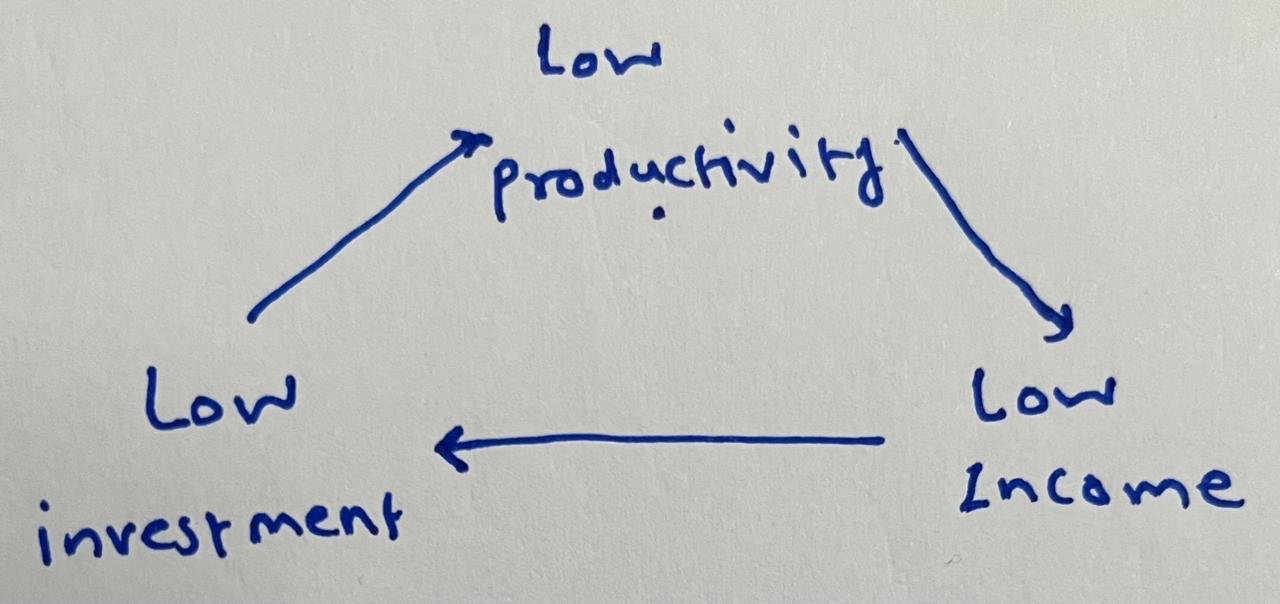
Low income trap limits farmers ability to invest in High Value crops and Technology.
High monsoon dependence – About 55% of cultivable land is rainfed – increasing risk and limiting diversification.
Fragmented landholdings – 86% Small and marginal farmers – restrict mechanisation.
Shift to commercial crops – Expansion of cotton (Deccan belt) and sugarcane (Punjab-Haryana, Krishna-Godavari basin) crowds out food crops.
Human factors – Population pressure, subsistence farming, and low risk appetite hinder diversification.
Institutional weaknesses – Defective land tenure, and poor processing for perishables. Eg- Only 13% mandis digital.
Market Uncertainty – Lack of assured markets for pulses, oilseeds, millets, fruits, and vegetables limits farmers’ ability to shift.
Infrastructural gaps – Eg- cold storage can accommodate only 11% of total produce.
Role of Emerging Technologies in promoting Crop Diversification
Precision Agriculture – Drones, IoT sensors, GIS enable farmers to manage diverse crops with accurate irrigation, nutrition, and pest control.
Biotechnology – Stress-tolerant and climate-resilient varieties encourage diversification. Eg- Drought Tolerant High-Yielding Chickpea Variety “SAATVIK (NC 9)”
Micro-Irrigation – Drip and sprinkler systems make cultivation of horticulture, vegetables, and spices viable even in dry regions.
Protected Cultivation Technologies – Eg- Polyhouses and shade nets allow off-season vegetables, flowers, and exotics.
Digital Platforms like e-NAM, agritech apps, FPO digital platforms provide real-time prices and reduce market risk for alternative crops.
Cold-Chain Technologies support high-value horticulture diversification. Eg: Apple packhouses.
Biofertilisers improve soil health and make pulses, oilseeds, and millets more viable in rainfed regions.
Climate-Smart Advisory Systems – AI-based weather advisories, satellite-based crop monitoring help farmers shift to climate-resilient crops.
Financial inclusion under JAM and DBT under PM KISAN increases capital investment and promotes diversification to high value crops
When science meets scale, when innovation becomes inclusive, when technology drives transformation, the foundation for great achievements is laid – PM Modi