Chandrayaan-3 mission successfully landed near the lunar South Pole in August 2023. India not only redeemed the partial failure of its predecessor but also became the first nation to reach the Moon’s most scientifically coveted region.
Main Task of Chandrayaan-3
To demonstrate Safe and Soft Landing on the Lunar Surface. Chandrayaan-2 experienced a setback with the lander’s failure to achieve a soft landing.
To demonstrate Rover roving on the moon and
To conduct in-situ scientific experiments.
Countries that have achieved moon mission
The Soviet Union (USSR)
The United States of America (USA)
The People’s Republic of China
The Republic of India
Japan (Achieved post-Chandrayaan-3 in early 2024 via its SLIM mission)
Subsystems of the Spacecraft
Propulsion Module (PM): Carries the Lander Module from launch vehicle injection until it reaches the final 100 km circular polar lunar orbit, where separation occurs.
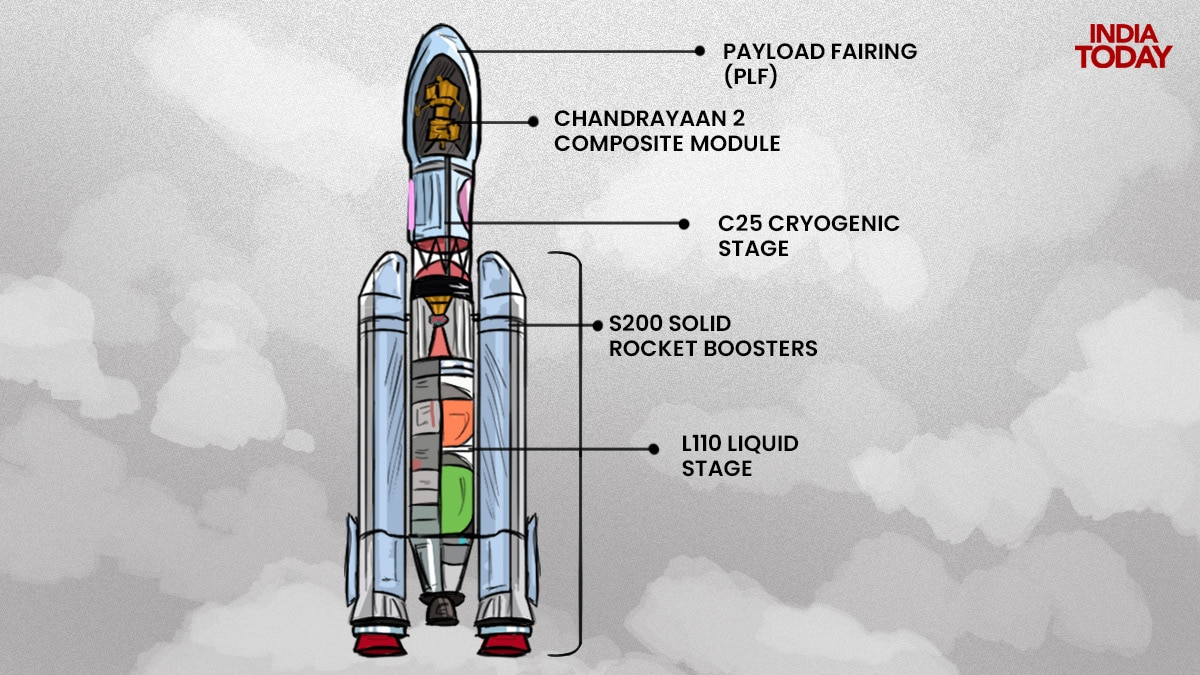
Lander Module (LM): To demonstrate soft-landing capabilities at a specific lunar site and deploy the Rover.
Scientific Payloads:
ChaSTE: Measures thermal conductivity and surface temperature.
ILSA: Monitors seismic activity around the landing site.
RAMBHA Uses Langmuir Probe (LP) to measure near-surface plasma density and temporal variations.
Laser Retroreflector Array: A passive instrument used for lunar laser ranging studies.
Rover: Mobility across the lunar surface to conduct chemical analysis of the soil and rocks.
Scientific Payloads:
APXS (Alpha Particle X-ray Spectrometer): Derives the elemental composition of the lunar surface.
LIBS (Laser Induced Breakdown Spectroscope): Identifies the chemical elements present in the vicinity of the landing site.
Role of the ‘Virtual Launch Control Centre’ (VLCC)
Remote System Checkouts: Allowed ISRO scientists to perform comprehensive remote testing of the LVM3-M4 rocket from Thiruvananthapuram.
Parallel Monitoring: It acted as a digital twin to the Main Control Centre (MCC) at Sriharikota, providing an additional layer of real-time telemetry analysis and redundancy.
Decentralized Coordination: Strategic hub that allows experts to monitor the health of the launch vehicle without overcrowding the primary launch site.
By rectifying previous design limitations, India’s third lunar mission successfully completed its complex soft-landing task, solidifying ISRO’s status in elite global space exploration.