💥Join UPSC 2027,2028 Mentorship (July Batch) + XFactor Notes & Microthemes PDF

Search results for: “”

  • [Burning Issue] Implementation of FASTags


    Context

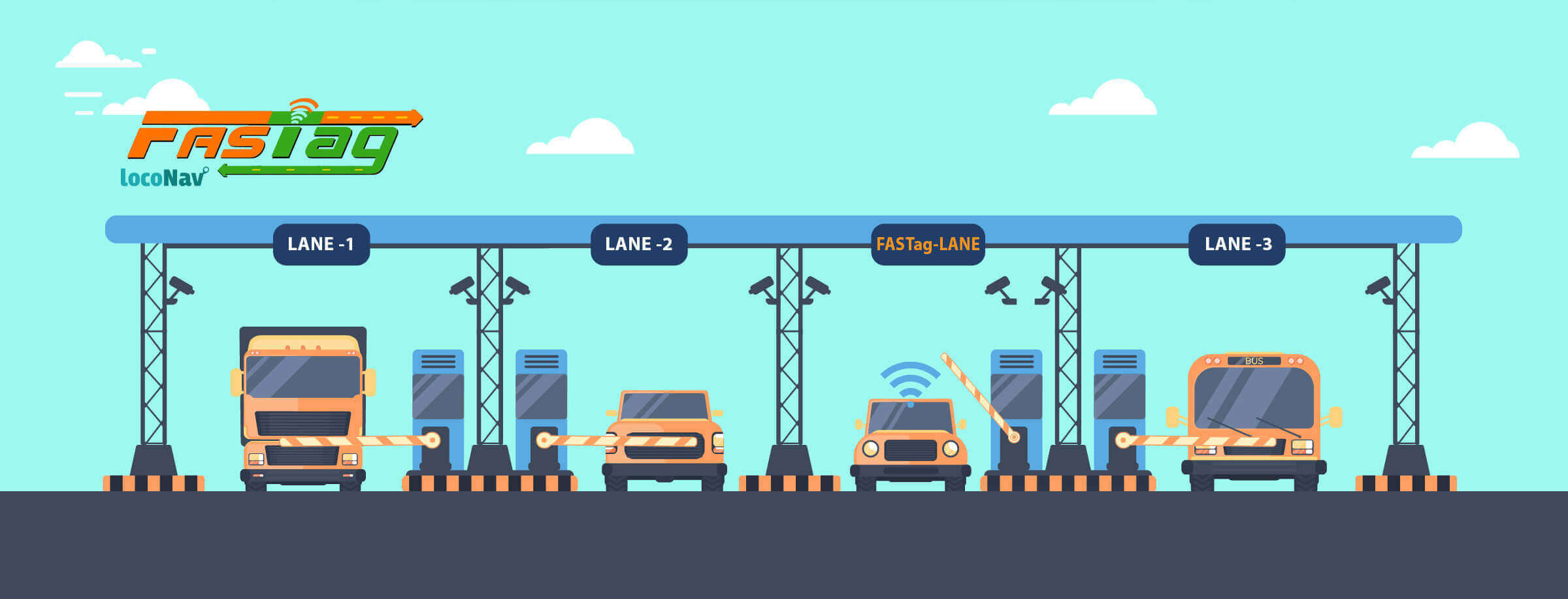
    From December 1, lanes on NH toll plazas across India has started accepting toll only through FASTag. One hybrid lane will continue to accept cash in addition to being tag-enabled.

    What is ‘FASTag’?
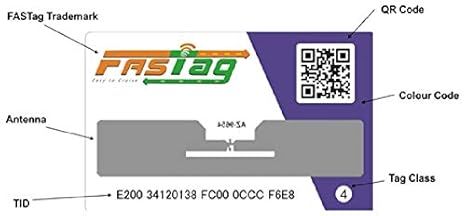
    • FASTags are stickers that are affixed to the windscreen of vehicles and use Radio Frequency Identification (RFID) technology to enable digital, contactless payment of tolls without having to stop at toll gates.
    • The tags are linked to bank accounts and other payment methods.
    • As a car crosses a toll plaza, the amount is automatically deducted, and a notification is sent to the registered mobile phone number.

    How does it work?

    • The device employs Radio Frequency Identification (RFID) technology for payments directly from the prepaid or savings account linked to it.
    • It is affixed on the windscreen, so the vehicle can drive through plazas without stopping.
    • RFID technology is similar to that used in transport access-control systems, like Metro smart card.
    • If the tag is linked to a prepaid account like a wallet, or a debit/credit card, then owners need to recharge/top up the tag.
    • If it is linked to a savings account, rthen money will get deducted automatically after the balance goes below a pre-defined threshold.
    • Once a vehicle crosses the toll, the owner will get an SMS alert on the deduction. In that it is like a prepaid e-wallet.

    How can one buy it?

    • E-commerce portals like Amazon and PayTM sell these tags issued by various banks.
    • Places, where these counters are set up, include Road Transport Authority offices, transport hubs, bank branches, and selected petrol pumps.
    • A FASTag bought from NHAI comes with a one-time fee of Rs 100 besides a refundable security deposit of Rs 150.
    • Apart from the currently free tags at NHAI booths, there is also a cashback of 2.5 per cent on FASTag transactions as an offer.
    • In the tag taken from NHAI, the Rs 150 security deposit, which the government is bearing as a promotion, comes back to the user as wallet value if the FASTag is linked to the NHAI e-wallet in the “My FASTag app” mobile app.
    • So in this particular scheme, the user gets Rs 150 back without even paying it.

    Penalties

    • A FASTag is valid for five years, and can be recharged as and when required.
    • Vehicles entering FASTag lanes without FASTag will be charged twice the toll amount.

    Will those living close to toll roads did not end up paying more frequently?

    • As per a government notification, users living within 10 km of a toll plaza can avail a concession on toll to be paid via FASTag.
    • They need to submit proof of residence and nearest point-of-sale location to validate.
    • Once the address is verified, the concession is ensured via FASTag affixed on the vehicle.

    Benefits of Fastags
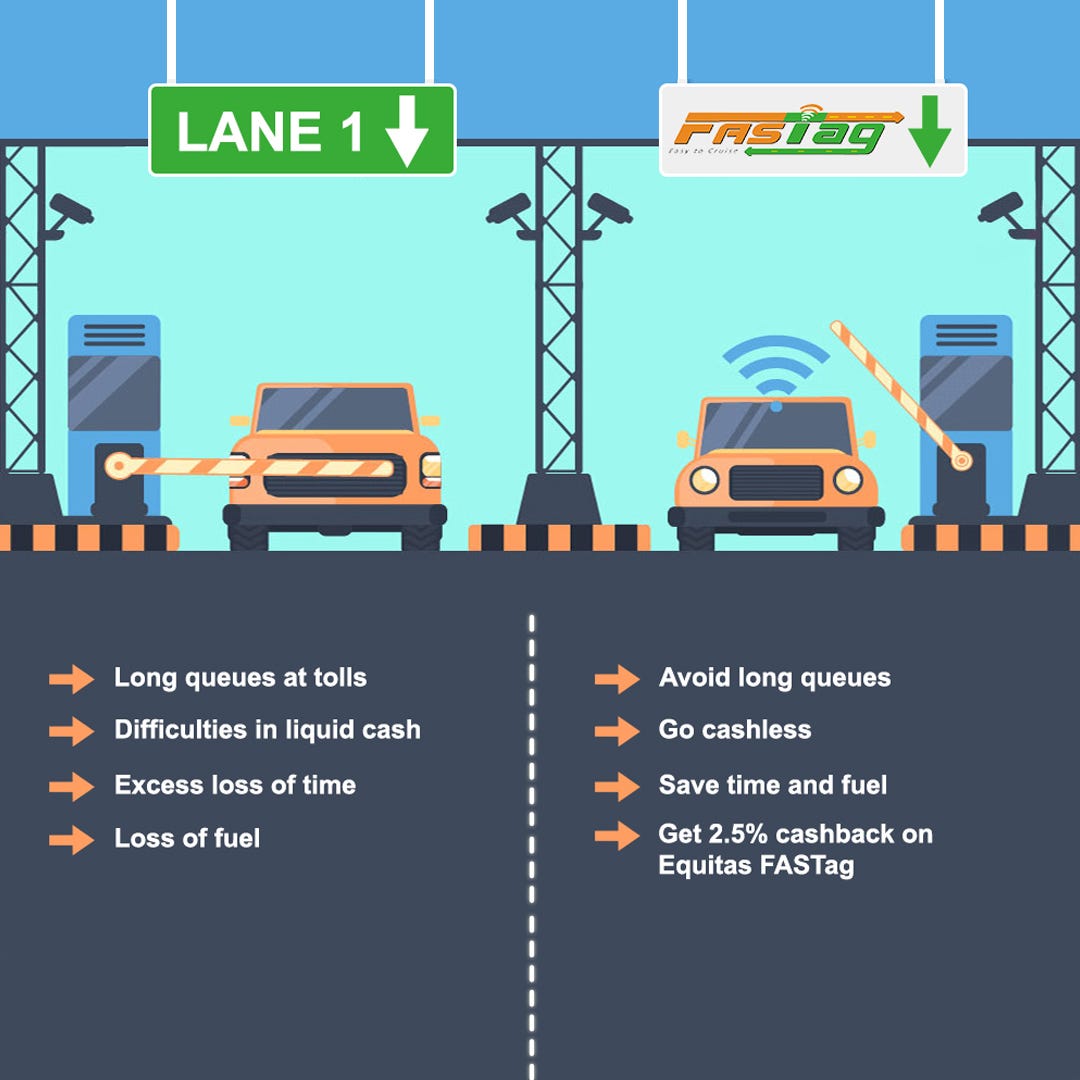
    • FASTag will help to reduce the waiting time at the plaza
    • Accommodating the increasing traffic without additional lanes
    • Eliminating the acceleration and idling, harmful vehicular emissions and air using FASTag
    • Reducing congestion around plazas
    • Pollution reduction
    • To save fuel for the future which will also help to reduce the operating cost of the vehicles
    • To provide customers the flexibility of paying their plaza bill’s with RFID Tag
    • Reduce cash handling which aids in enhanced audit control by centralizing user accounts
    • Enhancing data collection, information such as vehicle count of the day

    Is it working smoothly?

    • The tags sold by banks are not “bank-neutral”.
    • A FASTag bought from one bank can be recharged through that particular bank only and not through other banks.
    • However, tags sold/distributed by NHAI are bank-neutral as one can use any bank account to recharge/top up the value in the tag.

    What about state highways?

    • Under a new “One Nation One FASTag” scheme, the NHAI is trying to get states on board so that one tag can be used seamlessly across highways, irrespective of whether it is the state or the Centre that owns/manages it.
    • Recently as part of a pilot, Karnataka, Andhra Pradesh and Haryana signed MoUs with the Centre to accept FASTags in state highways also.


    References

    https://www.civilsdaily.com/news/explained-fastags/

    https://timesofindia.indiatimes.com/travel/destinations/fastags-in-india-why-is-it-mandatory-for-your-vehicles-to-have-one-now/as72333185.cms

    https://www.indiatoday.in/information/story/fastag-know-how-works-benefits-details-1622964-2019-11-27

  • Gear up for This week’s Samachar Manthan lecture on 8th December

    Dear students,

    We understand that the UPSC exam is a generalist exam. It’s more important to cover more issues than to cover one issue in more depth. Hence, through Samachar Manthan, we are trying to maintain a fine balance of covering many important news items and having a detailed discussion on selected topics which require the same. On daily basis a news gets repeated multiple times. Scattered knowledge is not adequately useful when you have to write a 200 words answer within 6-7 minutes. To handle this, Samachar manthan covers such issues in a comprehensive and consolidated manner which is the smart strategy.

    Benefits of Samachar Manthan

    • Packed 3 – 3.5 hours Weekly videos will focus on news and its importance from both prelims and mains perspective.
    • This program will also help you understand how to utilize current affairs in all your prelims and mains papers.
    • This ideology makes this course the best utilization of your time.
    • Detailed coverage would mean analysis from all the angles like background or history, features, significance, challenges and way forward. Also, multiple sources like epw, diplomat magazine etc will be referred to in the video lectures.
    • Such an approach will help in writing multidimensional answers.
    • Also which part of the topic is important from mains and prelims perspective will also be discussed.
    • Audio Visual Learning is more impactful than simply glancing through the material. So that you are able to retain information for long also interlink with any new information you get.
    • 4 stage structure of Video->Notes->testing->review to perfect your preparation
    • The sequence of video->Notes->testing->review is the best way to ensure maximum retention and a rock solid preparation. Each component of the program has been meticulously crafted.

    For example this week, we will be covering the following issues;

    Economics

    • Rise in onion prices (Detailed analysis)
    • Do India require High -speed rail?
    • Fall in GDP growth 
    • Imphal to Mandalay flight service
    • Nationwide Artificial Insemination Programme (NAIP)
    • List of certain G.I. Tagged Handloom Textile Products

    Enviro & Biodiversity

    • Coalbed Methane (Detailed analysis)
    • Rohtang Tunnel
    • Species in news: Trachischium apteii
    • [Editorial] Stubble burning is not the only culprit
    • [op-ed snap] Widening gap: On UN’s Emissions Gap Report 22
    • UNDP Accelerator Lab 23
    • Common But Differentiated Responsibilities and Respective Capability (CBDR-RC)
    • Species in news: Clownfish

    Governance

    • Named Driver Policy
    • Kartavya Portal
    • Transgender Persons (Protection of Rights) Bill, 2019 (Detailed analysis)
    • QS World University Rankings for Asia
    • The Dadra and Nagar Haveli and Daman and Diu (Merger of Union Territories) Bill, 2019
    • Yuwaah Youth Skilling Initiative
    • Organ donation in India (Detailed analysis)


    International Relations 38

    • [Editorial] Delhi needs to engage with Moscow on the unfolding Sino-Russian naval partnership
    • Kalapani Territorial Dispute(Detailed analysis)
    • UNESCO Convention against the trade of Cultural Property, 1970
    • Global Migration Report 2020

    Polity

    • Rules for the Conduct of Business
    • Mizoram revokes Forest Rights Act
    • Explained: The Bodoland dispute
    • [Editorial] Preventing political coalitions of convenience
    • [Editorial] India’s enduring document of governance
    • Should the Office of Governor be scrapped?   (Detailed analysis)

    Science Tech

    • FASTags
    • Cartosat-
    • “Contract for the Web”
    • Dendrochronology

    Security Issues 59

    • Budapest Convention on Cyber-Security
    • Exercise MILAN 2020
    • Exercise Him Vijay
    • Exercise SURYA KIRAN – XIV
    • Gujarat terror law


  • SAMANVAYA: Students Preparing for UPSC 2020 > 6 months to go!

    SAMANVAYA: Students Preparing for UPSC 2020 > 6 months to go!

    Click here to fill the form, tell us about your preparation and we will email you a 6-month revision plan.

    Dear Students, 

    Our lectures on paper discussions and posts on solutions and sample structures have received over 20,000 hits collectively.  

    It is time to get serious with your preparation and we have got your back.


    After numerous conversations with so many aspirants, we have started understanding your problems better and standardizing solutions for the same.

    These are being incorporated into our Samanvaya program. It is these practices that will make the program more effective.

    At the core of Samanvaya lies the fact that each one of you will have a unique journey while preparing for the exam. Some will get through on the first attempt without much effort while others will take both more time and more effort. We want to understand you better to help you optimize your journey so you can focus on the right things and not waste time on the wrong ones. We are asking you to tap into the valuable experiences of mentors who underwent the same grind and realize the pitfalls and understand the shortcuts to make it.

    Samanvaya program involves the following –

    1. Identifying your weaknesses

    Over 80% of students who claimed to have revised NCERTs were unable to answer basic questions. Many were not comfortable with at least 1 GS subject and Optional. Many struggled with ‘What went wrong’ after 2-3 years of hard work.

    Our mentors will help you assess your preparedness and suggest accurate strategies.

    2. Strategy and study plan discussions

    Over 90% of students couldn’t stick to a plan. Study plans and strategies are iterative in nature and we want to help you with that. Many are unable to perform in tests despite preparing hard. This could be due to a variety of factors – lack of adequate prep, jitters in the exam hall, inadequate revision, lack of practice of test series or just a bad day at work. Tell us what you think went wrong and we’ll figure out a way to get you over the line next time.

    3. Helping you understand the exam better

    Which books to read, different approaches, etc. Over 60% of students we talked to did not find NCERTs relevant and saw no point in being thorough with them.

    4. Lack of motivation

    We have all had those days when it’s been hard to motivate ourselves to hit the books and just study. It happens to the best of us sometimes and for some of us, it happens more frequently. And it is understandable, Civil Service preparation is a long and often lonely process. Every aspirant, from toppers to those who have quit have been overwhelmed by this process at some point.

    Samanvaya Code of Conduct

    • Be honest with your mentors about your preparation levels and stage.
    • Follow their advice and participate in tests and assignments that they set for you
    • Stay active in the telegram groups, ask doubts, don’t hold yourself back.
    • Don’t expect spoonfeeding. You have to drive the initiative.

    Click here to fill the form, tell us about your preparation and we will email you a 6-month revision plan.

    Here’s the feedback that we got from some of our students:


    Click here to fill the form, tell us about your preparation and we will email you a 6-month revision plan.

  • 6th December 2019 | Daily Answer Writing Enhancement

    ANNOUNCEMENT – There is a change in format. Students will now have to post answers on the questions page separately by clicking on the links given below. We plan to track progress for each of the GS papers and to achieve the same, this modification becomes important. Students who are unable to post answers, please email hello@civilsdaily.com. You will receive a resolution for sure. 

    Please avoid submitting typed answers. Write answers on paper.


    Question 1)

    Critically comment why discrimination and atrocities against Adivasis in India continues unabated, even in states that are educationally advanced. (15 Marks)

    Question 2)

    Give your opinion on the idea of introducing a ‘creamy layer’ for SC/ST reservations. (15 Marks)

    Question 3)

    India’s relations with Israel have, of late, acquired a depth and diversity, which cannot be rolled back.” Discuss. 15 Marks)

    Question 4)

    Utilization of public funds in a country must obey the principles of transparency and efficiency. do you agree? Give your opinion with suitable examples.(15 Marks)

    Reviews will be provided in a week. (In the order of submission- First come first serve basis). In case the answer is submitted late the review period may get extended to two weeks.

    *In case your answer is not reviewed in a week, reply to your answer saying *NOT CHECKED*. If Parth Sir’s tag is available then tag him.

    For the philosophy of AWE and payment, check  here: Click2Join

  • 5th December 2019 | Daily Answer Writing Enhancement

    ANNOUNCEMENT – There is a change in format. Students will now have to post answers on the questions page separately by clicking on the links given below. We plan to track progress for each of the GS papers and to achieve the same, this modification becomes important. Students who are unable to post answers, please email hello@civilsdaily.com. You will receive a resolution for sure. 

    Please avoid submitting typed answers. Write answers on paper.


    Question 1)

    Is one party system like that of China’s one-party system better than traditional multi-party democracies? Analyse. (15 Marks)

    Question 2)

    Do you think the Constitution of India does not accept the principle of strict separation of powers rather it is based on the principle of ‘checks and balances’? Explain. (15 Marks)

    Question 3)

    What challenges are facing India in the battle against HIV/AIDS? Find alternative approaches to tackle the resurgence of the disease. (15 Marks)

    Question 4)

    Do you think the public service values and the Code of Ethics should be given a statutory backing? Justify. (15 Marks)

    Reviews will be provided in a week. (In the order of submission- First come first serve basis). In case the answer is submitted late the review period may get extended to two weeks.

    *In case your answer is not reviewed in a week, reply to your answer saying *NOT CHECKED*. If Parth Sir’s tag is available then tag him.

    For the philosophy of AWE and payment, check  here: Click2Join

  • Get ready for the upcoming Polity Advanced Prelims Test on 7th December – sample questions highlighting our methodology

    Click here to enroll for the Prime Prelims TS

    Dear students,

    31st May 2020 is the D-day for all civil service aspirants.

    “Give me six hours to chop down a tree and I will spend the first four sharpening the ax.”

    This quote by Abraham Lincoln clearly sums up how one should prepare for that day. So before entering the battlefield alone should have enough practice. Our Prime Prelims Test series which shall enrich you to acquaint yourself with the pattern of CSE-2020, assess your abilities, rectify your mistakes and make you confident to appear on the examination day.

    Our Prime Prelims Test Series follows the same approach as that adopted by UPSC. Our team of experts is quite enriched with the UPSC pattern and focal point of the questions and hence creates more chances for the aspirants to crack civil service examination by appearing our Test Series.

    The key philosophy of our prelims TS is Evidence-based question making: The 3600 questions you face in our mocks have their relevance established in UPSC’s trend analysis. We focus on themes that are important as per UPSC so that we maximize your chances of questions overlap with the actual UPSC Prelims.

    This Ancient and Medieval History test contains questions from the following themes:

    Nothing speaks more than the facts itself rather than a mere jargon. Here is a list of 5 sample questions from the upcoming test which will help you in identifying the standards and approach we follow. (you can skip this if you want to attempt these directly in the test). 

    Noone but only you can assess how it will help you in being the top percentile of aspirants. You have to practice ruthlessly and civils Daily provides you with a platform to hone your skills.


    Q.1) Consider the following statements:

    1. Under article 29, the right to preservation of culture is available to minorities only.
    2. Under article 30, the right to establish educational institutions is available to minorities only

    Which of the above statements is/are correct?

    a. 1 only

    b. 2 only

    c. Both of them

    d. Neither of them


    Q.2) Consider the following:

    1. Single Citizenship
    2. Rigidity of Constitution
    3. Integrated Judiciary

    Which of the above are considered as Federal features of Indian Polity?

    a. 1 and 3 only

    b. 2 only

    c. 1 and 2 only

    d. All of them


    Q.3) The Governor of a state needs to Compulsorily reserve a bill for the President if:

    a. It puts strain on Consolidated Fund of the state

    b. It implements the Directive Principle of State Policy

    c. It proposes Capital punishment

    d. It endangers the position of the High Court


    Q.4) Consider the following fundamental rights:

    1. Equality before law and equal protection of laws.
    2. Prohibition of discrimination on grounds of religion, race, caste, sex or place of birth.
    3. Protection of life and personal liberty.
    4. Right to elementary education.

    Which of the fundamental rights mentioned above are applicable to foreigners?

    a. 1 and 2 only

    b. 1, 3 and 4 only

    c. 2 and 3 only

    d. 2 and 4 only


    Q.5) Provisions for education are mentioned in which part of the Constitution?

    a. Fundamental Rights

    b. Directive Principles of State Policy

    c. Fundamental Duties

    d. All of them