💥UPSC 2026, 2027, 2028 UAP Mentorship (March Batch) + Access XFactor Notes & Microthemes PDF

Search results for: “”

  • CRISPR-Based Therapies: A New Era in Genetic Disease Treatment

    Central Idea

    • Revolutionary Development: The medical world is witnessing a significant breakthrough with the approval of CRISPR-based therapies for sickle-cell disease and β-thalassemia in the U.K. and the U.S.
    • Global Impact: These advancements hold the potential to transform the lives of millions suffering from these inherited blood disorders.

    CRISPR Technology: From Discovery to Application

    • Origins of CRISPR: Discovered in archaea in 1993, CRISPR (Clustered Regularly Interspaced Short Palindromic Repeats) elements were later found to form an antiviral defense system in bacteria with Cas (CRISPR-associated) proteins.
    • Nobel Prize-Winning Innovation: Emmanuelle Charpentier and Jennifer Doudna’s work on CRISPR-Cas9 as a ‘molecular scissor’ earned them the 2020 Nobel Prize in chemistry.
    • Eukaryotic Genome Editing: Subsequent research demonstrated CRISPR-Cas9’s ability to edit eukaryotic genomes, paving the way for various applications in genetic therapies and agriculture.

    CRISPR in Medicine: Recent Approvals and Applications

    • CRISPR-Based Treatment for Blood Disorders: The MHRA in the U.K. and the FDA in the U.S. approved ‘Casgevy’ for treating sickle-cell disease and transfusion-dependent β-thalassemia.
    • Treatment Mechanism: Casgevy involves modifying a patient’s blood stem cells to correct the genetic defect causing sickling, then regrafting them to produce normal red blood cells.
    • Historical Context: This approval marks a full circle from Linus Carl Pauling’s description of sickle-cell disease as a molecular disorder 74 years ago.

    Emerging CRISPR Technologies and Approaches

    • Base-Editing: This technique allows genome editing at the single nucleotide level.
    • Prime Editing: A newer method that uses a search-and-replace strategy for precise genome modifications.
    • Epigenetic Modifications: CRISPR systems are also being developed to target epigenetic effects.

    Challenges and Future Prospects

    • Safety and Accuracy Concerns: Issues like off-target events, where CRISPR-Cas9 edits unintended parts of the genome, pose significant challenges.
    • Balancing Risks and Benefits: While the potential of these technologies is enormous, their risks must be weighed against both short- and long-term benefits.
    • Ongoing Research and Surveillance: Continuous scrutiny is essential to uncover potential side effects that are currently unknown.

    Conclusion

    • Celebrating Advances: The approval of therapies like Casgevy heralds a new era for millions suffering from genetic diseases.
    • Optimistic Outlook: The advancements in CRISPR technology signal a promising future in the field of genetic medicine and disease treatment.
  • Guru Teg Bahadur: Martyrdom and Legacy

    guru teg bahadur

    Central Idea

    • PM paid homage to Guru Teg Bahadur, the ninth Sikh Guru, on his martyrdom day, highlighting his bravery, moral integrity, and teachings that foster unity and peace.
    • His sacrifice, especially his defence of Kashmiri Pandits against Mughal Emperor Aurangzeb’s forced religious conversions in the 17th century, stands as a pivotal moment in Indian history.

    Guru Teg Bahadur’s Life and Contributions

    • Extensive Travels: Guru Teg Bahadur, born on April 1, 1621, was known for his extensive travels across India, akin to Guru Nanak Dev, the founder of Sikhism.
    • Reviving Sikh Centers: His journeys were instrumental in revitalizing Sikh centers beyond Punjab, setting the stage for the formation of the Khalsa by his son, Guru Gobind Singh, in 1699.
    • Poetic Legacy: A prolific poet, Guru Teg Bahadur’s hymns are an integral part of the Guru Granth Sahib, the central religious scripture of Sikhism.
    • Founder of Anandpur Sahib: He founded Anandpur Sahib in 1665, a city of great religious and historical significance for Sikhs.

    Execution by Aurangzeb

    • Protection of Kashmiri Pandits: In 1675, Kashmiri Pandits approached Guru Teg Bahadur for protection against Aurangzeb’s religious persecution.
    • Arrest and Martyrdom: Guru Teg Bahadur was arrested and later executed in Delhi on November 24, 1675, in Chandni Chowk, for refusing to convert to Islam and standing up for religious freedom.
    • Memorials in Delhi: Gurudwara Sis Ganj Sahib marks the place of his execution, and Gurudwara Rakab Ganj Sahib commemorates the site where his body was cremated.

    Try this PYQ:

    Q.Consider the following Bhakti Saints:

    1. Dadu Dayal
    2. Guru Nanak
    3. Tyagaraja

    Who among the above was/were preaching when the Lodi dynasty fell and Babur took over?

    (a) 1 and 3

    (b) 2 only

    (c) 2 and 3

    (d) 1 and 2


    Post your answers here.
  • What is Zero Trust Authentication (ZTA)?

    zero trust

    Central Idea

    • In response to rising cyberattacks, the Centre has established a secure e-mail system for 10,000 users across critical ministries and departments.
    • The National Informatics Centre (NIC) has designed this system, incorporating Zero Trust Authentication (ZTA).

    What is Zero Trust Authentication (ZTA)?

    • ZTA is a security concept and framework that operates on the principle of “never trust, always verify.”
    • This approach to cybersecurity is a significant shift from traditional security models that operated under the assumption that everything inside an organization’s network should be trusted.
    • In contrast, Zero Trust assumes that trust is never granted implicitly but must be continually evaluated and authenticated, regardless of the user’s location or the network’s perimeter.

    Key Principles of ZTA

    • Least Privilege Access: Users are granted only the minimum level of access needed to perform their job functions. This limits the potential damage in case of a security breach.
    • Strict User Verification: Every user, whether inside or outside the organization’s network, must be authenticated, authorized, and continuously validated for security configuration and posture before being granted access to applications and data.
    • Micro-segmentation: The network is divided into small zones to maintain separate access for separate parts of the network. If one segment is breached, the others remain secure.
    • Multi-Factor Authentication (MFA): ZTA often requires multiple pieces of evidence to authenticate a user’s identity. This could include something the user knows (password), something the user has (security token), and something the user is (biometric verification).
    • Continuous Monitoring and Validation: The system continuously monitors and validates that the traffic and data are secure and that the user’s behaviour aligns with the expected patterns.

    Implementation of Zero Trust Authentication

    • Technology: Implementation of Zero Trust requires technologies like identity and access management (IAM), data encryption, endpoint security, and network segmentation tools.
    • Policy and Governance: Organizations need to establish comprehensive security policies that enforce Zero Trust principles, including how data is accessed and protected.
    • User Education and Awareness: Training users on the importance of cybersecurity and the role they play in maintaining it is crucial.

    Benefits of Zero Trust Authentication

    • Enhanced Security Posture: By verifying every user and device, Zero Trust reduces the attack surface and mitigates the risk of internal threats.
    • Data Protection: Sensitive data is better protected through stringent access controls and encryption.
    • Compliance: Helps in meeting regulatory requirements by providing detailed logs and reports on user activities and data access.
    • Adaptability: Zero Trust is adaptable to a variety of IT environments, including cloud and hybrid systems.
  • Logistics Ease Across Different States (LEADS) Report, 2023

    Central Idea

    • The govt has released the LEADS (Logistics Ease across Different States) 2023 report, assessing logistics performance across Indian States and Union Territories (UTs).
    • The report includes 11 States and two UTs, encompassing coastal, landlocked, North Eastern States, and UTs.

    About LEADS Report

    • The LEADS index was launched in 2018 by the Commerce and Industry Ministry and Deloitte.
    • It was inspired by the Logistics Performance Index (LPI) of World Bank, and has evolved over time.
    • It ranks states on the score of their logistics services and efficiency that are indicative of economic growth.
    • States are ranked based on quality and capacity of key infrastructure such as road, rail and warehousing as well as on operational ease of logistics.

    Key Highlights of the 2023 Report

    • ‘Achievers’ Category: States like Andhra Pradesh, Gujarat, Karnataka, Tamil Nadu, Haryana, Punjab, Telangana, Uttar Pradesh, Assam, Sikkim, Tripura, and UTs Chandigarh, Delhi are named as ‘Achievers’.
    • Category Shifts: Maharashtra moved from ‘Achievers’ to ‘Fast Movers’, while Odisha shifted from ‘Achievers’ to ‘Aspirers’.
    • ‘Fast Movers’: Kerala and Maharashtra among coastal States, Madhya Pradesh, Rajasthan, Uttarakhand among land-locked States, and Arunachal Pradesh, Nagaland among North Eastern States are ‘Fast Movers’.
    • ‘Aspirers’: Goa, Odisha, West Bengal, Bihar, Chhattisgarh, Himachal Pradesh, Jharkhand, Manipur, Meghalaya, Mizoram, and UTs like Daman & Diu/Dadra & Nagar Haveli, Jammu & Kashmir, Ladakh are categorized as ‘Aspirers’.

    Policy perspectives

    • Digital Initiatives: Digital reforms like PM GatiShakti, Logistics Data Bank, ULIP, and GST are driving India’s improved global ranking.
    • India’s Improved LPI Rank: India’s LPI rank improved by six places to 38th position in 2023, reflecting the positive impact of these efforts.
    • Vision for Logistics Sector: India’s logistics sector is set to grow from a $3.5 trillion to $35 trillion economy by 2047.
  • Cassini Data reveals organic molecules in Enceladus’s Plume

    Enceladus

    Central Idea

    • A re-analysis of data from the Cassini mission has revealed a complex mix of molecules in the gaseous plumes of Saturn’s moon Enceladus.

    About Cassini Mission

    Details
    Launch Date October 15, 1997
    Mission Agencies NASA, European Space Agency (ESA), Italian Space Agency (ASI)
    Primary Focus Study of Saturn, its rings, moons, and magnetosphere
    Key Objectives – Study Saturn’s atmosphere

    – Investigate Saturn’s rings

    – Detailed studies of Saturn’s moons

    – Explore Saturn’s magnetosphere

    Major Achievements – Successful landing of the Huygens probe on Titan

    – Discovery of geysers on Enceladus

    – Identification of new moons

    – Detailed analysis of Saturn’s rings

    Enceladus Discoveries – Detection of water-ice geysers erupting from the south pole

    – Indications of a subsurface ocean

    – Analysis of organic compounds in the plumes

    Significant Milestones – Jupiter Flyby: December 2000

    – Saturn Orbit Insertion: July 1, 2004

    – Huygens Titan Landing: January 2005

    Mission Duration 1997-2017 (including extended missions)

    Discovery of Plumes and Initial Analysis

    • Cassini’s Initial Discovery: In 2005, the Cassini spacecraft discovered large plumes escaping from Enceladus’s southern hemisphere.
    • Source of Plumes: These plumes are believed to originate from a subsurface ocean through fissures in the moon’s icy surface.
    • Initial Molecular Findings: Earlier analyses identified water, carbon dioxide, methane, ammonia, and molecular hydrogen in the plume samples.

    Re-examination of Cassini Data

    • Research Team: Led by Jonah Peter from the California Institute of Technology, Pasadena, California.
    • Methodology: The team re-examined data using a statistical analysis technique, comparing it against a vast library of known mass spectra.
    • Newly Identified Molecules: The analysis revealed the presence of hydrocarbons like hydrogen cyanide (HCN), acetylene (C2H2), propylene (C3H6), ethane (C2H6), along with methanol and molecular oxygen.

    Significant Discovery of Nitrogen

    • Definite Presence of Nitrogen: The study confirmed the presence of nitrogen in the form of HCN, resolving previous uncertainties due to overlapping signals in mass spectrometry data.
    • Potential for Habitability: The diverse chemical reservoir under Enceladus’s surface suggests conditions that might be consistent with a habitable environment.
    • Support for Microbial Life: The presence of these compounds, along with mineralogical catalysts and redox gradients, could potentially support microbial communities or complex organic synthesis.
    • Caveat on Life Support: The ability of these compounds to support life depends on their concentration in Enceladus’s subsurface ocean.
  • The regulator’s challenge in the age of AI

    Global Competition for AI Regulation, or a Framework for AI Diplomacy? –  The Diplomat

    Central idea 

    The central idea revolves around the global momentum for AI regulation, acknowledging its transformative impact on sectors. It emphasizes the urgent need for regulatory skill-building to match the evolving risks of AI, especially for regulatory agencies, while highlighting the potential widespread adoption and diverse applications of generative AI across the economy.

    Key Highlights:

    • Recent Global Efforts: Global initiatives, including executive orders, legislations, and declarations, underscore the importance of regulatory skill-building in the digital age.
    • Transformative Impact: The urgency to rethink regulatory capabilities arises from AI’s transformative impact on sectors like banking, telecommunications, and insurance.
    • Generative AI Products: Products showcase vast scope and rapid improvement, indicating potential widespread adoption across the economy.

    Key Challenges:

    • Urgent Skill-Building: The downstream challenge involves urgently building regulatory skills to match the pace of emerging risks from AI technology.
    • Regulatory Agencies’ Role: Regulatory agencies, at the forefront, must adapt to AI’s transformative influence in various sectors.

    Key Terms and Phrases:

    • Generative AI: AI products with the capability to generate content or services, showcasing vast scope and rapid improvement.
    • Algorithmic Auditing: Audit of each part of a model’s lifecycle to understand workings and identify potential problematic outcomes.

    Key Quotes:

    • “AI may alter professional practices and norms, reshaping industries such as bookkeeping, accounting, and law.”
    • “Effective regulation can facilitate market acceptance of AI products and services, necessitating a proactive regulatory approach.”

    Key Statements:

    • Regulatory agencies, like the Reserve Bank of India and the Securities and Exchange Board of India, are developing AI tools for regulatory supervision.
    • Building regulatory capabilities in-house is challenging; agencies need to be nimble and proactive to acquire necessary skills and evaluate external inputs.

    Key Examples and References:

    • Banks and credit card companies are using AI for fraud detection, risk assessment, and digital marketing.
    • The Indian insurance industry utilizes AI for risk management, indicating diverse applications of AI in the economy.

    Key Facts and Data:

    • The Economist Intelligence Unit reports AI usage in banks, credit card companies, and e-commerce for various purposes, highlighting the technology’s growing influence.

    Critical Analysis:

    • The transformative potential of AI in various sectors necessitates a reevaluation of regulatory capabilities, including algorithmic auditing and understanding disclosure-related requirements.
    • While private sector incentives may mitigate rapid AI adoption, effective regulation remains crucial for market acceptance and avoiding inadequate reliance on external expertise.

    Way Forward:

    • Regulators must proactively build capabilities to understand and implement AI regulations, emphasizing the need for systemic development at the scale of the Indian state.
    • The central government should take the lead in understanding and replicating the transition from an analog to a digital state, addressing the challenge of developing capabilities for AI regulation.
  • An uphill struggle to grow the Forest Rights Act

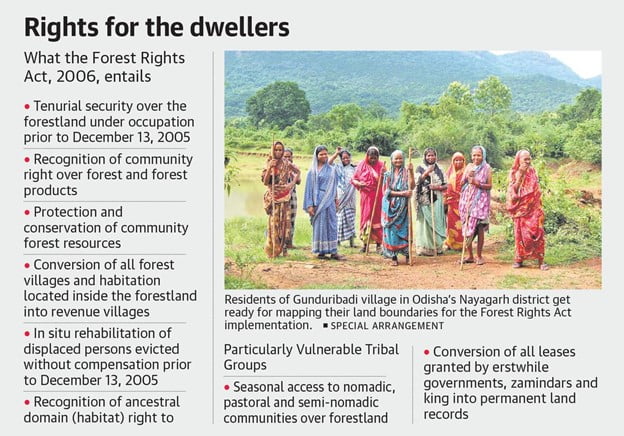
    Forest Rights Act, 2006 | IASbaba

    Central idea

    The Forest Rights Act (FRA) aims to rectify historical injustices faced by forest communities, addressing issues through individual and community forest rights. Implementation challenges, political opportunism, and bureaucratic resistance hinder the FRA’s potential to democratize forest governance. Despite recognizing past injustices, the FRA’s full realization faces obstacles.

    Key Highlights:

    • The Forest Rights Act (FRA) and its Aim: The FRA, enacted in 2006, seeks to rectify historical injustices faced by forest-dwelling communities due to colonial forest policies.
    • Acknowledgment of Injustices: It recognizes the disruption caused by the colonial takeover of forests, imposition of eminent domain, and subsequent injustices post-Independence.
    • Addressing Issues through Recognition: The FRA tackles ‘encroachments,’ access, and control by recognizing individual and community forest rights, fostering decentralized forest governance.

    Key Challenges:

    • Implementation Hurdles: Challenges include political opportunism, forester resistance, bureaucratic apathy, and a distorted focus on individual rights.
    • Concerns in Individual Rights Recognition: Shabby recognition of individual forest rights, especially in ‘forest villages,’ remains a concern.
    • Obstacles in Community Rights Recognition: Slow and incomplete recognition of community rights to access and manage forests (CFRs) faces opposition from the forest bureaucracy.

    Key Terms and Phrases:

    • Defining Concepts: Individual Forest Rights (IFRs), Community Forest Rights (CFRs), ‘Forest encroachments,’ Eminent domain, ‘Grow More Food’ campaign, Net Present Value fees, Wildlife (Protection) Act 1972, Forest (Conservation) Act 1980.

    Key Quotes:

    • Highlighting the Lag in Delivering Promises: “17 years after it was enacted, the FRA has barely begun to deliver on its promise of freeing forest-dwellers from historic injustices.”
    • Opposition to CFRs: “The forest bureaucracy vehemently opposes CFRs as it stands to lose its zamindari (control).”

    Key Statements:

    • FRA’s Remarkable Aspects: The FRA stands out for acknowledging historical injustices and providing redress through the recognition of individual and community forest rights.
    • Lacunas in Implementation: Implementation challenges include political misrepresentation, bureaucratic hindrance, and slow recognition of community rights.

    Key Examples and References:

    • State Recognition of CFRs: Maharashtra, Odisha, and Chhattisgarh are highlighted as states recognizing CFRs, with Maharashtra enabling their activation through de-nationalizing minor forest produce.

    Key Facts and Data:

    • Scale of Challenge: Estimates indicate that 70%-90% of the forests in central India should be under CFRs, emphasizing the magnitude of the challenge in implementing community rights.

    Critical Analysis:

    • Addressing Issues in Individual Rights Focus: The article critiques the distorted focus on individual rights, digital processes causing hardships, and the forest bureaucracy’s opposition to community rights.
    • Importance of Understanding FRA’s Intent: Emphasizes the need for a deeper understanding of the FRA’s intent to address historical injustices and democratize forest governance.

    Way Forward:

    • Comprehensive Recognition: To realize the FRA’s potential, there is a need for comprehensive recognition of both individual and community forest rights.
    • Appreciation of Intent: Political leaders, bureaucrats, and environmentalists must appreciate the spirit and intent of the FRA to ensure meaningful implementation and address historical injustices.
  • One person, one vote, one value

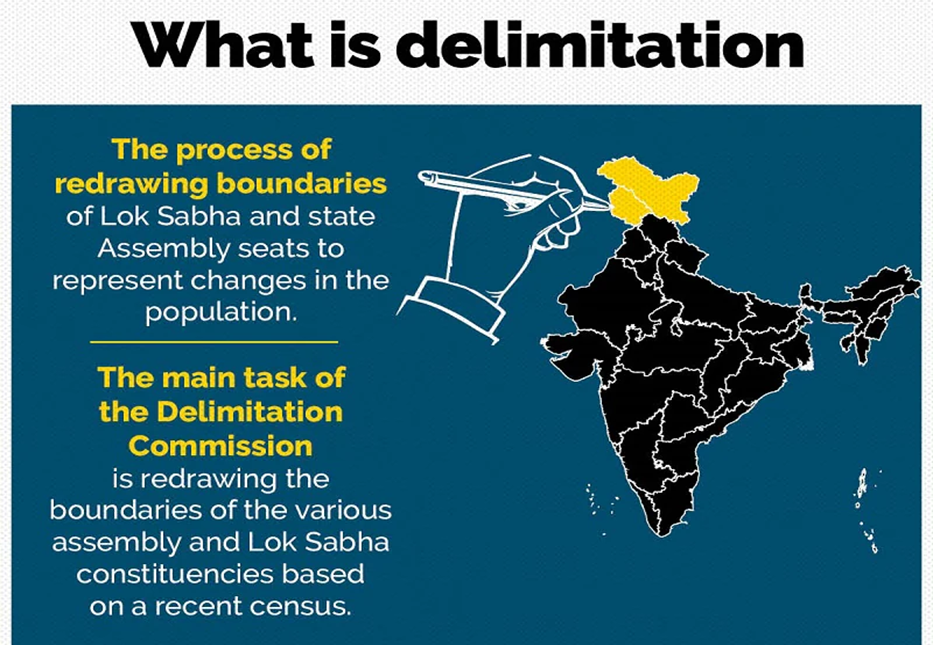
    Delimitation of Lok Sabha constituencies to bring about significant shifts  UPSC

    Central idea 

    The central idea revolves around the crucial role of delimitation in preserving political equality within liberal democracies. It addresses challenges such as population growth disparities, gerrymandering, and the need for a comprehensive legal framework. The way forward emphasizes urgent and comprehensive delimitation, protection of state interests, and continuous monitoring to ensure a fair and inclusive democratic representation.

    Key Highlights:

    • Political Equality in Liberal Democracies: In liberal democracies, political equality extends beyond the opportunity to participate; it includes ensuring that each citizen’s vote holds equal value.
    • Types of Dilution: Quantitative dilution is observed when population deviations among constituencies result in unequal representation. Qualitative dilution, on the other hand, occurs through gerrymandering, impacting the chances of minority representation.
    • Constitutional Safeguards: Articles 81, 170, 327, 330, 332 of the Constitution establish safeguards to guarantee political equality. They empower Parliament to enact laws related to delimitation and address concerns of both quantitative and qualitative dilution.
    • Role of Delimitation Commissions: Delimitation commissions, formed periodically, play a crucial role in maintaining population-representation equality by adjusting constituency boundaries.

    Key Challenges:

    • Population Growth Disparities: Unequal population growth among states poses a challenge, leading to quantitative dilution where the weight of votes varies significantly.
    • Impact of Gerrymandering: Gerrymandering can qualitatively dilute the value of votes, particularly affecting minority representation. Techniques like cracking, stacking, and packing can be employed to manipulate electoral boundaries.
    • Issues with Freezing and Variation Allowance: The freezing of population figures and the allowance for a 10% variation have resulted in imbalances, allowing deviations from the ideal population-representation ratio.

    Key Terms and Phrases:

    • Dilution Types: Understanding the distinctions between quantitative and qualitative dilution is essential for addressing challenges in the democratic process.
    • Legal Framework: Key legal terms include gerrymandering, the Delimitation Commission, Two Member Constituencies (Abolition) Act, 1961, 42nd Amendment Act, 1976, and the Sachar Committee Report, which provide the foundation for delimitation processes.

    Key Quotes:

    • “The right to vote can be diluted quantitatively and qualitatively by redrawing constituency boundaries.” – Pamela S. Karlan This quote emphasizes the importance of maintaining the integrity of the voting process and avoiding dilution through boundary manipulations.
    • “Delimitation of constituencies needs to be carried out regularly based on the decennial Census.” Regular delimitation, aligned with the decennial Census, is crucial for adapting to demographic changes and ensuring fair representation.

    Key Statements:

    • Population Growth Variations: Differences in population growth among states create a significant gap in the value of votes, impacting the democratic principle of equal representation.
    • Issues with Freezing and Variation Allowance: The freezing of population figures and the allowance for variation contribute to imbalances in representation, requiring careful consideration in the delimitation process.

    Key Examples and References:

    • Impact of Delimitation on SC-Reserved Seats: Delimitation’s impact on Scheduled Caste (SC)-reserved seats, especially concerning the majority Muslim population, highlights the complexities of fair representation.
    • Discrepancies in Muslim Representation: Discrepancies between the percentage of Muslim MPs in Parliament (4.42%) and their overall population (14.2%) underscore the qualitative dilution in the representation of minority communities.

    Key Facts and Data:

    • Population Growth Between 1971 and 2011: Disparities in population growth across states, with some experiencing over 125% growth, contribute to the quantitative dilution of votes.
    • Representation Disparity: The average representation disparity, where an MP in some states represents significantly more people than in others, reflects the challenges in achieving equal representation.

    Critical Analysis:

    • Threats to Democracy: Both quantitative and qualitative dilution pose significant threats to the democratic process, undermining the principle of equal political representation.
    • Challenges with Freezing and Variation Allowance: The freezing of population figures and the allowance for variation may result in continued imbalances, demanding a critical evaluation of the current delimitation framework.
    • Impact on Minority Representation: The qualitative dilution of votes has a notable impact on minority representation, requiring a nuanced approach in delimitation to address these disparities.

    Way Forward:

    • Urgent Delimitation: Urgent delimitation is necessary to rectify population-representation deviations and uphold the principles of equal representation in a timely manner.
    • Comprehensive Delimitation: Future delimitation processes must consider both quantitative and qualitative aspects, ensuring a comprehensive approach to achieve fair representation.
    • Protecting State Interests: Special attention is required to protect the interests of states with slower population growth, balancing the need for representation across regions.
    • Continuous Monitoring and Adjustments: Regular monitoring and adjustments in delimitation processes are essential for maintaining a robust and inclusive democratic system. Continuous adaptation to demographic changes will help address evolving challenges in representation.
  • [pib] Indian Tent Turtles rescued in Lucknow

    Indian Tent Turtles

    Central Idea

    • The Directorate of Revenue Intelligence (DRI), Zonal Unit, Lucknow, acted on specific intelligence to intercept an illegal wildlife trade of 436 baby Indian Tent turtles.

    About Indian Tent Turtles

    Details
    Scientific Classification Pangshura tentoria, Family: Geoemydidae
    Diet Mainly herbivorous, active swimmer.
    Habitat Prefers still water pools on river sides and slow running water near river banks.
    Distribution Native to India, Nepal, and Bangladesh.
    Conservation Status – Wild Life (Protection) Act, 1972: Schedule I

    – IUCN Status: Least Concern

    – CITES: Appendix II.

    Major Threats Illegal trade in the pet market due to its attractive appearance.
  • NASA to launch PACE Mission

    pace

    Central Idea

    • NASA is gearing up for the launch of PACE (Plankton, Aerosol, Cloud, ocean Ecosystem) mission in 2024. The mission’s objective is to enhance the understanding of Earth’s atmosphere.

    PACE Mission

    Details
    Objective To study the interplay of light, aerosols, and clouds, and their impact on air quality and climate.
    Ocean Study Analysis of the ocean color to understand oceanic processes.
    Primary Instrument Ocean Colour Instrument (OCI) for measuring ocean color across a spectrum from ultraviolet to shortwave infrared.
    Payloads – Spectro-polarimeter for Planetary Exploration (SPEXone)

    – Hyper Angular Research Polarimeter (HARP2)

    Instrument Features – Complementary spectral and angular sampling

    – Polarimetric accuracy

    – Enhanced spatial coverage

    Mission Goals – Improved atmospheric correction

    – Comprehensive aerosol and cloud science data

    – Enhanced ocean research

    Significance Expected to make significant breakthroughs in aerosol-cloud-ocean research through its synergistic payload.
  • Channapatna Toys in Afghan school academics

    Channapatna Toys

    Central Idea

    • Channapatna toys, a traditional craft from Karnataka, India, have become part of children’s academic activities in Afghanistan.

    About Channapatna Toys

    Details
    Location Channapatna, the Gombegala Ooru (Toy-town), about 60 km from Bengaluru, in Ramanagara district, Karnataka, India.
    Industry Over 250 cottage units and around 50 factories dedicated to toy-making.
    History Originated during Tipu Sultan’s reign in the 18th century, influenced by Persian artisans.
    Features – Handmade using traditional techniques

    – Made primarily of Ivory Wood, also sandalwood and mango wood

    – Painted with organic, natural dyes

    – Safe shapes for children (round, blunt edges).

    Recognition Received the Geographical Indication (GI) tag in 2005.
  • In news: Gandabherunda Art

    Gandabherunda Art

    Central Idea

    • Karnataka State Road Transport Corporation (KSRTC) has secured legal rights for the unique artistic representation of Gandabherunda Art as symbol of their corporate identity.

    About Gandabherunda Art

    Details
    Cultural Origin Ancient motif found in various cultures including Hittites, Egyptians, Sumerians, and Indians.
    Introduction to India Suggested by John Marshall to be introduced by the Shakas (Scythians), but also found in ancient Indian texts.
    Ancient Indian References Appears in Panchatantra, Mahabharata, Panini’s grammar, and Jain texts like Kalpa Sūtra.
    Archaeological Sites Found in Sirkap near Taxila and the Sanchi Stupa.
    Literary Appearances Featured in Buddhist literature and Panchatantra, often symbolizing unity and vigilance.
    Karnataka Temple Sculptures Prominently depicted in Hindu temples in Karnataka, linked to Vishnu’s Narasimha avatar in Narasimha Purana.
    Contemporary Significance State symbol of Karnataka; associated with the Mysuru royal family and the Order of Gandabherunda.
    Historical Usage Earliest depiction in the Mathura art period (1st century CE). Significant use in the Vijayanagara Empire (1336–1646 CE).
    Karnataka Emblem Official state emblem of Karnataka, adopted in 1956.
    Architectural Presence Common in South Indian temple architecture, especially in Karnataka. Notable at the Chennakesava Temple at Belur.
    Symbolism Represents material and spiritual power, strength, and fearlessness.
  • Maldives decides to end Hydrographic Survey Pact with India

    Hydrographic Survey

    Central Idea

    • The Maldives government has chosen not to renew a hydrographic survey agreement with India, marking a significant change in bilateral relations.

    Hydrographic Survey Pact: A Backgrounder

    • Nature of Hydrographic Surveys: These surveys involve mapping water bodies to facilitate safe and efficient maritime transportation.
    • 2019 Agreement: During Prime Minister Modi’s state visit to the Maldives in June 2019, an MoU was signed for cooperation in hydrography between the Indian Navy and the Maldives National Defence Force (MNDF).

    Activities under the Pact

    • Joint Hydrographic Surveys: Three joint surveys were conducted in 2021, 2022, and 2023, involving Indian Naval Ships like INS Darshak and INS Sutlej.
    • Survey Objectives: The surveys aimed to update navigational charts and support sectors like tourism and fisheries. They also involved tidal observations and identifying new shoals.
    • Support to MNDF: India provided hydrographic equipment and training to MNDF personnel, aligning with its policy of supporting the Maldives in establishing hydrographic capabilities.

    India’s Hydrographic Survey Agreements with Other Countries

    • Global Hydrographic Efforts: India has conducted hydrographic surveys in various countries, including Sri Lanka, Myanmar, and Bangladesh.
    • International Cooperation: The National Hydrographic Office highlights the potential for international cooperation in hydrography, especially in regions with limited capabilities.

    Reasons behind Maldives’ Decision   

    • Regime Change: The election of Mohamed Muizzu of the Progressive Party of Maldives (PPM), seen as more pro-China, contrasts with his predecessor President Solih’s India-friendly stance.
    • Geopolitical Dynamics: China’s increasing influence in the Indian Ocean region, particularly through the Belt and Road Initiative (BRI), has impacted India’s traditional sphere of influence in the Maldives.
    • ‘India Out’ Campaign: Allegations of Indian military presence and the new administration’s emphasis on national security and self-reliance in hydrographic capabilities have influenced this decision.

    Possible outcomes

    • Changing Geopolitical Landscape: The Maldives’ decision reflects the shifting geopolitical dynamics in the Indian Ocean, with growing Chinese influence challenging India’s traditional role.
    • Impact on India-Maldives Relations: This development could signify a recalibration of the Maldives’ foreign policy, potentially impacting India’s strategic interests in the region.
  • How the Hottest Summer ever affected the Arctic?

    arctic

    Central Idea

    • Unprecedented Warmth: The Arctic experienced its warmest summer on record in 2023, warming nearly four times faster than the global average since 1979.
    • NOAA’s Comprehensive Study: The National Oceanic and Atmospheric Administration’s (NOAA) Arctic Report Card, a peer-reviewed analysis by 82 scientists from 13 countries, details the critical impacts of this warming.

    Key Findings and Consequences of the Arctic Warming

    [1] Thawing of Subsea Permafrost

    • Accelerated Thawing Process: Warmer ocean temperatures are causing a faster thawing of subsea permafrost, which contains organic matter.
    • Release of Greenhouse Gases: This thawing leads to the decay of organic matter and the release of methane and carbon dioxide, intensifying global warming and ocean acidification.
    • Research Challenges: The extent of greenhouse gas release from subsea permafrost and its future impact on global warming remains uncertain due to limited research.

    [2] Food Insecurity

    • Decline in Salmon Populations: In Western Alaska, populations of Chinook and chum salmon were 81% and 92% below the 30-year mean, respectively.
    • Size Reduction and Species Variation: The size of adult salmon has decreased, and while Chinook and chum salmon declined, sockeye salmon numbers were 98% above the 30-year mean.
    • Impact on Indigenous Communities: These changes have led to fishery closures and significant cultural and food security impacts in Indigenous communities.

    [3] Raging Wildfires

    • Canada’s Severe Wildfire Season: Canada experienced its worst wildfire season, with over 10 million acres burned in the Northwest Territories.
    • Evacuations and Air Quality Impact: The fires led to mass evacuations and affected air quality, reaching as far as the southern United States.

    [4] Severe Flooding

    • Mendenhall Glacier Thinning: The Mendenhall Glacier in Alaska has thinned dramatically, causing annual floods.
    • Significant Flooding Event: In August 2023, a glacial lake burst through its ice dam, leading to unprecedented flooding and severe property damage in Juneau.

    [5] Greenland Ice Sheet Melting

    • Rare Melting Events: The highest point on Greenland’s ice sheet experienced melting for only the fifth time in 34 years.
    • Continued Mass Loss: Despite above-average winter snow accumulation, the ice sheet lost approximately 350 trillion pounds of mass between August 2022 and September 2023.
    • Contribution to Sea-Level Rise: Greenland’s ice sheet melting is the second-largest contributor to global sea-level rise.

    Conclusion

    • Immediate and Long-Term Impacts: The record-breaking temperatures in the Arctic have immediate consequences for local communities and long-term implications for global climate patterns.
    • Need for Further Research: Enhanced research is crucial to understand the full scope of Arctic warming and to develop effective mitigation strategies.
    • Global Responsibility: The findings highlight the urgent need for concerted global efforts to address climate change and its far-reaching impacts.
  • Iran announces Visa-free Travel for Indian Citizens

    Central Idea

    • Iran has announced the removal of visa requirements for Indian citizens and nationals from 32 other countries.
    • The decision is aimed at increasing tourism and improving global perceptions of Iran.

    Iran’s Visa-Free Travel Initiative

    • Countries Included: The list includes Russia, UAE, Bahrain, Saudi Arabia, Qatar, Kuwait, Lebanon, several Central Asian and African countries, Japan, Singapore, Southeast Asian nations, and select countries in Latin America and Europe.
    • Previous Visa Exemptions: Iran had earlier lifted visa requirements for Türkiye, Azerbaijan, Oman, China, Armenia, Lebanon, and Syria.
    • Tourist Influx Statistics: Iran witnessed a 48.5% increase in tourist numbers, reaching 4.4 million in the first eight months of the current Iranian year.

    Proposal for Wider Visa-Free Travel

    • Ministry’s Initial Proposal: The Ministry of Cultural Heritage, Tourism and Handicrafts proposed visa-free travel for 60 countries, though it wasn’t fully approved.
    • Umrah Flights to Saudi Arabia: Starting December 19, Iranians can travel to Saudi Arabia for Umrah, marking the first such opportunity in eight years.

    India’s Growing Outbound Tourism Market

    • Current Visa-Free Countries: 27 countries now offer visa-free entry to Indian citizens, with recent additions including Kenya, Indonesia, Malaysia, Thailand, and Sri Lanka.
    • Popular Destinations for Indian Citizens: The top five travel destinations are the UAE, the USA, Saudi Arabia, Singapore, and Thailand, with many visiting as part of the diaspora.
  • A time-honoured connect that will help bridge the Gulf

    Foreign Minister receives Indian National Security Advisor | Times of Oman  - Times of Oman

    Central idea 

    The state visit of Sultan Haitham bin Tarik of Oman to India underscores the historical ties and strategic importance of Oman as India’s closest neighbor in the Arabian Gulf region. The visit builds upon the robust India-Oman strategic partnership, focusing on defense, security, trade, and shared interests.

    Key Highlights:

    • Sultan Haitham bin Tarik of Oman is on a state visit to India, marking his first visit since assuming office in January 2020.
    • Oman holds strategic importance to India due to its geographical location, being the closest neighbor in the Arabian Gulf region.
    • The historical ties between India and Oman, reinforced by the ruling family’s favorable disposition, have led to robust diplomatic relations.
    • Oman’s foreign policy emphasizes moderation, mediation, and deliberate neutrality, making it a key player in diffusing tensions in the Gulf region.

    Key Challenges:

    • The ongoing Israel-Hamas conflict in the region poses challenges to stability, testing the diplomatic skills of India and Oman.
    • Balancing relations with Western powers, Gulf Cooperation Council (GCC) countries, and neighboring Iran requires a delicate approach.

    Key Terms and Phrases:

    • India-Oman strategic partnership
    • Memorandum of Understanding (MoU)
    • Gulf of Oman
    • Operation Sankalp
    • Duqm Port
    • India-Middle-East-Europe Connectivity Corridor (IMEEC)
    • South Asia Gas Enterprise (SAGE)

    Key Quotes:

    • “Oman is India’s gateway to West Asia.”
    • “Oman has pursued a foreign policy based on moderation, mediation, and deliberate neutrality.”

    Anecdotes and Examples:

    • Sultan Qaboos’ favorable disposition toward India, inviting Indian companies for projects and sourcing supplies.
    • Oman’s role in diffusing tensions during the Persian Gulf crisis in 2019.

    Key Statements:

    • The India-Oman strategic partnership is based on mutual trust and shared interests.
    • Oman’s deliberate neutrality during regional conflicts contributes to its role as an island of peace.

    Key Facts and Data:

    • Bilateral trade between India and Oman reached $12.388 billion in FY2022-23.
    • Over 6,000 India-Oman joint ventures exist, with an estimated investment of over $7.5 billion.

    Critical Analysis:

    • Oman’s ability to manage rival ideologies and power games in the region makes it vital to India’s interests.
    • The visit of Sultan Haitham bin Tarik is timely, given the ongoing Israel-Hamas conflict, testing the diplomatic resilience of both nations.

    Way Forward:

    • Strengthening security cooperation and maritime security efforts in the Indian Ocean region.
    • Exploring increased collaboration in strategic areas such as space cooperation and joint exploration of rare earth metals.

    The ongoing engagement between India and Oman is multidimensional, encompassing strategic, economic, and diplomatic facets. Both nations seek to enhance collaboration and navigate regional challenges for mutual benefit and stability.

  • What Tavleen Singh doesn’t get: Reservation is the oxygen for my uphill journey


    Central idea 

    The article challenges the call for the end of all reservations, emphasizing the nuanced discourse surrounding affirmative action. It highlights the generational struggle and trauma faced by reserved category individuals, countering perceptions of reservations as “freebies.” The central idea revolves around the ongoing need for reservations to address deep-rooted discrimination and foster a more inclusive society.


    Key Highlights:

    • The article challenges the call for the end of all reservations, criticizing the oversimplification of affirmative action discourse as mere controversy.
    • It emphasizes the generational struggle and trauma faced by reserved category individuals, countering the perception of reservations as “freebies.”
    • Dehumanizing language and casual derogatory remarks against those benefiting from reservations are highlighted, underscoring the need for dignity and respect.

    Key Challenges:

    • The article addresses challenges related to the continued discrimination faced by reserved category individuals, both socially and economically.
    • The entrenched influence of caste in societal structures and the unequal distribution of social, cultural, and economic capital pose ongoing challenges.

    Key Terms:

    • Reservations: Affirmative action policies providing opportunities for marginalized communities.
    • Caste Dynamics: The complex interplay of caste-related factors in societal structures.
    • Discrimination: Unfair treatment based on caste, leading to social and economic disparities.

    Key Phrases:

    • “Controversial stance on reservation.”
    • “Generations of struggle and trauma.”
    • “Dehumanizing chatter and derogatory remarks.”
    • “Caste’s embedded influence.”

    Key Quotes:

    • “Reservation is a tool for affirmative action and a historical necessity for India.”
    • “It is about giving respect, not just about ensuring financial or political equality.”
    • “Reservations should continue as long as there is discrimination in society.”

    Anecdotes:

    • Personal stories of individuals facing discrimination and struggles to access educational opportunities are mentioned.
    • Instances of derogatory remarks and social isolation experienced by those benefitting from reservations are highlighted.

    Key Statements:

    • “Reservations are essential tools for creating a more inclusive society.”
    • “Economic criteria alone cannot address the complexity of caste-based discrimination.”
    • “Reservations contribute to breaking the cycle of oppression and fostering upward mobility.”

    Key Examples and References:

    • Examples of individuals from reserved categories making strides in prestigious institutions.
    • Reference to RSS chief Mohan Bhagwat’s stance on the importance of reservations until discrimination ceases in society.

    Critical Analysis:

    • The article provides a nuanced perspective on reservations, challenging stereotypes and advocating for their continued importance.
    • It effectively critiques the oversimplified view of reservations as controversial, emphasizing the deeper societal challenges faced by reserved category individuals.

    Way Forward:

    • The article suggests ongoing discussions on reservation reforms while simultaneously engaging with persisting inequality and discrimination.
    • Advocates for the continued implementation of reservations until discrimination ceases, echoing the sentiment of respecting the dignity of marginalized individuals.
  • Opportune moment to rediscover Chennai’s hydrology

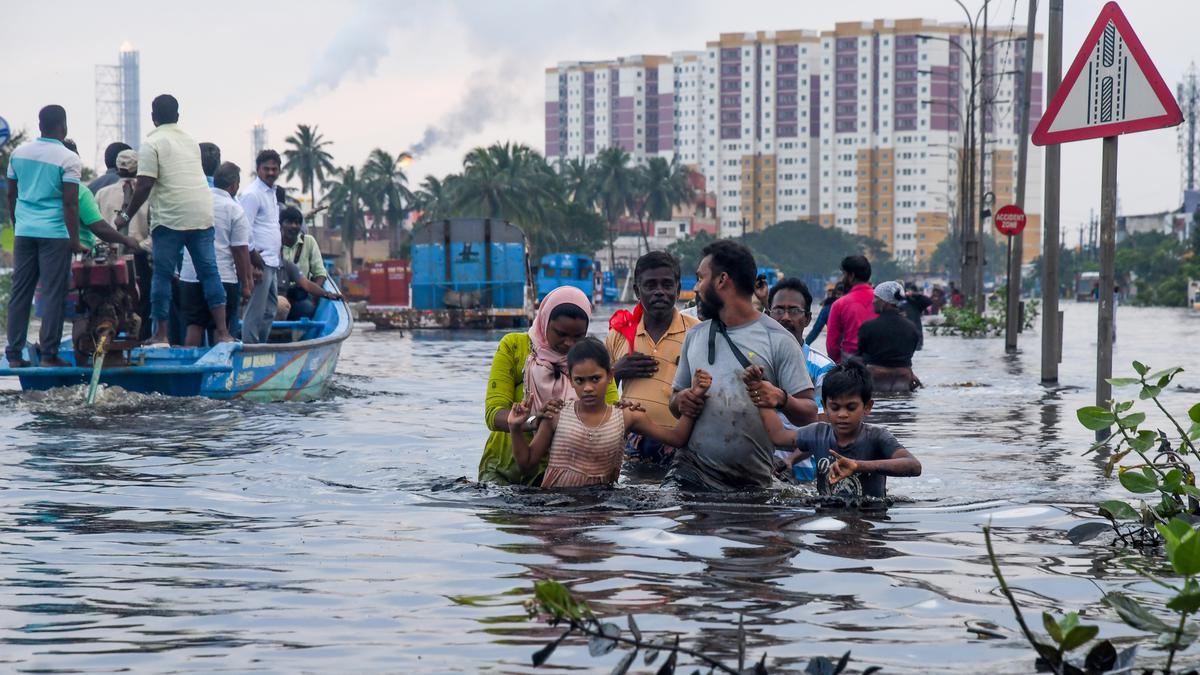
    Opportune moment to rediscover Chennai's hydrology - The Hindu

    Central idea 

    The article underscores the recurring floods in Chennai, attributing them to climate change while questioning the extent to which historical human errors and negligence contribute. Emphasizing the need for comprehensive measures, it calls for hydrological mapping, restoration of neglected water bodies, and ecological conservation to achieve flood resilience and sustainable water supply.

    Key Highlights:

    • Climate Change Attribution: Frequent floods in Chennai, attributed to climate change, raise questions about the impact of historical human errors and the effectiveness of conventional wisdom in flood mitigation.
    • Devastating Impact: Neglected irrigation tanks, encroachment on water bodies, and inadequate watershed management contribute to devastating floods, with the 2023 flood considered the worst in 47 years.
    • Need for Comprehensive Measures: The need for comprehensive hydro-elevation mapping, restoration of water bodies, and protection of ecological hotspots is emphasized for flood resilience and sustainable water supply.

    Key Challenges:

    • Historical Neglect: Neglected irrigation tanks and encroachment on water bodies contribute to over 80% runoff, worsening flood impacts.
    • Urban Expansion: Rapid urban expansion in Chennai, without considering ecological hotspots, leads to the loss of water bodies and wetlands.
    • Inadequate Maintenance: Major waterways and drainage systems suffer from heavy encroachments, sludge deposits, and lack of year-long maintenance.

    Key Terms:

    • Hydro-elevation Mapping: Mapping of upstream-downstream watersheds to understand water dynamics and drainage systems.
    • Ecological Hotspots: Areas with high biodiversity and ecological importance, crucial for flood resilience.
    • Storm Water Drain Network: A 2,900-kilometer network designed to manage stormwater runoff in the Greater Chennai Corporation (GCC) area.

    Key Phrases:

    • “Decode Chennai’s urban and peri-urban hydrology”: Emphasizes the need to understand and intervene in the interconnected hydrological conditions of Chennai.
    • “Converting disaster into opportunity”: Encourages turning flood challenges into an opportunity for sustainable water supply.

    Key Quotes:

    • “Are we hiding behind climate change for all the blunders made so far?”: Questions the tendency to attribute all flood-related issues to climate change.
    • “Have we learned any lessons from past flood events?”: Raises concerns about the lack of corrective measures despite repeated floods.

    Key Examples and References:

    • Chennai’s 3,588 irrigation tanks neglected, contributing to high runoff and flood damage.
    • Loss of water bodies and Pallikaranai marsh land due to rapid urban expansion.
    • The 2023 flood considered the worst in 47 years, highlighting the escalating impact of floods.

    Key Statements:

    • “Chennai city and the CMA can be permanently saved from floods”: Encourages a proactive approach to flood resilience through scientific interventions and ecological protection.
    • “Hiding behind climate change for all accumulated blunders”: Challenges the attribution of all flood-related issues to climate change without addressing historical neglect and errors.

    Key Facts:

    • The CMA to be expanded from 1,189 sq.km to 5,904 sq.km as part of Master Plan III, necessitating protection of ecological hotspots.
    • Rapid urban expansion in Chennai cited as one of the fastest in the country.

    Key Data:

    • 4,000 water bodies in the proposed CMA area, requiring protection from encroachments.

    Critical Analysis:

    • Challenges the effectiveness of conventional approaches and calls for a shift towards scientific and meaningful interventions in water management.
    • Emphasizes the need for a balance between urban expansion and ecological conservation for sustainable flood resilience.

    Way Forward:

    • Comprehensive Mapping: Conduct hydro-elevation mapping to understand water dynamics and drainage systems.
    • Restoration and Protection: Restore water bodies to original or increased capacity, protect ecological hotspots, and enforce “no development zones.”
    • Sustainable Urban Planning: Integrate ecological considerations into urban planning to prevent irreversible damage from urban expansion.

More posts