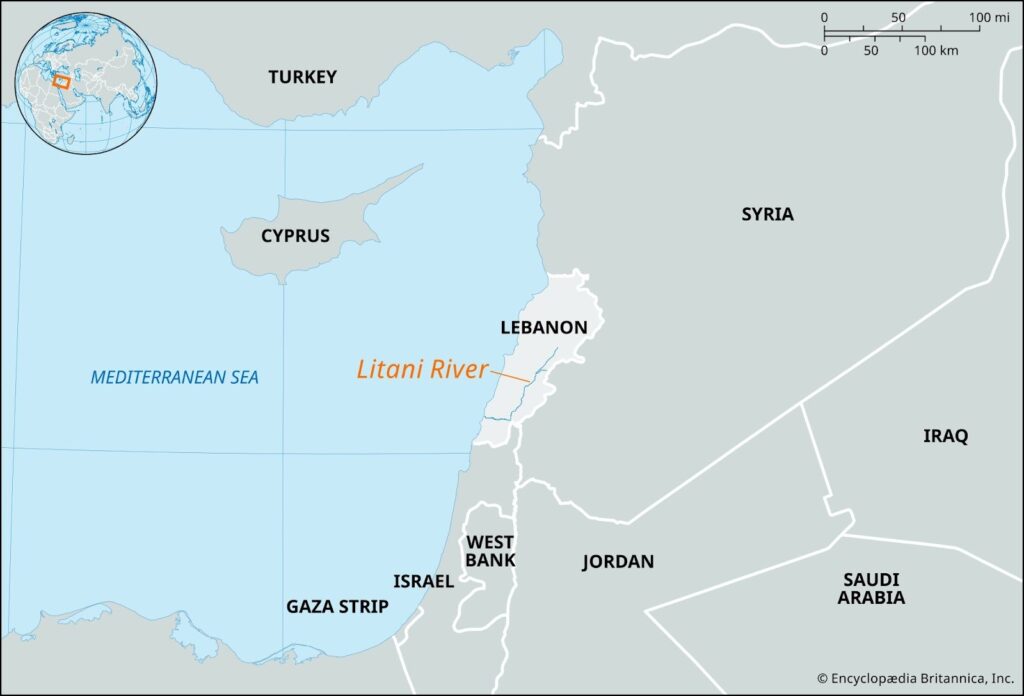
India and Oman are rapidly progressing in their negotiations for a Comprehensive Economic Partnership Agreement (CEPA), expected to be signed in January 2024.
The second round of talks was recently concluded in Muscat, indicating both countries’ eagerness to finalize the deal.
India-Oman Trade Relations
Export Destination: Oman is India’s third-largest export destination in the Gulf Cooperation Council (GCC), making the FTA crucial for enhancing Indian exports.
Current Trade Dynamics: Over 80% of Indian goods currently enter Oman with an average import duty of 5%, and the FTA aims to reduce these barriers.
Potential Benefits of the FTA
Boost in Exports: The agreement is expected to significantly increase Indian exports in various sectors, including gasoline, iron and steel, electronics, and machinery.
Key Export Sectors: Sectors like motor gasoline, iron and steel products, electronics, machinery, textiles, plastics, boneless meat, essential oils, and motor cars are likely to benefit from duty elimination.
Economic Context and Strategic Importance
Oman’s Economy: With a GDP of about USD 115 billion and a higher per capita income compared to India, Oman presents a market for diversified and higher-value Indian goods and services.
Bilateral Trade Growth: India-Oman bilateral trade reached USD 12.39 billion in 2022-23, with Indian exports and imports showing significant growth.
Oman’s Position: Oman’s strategic location in the Arabian Gulf region, with key ports along the Arabian Sea and the Gulf of Oman, is of utmost importance to India.
Historical Ties: The longstanding connection between Oman’s ruling family and India has fostered strong bilateral relations, with a significant Indian community contributing to these ties.
India-Oman Strategic Partnership
Defense and Security: The partnership, strengthened by a MoU signed in 2005, includes joint exercises and cooperation in maritime security.
Trade and Commerce: Bilateral trade and joint ventures are key pillars of engagement, with significant Indian investment in Oman.
Future Collaborations and Regional Stability
Space and Rare Earth Metals: Prospects for cooperation in space exploration and rare earth metals exploration are on the horizon.
Connectivity Projects: Oman could play a crucial role in India’s proposed connectivity corridors and infrastructure projects in West Asia.
Conclusion
Shared Interests: The deepening India-Oman relationship, marked by shared interests and mutual respect, positions Oman as India’s gateway to West Asia.
Broader Engagement: As India seeks to expand its global outreach, particularly in West Asia, Oman’s strategic importance and balanced foreign policy make it a key ally in the region.
The World Health Organization (WHO) recently declared loneliness a significant global health threat, with an estimated 10% of adolescents and 25% of older people affected worldwide.
Despite being a collectivistic society with over 140 billion people, loneliness in India remains relatively understudied and unacknowledged as a public health and social issue.
Understanding Loneliness
Definition: Loneliness is defined as the unpleasant experience due to a deficiency in one’s network of social relations, either quantitatively or qualitatively.
Health Impact: Comparable to smoking 15 cigarettes a day, loneliness can lead to severe mental and physical health issues, including heart disease, depression, and decreased longevity.
Data and Trends in India
Historical Data: Studies from the early 1990s to recent years show varying rates of loneliness, with a notable increase in loneliness among the elderly and the highly educated.
Pandemic Effect: COVID-19 and subsequent lockdowns have exacerbated loneliness, particularly among young people and those living alone.
Disparities and Challenges
Higher Among Educated Youth: Young, highly educated individuals face disproportionately higher rates of unemployment and loneliness, indicating a structural issue in the Indian economy.
Cultural Stigma: In India, loneliness is often dismissed as a phase or a state of mind, and discussing mental health is stigmatized, making it challenging to address the issue effectively.
Public Health Implications
Rising Disease Burden: Loneliness contributes to an increased risk of various diseases, potentially inflaming India’s already rising communicable and non-communicable disease burden.
Inadequate Healthcare Infrastructure: India’s healthcare system struggles with inadequate staff, infrastructure, and budgetary allocation, further complicating the response to the loneliness epidemic.
The Indian Experience of Loneliness
Cultural Differences: Unlike Western countries, India’s collectivistic culture and socioeconomic barriers present unique challenges in understanding and addressing loneliness.
Marginalized Communities: Loneliness disproportionately affects marginalized identities, and addressing it requires understanding the intersection of social inequity and mental health.
Addressing Loneliness as a Structural Problem
Need for Targeted Interventions: Recognizing loneliness as a distinct condition can help develop interventions tailored to India’s cultural context.
Community-Based Solutions: Addressing loneliness may require community-focused strategies that respond to structural inequities rather than solely clinical approaches.
Conclusion
National-Level Surveys: Conducting comprehensive surveys in local languages can help understand the true scale of loneliness in India’s diverse population.
Holistic Approach: Combating loneliness in India requires a multifaceted approach that includes improving mental health literacy, enhancing healthcare infrastructure, and addressing social inequalities.
Continuous Engagement: As loneliness gains recognition as a public health issue, India must continuously adapt its strategies to effectively support those affected by this silent epidemic.
The Ministry of Home Affairs (MHA) has declared the Muslim League Jammu Kashmir faction as an “unlawful association” under the Unlawful Activities (Prevention) Act (UAPA) for five years.
It is a very rare occasion that any election-contesting political party has been banned under UAPA.
Government’s Stance
The Union Home Minister emphasized that the organization and its members are involved in anti-national and secessionist activities, supporting terrorism, and inciting people to establish Islamic rule in Jammu and Kashmir.
It stated that the faction is engaged in anti-India and pro-Pakistan propaganda, aiming for Jammu and Kashmir’s secession from India, its merger with Pakistan, and the establishment of Islamic rule.
AboutUnderstanding the Unlawful Activities (Prevention) Act (UAPA)
Purpose: The UAPA aims to prevent unlawful activities and associations in India, focusing on maintaining the country’s integrity and sovereignty. Under Section 3 of the UAPA Act, the government has powers to declare an association “unlawful”.
Evolution: Originally passed in 1967, the UAPA has evolved from the Terrorist and Disruptive Activities (Prevention) Act (TADA) and the Prevention of Terrorism Act (POTA), with significant amendments in 2004 to include “terrorist act” in its scope.
Unlawful Activities: These include actions, whether by deeds, words, or visible representation, that work towards the cession or secession of a part of India, disrupt its sovereignty and territorial integrity, or cause disaffection against the country.
Unlawful Association: Under Section 3 of the UAPA Act, the government has powers to declare an association “unlawful”. An association can be deemed “unlawful” if it engages in, supports, or encourages unlawful activities, as defined under Section 2(p) of the UAPA.
Unlawful Activities and Funding
Fundraising for Terrorism: The Ministry highlighted that the outfit has been raising funds through various sources, including Pakistan, to support unlawful activities and terrorism.
Stone-Pelting Incidents: The group’s involvement in stone-pelting against security forces was cited as a sign of disrespect towards India’s constitutional authority and setup.
Linkages with Terrorist Organizations
Terror Connections: The MHA provided evidence of the faction’s connections with banned terrorist organizations and its role in supporting terrorist activities to instill terror in the country.
Government’s Concerns: The Central government expressed concerns that if unchecked, the faction would continue its anti-national activities, challenging India’s territorial integrity, security, and sovereignty.
Implications of the Ban
UAPA Enforcement: The declaration under Section 3 (3) of the UAPA signifies a stringent approach against the group’s activities for the next five years.
National Security Focus: This move aligns with the government’s commitment to maintaining national security and integrity, particularly in the sensitive region of Jammu and Kashmir.
Conclusion
Strong Message: The government’s decision sends a clear message against any forces acting against India’s unity, sovereignty, and integrity.
Continued Vigilance: The ban reflects India’s ongoing efforts to combat separatism and terrorism, ensuring peace and stability in Jammu and Kashmir and across the nation.
More than 600 students have signed up for our Mock Interviews of which 210 are from Civilsdaily’s flagship programs.
We aim to iron out small details in your interview preparation to help you gain a competitive advantage so that you can leave a lasting impression on the board.
This is a 3-level UPSC interview guidance program which will include:-
DAF Questionnaire: A detailed, personalized list of questions based on your DAF entries with more than 150+ questions which will guide you on how to prepare for DAF-related questions.
Online/Offline Mock interviews: with experienced faculties with a cumulative result of more than 2000+ UPSC selections.
One-to-one interaction with our top faculty for interview guidance to help you with any questions/doubts/issues that you may be facing.
Our team is dedicated to your success and our mentors are available 24 x 7 for any support.
Experience quality guidance and ensure your success with our support.
Enroll in the Sureshot 190+ program.
Panelists for Mock Interviews
Shri Shankar Aggarwal, IAS (retd.), former Secretary
Mrs. Aradhana Johri, IAS (retd.), former Secretary
Dr. Noor Mohammad, IAS (retd.), former EC
Shri Rajiva Misra, IFS (former Ambassador)
Dr. P.K. Agrawal, IAS (Retd.), former Ch. Secy
Shri T. N. Thakur, IAAS (retd.), former Dy CAG
Prof. U.M. Amin, Jamia Milia University
Mr. S. D. Singh, IFoS (Retd.)
Mr. Kunal Aggarwal, IRS
Mr. Debraj Das, IPS
Tentative:
Shri Harsh V. Pant (Observer Research Foundation), Shri SN Tripathi, IAS (Director IIPA), Shri Yogesh Narain (Retd. Defence Secretary), Shri Dipankar Gupta (Indian Sociologist), and others.
See what our UPSC toppers have to say about the program:
We will have a LIVE 1-1 session by UPSC interview topper Zenden
The Securities and Exchange Board of India (SEBI) has proposed introducing T+0 (same day) and instant settlement cycles in the equity cash segment, alongside the existing T+1 cycle.
Current Settlement Cycle
Evolution: SEBI shortened the settlement cycle from T+5 to T+3 in 2002, and then to T+2 in 2003. The T+1 cycle was introduced in 2021 and fully implemented by January 2023.
T+1 Cycle: Currently, the settlement of funds and securities occurs on the next day after the trade.
About T+0 Settlement Cycle
Phased Implementation: SEBI plans to introduce the shorter cycle in two phases: Phase 1 with T+0 Settlement and Phase 2 with Instant Settlement.
T+0 Settlement Details: In Phase 1, trades executed until 1:30 PM will be settled by 4:30 PM on the same day.
Instant Settlement Mechanics: Phase 2 envisages immediate trade-by-trade settlement, with trading continuing until 3:30 PM.
Scope and Implementation
Initial Focus: Initially, the T+0 settlement will be available for the top 500 listed equity shares based on market capitalization, implemented in three tranches.
Surveillance Measures: The same surveillance measures applicable in the T+1 cycle will apply to the T+0 cycle. Trade-for-trade settlement securities will not be eligible for T+0.
Rationale behind Introducing a Shorter Settlement Cycle
Market Growth and Efficiency: With the significant growth in market volumes and participants, SEBI aims to enhance market efficiency and safety, especially for retail investors.
Technological Advancements: The evolution of payment systems like UPI and the sophistication of market infrastructure support the feasibility of shorter settlement cycles.
Investor Attraction: Faster transactions, reliability, and low costs are key factors that attract investors, making Indian securities a more appealing asset class.
Features of the Proposed T+0 Settlement Mechanism
Early Pay-In Trend: A large percentage of retail investors already make early pay-ins of funds and securities, indicating readiness for instant settlement.
Instant Receipt Benefits: The mechanism enables instant receipt of funds and securities, reducing settlement shortages and enhancing investor control.
Investor Protection: Direct crediting of funds and securities into investors’ accounts, especially for UPI clients, strengthens investor protection.
Benefits of the New Mechanism
Flexibility for Clients: The new mechanism offers faster payouts of funds to sellers and securities to buyers, providing greater flexibility and control.
Market Ecosystem Advantages: The faster settlement cycle is expected to enhance the operational efficiency of the securities market, benefiting the entire ecosystem.
The year 2024 is set to be a landmark year in space exploration, following significant achievements in 2023, including NASA’s OSIRIS-REx and India’s Chandrayaan-3 missions.
Upcoming Missions
The year will feature several key missions under NASA’s Artemis plan and Commercial Lunar Payload Services, along with other international endeavors.
[1] Europa Clipper Mission
Objective: NASA’s Europa Clipper will explore Jupiter’s moon, Europa, known for its icy surface and potential subsurface saltwater ocean.
Significance: The mission aims to assess Europa’s habitability for extraterrestrial life by studying its icy shell, geology, and ocean.
Launch Details: Scheduled for launch on October 10, 2024, aboard a SpaceX Falcon Heavy rocket, with arrival at Jupiter set for 2030.
[2] Artemis II Mission
Program Goals: Part of NASA’s Artemis program to return humans to the Moon, including plans for a sustained presence and future Mars missions.
Mission Specifics: Artemis II, following the uncrewed Artemis I, will be the first crewed mission orbiting the Moon since 1972, planned for November 2024.
[3] VIPER Lunar Mission
Mission Overview: VIPER (Volatiles Investigating Polar Exploration Rover) aims to explore the Moon’s south pole for volatiles like water and carbon dioxide.
Technology and Schedule: Equipped to handle extreme lunar temperatures, VIPER’s launch is scheduled for November 2024, focusing on resources for future human exploration.
[4] Lunar Trailblazer and PRIME-1 Missions
SIMPLEx Program: These missions are part of NASA’s Small, Innovative Missions for Planetary Exploration (SIMPLEx), offering cost-effective, rideshare opportunities.
Objectives: Lunar Trailblazer will orbit the Moon to map water locations, while PRIME-1 will test drilling technology, both scheduled for mid-2024.
[5] JAXA’s Martian Moon eXploration (MMX) Mission
Mission Focus: JAXA’s MMX mission aims to study Mars’ moons, Phobos and Deimos, to determine their origin.
Science Operations: The spacecraft will conduct a three-year mission, including landing on Phobos and returning a sample to Earth, with a launch planned around September 2024.
[6] ESA’s Hera Mission
Mission Purpose: Hera, by the European Space Agency, will study the Didymos-Dimorphos asteroid system, following NASA’s DART mission’s kinetic impact in 2022.
Planetary Defense: Hera will assess the impact of DART’s collision and study the asteroids’ physical properties, with a launch set for October 2024.
The Indian government is focusing on the steel sector with the Production Linked Incentive (PLI) scheme 2.0 and ensuring raw material supply in 2024.
Minister of State for Steel highlighted these initiatives, emphasizing the promotion of scrap usage in steel production.
Growth and Recovery Post-Pandemic
Resilience: The steel sector has shown a strong recovery following the impact of the COVID-19 pandemic in 2020-21.
Production and Consumption: From April to November 2023, crude steel production increased by 14.5% y-o-y to 94.01 Million Tonnes (MT), and finished steel consumption rose by 14% to 86.97 MT.
Targets and Technological Advancements
Capacity Goal: India aims to reach an installed steel manufacturing capacity of 300 MT by 2030, currently at around 161 MT.
Innovation: Efforts are underway to integrate artificial intelligence and new technologies to enhance steel output and reduce carbon emissions.
PLI Scheme and Industry Expansion
PLI Scheme 1.0: The first phase aimed to boost speciality steel production, creating an additional capacity of around 25 MT.
Capacity Increase: Steel players are expanding their capacities, with the government facilitating project clearances and easing business operations.
Challenges and Concerns
Rising Imports and Costs: The industry faces challenges with increasing imports, high raw material prices, and geopolitical uncertainties.
Dependency: India relies heavily on imports for coking coal, a critical raw material for steel production.
Global Steel Industry and India’s Role
India’s Growth: India, the world’s second-largest steel producer, has shown robust growth, significantly contributing to the global steel industry.
Comparison with China: While China remains the largest producer, India has outpaced China in terms of growth rate in recent years.
Demand and Import Dynamics
Sectoral Demand: The construction sector, driven by government infrastructure spending and private investment, leads the demand for steel in India.
Import Measures: The government has implemented anti-dumping duties and other barriers to address steel dumping, particularly from China and Vietnam.
Price Trends and Future Outlook
Domestic Prices: Indian steel prices have increased due to strong demand, but global uncertainties may impact future price hikes.
Global Market Influence: Domestic pricing trends may be influenced by global economic recovery and price movements in the US and Europe.
Conclusion
Strategic Focus: The Indian government’s initiatives, like the PLI scheme, aim to strengthen the steel sector’s global competitiveness and self-reliance.
Balancing Growth and Challenges: While the sector shows promising growth, addressing challenges like raw material dependency and import pressures remains crucial.
Global Positioning: India’s significant role in the global steel market underscores its potential to influence industry trends and drive economic growth.
The article critiques the G20 Summit’s Declaration on women’s empowerment, highlighting past implementation challenges and questioning the clarity of “women-led development.” It emphasizes the discrepancy between rhetoric and actions, especially regarding declining budget allocations for women’s development. The central theme revolves around the need for a reevaluation of women-led development strategies to address persistent inequalities effectively.
Key Highlights:
The G20 Summit’s Declaration on the empowerment of women is acknowledged, but past working groups and sustainable development goals have seen limited implementation.
The term “women-led development” in the Declaration lacks clarity, and the article questions its parameters and implications for the existing development models.
The G20 Declaration reaffirms the role of private enterprise in driving economic growth, raising concerns about the compatibility of women-led development with the prevailing macroeconomic model.
Key Challenges:
The article highlights the persistent discrimination against women and girls globally, emphasizing the need for more effective measures to achieve Sustainable Development Goals.
Women-led development schemes, as mentioned in government bulletins, are criticized for masking the reduction in government investment in projects benefiting women’s development.
The Gender Budget, intended to prioritize women’s development, has shown a decline in total expenditure, raising concerns about the commitment to women-led development.
Key Terms/Phrases:
Women-led development
Sustainable Development Goals (SDGs)
Trickle-down theory
G20 Summit Declaration
Gender Budget
Private enterprise
Corporate-led development
Key Quotes for value addition:
“At the midway point to 2030, the global progress on SDGs is off-track with only 12% of the targets on track.”
“We encourage women-led development and remain committed to enhancing women’s full, equal, effective, and meaningful participation…”
Key Statements:
The article questions the lack of clarity in the term “women-led development” and its compatibility with existing development models.
Concerns are raised about the reduction in the Gender Budget and the inadequate allocation for wholly women-specific schemes.
Key Examples and References:
The article cites the decline in women’s share in regular waged work in India according to the Periodic Labour Force Survey (PLFS).
Specific government schemes and budgetary allocations are referenced to illustrate the disparities in women-led development.
Key Facts/Data:
The total Gender Budget for 2023-2024 was reduced from 5.2% of the total expenditure the previous year to 5%.
The share of women in regular waged work in India fell from 21.9% in 2018-2019 to 15.9% in 2022-2023.
Critical Analysis:
The article critically examines the discrepancies between rhetoric and action in women-led development, highlighting concerns about declining budget allocations and the lack of clarity in the proposed development model.
Way Forward:
The need for a reevaluation of women-led development strategies is emphasized, urging policymakers to prioritize economic independence for women and address the disparities in budgetary allocations.