The National Board for Wildlife (NBWL) has granted approval for diverting 142.76 hectares of forest land in Sharavathi Valley Lion-Tailed Macaque Wildlife Sanctuary, Karnataka.
About Lion-Tailed Macaque:
Scientific Classification: The Lion-Tailed Macaque (Macaca silenus), also known as the Wanderoo or Bearded Monkey, is an primate species endemic to the Western Ghats of India.
Distribution: It is found primarily in the states of Karnataka, Kerala, and Tamil Nadu.
Physical Characteristics: Recognized by a silver-white mane surrounding a black face and a lion-like tuft at the end of its tail, the body is covered in glossy black fur, and both sexes look similar.
Habitat and Behaviour
Preferences: The species inhabits tropical evergreen rainforests, and is also found in monsoon forests and shola-grassland ecosystems.
Habitat: It is arboreal (tree-dwelling) and diurnal (active during the day).
Elevation Range: Typically lives at altitudes between 600 and 1,800 metres above sea level.
Human Avoidance: Known for being shy, it tends to avoid human contact, staying high in the forest canopy.
Social Structure: Lives in social groups of 8 to 20 individuals, usually led by a dominant male.
Behaviour:
Dietary Habits: Primarily frugivorous, eating fruits, but also consumes leaves, stems, flowers, buds, fungi, and occasionally insects and small animals.
Communication System: Possesses a rich vocal communication system with over 17 distinct vocalizations.
Territorial Behavior: Males use loud calls to mark territory and warn intruders.
Conservation Status:
IUCN Status: Classified as Endangered on the IUCN Red List.
Legal Protection: Appendix I of CITES; Schedule I of the Indian Wildlife (Protection) Act, 1972.
Population and Conservation Efforts:
Population: It is estimated at around only 2,500 individuals.
Key Protected Area: The Sharavathi Valley Lion-Tailed Macaque Wildlife Sanctuary in Karnataka hosts the largest known population in any protected area, with around 700 individuals.
Ecological Importance:
Serves as an indicator species for rainforest health.
Plays a vital role in seed dispersal, contributing to forest regeneration.
The Standing Committee of the National Board for Wildlife (SC-NBWL) has decided to review and revise the 2011 guidelines on the declaration of Eco-Sensitive Zones (ESZs) around wildlife sanctuaries and national parks.
What are Eco-Sensitive Zones (ESZs)?
Overview: ESZs, also called Ecologically Fragile Areas (EFAs), are areas notified by the Ministry of Environment, Forest and Climate Change (MoEFCC) around Protected Areas (PAs) like national parks and wildlife sanctuaries.
Purpose:
Act as “shock absorbers” to protect areas by regulating potentially harmful activities.
Serve as transition zones from highly protected to less protected ecosystems.
Help conserve biodiversity, maintain landscape connectivity, and prevent fragmentation of habitats.
N4S: India’s human development story: progress, paradoxes, and inclusive AI crossroads. UPSC usually frames these themes as broad, thought‑provoking mains questions that fuse data with ethics—think GS 1 (2023) on “human development versus economic growth” and GS 3 (2014) on “capitalism and inclusive growth.” Aspirants often stumble because they quote HDI numbers but miss deeper threads such as widening gaps shown under “Persistent and Widening Inequalities,” or they forget to interlink technology with equity outlined in “Human Development in the Age of AI.” This article fixes those blind spots by walking you through each phase in “Evolution of Human Development in India,” backing every claim with crisp figures (life expectancy 72 years; top 1 % owns 40 % wealth) and ready‑to‑lift policy nuggets (“Aspirational Districts Programme,” “Ayushman Bharat,” “BharatNet”). The most special bit is the fresh “AI Can Worsen Inequality” lens, which shows exactly how algorithmic bias or English‑heavy datasets can derail progress—and also hands you counter‑ideas for answers (e.g., inclusive AI skilling pilots in Tamil Nadu). So, while reading these tight subheads and bracketed examples, you will find the perfect bridge between hard data and big‑picture analysis that the UPSC examiner secretly wants.
PYQ ANCHORING
GS 1: Why did human development fail to keep pace with economic development in India? [2023]
GS 3: Capitalism has guided the world economy to unprecedented prosperity. How ever, it often encourages shortsightedness and contributes to wide disparities between the rich and the poor. In this light, would it be correct to believe and adopt capitalism driving inclusive growth in India? Discuss.[2014]
MICROTHEMES: Population and associated issues, Inclusive Growth
Human development, as defined by UNDP, is about more than income — it’s about expanding people’s real freedoms, choices, and capabilities. India has made visible progress: in the 2025 Human Development Report, it climbed to rank 130, with rising life expectancy, education years, and per capita income.
But behind this progress lies a growing paradox — while national averages improve, inequality deepens. The top 1% of Indians now control over 40% of the country’s wealth (Oxfam, 2023), while millions still lack access to quality education, healthcare, and digital infrastructure.
Is India growing, but not developing equally? Can rising HDI numbers mask falling social mobility? And in the age of AI and acceleration, who is being left behind?
Evolution of Human Development in India
Phase
Key Features
Milestones & Initiatives
Post-Independence (1950s–1980s)
Focus on building a welfare state with state-led planning and social justice.
Community development programs, expansion of primary healthcare, emphasis on universal education.
Economic Liberalisation Era (1991–2010)
Shift towards growth-led development; human development linked to market reforms.
Rise in income levels, investment in private education/health, National Rural Health Mission (NRHM, 2005).
Rights-Based Approach (2005–2015)
Introduction of legal entitlements to welfare and human development.
Right to Education (RTE), MGNREGA, Food Security Act, expansion of school enrolment.
Digital Public Goods & Targeted Delivery (2015–Present)
Use of technology to improve reach and efficiency of welfare delivery.
Aadhaar, UPI, Ayushman Bharat, Jan Dhan Yojana, e-Shram, rise in life expectancy (72 years), and school years (13 years – HDR 2025).
Human Capital Push with Future-Readiness (Ongoing)
Focus on skilling, education reform, and tech-based learning.
National Education Policy (NEP) 2020, Skill India, PMKVY, National Digital Health Mission.
India in HDR 2025: Growth, Development, and Inequality
1. Improvement in Human Development Index (HDI)
India’s HDI Rank (2023): Improved from 133 to 130 out of 193 countries.
HDI Score: Increased from 0.676 to 0.685, placing India in the medium human development category.
Key drivers of improvement:
Life expectancy: Now at 72 years (up from 58.6 in 1990).
Mean years of schooling: Increased to 13 years (reflecting gains in education).
Gross National Income (GNI) per capita (PPP): Rose to USD 9,046.
2. Persistent and Widening Inequalities
Income Inequality: Remains stark — top 1% owns over 40% of national wealth (Oxfam, 2023), while a large share of the population lacks access to basic services.
Gender Gaps: Women continue to face limited access to AI-driven tools and job opportunities, despite equal qualifications — reinforcing the existing development divide.
Regional Disparities: Southern and western states perform much better on HDI indicators compared to eastern and northeastern regions.
Digital Divide: Access to AI, internet, and tech-skilling is heavily skewed toward urban, male, and English-speaking populations — risking exclusion of large segments from AI-enabled growth.
3. Human Development in the Age of AI: A Double-Edged Sword
AI as a tool of empowerment: India is positioning itself as an AI hub, with growing innovation and talent.
But… HDR 2025 warns that without inclusive policies, AI may deepen existing inequalities:
Those without access to education or digital tools risk being left behind.
AI models trained on data from high-HDI countries may not align with India’s social realities.
Youth, women, and informal workers are especially vulnerable to automation without adequate skilling.
Major Inequality Challenges in India // MAINS
The Human Development Report (HDR) 2025 shines a spotlight on India’s central paradox: while the country’s Human Development Index (HDI) has improved — now ranked 130 out of 193 countries — the benefits of progress remain unequally shared. The report notes that inequality alone reduces India’s HDI by nearly 30.7%, exposing how top-heavy economic growth masks deep divides in wealth, education, gender, geography, and access to technology.
The table below breaks down these inequality challenges across key dimensions, supported by data and policy examples from HDR 2025 and official Indian sources like PLFS, NFHS, and the Economic Survey.
Inequality Type
Nature and Persistence
Examples / Policy Responses
Income inequality
India’s HDI is reduced by ~30.7% due to inequality (HDR 2025). The top 1% and 10% command a lion’s share of income, while poverty reduction hasn’t translated into equitable growth. Wealth remains tightly concentrated.
Gini coefficient fell from ~0.472 (2014–15) to ~0.402 (2022–23) (SBI). 82 million filed income tax returns by 2023. Policies like MGNREGA, Jan-Dhan Yojana, LPG subsidies, and universal DBT target income gaps from below. Progressive taxation and expanded PDS also play redistributive roles.
Regional disparity
Stark east–west and rural–urban divides persist. Sikkim’s per capita income in 2024 is 3× the national average, while Bihar’s is just one-third. Health, education, and infrastructure outcomes mirror these gaps.
The Aspirational Districts Programme (NITI Aayog) focuses on lagging districts. Increased Finance Commission devolution to poorer states, infrastructure schemes (PMGSY, rural electrification), and targeted Smart Cities in Tier-2/3 towns aim to reduce disparities.
Gender gaps
Despite better schooling and health outcomes, female labour force participation remains abysmal (20–25%). Women continue to face wage gaps, limited asset ownership, and underrepresentation in leadership.
Beti Bachao Beti Padhao, Janani Suraksha Yojana, Ujjwala Yojana, and scholarships for girls target education and health. One-third reservation for women in legislatures (2023 amendment), Maternity Benefit Act, and Mudra loans for SHGs aim to economically and politically empower women.
Caste & social inequalities
Scheduled Castes, Scheduled Tribes, and OBCs lag in health, literacy, and jobs. PLFS (2023–24) shows only ~32.2% SC women work, compared to ~46.7% ST women. Social stigma and exclusion remain barriers to equality.
Constitutionally mandated reservations in education and public employment (SC: 15%, ST: 7.5%, OBC: 27%). Special schemes like SCSP/TSP budgets, scholarships, skill training, and PM Adi Adarsh Gram Yojana. Anti-discrimination protection via SC/ST Act.
Digital divide
95.2% of villages have 3G/4G, but digital use remains urban-heavy. Rural tele-density is ~59% vs urban ~134%. Gender, income, and education affect digital access. The divide hampers e-services, education, and financial inclusion.
Under Digital India, BharatNet has fiber-enabled over 2.13 lakh gram panchayats. Internet users rose from ~252 million (2014) to ~954 million (2024). Programs like PM-WANI, Common Service Centres, eGramSWARAJ, and start-up incentives for smaller towns aim to bridge the gap.
How AI Can Worsen Inequality in India
Area of Concern
How AI Exacerbates Inequality
Examples / India Context
Access to Opportunity
AI tools (e.g., in education, hiring, healthcare) often require digital access, literacy, and connectivity — all of which are skewed toward urban, male, upper-income users.
AI-driven skilling platforms benefit tech-savvy students, but large sections of rural India (especially women, SC/ST groups) lack smartphones, stable internet, or training (HDR 2025).
Job Displacement
AI and automation threaten low-skill, repetitive jobs (e.g., in BPOs, logistics, retail), which are a major source of employment for the lower middle class and urban poor.
India’s ITES and service sectors, employing lakhs in entry-level roles, may see significant automation without corresponding reskilling programs.
Algorithmic Bias
AI trained on global/narrow datasets may misinterpret Indian names, dialects, behaviors — leading to unfair screening in jobs, credit, or welfare.
Reports show AI-based job shortlisting in private firms discriminating against non-English resumes or women candidates. Biases against SC/ST names in financial screening tools also feared.
Language and Regional Exclusion
Most AI models are English-trained, underrepresenting India’s vast linguistic and cultural diversity. This limits usability for non-English users.
Chatbots, health apps, and educational AI tools often lack voice/text support for major Indian languages like Bhojpuri, Santali, or Manipuri.
Widening Education Divide
AI-powered adaptive learning and test-prep benefit urban private school students but bypass government school systems still lacking basic tech infrastructure.
AI tools like Khan Academy and Byju’s serve paying users. Meanwhile, 60%+ government schools still lack computers or internet (U-DISE, 2022–23).
Way Forward
Recommit to universal, quality public services — health, education, social protection.
Invest in AI for development, not just for growth — make it inclusive and accountable.
Bridge regional and rural-urban divides through targeted resource transfers.
Empower local governance and decentralised planning.
Align budgeting with human development priorities (Green/SDG budgeting).
#BACK2BASICS: About Human Development Index (HDI) and Human Development Report (HDR)// PRELIMS
The HDI, introduced in the UNDP’s 1990 Human Development Report, is a composite index measuring average achievement in three key dimensions:
Health – measured by life expectancy at birth.
Education – measured by mean years of schooling and expected years of schooling.
Standard of Living – measured by Gross National Income (GNI) per capita (PPP $).
The HDI serves as a multi-dimensional alternative to GDP, emphasizing “human well-being” over mere economic output. The HDR is an annual flagship publication by UNDP that evaluates progress on HDI and related indices like the Gender Inequality Index (GII) and Multidimensional Poverty Index (MPI). It offers an analytical snapshot of development progress and inequality, and in 2025, focuses on the transformative power and risks of Artificial Intelligence (AI) in shaping human progress.
Key Highlights from HDR 2025: India’s Human Development at a Crossroads
1. What the Data Shows
Area
Key Finding
HDI Rank
India improved from 133 (2022) to 130 (2023) among 193 countries; HDI value rose from 0.676 to 0.685, approaching the “High Human Development” threshold (0.700).
Life Expectancy
Reached a record 72 years — up from 67.7 (2022), and a significant leap from 58.6 in 1990.
Education
Expected years of schooling rose to 13 years, mean years to 6.9 — reflecting the impact of RTE Act, NEP 2020, and Samagra Shiksha Abhiyan.
Income Growth
GNI per capita (PPP) jumped to $9,046, up 4× since 1990 ($2,167).
Poverty Reduction
135 million people exited multidimensional poverty between 2015–16 and 2019–21 (NITI Aayog MPI).
Gender Inequality
GDI at 0.874; India ranks 102nd on the Gender Inequality Index (GII) — highlighting continued gender gaps.
AI Capacity
India hosts 20% of global AI researchers — up from nearly 0% in 2019; also leads in self-reported AI skills.
Inequality Impact
India’s HDI drops to 0.475 when adjusted for inequality — a 30.7% loss, among the highest globally.
2. Why HDI Matters for India
Beyond GDP: Offers a multidimensional lens to assess real human well-being — vital for India’s $5 trillion economy vision.
SDG Alignment: HDI overlaps with SDGs on health, education, equity (Goals 1, 3, 4, 5, 10).
Policy Targeting: MPI helps pinpoint sectoral gaps for more precise interventions.
Gender Lens: Tracks women-centric development under the G20 theme of Women-Led Development.
Human Capital Planning: Links education, skills, and health to economic productivity.
Centre–State Competition: Enables HDI-linked rankings, fostering cooperative federalism (e.g., NITI’s Human Development Dashboard).
Global Image: HDI performance influences investment, credit ratings, and soft power.
AI & Inclusion: Brings AI into the HDI conversation, pushing for inclusive digital development.
Framework for Redistribution: Anchors debates on taxation, welfare, and inequality correction.
3. India’s Human Development Initiatives
Health & Nutrition:Ayushman Bharat, Poshan Abhiyaan improved healthcare access and outcomes.
Livelihood & Finance:MGNREGA, Jan Dhan Yojana provide income security and financial inclusion.
AI for Development: States like Tamil Nadu and Telangana deploy AI for skilling; UNDP supports inclusive AI training.
Digital Infrastructure:IndiaAI Mission, Aadhaar, UPI, DigiLocker, and BharatNet scale digital access.
Monitoring Progress:SDG India Index tracks HDI-aligned goals; AI for Good and GPAI link India to global standards.
4. Persistent Challenges
High Inequality Drag: India loses 30.7% of its HDI due to inequality — one of South Asia’s worst.
Gender Gaps Persist: Women’s FLFPR rose to 41.7% (2023–24), but gaps in income, literacy, and leadership remain.
Learning Outcomes Lag: ASER reports low comprehension despite high enrolment.
Jobless Growth: Over 90% of India’s workforce remains in the informal sector (PLFS).
Urban–Rural Divide: Disparities in basic services, infrastructure, and access continue.
Digital Divide: Uneven access to devices and AI skews tech-driven benefits.
Weak Health Systems: Doctor–population ratio below WHO norms; large inter-state gaps.
Slow Progress Pace: Global and Indian HDI growth rates are among the lowest since 1990.
Global Comparison: India still trails BRICS peers — Brazil (89), China (75), Russia (59).
SMASH MAINS MOCK DROP
India’s rising Human Development Index masks deep-rooted structural inequalities in income, gender, and digital access. In the context of the 2025 Human Development Report, critically examine how technology—particularly Artificial Intelligence—can both bridge and widen these gaps. Suggest policy measures to ensure inclusive human development in the digital age.
[UPSC 2023] Why did human development fail to keep pace with economic development in India?
Linkage: The report says that India’s low scores in areas like women’s jobs and health show a deep problem that is slowing down the country’s progress. Even though the economy is growing, women are still left behind in key areas. That’s why the report’s low ranking is a strong warning.
Mentor’s Comment: The World Economic Forum’s Global Gender Gap Report 2025 has brought renewed attention to India’s poor performance in gender equality, ranking it 131 out of 148 countries. Despite being a global economic and digital power, the report highlights serious structural deficits in India, especially in women’s health, economic participation, and decision-making roles.
Today’s editorial analyses the World Economic Forum’s Global Gender Gap Report 2025 for India. This topic is important for GS Paper II (Social Justice) in the UPSC mains exam.
_
Let’s learn!
Why in the News?
Recently, India was ranked very low in the World Economic Forum’s Global Gender Gap Report 2025, showing that there are serious and long-standing inequalities between men and women, especially in jobs and economic roles.
Why is India’s low gender gap ranking seen as a structural failure?
Low Global Ranking in Gender Gap: According to the Global Gender Gap Report 2025, India ranks 131 out of 148 countries, reflecting persistent inequality in key areas such as economic participation and health. This ranking indicates a structural issue beyond isolated policy failures.
Poor Female Labour Force Participation: India ranks 143rd in economic participation and opportunity, with women earning less than one-third of what men do. Female labour force participation remains below 25%, revealing systemic barriers to employment despite rising educational levels.
What health barriers limit women’s economic participation in India?
High Anaemia Prevalence: Nearly 57% of women aged 15–49 suffer from anaemia (NFHS-5), which weakens physical capacity, affects cognitive ability, and reduces safe maternal outcomes, ultimately restricting their ability to work or study.
Gendered Gaps in Healthcare Access: Women, especially in rural and low-income groups, face inadequate access to reproductive health, preventive care, and nutrition, leading to poor health outcomes and lower life expectancy than men.
Neglect of Women’s Health in Policy: Public health systems often fail to prioritise women’s specific needs, with underfunded primary care, weak maternal services, and poor sanitation, resulting in chronic health issues that hinder long-term workforce participation.
How does unpaid care work hinder gender equality and growth?
Limits Women’s Workforce Participation: Indian women perform nearly seven times more unpaid domestic work than men (Time Use Survey), leaving little time for formal employment or skill development. For instance, many women drop out of jobs after childbirth due to lack of childcare support.
Undervalued in National Economy: Despite its economic value, unpaid care work is invisible in GDP calculations and often excluded from policy priorities. Countries like Uruguay have tried to measure and integrate care work into development plans to promote inclusive growth.
Worsens Gender Inequality in Decision-Making: The burden of care responsibilities keeps women out of leadership roles and policy spaces, reinforcing their marginalisation in public and private institutions. Low representation of women in budget committees leads to underfunding of women-centric welfare schemes.
Note: The Time Use Survey, conducted by the National Statistical Office (NSO) in India (latest available: 2019), provides valuable data on how individuals allocate time to various activities over a 24-hour period.
Which global models can India adopt for care economy reforms?
Uruguay’s Approach: The National Integrated Care System ensures universal access to services like childcare, eldercare, and disability assistance, aiming to reduce the unpaid care burden and promote professionalisation of care work.
South Korea’s Model: Through expansive public investment in care services, including care vouchers and subsidised facilities, South Korea has enhanced female workforce participation and addressed the care gap in ageing and young populations.
Nordic Countries’ Example: Nations like Sweden and Norway offer state-supported childcare, generous parental leave, and policies that promote shared caregiving roles, fostering strong welfare systems and improving gender equity.
What are the demographic risks of excluding women from the workforce?
Rising Dependency Ratio: When women are excluded, fewer people contribute economically while more depend on them, especially as India’s population ages. Eg: By 2050, nearly 20% of Indians will be senior citizens, increasing the burden on a shrinking working population.
Shrinking Labour Force: Low female participation limits the potential of India’s large youth base, reducing the nation’s demographic dividend. Eg: India’s female labour force participation was just 24% in 2023, compared to over 60% in many developing nations.
Stagnant Economic Growth: Without women’s inclusion, GDP growth slows, and the country may miss massive income gains. Eg: McKinsey Global Institute estimated India could add $770 billion to its GDP by 2025 by closing gender gaps.
What are the demographic risks of excluding women from the workforce?
Beti Bachao Beti Padhao (BBBP): Launched in 2015, this scheme aims to improve the child sex ratio, ensure education for girls, and raise awareness against gender discrimination.
Pradhan Mantri Matru Vandana Yojana (PMMVY): This maternity benefit scheme provides financial support to pregnant and lactating women for their first childbirth, promoting nutrition and health.
Mahila Shakti Kendra (MSK): MSKs offer support services at the grassroots level, including skill training, employment guidance, legal aid, and digital literacy to empower rural women.
Way forward:
Invest in Women-Centric Infrastructure: Enhance public spending on healthcare, childcare, and eldercare services, especially at the primary level, to support women’s well-being and free up time for economic participation.
Institutionalize Gender-Responsive Policies: Implement gender budgeting, time-use surveys, and inclusive labour reforms to recognize unpaid care work and promote women’s entry into the formal workforce.
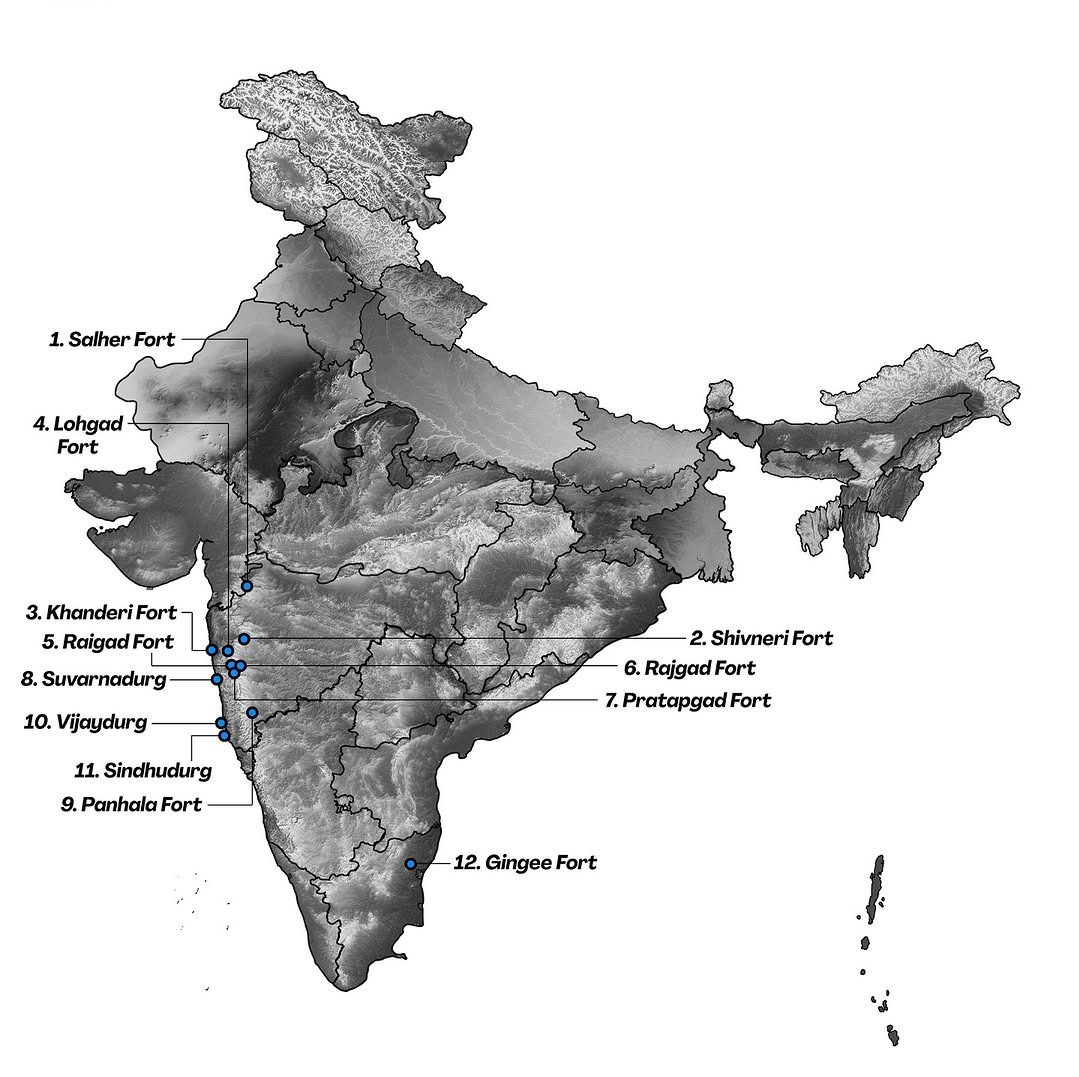
The ‘Maratha Military Landscapes’ of India have been inscribed on the UNESCO World Heritage List under the cultural category during the 47th session of the World Heritage Committee held in Paris.
AboutMaratha Military Landscapes:
Overview: A network of 12 forts showcasing the Maratha Empire’s military architecture and strategic fortification from the 17th to 19th centuries.
Time Period: Developed between 1670 CE (Shivaji’s era) and 1818 CE (end of Peshwa rule).
Geographical Spread: 11 forts in Maharashtra and 1 in Tamil Nadu (Gingee Fort), covering hill, coastal, forest, plateau, and island terrains.
The Department of Telecommunications (DoT) has launched an expanded Sanchar Mitra Scheme to engage engineering students as digital ambassadors for promoting telecom literacy, digital safety, and citizen engagement.
What is the Sanchar Mitra Scheme?
Launching Body: An initiative by the Department of Telecommunications (DoT), Government of India.
Primary Aim: To engage student volunteers as “Sanchar Mitras” or digital ambassadors to spread awareness about telecom-related issues.
Purpose:
Bridge the communication gap between citizens and the telecom ecosystem.
Promote safe and informed use of telecom services.
Encourage public participation in India’s digital transformation.
Implementation Status:
Piloted in select institutions.
Now being scaled up for nationwide rollout.
Key Features and Highlights:
Target Audience: It primarily targets students from engineering and technical backgrounds such as telecommunications, computer science, electronics, and cybersecurity.
Selection of Volunteers: Students will be nominated as Sanchar Mitras in consultation with DoT field units and educational institutions.
Training Modules: Volunteers will be trained to conduct grassroots campaigns on cyber fraud prevention, EMF radiation concerns, and responsible digital behavior.
Training Institutions: Training will be delivered by the National Communications Academy–Technology (NCA-T) and the Media Wing of the DoT.
Core Pillars: The scheme is structured around three key pillars: Connect, Educate, and Innovate.
Tech Awareness Promotion: Sanchar Mitras will promote awareness on emerging telecom technologies like 5G, 6G, AI, and cybersecurity.
Community Outreach: Students will engage with communities, NGOs, and schools to foster a culture of informed digital citizenship.
Strategic Alignment: It aligns with India’s strength in the “Four Ds”: Democracy, Demography, Digitisation, and Delivery.
[UPSC 2010] Which among the following do/does not belong/belongs to the GSM family of wireless technologies?
Options: (a) EDGE (b) LTE (c) DSL* (d) Both EDGE and LTE
The Ministry of Heavy Industries (MHI) has launched E-Truck Incentive Scheme to provide financial incentives for electric trucks (e-trucks) under the PM E-DRIVE initiative.
What is E-Truck Incentive Scheme?
Overview: It is a dedicated scheme to provide financial incentives for electric trucks under the broader PM E-DRIVE initiative.
First-of-its-Kind Support: This is the first direct government support specifically for electric trucks to promote clean, efficient, and sustainable freight mobility.
Target Vehicle Categories: It targets N2 and N3 category trucks, as per Central Motor Vehicle Rules (CMVR):
N2: GVW above 3.5 tonnes up to 12 tonnes
N3: GVW above 12 tonnes up to 55 tonnes
Incentive for Articulated Vehicles: For articulated vehicles, the incentive applies only to the puller tractor of the N3 category, not the trailer.
Warranty Requirements:
Battery: 5 years or 5 lakh km, whichever comes first
Motor & Vehicle: 5 years or 2.5 lakh km
Incentive Details:
Based on Gross Vehicle Weight (GVW)
Maximum support capped at ₹9.6 lakh per e-truck
Incentives are given as upfront discounts, reimbursed to Original Equipment Manufacturers (OEMs) through the PM E-DRIVE portal
Deployment Goal: It aims to support the deployment of 5,600 electric trucks across India.
1,100 trucks reserved for Delhi, with ₹100 crore allocated due to high pollution levels
Mandatory Scrappage Clause: To qualify, applicants must scrap an old diesel truck via scrappage centres approved by the Ministry of Road Transport and Highways (MoRTH).
Sectoral Impact: It is expected to benefit sectors like steel, ports, cement, and logistics by reducing fuel costs and improving air quality.
About PM E-DRIVE Scheme:
Overview: It stands for Prime Minister’s Electric Drive Revolution in Innovative Vehicle Enhancement, launched by the Ministry of Heavy Industries in September 2024.
Long-Term Goal: To to foster an EV ecosystem, reduce carbon emissions, and help India achieve Net Zero emissions by 2070.
Budget Allocation: It has a total outlay of ₹10,900 crore for two years, aimed at accelerating India’s electric mobility transition.
Scope and Coverage: It supports multiple vehicle categories: Two-wheelers; Three-wheelers; Electric trucks; Electric buses and Electric ambulances.
Demand Incentive: It provides direct demand incentives to buyers through OEMs, lowering the upfront cost of EVs.
Category-wise Allocation:
₹3,679 crore: For two-wheelers, three-wheelers, ambulances, and trucks
₹500 crore: Specifically for electric ambulance procurement
₹4,391 crore: To procure 14,028 electric buses in 9 major cities (Delhi, Mumbai, Kolkata, Chennai, Ahmedabad, Surat, Bangalore, Pune, Hyderabad)
Charging Infrastructure: ₹2,000 crore allocated to build 72,300 public charging stations nationwide, including:
Fast chargers for four-wheelers, buses, two-wheelers, and three-wheelers
Digital E-Voucher System:
Incentives claimed through Aadhaar-authenticated e-vouchers
Signed digitally by both buyer and dealer for transparency
Vehicle Scrappage Mandate: Scrapping of old vehicles is mandatory to claim certain incentives, especially for electric trucks, promoting fleet modernization.
[UPSC 2025] Consider the following types of vehicles:
I. Full battery electric vehicles II. Hydrogen fuel cell vehicles III. Fuel cell electric hybrid vehicles
How many of the above are considered as alternative (powertrain) vehicles?
Options: (a) Only one (b) Only two (c) All the three* (d) None
Mizoram Governor has imposed Governor’s Rule in the Chakma Autonomous District Council (CADC) due to prolonged political instability and repeated leadership changes.
About Autonomous District Councils (ADCs):
Basis: They are local self-governing institutions established under the Sixth Schedule of the Indian Constitution.
Coverage: ADCs are constituted in tribal areas of the northeastern states—Assam, Meghalaya, Tripura, and Mizoram (ATM2) [Sixth Schedule]
Purpose: These councils aim to provide autonomy to tribal communities to preserve their culture, customs, and govern their local affairs.
Notification: Each tribal area notified under the Sixth Schedule is declared an autonomous district, governed by its respective ADC.
Objective: The primary objectives of ADCs are to promote tribal self-governance, ensure local development, and protect tribal identity and rights.
Note: The Constitution provides for the reservation of seats in Panchayats for STs.
Key Features of ADCs
Legal Status: ADCs are formed through constitutional provisions under the Sixth Schedule and are not governed by state laws.
Council Composition: Each ADC comprises up to 30 members, of which 26 are elected by adult suffrage and 4 are nominated by the Governor.
Tenure: The tenure of an ADC is 5 years from the date of its constitution.
Scope of Authority: ADCs have legislative, executive, and limited judicial powers specific to the needs of tribal communities.
Applicability of Laws: State and Central laws do not automatically apply in ADC areas unless explicitly extended by the Governor.
Powers and Functions of ADCs:
Law-Making Powers: ADCs can enact laws on land management, agriculture, and forest use (excluding reserved forests).
Customary Regulations: They can regulate inheritance, marriage, divorce, and social customs, and appoint traditional chiefs and headmen.
Local Administration: It oversee services such as primary education, dispensaries, roads, markets, and fisheries.
Judicial Functions: Councils can establish village courts to try civil and criminal cases involving tribal members, with sentencing powers up to five years.
Regulation of Trade: They may regulate money lending and trade by non-tribals, subject to Governor’s approval.
Revenue Sources: It can levy taxes on professions, trades, animals, vehicles, markets, ferries, and public infrastructure like roads and schools.
Autonomy and Limitations:
Degree of Autonomy: ADCs enjoy substantial legislative and administrative autonomy within their territorial jurisdiction.
Non-Applicability of General Laws: Parliamentary and State laws apply only when directed by the Governor, ensuring self-rule.
Governor’s Oversight: Despite autonomy, the Governor retains discretionary powers and can approve, modify, or annul council decisions.
Financial Constraints: ADCs often face limited revenue generation, which restricts their developmental effectiveness.
Administrative Challenges: Operational issues include leadership instability, shortage of trained personnel, and state-level interference in council functions.
[UPSC 2015] The provisions in Fifth Schedule and Sixth Schedule in the Constitution of India are made in order to:Options: (a) protect the interests of Scheduled Tribes * (b) determine the boundaries between States (c) determine the powers, authority and responsibilities of Panchayats (d) protect the interests of all border States
The International Criminal Court (ICC) has issued arrest warrants for senior Taliban leaders in Afghanistan over the persecution of women, a crime against humanity.
About the International Criminal Court (ICC):
Established: 2002 under the Rome Statute (1998); headquartered at The Hague, Netherlands.
Nature: First permanent international court to try individuals for grave crimes.
Jurisdiction over 4 core crimes:
Genocide
Crimes against humanity
War crimes
Crime of aggression
Members: 124 States Parties
NON-members: India, China, USA, Russia, Israel, Ukraine
Structure:
Office of the Prosecutor – investigates and prosecutes cases.
18 Judges – elected for 9 years.
Assembly of States Parties – governs ICC administration.
Recent U.S. domestic policies on universities, companies, and immigration are causing short-term economic pain for India. However, they also offer long-term strategic opportunities. These changes may indicate the end of Pax Americana.
Why do U.S. policy shifts offer both risks and opportunities for India?
Opportunities for India:
Manufacturing Opportunity: As U.S.–China tensions disrupt global supply chains, India can attract companies looking to diversify production. Eg: Apple shifting iPhone assembly to India reflects the country’s growing role as a China+1 manufacturing hub.
Chance to Implement Bold Domestic Reforms: With reduced global dependence, India can focus on strengthening its internal systems through deregulation, decentralisation, and investment in human capital. Eg: A proposed 180-day plan calls for cutting compliance burdens, empowering state governments, and granting autonomy to top institutions like IITs and IIMs.
Higher Education and Innovation Ecosystem: As American universities face political and financial pressure, India can position its institutions as global research and innovation leaders. Eg: Granting “poorna swaraj” (full autonomy) to institutions like IISc, Ashoka, and IITs can help them climb global university rankings and drive home-grown R&D.
Risks for India:
Decline in Remittances and Student Enrolment: Stricter U.S. immigration and visa policies can reduce the flow of Indian students and workers, affecting remittances and global exposure. Eg: H-1B visa tightening under Trump led to fewer Indian tech workers entering the U.S., impacting remittancesand brain circulation.
Disruption to Exports and Supply Chains: Protectionist trade measures and tariffs can disrupt India’s export-dependent sectors like software, pharmaceuticals, and electronics.
What impact has U.S. research and immigration had on India’s growth?
Skilled Immigration: Indian immigrants in the U.S. contribute significantly to tech and scientific advancement, creating reverse knowledge flow to India. Over 70% of H-1B visas (2022) were granted to Indians, many of whom later founded companies or returned with expertise. Eg: Infosys, Wipro, and TCS have benefited from U.S.-trained professionals in leadership and innovation roles.
High Remittances Fueling Economic Stability: Indian diaspora in the U.S. contributes a major share of remittance inflows, supporting India’s foreign exchange reservesand rural economy. According to the World Bank (2023), the U.S. contributed over $23 billion in remittances to India, nearly 25% of India’s total remittance receipts.
Advancing Indian R&D and Education: U.S. federal funding has indirectly boosted India’s scientific growth through collaborations and return migration. The National Institutes of Health (NIH) funded research contributed to 99% of new drugs approved between 2010–2019. Eg: Indian researchers trained in U.S. labs or funded via U.S.-India Science and Technology Forum (USISTEF)have driven innovation in biotech, vaccines, and AI in India.
What does a weakening Pax Americana mean for India’s strategy?
Pax Americana refers to the period of relative global peace and stability under the dominance of the United States, particularly after World War II.
Push for Strategic Autonomy and Multipolar Engagement: As U.S. dominance declines, India must strengthen ties with multiple global powers while maintaining independence in foreign policy. India’s active role in BRICS, QUAD, and IMEC reflects efforts to diversify strategic partnerships and avoid overdependence on any one nation.
Accelerated Domestic Reforms for Economic Resilience: With global uncertainty, India needs internal strength through deregulation, decentralisation, and investment in infrastructure and skills. PLI schemes, Digital Public Infrastructure, Make in India, and self-reliance efforts show a move toward economic resilience.
Enhanced Role in Global Governance and Norm Setting: A weakening U.S. opens space for India to shape the global agenda in climate change, digital governance, and international trade. India’s G20 presidency and promotion of Digital Public Infrastructure as a global good underline its leadership in global norm-setting.
What are the key reforms that can boost India’s global economic standing? (Way forward)
Simplification: Simplifying regulations for employers by reducing compliance burdens, redundant filings, and removing criminal penalties in business laws can foster a more business-friendly environment. A focused 180-day plan to cut red tape would significantly improve ease of doing business and attract global investors.
Decentralisation: Decentralising power to States and cities by transferring funds, functions, and personnel empowers local governments to drive regional economic development. This enhances capacity for targeted innovation and creates globally competitive manufacturing ecosystems.
Autonomy: Empowering higher education and research institutions like IITs, IISc, and IIMs through full autonomy allows them to innovate, form global collaborations, and improve their position in international rankings.
Mains PYQ:
[UPSC 2018] How would the recent phenomena of protectionism and currency manipulations in world trade affect the macroeconomic stability of India?
Linkage: The rise of protectionism, which can be associated with policies like “Make America Great Again” mentioned in the article, signifies a shift in global trade dynamics. This question asks about the impact of such phenomena on India’s macroeconomic stability, underscoring the need for India to adapt and strengthen its economy in response to these global changes.