The World Bank defines infrastructure as “the basic physical and organizational structures and facilities needed for the operation of a society, enterprise, or system.” It is prerequisite for rapid, inclusive and sustainable growth.
Importance of Investment in Infrastructure for Rapid Growth
A 1% increase in infrastructure investment can raise output by 0.4% in the same year and by 1.5% in 4 years. (IMF)
Modern transport, logistics and energy infrastructure reduce time and transaction costs and increase competitiveness.
Boosts Manufacturing & Exports – Eg- Port led development under Sagarmala project
Crowds in domestic private investment and FDI –
Facilitates Urbanisation and industrialization- Eg- industrial corridors, and smart cities support agglomeration economies and higher output.
Energy Security through investments in renewables (48 % of the total installed capacity).
Importance of Investment in Infrastructure for Inclusive Growth
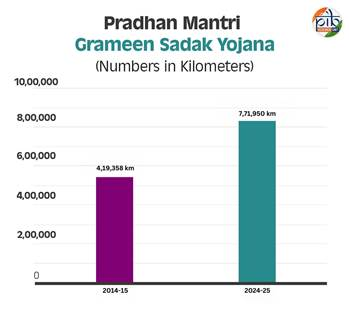
Bridges Rural-Urban Divide- Rural roads, irrigation networks and decentralised energy systems enhance market access and livelihoods. Eg- PMGSY
Access to Basic Services – Water supply, sanitation, healthcare facilities, and DPI ensure equitable access for vulnerable groups. Eg- Jal Jeevan Mission
Balanced Regional Growth- Connectivity in tribal, hilly, and northeastern regions improves mobility, education access, and economic opportunity.
Employment Generation for low-skilled and semi-skilled workers. Eg- The PM Gati Shakti initiative is expected to create 1 crore+ jobs by 2030.
Improves standard of living – Eg- over 4Cr houses constructed under PMAY
Women Empowerment – Eg- SBM improving access to sanitation
India’s Experience – Achievements and Challenges
India has the second largest road network in the world (1.5 lakh km National Highway)
Ports & Logistics: Sagarmala increased port capacity beyond 2,600 MTPA.
Digital Infrastructure: Aadhaar, UPI, BharatNet deepened digital inclusion.
Energy: Renewable capacity crossed 240+ GW, improving energy security.
Challenges
Lack Of Integrated Policy- India has the second largest infrastructure deficit in the world (after Brazil)
Financing Constraints: NIP requires Rs 111 lakh crore.
Delays in Land Acquisition & Clearances slowing project execution. Eg- Mumbai Metro
Urban Infrastructure Deficits: Eg- 17% population living in slums
Logistics Inefficiencies: 13-14% logistics cost compared to 8-10% global average
Poor concession agreements and litigation in PPP projects
Neglect of social infrastructure – Eg- health and education spending at 1.9% and 4% of GDP only
Inadequate R&D expenditure (0.7% of GDP) hinder the adoption of innovative solutions.
Way Forward
Strengthen PPP Models with better risk-sharing and transparent concession agreements. (Kelkar Committee recommendations)
Accelerate Gati Shakti Platform for integrated planning and faster clearances.
Increase Sustainable Financing via green bonds, NIIF, and development finance institutions.
Focus on Climate-Resilient Infrastructure in coastal, drought-prone and flood-prone regions.
Sustainable and high-quality infrastructure is a essential for realisation of a $40 Trillion economy by 2047.