Pressure groups are organized associations that seek to influence government policies without contesting elections. Samuel H. Finer calls them “Invisible empires”
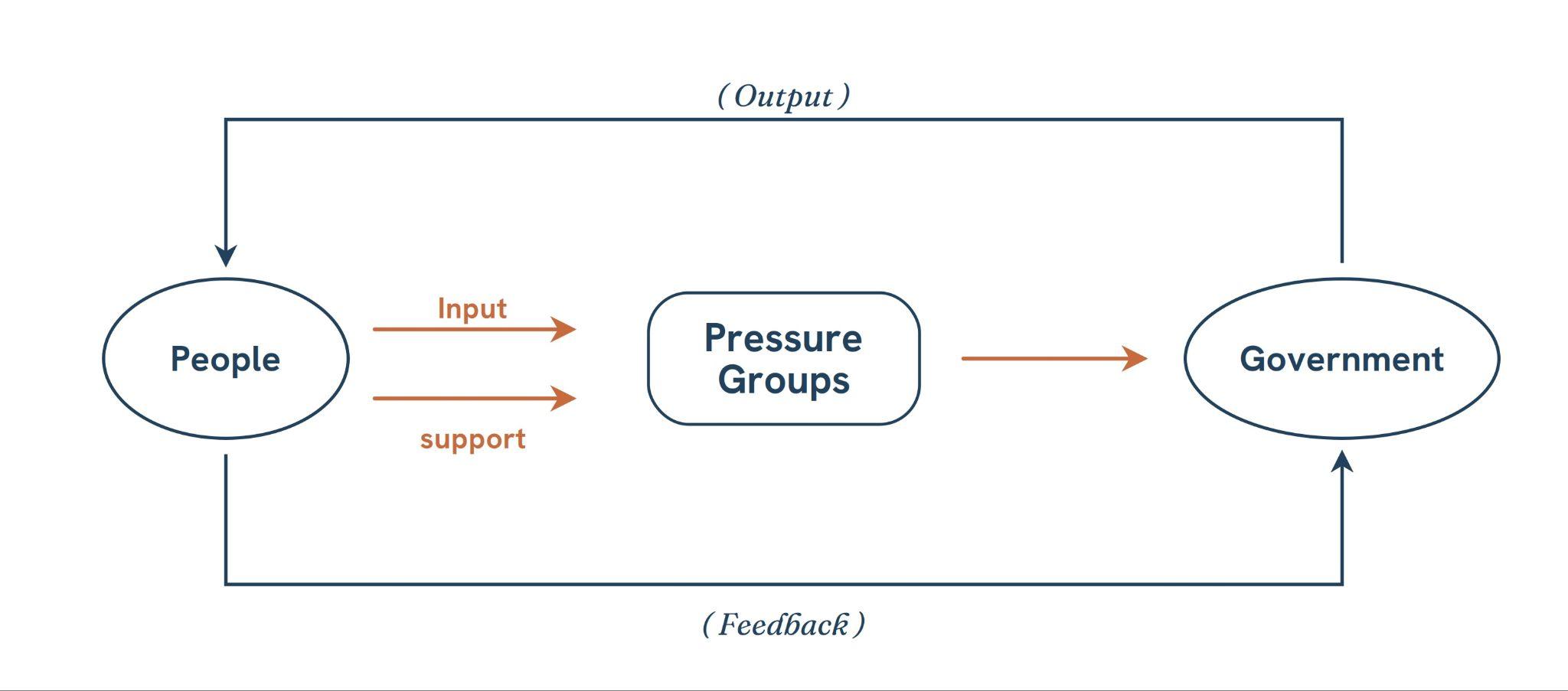
Vital Role of Pressure Groups
Agents of Political Modernization and Socialization
Interest Articulation – Eg- Farmer Unions
Facilitates Social Progress – Eg- Eg- NAZ Foundation’s fight against Section 377.
Enables Constructive Participation (‘safety-valve’ outlet)
Future political leadership – Eg- Arvind Kejriwal (earlier part of IAC campaign)
Role of Business Associations in Public Policies
Policy Advocacy and Lobbying- Eg- ASSOCHAM lobbied for GST simplification and corporate tax reduction (2019).
Research Support – Provide expert input, data, and feedback. Eg- pre-budget consultations with CII and FICCI
Act as implementing partners for national missions. Eg- CII-NSDC collaboration under Skill India Mission.
International Economic Diplomacy – Facilitate trade forums, business summits, and global investor meets. Eg- opposition to RCEP
Legal and Regulatory Influence – Push for ease of compliance and regulatory clarity. Eg- ASSOCHAM provided feedback for Companies (Amendment) Act, 2020.
Promoting Responsible and Inclusive Growth through CSR and ESG norms.
Provide a platform for consultations for key issues like industrial revolution 4.0 etc.
Challenges
Elite Bias – limited representation for MSMEs, startups, and informal sector.
Fragmentation due to multiple bodies (CII, FICCI, ASSOCHAM, NASSCOM) lead to overlapping agendas and diluted influence.
Regulatory Capture – Eg- Corporate-Politicians-Bureaucracy nexus (Vohra committee)
Poor Regulation and Secrecy lead to corruption and crony capitalism.
Way Forward
“Lobbying Regulation Act” similar to the USA
Financial Transparency in Functioning
For Viksit Bharat @2047 business associations must move from protest-based mobilization to knowledge-based engagement with the state.