Despite being the largest foodgrain producer (73 million tonnes of buffer stock) and running the world’s largest food security programs (NFSA), India ranks 102nd out of 123 countries in the Global Hunger Index 2025.
Focus on Lack of Availability of Food
NFSA, 2013: 5 kg subsidized food grains/month to 67% of India’s population.
PM Garib Kalyan Anna Yojana: Extended free food grain distribution during and post-COVID.
ICDS and Mid-Day Meal Scheme: Supply meals to pregnant women, lactating mothers, and children to combat calorie deficiency.
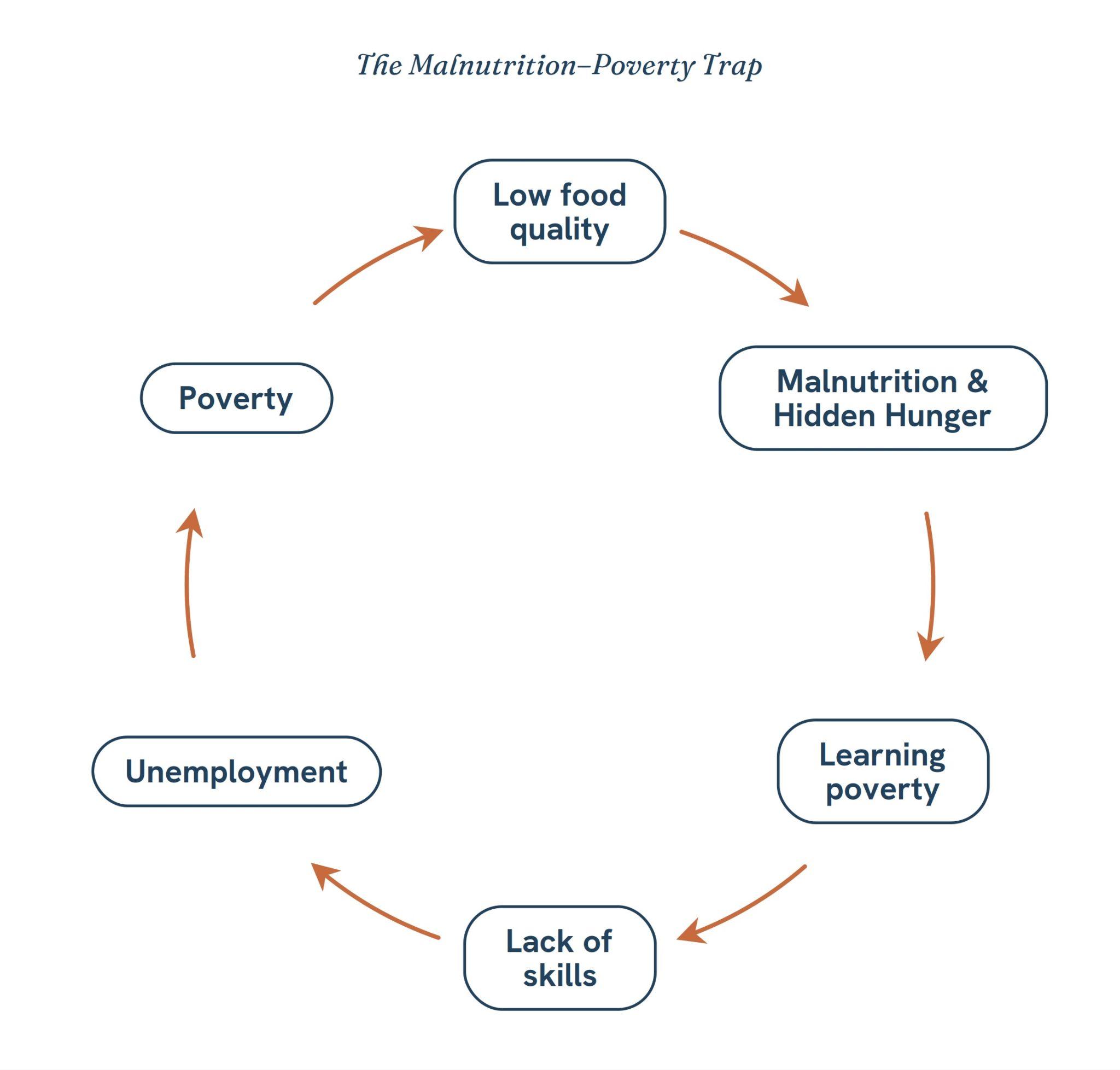
Persistent Malnutrition: NFHS-5 shows stunting (32.9%), wasting (18.7%), and underweight (32%) children despite extensive food programs.
High Anemia Levels: 57% of women and 67% of children are anemic – a form of hidden hunger linked to poor micronutrient intake, not lack of food.
SOFI 2025: 12% of Indians remain undernourished despite record food production.
Global Hunger Index 2025: score of 25.8 (Serious).
Ineffective Human Development Policies in India
Health System Deficiencies: Poor healthcare access, high maternal mortality, inadequate disease prevention, and sanitation deficits worsen malnutrition.
Education Gaps: Lack of nutrition awareness, hygiene education, and poor child care practices perpetuate undernutrition despite food access.
Feminization of poverty: Low female labor participation, limited autonomy, and poor maternal nutrition cause intergenerational hunger.
A large share of the workforce (90%) remains in low-paid informal jobs, restricting food affordability and living standards.
Limited Funding – Public spending on health (~1.9% of GDP) and education (~2.9% of GDP) remains below global averages, weakening capability-building.
Income Poverty and Inequality: The poorest 10% spend over 60% of income on food, leaving little for health or education.
Jobless Growth: Despite 7%+ GDP growth, unemployment among youth remains 17.3% (PLFS 2022-23).
Steps Taken to Address the Broader Dimensions of Hunger
Saksham Anganwadi and Poshan 2.0: Modernizes ICDS infrastructure and promotes dietary diversity through fortified foods.
Ayushman Bharat and PM Jan Arogya Yojana: insurance coverage to 50Cr population
Swachh Bharat Mission & Jal Jeevan Mission: Improve sanitation and safe water, reducing nutrient loss due to infections.
MGNREGA, NRLM, and PM-KISAN: Provide livelihood and income support to improve household food affordability.
Women Empowerment Initiatives: Mobilizing over 1 crore women into 9.96 lakh Self-Help Groups (SHGs) under NULM
Millets Promotion under “Shree Anna” – Integration of nutri-cereals (e.g. ragi, bajra, jowar) into PDS, ICDS and PM POSHAN
Way Forward
Promote diet diversity (millets, pulses, vegetables) through PDS reform.
Increase public investment in health (2.5%) and education (6%) to strengthen human capital.
Adopt data-driven local interventions under Aspirational Districts Programme to target high-burden regions.
Adopt Brazil’s Bolsa Família conditional cash transfer scheme
Scale State level best practices like TN’s inclusion of Eggs in MDM
India’s vision of ‘Sabka Saath, Sabka Vikas’ demands inclusive nutrition as the foundation for sustainable human development.