💥Join UPSC 2027,2028 Mentorship (July Batch) + XFactor Notes & Microthemes PDF

Author: Access Account

  • Elucidate the importance of buffer stocks for stabilizing agricultural prices in India. What are the challenges associated with the storage of buffer stock? Discuss

    Buffer stocks are reserves of essential commodities, aimed at stabilizing agricultural prices and ensuring food security. India currently maintains over 80 million tonnes of buffer stock, well above the norm set by the Buffer Stocking Policy (around 30-40 million tonnes), managed primarily by the Food Corporation of India (FCI). 


    Importance of buffer stocks for stabilizing agricultural prices:

    1. Mitigating Price Volatility: According to the RBI Report, despite adverse climatic conditions and international disruptions, buffer stocks helped contain food inflation at average of 5.9%.
    2. Mitigating Global Supply Disruption (2022-23): Even during the Russia-Ukraine war, buffer stocks helped stabilize the market by releasing 18 lakh tonnes of wheat in early 2023.
    3. Stabilizing Farmers’ Incomes: In 2021-22, FCI procured 43 million tonnes of wheat and 58 million tonnes of rice, stabilizing farmer incomes during surplus production.
    4. Public Distribution System (PDS): Buffer stocks support the National Food Security Act (NFSA), ensuring food supply to 67% of India’s population at subsidized rates, and controlling inflation for essential goods.
    5. Export Management: In times of surplus, the government can release surplus grains for export. Conversely, during shortages, restricting exports ensures price stabilization.
    6. Meeting Emergency Needs – Buffer stocks help meet food requirements during natural calamities or crises. Eg- Garib Kalyan Yojana during COVID

    Challenges Associated with Storage of Buffer Stocks:

    1. Wastage and Quality Degradation: As per Ministry of Consumer Affairs, more than 25000 Metric Tonnes (MT) of food grains were wasted in the last five years in FCI godowns.
    2. Excess Procurement:  In 2020-2021, India held about 90 million metric tons of food grains particularly due to the open procurement policy, far exceeding the buffer norms.
    3. Management and Leakages:  Shanta Kumar Committee highlighted that 46% of PDS grains do not reach the intended beneficiaries due to inefficiencies and corruption.
    4. Mismatch Between Procurement and Regional Needs:  Procurement is concentrated in states like Punjab, Haryana, and UP, whereas Bihar and West Bengal often face shortages.
    5. Inadequate Storage Infrastructure and obsolete technology: Using temporary facilities like Covered and Plinth (CAP), lacking modern technology for temperature control, pest management, and moisture regulation.    
    6. Financial burden on the government due to high costs of procurement, storage, and management, especially during years of large-scale purchases, straining the budget.

    Recommendations to revamp storage of buffer stocks:

    1. Ashok Gulati Committee (2011): revision of buffer stock norms based on actual requirements for the PDS and emergency situations.
    2. Comptroller and Auditor General (CAG) Report on FCI (2013): use of Technology to digitize inventory management systems, allowing real-time tracking of food stocks at FCI warehouses.
    3. Shanta Kumar Committee (2015): It suggested decentralizing the procurement process by encouraging states to take up procurement based on their regional capabilities. 

    India’s “World’s Largest Grain Storage Plan” aims to create 70 million tons of modern storage through cooperatives, enhancing rural capacity, improving grain handling, and reducing post-harvest losses by building silos and warehouses in underserved areas.

  • What are the major challenges faced by Indian irrigation system in recent times? State the measures taken by the government for efficient irrigation management

    Irrigation is critical to Indian agriculture, which accounts for 80% of the country’s freshwater consumption. According to the Ministry of Agriculture, about 52% of India’s net sown area is irrigated, but inefficiencies in the system have hampered agricultural productivity. 

    Major challenges faced by Indian irrigation system in recent times:

    • Groundwater exploitation: According to CGWA, India extracts nearly 25% of global groundwater annually. Punjab and Haryana groundwater tables deplete by 33% in the last two decades.
    • Inefficient Water Use: Due to electricity subsidies and Traditional methods like flood irrigation, still used in 85% of irrigated areas.
    • Poor Infrastructure: Canal systems, which cover around 40% of irrigated land, suffer from leakages and evaporation losses, leading to about 30-40% wastage (Central Water Commission).
    • Unequal Distribution: Punjab, with 98% irrigation coverage, contrasts with underdeveloped infrastructure in eastern and southern states. (NITI Aayog).
    • Low Adoption of Modern Techniques: As per ICAR, only 6% of India’s irrigated land uses drip or sprinkler systems, mainly due to high initial costs and lack of awareness.

    Measures taken by the government for efficient irrigation management:

    1. National Mission for Sustainable Agriculture (NMSA): to promote sustainable agriculture practices, enhance water use efficiency, and encourage adoption of new irrigation technologies.
    2. Pradhan Mantri Krishi Sinchai Yojana (PMKSY): aims to improve irrigation coverage, enhance water efficiency, and promote modern irrigation techniques such as drip and sprinkler systems.
    3. Command Area Development & Water Management (CADWM): Improves irrigation efficiency by repairing and upgrading canal systems  across 17 million hectares (CWC).
    4. Atal Bhujal Yojana: With a budget of ₹6,000 crores, this scheme focuses on sustainable groundwater management in stressed regions, aiming to reduce over-extraction in 78 districts.
    5. Jal Shakti Abhiyan: A water conservation campaign targeting 256 water-stressed districts, focusing on rainwater harvesting and recharging groundwater (NITI Aayog).

    State Led initiatives:

    1. Mission Kakatiya(Telangana)-for rejuvenation of tanks and micro-irrigation sources.
    2. Jalyukt Shivar Abhiyan(Maharashtra)-promotes water conservation and management by constructing farm ponds, percolation tanks, and check dams.
    3. Krishi Bhagya(Karnataka)-promotes the adoption of micro-irrigation systems, rainwater harvesting, etc.

    Therefore, as recommended by the Ashok Dalwai Panel, a substantial investment in modern irrigation infrastructure, including drip and sprinkler systems, and the need to revisit water pricing policies to increase water-use efficiency and agricultural productivity.

  • What is the need for expanding the regional air connectivity in India? In this context, discuss the government’s UDAN Scheme and its achievements

    India’s vast geography and diverse regions make efficient air connectivity a critical element in driving economic growth, enhancing national integration, and ensuring equitable development across the country. The UDAN Scheme was launched with the objective of connecting small and medium cities with big cities through air service.

    Need for expanding the regional air connectivity in India:

    1. Decongesting Overloaded Metros: Major urban airports like those in Delhi, Mumbai, and Bengaluru are experiencing severe congestion due to increased passenger traffic.
    2. Economic and Trade Development: Improved air connectivity can further boost initiatives like “Making Districts as export hubs” thereby facilitating local economies.
    3. Promoting Tourism: Unlocking Tourism Potential, especially in states like Northeast India, Himachal Pradesh, Uttarakhand, and Rajasthan.
    4. Enhancing National Security: Improved connectivity, particularly in border and strategic areas such as Ladakh, Arunachal Pradesh, and the Andaman & Nicobar Islands, is critical for national security.
    5. Disaster Management and Relief: Regions prone to natural disasters, such as floods, earthquakes, and landslides, benefit from rapid response and evacuation efforts when accessible by air.

    The Government’s UDAN Scheme

    Key features:

    1. Subsidized Airfare: airfares for a 500 km flight are capped at ₹2,500 for a one-hour journey.
    2. Viability Gap Funding (VGF): To incentivize non-commercially viable regional routes.
    3. Development of Airports: Particularly in unserved and underserved areas by improving infrastructure, including runways, terminals, and navigational aids.
    4. Public-Private Partnership (PPP): Encourages private sector participation in developing regional airport infrastructure.

    Achievements of UDAN Scheme:

    1. As per Ministry of Civil Aviation, UDAN scheme is operating over 2.8 lakh flights and serving 1.43 crore passengers as of August 31, 2024. 
    2. Increased Regional Connectivity: The scheme has launched operations on 583 routes, linking 86 airports, including 13 heliports and 2 water aerodromes. 
    3. Affordable Air Travel: India has emerged as the third-largest domestic aviation market, with the total number of air passengers handled at Indian airports reaching 37.6 crore in FY24—a year-on-year increase of 15%. 
    4. Growth in Regional Aviation: Airlines such as Star Air, Trujet, and Air India Regional have expanded their operations under the scheme. Eg- Akasa Air ordering 200 aircraft within 17 months
    5. Development of Infrastructure: Airports, such as those in Jharsuguda (Odisha), Kishangarh (Rajasthan), and Pakyong (Sikkim), have been operationalized.
    6. Boost to Regional Economies and Tourism: To promote tourism, 46 important tourist spots have been selected under UDAN Scheme.
    IssuesWay Forward
    Out of the 479 airport routes that were revived by the Union Government, 225 have ceased operations.Enhancing Financial Viability: Implementing revenue-sharing models to incentivize the operationalization of less profitable routes.
    As per CAG Report, there is excessive collection of Regional Air Connectivity Fund (RCF) and delay on the part of RACFT in raising RCF levy claims on the airline operators.Streamlining Regulatory Processes: Expediting the process of obtaining regulatory clearances from agencies like the DGCA , state governments, and airport authorities.
    AAI’s Viability Gap Fund’s claims approved through self-certification led to non-compliance to several scheme provisions. (CAG Report)Focus on Sustainable Practices and leveraging technology: Adopting fuel-efficient technologies to reduce carbon footprints and Data Analytics for Route Optimization

    India can draw inspiration from the “Regional Connectivity Scheme” (RCS) in the United Kingdom whose emphasis on PPP and operational efficiency, can help realising the vision of ‘New India’.

  • Discuss the merits and demerits of the four ‘Labour Codes’ in the context of labour market reforms in India. What has been the progress so far in this regard?

    As per recommendations of 2nd National Commission on Labour, 29 labor laws in India have been consolidated into Four comprehensive labor codes which aim at boosting the ease of doing business, while also extending social security to millions of workers, particularly in the informal and gig economy.

    1. Code on Wages: Standardized wage and bonus payments.
    2. Industrial Relations Code: Streamlines dispute resolution and labour relations.
    3. Occupational Safety, Health, and Working Conditions Code: Ensures safe and healthy working conditions.
    4. Code on Social Security: Expands social security benefits.

    Merits of Labour Codes:

    1. Simplification and Rationalization of Laws: The consolidation of 29 laws into 4 codes reduces the complexity of compliance Uniform definitions E.g. simplifying payroll calculations.
    2. Promoting Formalization and Social Security: Code on Social Security brings gig and platform workers (e.g., delivery workers, app-based drivers) under the social security net 
    3. Minimum floor wage: to be determined by the Central government based on the minimum living standards and level of skills of workers based on which state governments shall identify a minimum wage rate, to be revised every 5 years or earlier. 
    4. Minimise exploitative practices – Provisions for overtime wages twice the normal wages on an hourly or part-of-hour basis as well as coverage of Employees’ State Insurance (ESI). 
    5. Flexibility in Hiring and Firing: The Industrial Relations Code allows firms with up to 300 workers (previously 100) to hire and fire employees without requiring government permission.
    6. Improved Worker Safety and Health Standards: The Occupational Safety, Health, and Working Conditions Code mandates stricter safety norms, such as proper ventilation, cleanliness, and adequate lighting at workplaces.
    7. Easier Resolution of Industrial Disputes: The Industrial Relations Code mandates the formation of Grievance Redressal Committees for companies with 20 or more workers and allows faster resolution through tribunals.
    8. Changes in EPF & gratuity: the Employee Provident Fund (EPF) and gratuity contributions are now applicable to both organised and unorganised sectors. Further, the codes permit a 1-year service for employees to collect gratuities from earlier 5 years.
    9. Gender Equality – The Code of Wages prohibits discrimination in remuneration and recruitment of employees for work of similar nature.
    10. Maternity benefits: the SS Code continues to ensure 26 weeks of paid maternity leave along with creche facilities funded by the employer.

    Demerits of Labour Codes:

    1. Lack of Uniformity Across States: Labour is a concurrent subject in India, this could lead to lack of uniformity in implementation across different regions.
    2. Delegated Legislation – Standing Committee on Labour has noted that the Acts delegates various aspects for rule-making by the government. Eg-  defining the entitlements 
    3. Concerns about Gig and Informal Workers’ Security: the Code on Social Security does not provide clear mechanisms for ensuring comprehensive coverage and enforcement.
    4. Impact on Trade Unions and Collective Bargaining: A requirement that 75% of workers in a company must vote for a strike before it is legally recognized can dilute the role of trade unions        
    5. Weakening of Workers’ Rights and Protections: The increased threshold for government permission for layoffs is criticized for potentially weakening job security.
    6. Power to government to modify or reject tribunal awards – it raises the question of conflict of interest, as government may modify an award made by the Tribunal in a disputes it is a party.  
    7. Provisions on fixed term employment – unequal bargaining powers between the worker and employer could affect the rights of workers as the power to renew contracts lies with employer.

    Progress so far in this regard:

    1. Publication of draft rules: over 20 states have published draft rules, but final notifications are still awaited in most cases.
    2. Implementation: Implementation has been delayed due to state-level preparations and ongoing consultations with stakeholders. 
    3. Centre has already enforced few provisions like Central Advisory Board and establishment of an employee’s and his family members’ identities through respective Aadhaar numbers.

    Reasons For Delay 

    1. Some states are yet to publish rules to set the codes in motion 
    2. Talks between the Union labour ministry and unions have stalled  
    3. Centre is inclined to take all stakeholders on board for which there needs agreement on key provisions.

    Way Forward

    1. Labour Market Information System (LMIS): to pinpoint skill shortages, training needs, and disseminate new job opportunities.
    2. Comprehensive Economic Reforms: upgrading infrastructure, skilling the workforce, and maintaining a consistent export-import policy to bolster investment and job creation.

    India can draw on Denmark’s “flexicurity” system which combines labor market flexibility with comprehensive social security, to ensure ensure ‘Ease of Doing Business’ and realise target of VIKSIT BHARAT 2047.

  • Describe the context and salient features of the Digital Personal Data Protection Act, 2023

    Data has emerged as ‘New Oil.’ As  technology has become the defining paradigm of the 21st century, the DPDP Act, India’s first data protection act, establishes a framework for the processing of personal data in India.

    Context of the DPDP Act, 2023:

    1. Rise in Digital Data Usage: as per Nokia’s Mobile Broadband Index (MBiT), Indian users on average consumed 24.1 gigabytes (GB) of data per capita per month in 2023 
    2. Judicial Interpretation: Recognition of the Right to Privacy as a fundamental right under Article 21 of the Indian Constitution emphasizes the need for a data protection law to protect personal information in the digital age.
    3. Global Trends: India’s DPDP Act mirrors global efforts to regulate data processing, such as the European Union’s General Data Protection Regulation (GDPR). 
    4. Previous Data Protection Drafts:  The DPDP Act, 2023, builds on earlier drafts of data protection bills (such as the Personal Data Protection Bill, 2019), which faced multiple revisions due to concerns over government exemptions, data localization, and compliance costs for businesses.
    5. Rise in cyber crime – As per NCRB, in May 2024, the Indian Cyber Crime Coordination Centre (I4C) recorded an average of 7,000 cybercrime complaints per day. This is a 60.9% increase from 2022 to 2023 and an 113.7% increase from 2021 to 2023.
    6. Use of Data in government schemes like Aadhar, DBT etc. 

    Salient Features of the Digital Personal Data Protection Act, 2023:

    1. Applicability: The DPDP Act applies to the processing of digital personal data in India, whether collected online or offline and later digitized. It also applies to data processing outside India if the data pertains to providing goods or services to data principals (individuals) within India.
    2. Key Stakeholders: Data Principal (DP), Data Fiduciary, Data Processor
    3. Penalty for Infringement: The Act imposes financial penalties for non-compliance, ranging from Rs. 10,000 to Rs. 250 crores, but does not impose criminal penalties.
    4. Conflict with Existing Laws: The DPDP Act’s provisions are additional to existing laws. In case of conflict, the DPDP Act will take precedence to the extent of the conflict.
    5. Data Protection Board of India (DPBI):
    1. An independent body responsible for resolving disputes related to privacy and data protection.
    2. It has the authority to impose penalties for non-compliance and breaches of the Act.
    3. Appeals against DPBI orders can be made to the High Court, which can also take up breaches suo moto
    4. Citizen’s Rights:
    1. Right to Information: The DP has the right to know how their data is being used.
    2. Right to Correction and Erasure: The DP can request corrections or erasure of their personal data.
    3. Grievance Redressal: The DP has the right to approach authorities for grievances related to data breaches or misuse.
    4. Right to Nominate: In case of death or incapacity, the DP can nominate someone to exercise their rights
    IssuesWay Forward
    Lack of Standardization: Inconsistent data formats and standards across different departments.Establishing a clear implementation framework to ensure effective coordination.
    Fragmented Systems results in data silos, making it difficult to share and access data across departments.Developing decentralized, reliable databases to ensure that governance decisions are rooted in accurate and comprehensive data.
    Inaccurate or outdated data Eg- Issues with the accuracy of data in land records Opening of data “silos” to capture the potential wealth of data sharing between governmental offices, corporations and citizens.

    By carefully choreographing a dance between data localization, infrastructure development, and technological innovation, India can pave the way for a data-driven future that is both innovative and accountable.

  • Explain how narco-terrorism has emerged as a serious threat across the country. Suggest suitable measures to counter narco-terrorism

    ‘Narcoterrorism’ refers to the use of drug trafficking networks—routes, funding mechanisms, and

    incomes—by terrorist organizations. According to the Narcotics Control Bureau (NCB), more than 100 instances of drone incursions reported in the India-Pakistan border alone in 2023, with most carrying heroin and weapons meant for terrorists operating in India.


    Narco-terrorism has emerged as a serious threat:

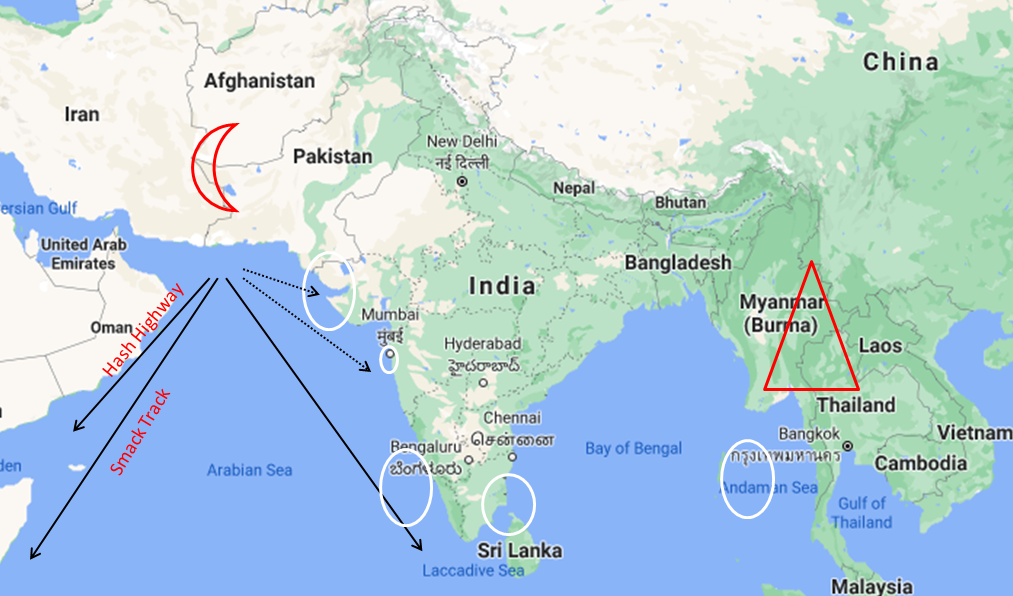
    1. Strategic location:  Proximity to the Golden Crescent to the west and the Golden Triangle to the east 
    2. As per International Narcotics Control Board (INCB) Annual Report 2023, nearly 40% of the world’s opiate users reside in South Asia. 
    3. Use of Technology – Cyber-enabled drug markets, operating on the dark web and crypto-markets, are making illicit drugs more accessible than ever before.
    4. Linkage with terrorist groups: 20-30% of drug smuggling operations in Jammu and Kashmir are estimated to be linked to groups like Lashkar-e-Taiba (LeT) and Jaish-e-Mohammed (JeM) (IB Report).
    5. Increased Smuggling through Coastal Routes: Eg-  seizure of 2,826 kg of drugs, comprising mostly heroin and cocaine, across India’s ports and coastal waters in 2023, the highest in 5 years.
    6. Narcotics and Maoist Insurgency:  Maoist-linked drug operations are used to generate revenue for purchasing arms.
    7. Use of Northeast India as a Transit Point: The porous borders of Northeast India, are used by insurgent groups like the National Socialist Council of Nagaland (NSCN) for drug smuggling. 
    8. Use of Advanced Smuggling Methods: use of drones and maritime routes to smuggle drugs into India, especially across the Punjab and Gujarat borders.
    9. Collaboration with State Actors: Pakistani state agencies are reportedly involved in facilitating narcoterrorism by supporting cross-border drug trafficking that funds terrorism in India.

    Measures to counter narco-terrorism:

    1. Strengthening Border Security:Enhance surveillance and monitoring along borders using advanced technologies such as drones, sensors, and AI to detect and prevent narcoterrorism activities, particularly along the India-Pakistan and India-Myanmar borders.
    2. Strengthening Law Enforcement and Intelligence: 
    1. Ensure the strict enforcement of laws like the Narcotic Drugs and Psychotropic Substances (NDPS) Act, 1985
    2. Ensure seamless sharing of real-time intelligence between agencies like the Intelligence Bureau (IB), Research and Analysis Wing (RAW), and NCB
    1. International Cooperation: Collaborate with Bangladesh, Myanmar, and Afghanistan through bilateral and multilateral platforms like SAARC and BIMSTEC.
    2. Community-Level Interventions: Establish comprehensive drug rehabilitation and de-addiction centers, particularly in regions with high drug abuse rates like Punjab.
    3. Targeting the Nexus between Crime and Terrorism: Strengthening UAPA and financial regulations such as PMLA to target financial linkages between drug traffickers and terrorist groups.

    A failed state in the neighbourhood combined with narco-terrorism can have serious consequences for India’s security. A comprehensive risk-mitigation approach is imperative to safeguard India’s national security and secure a better and healthier future for its citizens.

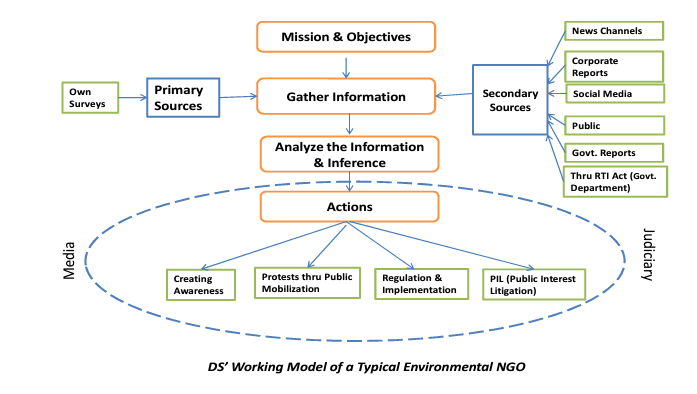
  • What role do environmental NGOs and activists play in influencing Environmental Impact Assessment (EIA) outcomes for major projects in India? Cite four examples with all important details

    “World today is economically richer & environmentally poorer the ever” 

    The UN Department of Public Information (DPI) defines the NGO as “a not-for-profit, voluntary citizen’s group that is organized on a local, national or international level to address issues in support of the public good.” 

    Role of environmental NGO’s:

    • Raising Public Awareness and Participation- Eg- In projects like the Vedanta bauxite mining project in Odisha, activists and NGOs mobilized local tribal communities to participate in public consultations, eventually leading to the project being halted.
    • Advocacy and Legal Interventions – Eg- Activist groups like Kalpavriksh and Vanashakti have filed PILs against infrastructure developments in ecologically sensitive areas like the Western Ghats.
    • .
    • Independent Review and Monitoring of EIAs – Eg- Greenpeace India highlighted deficiencies in the EIA process in Mundra Port and SEZ project.
    • Pressure for Policy Reforms- Their efforts have led to amendments in EIA regulations, such as improvements in the public hearing process and better safeguards for sensitive ecosystems.
    • Exposing Environmental Violations – Eg-  In the Sterlite copper plant case in Tamil Nadu, NGO activism exposed how the plant was operating without proper environmental clearances, leading to closure of the plant.
    • Engaging with International Advocacy Networks including development finance institutions to ensure stricter compliance with international environmental standards.

    Examples

    1. Narmada Bachao Andolan (NBA), led by social activist Medha Patkar. It raised concerns about the incomplete and flawed EIA, which did not fully assess the displacement of people or the ecological damage to the Narmada River ecosystem. While the dam was eventually built, NBA’s efforts ensured a greater focus on rehabilitation and resettlement policies.
    2. Goa Foundation and Mining in Goa NGO/Activist Involved: filed petitions in the Supreme Court challenging the approval of mining leases based on inadequate and outdated EIAs. The NGO provided scientific data showing how large-scale illegal mining was leading to deforestation, loss of biodiversity, water pollution, and siltation of rivers, which affected agriculture and fisheries. In 2012, the Supreme Court imposed a ban on mining activities in Goa. 
    3. Kalpavriksh and the POSCO Steel Plant Project in Odisha –  worked closely with local communities to highlight that the EIA did not address the full extent of forest clearance, water consumption, and pollution. The NGO submitted expert critiques to the Ministry of Environment and Forests (MoEF), pointing out deficiencies in the EIA process, including the lack of public consultations and ignoring of critical environmental impacts.  The MoEF revoked the forest clearance for the project in 2010. 
    4. Himdhara and Hydropower Projects in Himachal PradeshNGO/Activist Involved: Himdhara conducted independent environmental impact assessments and highlighted issues such as improper evaluation of seismic risks, water flow changes, and the cumulative impacts of multiple hydropower projects on the river systems. As a result of their sustained efforts, the original design of the Luhri Hydroelectric Project was altered, reducing its capacity and minimizing environmental damage. 

    Issues:

    1. Organizational Issues – A survey by Indian Institute of Corporate Affairs (IICA) found that around 67% of small and medium-sized NGOs.
    2. As per report by the Harvard Kennedy School the majority of NGOs in India don’t have Board for governance.
    3. Regulatory Issues – Out of 3 million NGOs in the country, only about 175,000 of are registered on Niti Aayog’s Darpan portal.
    4. Funding Constraints: Over dependence on government funding curtails their ability to hold government and administration accountable.
    5. Security:  As per the Intelligence Bureau report, foreign-funded NGOs are acting as instruments for the foreign policy goals of Western governments. Their activism has led to reducing GDP growth by 2-3%.

    Way Forward

    1. 2nd ARC: set up an independent National Accreditation Council- to provide for the system of accreditation of voluntary organizations that seek funding from government agencies.
    2. Vijay Kumar Committee Recommendations:  ‘Light regulation’ of NGO and  a separate law for voluntary agencies
    3. Establishing a governing board enhances NGO governance.

    NGOs are “integral cogs in the wheel of good governance”. A balanced partnership between genuine NGOs and the government is crucial for India’s progress.

  • Industrial pollution of river water is a significant environmental issue in India. Discuss the various mitigation measures to deal with this problem and also the government’s initiatives in this regard

    As per CPCB report, 46 percent of the 603 Indian rivers are polluted based on indicator of organic pollution i.e. Biochemical Oxygen Demand (BOD) (3mg/L) with the discharge of untreated industrial affluents as one of the major reasons.

    Industrial pollution of river water is a significant environmental issue:

    1. Impact river water quality:  According to the CPCB, the Ganges and Yamuna often exceed permissible limits for pollutants such as biological oxygen demand (BOD), fecal coliform, heavy metals, and other toxic substances.
    2.  Impact on Aquatic Life:  High levels of toxicity in the Ganges has severely affected the population of the endangered Ganges river dolphin.
    3.  Public Health Concerns: According to the World Bank, water pollution is responsible for around 1.5 million deaths annually in India due to preventable waterborne diseases.
    4.  Socioeconomic Impacts: Irrigation with contaminated water affects crop quality and yields, Declining fish populations, and diminishing the aesthetic and cultural value of rivers that are vital to India’s heritage.

    Mitigation Measures to deal with this problem:

    1. Stringent Enforcement of Environmental Regulations: E.g. the Water (Prevention and Control of Pollution) Act, 1974, and the Environment Protection Act, 1986, which set standards for effluent discharge from industries.
    2. Effluent Treatment Plants (ETPs) and Common Effluent Treatment Plants (CETPs): Mandating industries to set up on-site ETPs to treat wastewater before discharge into rivers. 
    3. Zero Liquid Discharge (ZLD) Policy: Encouraging industries to adopt ZLD technologies, which ensure that all wastewater is treated and recycled within the plant.
    4. Green Chemistry and Cleaner Production Techniques: This includes using environmentally friendly raw materials and energy-efficient processes to minimize the generation of pollutants at the source.
    5. Riverbank Buffer Zones and Monitoring: Establishing buffer zones around rivers where industrial activities are restricted and setting up real-time water quality monitoring systems

    Government Initiatives in this regard:

    1. Namami Gange Programme: Over 150 sewage treatment plants (STPs) have been sanctioned under this program to improve the water quality of the Ganga.
    2. National Water Mission: Under the National Action Plan on Climate Change, it focuses on water conservation, pollution reduction, and promoting efficient water use in industries.
    3. National Green Tribunal (NGT): The NGT has mandated the closure of 123 industries for non-compliance with pollution standards in various river basins.
    4. Pollution Control Boards (CPCB & SPCBs): Central and state pollution control boards regulate industrial discharges and set water quality standards. Regular inspections and pollution audits are conducted to ensure compliance.
    5. River Rejuvenation Programs: The Narmada Seva Mission launched by the Madhya Pradesh government focuses on afforestation and pollution control to restore the Narmada River’s health.

    Therefore, stronger enforcement and technological upgrades such as Denmark’s wastewater treatment model, can aid in mitigating the river pollution sustainably.

  • What is the technology being employed for electronic toll collection on highways? What are its advantages and limitations? What are the proposed changes that will make this process seamless? Would this transition carry any potential hazards?

    The National Highways Authority of India (NHAI) had introduced RFID-based FASTag as the primary technology used for electronic toll collection (ETC) in 2014. In February 2021, the government made FASTags compulsory for all vehicles, ensuring a cashless and more efficient toll collection system across the country.

    Advantages:

    1. Reduced Congestion: ETC eliminates the need for vehicles to stop at toll booths, thus reducing traffic congestion. 
    2. Reduced Waiting Time: Cuts down toll plaza congestion, saving up to 20 minutes per trip (MoRTH, 2022).
    3. Faster Processing: The system automatically charges the toll, reducing the transaction time significantly compared to manual toll collection.
    4. Lower Operational Costs: ETC requires fewer staff at toll booths, leading to cost savings for toll operators.
    5. Better Revenue Collection: Automated systems reduce human error and the risk of cash leakage or fraud, ensuring better toll revenue management.
    6. Environmental Benefits: Reduced idling time at toll booths results in lower emissions from vehicles, contributing to environmental conservation.

    Limitations:

    1. Technical Glitches: such as improper tag placement, reader malfunction, or weather conditions (e.g., heavy rain), leading to delays or disputes.
    2. Inconsistent Implementation: Not all state highways have fully integrated FASTag lanes, which can be confusing for drivers traveling on mixed routes.
    3. Network Dependency: FASTag is heavily reliant on internet connectivity for real-time transactions. Poor connectivity at certain toll plazas can lead to failed or delayed transactions.
    4. Customer Support and Disputes: Some users have reported difficulties with resolving issues like incorrect toll deductions or recharging problems, pointing to the need for improved customer support infrastructure.
    5. Double Charges for Manual Payments: Vehicles without a functional FASTag or insufficient balance are charged double the toll when paying in cash, which can be seen as punitive rather than encouraging for drivers still transitioning to the system.

    Proposed changes to make the process seamless:

    1. Transition to ANPR-Based Tolling: ANPR will allow vehicles to pass through toll plazas without any physical tag by capturing and recognizing license plates for automatic toll deduction.
    2. Distance-Based Tolling (GNSS/GPS): Instead of paying at multiple toll plazas, vehicles would be charged based on the actual distance they travel on the highways. This system could eliminate the need for physical toll plazas altogether.
    3. Integration with State Highways: Extending FASTag coverage to more state highways and city roads, ensuring that drivers can experience a fully seamless journey without switching between tolling systems.
    4. Contactless and Mobile Payments: Enabling mobile apps for real-time toll payments or integrating FASTag with digital wallets and payment platforms (e.g., UPI, Paytm) for increased convenience.

    Potential hazards of this transition:

    1. Data Security Risks: Increased digitization raises the risk of cyber-attacks, where sensitive data like vehicle movements and financial details can be compromised.
    2. Technical Glitches:  Any glitch in the RFID or GPS system could result in incorrect toll charges or unregistered toll crossings, leading to disputes.
    3. System Downtime: Power failures or system crashes can disrupt the toll collection process, leading to traffic jams and user dissatisfaction.
    4. High Cost leading to higher tax burden on citizens

    Road transport carries around 87% of India’s passenger traffic and over 60% of India’s freight traffic hence seamless traffic management is essential for goal of $5 Trillion economy.

  • What is the present world scenario of intellectual property rights with respect to life materials? Although, India is second in the world to file patents, still only a few have been commercialized. Explain the reasons behind this less commercialization

    As per WIPO, Intellectual property (IP) refers to creations of the mind, such as inventions; literary and artistic works; designs; and symbols, names and images used in commerce. Intellectual Property Rights (IPR) in the context of life materials, such as genetically modified organisms (GMOs), plant varieties, and biotechnological inventions, is a complex and ethically charged topic.

    Present world scenario of IPR with respect to life materials:

    1. International Legal Frameworks – Global agreements such as the Trade-Related Aspects of Intellectual Property Rights (TRIPS) agreement under the World Trade Organization (WTO) provide a baseline for IPR protection, including life materials. 
    2. Economic Contributions of Biotechnology:  The global biotechnology market is projected to grow at a compound annual growth rate (CAGR) of 15.83%, reaching about $2.44 trillion by 2030. 
    3. Global Patent Filings in Biotechnology:  According to the World Intellectual Property Organization (WIPO), biotechnology patent applications represented about 13% of all global patent filings.
    4. Impact of Biopiracy:  A study by the International Centre for Trade and Sustainable Development (ICTSD) highlighted that up to 90% of traditional knowledge related to biodiversity remains unprotected globally, increasing the risk of exploitation.
    5. Ethical Considerations and Public Perception:  According to a 2021 survey by the Pew Research Center, about 59% of respondents in developed countries expressed concern over the ethical implications of genetic engineering, which includes the patenting of life materials.

    As per the Indian Patent Office, India filed about 65,000 patents in 2021-22, making it the second-highest filer of patents in the world, however only 5% of these lead to commercially viable products.

    Reasons include:

    1. Funding and Investment issues:  A report by NASSCOM indicated that Indian startups raised over $38 billion in funding in 2021, yet 40% of biotechnology startups cited access to capital as a primary barrier to commercialization.
    2. Regulatory hurdles: According to Biotechnology Innovation Organization (BIO), about 55% of biotech companies reported that regulatory hurdles are significant barriers to bringing products to market.
    3. Weak Industry-Academia Linkages:  Innovations in Indian research institutes like CSIR often don’t reach the market due to poor industry partnerships. Less than 10% of patents filed by institutions like IITs and CSIR are transferred to industries for commercialization.
    4. Insufficient infrastructure – India’s technological and incubation infrastructure is inadequate to support startups and innovators.
    5. Intense competition from global players: Despite having biosimilars like insulin and monoclonal antibodies, Biocon Ltd. faces intense competition from global players, leading to challenges in commercializing its innovations effectively.
    6. Disputes over traditional knowledge: E.g. turmeric and neem tree patent controversy with U.S. companies. Though the patents were eventually revoked, it showcased the struggles in translating traditional knowledge into commercial applications.
    7. Public Opposition: Innovations like GM seeds often face resistance, as seen in the Bt brinjal controversy in India.

    Some key measures to strengthen commercialization include:

    1. National Intellectual Property Rights Policy 2016 which aims to create a robust IPR ecosystem and promote innovation and entrepreneurship.
    2. Establishment of Patent Facilitation Centers to provide guidance and support to inventors, especially small enterprises and startups.
    3. Atal Innovation Mission (AIM) for providing funding and support for innovation hubs, and incubation centers.
    4. Protection of traditional knowledge and biodiversity through the Traditional Knowledge Digital Library (TKDL).
    5. Revisiting the Drug and Clinical Trials Rules (2019) to expedite the approval process for new drugs and medical devices.

    By strengthening the IPR framework and startup ecosystem India can realize the objective of VIKASIT BHARAT and KNOWLEDGE ECONOMY by 2047.