💥Join UPSC 2027,2028 Mentorship (July Batch) + XFactor Notes & Microthemes PDF

Author: Root

  • [CD Exclusive] SWOT Analysis Questions for 3 Types of IAS Mains Qualified Aspirants

    [CD Exclusive] SWOT Analysis Questions for 3 Types of IAS Mains Qualified Aspirants

    Let’s face the facts. Very few of us can face an IAS interview with gusto.

    The remaining lion’s share of aspirants wails from self-doubt, no matter how much data and mocks we claim to have attempted and cramped.

    Remember, we have a few hours within which we have to impress the panel. You may be an engineer of the first water, an aspirant with dogged determination and a story to reckon with, but it is what transpires during those few hours is what matters.

    You need the best to come out of you, period.

    Back in 2017, Civilsdaily was one of the few institutions which brought about a change in the way an aspirant approaches the IAS exam. We have been very meticulous with our Samanvaya Calls (Mentoring interventions on phone) and invited aspirants (our students or not) to come and fill the form and share their preparation related issues.


    TRANSCEND (Interview Guidance by CD) module vs. other mock interview programs

    SWOT Analysis

    The interview preparation in our Transcend module is now enhanced with questions that are expected from you given your life-stage during this preparation journey. Much more beyond your hobbies and childhood dreams.

    We have profiled you in 3 broad buckets in our announcement post for Transcend 2019-20.

    Once you fill-up the form and submit your DAF, we have requested you to send us a selfie video with candid answers to 6 standard questions.

    Post that, we will analyze and build personalized interventions depending upon UPSC readiness bucket.


    Here’s a preview of what those questions are going to be and their importance.

    Profile 1: UPSC Senior

    Q1. You have failed in your previous attempt/s, why do you think we should consider your candidature seriously this time?

    This question tests the psychology of the candidate. The language has been deliberately made harsh to push the candidate on the back foot. The candidate is expected to remain optimistic and calm despite the provocative language and give logical points about why she is amongst the best choices for civil services.

    Q2. What do you think about the Citizenship Amendment Bill?

    This seemingly simple question has been asked to test the neutrality, articulation, logical exposition and critical thinking skills of the candidate. The issue of CAB is extremely complex with strong opinions aired by all sides. The candidate is expected to be aware of all the viewpoints and also have her own opinion on the issue. Normally, senior aspirants tend to avoid sharing their personal opinions on complicated and controversial national issues, but a candidate who has reached interview stage multiple times is expected to have the maturity to deal with such issues. In order to further test the candidate’s balance of judgement and ability to handle pressure, the interview board might counter the candidate’s arguments with strong (and even extreme) counter-arguments.

    Profile 2: The Working Professional (let’s say from steel & iron sector)

    Q1. How is India faring in the Iron and steel sector, both globally and domestically? What will be the impact of the National Steel Policy, 2017 on the sector? What are the latest technologies in steel manufacturing? Etc

    These kinds of Qs are asked to gauge how well the candidate understands the sector she works in. The candidate is expected to know the factual details with examples. Not answering such questions will go well with the board.

    Q2. Some Qs around your hobbies might be asked.

    The purpose of such Qs is to judge the significance you accord to ‘quality of life’. Your answer must reflect that despite the busy schedule, you do find some time to relax and recuperate from the stress of modern life.

    Profile 3: The Fresher

    Q1. Ideally, UPSC preparation should be managed alongside one’s studies and does not demand dedicated and exclusive preparation. Why did you need to invest a year specifically for it?

    Normally, aspirants think that many years of dedicated hard work is needed to crack the UPSC. This Q is intended to ‘stun’ the candidate by stressing on a point contrary to her belief. The purpose is to test the self-confidence and mental strength of the candidate. If the interviewee has a weak mind, she might blank out in this situation, and might not be able to answer properly anything that follows.

    Q2. What is your opinion about the encounter of the rape accused by Hyderabad police?

    Young people are often swayed by their emotions, and therefore, these kinds of questions are asked. They are intended to test qualities like maturity, the balance of judgment, critical power of assimilation, emotional intelligence of the candidate, faith in constitutional values, etc. Such questions can arouse very strong and knee-jerk reactions which can cost you the interview. These have to be avoided at all costs.


    We hope you have been watching our “How’s the josh videos” on the Civilsdaily Youtube channel. Rakesh Sir will be actively looking into your DAFs and reviewing your videos to ensure that every hour gets counted.


  • SAMANVAYA: Students Preparing for UPSC 2020 > 5 months to go – get fired up

    SAMANVAYA: Students Preparing for UPSC 2020 > 5 months to go – get fired up

    We have launched the Decimate Prelims Program. We are putting in our best effort to help all our students get a competitive edge.

    Click here to fill the form, tell us about your preparation and we will email you a revision plan specifically designed for you.

    Dear Students, 

    Our lectures on paper discussions and posts on solutions and sample structures have received over 20,000 hits collectively.  

    It is time to get serious with your preparation and we have got your back.


    After numerous conversations with so many aspirants, we have started understanding your problems better and standardizing solutions for the same.

    These are being incorporated into our Samanvaya program. It is these practices that will make the program more effective.

    At the core of Samanvaya lies the fact that each one of you will have a unique journey while preparing for the exam. Some will get through on the first attempt without much effort while others will take both more time and more effort. We want to understand you better to help you optimize your journey so you can focus on the right things and not waste time on the wrong ones. We are asking you to tap into the valuable experiences of mentors who underwent the same grind and realize the pitfalls and understand the shortcuts to make it.

    Samanvaya program involves the following –

    1. Identifying your weaknesses

    Over 80% of students who claimed to have revised NCERTs were unable to answer basic questions. Many were not comfortable with at least 1 GS subject and Optional. Many struggled with ‘What went wrong’ after 2-3 years of hard work.

    Our mentors will help you assess your preparedness and suggest accurate strategies.

    2. Strategy and study plan discussions

    Over 90% of students couldn’t stick to a plan. Study plans and strategies are iterative in nature and we want to help you with that. Many are unable to perform in tests despite preparing hard. This could be due to a variety of factors – lack of adequate prep, jitters in the exam hall, inadequate revision, lack of practice of test series or just a bad day at work. Tell us what you think went wrong and we’ll figure out a way to get you over the line next time.

    3. Helping you understand the exam better

    Which books to read, different approaches, etc. Over 60% of students we talked to did not find NCERTs relevant and saw no point in being thorough with them.

    4. Lack of motivation

    We have all had those days when it’s been hard to motivate ourselves to hit the books and just study. It happens to the best of us sometimes and for some of us, it happens more frequently. And it is understandable, Civil Service preparation is a long and often lonely process. Every aspirant, from toppers to those who have quit have been overwhelmed by this process at some point.

    Samanvaya Code of Conduct

    • Be honest with your mentors about your preparation levels and stage.
    • Follow their advice and participate in tests and assignments that they set for you
    • Stay active in the telegram groups, ask doubts, don’t hold yourself back.
    • Don’t expect spoonfeeding. You have to drive the initiative.

    Click here to fill the form, tell us about your preparation and we will email you a revision plan specifically designed for you.

    Here’s the feedback that we got from some of our students:


    Click here to fill the form, tell us about your preparation and we will email you a revision plan specifically designed for you.

  • SAMANVAYA: Students Preparing for UPSC 2020 > 5 months to go – get fired up

    SAMANVAYA: Students Preparing for UPSC 2020 > 5 months to go – get fired up

    Click here to fill the form, tell us about your preparation and we will email you a revision plan specifically designed for you.

    Dear Students, 

    Our lectures on paper discussions and posts on solutions and sample structures have received over 20,000 hits collectively.  

    It is time to get serious with your preparation and we have got your back.


    After numerous conversations with so many aspirants, we have started understanding your problems better and standardizing solutions for the same.

    These are being incorporated into our Samanvaya program. It is these practices that will make the program more effective.

    At the core of Samanvaya lies the fact that each one of you will have a unique journey while preparing for the exam. Some will get through on the first attempt without much effort while others will take both more time and more effort. We want to understand you better to help you optimize your journey so you can focus on the right things and not waste time on the wrong ones. We are asking you to tap into the valuable experiences of mentors who underwent the same grind and realize the pitfalls and understand the shortcuts to make it.

    Samanvaya program involves the following –

    1. Identifying your weaknesses

    Over 80% of students who claimed to have revised NCERTs were unable to answer basic questions. Many were not comfortable with at least 1 GS subject and Optional. Many struggled with ‘What went wrong’ after 2-3 years of hard work.

    Our mentors will help you assess your preparedness and suggest accurate strategies.

    2. Strategy and study plan discussions

    Over 90% of students couldn’t stick to a plan. Study plans and strategies are iterative in nature and we want to help you with that. Many are unable to perform in tests despite preparing hard. This could be due to a variety of factors – lack of adequate prep, jitters in the exam hall, inadequate revision, lack of practice of test series or just a bad day at work. Tell us what you think went wrong and we’ll figure out a way to get you over the line next time.

    3. Helping you understand the exam better

    Which books to read, different approaches, etc. Over 60% of students we talked to did not find NCERTs relevant and saw no point in being thorough with them.

    4. Lack of motivation

    We have all had those days when it’s been hard to motivate ourselves to hit the books and just study. It happens to the best of us sometimes and for some of us, it happens more frequently. And it is understandable, Civil Service preparation is a long and often lonely process. Every aspirant, from toppers to those who have quit have been overwhelmed by this process at some point.

    Samanvaya Code of Conduct

    • Be honest with your mentors about your preparation levels and stage.
    • Follow their advice and participate in tests and assignments that they set for you
    • Stay active in the telegram groups, ask doubts, don’t hold yourself back.
    • Don’t expect spoonfeeding. You have to drive the initiative.

    Click here to fill the form, tell us about your preparation and we will email you a revision plan specifically designed for you.

    Here’s the feedback that we got from some of our students:


    Click here to fill the form, tell us about your preparation and we will email you a revision plan specifically designed for you.

  • Failed Prelims 2019!  Don’t Worry CD Prelims Test Series 2020 can help you to rectify your Fundamental weakness

    Failed Prelims 2019! Don’t Worry CD Prelims Test Series 2020 can help you to rectify your Fundamental weakness

    Here’s the link to the Prime Prelims TS brochure. Click2download | To understand the points in depth, we recommend you download and read before joining us.


    Dear Students,

    Prime TS, being our legacy product always gets the best from us. Our oldest & most loved offering takes a giant leap this year with 6 key differentiators and 3 ‘exclusive’ features.

    We started way back in 2015 with Dr. Vipin Garg (then an AIIMS graduate, member of the founding team @Civilsdaily and now an IAS officer in Gujarat) working hand in hand with us on defining the key features of our Prelims Test Series. Over the years, Prime TS has evolved into a comprehensive learning & assessment companion for aspirants of all stages and preparation style.

    Mastering Prelims by Guided yet Flexible Goal Setting

    Here’s the question we have always challenged ourselves with: 

    What good is a test series if all it does is give you a set of 100 questions and backs them up with explanations? As good as the xerox version of the same, right?

    Why do most of us find it hard to make a cut at UPSC Prelims (in spite of the abundance of pirated versions of high-quality test series)?

    Short Answer: Lack of a goal based mentoring to ensure that you tie up your loose ends in a time-bound manner before going to the next mock

    Long Answer: The misconception that reverse engineering (learning theory from solutions) & recursive learning (solving the wrong questions again & again till you get them right) alone is enough for a rewarding mock practice is LETHAL. What you need is a way to correct your fundamental learning errors. You need to analyse what went wrong in the learning process (which can potentially wreck 5 similar questions in the future). You need someone to motivate you and take you back to the basics to correct the identified gaps. Right about that very moment. Not after the whole subject is done. Not after the prelims is lost!

    This answer defines the very foundation of our Prime Prelims Test series and here’s how we solve this problem for YOU:

    1. Evidence-based question making: The 3600 questions you face in our mocks have their relevance established in UPSC’s trend analysis. We focus on themes that are important as per UPSC so that we maximise your chances of questions overlap with the actual UPSC Prelims.

    2. Standardising & Tagging those evidence backed questions: Even for the most serious student, judging the quality of any TS is a difficult proposition. To ensure that we hold the end of our bargain, we have introduced 3 layers of tagging:

      1. Difficulty Level Tags: Level 1, 2, 3

      2. Subject/ sub-subject Tags: To ensure that your revision is focussed, we tag questions at deeper layers so that you discover your subject specific blindspots and rectify them

      3. Question Type Tags: Helps you understand the mix of questions and equip yourself in multifaceted question forming. Eg: Consolidation Questions, Comparative Questions, Interactive Questions*

    3. Tikdams for mastering the art of intelligent guesstimates: Think of तिकड़म as a more refined version of the oft-quoted word Jugaad. UPSC is an intelligent test taker. It not only wants to test your comprehension (of syllabus) but also your ability to perform under pressure (& lack of information). How would you solve a “factual” question which gives an illusion of the necessity of “rote-learning”? By ensuring that your core fundamentals are strong and then using the Art of Tikdams to go for the best approximation among the answer choices! We are the only test series which trains you on that!*

    4. SAMANVAYA – 1<>1 Mentoring for Goal Setting: SAMANVAYA adds the much-needed layer of mentor intervention to help you with personalised mini-goals to fortify the defenses in a time-bound manner. It takes help from point #1 & #2 to understand your preparation timeline and then works with you.

    5. CD’s Monthly Magazines: We walk the extra mile with Monthly Magazine Combo (12 months of all good content at CD). These magazines are a brand in themselves and have been a preference of Toppers for years. The monthly package contains curated information from these 6 areas :
      1. News + PIB (without oped),
      2. Op-eds
      3. SC Judgements
      4. Govt. Schemes in News
      5. Intl Org + Domestic Org
      6. Prelims Daily Compilations
    6. Advanced Lecture Series: PRIME TS, being our legacy product gets the best of us. While we leave no stones unturned to build your assessment profile, we also provide you with this crucial & independent module as a part of the package.

      ALS is yet another nifty way of revisiting the tricky, factual and sometimes technical aspects of the static syllabus. 60+ hours of videos – most helpful when you advance to the L2 & L3 tests and very rewarding for senior UPSC students.


    We have kept our pricing similar to previous year’s. The idea is to make it affordable for every single aspirant without compromising the quality & promise which comes with our name.

    It doesn’t matter if you plan to join an offline coaching institute or go on the self-study route, Prime Prelims is an investment worth making to ensure that your learning curve gets shortened and your test-taking skills delight you with a positive result 🙂

    Here’s the link to the Prime Prelims TS brochure. Click2download

    Click here to enroll for the Prime Prelims TS

    PS: We are in the process of preparing an updated dossier on the Art of Tikdams and will make it available for a free download soon. If you wish to download an older version of the document, pls click here.

    PS2: Once you join the programme, you will get a detailed time table on how to go about the reading material and how to space your assessment routine. Everything is planned out for you!


    If you wish to do a direct bank transfer, here are the details.

    A/C NAME: APEIROGON TECHNOLOGIES PVT. LTD
    A/C NO: 50200016012695
    IFSC CODE: HDFC0000922
    GSTIN: 07AAOCA0521B1ZA

    NOTE #1: BEFORE MAKING A DIRECT BANK TRANSFER, PLS CHECK THE FULL AMOUNT (INCLUSIVE OF TAXES). ONCE THE PAYMENT IS DONE, DROP A MAIL TO HELLO@CIVILSDAILY WITH YOUR TRANSACTION ID AND COURSE JOINED
    NOTE #2: CIVILSDAILY’S PARENT COMPANY NAME IS APEIROGON TECHNOLOGIES. DON’T PANIC!

  • AWE – Reminder – Enrollments Open for the Months of January and February

    Dear students,

    AWE Program is gaining popularity and seeing a lot of participation.    

    We request all students to renew their subscription for the upcoming months. Let’s keep the momentum going. 

    We are working hard to make the program more featureful, highlight the best answers, show the competency levels of students.

    Here is the schedule for the Month of December for topics being covered in GS Paper 1 and Paper 4

    January 2020

    Date Question 1 Question 4
    2nd January, Thursday Indian Society and Diversity of India. Ethical concerns and dilemmas in government and private institutions.
    3rd January, Friday Role of women and women’s organization. Laws, rules, regulations, and conscience as sources of ethical guidance.
    6th January, Monday Population and associated issues, poverty, and developmental issues. Case Studies
    7th January, Tuesday Urbanization, their problems, and their remedies. Case Studies
    8th January, Wednesday Effects of globalization on Indian society. Case Studies
    9th January, Thursday Social empowerment, communalism, regionalism & secularism. Case Studies
    10th January, Friday Salient features of the world’s physical geography. Case Studies
    13th January, Monday Distribution of key natural resources across the world. Accountability and ethical governance; strengthening of ethical and moral values in governance.
    14th January, Tuesday Factors responsible for the location of primary, secondary, and tertiary sector industries. Ethical issues in international relations and funding; corporate governance.
    15th January, Wednesday Important Geophysical phenomena such as earthquakes, Tsunami, Volcanic activity, cyclone, etc. Concept of public service; Philosophical basis of governance and probity.
    16th January, Thursday Changes in critical geographical features (including water-bodies and ice-caps) and in flora and fauna and the effects of such changes. Information sharing and transparency in government, Right to Information.
    17th January, Friday Indian culture covering the salient aspects of Art Forms, Literature, and Architecture. Codes of Ethics, Codes of Conduct, Citizen’s Charters. 
    20th January, Monday Modern Indian history from about the middle of the eighteenth century until the present. Case Studies
    21st January, Tuesday The Freedom Struggle – its various stages and important contributors /contributions from different parts of the country. Case Studies
    22nd January, Wednesday Post-independence consolidation and reorganization within the country. Case Studies
    23rd January, Thursday History of the world including events from the 18th century.  Case Studies
    24th January, Friday Political philosophies like communism, capitalism, socialism, etc.- their forms and effect on the society. Case Studies
    27th January, Monday Indian Society and Diversity of India. Work culture, Quality of service delivery.


    Monthly Rs. 1200 + taxes: Click2Join (bi-monthly payments accepted)

    The fee is for 2 months combined.

    For more information on how the program proceeds, click here –


    https://www.civilsdaily.com/answer-writing-enhancement/

  • SAMANVAYA: Students Preparing for UPSC 2020 > 6 months study plan.

    SAMANVAYA: Students Preparing for UPSC 2020 > 6 months study plan.

    Click here to fill the form, tell us about your preparation and we will email you a revision plan specifically designed for you.

    Dear Students, 

    Our lectures on paper discussions and posts on solutions and sample structures have received over 20,000 hits collectively.  

    It is time to get serious with your preparation and we have got your back.


    After numerous conversations with so many aspirants, we have started understanding your problems better and standardizing solutions for the same.

    These are being incorporated into our Samanvaya program. It is these practices that will make the program more effective.

    At the core of Samanvaya lies the fact that each one of you will have a unique journey while preparing for the exam. Some will get through on the first attempt without much effort while others will take both more time and more effort. We want to understand you better to help you optimize your journey so you can focus on the right things and not waste time on the wrong ones. We are asking you to tap into the valuable experiences of mentors who underwent the same grind and realize the pitfalls and understand the shortcuts to make it.

    Samanvaya program involves the following –

    1. Identifying your weaknesses

    Over 80% of students who claimed to have revised NCERTs were unable to answer basic questions. Many were not comfortable with at least 1 GS subject and Optional. Many struggled with ‘What went wrong’ after 2-3 years of hard work.

    Our mentors will help you assess your preparedness and suggest accurate strategies.

    2. Strategy and study plan discussions

    Over 90% of students couldn’t stick to a plan. Study plans and strategies are iterative in nature and we want to help you with that. Many are unable to perform in tests despite preparing hard. This could be due to a variety of factors – lack of adequate prep, jitters in the exam hall, inadequate revision, lack of practice of test series or just a bad day at work. Tell us what you think went wrong and we’ll figure out a way to get you over the line next time.

    3. Helping you understand the exam better

    Which books to read, different approaches, etc. Over 60% of students we talked to did not find NCERTs relevant and saw no point in being thorough with them.

    4. Lack of motivation

    We have all had those days when it’s been hard to motivate ourselves to hit the books and just study. It happens to the best of us sometimes and for some of us, it happens more frequently. And it is understandable, Civil Service preparation is a long and often lonely process. Every aspirant, from toppers to those who have quit have been overwhelmed by this process at some point.

    Samanvaya Code of Conduct

    • Be honest with your mentors about your preparation levels and stage.
    • Follow their advice and participate in tests and assignments that they set for you
    • Stay active in the telegram groups, ask doubts, don’t hold yourself back.
    • Don’t expect spoonfeeding. You have to drive the initiative.

    Click here to fill the form, tell us about your preparation and we will email you a revision plan specifically designed for you.

    Here’s the feedback that we got from some of our students:


    Click here to fill the form, tell us about your preparation and we will email you a revision plan specifically designed for you.

  • How to Steer Clear of Analysis Paralysis during your IAS Prep

    Image Ref: Link

    “The maxim ‘Nothing avails but perfection’ may be spelled shorter: ‘Paralysis.’” 

    ~Winston Churchill

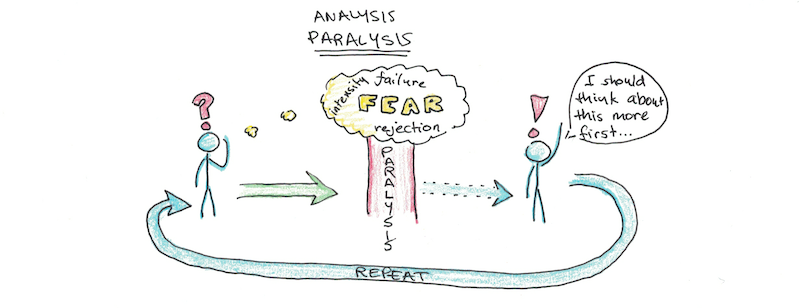
    Have you ever come across a situation where you over-analyzed a problem, and later saw that all your energy of the forward movement, all the energy of taking action, had dissipated? Well, welcome to the world of analysis-paralysis. 


    What is analysis-paralysis

    There are, generally speaking, two kinds of problems. Let us call one type ‘fixed’ and the other type ‘fluid’. Deep analysis does produce useful results in the case of ‘fixed’ problems, where most of the underlying factors remain the same over time. However, this is not what happens when we over-analyze a situation or problem, which is ‘fluid’, in which many underlying factors change over time. 

    In our search for a solution to such ‘fluid’ situations, we forget that the ground on which our problem is standing is changing all the time. So, no emergent ‘best’ solution remains that way for any duration of time, and we, and our instincts, fall into confusion, feeling dissatisfied with every solution, and eventually, we find ourselves unable to act.

    The problem of over-thinking

    It is usually the intelligent, the competent, and the observant who are trapped by over-thinking. Analysis is an inherent part of their nature and when faced with complex problems of the ‘fluid’ variety their natural reaction is to start thinking about the problem. Looking for possibilities and weighing them for their solution potentials. They can see many more possibilities than the average person, and they begin to construct a decision tree in their minds, composed of possibilities and their solution potentials. 

    What they don’t realize is that they are dealing with a dynamic and fluid situation, that is altering with time. And the only way out, in such situations, is to take quick action, based on a snapshot of the problem at any one moment in time. 

    There is no ‘one solution’ to the problem since the problem itself is not ‘one’. It is, in fact, a series of similar problems linked together by transitions. The solution will only come about in a series of countering actions, each meant to deal with a particular snapshot of the problem. 

    “The most effective way to do it is to do it.”

    ~Amelia Earhart


    How to avoid over-thinking

    #1. As a first step, at the very start of our search for a solution, we should ask ourselves this question:

    • Is this a problem that is based on factors that will remain the same over time, or 
    • Is it a problem where the underlying factors will change with time. 

    #2. If it is of the first type, we can proceed with an analytical approach. However, if it is the second type of problem, we should immediately give up all hope of finding a solution through analysis. 

    #3. Next, we have to understand that the only effective method of solving such problems is iterative actions. With only a brief analysis, we have to swiftly move into action mode. The steps for solving the problem are:

    • Take a snapshot of the problem, 
    • Analyse-it briefly, 
    • Perform the actions necessary to solve this particular snapshot, 
    • Finally, analyse the feedback, and iterate through the steps above again.

    “You don’t have to see the whole staircase, just take the first step.” 

    ~Martin Luther King Jr.

    You will constantly be shown more of your route as you progress down the road. You have to have faith that things will work out when you get there. You may not be able to see the whole staircase, but you can take the first step and begin climbing it. 


    Action-oriented problem solving

    Solving problems, using the techniques given above, enables you to think on your feet and not get bogged down by analysis-paralysis.

    The UPSC Civil Services exam is designed to thoroughly test your ability to handle a variety of problems. 

    The first stage of the exam, the prelims, tests your analytical thinking and problem-solving prowess. Overthinking any options out of the four might make choosing the right answer all the more complex. For instance, if we dive deep into the options, we might find that there are actually no false statements per se. There are statements that don’t fit in the particular context of the stated question. That makes over-analyses detrimental as it then opens channels for connecting unnecessary dots.

    The second stage, the mains, requires quick charting out and representation skills. Any deviation from time limit can cost you the one mark that is ever so important. Just imagine sitting in the examination hall and zoning out amidst that pressure. Nobody would want that right? Yet, over-analyzers are prone to get stuck in the downward spiral of inactivity, unknowingly so, for a long period, in the quest for perfection. 

    The third stage of the exam, the interview, is particularly geared for testing your ability to solve fluid problems. 

    One of the questions asked in a Civil Services interview was: What happened when the wheel was invented? Just imagine the kind of answers that are possible, if you are prone to over-thinking. The range and depth of possible answers is endless. But, the candidate was not given to analysis-paralysis and the rejoinder to this snapshot of a problem was: It caused a revolution. 

    The candidate got through.

    Hence, we can all decide if we want to sit and over analyse everything that UPSC decides to throw our way. Or we can actually shift our focus to a more practical approach of calling a spade, a spade, and believing so. The former approach would make us very knowledgeable and an interesting person to talk to, in time. The latter would turn us into bureaucrats and the future torchbearers of this dynamic country. It’s your choice to make.

    If you’re the one catching yourself over-thinking, it’s time to ask yourself-

    Are you too bothered by analysis-paralysis? What strategies do you use that help you? we’d like to hear from you in the comments. Maybe we could help…


    If you would like to read my inspirational book The Last Alchemist, here is the Amazon link The Last Alchemist by Aditya Joshi.

    ~Vikram Aditya Joshi


    NOTE: Want to speak to a mentor at Civilsdaily for your IAS Prep queries? Please fill out this form, we will call you back [Click2Fill]

  • AWE – Reminder – Enrollments Open for the Months of December and January

    Dear students,

    AWE Program is gaining popularity and seeing a lot of participation.    

    We request all students to renew their subscription for the upcoming months. Let’s keep the momentum going. 

    Many students do see a value in practising questions every day. It keeps the momentum going and incrementally builds a database of questions and answers that can be used for Mains.  So we have created a truly effective program.

    We have come up with a 90 days plan through which you will be able to cover your GS mains syllabus twice while giving proper time to GS paper 4 as well, along with more than 30 case studies. Like before, we will ask 4 questions every day covering the GS 1,2,3,4. Questions will cover both contemporary and static parts. 

    The program will operate on the Weekdays. This was requested by the students themselves. We believe being regular for 5 days is a decent enough challenge. Moreover, Saturdays and Sundays off allowing students to contribute to other programs. 

    The above system leads to questions being submitted in the last week of every month and we require time to wrap those up. Hence, we will not be posting any questions from the 27th of each month. The last few days will be exclusively reserved for clearing the backlog of reviews. 

    • Question number 1 will cover your static parts of papers 1.
    • Question numbers 2 and 3 will cover your GS papers 2 and 3 with a focus on current affairs, linking it to the static portions.
    • Question number 4 will cover Paper 4, i.e. ethics. One week we will cover static portions from that paper while subsequent week, it will be solely focusing on case studies. The same process will follow every alternate week for question number 4.

    We are working hard to make the program more featureful, highlight the best answers, show the competency levels of students.

    Here is the schedule for the Month of December for topics being covered in GS Paper 1 and Paper 4

    December, 2019

    Date Question 1 Question 4
    2nd December, Monday The Freedom Struggle – its various stages and important contributors /contributions from different parts of the country. Concept of public service; Philosophical basis of governance and probity.
    3rd December, Tuesday Post-independence consolidation and reorganization within the country. Information sharing and transparency in government, Right to Information.
    4th December, Wednesday History of the world including events from the 18th century.  Codes of Ethics, Codes of Conduct, Citizen’s Charters. 
    5th December, Thursday Political philosophies like communism, capitalism, socialism, etc.- their forms and effect on the society. Work culture, Quality of service delivery.
    6th December, Friday Indian Society and Diversity of India. Utilization of public funds, challenges of corruption.
    9th December, Monday Role of women and women’s organization. Case Studies
    10th December, Tuesday Population and associated issues, poverty, and developmental issues. Case Studies
    11th December, Wednesday Urbanization, their problems, and their remedies. Case Studies
    12th December, Thursday Effects of globalization on Indian society. Case Studies
    13th December, Friday Social empowerment, communalism, regionalism & secularism. Case Studies
    16th December, Monday Salient features of the world’s physical geography. Essence, determinants, and consequences of Ethics in human actions; dimensions of ethics; ethics in private and public relationships.
    17th December, Tuesday Distribution of key natural resources across the world. Human Values
    18th December, Wednesday Factors responsible for the location of primary, secondary, and tertiary sector industries. Attitude
    19th December, Thursday Important Geophysical phenomena such as earthquakes, Tsunami, Volcanic activity, cyclone, etc. Aptitude and foundational values for Civil Service, integrity, impartiality and non-partisanship, objectivity, dedication to public service, empathy, tolerance and compassion towards the weaker sections.
    20th December, Friday Changes in critical geographical features (including water-bodies and ice-caps) and in flora and fauna and the effects of such changes. Emotional intelligence concepts.
    23rd December, Monday Indian culture covering the salient aspects of Art Forms, Literature, and Architecture. Contributions of moral thinkers and philosophers from India and the world.
    24th December, Tuesday Modern Indian history from about the middle of the eighteenth century until the present. Case Studies
    25th December, Wednesday The Freedom Struggle – its various stages and important contributors /contributions from different parts of the country. Case Studies
    26th December, Thursday Post-independence consolidation and reorganization within the country. Case Studies
    27th December, Friday History of the world including events from the 18th century.  Case Studies

    Monthly Rs. 1200 + taxes: Click2Join (bi-monthly payments accepted)

    The fee is for 2 months combined.

    This is how our review system works:


    For more information on how the program proceeds, click here –


    https://www.civilsdaily.com/answer-writing-enhancement/

  • SAMANVAYA: Students Preparing for UPSC 2020 > 6 months to go!

    SAMANVAYA: Students Preparing for UPSC 2020 > 6 months to go!

    Click here to fill the form, tell us about your preparation and we will email you a 6-month revision plan.

    Dear Students, 

    Our lectures on paper discussions and posts on solutions and sample structures have received over 20,000 hits collectively.  

    It is time to get serious with your preparation and we have got your back.


    After numerous conversations with so many aspirants, we have started understanding your problems better and standardizing solutions for the same.

    These are being incorporated into our Samanvaya program. It is these practices that will make the program more effective.

    At the core of Samanvaya lies the fact that each one of you will have a unique journey while preparing for the exam. Some will get through on the first attempt without much effort while others will take both more time and more effort. We want to understand you better to help you optimize your journey so you can focus on the right things and not waste time on the wrong ones. We are asking you to tap into the valuable experiences of mentors who underwent the same grind and realize the pitfalls and understand the shortcuts to make it.

    Samanvaya program involves the following –

    1. Identifying your weaknesses

    Over 80% of students who claimed to have revised NCERTs were unable to answer basic questions. Many were not comfortable with at least 1 GS subject and Optional. Many struggled with ‘What went wrong’ after 2-3 years of hard work.

    Our mentors will help you assess your preparedness and suggest accurate strategies.

    2. Strategy and study plan discussions

    Over 90% of students couldn’t stick to a plan. Study plans and strategies are iterative in nature and we want to help you with that. Many are unable to perform in tests despite preparing hard. This could be due to a variety of factors – lack of adequate prep, jitters in the exam hall, inadequate revision, lack of practice of test series or just a bad day at work. Tell us what you think went wrong and we’ll figure out a way to get you over the line next time.

    3. Helping you understand the exam better

    Which books to read, different approaches, etc. Over 60% of students we talked to did not find NCERTs relevant and saw no point in being thorough with them.

    4. Lack of motivation

    We have all had those days when it’s been hard to motivate ourselves to hit the books and just study. It happens to the best of us sometimes and for some of us, it happens more frequently. And it is understandable, Civil Service preparation is a long and often lonely process. Every aspirant, from toppers to those who have quit have been overwhelmed by this process at some point.

    Samanvaya Code of Conduct

    • Be honest with your mentors about your preparation levels and stage.
    • Follow their advice and participate in tests and assignments that they set for you
    • Stay active in the telegram groups, ask doubts, don’t hold yourself back.
    • Don’t expect spoonfeeding. You have to drive the initiative.

    Click here to fill the form, tell us about your preparation and we will email you a 6-month revision plan.

    Here’s the feedback that we got from some of our students:


    Click here to fill the form, tell us about your preparation and we will email you a 6-month revision plan.

  • AWE – Reminder – Enrollments Open for the Months of December and January

    Dear students,

    AWE Program is gaining popularity and seeing a lot of participation.    

    We request all students to renew their subscription for the upcoming months. Let’s keep the momentum going. 

    We are working hard to make the program more featureful, highlight the best answers, show the competency levels of students.

    Here is the schedule for the Month of December for topics being covered in GS Paper 1 and Paper 4

    December, 2019

    Date Question 1 Question 4
    2nd December, Monday The Freedom Struggle – its various stages and important contributors /contributions from different parts of the country. Concept of public service; Philosophical basis of governance and probity.
    3rd December, Tuesday Post-independence consolidation and reorganization within the country. Information sharing and transparency in government, Right to Information.
    4th December, Wednesday History of the world including events from the 18th century.  Codes of Ethics, Codes of Conduct, Citizen’s Charters. 
    5th December, Thursday Political philosophies like communism, capitalism, socialism, etc.- their forms and effect on the society. Work culture, Quality of service delivery.
    6th December, Friday Indian Society and Diversity of India. Utilization of public funds, challenges of corruption.
    9th December, Monday Role of women and women’s organization. Case Studies
    10th December, Tuesday Population and associated issues, poverty, and developmental issues. Case Studies
    11th December, Wednesday Urbanization, their problems, and their remedies. Case Studies
    12th December, Thursday Effects of globalization on Indian society. Case Studies
    13th December, Friday Social empowerment, communalism, regionalism & secularism. Case Studies
    16th December, Monday Salient features of the world’s physical geography. Essence, determinants, and consequences of Ethics in human actions; dimensions of ethics; ethics in private and public relationships.
    17th December, Tuesday Distribution of key natural resources across the world. Human Values
    18th December, Wednesday Factors responsible for the location of primary, secondary, and tertiary sector industries. Attitude
    19th December, Thursday Important Geophysical phenomena such as earthquakes, Tsunami, Volcanic activity, cyclone, etc. Aptitude and foundational values for Civil Service, integrity, impartiality and non-partisanship, objectivity, dedication to public service, empathy, tolerance and compassion towards the weaker sections.
    20th December, Friday Changes in critical geographical features (including water-bodies and ice-caps) and in flora and fauna and the effects of such changes. Emotional intelligence concepts.
    23rd December, Monday Indian culture covering the salient aspects of Art Forms, Literature, and Architecture. Contributions of moral thinkers and philosophers from India and the world.
    24th December, Tuesday Modern Indian history from about the middle of the eighteenth century until the present. Case Studies
    25th December, Wednesday The Freedom Struggle – its various stages and important contributors /contributions from different parts of the country. Case Studies
    26th December, Thursday Post-independence consolidation and reorganization within the country. Case Studies
    27th December, Friday History of the world including events from the 18th century.  Case Studies

    Monthly Rs. 1200 + taxes: Click2Join (bi-monthly payments accepted)

    The fee is for 2 months combined.

    For more information on how the program proceeds, click here –


    https://www.civilsdaily.com/answer-writing-enhancement/