💥Join UPSC 2027,2028 Mentorship (July Batch) + XFactor Notes & Microthemes PDF

Author: CD Staff

  • Custodial Torture: A legal impossibility or just political unwillingness ?

    Custodial Torture: A legal impossibility or just political unwillingness ?

    N4S: 

    This article explores one of the most uncomfortable realities of India’s law enforcement system — the silent, systemic culture of custodial torture. UPSC has a habit of testing such issues in layered, thought-provoking ways. For example, the 2018 GS2 question asked how policy contradictions lead to poor environmental protection. In the same way, UPSC can frame questions around custodial torture by tying it to larger ideas — human rights, police reforms, federalism, or even international relations. It won’t ask: “What is custodial torture?” It will ask: “Why hasn’t India enacted an anti-torture law despite being a democracy?” This is where many aspirants falter. They memorize provisions and judgments but forget to ask the “why,” “how,” and “what next.”This article fixes that problem. It doesn’t just list laws (like the D.K. Basu guidelines or IPC Sections 330/331), but also explains why these laws don’t work in practice. It explains why constables and IPS officers view violence so differently (see: “Factors of Divergence”) and how these differences shape police behavior.The most special feature of this article? It doesn’t just inform. It provokes. It asks tough questions—like, is custodial torture still happening because the public silently supports it in the name of “quick justice”? Or because politicians don’t want to lose control over the police?

    This article examines the persistent issue of custodial torture in India’s policing system—a topic often overlooked but highly relevant for UPSC. The exam rarely asks direct questions like “What is custodial torture?” Instead, it connects such issues to broader themes like human rights, police reforms, or international obligations. For example, it may ask, “Why has India not passed an anti-torture law despite being a democracy?”

    The article goes beyond listing laws such as the D.K. Basu guidelines or IPC Sections 330 and 331. It explains why these laws often fail in practice and how views on violence differ across police ranks. It also encourages reflection on whether torture persists due to public approval or political control over the police.

    PYQ ANCHORING

    1. GS 2: Policy contradictions among various competing sectors and stakeholders have resulted in inadequate ‘protection and prevention of degradation’ to environment.  Comment with relevant illustration. [2018]

    MICROTHEME: Structural reforms and Actions

    In India, custodial violence isn’t just a problem of a few rogue officers — it’s a culture silently accepted and justified within the police force itself. A Lokniti-CSDS study shows a disturbing trend: 63% of police personnel believe it’s acceptable to use violence against suspects of serious crimes. Support for torture is alarmingly high even in cases like rape, murder, and terrorism. Shockingly, even petty crime investigations see a large number justifying verbal threats and physical abuse.

    On the ground, threats and light physical force are used often; third-degree torture methods, while less frequent, are still worryingly present. Most police personnel are reluctant to report torture — only 39% think it should always be mandatory. Senior officers are even less supportive of reporting.

    Legal protection for juniors could encourage some to report violence, but the deeper problem is cultural: brutality is seen as “necessary.” Unless mindsets change, legal reforms alone won’t end custodial violence in India.

    Factors of Divergence in attitudes of Constables and IPS Officers /*SMASH MAINS

    While both constables and IPS officers serve within the same policing system, their attitudes toward the use of violence are shaped by vastly different educational, social, and professional realities. This table outlines six key factors that explain the sharp divergence in their mindsets.

    FactorBrief ReasonExample
    EducationIPS officers are exposed to constitutional values; constables have limited legal literacy.IPS officers study human rights; constables often rely on informal methods.
    TrainingIPS training stresses ethics and modern policing; constables focus on physical law enforcement.IPS officers practice evidence-based investigation; constables may use intimidation.
    Work PressureConstables face direct pressure for quick results; IPS officers supervise from a distance.A constable might beat suspects under pressure; an IPS officer manages reporting.
    Social BackgroundConstables often come from violence-normalized settings; IPS officers are urban, rights-aware.Rural constables see force as normal; IPS officers prioritize procedure.
    Career IncentivesIPS careers demand clean records; constabulary promotions are loyalty-based.IPS officers risk media scrutiny; constables may be praised internally for ‘toughness.’
    AccountabilityIPS officers are directly accountable to courts, NHRC, media; constables are insulated.IPS officers face legal summons; constables stay protected within the system.

    Impact of Custodial Torture on India’s International Relations

    India, a prominent democratic nation, faces significant international scrutiny due to reports of custodial torture, a grave violation of human rights. These incidents not only tarnish its global image but also hinder diplomatic relations and affect its credibility in various global forums. Custodial torture impacts India on the international stage in the following ways:


    1. Damage to India’s Human Rights Image

    • Example: UN Human Rights Council (UNHRC) reviews have consistently flagged custodial deaths in India, impacting India’s credibility in global forums.
    • Impact: Weakens India’s ability to project itself as a leader of democratic and humanitarian values.

    2. Obstacles in Bilateral Extradition Treaties

    • Example: UK courts (e.g., Vijay Mallya case, 2020) have cited concerns over prison conditions and potential mistreatment while considering extraditions to India.
    • Impact: Countries hesitate to extradite accused persons, fearing violations of human rights in Indian custody.

    3. Criticism in UN and Other Multilateral Bodies

    • Example: During India’s Universal Periodic Review (UPR) at the UNHRC in 2017, several countries recommended India to ratify the UN Convention Against Torture.
    • Impact: Multilateral scrutiny limits India’s diplomatic leverage on human rights issues.

    4. Negative Influence on Trade and Investment Climate

    • Example: EU-India Free Trade Agreement (FTA) negotiations have seen human rights concerns, including custodial torture, being raised by European parliamentarians.
    • Impact: Persistent human rights criticisms can deter ethical investment and complicate trade agreements.

    5. Weakening of India’s Moral Standing in International Advocacy

    • Example: India’s call for Palestinian rights or criticisms of racial discrimination abroad lose weight when its own custodial abuses are highlighted in response.
    • Impact: Diminishes India’s moral authority to speak on international justice issues.

    6. Pressure from International NGOs and Watchdogs

    • Example: Amnesty International and Human Rights Watch regularly release critical reports on custodial torture in India (e.g., Amnesty’s 2020 report on UP police encounters).
    • Impact: International campaigns can shame India diplomatically, influence foreign media narratives, and increase global pressure.

    The issue of custodial torture severely undermines India’s global standing, from its human rights credibility to its diplomatic relations and trade negotiations. As international pressure mounts, addressing this issue becomes crucial for India to restore its moral authority and strengthen its position in global affairs.

    Protective Mechanisms Available Against Custodial Torture in India// DOMINATE PRELIMS

    India has developed several constitutional, judicial, and institutional safeguards to protect individuals from custodial torture. The key protective mechanisms are:

    1. Constitutional Safeguards

    • Article 21: Guarantees the Right to Life and Personal Liberty, interpreted to include protection against torture, inhuman and degrading treatment.
    • Article 22: Provides procedural safeguards for arrest and detention, such as the right to be informed of grounds of arrest and the right to consult a legal practitioner.
    • Article 20(3): Protects against self-incrimination during investigations and custodial interrogations.

    2. Judicial Safeguards

    • D.K. Basu v. State of West Bengal (1997) Issued 11 mandatory guidelines to be followed during arrest and detention, including:
      • Arrest memo signed by witness.
      • Information to relatives/friends.
      • Medical examination every 48 hours.
      • Right to consult a lawyer during interrogation. Incorporated into CrPC (Sections 41B–41D).
    • Paramvir Singh Saini v. Baljit Singh (2020) Directed installation of CCTV cameras with audio recording in all police stations and investigation agencies to ensure transparency.
    • Prakash Singh v. Union of India (2006) Ordered creation of Police Complaints Authorities in every state for independent investigation into police misconduct.

    3. Statutory Safeguards

    • Criminal Procedure Code (CrPC):
      • Section 167: Requires production of the arrested person before a magistrate within 24 hours.
      • Section 176: Mandates magisterial inquiry into cases of custodial deaths.
    • Indian Evidence Act, 1872:
      • Section 25: Confessions made to a police officer are not admissible as evidence.
      • Section 26: Confession must be made in the immediate presence of a Magistrate to be admissible.
    • Indian Penal Code (IPC):
      • Sections 330 & 331: Penalize voluntarily causing hurt/extorting confession.
      • Section 302: Allows police officers to be prosecuted for custodial deaths.
    • Legal Services Authorities Act, 1987: Provides free legal aid to the underprivileged, ensuring access to lawyers during detention.

    4. Institutional Safeguards

    • National Human Rights Commission (NHRC):
      Monitors custodial deaths and custodial violence cases; mandates reporting of any such incidents within 24 hours.
    • State Human Rights Commissions (SHRCs):
      Perform similar roles at the state level.
    • Police Complaints Authorities (PCAs):
      Set up in states following the Prakash Singh judgment for independent redressal of police misconduct complaints.
    • Oversight Committees (as per Paramvir Singh Case):
      Monitor the functioning and maintenance of CCTVs in police stations.

    5. International Commitments

    • India signed the UN Convention Against Torture (UNCAT) in 1997 but has yet to ratify it.
    • Law Commission (2017) and various expert bodies have recommended enacting a specific anti-torture law, but it is still pending.

    Protection against custodial torture in India rests on constitutional rights, detailed judicial guidelines, statutory laws, institutional watchdogs, and international moral obligations. However, enforcement and systemic reform remain key challenges.

    Custodial Torture = A legal impossibility or just political unwillingness ?


    Custodial torture remains a brutal reality in India, despite constitutional protections. The real question is not whether it can be legally prevented — it’s whether there’s genuine political will to do so. While political unwillingness is at the core, some deeper systemic reasons also add complexity.

    I. Political Unwillingness is the Core Reason

    PointExplanationExample
    1. Repeated Failure to Enact LawPolitical push has been missing even when the courts demanded action.The Prevention of Torture Bill, 2010 passed Lok Sabha but lapsed in Rajya Sabha without serious effort to revive it.
    2. Ignoring International ObligationsSigning global treaties without ratification shows lack of seriousness.India signed the UN Convention Against Torture in 1997, but hasn’t ratified it for over 25 years.
    3. Lack of Pressure from CitizensPublic outrage is temporary and politically weak.After the 2020 Jayaraj-Bennix deaths, there was anger but no lasting legislative change.
    4. Police Used as Political ToolStrong anti-torture laws are seen as reducing political control over police.State governments resist laws that would limit their ability to “manage” police forces for political ends.
    5. Ignoring Judicial AppealsEven repeated Supreme Court nudges haven’t moved governments.Cases like D.K. Basu (1997) and Paramvir Singh Saini (2020) urged laws against torture, but Parliament hasn’t acted.
    6. Fear of Police ResistancePoliticians fear upsetting police and paramilitary forces.After the Law Commission’s 2017 push for anti-torture laws, internal resistance from police slowed political response.

    II. But It’s Not Just Political Unwillingness

    PointExplanationExample
    1. Fear of Law MisuseGovernments fear fake cases will hamper police work, especially in insurgency areas.In Naxal-hit zones, stronger laws are seen as a threat to policing.
    2. Federal Structure ComplicationsPolice is a State Subject — Centre making a law could spark Centre-State tensions.States may oppose any central anti-torture law citing constitutional rights.
    3. Existing Legal ProvisionsSome argue new laws aren’t needed, only better enforcement of current ones.IPC Sections 330/331 already criminalize torture; Section 302 applies for custodial deaths.
    4. Weak Civil Society PressureNo large public movement like RTI or Lokpal has built up around this issue.Without mass pressure, governments find little incentive to act.
    5. Administrative GapsPractical hurdles like lack of funds and staff make implementation difficult.Even court-ordered CCTV installation in police stations remains patchy.
    6. Colonial-Era Policing LegacyHarsh policing methods are culturally normalized from British rule days.Public and political tolerance for “third degree” tactics delays reforms.

    Custodial torture survives not because India lacks the legal imagination to stop it, but because political systems benefit from the status quo. Unless there’s sustained pressure — from courts, civil society, and voters — real change will remain a distant hope.

    Way Forward

    1. Standalone Anti-Torture Law
      ➔ Enact a comprehensive Anti-Torture Act with clear definitions, victim compensation, independent investigation, and compliance with UNCAT.
    2. Mandatory Video Recording of Interrogations
      ➔ Ensure complete audio-visual recording of all custodial interrogations, with recordings preserved for a minimum of 5 years and accessible to courts.
    3. Independent Investigation Units
      ➔ Set up special investigation teams under Human Rights Commissions, separate from the regular police chain of command, for custodial torture cases.
    4. Reverse Burden of Proof
      ➔ Shift burden onto police in cases of custodial deaths/injuries — officers must prove innocence unless otherwise established.
    5. Stronger Judicial Oversight
      ➔ Mandatory monthly inspections of police lockups by Judicial Magistrates, and judicial inquiry (not executive) in all custodial death cases.
    6. Protection for Whistleblowers and Victims
      ➔ Extend whistleblower protections to police and prison staff reporting torture; allow easy, time-bound access to CCTV footage for victims.

    #BACK2BASICS: Custodial Torture in India: An Enduring Challenge

    The Status of Policing in India Report (SPIR) 2024, released by Common Cause and Lokniti-CSDS, highlights systemic issues of custodial violence, torture, and lack of accountability, based on interactions with 8,276 police personnel across 17 states and Union Territories.

    Understanding Torture

    Under the UN Convention Against Torture (UNCAT, 1984), torture involves the intentional infliction of severe pain by public officials. India signed UNCAT in 1997 but has not ratified it, making compliance non-binding.

    Key Findings

    • Tough Policing: 55% of police personnel endorse “tough methods”; ambiguity exists between legitimate force and torture.
    • Mob Justice & Encounters: 25% justify mob violence (e.g., child-lifting cases); 22% support encounter killings over trials.
    • Arrest Compliance: Only 41% claim procedures are “always” followed; Kerala highest at 94%.
    • Third-Degree Methods: 30% justify torture for serious crimes; 9% even for petty offenses. Victims are mainly Dalits, Adivasis, Muslims, and slum dwellers.
    • Custodial Deaths: NCRB (76), NHRC (70), NCAT (111) in 2020; yet zero convictions (2018–22).
    • Judicial & Medical Apathy: Magistrates often passive; medical exams sometimes done by eye specialists (example: Maharashtra case cited by civil society groups).

    Structural Causes

    • Colonial Legacy of Policing: Use of force to maintain control (Indian Police Act, 1861 framework).
    • Lack of Accountability: Rare convictions in custodial deaths (zero convictions in 4 years despite multiple deaths).
    • Political and Bureaucratic Pressure: Quick results prioritized over legal processes (e.g., pressure during high-profile crimes).
    • Inadequate Training and Legal Literacy: Police unaware of rights-based policing (e.g., third-degree practices justified in petty theft cases).
    • Public Tolerance of Violence: Support for encounters and mob violence evident in surveys (22% support encounters even for serious offenders).
    • Opaque Detention Practices: Lack of transparency in arrest and detention (e.g., minimal magistrate interaction with accused).

    Custodial torture is a global problem: Guantanamo Bay abuses (US), Abu Ghraib scandal (Iraq), routine torture reports (Russia, China, Pakistan).

    Custodial torture persists due to deep-rooted structural flaws. While the SPIR 2024 report shows growing support for human rights training, real change demands urgent steps: enacting anti-torture legislation, ratifying UNCAT, strengthening accountability, and reforming police and judicial practices.

    SMASH MAINS MOCK DROP

    Custodial torture remains a serious human rights concern in India despite legal safeguards. Analyze the causes behind its persistence and suggest effective measures to eliminate it.

  • Navigating the North: How Is India Planning Its Arctic Engagement

    Navigating the North: How Is India Planning Its Arctic Engagement

    N4S: 

    UPSC often asks questions that link global developments with India’s national interests, especially when the issue has environmental, economic, and geopolitical angles. That’s exactly what the 2021 question did — it asked how Arctic and Antarctic melting differently affect weather and human activities. Students tend to miss the layered nature of such topics. Many stop at climate change or just list facts. They skip connecting dots like how the Northern Sea Route (NSR) links to India’s trade policy, or how thawing permafrost in Siberia could affect India’s monsoons. This article helps fill that gap. It combines science with strategy. For example, under “New Shipping Routes & Economic Benefits,” it shows how India must invest in Arctic-ready ships. In “India’s Arctic Partnerships,” it explains why Himadri and IndARC are more than just research outposts — they’re soft power tools. Students often forget this dual role. The article also brings geopolitics to the front — how India must balance ties with Russia and the West (“Security & Cooperation”). The most special part? It doesn’t treat the Arctic as a cold, faraway place. It brings it home to India — from affecting our monsoons to shaping future trade. With examples like Arctic methane thaw and Polar Silk Road, the article builds that critical “connect,” which UPSC always rewards.

    This article explores how Arctic developments affect India’s environment, economy, and strategic interests. UPSC often frames such questions by linking global changes with national priorities, as seen in the 2021 question on the Arctic and Antarctic impacts. Many aspirants stop at climate facts and miss the broader picture, such as the Northern Sea Route’s link to India’s trade or how thawing permafrost in Siberia might influence monsoon patterns.

    The article fills this gap by combining science with policy insights. It explains why India needs Arctic-ready ships, how Himadri and IndARC serve both research and diplomacy, and why managing ties with Russia and the West is crucial. With examples like methane thaw and the Polar Silk Road, it helps aspirants connect global events to UPSC-relevant themes.

    PYQ ANCHORING

    1. GS 2:  How does the melting of the Arctic ice and glaciers of the Antarctic differently affect the weather patterns and human activities on the Earth? Explain. [2021]

    MICROTHEME:  Cryosphere and Himalayan Eco-system

    The melting of the Arctic region may be a looming climate disaster, but it also brings a chance for significant geopolitical advantage. As the ice melts and sea levels rise, new trade routes are opening up, which could change the global trade landscape. This opportunity becomes even more important given the trade challenges, like tariffs imposed by the U.S., and the growing partnerships between countries to control supply chains and trade routes. Climate change is also playing a big role in shaping these dynamics. So, it’s essential to take a closer look at how this situation affects India.

    Three key questions we need to explore are: How can India position itself to benefit from the new trade routes in the Arctic? What steps should India take to balance its economic interests with the environmental risks in the region? How can India strengthen its partnerships with countries in the Arctic, given the shifting geopolitical landscape?

    Arctic: A Geostrategic Pillar for India

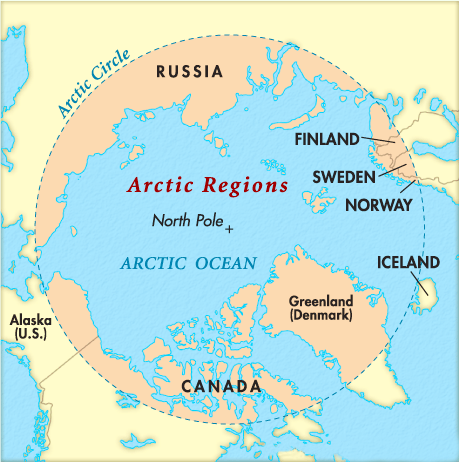
    The Arctic region is becoming more important for global powers, and India’s involvement there is crucial for a variety of reasons, from economic opportunities to security and global influence. Here’s how the Arctic is shaping up as a key geostrategic asset for India:

    1. New Shipping Routes & Economic Benefits: With the ice in the Arctic melting, new shipping routes like the Northern Sea Route (NSR) are opening up, offering much faster ways to travel between Europe and Asia. For India, this is a big opportunity. By boosting its shipbuilding capacity and investing in specialized Arctic ships, including ice-breakers, India can take full advantage of these new trade routes and strengthen its position in global shipping.
    2. Energy Resources & Strategic Ties: The Arctic is rich in untapped resources like oil and gas. As India’s energy needs grow, securing access to these resources is becoming increasingly important. Working closely with Arctic nations, particularly Russia, allows India to diversify its energy sources. However, India must carefully manage its relationship with Russia, especially considering China’s growing presence in the Arctic with its ambitious Polar Silk Road plans.
    3. Environmental and Security Concerns: The changes happening in the Arctic have global impacts, including on India’s climate, especially its monsoon patterns. India’s research stations and expeditions in the region, like Himadri and IndARC, play a vital role in monitoring climate change and its effects. This scientific involvement strengthens India’s image as a responsible global player and gives it a voice in international environmental discussions.
    4. Geopolitical Influence: The Arctic isn’t just about resources and shipping – it’s also about global power. By actively participating in international forums like the Arctic Council, India can build important diplomatic relationships with other countries, including Japan and South Korea. It also gives India the chance to advocate for a more inclusive approach to Arctic governance, which would enhance its geopolitical influence.
    5. Security & Cooperation: With increasing military activity in the Arctic, India’s security interests are at stake. Balancing relations between Russia and the West is delicate, but India can work with countries that share similar concerns to maintain peace and stability in the region. By getting involved in security discussions, India can strengthen its global role in promoting peace.

    In short, the Arctic holds significant opportunities for India. By focusing on sustainable development, forming strategic partnerships, and taking an active role in regional cooperation, India can use its engagement in the Arctic to boost its economic, security, and geopolitical standing on the world stage.

    Significance of Arctic region’s melting//MAINS

    As the Arctic continues to warm and ice melts at an alarming rate, it’s not just a story of environmental change. The impacts of this transformation ripple across the globe in various ways. From affecting wildlife habitats and weather patterns to opening up new economic opportunities and geopolitical tensions, the Arctic’s changing landscape brings both challenges and opportunities. The table below breaks down how these changes are influencing three key areas: 

    AspectPointExample
    Environmental1. Loss of Polar Wildlife HabitatsPolar bears and seals rely on sea ice for hunting and breeding. As the ice melts, they face survival challenges.
    2. Thawing PermafrostThawing permafrost in Siberia releases methane, a greenhouse gas, contributing to global warming.
    3. Ocean AcidificationMelting ice leads to more CO2 absorption by the ocean, which harms marine life like coral reefs and shellfish.
    4. Disruption of Global Weather PatternsArctic warming alters the jet stream, causing unpredictable weather, including heatwaves in Europe and harsh winters in North America.
    5. Melting Glaciers and Rising Sea LevelsMelting glaciers in Greenland and Antarctica raise sea levels, threatening coastal communities worldwide.
    Economic1. New Fishing GroundsAs the ice recedes, new fishing areas emerge off the coast of Alaska, potentially boosting global fish supply.
    2. Access to Energy ResourcesThe Arctic holds significant untapped oil and gas reserves, with exploration increasing due to melting ice.
    3. Northern Sea Route for ShippingThe opening of the Northern Sea Route reduces travel time between Europe and Asia, cutting down shipping costs and time.
    4. Boost to Arctic TourismMelting ice makes the Arctic more accessible to tourists, with an increase in cruise ships and wildlife tours.
    5. Increased Cost of InfrastructureWarming in the Arctic requires investment in new infrastructure for shipping and energy extraction, raising costs.
    Geopolitical1. Territorial Disputes Over ResourcesCountries like Russia, Canada, and the U.S. are competing for control of oil, gas, and mineral reserves in the Arctic.
    2. Military Presence and Strategic ImportanceNations like the U.S. and Russia are increasing military presence in the Arctic to safeguard resources and shipping routes.
    3. International Cooperation on Environmental ProtectionThe Arctic Council promotes cooperation between nations to protect the environment and wildlife.
    4. Opening of New Trade RoutesThe Northern Sea Route becomes more viable as the ice melts, providing a shorter shipping route between Europe and Asia.
    5. Geopolitical Influence through the ArcticCountries with Arctic territories, like Russia, use their position to increase geopolitical influence over global trade.

    India’s Arctic Partnerships in a Changing Geopolitical Landscape

    As the Arctic becomes a focal point for global economic and environmental changes, India has a unique opportunity to strengthen its partnerships with countries in the region. Given the shifting geopolitical dynamics, India can adopt several strategies to enhance its position and foster deeper cooperation with Arctic nations:

    1. Engage through Multilateral Platforms: India can leverage platforms like the Arctic Council and the Arctic Circle India Forum to engage with other nations. By actively participating in discussions on climate change, sustainable development, and Arctic governance, India can showcase its commitment to the region’s well-being and strengthen diplomatic ties with countries like Norway, Canada, and Russia.
    2. Focus on Scientific and Environmental Cooperation: India’s role in Arctic research is pivotal, with initiatives like Himadri and IndARC (India’s Arctic Research Centre). By enhancing scientific collaboration on climate monitoring and environmental preservation, India can position itself as a key partner in the region’s sustainable development and climate change mitigation efforts. This will help India build trust with Arctic nations that are highly focused on environmental concerns.
    3. Build Strategic Economic Partnerships: As new shipping routes open up and natural resources become more accessible, India should look to strengthen economic ties with Arctic countries, especially in the fields of energy, shipping, and infrastructure. Collaborations with Russia, for example, could help India secure access to Arctic resources and boost its presence in the global energy market. India can also explore opportunities in Arctic tourism and logistics, areas likely to see growth as the region becomes more accessible.
    4. Enhance Bilateral Ties with Key Arctic Nations: India can deepen its relationships with Arctic powers, particularly Russia, by collaborating on Arctic shipping routes, energy exploration, and scientific research. Simultaneously, India should explore new partnerships with countries like Japan and South Korea, which share similar interests in Arctic governance and resource management.
    5. Promote Peaceful and Inclusive Arctic Governance: India can play a significant role in advocating for a more inclusive and equitable Arctic Council. As the region becomes more geopolitically competitive, India’s support for a multilateral, rules-based approach to Arctic governance could enhance its credibility and influence in the region.

    Initiatives of India for Arctic region//PRELIMS

    India has been progressively enhancing its engagement in the Arctic region through scientific research, environmental protection, and international cooperation. The key initiatives include:

    India’s Arctic Initiatives

    AreaInitiativeDetails
    Research StationsHimadriEstablished in 2008 at Ny-Ålesund, Svalbard, Himadri is India’s first permanent Arctic research station. It focuses on atmospheric studies, glaciology, and marine biology .
    IndARCDeployed in 2014 in Kongsfjorden, Norway, IndARC is India’s first underwater moored observatory in the Arctic, aiming to study climate change impacts and their influence on the monsoon .
    Policy FrameworkNational Arctic PolicyReleased in 2022, this policy outlines India’s approach to Arctic engagement, emphasizing scientific research, environmental protection, economic development, and international cooperation .
    International CooperationArctic Council ObserverIndia has been an observer in the Arctic Council since 2013, participating in discussions on sustainable development and environmental protection in the Arctic region .
    Scientific ExpeditionsArctic ExpeditionsSince 2007, India has conducted 13 Arctic expeditions, focusing on climate studies, glaciology, and marine biology .
    Institutional LeadershipNational Centre for Polar and Ocean Research (NCPOR)Based in Goa, NCPOR is the nodal agency for India’s polar research programs, including Arctic studies, and oversees the operation of research stations like Himadri and IndARC .
    Strategic PartnershipsCollaboration with RussiaIndia collaborates with Russia on Arctic research and exploration, including potential joint ventures in energy projects, while being mindful of international sanctions .

    Way Forward

    1. Shipbuilding: India should ramp up its shipbuilding capacity, focusing on ships suited for Arctic conditions. Investments in ice-breaking fleets and structural upgrades are essential to compete globally.
    2. Multilateral Engagements: Platforms like the Arctic Circle India Forum should be leveraged to push India’s Arctic policy forward, encouraging stakeholder dialogues and partnerships with an India-Asia focus.
    3. Polar Ambassador: India can appoint a Polar Ambassador to streamline its Arctic efforts, following in the footsteps of nations like the U.S. and Greenland, who have recognized the growing geopolitical importance of the region.
    4. Balancing Russia & USA: India must carefully balance its relations with both Russia and the USA. While Russia offers Arctic expertise, India must avoid aligning too closely with China’s Arctic ambitions. Partnering with like-minded countries like Japan and South Korea can help India shape a more inclusive Arctic governance structure.

    The Arctic presents both immense opportunities and risks. India should seize the economic potential while ensuring sustainable development and careful geopolitical navigation to avoid reckless exploitation of Arctic resources.

    #BACK2BASICS: INDIA’S ARCTIC POLICY

    India’s Arctic Policy is structured around six central pillars and a set of objectives that guide its approach towards the Arctic region. These provisions focus on scientific research, environmental protection, economic development, and enhancing national capabilities to navigate the challenges and opportunities presented by the Arctic’s changing landscape.

    Six Central Pillars:

    1. Science and Research: Advancing scientific exploration and research to deepen understanding of the Arctic region, including its climate, ecosystems, and resources.
    2. Environmental Protection: Ensuring the preservation of the Arctic environment and addressing the impacts of climate change on the region.
    3. Economic and Human Development: Promoting economic cooperation and sustainable development opportunities in the Arctic, including maritime trade and resource management.
    4. Transportation and Connectivity: Enhancing transportation links and connectivity between India and Arctic countries, with a focus on emerging trade routes.
    5. Governance and International Cooperation: Strengthening India’s role in global forums such as the Arctic Council and fostering partnerships with Arctic nations for shared governance and resource management.
    6. National Capacity Building: Building the necessary institutional and human resource capacities within India to effectively engage with the Arctic region.

    Objectives:

    • Strengthen National Capabilities: Enhance India’s science and exploration capabilities in the Arctic, focusing on climate and environmental protection, as well as maritime and economic cooperation.
    • Institutional Capacity Building: Strengthen India’s institutional framework and inter-ministerial coordination, fostering collaboration between government bodies, academic institutions, research organizations, and businesses to advance India’s Arctic interests.
    • Climate Change and Environmental Impact: Increase understanding of the impact of Arctic climate change on India’s own climate, economy, and energy security, and develop strategies to mitigate these effects.
    • Analysis and Coordination: Promote better analysis, prediction, and policymaking regarding the consequences of Arctic ice melting on global shipping routes, energy security, and the exploitation of Arctic mineral resources, which are critical to India’s strategic interests.
    • Linkages with Polar Regions and the Himalayas: Investigate the interconnections between the Arctic and the Himalayas, and foster closer cooperation with Arctic countries through scientific and traditional knowledge exchange.
    • Arctic Council Participation: Enhance India’s engagement in the Arctic Council and improve understanding of the Arctic’s complex governance structures, international laws, and geopolitical dynamics, ensuring India’s voice is heard in shaping the future of the region.

    India’s Arctic Policy emphasizes the importance of multi-dimensional engagement with the region, addressing both the opportunities and risks posed by a rapidly changing Arctic.

    MOCK DROP

    India’s Arctic Policy reflects the strategic shift from science diplomacy to geopolitics in the polar region. Critically examine the key objectives of India’s Arctic Policy and evaluate its significance in the context of climate change, energy security, and global governance.

  • Geo-Economic Fragmentation: A New Economic Cold War?

    Geo-Economic Fragmentation: A New Economic Cold War?

    NOTE4STUDENTS:

    Geo-economic fragmentation is reversing globalization, reshaping trade, investment, and supply chains. UPSC usually asks questions by linking globalization, trade policies, and institutions like WTO to India’s economic and strategic interests. It focuses on how global trends impact India and what policy changes are needed. Aspirants often falter in applying static concepts to current affairs. Many struggle to integrate real-world trade policies, geopolitical shifts, and economic data into structured answers. The Rise of Trade Restrictions, Shifting Investment Patterns, and Financial Decoupling are well-explained in this article with recent examples, helping aspirants connect theory with practice. It provides a cause-effect structure, making it easier to frame balanced answers. One very special feature of this article is how it blends micro (specific trade policies) and macro (global economic trends) perspectives, making complex topics easier to understand and apply in answers.

    PYQs Anchoring:

    GS 3: Elucidate the relationship between globalization and new technology in a world of scarce resources, with special reference to India. [2022]

    GS 2: What are the key areas of reform if the WTO has to survive in the present con text of ‘Trade War’, especially keeping in mind the interest of India? [2018]

    Microthemes: Globalisation, WTO

    The world is witnessing a shift away from globalization towards geo-economic fragmentation (GEF)—a process where economic integration is reversing due to strategic considerations. The Economic Survey 2024-25, presented by Finance Minister Nirmala Sitharaman, highlights how trade, investment, and migration flows are being reshaped by rising geopolitical tensions.

    Countries are once again forming economic blocs, reminiscent of the Cold War era, with terms like “friend-shoring” gaining prominence in global policymaking. Trade disputes, technological standards, and security concerns are driving this shift, impacting global growth and stability.

    STATE OF GEO-ECONOMIC FRAGMENTATION

    1. The Rise of Trade Restrictions: Trade barriers are increasing at an unprecedented rate. According to the World Trade Organization (WTO):
    • Between October 2023 and October 2024, countries introduced 169 new trade-restrictive measures, covering trade worth $887.7 billion—a $550 billion increase from the previous year.
    • Since 2020, over 24,000 trade and investment restrictions have been implemented globally.

    This rise in protectionism is slowing down global trade, leading to concerns of secular stagnation, where economies struggle with long-term low growth. The International Monetary Fund (IMF) warns that trade fragmentation is costlier today than during the Cold War because global trade accounts for 45% of GDP, compared to just 16% in the past. Reduced trade also hampers knowledge sharing and cross-border investments, further affecting growth.

    1. The Shift in Global Investment Patterns

    Foreign Direct Investment (FDI) flows are now dictated by geopolitical alignments rather than purely economic factors.

    • Investments are increasingly concentrated among allied nations, especially in strategic sectors like technology and energy.
    • Emerging markets and developing economies, which depend on FDI from advanced economies, face heightened restrictions, making them more vulnerable.

    The trend of “friend-shoring” and “re-shoring” (moving production back to home countries or friendly nations) is reducing investment in these economies, leading to potential output losses and economic instability.

    1. China’s Growing Dominance

    The Economic Survey underscores China’s expanding control over global manufacturing and energy transition technologies:

    • China is projected to account for 45% of global manufacturing, surpassing the combined output of the US and its allies (UNIDO projection).
    • It dominates renewable energy production, controlling:
      • 80% of the solar panel supply chain (from polysilicon to modules).
      • 80% of global battery manufacturing capacity, essential for electric vehicles.
      • 60% of the world’s wind energy infrastructure.

    This dominance gives China a strategic edge in shaping global supply chains, reinforcing its position as an economic powerhouse.

    Reasons behind this Fragmentation:

    1. Geopolitical Tensions and Economic Nationalism

    • Rising competition between major powers (U.S.-China, Russia-West) is pushing nations to prioritize national security over global trade.
    • Example: Western sanctions on Russia post-Ukraine invasion forced Russia to pivot towards China, UAE, and India.
    • Example: The U.S. is strengthening economic ties with Taiwan and South Korea to counter China’s dominance.

    2. Trade Protectionism and Industrial Policy

    • Governments are favoring domestic industries over foreign competition by offering subsidies, tax breaks, and trade restrictions.
    • Example: The U.S. Inflation Reduction Act (2022) provides $369 billion in green subsidies to boost domestic clean energy production.
    • Example: India’s Production-Linked Incentive (PLI) scheme promotes local manufacturing in electronics and pharma.

    3. The Impact of COVID-19 on Supply Chains

    • The pandemic exposed vulnerabilities in global supply chains, leading countries to rethink their reliance on China-centric manufacturing.
    • Example: The EU and U.S. are diversifying production to Vietnam, India, and Mexico.
    • Example: Japan’s $2.2 billion fund helped companies relocate production away from China.

    4. The Rise of Digital and Financial Fragmentation

    • The shift towards de-dollarization and alternative financial systems is weakening U.S. economic dominance.
    • Example: China’s Cross-Border Interbank Payment System (CIPS) is an alternative to SWIFT for global payments.
    • Example: India and UAE are conducting trade in rupees, reducing dependence on the dollar.

    5. Declining Trust in Global Institutions

    • Countries are losing faith in WTO, IMF, and G20, leading to the rise of regional trade agreements and security pacts.
    • Example: The Comprehensive and Progressive Agreement for Trans-Pacific Partnership (CPTPP) is an attempt to bypass the WTO.

    Countries’ role in managing Geo-Economic Fragmentation:

    1. Diversifying Supply Chains
      • Countries should build regional partnerships to balance security with economic efficiency.
      • Example: IMEC (India-Middle East-Europe Corridor) aims to provide an alternative to China’s Belt and Road Initiative.
    2. Strengthening Trade Agreements
      • Nations should reform global trade rules under WTO, IMF, and G20 to prevent economic conflicts.
      • Example: The Regional Comprehensive Economic Partnership (RCEP) is boosting intra-Asia trade.
    3. Balancing Protectionism and Globalization
      • Governments should promote domestic industries while keeping key global trade partnerships intact.
      • Example: Germany supports its auto industry while expanding global export partnerships.
    4. Enhancing Economic Diplomacy
      • Nations should engage in bilateral negotiations to prevent unnecessary trade conflicts.
      • Example: India and Australia’s early free trade agreement (ECTA) strengthened trade while keeping national interests secure.
    5. Investing in Digital and Financial Resilience
      • Countries should develop secure digital payment systems and financial institutions that promote cross-border cooperation.
      • Example: India’s UPI and Singapore’s PayNow linkage promote digital trade integration.

    WAY FORWARD

    Geo-economic fragmentation is reshaping global trade and investment, with nations prioritizing security and self-reliance over globalization. However, over-reliance on protectionism can lead to higher costs, inefficiencies, and slower economic growth. The challenge for world leaders is to strike a balance between economic resilience and international cooperation to ensure a stable and prosperous global economy.

    As global rules change, India must focus on self-reliance and economic resilience. India should focus on the following: 

    • Strengthening domestic industries to reduce over-reliance on global supply chains.
    • Encouraging economic freedom by systematically deregulating industries and empowering businesses.
    • Expanding trade partnerships beyond traditional blocs to ensure greater flexibility and market access.

    As geo-economic fragmentation continues to reshape the world, India’s best strategy is to leverage its internal strengths, ensuring sustainable and independent economic growth in an increasingly unpredictable global environment.

    Back to Basics: Understanding Geo-Economic Fragmentation

    Geo-economic fragmentation refers to the increasing division of the global economy into competing blocs due to rising geopolitical tensions, trade restrictions, economic nationalism, and financial decoupling. Nations are moving away from interdependence and globalization towards self-sufficiency and strategic alliances, leading to disruptions in global trade, investment, and supply chains.

    Instead of a unified global economy, we now see the emergence of regional economic clusters where trade and investments are conducted within politically aligned nations, while restricting engagement with adversaries. This shift raises concerns about economic slowdown, rising costs, and a decline in global cooperation.

    Key Features of Geo-Economic Fragmentation

    1. Rise in Trade Barriers
      • Countries are imposing higher tariffs, export bans, and import restrictions to protect domestic industries.
      • Example: The U.S.-China trade war saw tariffs on $550 billion worth of goods, disrupting global supply chains and raising consumer prices.
      • Example: India increased import duties on Chinese electronic goods to promote domestic manufacturing.
    2. Restrictions on Foreign Investments
      • Governments are tightening control over foreign direct investment (FDI), especially in strategic industries like technology, defense, and energy.
      • Example: The U.S. and EU restricted Chinese investments in AI, semiconductors, and 5G due to security concerns.
      • Example: India introduced FDI restrictions on Chinese companies following border tensions in 2020.
    3. Supply Chain Decoupling and “Friend-Shoring”
      • Nations and companies are reshoring (bringing production home) or “friend-shoring” (moving production to allied countries) to reduce reliance on adversarial nations.
      • Example: The U.S. CHIPS Act (2022) provides $52 billion to shift semiconductor production away from China.
      • Example: Apple and Samsung are relocating production from China to India and Vietnam.
    4. Financial Decoupling and De-Dollarization
      • Nations are creating alternative financial networks to reduce reliance on the U.S. dollar and Western banking systems.
      • Example: Russia and China are increasing trade in yuan and rubles, bypassing the SWIFT banking system.
      • Example: BRICS nations (Brazil, Russia, India, China, South Africa) are exploring a new common currency to challenge dollar dominance.
    5. Technology Bifurcation (Tech War)
      • The world is moving toward two separate technology ecosystems, with the U.S. and allies on one side and China and Russia on the other.
      • Example: The U.S. banned Huawei and TikTok, while China developed domestic alternatives to Google and Apple services.
      • Example: China is investing billions in domestic semiconductor production after being cut off from U.S. chip exports.
    6. Shifting Strategic Alliances
      • Nations are diversifying trade and investment away from geopolitical rivals and towards friendly countries.
      • Example: India is reducing trade dependence on China and increasing ties with Japan, ASEAN, and the EU.
      • Example: The India-Middle East-Europe Economic Corridor (IMEC) is seen as a counter to China’s Belt and Road Initiative (BRI).

    Impact of Geo-Economic Fragmentation

    ImpactExplanationExample
    Reduced Global GrowthTrade restrictions and supply chain disruptions slow down global economic expansion.The IMF estimates geo-economic fragmentation could reduce global GDP by up to 7%.
    Higher Costs & InflationImport tariffs, disrupted supply chains, and production relocation drive up manufacturing costs.The U.S.-China trade war led to price hikes on electronics, automobiles, and household goods.
    Supply Chain DisruptionsDependence on a single country for key components leads to inefficiencies when trade relations sour.COVID-19 caused semiconductor shortages, impacting industries from automobiles to consumer electronics.
    Weakened MultilateralismGlobal organizations like WTO, IMF, and G20 struggle to resolve economic conflicts.The WTO dispute resolution system weakened after the U.S. blocked judicial appointments.
    Financial DecouplingNations shift away from the U.S. dollar and create alternative financial systems.Russia and China are settling trade in local currencies rather than using the dollar.
    Technology FragmentationNations develop separate technological standards, supply chains, and regulatory policies.China banned U.S. chipmakers, while U.S. banned TikTok and Huawei.
    Geopolitical RealignmentsCountries shift trade and investment to more politically aligned partners.India is expanding ties with ASEAN and Europe to reduce dependence on China.
  • Water as War: How India Is Rewriting the Rules of the Indus Treaty?

    N4S: This article explains the Indus Water Treaty and its recent challenges in clear, simple terms. UPSC often frames questions on such topics by linking them to current geopolitical tensions, legal frameworks, and bilateral relations. For example, previous questions have asked about maritime disputes and the importance of safeguarding navigation, which requires understanding of broader strategic issues and specific bilateral tensions (like India-China relations in the South China Sea). Aspirants often falter by memorizing treaty provisions without connecting them to real-world events or failing to understand the dispute resolution mechanisms under the treaty (such as the role of the Permanent Indus Commission or Neutral Expert). This article helps by breaking down complex ideas like “holding the treaty in abeyance” and why it has no clear legal basis under international law, using simple language and specific examples like the 2016 Pakistan bypass of the Neutral Expert stage. It also highlights how water has become a diplomatic tool and weapon, a concept many aspirants miss because they don’t link resources to international diplomacy (for example, India’s response after terror attacks by signaling water restrictions). One special feature of this article is its clear explanation of the three-tier dispute resolution process and how India and Pakistan have used or bypassed these mechanisms, which helps aspirants answer both conceptual and current-affairs-based questions with confidence. Overall, this article makes a tough topic accessible, showing the connections between history, law, and geopolitics, which is exactly how UPSC tests aspirants.

    This article explores the Indus Water Treaty and its recent challenges by linking it to broader themes of geopolitics, international law, and India-Pakistan relations. UPSC often frames such topics around strategic issues, as seen in questions on maritime disputes or resource-based diplomacy. Aspirants usually falter by focusing only on treaty provisions, missing how these relate to current events or dispute resolution mechanisms like the Permanent Indus Commission or the Neutral Expert.

    The article explains ideas such as “holding the treaty in abeyance” and highlights past examples like Pakistan bypassing the Neutral Expert in 2016. It also discusses how water has become a diplomatic tool. With a focus on real events and structured analysis, it helps aspirants tackle both static and dynamic dimensions effectively.

    PYQ ANCHORING

    • GS 2: With respect to the South China sea, maritime territorial disputes and rising tension affirm the need for safeguarding maritime security to ensure freedom of navigation and over flight throughout the region. In this context, discuss the bilateral issues between India and China. [2014] 

    MICROTHEME: BILATERAL RELATIONS

    “Rivers don’t just carry water. They carry history, power—and sometimes, revenge.”

    Signed in 1960, the Indus Water Treaty was hailed as a miracle of diplomacy between two hostile neighbours—India and Pakistan. For over six decades, even through wars and terror strikes, the treaty held firm, insulated from political tempests.

    Until now.

    After the brutal Pahalgam attack that claimed the lives of Indian soldiers, Delhi has done the unthinkable—moved to suspend parts of the treaty. For the first time in history, water is being used not just as a resource, but as a weapon.

    So what does this mean for India, for Pakistan—and for the fragile peace in South Asia?
    Is this strategic pressure or a dangerous escalation?
    And above all: once water becomes war, can there ever be peace again?

    Key Reasons Cited by India for Holding the Indus Waters Treaty (IWT) “in Abeyance”

    • Fundamental Change in Circumstances: India argues that since the treaty’s signing in 1960, there has been a drastic shift in population demographics and developmental needs, especially the urgent requirement for clean energy. Eg: India’s push for hydropower projects on western rivers like Kishanganga and Ratle reflects its clean energy goals.
    • Violation of Good Faith Principle: India claims that Pakistan has not acted in good faith, as evidenced by its continuous sponsorship of cross-border terrorism, which undermines mutual trust required under international treaties. Eg: The recent Pahalgam terror attack is cited as part of a pattern of hostile actions.
    • Obstruction in Treaty Implementation: India points to Pakistan’s resistance and obstructionist approach in dispute resolution and infrastructure development under the treaty framework. Eg: In 2016, Pakistan bypassed the Neutral Expert process and approached the Permanent Court of Arbitration directly, delaying dam projects.

    Legal Invalidity of the Term “Hold in Abeyance” Under International Law:

    • “Abeyance” Not Recognised in VCLT Terminology: The VCLT only recognises terms like “termination” and “suspension” of treaties—not “abeyance.” Hence, “holding a treaty in abeyance” has no formal legal status or procedural clarity under international law. Eg: Article 62 of the VCLT provides for treaty termination due to fundamental change in circumstances, but does not mention or define “abeyance.”
    • High Threshold for Fundamental Change: Even under Article 62, “fundamental change in circumstances” must directly relate to the core purpose of the treaty, and meet strict criteria set by international jurisprudence, particularly the ICJ. Eg: In the 1984 Nicaragua v. United States case, the ICJ rejected the US claim that a political shift in Nicaragua was a fundamental change justifying treaty exit.

    Dispute Resolution Mechanism Under the Indus Waters Treaty:

    • Permanent Indus Commission (PIC) – First Tier: Both India and Pakistan appoint Commissioners who meet regularly to resolve technical and implementation issues bilaterally. This is the first step in resolving disputes. Eg: Disagreements over annual data sharing or small projects are often addressed at this level.
    • Neutral Expert – Second Tier: If the issue remains unresolved, either country can request the World Bank to appoint a Neutral Expert for technical matters such as design parameters of projects. Eg: In 2005, a Neutral Expert was appointed to resolve the Baglihar Dam dispute between India and Pakistan.
    • Permanent Court of Arbitration (PCA) – Third Tier: If the issue is legal or political, or if technical resolution fails, the matter can be escalated to the Permanent Court of Arbitration, facilitated by the World Bank. Eg: In 2016, Pakistan skipped the Neutral Expert stage and approached the PCA over the Kishanganga and Ratle projects, which India opposed.
    Pakistan’s 2016 Bypass of the Neutral Expert Stage Under the IWT:

    Bypassing in 2016 Over Indian Hydropower Projects: In 2016, Pakistan directly approached the Permanent Court of Arbitration (PCA) over India’s construction of the Kishanganga and Ratle hydroelectric projects, skipping the Neutral Expert stage meant for resolving technical disputes. Eg: Pakistan alleged that India’s designs violated the IWT’s specifications regarding spillway structures and pondage levels.

    India’s Objection to Parallel Proceedings: India strongly opposed this move, stating that the IWT does not allow parallel proceedings at both the Neutral Expert and PCA stages for the same issue. India refused to participate in the PCA process and called for dispute resolution through the Neutral Expert instead. Eg: India maintained that allowing parallel processes undermines the treaty’s dispute resolution structure.

    Transboundary Water Disputes

    Transboundary water disputes occur when rivers, lakes, or groundwater basins flow across the boundaries of two or more countries, creating competition over access, usage, and control. As freshwater becomes scarcer due to climate change, population growth, and industrial demands, such disputes are becoming more frequent and politically sensitive. While international law encourages cooperation through treaties, the absence of enforcement mechanisms often turns shared water resources into contested geopolitical flashpoints. South Asia, Africa, and the Middle East are particularly vulnerable to such disputes due to legacy borders and high water dependency.

    Major Transboundary Water Disputes

    River/BasinCountries InvolvedNature of Dispute
    Indus RiverIndia & PakistanIndia’s hydro projects (e.g., Kishanganga) seen as threats by Pakistan; long-standing tension under the Indus Waters Treaty.
    Brahmaputra (Yarlung Tsangpo)China, India, BangladeshChina’s dam-building and data withholding upstream raise concerns over downstream water security.
    Teesta RiverIndia & BangladeshBangladesh seeks equitable flow; India’s West Bengal government objects citing regional needs.
    Nile RiverEthiopia, Sudan, EgyptEthiopia’s GERD dam project seen by Egypt as a threat to its vital freshwater supply.
    Tigris–EuphratesTurkey, Syria, IraqTurkish dams reduce downstream flow; accusations of water hoarding and destabilization.
    Jordan RiverIsrael, Jordan, PalestineOverlapping territorial and water rights complicate long-term agreements.

    Water Wars in South Asia

    In South Asia, where river systems transcend national boundaries, water is not merely a resource—it is a strategic asset tied to food security, energy generation, and political stability. Most countries in the region depend on rivers that originate beyond their borders, creating deep interdependence but also significant tension. While outright wars over water have not occurred, the region has witnessed recurring diplomatic friction, data withholding, dam-based disputes, and the politicization of river treaties. In several cases, water has become an extension of unresolved border conflicts or trust deficits between neighbours.

    Water Tensions in India’s Neighbourhood

    India &…Waterbody InvolvedType of Tension
    PakistanIndus River SystemIndia threatens to restrict water usage post-terror attacks; Pakistan alleges treaty violations.
    ChinaBrahmaputra (Yarlung Tsangpo)China’s refusal to share flood data during border tensions; concern over mega dams upstream.
    BangladeshTeesta RiverDeal pending since 2011; political deadlock in India over water-sharing arrangements.
    NepalKoshi & Gandak RiversAccusations of dam-induced floods and lack of joint river governance mechanisms.
    BhutanHydropower ProjectsDependence on India for electricity export and grid access; concerns over pricing and autonomy.

    Using Natural Resources as Diplomatic Tools

    Throughout history, nations have used their control over natural resources not just for economic gain but as tools of diplomacy, pressure, or retaliation. This strategic use—also known as resource weaponization—has extended to water in recent decades. When treaties are threatened, data is withheld, or river flow is altered for political messaging, water becomes a bargaining chip in regional politics. India’s evolving stance on the Indus Waters Treaty after major terror attacks is one example. Globally, countries have used oil, gas, rare minerals, and even food exports to signal intent, extract concessions, or punish adversaries—all without firing a shot.

    Examples of Resource Weaponization

    ResourceCountry Using ItHow It’s Used as Leverage
    Water (Indus Rivers)IndiaPost-terror attacks (Uri, Pulwama, Pahalgam), India signals intent to restrict water to Pakistan under treaty limits.
    GasRussiaShut down pipelines to Europe during Ukraine crisis to increase geopolitical leverage.
    Rare Earth MineralsChinaLimited exports to Japan (2010) and threatened the US amid trade wars over semiconductor tech.
    OilArab OPEC Nations1973 oil embargo used to pressure Western countries supporting Israel in Yom Kippur War.
    Hydrological DataChinaRefused flood data to India during political standoffs; increased disaster vulnerability.
    Food ExportsIndia, Russia, ArgentinaBanned rice, wheat, or soybean exports during global shortages to protect domestic prices or gain trade leverage.

    #BACK2BASICS : INDUS WATER TREATY

    Indus Water Treaty: Overview and Key Provisions

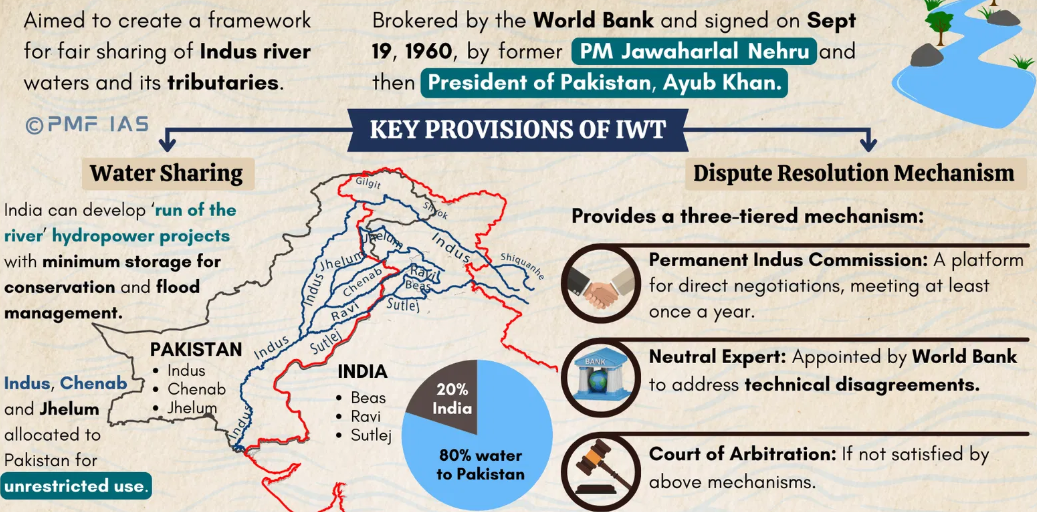
    The Indus Water Treaty (IWT), signed in 1960, governs the water-sharing arrangements between India and Pakistan over the Indus River system. The Treaty emerged as a solution to water disputes following the partition of India in 1947, which divided the river system between the two nations.

    Key Provisions of the Indus Water Treaty

    1. Water Sharing Arrangement:
      • The six rivers in the Indus Basin were divided as follows:
        • Western Rivers: Indus, Jhelum, and Chenab were allocated to Pakistan for unrestricted use, except for specified uses by India (e.g., non-consumptive, agricultural, and domestic uses).
        • Eastern Rivers: Ravi, Beas, and Sutlej were allocated to India for unrestricted use.
      • Approximately 80% of the water flow was allocated to Pakistan and 20% to India.
    2. Specific Rights for India on Western Rivers:
      • Annexure C: Grants India rights for limited agricultural usage of waters from the western rivers.
      • Annexure D: Allows India to build ‘run-of-the-river’ hydropower projects (HEPs), which do not involve live water storage.
        • India must adhere to detailed design specifications.
        • Pakistan must be informed about project designs and can raise objections within three months.
    3. Storage Provisions: India is permitted minimal storage on the western rivers for conservation and flood control purposes.
    4. Permanent Indus Commission
      • A Permanent Indus Commission was established under the Treaty, comprising representatives from both nations.
      • Functions: Act as the first step in resolving water-related conflicts and Mandate at least one annual meeting.
    5. Dispute Resolution Mechanism: The IWT outlines a three-step graded dispute resolution mechanism:
      • Permanent Indus Commission/Inter-government Talks: Initial disputes should be resolved through the Commission or inter-government dialogues.
      • Neutral Expert (NE): Unresolved disputes may be referred to the World Bank, which can appoint a Neutral Expert to resolve specific issues.
      • Court of Arbitration (CoA): If disputes involve treaty interpretation or dissatisfaction with the NE’s decision, they may be referred to a Court of Arbitration.

    Discuss the key provisions of the Indus Water Treaty and analyze the implications of India’s decision to ‘hold the treaty in abeyance’ in light of international law and regional security. How does the strategic use of water as a diplomatic tool affect peace in South Asia?

  • Defamation vs. Criticism: Drawing the Line in a Democracy ?

    Defamation vs. Criticism: Drawing the Line in a Democracy ?

    The UPSC often picks real-life legal or social conflicts and then asks aspirants to explore the constitutional principles behind them. In 2014, for example, it asked whether films in India stand on a different footing under freedom of speech. This article builds on a similar theme—how freedom of expression collides with defamation in the digital age, through the ANI vs Wikipedia case.

    Aspirants either stay stuck in textbook definitions or miss the real-world application of concepts like Article 19(1)(a), reasonable restrictions, or public interest. Many don’t know how to transition from theory to argument. For example, they might know “truth is a defence in defamation” but wouldn’t know how to use that in a Wikipedia-related controversy.

    This article fills that gap. It takes a complex courtroom battle and unpacks it into clear, exam-relevant subthemes: ‘Should Digital Platforms Follow Editorial Standards?’, ‘Drawing the Line between Criticism and Defamation’, and ‘Important SC Judgments’. For instance, it shows how Wikipedia cited Indian Express and LiveLaw to defend its content—connecting it directly with the idea of “truth” and “public interest” in criticism. What makes this article stand out is that it doesn’t just explain the case—it teaches you how to think like a UPSC topper. It breaks down PYQ-style arguments, adds Supreme Court cases like Rajagopal v. State of Tamil Nadu, and builds a toolkit for writing high-quality GS 2 or Ethics answers. If you’re someone who struggles to move from facts to framing a balanced argument, this article is your shortcut.

    This article explores the clash between freedom of expression and defamation in the digital age, using the ANI vs Wikipedia case as a lens. UPSC often asks questions that begin with real-life conflicts and lead into constitutional principles, like the 2014 Mains question on films and free speech.

    Many aspirants know textbook terms like Article 19(1)(a) or “truth as a defence,” but struggle to apply them in real scenarios. This article bridges that gap. It breaks down key subtopics such as editorial standards for digital platforms, the line between criticism and defamation, and relevant Supreme Court cases. With clear examples and case references, it helps you move from theory to structured argument—exactly what UPSC expects.

    PYQ ANCHORING

    1. GS 2: What do you understand by the concept “freedom of speech and expression”? Does it cover hate speech also? Why do the films in India stand on a slightly different plane from other forms of expression? Discuss. [2014]

    MICROTHEME: Fundamental Rights

    What happens when a global encyclopedia clashes with a national news agency in the court of law? You get a legal drama playing out in real-time—on your screen and on Wikipedia.

    It all started on July 9, 2024, when news agency ANI dragged the Wikimedia Foundation to the Delhi High Court. The trigger? A Wikipedia page that called ANI a “propaganda tool for the central government” and included content ANI claimed was defamatory. ANI hit back hard—asking for ₹2 crore in damages, a takedown of the content, a publishing ban on similar material, and even edit access to the page. But Wikipedia pushed back, defending its open, community-driven model and citing media sources like LiveLaw and Indian Express to back the content.The Delhi High Court ordered Wikipedia to reveal the identities of the editors behind the page—and even warned of a block if it didn’t comply. A new page popped up summarizing the legal battle itself, and ANI cried foul again, calling it contempt. The court agreed, ordering that page down. Now, the fight has reached the Supreme Court, where Wikimedia argues this threatens the fundamental right to document ongoing legal matters.

    This case raises serious—and tricky—questions: Where do we draw the line between free speech and defamation in the digital age? Should courts force transparency on platforms built on anonymous contributions? And who really controls the narrative in the age of crowdsourced knowledge?

    ANI vs Wikipedia Case

    The dispute started on July 9, 2024, when news agency ANI filed a defamation case against the Wikimedia Foundation in the Delhi High Court. ANI claimed a Wikipedia page falsely labelled it a “propaganda tool for the central government” and contained defamatory content.

    ANI sought: Takedown of the content, ₹2 crore in damages, a ban on publishing such material and access to edit the page (which was protected from ANI edits but open to others). Wikipedia defended its neutral, community-moderated platform, stating:

    • The page used content from credible media sources (e.g., LiveLaw, Indian Express)
    • The article was not authored by Wikipedia, but by independent contributors
    • The content is protected by free speech rights

    In August 2024, Delhi HC ordered Wikipedia to disclose the identities of users who posted the edits; warned of a potential block. A new Wikipedia page summarizing the legal case itself was created. ANI filed a contempt plea, saying it interfered with ongoing proceedings.

    • Delhi HC ordered this new page to be taken down
    • Wikimedia challenged this in the Supreme Court, saying it threatens the right to free documentation of legal proceedings.

    Supreme Court Proceedings (April 2025):

    • The Supreme Court has reserved its verdict on Wikimedia’s appeal against the Delhi High Court’s takedown order.
    • A decision is expected in the coming weeks.

    This is a free speech vs defamation case.

    • ANI is upset about what was written about it on Wikipedia—especially being labelled as a mouthpiece of the government.
    • They sued Wikipedia and wanted the content removed, the page locked, and compensation.
    • The Delhi High Court took ANI’s side and ordered Wikipedia to:
      • Share user identities
      • Take down content that summarized the case
    • But Wikipedia pushed back, saying:
      • It’s just a publicly editable encyclopedia
      • The content was from real news reports
      • Court cases can be documented by the public

    Now, the Supreme Court is looking into whether ANI’s hurt reputation justifies removing public documentation, and whether the High Court overstepped by ordering content takedown without proving contempt of court.

    The case is important for freedom of expression, platform responsibility, and transparency in court reporting in India.

    Should Digital Platforms Follow Editorial Standards Like News Media?

    With the rise of digital platforms like Wikipedia, Reddit, and YouTube, the lines between traditional media and user-generated content have blurred. These platforms influence public opinion, shape narratives, and often serve as primary information sources. This raises a crucial question: should these platforms be held to the same editorial standards as legacy news media? While their structures differ, their societal impact increasingly demands scrutiny.

    PointExplanationExample
    1. Reach and ImpactDigital platforms influence public opinion just like newspapers and TV.YouTube videos on political issues get millions of views, often more than news shows.
    2. Risk of MisinformationLack of editorial checks allows fake or harmful content to spread.Reddit threads spreading conspiracy theories with no fact-checking.
    3. Trust and CredibilityEditorial rules improve the quality and trustworthiness of content.Wikipedia’s rules on citing reliable sources improve its accuracy.
    4. Model DifferencesPlatforms work differently from newsrooms but still need basic rules.A podcast platform may not edit content but can still check for hate speech.
    5. Inconsistent ModerationWithout standards, platforms often remove or keep content unfairly.Instagram may remove political satire but allow offensive memes.
    6. Protection from PressureClear rules can protect platforms from political or corporate influence.If standards exist, platforms can resist pressure to take down factual reports.
    7. Safeguarding DemocracyPeople rely on these platforms for information, so they need responsibility.During elections, misleading videos on Facebook can affect voter choices.

    Defamation vs. Criticism: Drawing the Line in a Democracy

    In a democracy, free speech and criticism are essential for holding power accountable. At the same time, individuals have the right to protect their reputation. The line between defamation and legitimate criticism lies in the intent, truth, and public interest behind a statement. The challenge is to protect both democratic discourse and personal dignity.

    Distinguishing Defamation from Legitimate Criticism

    PointExplanationExample
    1. Truth as a DefenseStatements based on verified facts are protected.The Punjab and Haryana High Court upheld journalists exposing the 2015 Vyapam scam based on evidence, protecting their right to report.
    2. Public Interest MattersCriticism made for public good is often considered fair comment.The reporting on the Pegasus spyware scandal by media outlets, highlighting surveillance of activists and journalists, was seen as public interest.
    3. Intent and MaliceDeliberate falsehoods meant to harm are defamation.The defamation case against actor Kangana Ranaut for spreading false claims about certain individuals was cited as malicious intent.
    4. Tone and LanguageConstructive criticism is legitimate; abusive or hateful speech may be defamatory.Politicians criticizing government policy on COVID-19 management is fair; hate speech against religious groups crosses into defamation.
    5. Platform and AudienceLarger platforms have greater responsibility for accuracy.The Delhi High Court’s order for Wikipedia to remove defamatory content about ANI showed how a widely accessed platform’s misinformation can have serious impact.
    6. Private vs Public FiguresPublic figures face more scrutiny but have protection from baseless attacks.Coverage of former Prime Minister Modi’s policies is subject to criticism; however, baseless personal attacks against him have led to legal notices.
    7. Legal SafeguardsCourts balance free speech and protection against defamation.The Supreme Court’s ruling in Subramanian Swamy vs. Union of India upheld strong defamation laws but stressed they should not curb free speech unnecessarily.


    The balance between free speech and reputation must be navigated carefully. While criticism is a democratic right, it should be fact-based and civil, not a tool for personal attacks.

    Defamation Laws Around the World

    Country/RegionLegal Approach to Defamation
    JapanBoth criminal and civil defamation prosecutions allowed. Convicted individuals may face up to 1 year imprisonment, forced labour, and fines up to 300,000 yen.
    New ZealandAbolished criminal defamation in 1993; only civil claims remain.
    USANo federal criminal defamation law, but 24 states retain criminal defamation provisions.
    EuropeAbout 75% of member states of the OSCE maintain criminal defamation laws despite international calls for decriminalization.

    Important Supreme Court judgments on defamation 

     1. Subramanian Swamy v. Union of India (2016)

    • Key Point: Upheld the constitutionality of criminal defamation under Sections 499 and 500 of the IPC.
    • Court’s View: Right to reputation is part of the right to life under Article 21, and must be balanced against free speech under Article 19(1)(a).
    • Impact: Reinforced that defamation laws are a reasonable restriction on free speech.

    2. Shreya Singhal v. Union of India (2015)

    • Key Point: While this case struck down Section 66A of the IT Act for violating free speech, it clarified that defamation remains a valid restriction under Article 19(2).
    • Impact: Helped distinguish between reasonable restrictions (like defamation) and vague, arbitrary laws on speech.

    3. Rajagopal v. State of Tamil Nadu (1994) (a.k.a. Auto Shankar Case)

    • Key Point: Recognized the right to privacy and held that publishing without consent violates personal rights—unless content is part of the public record or public interest.
    • Impact: Set a precedent that public officials cannot sue for defamation just because information is inconvenient if it is true and based on public records.

    4. Khushwant Singh v. Maneka Gandhi (2002)

    • Key Point: The court allowed the publication of certain controversial passages in Khushwant Singh’s autobiography, noting that public figures should be open to criticism.
    • Impact: Emphasized that public interest and fair comment are valid defences against defamation.

    5. Bennett Coleman v. Union of India (1973)

    • Not about defamation directly, but crucial in establishing that freedom of the press is part of free speech.
    • Relevance: Forms the constitutional base when balancing defamation laws with press freedom.

    Way Forward

    1. Teach people how to spot fake news and unfair attacks.
      This helps everyone understand the difference between honest criticism and harmful lies.
    2. Support fact-checking by trusted groups.
      When news and online content are checked carefully, people can trust what they read.
    3. Make laws clearer about what counts as defamation.
      This stops people from using defamation laws to scare or silence those who speak up.
    4. Encourage all media, including websites and social platforms, to follow good ethical rules.
      This means sharing honest and respectful criticism without spreading false or harmful info.
    5. Create special courts that quickly handle defamation cases.
      This way, problems get solved fast and don’t drag on to intimidate critics.
    6. Protect journalists and whistleblowers who expose corruption or wrongdoing.
      They should feel safe to speak up without fear of being sued unfairly.
    7. Make digital platforms responsible for managing harmful content.
      They should work to stop defamation while still allowing people to share their opinions freely.

    #BACK2BASICS: DEFAMATION

    Defamation refers to the communication of a false statement that harms the reputation of an individual, business, product, group, government, religion, or nation.

    Defamation Law in India// DOMINATE PRE

    In India, defamation is recognised both as a criminal offence and a civil wrong, governed respectively under the Indian Penal Code (IPC) and the Code of Civil Procedure (CPC).

    • Civil Defamation: Under civil law, defamation is addressed through the Law of Torts, where the aggrieved party can claim damages as compensation for harm to their reputation.
    • Criminal Defamation: Defamation is a bailable, non-cognizable, and compoundable offence under criminal law. According to Section 500 of the IPC, the punishment may include simple imprisonment for up to two years, a fine, or both.

    Constitutional Provisions

    • Article 19(1)(a):Guarantees the fundamental right to freedom of speech and expression.
    • Article 19(2):Allows for reasonable restrictions on this freedom in the interest of defamation, contempt of court, incitement to an offence, etc.

    Legal Provisions on Defamation in India

    • Section 499 IPC: Defines defamation as making or publishing any statement (spoken, written, or by signs/visible representations) that harms reputation.
      The section extends defamation to statements about a “collection of persons” as well.
    • Exceptions under Section 499:
      Defamation is not applicable if the statement is:
      • True and made for the public good,
      • Related to the conduct of government officials,
      • Pertaining to any public question, or
      • Concerned with the merits of public performance.
    • Punishment (Section 500 IPC): Whoever commits defamation may be punished with imprisonment up to two years, a fine, or both.

    How Does Criminal Defamation Work in India?

    If someone feels that their reputation has been harmed by a false statement, they can choose to file a criminal defamation case. But unlike other serious crimes, criminal defamation has its own process.

    The Legal Process: Step-by-Step

    1. Not a Serious Crime (Legally Speaking):
      Criminal defamation is considered a non-cognisable and bailable offence, which means the police cannot arrest the accused just because someone filed a complaint. It also means no FIR is registered automatically.
    2. Approach the Magistrate:
      Instead of going to the police, the aggrieved person usually files a private complaint before a magistrate. They must record their statement to convince the magistrate that the case is serious enough to proceed.
    3. Summons and Bail:
      If the magistrate is satisfied, they issue summons to the accused. This is when the case officially begins, and the accused must apply for bail.
    4. Is There a Case?:
      The magistrate checks if there is a prima facie (on the face of it) case. If yes, the trial moves forward. If not, the case is dismissed and the accused is let go without a full trial.

    Why Is Criminal Defamation Controversial?

    While protecting someone’s reputation is important, critics say using criminal law for this has serious drawbacks.

    Concerns Raised:

    • Threat to Free Speech:The fear of going to jail can silence journalists, activists, and ordinary citizens from speaking the truth or expressing opinions.
    • Used to Harass:Some people use defamation cases to intimidate or harass critics, especially those exposing corruption or misconduct.
    • Disproportionate Punishment:Sending someone to prison for saying something offensive may seem like an overreaction when a civil suit could do the job.

    Arguments in Favour of Decriminalising Defamation

    • Freedom to Speak Freely:Encourages open debate and expression without the threat of jail.
    • Proportionate Response:Civil penalties (like fines) are more appropriate than prison.
    • Lighter Load on Courts:Criminal cases clog up the judicial system. Civil suits are easier to manage.
    • Prevents Misuse:Stops powerful people from misusing defamation laws to suppress dissent.

    Arguments Against Decriminalising Defamation

    • Protecting People’s Reputations:False statements can do serious damage—there should be accountability.
    • Fighting Fake News:Criminal laws act as a strong deterrent against false and malicious content.
    • Shielding the Vulnerable:People without power or access to lawyers may find criminal law a stronger safeguard.
    • Maintaining Social Harmony:Defamation laws help prevent public unrest by discouraging reckless statements.

    What the Supreme Court Says

    In the Subramanian Swamy v. Union of India case, the Supreme Court upheld the constitutionality of criminal defamation. The Court made some key points:

    • Balance is Key: Free speech is important, but so is a person’s right to their reputation.
    • Reasonable Restriction: Criminal defamation is a reasonable limit on speech, as allowed under Article 19(2) of the Constitution.
    • Dignity Matters: The Court ruled that the right to reputation is part of the right to life (Article 21) and must be protected alongside the right to free expression.

    SMASH MAINS MOCK DROP

    In a democracy, where should the line be drawn between defamation and legitimate criticism? Discuss the challenges in balancing free speech with protection of reputation.

  • Will India’s Aviation Sector Overcome Its Challenges to Reach New Heights?

    Note4students: 

    The Indian aviation sector became the world’s third-largest domestic aviation market. Big news from the Mains perspective. PYQs analysis gives us 2 possible lines of questioning: upcoming challenges for the sector to maintain the status quo or your comment on the evolution of aviation sector in India. 

    Avoid writing generic pointers. Standard textbooks won’t help you with notes on the topic of service industry growth story. We have detailed points for each challenge (Operational, financial, administrative, etc.) in the main article. and a snapshot of progress for the aviation sector in the Back2basics to develop your core understanding. 

    UPSC Microthemes & Mains PYQ:

    GS3: Examine the development of Airports in India through joint ventures under Public – Private Partnership (PPP) model. What are the challenges faced by the authorities in this regard? (UPSC 2017)

    GS2: The need for cooperation among various service sector has been an inherent component of development discourse. Partnership bridges bring the gap among the sectors. It also sets in motion a culture of ‘Collaboration’ and ‘team spirit’. In the light of statements above examine India’s Development process. (UPSC 2019)

    Microthemes: Airports X Infrastructure, PPP X Infrastructure

    The Indian aviation industry has emerged as a global powerhouse, becoming the world’s third-largest domestic aviation market. Projected to surpass the United States and China by 2030, India’s aviation sector is poised for immense growth, driven by robust demand, infrastructure expansion, and government support. However, the sector faces significant challenges that must be addressed to unlock its full potential.

    Status of the Industry

    Key MetricData/Statistic
    Global Ranking3rd largest domestic aviation market
    Operational AirportsIncreased from 74 in 2014 to 148 in 2023
    PPP AirportsExpected to increase from 5 in 2014 to 24 by 2024
    FDI InvestmentReached $3.73 billion (2000–2022)

    The rapid increase in operational airports and public-private partnership (PPP) airports demonstrates India’s commitment to expanding infrastructure. Foreign Direct Investment (FDI) has also surged, reflecting investor confidence in the industry.

    Potential of India’s Aviation Sector: 

    The aviation sector holds immense promise for India’s economic development, including enhanced connectivity, job creation, and regional growth.

    1. Increased Market Share: According to the International Air Transport Association (IATA), India is expected to be the world’s third-largest air passenger market by 2030, overtaking China and the United States.
    2. Balanced Economic Growth: Aviation connectivity promotes economic growth in remote areas, as seen in the North East, where enhanced air connectivity has accelerated development.
    3. Tourism Growth: The aviation sector acts as a growth catalyst for tourism, generating employment in supporting sectors like hospitality, retail, and transportation.
    4. Manufacturing Boost: India’s expanding aviation industry has created demand for maintenance, repair, and overhaul (MRO) facilities, providing job opportunities in aerospace manufacturing and engine maintenance.
    5. FDI in Infrastructure: With around $3 billion in FDI, the sector has seen significant investments in projects such as greenfield airports in Navi Mumbai and Noida (Jewar).
    6. Employment Opportunities: The industry is expected to require 10,900 additional pilots by FY30, along with other skilled personnel, highlighting its role in job creation.

    Key Government Initiatives

    Policy/InitiativeDescription
    National Civil Aviation Policy, 2016Promotes international reach of Indian airlines and mandates domestic deployment for international operations.
    UDAN SchemeEnhances regional connectivity to underserved cities in tier 2 and 3 regions.
    Open Sky PolicyLiberalizes aviation, allowing private sector involvement in airport development, with 60% of traffic managed under PPP.
    Open Sky Air Service AgreementsEnables unlimited flights between India and signatory countries.
    FDI and Tax IncentivesAllows 100% FDI in greenfield projects and 74% in brownfield under automatic route, with tax exemptions for airport projects.

    Challenges Facing India’s Aviation Sector 

    Despite its growth potential, India’s aviation sector faces challenges across Operational, Financial, Infrastructural, Regulatory, and Environmental categories. Here is a breakdown:

    1. Operational Challenges
      1. Grounded Unsafe Aircraft: Financially struggling airlines like SpiceJet and GoAir have grounded a significant portion of their fleets. Over 160 aircraft, or about 25% of the total fleet, are currently grounded, reducing service availability.
      2. Crew Shortage: A shortage of trained pilots, engineers, and cabin crew disrupts operations, leading to increased turnaround times and higher operational costs.
      3. Supply Chain Disruptions: Delays in aircraft and component deliveries from original equipment manufacturers (OEMs) hinder the sector’s ability to meet growing demand.
    2. Financial Challenges
      1. Financial Losses: Indian airlines are projected to lose between $1.6 and $1.8 billion in FY24 due to high operating costs and low profitability, with major losses from carriers like Go First, SpiceJet, and Jet Airways.
      2. High Operational Costs: Rising fuel prices, accounting for 45-50% of airline expenses, further burden financially struggling airlines.
      3. Low Domestic Travel Penetration: India’s per capita air travel rate is 0.13 seats per capita, much lower than countries like China (0.49), indicating untapped market potential.
    3. Infrastructural Challenges
      1. Poor Rural Connectivity: Despite initiatives like UDAN, there is limited air connectivity to tier-2 and tier-3 towns, with major airports controlling air traffic and limited regional service.
      2. Underdeveloped MRO Facilities: The lack of Maintenance, Repair, and Overhaul (MRO) infrastructure forces airlines to rely on foreign services, making maintenance more costly.
      3. Gaps in Airport Infrastructure: India’s airport infrastructure and Air Traffic Control (ATC) are insufficient to handle rapid growth, requiring significant upgrades to support future demand.
    4. Regulatory Challenges
      1. High Fuel Taxes: India imposes one of the highest taxes on Aviation Turbine Fuel (ATF), significantly increasing operating costs for airlines.
      2. Outdated Policies: The Aircraft Act, 1934, and Aircraft Rules, 1937, have not kept pace with modern aerospace technology, creating inefficiencies and limiting growth.
      3. Market Duopoly: IndiGo and Tata group airlines dominate the market, with 60% and 20% market shares, respectively, reducing competition and innovation.
    5. Environmental Challenges
      1. Carbon Emissions Pressure: Under the Carbon Offsetting and Reduction Scheme for International Aviation (CORSIA), Indian airlines face increasing pressure to adopt sustainable practices, adding to operational costs.
      2. Sustainability Concerns: The industry is under growing scrutiny to minimize its environmental impact, which may require additional investments in cleaner technology and fuel-efficient practices.

    To unlock its potential, India’s aviation sector requires strategic reforms across these areas, focusing on improving infrastructure, modernizing regulations, and addressing financial sustainability.

    Way Forward

    1. Regulatory Reforms
      1. DGCA Reforms: Appointing aviation professionals, rather than bureaucrats, to lead the Directorate General of Civil Aviation (DGCA) can improve regulatory oversight and bring specialized knowledge to the regulatory body.
      2. Modernization of Aircraft Act and Rules: Updating the Aircraft Act, 1934, and Aircraft Rules, 1937, will help align regulations with modern aerospace technology, streamlining operations and enhancing passenger growth.
    2. Financial Reforms
      1. Tax Rationalization: Reducing taxes on aviation turbine fuel (ATF), cargo, and airport operations can help alleviate cost pressures on airlines, making operations more financially sustainable.
      2. Support for Startups: Encouraging entrepreneurship in the Maintenance, Repair, and Overhaul (MRO) sector under the ‘Start-up India’ initiative can promote local industry development and reduce dependence on foreign services.
    3. Infrastructural Development
      1. Enhanced Rural Connectivity: Expanding air connectivity to Tier 2 and Tier 3 cities through initiatives like the UDAN scheme will increase accessibility and help unlock demand in underserved markets.
    4. Environmental Initiatives
      1. Environmental Sustainability: Implementing the Carbon Offsetting and Reduction Scheme for International Aviation (CORSIA) and investing in sustainable aviation practices will reduce the environmental footprint of the sector, supporting long-term sustainability.

    These initiatives can collectively strengthen India’s aviation sector, making it more competitive, sustainable, and accessible.

    Conclusion: The Indian aviation sector holds transformative potential for economic growth, connectivity, and job creation. However, realizing this potential requires addressing structural challenges, modernizing regulations, and adopting sustainable practices. With targeted reforms and continued investment, India can become a global leader in aviation and an attractive market for international stakeholders.

    #BACK2BASICS: India’s Aviation Sector: A Snapshot of Progress

    1. India’s Aviation Boom:
      India has skyrocketed to become the world’s third-largest domestic aviation market, trailing only the USA and China. Once limited, the sector now thrives as a vibrant and competitive industry. Government policies and initiatives have played a significant role in creating an environment ripe for growth and innovation.
    2. Infrastructure Development:
      India’s airport network has seen incredible expansion, doubling its operational airports from 74 in 2014 to 148 as of April 2023, making air travel accessible to a larger population.
    3. Regional Connectivity Scheme-UDAN:
      Launched in 2016, UDAN (Ude Desh ka Aam Nagrik) connects under-served and unserved airports, enhancing connectivity and boosting local economies. With 517 routes in operation linking 76 airports, UDAN has made air travel accessible to over 13 million people.
    4. Passenger Growth:
      The sector is witnessing strong post-COVID growth. From January to September 2023, domestic airlines carried nearly 113 million passengers, a 29% increase over the previous year. International traffic also surged, with 46 million passengers, up by nearly 40% compared to the same period in 2022.
    5. Carbon Neutrality Efforts:
      The Ministry of Civil Aviation (MoCA) is pushing for carbon-neutral operations, advising airports to map their emissions and work towards net-zero carbon footprints. Newly built airports are also prioritizing green initiatives. Delhi, Mumbai, Hyderabad, and Bengaluru airports have achieved Level 4+ ACI Accreditation for carbon neutrality, and 66 airports in India now operate on 100% green energy.

    India’s aviation sector isn’t just growing—it’s setting the stage for sustainable, accessible, and inclusive air travel.

  • Inflation and Food Prices: Can Rate Cuts and Falling Food Prices Sustain the Trend ?

    N4S:

    This article explains the causes and control of food inflation in India clearly and simply. UPSC often asks questions that require linking causes of inflation with monetary policy measures, as seen in the 2024 question on food inflation and RBI’s policy effectiveness. Aspirants usually falter by not connecting theory with current data or by missing the nuances between supply-side and demand-side factors. They also struggle to analyze the RBI’s role realistically rather than just listing policies. This article helps by breaking down complex themes like “Role played by Food Prices in Reducing Retail Inflation” with up-to-date examples (e.g., vegetable prices fell by 7.04% in March 2025), making it easier to grasp the direct impact on inflation. It also clarifies the RBI’s responses under different scenarios (like rate cuts and liquidity management) and their limitations, helping aspirants think critically rather than memorize. The special feature of this article is its clear linking of macroeconomic terms to real-world numbers and RBI decisions, making abstract concepts practical and exam-relevant. By focusing on specific subheads like “RBI’s policy responses in various scenarios” and “The Link Between Food Prices and Inflation,” it guides aspirants to answer mains questions with structured, evidence-backed arguments, avoiding common pitfalls. Overall, it is a concise yet comprehensive resource that bridges textbook knowledge with current affairs smoothly.

    This article explores the causes and control of food inflation in India by linking economic concepts with current trends. UPSC often frames such topics by combining theory with real-world application, as seen in the 2024 question on food inflation and the RBI’s policy effectiveness. Many aspirants struggle to connect supply-side and demand-side factors or evaluate the RBI’s role beyond surface-level policy tools.

    The article addresses these challenges using recent data, such as the 7.04 percent drop in vegetable prices in March 2025, to illustrate inflation patterns. It also examines how the RBI responds in different scenarios—through interest rate adjustments or liquidity measures—and where those responses fall short. With focused subheads and grounded analysis, it helps aspirants write structured, evidence-based answers.

    PYQ ANCHORING

    1. GS 3:  What are the causes of persistent high food inflation in India? Comment on the effectiveness of the monetary policy of the RBI to control this type of inflation. [2024]

    MICROTHEME: MONETARY POLICY

    India’s retail inflation has been on a steady decline, primarily driven by the sharp drop in food prices, especially vegetables, eggs, and pulses. Following two rate cuts by the Reserve Bank of India (RBI), inflation is expected to stay below 4% in the coming months, with a possible further rate cut of 50 basis points.

    India’s Retail Inflation in March 2025

    • Retail Inflation Rate: In March 2025, India’s retail inflation eased to 3.34%, the lowest since August 2019.
    • Comparison to Previous Month: This marked a drop from February’s 3.61%, continuing the downward trend in inflation.
    • Contributors to Decline: The main drivers of this decline were a significant reduction in food prices, particularly vegetables, eggs, and pulses. Vegetable prices, for example, fell by 7.04% year-on-year in March.

    Role played by Food Prices  in Reducing Retail Inflation

    • Vegetable Prices: Vegetable prices dropped significantly by 7.04% in March, compared to a small increase of 1.07% in February. This drastic fall helped reduce overall food inflation.
    • Pulses Prices: Pulses prices also saw a decline of 2.73% in March, after a smaller decrease of 0.35% in February, further contributing to lower food inflation.
    • Overall Food Inflation: Food inflation dropped to 2.69% in March 2025 from 3.75% in February, marking the lowest since November 2021.
    • Improved Farm Output: Better farm output, particularly in vegetables and pulses, stabilized food supplies, further easing inflationary pressures.

    RBI’s Response to Easing Inflation

    • Second Rate Cut: On April 9, 2025, the RBI reduced the policy repo rate by 25 basis points to 6.00%, its second consecutive rate cut.
    • Shift to Accommodative Stance: The RBI moved its monetary policy stance from “neutral” to “accommodative,” signaling a supportive approach to economic growth while keeping inflation in check.
    • Revised Inflation Forecast: The RBI revised its inflation forecast to 4% for FY 2025-26, down from the earlier 4.2%, reflecting improved inflation dynamics.
    • Revised GDP Growth Estimate: The RBI lowered its GDP growth estimate to 6.5% for the fiscal year, down from 6.7%, citing global uncertainties and trade tensions.

    Risks Highlighted by RBI Affecting Inflation Outlook

    • Global Market Uncertainties: Ongoing global uncertainties, including trade tensions, could disrupt supply chains and lead to higher import costs. For example, a worsening of U.S.-China trade relations could escalate costs.
    • Adverse Weather Conditions: Unpredictable weather, such as unseasonal rains or droughts, could affect agricultural supply and push up food prices.
    • Rising Global Commodity Prices: Fluctuations in global commodity prices, including oil, could drive up domestic prices. For instance, rising crude oil prices could increase fuel and transportation costs.
    • Supply Chain Disruptions: Geopolitical tensions or supply chain disruptions (e.g., from the COVID-19 pandemic) could lead to higher prices for imported goods, impacting inflation.
    • Core Inflation Pressures: Core inflation (excluding volatile food and fuel) remained high at 4.1%, signaling persistent inflationary pressures in the economy.

    The Link Between Food Prices and Inflation

    Food prices play a pivotal role in shaping the inflationary trends in an economy. As essential items for daily consumption, changes in food prices directly influence the cost of living. When food prices rise, inflation tends to increase, and when food prices decline, inflation can ease. Here’s how food prices are intricately linked to inflation:

    FactorExplanationExample
    Direct Contribution to CPIFood prices are a significant component of the Consumer Price Index (CPI), which is used to measure inflation. A rise in food prices directly increases CPI.A 10% rise in vegetable prices increases the CPI.
    Impact on Household BudgetsHigher food prices lead to higher household spending on basic items, reducing disposable income and contributing to overall inflation.Increased spending on food reduces the ability to spend on other goods and services.
    Food as a StapleStaple foods (e.g., wheat, rice, vegetables) are essential for survival. A rise in their prices can push up inflation, especially in developing countries.A price hike in wheat can cause inflationary pressure on food items like bread.
    Inflation ExpectationsPersistent food price increases can create inflation expectations. When consumers expect higher prices, they may demand higher wages, contributing to further inflation.If vegetable prices consistently rise, workers may demand higher wages, fueling inflation.
    Government ResponseRising food prices often prompt central banks to adjust monetary policies, such as increasing interest rates to control inflation.RBI may hike interest rates to curb inflation caused by rising food prices.
    Supply Chain DisruptionsDisruptions in the supply of food (e.g., due to weather, transportation issues) can cause short-term spikes in food prices, which can drive inflation temporarily.A poor monsoon leading to a spike in vegetable prices may temporarily raise inflation.

    RBI’s policy responses in various scenarios

    Broad ThemeRBI’s Monetary Policy ResponseEffectiveness
    1. Supply-Side ConstraintsInterest Rate Adjustments: To reduce inflationary pressures, the RBI can increase interest rates, which can dampen overall demand, helping to alleviate food price inflation. (Example: Repo Rate Hike)Moderate: While rate hikes can reduce demand, they do not directly address supply-side constraints like poor weather, crop failures, or logistical issues.
    Liquidity Management: Through tools like Cash Reserve Ratio (CRR), the RBI can control the money supply, limiting excess liquidity that could lead to inflationary pressures. (Example: CRR adjustment)Moderate: While liquidity management helps control demand, it does not directly resolve supply issues like crop shortages or inefficient agricultural practices.
    2. Inefficiencies in the Supply ChainCredit Control: The RBI’s policy of providing easy access to credit for agriculture can help farmers and businesses improve infrastructure and reduce supply chain inefficiencies. (Example: Targeted Credit)Low: Credit control can aid in agricultural growth but does not directly address logistical inefficiencies, poor storage, or high food wastage in the supply chain.
    Priority Sector Lending: By mandating a certain percentage of loans be given to agriculture and rural sectors, the RBI can encourage improvements in rural infrastructure and logistics. (Example: PSL targets)Moderate: This encourages investment in agriculture but does not solve the systemic issues in the supply chain, such as poor transportation and lack of cold storage.
    3. Demand-Supply ImbalancesInflation Targeting: The RBI focuses on a specific inflation target (4% +/- 2%) to control both food and general inflation, which can help stabilize prices in times of demand-supply imbalances. (Example: Repo Rate)Moderate: This helps manage demand-side inflation, but its effectiveness in resolving supply-side imbalances is limited.
    Forward Guidance: By providing signals about future monetary policy, the RBI can manage public expectations and help stabilize food price inflation during periods of imbalance. (Example: Policy Announcements)Moderate: Forward guidance can help curb inflation expectations, but it doesn’t directly address structural imbalances or fluctuating demand due to changing consumption patterns.
    4. Global & External FactorsExchange Rate Management: The RBI stabilizes the exchange rate through market interventions, helping to control import-related food price inflation, especially for edible oils and other imports. (Example: Forex reserves)Moderate: Stabilizing the currency helps mitigate imported food inflation but does not resolve issues like global supply disruptions or rising international food prices.
    Currency Stabilization: The RBI’s efforts to intervene in the forex market to stabilize the rupee also help manage the cost of importing food, reducing the impact of price fluctuations on imported food items. (Example: Currency intervention)Moderate: While currency stabilization is crucial, it does not prevent external shocks such as natural disasters or geopolitical tensions that influence global food prices.
    5. Rising Input CostsMonetary Tightening: The RBI increases interest rates to reduce demand for inputs, such as fuel or fertilizers, which can help curb cost-push inflation. (Example: Repo rate hike)Effective: Monetary tightening can help control inflationary pressures on input costs. However, it doesn’t directly affect global prices for inputs like oil or fertilizers.
    Liquidity Management: RBI uses tools like the CRR to absorb excess liquidity, reducing inflationary pressures on input costs. (Example: CRR changes)Moderate: Helps control demand but doesn’t directly affect global price increases for raw materials or essential agricultural inputs.
    6. Policy-Level IssuesInflation Targeting Framework: RBI follows an inflation-targeting framework, aiming to keep inflation in check through policy rate adjustments. (Example: Repo rate hikes)Moderate: While inflation targeting helps stabilize inflation, it does not directly address policy-level issues like government intervention in food exports or import bans.
    Coordination with Fiscal Authorities: The RBI works with the government to tackle food inflation, though its primary role is monetary policy. (Example: Coordination in 2021 food inflation measures)Moderate: Coordination between RBI and fiscal authorities is beneficial, but RBI alone cannot solve structural issues in food policy, such as pricing or export restrictions.

    Way Forward:

    1. Enhance Agricultural Productivity: Invest in sustainable farming practices, modern irrigation systems, and efficient crop management to ensure consistent food supply and mitigate price volatility.
    2. Improve Supply Chain Infrastructure: Strengthen logistics networks to reduce food wastage, improve distribution efficiency, and minimize the impact of disruptions on food prices.
    3. Promote Price Stability Mechanisms: Implement strategic reserves and price stabilization programs for essential food items, helping to smooth out short-term fluctuations in food prices.
    4. Increase Digital Integration in Agriculture: Use technology to improve market access for farmers, provide real-time price data, and enable better forecasting of food production, allowing better price predictions and planning.
    5. Strengthen Weather Forecasting & Disaster Management: Improve weather forecasting systems and develop contingency plans for adverse weather conditions to safeguard food production and prevent price spikes.

    #BACK2BASICS: INFLATION

    Inflation refers to the overall increase in the prices of goods and services, which results in a decrease in people’s purchasing power. In simple terms, when inflation rises, without a corresponding increase in income, you are able to buy fewer goods and services for the same amount of money, or you have to pay more for the same items.

    A “rising” inflation rate means that the pace at which prices are rising is itself increasing. For example, if inflation was 1% in March, 2% in April, 4% in May, and 7% in June, this shows that the rate of price increases is accelerating over time.


    Causes of Inflation

    1. Demand-Pull Inflation:
      This type of inflation occurs when demand for goods and services exceeds supply. When demand is high, consumers are willing to pay more, leading to an overall increase in prices.
    2. Cost-Push Inflation:
      Cost-push inflation arises from rising production costs, such as higher wages, increased raw material costs, or disruptions in the supply chain. These higher costs are passed on to consumers in the form of higher prices.
    3. Wage-Price Inflation:
      This inflation occurs when there is a cycle between wages and prices. Workers demand higher wages, and businesses, in turn, raise prices to cover the increased labor costs. This can create a feedback loop where rising wages lead to rising prices, which in turn lead to further wage demands.

    What are the Different Indices Through Which Food Inflation is Measured in India?

    1. Consumer Price Index (CPI):
      The CPI measures the rate at which the prices of goods and services that consumers buy for personal use increase over time. It includes food, clothing, housing, transportation, medical care, and more. The CPI is categorized into four types:
      • CPI for Industrial Workers (IW)
      • CPI for Agricultural Labourers (AL)
      • CPI for Rural Labourers (RL)
      • CPI for Urban Non-Manual Employees (UNME)
    2. Consumer Food Price Inflation (CFPI):
      CFPI is a part of the broader CPI and tracks the price changes of food items commonly consumed by households, including cereals, vegetables, fruits, dairy products, and meat. The Reserve Bank of India uses the CPI-Combined (CPI-C) for monitoring food inflation.
    3. Wholesale Price Index (WPI):
      WPI tracks the price changes of goods sold in bulk by wholesalers to businesses. It focuses only on goods (not services) and provides insight into the supply and demand dynamics of industries, manufacturing, and construction. The WPI includes:
      • Primary Articles (22.62% of WPI) such as food items like cereals, pulses, vegetables, fruits, and dairy products.
      • Non-Food Articles, including items like oil seeds, minerals, and crude petroleum.

    What are Various Government Initiatives to Control Food Inflation?

    1. Subsidized Commodities:
      The government is distributing subsidized vegetables such as onions and tomatoes through its network and releasing stocks of wheat and sugar to stabilize prices.
    2. Reduction in Import Duty:
      To boost domestic production, the government is encouraging pulse cultivation and reducing import duties on certain pulses to enhance local availability.
    3. Export Bans:
      To ensure ample domestic supply, the government has imposed bans on wheat exports since May 2022 and on broken rice exports since September 2022, aimed at lowering domestic prices.
    4. Ban on Stockpiling:
      Regulations have been introduced to limit stockpiling. For example, traders, millers, wholesalers, and retail chains can hold no more than 3,000 tonnes of wheat, while smaller retailers and shops can hold only 10 tonnes to prevent excessive stockpiling and price hikes.
    5. Operation Greens:
      This initiative focuses on stabilizing the supply of Tomato, Onion, and Potato (TOP) crops year-round across the country to minimize price fluctuations and stabilize food inflation.
    6. Floor Prices:
      To manage onion prices during supply shortages, the government has set a minimum export price (MEP) of $800 per tonne (₹67 per kg) for onions from October 29 to December 31, 2023, in response to rising prices due to delayed kharif onion arrivals.

    MOCK DROP: India’s retail inflation is declining due to falling food prices and RBI’s rate cuts. Critically examine whether rate cuts and reduced food prices can sustainably keep inflation under control. What challenges could affect this trend in the near future?

  • The Supreme Court vs. The Tamil Nadu Governor: What Does This Judgment Say About the Governor’s Role ?

    N4S: This article unpacks the complex and often controversial role of the Governor in India’s democracy. UPSC usually frames questions on this topic by testing aspirants’ understanding of the Governor’s constitutional powers, their discretionary limits, and the tension between the executive and legislature (for example, the 2022 mains question on legislative powers and ordinance re-promulgation). Aspirants often falter because they get confused about the extent of the Governor’s discretion and fail to connect theory with recent judicial clarifications (like the Supreme Court’s 2025 ruling in the Tamil Nadu case). Many miss how the judiciary has actively shaped the Governor’s role, balancing Centre-State relations and preventing misuse of power. This article addresses those gaps by clearly explaining key phases in the Governor’s evolution, supported by landmark court cases (such as S.R. Bommai and Nabam Rebia) and recent examples of controversies involving Governors in Arunachal Pradesh and West Bengal. One special feature of this article is its use of a “Judgement Matrix” that breaks down the Supreme Court’s 2025 verdict on Governors’ powers, making a complex judgement easy to grasp. It also explains how Article 142 powers of the Supreme Court have been used to resolve political deadlocks, a point often overlooked by aspirants. By following subheads like “Supreme Court’s Clarity,” “Key Concerns,” and “When the Supreme Court Steps In,” readers get a structured and up-to-date understanding that helps them write precise, balanced answers—something UPSC values highly.

    This article explains the evolving role of the Governor in India’s democracy, a topic UPSC often tests through questions on constitutional powers, discretionary limits, and Centre-State tensions. The 2022 mains question on ordinance re-promulgation is a good example. Many aspirants struggle to connect legal theory with recent developments like the Supreme Court’s 2025 ruling in the Tamil Nadu case.

    This article bridges that gap by tracing the Governor’s role through key court cases like S.R. Bommai and Nabam Rebia, and by analysing recent controversies in states like West Bengal and Arunachal Pradesh. A key highlight is the “Judgement Matrix” that simplifies the 2025 verdict, along with insights on Article 142. It offers a clear, structured approach for writing strong, well-argued answers.

    PYQ ANCHORING

    1.GS 2:  Discuss the essential conditions for exercise of the legislative powers by the Governor. Discuss the legality of re-promulgation of ordinances by the Governor without placing them before the Legislature. [2022]

    MICROTHEME:  Executive Vs Legislature

    “The Governor is not an emperor… he is a constitutional head.”
    Constitution Bench of the Supreme Court

    In a significant ruling that strengthens the spirit of federalism, the Supreme Court of India, in the case of State of Tamil Nadu vs. Governor of Tamil Nadu, addressed a long-standing constitutional grey area — the role of Governors in granting assent to state bills. For decades, delays, inaction, and selective interventions by Governors have sparked Centre–State tensions and raised fundamental questions about democratic accountability.

    This verdict not only clarifies constitutional roles but also reignites the debate around the misuse of gubernatorial powers in India’s federal setup.

    But why have Governors often been at the centre of political controversies? What role has Judiciary played over the years in handling grey areas ? And what reforms can ensure their role remains neutral, accountable, and democratic?This article unpacks it all.

    Background: A Constitutional Stalemate

    The issue arose when the Governor of Tamil Nadu withheld assent to 10 bills passed by the State Legislative Assembly, without providing any reasons or returning them for reconsideration. This led to a legislative deadlock and was perceived as an overreach by an unelected constitutional authority.

    In response, the Tamil Nadu Assembly re-passed the same bills and sent them back to the Governor. Instead of acting on them—either by granting assent or returning them with comments—the Governor referred the bills to the President, bypassing the Council of Ministers entirely.

    Supreme Court’s Clarity: No Room for Delay or Discretion

    The Supreme Court, taking strong note of this constitutional impasse, ruled that:

    • Governors must act within a reasonable timeframe under Article 200 of the Constitution.
    • The office of the Governor is not meant to be a parallel power center. It is bound by the aid and advice of the Council of Ministers.
    • Discretion is not a default power. The Governor cannot indefinitely withhold assent or send bills to the President without valid grounds.

    In essence, the verdict reaffirmed a foundational principle of Indian democracy — the elected government governs, not the nominated Governor.

    Judgement Matrix: Governor’s Powers over State Bills 

    The State of Tamil Nadu vs. The Governor of Tamil Nadu and Another,2025

    IssueConstitutional Provision / ContextKey ArgumentsSupreme Court’s JudgementImplications
    1. Can the Governor withhold assent without informing the legislature?Article 200 (First Proviso): Governor can return the bill with recommendations.Petitioner: Governor must send reasons back; cannot sit silent or act unilaterally. Respondent: Governor has power to withhold without communication.No. Governor must act within Article 200’s framework. If withholding, they must send the bill back with reasons “as soon as possible.”Stops misuse of “pocket veto” and ensures transparency. Upholds legislative supremacy.
    2. Does the Governor have an absolute veto (can block a bill forever)?Constitution does not allow “pocket veto” or indefinite delay.Petitioner: Pocket veto not allowed; TN example cited. Respondent: Withholding assent = absolute veto.No. Governor does not have absolute veto. They cannot block a bill permanently.Prevents Governor from stalling state legislature. Reinforces time-bound accountability.
    3. Can the Governor send back a reconsidered bill to the President again?Article 200 allows reservation only once unless the bill changes.Petitioner: Once legislature reconsiders, Governor must assent. Respondent: No express bar on reserving it again.No. Once reconsidered by the state, the Governor must assent unless the bill is materially changed.Reinforces federal balance. Stops executive overreach.
    4. Should there be a time limit for the Governor to act on a bill?Article 200 uses “as soon as possible” – not a fixed deadline.Petitioner: Time limit must be read into the phrase to avoid delays. Respondent: Only Parliament can insert such a time limit.Yes. Even without explicit timelines, Courts can enforce reasonable limits to avoid misuse.Reduces legislative uncertainty. Judicial intervention used to prevent abuse.
    5. Can Governor’s actions under Article 200 be reviewed by Courts?Governor’s decisions are traditionally considered beyond judicial scrutiny.Petitioner: Courts must intervene in cases of delay, mala fide, or constitutional violations. Respondent: Article 200 actions are non-justiciable.Yes. Governor’s and President’s actions are subject to judicial review if exercised arbitrarily or in bad faith.Important check on executive discretion. Preserves constitutional morality.

    Key Takeaways from the judgement:

    1. Governor’s discretion is not absolute—it is constitutionally limited.
    2. Judicial review applies even to actions of constitutional authorities like the Governor or President, especially if rights or federalism is at stake.
    3. Time-bound governance is a constitutional expectation even if not explicitly stated.

    Certainly! Here’s an expanded and updated section on the key concerns regarding the role of Governors in India, incorporating recent examples and developments:


    Key Concerns Regarding the Role of Governors in India

    While Governors are meant to act as neutral links between the Centre and states, their role has increasingly become controversial. From delaying bills to interfering in elected governments’ work, many actions have raised serious concerns. The table below breaks down the key issues.

    ConcernWhat’s the Issue?Examples
    1. Impartiality of GovernorsGovernors are supposed to be neutral. But sometimes, they seem to act in favour of the ruling party at the Centre, raising doubts about their fairness.Arunachal Pradesh (2016): The Governor advanced the Assembly session without the CM’s advice. It led to the government’s dismissal, which the Supreme Court later reversed, calling the move unconstitutional.
    2. Misuse of Article 356Governors have recommended President’s Rule in states even when the elected government had the majority—without a proper floor test.Uttarakhand (2016): The Governor recommended President’s Rule just before a floor test. The High Court struck it down, saying a floor test is the right way to prove majority.
    3. Overreach in State AffairsGovernors sometimes interfere too much in administration, bypassing elected governments and creating confusion or paralysis.Delhi (2023): The LG and Delhi Govt clashed over who controls services. The Supreme Court ruled that the elected government has the final say in such matters. West Bengal (2023): The Governor appointed VCs on his own, leading to legal fights with the state.
    4. Lack of AccountabilityGovernors aren’t elected, and there’s no clear system to hold them answerable to the public. They can be removed, but only by the Centre.No Governor has ever been impeached. Even if they delay bills or act controversially, there’s no direct consequence. This makes them powerful but unaccountable.
    5. Delaying Assent to BillsSometimes, Governors sit on bills for months without approving or rejecting them. This delays governance and can block laws passed by elected MLAs.Tamil Nadu (2020–2023): The Governor didn’t act on 10 bills for a long time. The Supreme Court (2025) said this was wrong and ruled that Governors must act in a time-bound way and can’t use a ‘pocket veto’.

    These concerns underscore the need for clearer guidelines and accountability mechanisms to ensure that the role of Governors aligns with the principles of federalism and democratic governance enshrined in the Constitution.

    Key Phases with Specific Examples:

    1. Colonial Era (Pre-1947): The Governor acted as a direct representative of the British Crown, with all decisions made in the context of British imperial interests.
    2. Post-Independence (1947–1950s): The office was constitutionalized, with Governors appointed by the President to serve as ceremonial heads of states.
    3. 1950s-1970s: The Governor played an influential role in political crises, including the dismissal of state governments (e.g., Kerala 1959 and Maharashtra/Gujarat in the 1970s).
    4. 1970s-1990s: Increasing involvement in political decision-making, with Governors recommending President’s Rule (e.g., Punjab 1987 and Bihar 1977).
    5. 2000s-Present: Governors still play a critical role in certain political and constitutional crises, with controversies over their neutrality (e.g., Kerala 2011, West Bengal 2019).

    Judiciary on the role of governor

    YearCaseKey PointsSignificance
    1974Shamsher Singh v. State of Punjab– Governor acts on the advice of the Council of Ministers.This judgment clarified that the Governor’s role is mostly ceremonial and must act according to the advice of the Council of Ministers.
    1994S.R. Bommai v. Union of India– Governor’s discretion in recommending President’s Rule is subject to judicial review.It emphasized that the Governor’s decision to impose President’s Rule must be based on sound constitutional grounds, and judicial review is available.
    2005Rameshwar Prasad v. Union of India– Governor must act impartially and cannot interfere in state politics.Reaffirmed that the Governor must ensure democratic processes and cannot act in a partisan manner when recommending President’s Rule or forming a government.
    2010Union of India v. Raj Bhavan– Governor’s powers are circumscribed by the Constitution, and must respect the limits of the law.This case clarified the limits of Governor’s discretionary powers and the necessity for neutrality in the office.
    1990K. R. Vishwanathan v. Union of India– Governor’s decision to dissolve a state legislative assembly must be constitutionally justified.Reinforced that the Governor’s discretion in dissolving assemblies should not be exercised arbitrarily or in political haste.
    1994K. Anbazhagan v. Governor of Tamil Nadu– Governor must appoint the Chief Minister who has the majority in the Legislative Assembly.Emphasized that the Governor’s role in government formation is ceremonial, limited to ensuring the majority support in the Legislative Assembly.
    2007State of Goa v. Union of India– Governor must ensure fair governance and cannot be involved in partisan political maneuvering.This case stressed that the Governor should be neutral and prevent any form of political manipulation, particularly when dealing with government formation.
    2016Nabam Rebia v. Deputy Speaker, Arunachal Pradesh– The Governor should not interfere in the functioning of the legislative assembly except under specific circumstances, especially when the Speaker is removed from office.The judgment clarified the Governor’s role in maintaining constitutional order without becoming involved in legislative affairs unnecessarily, especially when the assembly is in session.

    When the Supreme Court Steps In to Fix a Mess: The Use of Article 142

    Sometimes, constitutional deadlocks or political standoffs—like Governors sitting on Bills—need more than just words. That’s when the Supreme Court pulls out Article 142. This special power lets the Court deliver complete justice, even if it means going beyond usual rules. In the Tamil Nadu case too, the SC used Article 142 to break the deadlock and ensure smooth governance. 

    IssueCaseSupreme Court’s RoleResolution
    Delays in Governor’s Assent to BillsK. Arumugam v. Union of India (2007)The Court used Article 142 to deem the Governor’s assent as given after an undue delay, resolving a constitutional deadlock over non-action.The Supreme Court invoked its power under Article 142 to deem assent to the Bills as given, bypassing further delay.
    Conflict Between Centre and States over Presidential RuleS.R. Bommai v. Union of India (1994)The Court used Article 142 to balance the federal structure by limiting arbitrary imposition of President’s Rule under Article 356.The Court limited the arbitrary use of President’s Rule and emphasized a proportionality approach, restoring constitutional balance.
    Dispute over the Validity of Election LawsIndira Gandhi v. Raj Narain (1975)The Court invoked Article 142 to strike a balance between electoral fairness and the right to contest an election, upholding democratic principles.Invalidated the 1971 election of Indira Gandhi, using its powers to safeguard electoral integrity.
    Tackling Inaction in the Appointment of JudgesSupreme Court Advocates-on-Record Association v. Union of India (2016)The Court invoked Article 142 to establish the collegium system for judicial appointments, resolving issues related to executive interference in judicial matters.Established the Collegium System for judicial appointments, ensuring judicial independence from executive influence.
    Delay in the Finalization of River Water Sharing AgreementsM.C. Mehta v. Union of India (2002)Article 142 was used to issue a directive to finalize the water-sharing agreement between states, overriding the lack of consensus.The Court issued directives under Article 142 to resolve the inter-state water dispute, ensuring water distribution in a fair and timely manner.
    Removal of Legislative DeadlockTamil Nadu Bills Case (2017)In the case of Tamil Nadu Bills, the Court invoked Article 142 to resolve the deadlock created by the Governor’s delay in assenting to Bills.Used Article 142 to declare that Bills passed by the Tamil Nadu Legislature were deemed to have received the Governor’s assent, bypassing prolonged inaction.

    WAY FORWARD

    1. Let States Hold Governors Accountable:
      Right now, only the President can remove a Governor, which means they aren’t answerable to the states they serve.
      The Punchhi Commission suggested an impeachment process at the state level to make them more accountable.
      Even the Supreme Court in B.P. Singhal v. Union of India (2010) said that a Governor can’t just be removed without valid reason.
    2. Tweak Article 163 to Limit Discretion:
      Article 163 lets Governors use their own judgement in some cases — but that’s led to biased decisions.
      This Article could be amended to say that discretion should be used only in rare, serious cases — like protecting the Constitution or national interest.
    3. Set Up Regular Performance Reviews:
      A Judicial Commission could be created to keep an eye on how Governors use their powers.
      This would make sure they follow constitutional norms, don’t overstep, and stay transparent.
    4. Tighten the Rules Around President’s Rule:
      Governors shouldn’t be able to randomly recommend President’s Rule (Article 356).
      The S.R. Bommai judgment (1994) made it clear: there must be solid evidence, and courts can step in.
      The Sarkaria Commission also said this should be a last resort, used only when no other option is left.

    #BACK2BASICS: EVOLUTION OF THE ROLE OF GOVERNOR

    PeriodDevelopmentKey Features/Changes
    Colonial Times (Pre-1947)Governor under British Colonial Rule– The Governor was the representative of the British Crown in each province.
    – The Governor had significant executive powers and controlled the provincial administration.
    – Governors acted in alignment with the British imperial interest, reporting to the British Government in London.
    Post-Independence (1947)Governor under the Constitution of India– The office of the Governor was retained in the Constitution of India (Article 153).
    Role under the Indian Constitution– The Governor became the ceremonial head of a state, representing the President of India in the state.
    – Governors were appointed by the President of India.
    – Governor’s powers and functions were largely defined by the advice of the Council of Ministers (Article 167).
    1950-1970sConsolidation of the Governor’s Role– Governors were primarily involved in the administration and execution of laws in states.
    Governor’s Relationship with State Governments– Tension between Governors and State Chief Ministers in certain states (e.g., dismissal of the Kerala government in 1959 under Governor Sripathi S. Rao).
    – Role in dismissing state governments under certain conditions (e.g., dismissal of the Maharashtra and Gujarat governments in the 1970s).
    1970s-1990sShift towards Increased Political Role– Governors became more involved in political decisions, sometimes acting as agents of the central government (e.g., during President’s Rule in Punjab in 1987).
    Presidential Rule (Article 356)– Governors played a central role in recommending the imposition of President’s Rule in states with breakdowns in law and order (e.g., imposition of President’s Rule in Bihar in 1977, West Bengal in 1970).
    – Increased politicization of the office, leading to controversies regarding the neutrality of Governors (e.g., Tamil Nadu Governor in the 1990s during the AIADMK-DMK conflict).
    2000s to PresentReforms and Changing Role– Growing calls for reforming the role of Governors to ensure their neutrality and reduce political interference (e.g., the demand for the resignation of Governors during political transitions like in West Bengal in 2019).
    Governors’ Role Today– Governors continue to play a largely ceremonial role, but they still hold significant power in some circumstances (e.g., the role of Governors in recommending President’s Rule in Jammu & Kashmir in 2018).
    – Issues like the discretion to dissolve state assemblies or withhold assent to bills continue to raise questions (e.g., Kerala Governor withholding assent to the Kerala Lokayukta Bill in 2011).
    Modern Controversies– Recent instances of Governors being accused of acting in a partisan manner (e.g., Uttarakhand Governor in 2016, who controversially imposed President’s Rule in a politically charged situation).
    Calls for Reform– Discussions about balancing the autonomy of states and the role of Governors in ensuring democratic governance (e.g., ongoing debates regarding the Governor’s powers in Tamil Nadu, Maharashtra, and West Bengal).

    MOCK DROP: Critically examine the role of the Governor in India’s democracy. To what extent does the office act as a neutral constitutional head versus a tool of political influence? Discuss with relevant examples.

  • BIMSTEC at a Crossroads: Can India Drive the Change ?

    N4S:

    UPSC has asked questions from  themes like BIMSTEC by linking old groupings like SAARC with emerging ones like BIMSTEC. The 2022 question on BIMSTEC vs SAARC is a perfect example. The challenge for aspirants is not the lack of facts—it’s the struggle to connect headlines with deeper foreign policy themes. They remember the Bangkok Vision 2030 or India’s push for maritime links, but they miss the underlying issues like how India’s dominance creates discomfort (see: “India-Centric Perception”) or how BIMSTEC is now trying to fill the void SAARC couldn’t (see: “Overcoming SAARC’s Limitations”).

    This article helps you connect the dots. It doesn’t just tell you what happened at the Summit—it shows you why it matters. For example, when it explains how the “BIMSTEC FTA remains stalled despite decades of negotiation,” it reminds you to think about implementation failure—a key theme in UPSC.

    The best part? It ties everything back to the syllabus without sounding robotic. Topics like “Human Capital” and “Strategic Role in the Indo-Pacific” aren’t left floating. They’re linked with India’s larger goals, like the Act East policy or Neighbourhood First, and brought down to examples you can actually remember (like “BODHI” training or the Andaman & Nicobar maritime plan).

    This article helps you understand BIMSTEC not just as a regional grouping but as a reflection of India’s evolving foreign policy. UPSC often frames questions by comparing older frameworks like SAARC with newer ones like BIMSTEC, as seen in the 2022 paper. The challenge is not recalling facts like the Bangkok Vision 2030 or maritime goals, but connecting them to deeper issues such as India’s dominant role or BIMSTEC’s effort to succeed where SAARC failed.

    This article does that clearly. It explains why the stalled BIMSTEC FTA matters and highlights key syllabus themes like human capital and Indo-Pacific strategy. It links them to policies like Act East and Neighbourhood First through real examples like BODHI training and the Andaman maritime plan.

    PYQ ANCHORING

    1. GS 2: Do you think that BIMSTEC is a parallel organisation like the SAARC? What are the similarities and dissimilarities between the two? How are Indian foreign policy objectives realized by forming this new organisation? [2022]

    MICROTHEME: Groupings involving Immediate and Extended neighbours

    “The world is watching Asia, and BIMSTEC must step up to the challenge.”

    This quote from Indian Prime Minister Narendra Modi reflects the rising importance of regional cooperation in Asia. At the 6th BIMSTEC Summit, India took the lead with bold plans like the Bangkok Vision 2030, aiming to make the region more connected and prosperous. The focus was on things like improving maritime shipping and digital payments, plus setting up centers for skill development and disaster management.

    India’s push includes a variety of initiatives in trade, security, and culture—but BIMSTEC still faces major challenges. The group has struggled with weak trade ties, political disagreements, and China’s influence.

    So, where does BIMSTEC go from here? Can the Summit really make a difference? Is India’s leadership inclusive or too focused on its own interests?Can BIMSTEC fill the gaps left by SAARC and work alongside ASEAN?

    6th BIMSTEC Summit: Highlights & India’s Lead

    Key Outcomes

    • Bangkok Vision 2030: Push for a prosperous, resilient, and open BIMSTEC by 2030.
    • Maritime Transport Pact: Boosts regional shipping links and cuts trade costs.

    India-Led Initiatives

    AreaInitiatives
    Human CapitalBODHI: Skill training at Nalanda University & Forest Research Institute
    Institution BuildingCentres of Excellence on disaster mgmt, maritime transport, medicine & farming
    Trade & EconomyStudy on local currency trade; proposed BIMSTEC Chamber of Commerce
    Security & SpaceIndia to host 1st Home Ministers’ Meet on cybercrime, terrorism, space ties
    Culture & YouthYoung Leaders’ Summit, BIMSTEC Games (2027), Music Festival
    Energy & InfraBIMSTEC Energy Centre (Bengaluru); proposal for regional electric grid
    Digital FinancePilot on linking India’s UPI with BIMSTEC for inclusive digital payments

    India’s Strategy to Reinvigorate BIMSTEC

    Focus AreaIndia’s Approach
    Stronger Regional TradeFast-tracking the BIMSTEC FTA and easing trade barriers.
    Targeted DiplomacyDeepening ties with Thailand, Bangladesh, and Sri Lanka to build trust.
    Leading by ExampleProposing visa relaxations and tariff cuts to boost tourism and trade.
    Maritime GrowthDeveloping the Andaman & Nicobar Islands as a strategic hub.
    Port & Regulation ReformModernizing eastern ports and standardizing maritime laws for better connectivity.

    BIMSTEC: Filling the Gaps Left by SAARC and ASEAN


    BIMSTEC was set up in 1997 to fill the gaps left by existing groups like SAARC and ASEAN. While these organizations were already active, BIMSTEC was seen as a fresh platform to connect South and Southeast Asia, tackling issues that go beyond regional borders. 

    ReasonExplanationExample
    Geographic ConnectivityConnects both South and Southeast Asia, focusing on the Bay of Bengal region.The India-Myanmar-Thailand Highway enhancing connectivity between India and Southeast Asia.
    Overcoming SAARC’s LimitationsSAARC struggled with political tensions, especially between India and Pakistan.BIMSTEC excluded Pakistan, allowing for more focused cooperation among its members.
    A Broader Economic FocusUnlike ASEAN, which primarily focused on economic growth, BIMSTEC also emphasizes social and technical cooperation.BIMSTEC’s focus on maritime cooperation and the energy sector, like the BIMSTEC Energy Centre in Bengaluru.
    Strategic Role in the Indo-PacificBIMSTEC provides a platform for India to strengthen its influence in the Indo-Pacific.India’s ‘Act East’ policy aligns with BIMSTEC’s strategic role, especially in maritime security.
    Environmental CollaborationBIMSTEC addresses regional environmental and disaster management concerns.BIMSTEC’s Disaster Management Exercises (DMEx) and regional climate resilience efforts.
    Underdeveloped InfrastructureBIMSTEC’s focus on infrastructure projects like roads, ports, and energy is crucial for the region’s growth.Development of Sittwe Port in Myanmar and regional energy grid projects to boost connectivity.
    Avoiding ASEAN’s OverextensionASEAN’s broader regional focus sometimes limits attention on specific South Asian issues, which BIMSTEC addresses.BIMSTEC’s tailored approach to regional challenges like cross-border terrorism and maritime security.

    BIMSTEC was designed to address the gaps and specific needs that were not fully served by SAARC and ASEAN, offering a more focused, practical framework for regional cooperation.

    BIMSTEC: Struggle to Take Off after a 25-Year Journey

    BIMSTEC was meant to connect South and Southeast Asia—but 25+ years on, it’s mostly talk, not action. Weak structure, patchy political will, and shallow economic ties keep it from becoming a real force. Here’s a quick look at what’s holding it back, with real-world examples.

    Issue AreaChallengeExamples / Specifics
    1. Structural and Institutional Gaps
    Lack of Permanent SecretariatBIMSTEC Secretariat was only established in 2014, 17 years after its formation in 1997.Even today, it remains under-resourced and lacks institutional memory compared to ASEAN’s Jakarta HQ.
    Irregular Summits and MinisterialsInconsistent high-level engagement weakens policy follow-through.Only 5 summits in 26 years; the 5th Summit was held in 2022 after a 4-year gap.
    Weak Legal FrameworkNo binding charter until 2022, limiting enforceability of decisions.BIMSTEC Charter adopted only recently; ASEAN had one by its 10th year.
    2. Political and Strategic Disconnect
    Varying Strategic InterestsMember countries prioritize different regional groupings.Thailand leans towards ASEAN; Sri Lanka and Bangladesh focus on SAARC and bilateral ties.
    India-Centric PerceptionSeen as a tool for India’s strategic outreach, not a shared vision.India’s BBIN projects often bypass BIMSTEC frameworks, breeding scepticism among members.
    China’s ShadowMembers are cautious due to Chinese economic influence.Myanmar and Thailand are deeply integrated into China’s Belt and Road Initiative.
    3. Economic and Functional Weaknesses
    Poor Trade IntegrationIntra-BIMSTEC trade is only ~7% of total trade among members.BIMSTEC FTA remains stalled despite decades of negotiation.
    Lack of Connectivity ProjectsPhysical and digital connectivity remains fragmented.Kaladan project delayed for years; Motor Vehicle Agreement yet to be finalized.
    Sectoral OverloadToo many sectors without prioritization dilutes focus.BIMSTEC expanded to 14 sectors; now trying to rationalize to 7 key sectors post-2022.

    Influence of Non-Members on BIMSTEC Dynamics

    1. Geopolitical Competition: Countries like China and the US influence BIMSTEC indirectly by strengthening ties with member states through economic or military partnerships, creating a competitive environment. For example, China’s Belt and Road Initiative (BRI) has drawn countries like Sri Lanka and Myanmar into its orbit, potentially diverting focus from BIMSTEC’s regional cooperation agenda.
    2. Economic Partnerships: Non-member countries, especially from ASEAN and the West, often provide trade opportunities and investments that can overshadow BIMSTEC’s efforts. This can divert the region’s focus from intra-regional cooperation to external partnerships, as seen with India’s “Act East” policy aimed at increasing trade ties with ASEAN.
    3. Strategic Alliances: The presence of external powers in South Asia, particularly the US and China, often influences member states’ policies and alignment. For instance, India’s rivalry with China in the region impacts BIMSTEC’s ability to adopt a unified stance on security and economic issues, as member states might align with or be swayed by external powers’ interests.
    4. Soft Power: Countries like Japan and Australia, which are not part of BIMSTEC but engage with its members, often influence the bloc’s priorities through development assistance, technology transfer, and diplomatic support. Their involvement often shapes regional projects such as infrastructure development or disaster management efforts, impacting BIMSTEC’s project focus.
    5. Security Concerns: External powers with security interests in the region, like the US, influence BIMSTEC by pushing for enhanced counter-terrorism, maritime security, and cybersecurity collaboration, which can align with their broader strategic goals in the Indo-Pacific. This can shift BIMSTEC’s priorities toward these issues, sometimes at the cost of economic or social initiatives.

    In essence, while BIMSTEC is designed to foster regional cooperation, external powers play a significant role in shaping its trajectory, sometimes pushing the bloc’s agenda toward broader geopolitical and economic interests.

    Way Forward

    1. Leverage Regional Synergies: Harness the diverse resources of BIMSTEC members for optimal regional cooperation, fostering a stronger, more dynamic bloc.
    2. Diplomatic Engagement: Engage in sustained bilateral and multilateral dialogues to prevent political issues, like the Rohingya crisis, from hindering progress. India should maintain strong ties with Nepal, Sri Lanka, and Bangladesh to ensure stable relations.
    3. Myanmar’s Engagement: India and members must navigate Myanmar’s political instability cautiously until it stabilizes, ensuring balanced cooperation.
    4. Boost Connectivity: Focus on the FTA, coastal shipping, and electricity grid connectivity to drive regional trade. Securing timely project funding and implementation is essential.
    5. India’s Leadership: India must lead by offering funding and supporting initiatives like the Eminent Persons Group (EPG) to create a vision document, addressing power imbalances and facilitating trade.
    6. Future Areas of Focus: Expand focus to new areas like the blue economy, digital economy, and MSME collaborations to foster sustainable growth.

    #BACK2BASICS: BIMSTEC

    BIMSTEC (Bay of Bengal Initiative for Multi-Sectoral Technical and Economic Cooperation) was created in 1997 as a bridge between South and Southeast Asia—offering an alternative to SAARC, which has been paralyzed by regional rivalries (e.g., India-Pakistan tension). It connects countries around the Bay of Bengal to promote trade, security, and connectivity.


    BIMSTEC at a Glance

    AspectDetails
    Established1997 via the Bangkok Declaration
    Members7 – Bangladesh, Bhutan, India, Myanmar, Nepal, Sri Lanka, Thailand
    Core GoalRegional cooperation in trade, security, energy, and development

    Why BIMSTEC Matters to India

    AreaRelevance
    Strategic LeverageStrengthens India’s Act East & Neighbourhood First policies (connects to ASEAN via Thailand & Myanmar)
    Economic TiesPush for BIMSTEC FTA to boost trade and value chains (India is largest economy in group)
    SecurityCooperation on terrorism, cyber threats, maritime safety (e.g., BIMSTEC DMEx drills)
    Energy & ClimateBIMSTEC Energy Centre supports regional power grids and clean energy planning
    Northeast AccessProjects like Sittwe Port and India-Myanmar-Thailand Highway ease Siliguri Corridor pressure
    Geopolitical ReachExpands India’s Indo-Pacific influence without SAARC roadblocks

    What’s Holding BIMSTEC back?

    Challenge TypeProblemExample
    StructuralWeak Secretariat, poor fundingSecretariat in Dhaka lacks teeth
    Slow ExecutionKey deals like FTA & connectivity projects are stuckFTA talks drag on since 2004
    Political VolatilityDomestic instability in members disrupts planningCoup in Myanmar, crisis in Sri Lanka
    Split FocusSome members favour ASEAN, SAARC or bilateral ties over BIMSTECThailand leans towards ASEAN
    Unequal OwnershipVarying commitment levels slow down collective momentumIndia leads, others often passive
    Funding GapsLow financial contribution hampers implementation of big projectsFew large-scale infra projects completed

    Why BIMSTEC is a Better Alternative to SAARC?

    SAARC LimitationsBIMSTEC Advantages
    India-Pakistan tensions hinder cooperation.Pakistan’s exclusion leads to no political deadlock.
    Limited progress on connectivity.Projects like the BBIN Motor Vehicle Agreement and IMT Highway are active.
    Minimal security cooperation.Enhanced security and maritime cooperation are promoted.
    Insufficient trade integration.Working towards Free Trade Agreement, energy cooperation, and digital economy linkages.
    No significant leadership initiative.India takes a proactive leadership role.

    SMASH MAINS MOCK DROP

    BIMSTEC as a regional grouping holds strategic and economic importance for South Asia and Southeast Asia. Analyze the challenges and opportunities faced by BIMSTEC in enhancing regional cooperation.

  • Sailing Towards Self-Reliance: Is India Ready for Atmanirbharta in the Maritime Sector?

    Sailing Towards Self-Reliance: Is India Ready for Atmanirbharta in the Maritime Sector?

    NOTE4STUDENTS:

    This article covers India’s journey toward maritime self-reliance, focusing on indigenous naval production and strategic initiatives. UPSC tends to ask questions that connect current affairs with static knowledge. Many struggle with connecting current events to static concepts. It’s not just about knowing the facts but understanding their broader implications in the context of India’s defense strategy. Another common mistake is not giving enough attention to details of indigenous systems or the technical aspects involved in defense production, which are key to understanding India’s maritime self-reliance. This article breaks down complex topics into simple, digestible pieces. It covers both current news and static knowledge, making it easy to understand how one ties into the other. It also connects real-world events (like the commissioning of warships) with defense policy and technological advancements, helping to bridge gaps in understanding.

    PYQ ANCHORING & MICROTHEMES

    1. GS 2: Sea is an important Component of the Cosmos’. Discuss in the light of the above statement the role of the IMO(International Maritime Organisation) in protecting environment and enhancing maritime safety and security.  [2023]
    2. GS 3 : What are the maritime security challenges in India ? Discuss the organisational, technical and procedural initiatives taken to improve the maritime security. [2022]

    Microthemes: Maritime Security Challenges

    On January 15, 2024, Prime Minister Narendra Modi presided over the commissioning of three naval platforms—INS Surat (destroyer), INS Nilgiri (frigate), and INS Vagsheer (submarine)—built at Mazagon Docks, marking a historic milestone in India’s quest for maritime self-reliance (Atmanirbharta). 

    The Indian Navy’s Swavlamban initiative reflects a commitment to Atmanirbhar Bharat (self-reliance), emphasizing innovation and indigenization in defense manufacturing. This aligns with India’s broader aspirations of reducing dependency on imports while leveraging domestic capabilities to add value and boost exports. 

    PRESENT STATUS OF MARINE ATMANIRBHARTA

    AspectDetails
    Present Force LevelApproximately 150 ships and submarines, with 60 large Navy ships valued at Rs 1.5 trillion currently under construction.
    Indigenous Warship and Submarine ProductionWarships: 60 warships/vessels under construction at MDL, GRSE, and GSL, including:
    – INS Vikrant (India’s first indigenous aircraft carrier, commissioned 2022)
    – Project 15B (Visakhapatnam-class destroyers, advanced stealth destroyers)
    – Project 17A (Nilgiri-class frigates, guided missile frigates)
    Submarines:
    – Advanced Technology Vessel (ATV) Project, including Arihant-class nuclear submarines.
    – INS Arihant and Arighat (indigenous nuclear-powered submarines).
    – Kalvari-class submarines (Scorpene, six inducted/planned under Project 75 at MDL).
    Indigenous Weapons Systems– BrahMos Missiles (jointly with Russia, domestically produced)
    – Varunastra Torpedo (indigenous heavyweight torpedo for anti-submarine warfare).
    – DRDO Missiles & Systems (Barak-8, underwater surveillance systems).
    Indigenous Sensors and Electronics– Development of Combat Management Systems (CMS), radar systems (Rohini and Revathi), and Sonars (HUMSA-NG for ships and submarines).
    Aircraft and UAVs– Naval Tejas (Indigenous Light Combat Aircraft for carrier-based operations under development).
    – Dornier 228 Aircraft (locally produced multi-role aircraft for maritime patrol).
    – Rustom UAV (Indigenous unmanned aerial vehicle for surveillance).

    The Indian Navy’s present force level comprises about 150 ships and submarines with 60 large Navy ships, valued around Rs 1.5 trillion, are under construction. India’s naval force has made significant strides in domestic production, showcasing a growing reliance on indigenous capabilities.

    KEY STEPS TOWARDS MARITIME ATMNIRBHARTA

    1. Strategic Vision and Initiatives: SAGAR (Security and Growth for All in the Region) framework emphasizes an open, secure, and inclusive Indo-Pacific, with India as a first responder in the Indian Ocean.

    2. Evolution of Self-Reliance:

    • Make-in-India (2014) aimed at attracting foreign manufacturers to set up operations in India for job creation, skill development, and technology transfer.
    • Atmanirbhar Bharat expands this vision to foster domestic manufacturing (indigenization) and ensure India’s capacity to add value to necessary imports.

    3. Navy’s Success in Indigenization:

    Since the 1960s, the Navy has indigenously designed 19 warship models and built 121 ships and submarines.

    It has developed advanced systems like propulsion mechanisms, sonar, electronic warfare suites, fire control systems, and more, many of which are exported as “world-class” products.

    4. Focus on Technology & MSMEs:

    The Navy’s 15-year Science and Technology Roadmap emphasizes cutting-edge areas like AI, robotics, hypersonic missiles, and bio-technical weapons. E.g. DPSUs and MSMEs Collaboration.

    MSMEs and start-ups play a crucial role in creating disruptive technologies and supporting special operations. E.g. Green Channel Policy.

    5. Collaborations & Innovation Structures:

    The Navy has established the Naval Indigenisation and Innovation Organisation (NIIO), the Naval Technology Acceleration Council (N-TAC), and vendor-development programs to facilitate partnerships with academia, industry, and global players.

    Initiatives like IN STEP engage students to work on naval problem statements.

    NEEDS OF MARITIME ATMNIRBHARTA

    AreaBenefitExample
    National Security and Strategic AutonomyReduces dependence on foreign suppliers, ensuring independence during conflicts.Development of the INS Arihant.
    Economic Growth and Cost-EffectivenessReduces reliance on imports, strengthens local industries, creates jobs, fosters innovation.Construction of INS Kamorta (anti-submarine warfare corvette) in Kolkata.
    Maritime Domain AwarenessEnhances ability to monitor coastlines, EEZ, and IOR with tailored surveillance systems.PierSight’s Varuna.
    Global Influence and Soft PowerBuilds credibility and strengthens international partnerships via defense exports.Export of Offshore Patrol Vessels (OPVs).
    Aligning with Atmanirbhar Bharat VisionSupports India’s goal of self-reliance, reduces import dependency in defense.Construction of the INS Vikrant under Make in India and Defence Acquisition Procedure (DAP) 2020.
    Preparedness for Non-Traditional ThreatsFacilitates quick, tailored responses to maritime threats like piracy and terrorism.Information Fusion Centre-Indian Ocean Region (IFC-IOR).
    Technology and Innovation AdvancementPromotes local technological development benefiting both defense and civilian sectors.Varunastra torpedo.

    CHALLENGES WITH INDIA’S MARITIME ATMNIRBHARTA

    1. Global and Regional Context:
    • The Indian Navy is well-regarded, but still behind major powers like the US and China.
    • True Value Rating (TrV): India ranks 7th globally with 103 major naval units and a TrV of 100.5, while the US and China have much larger fleets with TrVs of 323.9 and 319.8, respectively.
    • Defense Spending: India’s defense budget for 2023 was $84 billion, while the US spent $916 billion and China spent $330 billion.
    1. Challenges in Indigenisation:
    • Shipbuilding Delays: India’s shipbuilding is slow. For example, the INS Surat took 31 months to build, while China built a similar ship in just 4.5 months.
    • Dependence on Imports: A lot of the equipment needed for warships is still bought from other countries. There are few local successes, like the BrahMos missile.
    • R&D Challenges: Progress in developing military technology has been slow, affecting India’s ability to become truly self-reliant in defense.
    1. Technological and Innovation Gaps: India still relies on foreign technology for important systems, like advanced turbines, nuclear propulsion, and anti-submarine weapons. The slow adaptation to new technology makes it harder to keep up with global competition.
    2. Infrastructure and Skilled Workforce Deficits: Shipyards in India, like MDL and GRSE, are overloaded, causing delays in production. There is also a shortage of skilled professionals in areas like submarine design and weapon development.
    3. Bureaucratic and Budgetary Challenges: The process of buying new defense technology is slow and complicated, often leading to delays and cost overruns. This is seen in projects like the Arihant-class nuclear submarines.
    4. Security Vulnerabilities: The increasing use of digital systems, such as those on INS Vikramaditya, exposes the navy to cyber threats. Stronger security measures are needed to protect sensitive technology.
    5. Global Competition and Limited Export: Indian defense products face tough competition from countries like the US and China in the global market. Challenges in scaling up production and selling technology like the INS Kalvari limit India’s export opportunities.

    WAY FORWARD

    1. Defense R&D: Prioritize local development of naval technologies like the INS Vikrant, India’s first indigenous aircraft carrier.
    2. Empowerment: Support local industries like Mazagon Dock Shipbuilders Limited (MDL) in manufacturing naval assets through public-private partnerships.
    3. Strategic Partnerships: Strengthen ties with countries like France for the Scorpene submarine project, which was a joint venture for building nuclear-capable submarines.
    4. Infrastructure Development: Modernize Goa Shipyard to ramp up the construction speed of ships, reducing delays in building vital naval vessels.
    5. Naval Doctrine: Develop strategies for countering hybrid warfare, like India’s policy on anti-submarine warfare and cyber defense strategies to prevent naval vulnerabilities.
    6. Acquisition Reforms: Streamline naval procurement processes as seen with the quick induction of the INS Kalvari, a Scorpene-class submarine.
    7. Visionary Leadership: Provide political direction like in the Make in India campaign, driving India’s commitment to indigenous defense production, such as the BrahMos missile program.
    8. Youth Engagement: Encourage youth in STEM through programs like the Indian Navy’s National level internship scheme, where students work directly on naval technologies.

    #BACK2BASICS: DOMESTIC PRODUCTION FOR INDIA’S NAVY 

    1. Indigenous Warship and Submarine Production:

    a. Warships: 60 warships and vessels are currently under construction in Indian shipyards, including the Mazagon Dock Shipbuilders Limited (MDL), Garden Reach Shipbuilders and Engineers (GRSE), and Goa Shipyard Limited (GSL). Notable projects are:

    INS Vikrant: India’s first indigenous aircraft carrier, commissioned in 2022.

    Project 15B (Visakhapatnam-class destroyers): Advanced stealth destroyers being built domestically.

    Project 17A (Nilgiri-class frigates): Guided missile frigates equipped with state-of-the-art systems.

    b. Submarines:

    Advanced Technology Vessel (ATV) Project: Launched in the 1980s and marked India’s place in designing and building nuclear-powered submarines, leading to the creation of the Arihant-class submarines.

    INS Arihant and Arighat: India’s indigenous nuclear-powered submarine.

    Kalvari-class submarines (Scorpene): Built under Project 75 at MDL in collaboration with France, with six submarines inducted/planned.

    2. Indigenous Weapons Systems:

    BrahMos Missiles: Jointly developed with Russia and domestically produced; equipped on many Indian Navy ships.

    Varunastra Torpedo: Indigenously developed heavyweight torpedo used in anti-submarine warfare.

    DRDO-developed missiles and systems: Advanced missile systems like Barak-8 and underwater surveillance systems.

    3. Indigenous Sensors and Electronics:

    Development of Combat Management Systems (CMS) and radar systems such as the Rohini radar and Revathi radar, enhancing the Navy’s self-reliance.

    Sonars: Indigenous sonars like HUMSA-NG are deployed on Indian Navy ships and submarines.

    4. Aircraft and UAVs:

    Naval Tejas: Efforts are ongoing to operationalize an indigenous Light Combat Aircraft (LCA) for carrier-based operations.

    Dornier 228 Aircraft: Locally produced multi-role aircraft for maritime patrol.

    Rustom UAV: Indigenous unmanned aerial vehicles are under development for surveillance purposes.