💥Join UPSC 2027,2028 Mentorship (July Batch) + XFactor Notes & Microthemes PDF

Category: Ranker Webinars

  • Best IAS Coaching in Pune

    Best IAS Coaching in Pune

    Are you in Pune and aspiring to crack the UPSC Civil Services Examination? Welcome to Civilsdaily—your trusted partner for the best IAS coaching in Pune. Our comprehensive programs are tailored to meet the unique needs of every aspirant, ensuring you have the right guidance at every step of your journey.

    Why Choose Civilsdaily for IAS Coaching in Pune?

    Civilsdaily stands out among UPSC coaching institutes in Pune due to our personalized mentorship and innovative teaching methodologies. We provide a holistic approach to UPSC preparation, integrating static concepts with current affairs to enhance retention and understanding. With us, you don’t just prepare—you prepare to succeed.

    UPSC Programs and Courses Offered

    Our courses are designed to cater to all stages of the UPSC examination, making us one of the best UPSC classes in Pune.

    Foundation Course

    The Foundation Course lays a strong groundwork for your UPSC journey. It’s perfect for beginners seeking a structured approach to cover the extensive syllabus. Our expert faculty delivers lectures in an engaging storytelling format, avoiding mundane facts and focusing on concept building.

    Prelims Program

    Our Prelims Program is meticulously crafted to enhance your problem-solving abilities and time management skills. Regular mock tests and practice sessions ensure you’re well-prepared for the preliminary examination.

    Mains Program

    The Mains Program delves deeper into advanced topics, honing your analytical and answer-writing skills. With personalized feedback and value-added points, we help you articulate your thoughts effectively.

    Interview Guidance Program

    Prepare for the final hurdle with our Interview Guidance Program. We conduct mock interviews and provide strategies to boost your confidence and communication skills.

    Mock Tests & Mentorship

    Regular mock tests combined with our unique 3-Layered Super Mentorship provide continuous evaluation and guidance, setting us apart from other IAS classes in Pune.

    Civilsdaily’s 3 layers of Mentorship for UPSC

    IAS Batch Mentors: Top Rankers


    Learn directly from UPSC toppers like AIR 48 Aaditya Pandey, AIR 50 Abhijit, and AIR 22 Pavandatta. These mentors guide small batches, offering insights that can help you secure top ranks.

    Civilsdaily’s IAS Faculty


    Our team of domain experts, including Pravin Sir, Arvind Sir, Zeeshan Sir, Parth Sir, Jatin Sir, and Venus Ma’am, provide specialized coaching through various programs like Samachar Manthan for current affairs.

    Dedicated Mentors


    Receive personalized support from mentors who have a proven track record of producing top rankers. They manage your preparation holistically, focusing on your strengths and areas for improvement.

    Key Features of Civilsdaily UPSC IAS Coaching

    • Adaptive Learning Plans
      Our study plans adapt to your individual learning curve, ensuring efficient preparation.
    • Integration of Current Affairs and Static Concepts
      We seamlessly blend current events with foundational knowledge, enhancing understanding and retention.
    • Expert Faculty and Domain Specialists
      Learn from historians, economists, and geographers who are experts in their fields.
    • Interactive Learning Environment
      Engage in active learning through discussions, doubt-clearing sessions, and collaborative study groups.
    • Proven Success Record
      Join the ranks of successful candidates who began their journey with Civilsdaily, one of the best UPSC coaching centers in Pune.

    Student Success Stories and Testimonials

    Enroll Now – Transform Your IAS Preparation with Civilsdaily

    Why wait to start your journey towards becoming an IAS officer? Enroll now with Civilsdaily—the leading UPSC coaching in Pune—and take the first step towards achieving your dream. With our expert guidance and comprehensive programs, success is within your reach.

    FAQs

    Which is the best UPSC Coaching in Pune?

    Civilsdaily is recognized as one of the best UPSC coaching institutes in Pune, offering comprehensive courses and personalized mentorship that cater to the needs of every aspirant.

    Which coaching is best for IAS in Pune?

    For those seeking top-notch IAS coaching in Pune, Civilsdaily provides expert guidance, a structured curriculum, and a proven mentorship program led by UPSC toppers and domain experts.

    What are some top IAS Coaching institutes in Pune?

    Pune hosts several reputable IAS coaching institutes, but Civilsdaily stands out due to our unique 3-Layered Super Mentorship and a holistic approach to UPSC preparation.

  • [UPSC Webinar] By AIR 48, Aaditya Pandey, IAS | How to Use Nov-Dec for Ethics and Essay Preparation | Learn to Solve Case Studies & Abstract Essays | Join on 8th November 2024 at 8:00 PM

    [UPSC Webinar] By AIR 48, Aaditya Pandey, IAS | How to Use Nov-Dec for Ethics and Essay Preparation | Learn to Solve Case Studies & Abstract Essays | Join on 8th November 2024 at 8:00 PM

    I will share a solid preparation plan & strategy for Ethics and Essay Paper—a no-nonsense, straight-to-the-point session.

    AIR 48, IAS Aaditya Pandey

    Register for the session to get preparation plan and strategy for Ethics and Essay Paper


    IAS Aaditya Pandey, UPSC, CIvilsdaily, Mentorship, UAP, UPSC Ranker

    Read about AIR-48, IAS Aaditya Pandeys UPSC Preparation Journey

    Ethics, Essay, and optional subjects are key to succeeding in the UPSC exam. Excelling in the Ethics paper can significantly boost your chances of making the final list, as a strong grasp of ethics typically indicates good answer-writing skills. If you can complete the Ethics paper on time, it’s likely you’ll manage to finish other General Studies papers as well. Moreover, a solid understanding of ethics is beneficial for the Essay paper.

    To write an effective Ethics answer, it’s important to focus on content enrichment, use a theme-specific framework (such as ready-made points for topics like Corporate Governance, Emotional Intelligence, Aptitude vs. Attitude), and pay attention to presentation aspects, including the use of diagrams, interlinking with specific examples, and structuring of case studies. Covering different dimensions and linking points to theories are also crucial for crafting a strong Ethics paper.

    IAS Aaditya Pandey sir (AIR 48), in this masterclass, he’ll share his strategy and what contributed to his success. He will be sharing GS Paper -4 and Essay preparation plan and strategy.

    Join us for the session on 08th Nov, at 8 PM. This session is a must-attend for you If you are attempting UPSC for the first time or have attempted earlier and now preparing for next year, then it is going to be a valuable session for you too.

    See you in masterclass”


    It will be a practical webinar and here’s what we will be discussing:

    1. Learn to solve case-studies & abstract essays.
    2. How to utilize Nov-Dec to prepare for Ethics and Essay.
    3. Increase ~20 marks in GS-4 and essay paper.
    4. Important Micro-themes for GS Paper -4 (Absolute negotiable for every beginner)
    5. Note-Making and Answer Writing & UPSC PYQs to show the difference between a beginner vs. a ranker’s attempt to the same question.

    It will be a 45 minute webinar, post which we will open up the floor for all kinds of queries which a beginner must have. No questions are taboo and Aaditya Sir is known to be patiently solving all your doubts.

    Join us for a Zoom session on 08th Nov 2024 at 8:00 p.m. This session is a must-attend for you If you are attempting UPSC for the first time or have attempted earlier and now preparing for next year, then it is going to be a valuable session for you too.

    We will deal with all the aspects for a comprehensive UPSC Preparation. We’ll talk about starting with the basics, and move to advanced level.

    See you in the session”

    Register for the session for a focussed UPSC Prep


    In this masterclass, you will get:

    1. A 45-minute deep dive on how to plan your UPSC strategy from the start to the end.
    2. How do first-attempt IAS Rankers get the most out of their one year prep?
    3. Insider tips that only the top IAS and IPS rankers know and apply to get rank.

    By the end, you’ll have razor-sharp clarity and a clear path to crack UPSC with confidence and near-perfect certainty. 

    Join UPSC session on 08th Nov 2024, 8:00 pm

    (Don’t wait—the next webinar won’t be until Dec 24)


    These masterclasses are packed with value. They are conducted in private with a closed community. We rarely open these webinars for everyone for free. This time we are keeping it for 300 seats only.

    Ready to attend the UPSC Webinar?


    Not sure yet?

    We recommend you register here. It takes less than 10 seconds to register.

    • No spam! Once in a while, we’ll only send you high-quality exam-related content. 
    • We will inform you about the upcoming Masterclasses that might benefit you.
    • You can demand one free mentorship call from verified Civilsdaily mentors. 
    • You can always choose to unsubscribe. 
  • [Beginner’s Webinar] By Eshani Anand, AIR 79 | 1.5-Year Plan to Clear UPSC 2026 in the First Attempt | Know the Topper’s Mindset | Join on 4th November 2024 at 7:00 PM

    [Beginner’s Webinar] By Eshani Anand, AIR 79 | 1.5-Year Plan to Clear UPSC 2026 in the First Attempt | Know the Topper’s Mindset | Join on 4th November 2024 at 7:00 PM

    I will share a solid preparation roadmap & strategic blueprint for UPSC 2026—a no-nonsense, straight-to-the-point session.

    Eshani Anand, AIR 79, UPSC’23

    Register for the session to get preparation roadmap and strategy for UPSC-CSE 2026


    IAS, UPSC, Civilsdaily, Metorship, UPSC Ranker

    Read about AIR-79′ Eshani Anand’s UPSC Preparation Journey

    “Hi, I’m Ishani, AIR 79 in UPSC 2023. My journey was as much about personal growth as academic preparation. Initially, I followed conventional methods, but after my first prelims attempt, I realised the exam demanded a deeper self-awareness. Inspired by my father’s work in bureaucracy, I prioritised emotional intelligence, empathy, and resilience. I developed my own strategies, like a ‘cookie jar’ of small achievements for motivation, and stayed grounded through supportive friends, journaling, and hobbies. This journey taught me that success comes from authenticity, adaptability, and continuous learning.”

    Join me for a Zoom session on Nov 04th, 2024, at 7:00 p.m. It’s for everyone, whether you’re new to UPSC or you’ve tried before but are targeting a Top 50 rank in UPSC 2026.

    In the session, we will discuss how to start and strategize your prep for UPSC 2026. I will share a precise stepwise study plan and approach for a top 50 rank. I will also discuss the philosophy of UPSC prep, what UPSC expects, and how you should adapt to meet those expectations.

    We will deal with all the aspects for a comprehensive UPSC preparation.

    We’ll talk about starting with the basics, NCERTs that aren’t just textbooks but your foundation stones. You will have to complement this with a disciplined approach to reading newspapers and covering CA. It’s not about skimming through; it’s about understanding the world around you, which is crucial for both Prelims and Mains.

    Gradually how to progress to standard books, but do so with a strategy. You don’t just read; you analyze and understand. And here’s where the mindset plays a massive role. Transforming from an aspirant to a top ranker isn’t just about hard work but smart work, the right attitude, and persistence.

    Focus on mastering answer writing should be from early on. Your notes should be concise, clear, and, most importantly, useful. You have to learn to weave current affairs with static portions seamlessly. This isn’t just preparation; it’s about building a habit, a discipline that will stand you in good stead for UPSC and life.

    I’ve talked to thousands of UPSC hopefuls on YouTube and through Civilsdaily. I know what you’re up against because I’ve been there. In this webinar, I’ll also share my notes with you.

    I genuinely believe std. resources and mock tests are not enough now to get a rank in UPSC CSE.

    One must consider the overall preparation strategy and how he/she will approach the exam.

    Now you need to define the exact plan.

    This thinking gives you an edge over others in the exam. You become relaxed and confident throughout the journey, which is otherwise filled with lots of daily anxiety, fear, and uncertainty.

    This Sunday, I am coming to help you create your own preparation plan, especially if you are a beginner. You must attend this.

    My masterclass will be a reality check on modern-day UPSC prep. Not just my book list and strategy but also my inputs on your current strategy shared with you over our private Zoom meeting.”

    Join me on 04th Nov, at 7 PM, for an exclusive webinar on UPSC 2026 preparation roadmap and how to perform at the alpha level in your very first attempt.


    It will be a practical webinar and here’s what we will be discussing:

    1. Micro Timetable for 2026 & How should an absolute beginner start his/ her UPSC 2026 prep? What are the high yielding areas that are quick to conquer and necessary to master.
    2. Important Micro-themes for GS Papers (Absolute negotiable for every beginner) – If you miss mastering these, forget your rank, you will risk even your mental health – so get them right
    3. Note-Making and Answer Writing & UPSC PYQs to show the difference between a beginner vs. a ranker’s attempt to the same question.

    It will be a 45 minute webinar, post which we will open up the floor for all kinds of queries which a beginner must have. No questions are taboo and Eshani mam is known to be patiently solving all your doubts.

    Join us for a Zoom session on 04th Nov 2024 at 7:00 p.m. This session is a must-attend for you If you are attempting UPSC for the first time or have attempted earlier and now preparing for next year, then it is going to be a valuable session for you too.

    We will deal with all the aspects for a comprehensive UPSC Preparation. We’ll talk about starting with the basics, and move to advanced level.

    See you in the session”

    Register for the session for a focussed UPSC 2026 Prep


    In this masterclass, you will get:

    1. A 45-minute deep dive on how to plan your UPSC strategy from the start to the end.
    2. How do first-attempt IAS Rankers get the most out of their one year prep?
    3. Insider tips that only the top IAS and IPS rankers know and apply to get rank.

    By the end, you’ll have razor-sharp clarity and a clear path to crack UPSC with confidence and near-perfect certainty. 

    Join UPSC session on 04th Nov 2024, 7:00 pm

    (Don’t wait—the next webinar won’t be until Dec 24)


    These masterclasses are packed with value. They are conducted in private with a closed community. We rarely open these webinars for everyone for free. This time we are keeping it for 300 seats only.

    Ready to attend the UPSC Webinar?


    Not sure yet?

    We recommend you register here. It takes less than 10 seconds to register.

    • No spam! Once in a while, we’ll only send you high-quality exam-related content. 
    • We will inform you about the upcoming Masterclasses that might benefit you.
    • You can demand one free mentorship call from verified Civilsdaily mentors. 
    • You can always choose to unsubscribe. 
  • [UPSC Openhouse] By Roshan Sir, UPSC Ranker 2023 & Civilsdaily’s UAP Mentor | From Mentor to Ranker: An Exclusive Civilsdaily Story | Join on 30th Oct 2024 at 7:00 PM

    [UPSC Openhouse] By Roshan Sir, UPSC Ranker 2023 & Civilsdaily’s UAP Mentor | From Mentor to Ranker: An Exclusive Civilsdaily Story | Join on 30th Oct 2024 at 7:00 PM

    Register for the masterclass on 30th Oct 2024, 7 PM to Get an yearlong structured mentorship plan


    Civilsdaily, Mentorship, UPSC, IAS Ranker, Animesh Pradhan, Aaditya Pandey IAS

    Know more about Roshan Sir’s Masterclass

    Roshan’s story is one of grit, determination, and relentless struggle. He doesn’t come from a privileged background—his father is a mechanic, and his mother works as a laborer. Despite these challenges, he cleared IIT and now UPSC.

    IAS, Civilsdaily, UPSC, Mentorship

    Civilsdaily receives around 100 job applications daily, many from candidates who have cleared various stages. Those who narrowly missed prelims often feel they’re on par academically. When Roshan joined us, we admired his personal struggles and his commitment to helping students with the support he never had. That truly set him apart.

    Roshan Sir is Civilsdaily’s UAP Mentor. Over time, he has guided many students, helping them feel confident in their ability to crack this exam. In Roshan Sir’s words:

    “UAP Mentoring gave me access to a lot of value-added content. I used X Factor Notes, Microthemes, and Samachar Manthan extensively to write mains this year.”

    Beyond this, Roshan Sir developed his unique mentoring style, and students appreciated the guidance and valuable insights he provided.

    Over time, Roshan Sir has gained a deep understanding of the UPSC exam’s demands. Through experience, he has identified what truly works and what UPSC expects. Eager to share his insights with 2025 and 2026 aspirants, he will outline his mentoring style and a practical strategy for upcoming attempts in this session.

    Join him on Wednesday, 30th October, at 7 PM!

    Join UPSC Ranker and Senior Mentor Roshan Sir on 30th October, at 7 PM. We will be conducting a FREE webinar exclusively for UPSC 2025 and 2026 aspirants giving you a sneak peak of what it takes to perform at the alpha level in your very first attempt.


    It will be a 45 minute webinar, post which we will open up the floor for all kinds of queries which a beginner must have. No questions are taboo and Roshan sir is known to be patiently solving all your doubts.

    Join us for a Zoom session on 30th Oct 2024, 7 PM. This session is a must-attend for you If you are attempting UPSC for the first time or have attempted earlier and now preparing for next year, then it is going to be a valuable session for you too.

    We will deal with all the aspects for a comprehensive UPSC Preparation. We’ll talk about starting with the basics, and move to advanced level.

    See you in the session”

    Register for the session for a focussed UPSC prep


    About Civilsdaily Mentorship Philosophy:

    At Civilsdaily, we treat Mentorship as a specialization. Not every Mains or interview candidate can be a mentor. Most such mentors will suggest cosmetic changes and will only help you evolve slowly. It is easy to find comfort in sentences like ‘every topper is different’ and’ they have their own path’. Finding what’s different about you and then figuring out your own path is why Mentorship is essential.

    We walk the talk by helping you craft your own way of preparation. A method that enhances your probability of qualifying UPSC-CSE in a single attempt. We give you that near-perfect certainty. Delivering this consistently to hundreds of aspirants (now rankers) in the past was challenging. We still stick to it and keep getting better at it with each passing year.

    At CD, we understand the science and the art of everything UPSC. If you have a problem, we will sit with you and find a solution. If that doesn’t work, then we try solution 2. Eventually, we will make sure you end up making progress. What’s the point of any content, program, or mentorship without progress? This is precisely why aspirants trust they have the best shot at clearing the exam with Civilsdaily.

    We invest a significant amount of time, effort, and energy into creating lectures, notes, and tests, understanding your needs as an aspirant. We take this responsibility seriously because, ultimately, your future depends on it.

    The heart of the Civilsdaily platform is the Yearlong Mentorship Program. For years, aspirants have enrolled here because they couldn’t find such depth and passion towards quality content and Mentorship anywhere. Their search inevitably ends at Civilsdaily. Enrollment in these programs and Mentorship also makes us accountable to aspirants for the value they get.

    In the past few years, we’ve worked quietly in the background with hundreds of aspirants; many now serve as IAS, IPS, IFS and more. We are very proud of what we’ve achieved.Overwhelmed by quick fixes, content overload and messy timetables which never work? Join us as we take you through a realistic and relatable roadmap for UPSC 2026 preparation. 

    In this masterclass, you will get:

    1. A 45-minute deep dive on how to plan your UPSC strategy from the start to the end.
    2. How do first-attempt IAS Rankers get the most out of their one year prep?
    3. Insider tips that only the top IAS and IPS rankers know and apply to get rank.

    By the end, you’ll have razor-sharp clarity and a clear path to crack UPSC with confidence and near-perfect certainty. 

    Join UPSC session on 30th Oct 2024, 7 PM

    (Don’t wait—the next webinar won’t be until Nov 24)


    These masterclasses are packed with value. They are conducted in private with a closed community. We rarely open these webinars for everyone for free. This time we are keeping it for 300 seats only.

    Ready to attend the UPSC Webinar?


    Not sure yet?

    We recommend you register here. It takes less than 10 seconds to register.

    • No spam! Once in a while, we’ll only send you high-quality exam-related content. 
    • We will inform you about the upcoming Masterclasses that might benefit you.
    • You can demand one free mentorship call from verified Civilsdaily mentors. 
    • You can always choose to unsubscribe. 
  • भारत में हरित क्रांति

    परिचय 

    1940 में रिचर्ड ब्राडली ने भारत को “भिखारी का कटोरा” कहा क्योंकि यह भारी मात्रा में खाद्यान्न आयात के लिए अमेरिका पर निर्भर था।  

    हरित क्रांति 1960 के दशक में नॉर्मन बोरलॉग द्वारा शुरू की गई एक पहल थी। उन्हें विश्व में ‘हरित क्रांति के जनक’ के रूप में जाना जाता है।  

    इस प्रयास के कारण उन्हें 1970 में नोबेल शांति पुरस्कार से सम्मानित किया गया, क्योंकि उन्होंने गेहूं की उच्च उपज वाली किस्में (HYVs) विकसित की थीं।  

    हरित क्रांति का तात्पर्य तीसरी दुनिया के देशों में आधुनिक इनपुट्स, प्रौद्योगिकियों, HYVs, कृषि मशीनीकरण और सिंचाई सुविधाओं के उपयोग पर आधारित फसल उत्पादन में कई गुना वृद्धि से है।

    भारत में हरित क्रांति  

    भारत में हरित क्रांति का नेतृत्व मुख्य रूप से एम.एस. स्वामीनाथन ने किया।  

    1961 में, एम.एस. स्वामीनाथन ने नॉर्मन बोरलॉग को भारत आमंत्रित किया, जिन्होंने मेक्सिको, जापान आदि में हुई क्रांति जैसी भारतीय कृषि में बदलाव की सलाह दी।  

    हरित क्रांति की शुरुआत इंटेंसिव एग्रीकल्चर डिस्ट्रिक्ट प्रोग्राम (IADP) के साथ प्रयोगात्मक रूप से भारत के 7 जिलों में की गई।  

    1965-66 में उच्च उपज वाली किस्मों (HYV) का कार्यक्रम शुरू किया गया, जिसे भारत में हरित क्रांति की शुरुआत माना जाता है।  

    1967-68 से 1977-78 तक फैली हरित क्रांति ने भारत को खाद्यान्न की कमी वाले देश से दुनिया के प्रमुख कृषि राष्ट्रों में बदल दिया।  

    हरित क्रांति के परिणामस्वरूप, विकासशील देशों में नई, उच्च उपज वाली किस्मों के बीजों की शुरुआत के कारण खाद्यान्न (विशेष रूप से गेहूं और चावल) के उत्पादन में भारी वृद्धि हुई, जिसकी शुरुआत 20वीं सदी के मध्य से हुई थी।

    भारत में हरित क्रांति का इतिहास 

    हरित क्रांति का इतिहास 1940 के दशक से जुड़ा है, जब अमेरिका ने मैक्सिको में कृषि प्रौद्योगिकी के विकास में मदद के लिए एक वैज्ञानिक अभियान शुरू किया। उच्च उपज वाली किस्में (HYVs) इस नई तकनीक का मुख्य केंद्र थीं।  

    नॉर्वे में जन्मे और अमेरिका में कार्यरत कृषि वैज्ञानिक डॉ. नॉर्मन बोरलॉग ने बौनी किस्मों के गेहूं के ‘चमत्कारी बीज’ (HYV) का नवाचार किया।  

    1943 में, भारत ने दुनिया के सबसे भयानक खाद्यान्न संकट का सामना किया; बंगाल अकाल, जिसमें लगभग 40 लाख लोग भूख के कारण पूर्वी भारत में मारे गए।  

    1947 में स्वतंत्रता प्राप्ति के बाद भी 1967 तक सरकार मुख्य रूप से खेती के क्षेत्रों के विस्तार पर ध्यान केंद्रित करती रही। लेकिन जनसंख्या वृद्धि खाद्यान्न उत्पादन की तुलना में कहीं अधिक तेज गति से हो रही थी।  

    इसने उपज में वृद्धि के लिए तत्काल और कठोर कार्रवाई की आवश्यकता पैदा की। यह कार्रवाई हरित क्रांति के रूप में सामने आई।  

    भारत में हरित क्रांति की शुरुआत 1960 के दशक के अंत में हुई। हरित क्रांति 1967 से 1978 की अवधि के दौरान मुख्य रूप से पंजाब और हरियाणा के कुछ हिस्सों में कार्यान्वित हुई।  

    इस चरण में हरित क्रांति केवल गेहूं और चावल पर केंद्रित थी। भारत के डॉ. एम.एस. स्वामीनाथन ने हरित क्रांति का नेतृत्व किया।  

    इसके विपरीत, 1980 के दशक में कृषि वृद्धि (हरित क्रांति की दूसरी लहर) में लगभग सभी फसलों को शामिल किया गया, जिसमें चावल भी था, और यह पूरे देश में फैल गई।

    हरित क्रांति के उद्देश्य  

    लघु अवधि: 

    हरित क्रांति का मुख्य उद्देश्य भारत की भूख की समस्या को हल करना था, विशेषकर दूसरे पंचवर्षीय योजना के दौरान।

    दीर्घकालिक:  

    इसका दीर्घकालिक उद्देश्य समग्र कृषि का आधुनिकीकरण था, जो ग्रामीण विकास, औद्योगिक विकास, बुनियादी ढांचे और कच्चे माल पर आधारित था।

    रोज़गार:  

    कृषि और औद्योगिक क्षेत्र दोनों में श्रमिकों को रोजगार प्रदान करना।

    वैज्ञानिक अध्ययन:  

    ऐसे मजबूत पौधों का उत्पादन करना जो अत्यधिक जलवायु और बीमारियों का सामना कर सकें।

    कृषि जगत का वैश्वीकरण: 

    प्रौद्योगिकी को गैर-औद्योगिक देशों में फैलाना और प्रमुख कृषि क्षेत्रों में कई कंपनियों की स्थापना करना।

    हरित क्रांति की मुख्य विशेषताएं 

    उच्च उपज वाली किस्में (HYVs):  

    ये आनुवंशिक रूप से संशोधित बीज होते हैं, जो सामान्य फसलों की तुलना में 2 से 3 गुना अधिक उपज दे सकते हैं।  

    यह बौनी किस्म होती है, जिसका घना छत्र होता है और इसे अधिक पानी, रासायनिक उर्वरक, कीट और खरपतवार से सुरक्षा की आवश्यकता होती है क्योंकि यह बहुत नाजुक होती है।  

    यह फसल की मिट्टी की तैयारी जैसे गतिविधियों की भी मांग करती है। इसकी छोटी उत्पादन अवधि होती है, जिससे कम समय में अधिक उत्पादन संभव हो पाता है।

    सिंचाई सुविधाएं:  

    1960 में कुल सिंचित क्षेत्र केवल 30 मिलियन हेक्टेयर था, और पूरे भारत में सिंचाई का विस्तार करना एक कठिन कार्य था।  

    ऋण आवश्यकताएं: 

    हरित क्रांति के लिए किसानों की जरूरतों को पूरा करने के लिए ग्रामीण ऋण और सूक्ष्म वित्त का एक मजबूत नेटवर्क आवश्यक था।  

    कृषि का व्यवसायीकरण:  

    फसलों के लिए न्यूनतम समर्थन मूल्य (MSP) की शुरुआत ने किसानों को अधिक फसल उगाने का प्रोत्साहन दिया।  

    कृषि मशीनीकरण:

    फसल उत्पादन बढ़ाने के लिए कृषि मशीनीकरण की आवश्यकता थी।  

    कमान क्षेत्र विकास कार्यक्रम (CADP):  

    CADP की शुरुआत 1974 में हुई, जिसमें दो विधियाँ शामिल थीं:  

    – फार्म में विकास गतिविधियाँ: इसमें कृषि नहरों का निर्माण, जुताई, समतलीकरण, कली तैयार करना आदि शामिल हैं।  

    – फार्म के बाहर विकास गतिविधियाँ: इसमें सड़कों का निर्माण, ग्रामीण संपर्क, विपणन, परिवहन, संचार आदि शामिल हैं।  

    रासायनिक उर्वरकों का उपयोग: 

    भारतीय मिट्टी में नाइट्रोजन की कमी होती है, इसलिए 4:2:1 के मानक अनुपात में NPK उर्वरक का उपयोग किया गया, लेकिन वास्तविक अनुपात 3:8:1 था।  

    कीटनाशक, रोगनाशक और खरपतवारनाशक का उपयोग: 

    कीट, बीमारियों और खरपतवारों से फसलों की सुरक्षा के लिए कीटनाशकों और रोगनाशकों का उपयोग किया गया।  

    ग्रामीण विद्युतीकरण: 

    कृषि मशीनीकरण बढ़ाने के लिए ग्रामीण विद्युतीकरण एक पूर्व शर्त थी।  

    भूमि धारण और भूमि सुधार:

    भूमि धारण का मतलब भूमि का एकीकरण है, और भूमि सुधारों में बिचौलियों और जमींदारी व्यवस्था का उन्मूलन, किरायेदारी सुधार आदि शामिल हैं।  

    हरित क्रांति में महत्वपूर्ण फसलें:  

    मुख्य फसलें गेहूं, चावल, ज्वार, बाजरा और मक्का थीं।  

    नई रणनीति में खाद्यान्नों के अलावा अन्य फसलों को शामिल नहीं किया गया।  

    गेहूं कई वर्षों तक हरित क्रांति की मुख्य धुरी बना रहा।

    भारत में हरित क्रांति के चरण 

    (1) हरित क्रांति का पहला चरण (1965-66 से 1980)  

    भारत को तत्काल खाद्य आपूर्ति और खाद्यान्न उत्पादन में आत्मनिर्भरता की सख्त आवश्यकता थी। गेहूं क्रांति मेक्सिको, मिस्र जैसे विभिन्न तीसरी दुनिया के देशों में सफल रही थी।  

    हरित क्रांति का पहला चरण न केवल फसल विशेष था बल्कि क्षेत्र विशेष भी था, क्योंकि:  

    – पंजाब में कृषि अवसंरचना अच्छी तरह से विकसित थी, जबकि हरियाणा और पश्चिमी उत्तर प्रदेश ने अपनी निकटता का लाभ उठाया, जहां सिंचाई सुविधाएं आसानी से विस्तारित की जा सकती थीं।  

    – यह क्षेत्र प्राकृतिक आपदाओं से मुक्त था।  

    यह चरण IADP और IAAP कार्यक्रमों के साथ प्रयोगात्मक रूप से शुरू हुआ, लेकिन मुख्य पहल 1965-66 की वार्षिक योजना के दौरान HYV कार्यक्रम था।  

    1974 में कमांड एरिया डेवलपमेंट प्रोग्राम के साथ हरित क्रांति को फिर से महत्व दिया गया।  

    1950-51 में खाद्यान्न उत्पादन केवल 25 मिलियन टन था और 1965-66 में यह 33 मिलियन टन था। 1980 में यह 100 मिलियन टन तक पहुंच गया, जो 10 वर्षों में तीन गुना वृद्धि थी।  

    यह चरण मुख्य रूप से गेहूं उत्पादन पर केंद्रित था, जो 5 वर्षों में 2.5 गुना बढ़ा। इसे हरित क्रांति कहा गया।  

    इसने भारत को खाद्यान्न उत्पादन में आत्मनिर्भरता प्रदान की, और कुपोषण, अकाल, गरीबी और भुखमरी की घटनाओं को कम किया। भारत “भिखारी का कटोरा” की छवि से सफलतापूर्वक बाहर आ गया।

    (2) हरित क्रांति का दूसरा चरण (1980-1991)  

    छठी और सातवीं पंचवर्षीय योजना के दौरान, गीली कृषि (मुख्य रूप से चावल) पर ध्यान केंद्रित किया गया।  

    पहले चरण में चावल उत्पादन केवल 1.5 गुना बढ़ा था। ऐसे क्षेत्र जिनमें 100 सेमी से अधिक वर्षा होती थी, जैसे पश्चिम बंगाल, बिहार, पूर्वी उत्तर प्रदेश, असम, तटीय मैदानों को लक्षित किया गया।  

    इस चरण में आंशिक सफलता मिली, और कृष्णा-गोदावरी डेल्टा और कावेरी बेसिन ने अपेक्षित परिणाम दिए। पश्चिम बंगाल और बिहार ने भी उत्पादन में वृद्धि दिखाई।  

    हालांकि, चावल की उत्पादकता की पूरी क्षमता को संस्थागत कारकों जैसे भूमि सुधार, किरायेदारी आदि के कारण महसूस नहीं किया जा सका।  

    किसानों की पारंपरिक सोच भी हरित क्रांति के दूसरे चरण की सफलता में एक प्रमुख बाधक थी।

    (3) हरित क्रांति का तीसरा चरण (1991-2003) 

    आठवीं और नौवीं पंचवर्षीय योजना के दौरान, शुष्क भूमि कृषि पर ध्यान केंद्रित किया गया, और कपास, तिलहन, दालें, बाजरा आदि में उच्च उपज वाली किस्में (HYV) पेश की गईं। इस चरण को आंशिक सफलता मिली।  

    उप-आर्द्र और अर्ध-शुष्क क्षेत्रों की स्थिति में सुधार के लिए एकीकृत जलग्रहण प्रबंधन कार्यक्रम (IWMP) शुरू किया गया।  

    हालांकि, यह केवल नर्मदा-तापी दोआब, तुंगभद्रा बेसिन और भीमा-कृष्णा बेसिन में ही कुछ हद तक सफल रहा।  

    नौवीं योजना के अंत के बाद, सरकारी नीतियों के दृष्टिकोण में एक मौलिक बदलाव आया।  

    हरित क्रांति वाले क्षेत्रों में पारिस्थितिकीय प्रभावों के कारण, कृषि पारिस्थितिकी, संरक्षण विधियों और सतत विकास पर आधारित संतुलित कृषि वृद्धि की नई अवधारणा (10वीं योजना) सामने आई।  

    पूरे कृषि क्षेत्र को लक्षित किया गया, और इसे ‘इंद्रधनुष क्रांति’ के रूप में जाना जाता है।  

    इंद्रधनुष क्रांति की प्रक्रिया 1980 के दशक में पीली क्रांति (तिलहन), नीली क्रांति (मत्स्यपालन), श्वेत क्रांति (दूध, 1970 के दशक में), ब्राउन क्रांति (उर्वरक) और सिल्वर क्रांति (कुक्कुट पालन) के साथ संबद्ध थी।  

    11वीं योजना में, इस विचार को संतुलित वृद्धि के साथ सतत कृषि तक बढ़ाया गया, जिसे समावेशी वृद्धि कहा जाता है।

    भारत में हरित क्रांति का प्रभाव  

    फसल उत्पादन में भारी वृद्धि: 

    1978-79 में 131 मिलियन टन अनाज उत्पादन हुआ, जिससे भारत दुनिया के सबसे बड़े कृषि उत्पादक देशों में से एक बन गया।  

    खाद्यान्न आयात में कमी: 

    भारत खाद्यान्न में आत्मनिर्भर हो गया और केंद्रीय भंडार में पर्याप्त स्टॉक था। समय-समय पर भारत खाद्यान्न निर्यात करने की स्थिति में भी था। प्रति व्यक्ति खाद्यान्न की शुद्ध उपलब्धता भी बढ़ी।  

    किसानों को लाभ:  

    हरित क्रांति ने किसानों की आय के स्तर को बढ़ाने में मदद की। किसानों ने अपनी अधिशेष आय का उपयोग कृषि उत्पादकता में सुधार के लिए किया।  

    विशेष रूप से बड़े किसानों को इस क्रांति का लाभ मिला, जिन्होंने HYV बीज, उर्वरक, मशीनरी आदि जैसे विभिन्न इनपुट्स में भारी निवेश किया।  

    इसने पूंजीवादी कृषि को भी बढ़ावा दिया और कृषि में अधिशेष उत्पन्न किया, जिससे इसका व्यवसायीकरण हुआ।  

    औद्योगिक विकास:  

    हरित क्रांति से बड़े पैमाने पर कृषि मशीनीकरण हुआ, जिससे ट्रैक्टर, हार्वेस्टर, थ्रेशर, डीजल इंजन, इलेक्ट्रिक मोटर, पंप सेट आदि जैसी विभिन्न मशीनों की मांग बढ़ी।  

    रासायनिक उर्वरक, कीटनाशक, रोगनाशक, खरपतवारनाशक की मांग भी काफी बढ़ी।  

    कई कृषि उत्पादों का उपयोग कृषि आधारित उद्योगों में कच्चे माल के रूप में किया गया।  

    कृषि प्रसंस्करण उद्योगों और खाद्य प्रसंस्करण उद्योगों के विकास ने टियर- II/III शहरों का औद्योगिकीकरण किया और शहरीकरण की दर में वृद्धि हुई।  

    ग्रामीण रोजगार:  

    हरित क्रांति के कारण कई फसलों और उर्वरकों के उपयोग के कारण श्रम शक्ति की मांग में उल्लेखनीय वृद्धि हुई।  

    इसने न केवल कृषि श्रमिकों के लिए बल्कि औद्योगिक श्रमिकों के लिए भी रोजगार के कई अवसर पैदा किए, जैसे कि फैक्ट्रियों और जलविद्युत स्टेशनों की स्थापना।  

    हरित क्रांति ने भूख और अकाल को समाप्त करने में मदद की।  

    इसने ग्रामीण बुनियादी ढांचे के विकास को भी बढ़ावा दिया, जो हरित क्रांति की पूर्व शर्त थी।

    भारत में हरित क्रांति के नकारात्मक प्रभाव 

    सीमित खाद्यान्न पर ध्यान केंद्रित करना:  

    हालाँकि गेहूं, चावल, ज्वार, बाजरा और मक्का जैसी फसलों को हरित क्रांति से लाभ हुआ, लेकिन अन्य फसलें जैसे कि मोटे अनाज, दालें और तिलहन इसके दायरे में नहीं आईं।  

    व्यावसायिक फसलें जैसे कपास, जूट, चाय और गन्ना भी लगभग अनछुई रही।  

    HYVP का सीमित कवरेज: 

    उच्च उपज वाली किस्मों का कार्यक्रम (HYVP) केवल पांच फसलों तक सीमित था: गेहूं, चावल, ज्वार, बाजरा और मक्का।  

    आर्थिक प्रभाव: 

    – व्यक्तिगत अंतर: अलग-अलग स्थानों पर आय में अंतर के कारण व्यक्तियों के बीच भेदभाव बढ़ा।  

    – क्षेत्रीय अंतर: फसल उत्पादन में अंतर के कारण पश्चिमी उत्तर प्रदेश और पूर्वी उत्तर प्रदेश के बीच अंतर बढ़ा।  

    – राज्य स्तर पर अंतर: 1960 में पंजाब और बिहार दोनों राज्यों का फसल उत्पादन समान था, लेकिन हरित क्रांति के कारण 1990 तक इन दोनों राज्यों के बीच उत्पादन में बड़ा अंतर आ गया।  

    – ऋण जाल: अनौपचारिक ऋण सेवाओं की वृद्धि के कारण श्रमिकों और किसानों को ऋण के जाल में फंसने की समस्या उत्पन्न हुई।  

    रासायनिक उपयोग का अत्यधिक प्रयोग: 

    हरित क्रांति ने पेस्टिसाइड्स और सिंथेटिक नाइट्रोजन उर्वरकों के बड़े पैमाने पर उपयोग को बढ़ावा दिया।  

    हालाँकि, किसानों को इनकी उच्च जोखिम वाली उपयोगिता के बारे में कोई जानकारी नहीं दी गई, जिससे फसलों को नुकसान हुआ और पर्यावरण एवं मिट्टी प्रदूषण की समस्या बढ़ी।  

    जल का अत्यधिक उपयोग:  

    हरित क्रांति के दौरान उगाई गई फसलें जल की अधिक खपत करने वाली थीं।  

    मिट्टी और फसल उत्पादन पर प्रभाव:  

    बार-बार फसल चक्रीकरण के कारण मिट्टी के पोषक तत्व समाप्त हो गए।  

    नई किस्मों के बीजों की जरूरत को पूरा करने के लिए उर्वरकों का उपयोग बढ़ा, जिससे मिट्टी के pH स्तर में वृद्धि हुई।  

    रासायनिक उर्वरकों के कारण मिट्टी में फायदेमंद सूक्ष्मजीव नष्ट हो गये, जिससे उपज में गिरावट आई।  

    सामाजिक प्रभाव:

    – ग्रामीण भूमिहीनता में वृद्धि: छोटे और सीमांत किसान भूमि विहीन हो गए और कृषि श्रमिक बन गए, जिससे ग्रामीण गरीबी और स्वास्थ्य समस्याएं बढ़ीं।  

    – मशीनीकरण के कारण बेरोजगारी: कृषि मशीनीकरण के कारण रोजगार के अवसर घटे।  

    – पितृसत्तात्मक संरचना की मजबूती: महिलाओं के खिलाफ भेदभाव, भ्रूण हत्या, दहेज प्रथा में वृद्धि हुई।  

    स्वास्थ्य पर प्रभाव: 

    रासायनिक उर्वरकों और पेस्टिसाइड्स का बड़े पैमाने पर उपयोग (जैसे फॉस्फामिडोन, मेथोमिल, फोरेट, ट्रियाज़ोफोस, और मोनोक्रोटोफोस) ने कई गंभीर स्वास्थ्य समस्याओं को जन्म दिया, जिनमें कैंसर, गुर्दे की विफलता, मृत बच्चे और जन्म दोष शामिल हैं।

    निष्कर्ष  

    भारत में हरित क्रांति का उद्देश्य देश में खाद्यान्न की आत्मनिर्भरता हासिल करना था, जिसे सफलतापूर्वक प्राप्त किया गया है। अब इसे एक सतत कृषि पद्धति में परिवर्तित करना आवश्यक है।  

    इसके अलावा, हरित क्रांति को कहीं अधिक व्यापक क्षेत्र में लागू किया जा सकता है और इसे हरित क्रांति से “सर्वकालिक क्रांति” (Evergreen Revolution) में बदलने की आवश्यकता है।  

    यह कृषि में वही वैज्ञानिक क्रांति थी जिसे औद्योगिक देशों ने पहले ही अपना लिया था, और भारत ने इसका सफल रूप से अनुकूलन और हस्तांतरण किया।  

    हालाँकि, खाद्य सुरक्षा सुनिश्चित करने के अलावा पर्यावरण, गरीब किसानों की स्थिति, और उनके लिए रासायनिक उपयोग के बारे में शिक्षा जैसे अन्य महत्वपूर्ण पहलुओं की उपेक्षा की गई।  

    आगे बढ़ने के लिए नीति निर्माताओं को गरीबों को अधिक सटीक रूप से लक्षित करना चाहिए ताकि वे नई तकनीकों से अधिक प्रत्यक्ष लाभ प्राप्त कर सकें, और ये तकनीकें पर्यावरणीय दृष्टिकोण से भी अधिक सतत होनी चाहिए।

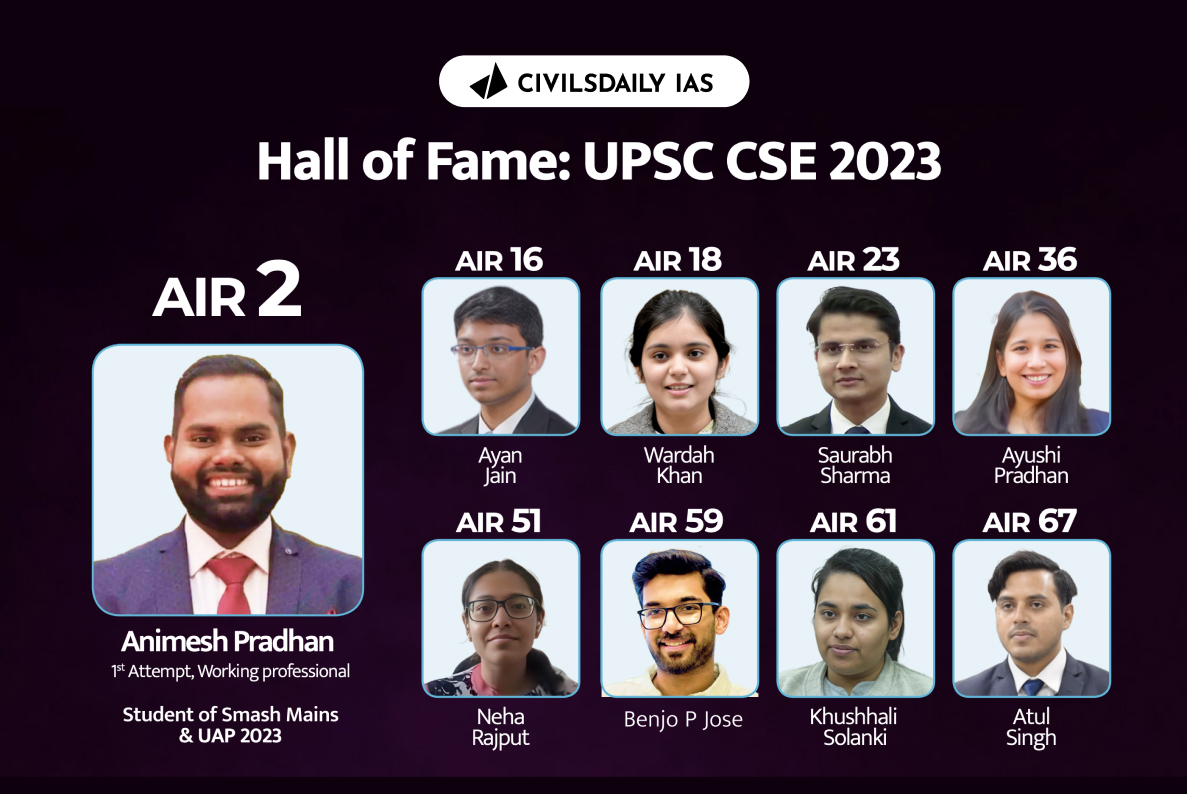
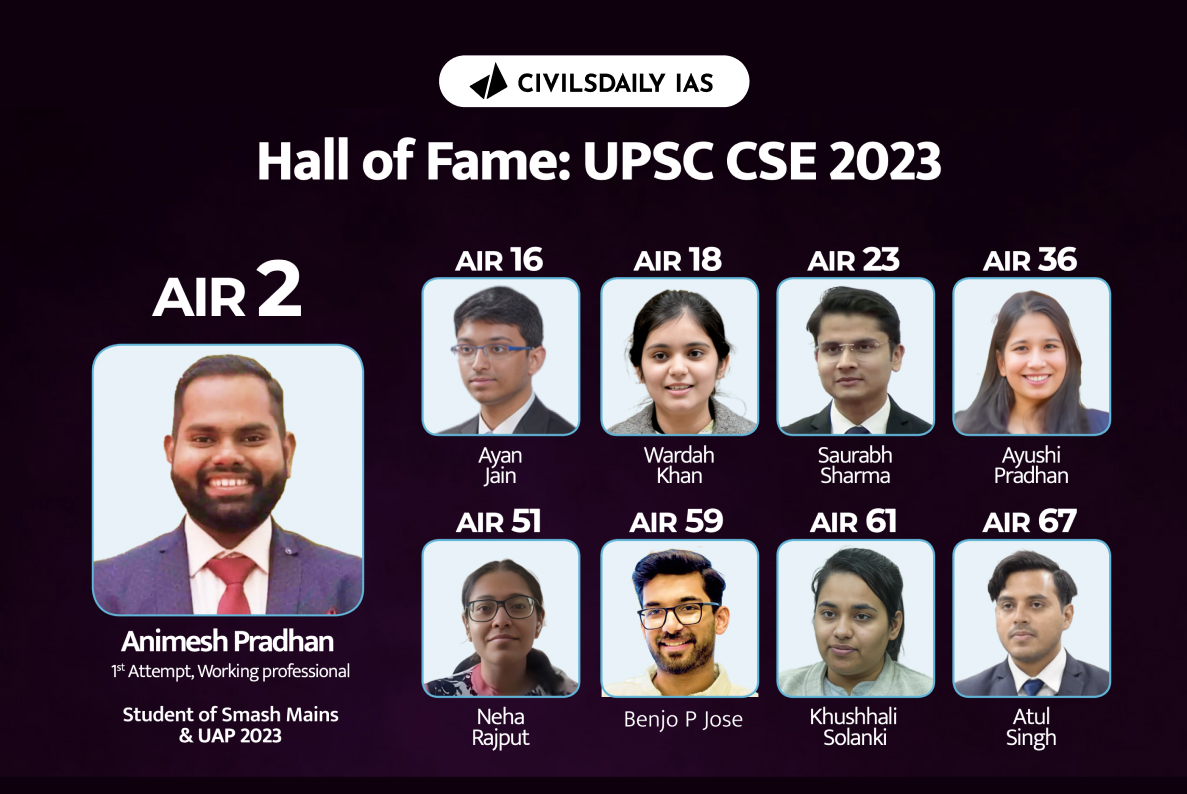
  • [November Batch For UPSC 2025 & 2026] Our UAP Mentorship Student Got AIR 2, Animesh Pradhan, First Attempt, Working Professional. Join UAP 2025 & 2026.

    [November Batch For UPSC 2025 & 2026] Our UAP Mentorship Student Got AIR 2, Animesh Pradhan, First Attempt, Working Professional. Join UAP 2025 & 2026.

    Animesh Pradhan, Age 24, Attempt: 1st, UPSC-CSE AIR 2.
    A graduate of NIT Rourkela, working as a full-time employee in Indian Oil Corp., he cleared UPSC CSE on his first attempt at the age of 24. He lost his father at an early age and was left with his Mother and elder sister. Unfortunately, his Mother passed away 40 days ago and couldn’t see her Son’s success and cherish it. His sister got married in January last year. He is a very committed, humble, and diligent student with high professional skills in managing work and studies.

    AIR 2, Animesh Pradhan at Civilsdaily Delhi Centre Today

    Schedule a 1-1 call with Civilsdaily’s Mentor for focused UPSC Prep

    UPSC preparation, IAS, UAP, Civilsdaily IAS, AIR 2, Animesh Pradhan

    With all the lows in life, he came with the hope that one day, his mother would see him becoming an IAS officer. Even though one wish in these two remained unachieved, wherever his mother is, her wishes will be with him, and if there is heaven at all, she might be celebrating this in that heaven.

    AIR 2, Animesh Pradhan On Call With Civilsdaily Mentor Showing His Gratitude

    We hope he achieves much more success and wish him enough grit to achieve whatever he wants in life. We expect him not to stop here and make this a mere small achievement in his list of aspirations.

    UPSC preparation, IAS, UAP, Civilsdaily IAS, AIR 2, Animesh Pradhan

    Animesh Pradhan enrolled in UAP Mentorship, and we made sure that he got his name on the list.

    Schedule a 1-1 call with Civilsdaily’s mentor

    Why Civilsdaily Mentorship and Programs Are Unique?

    Element No. 1: The System

    The first element of the powerful mentorship program at CD is – The System.

    The system is the method that is used during the program. One of the first surprising elements of a Civilsdaily program is that we do an early assessment of the current stage of aspirants. This is done in 10+ dimensions. Along with that, you get a lot of study material in advance. Unlike other courses that give you average content when the course begins, you get high-quality content for UPSC Prep well in advance. The reason for this is simple: The Mentor is not around to create “shock and awe”. Instead, the element that really helps learning is the “safe zone”. When aspirants get the material in advance, it gives them time to learn and absorb it. And then, when the initial assessments happen in the form of mock tests, the aspirant is able to apply the learning.

    One big reason we fail to learn and progress in UPSC Prep is that we do not have time to practice and attempt mocks. 

    No one is around to correct our mistakes. All we get is an endless stream of information, and mastery over exam is further away than ever. The notes themselves need design: lots of examples, relevance to PYQs, and easy-to-read language. The syllabus content needs to be broken up into consumable chunks. It’s design, design and more design. Check our atomic and flash notes, and you will understand what we mean. A well-constructed system is the first element of the program at CD but by no means the most important.

    Trying to cope with breathless content all at once is extremely intimidating for the aspirants. When you’re in a Civilsdaily Mentorship program, you get the content well in advance. There’s no need to create “shock and awe” while mentoring. You learn better when you know and own the content, using the course to practice and get better at it instead.

    Element No. 2: The Group

    A journey of a thousand miles can be really intimidating without a group because UPSC -CSE requires MCQ and answer writing aptitude, which requires constant practice. When you work alone, it’s easy to give up or get distracted. A group is what gets you ahead. But how do you get a group that’s focused, smart, and helpful? Do such groups even exist?

    There’s a saying in Africa: If you want to go quickly, go alone. If you want to go far, go with a group. And yet, not any group will do, will it? You’ve been in Telegram groups before, and the terms “kind, helpful and smart” don’t come to mind, do they?

    The one thing that will amaze you at Civilsdaily is how much you come to rely on your group. At first, many aspirants assume that their progress is a lonely journey. They learn what’s required, do their mocks, and when the course is done, they get to the finish line.

    And yet habit-creation reveals something entirely different.

    Snagging a bad habit is relatively easy. The moment you have to build a “good habit,” it’s a lot harder to stay motivated—unless, of course, you have a group.

    The aspirant groups at the Civilsdaily course are brilliant, focused and helpful.

    It almost seems hard to find such an active, helpful bunch of people. And the reason why you’ll find this level of camaraderie here, is because of several reasons. But the biggest reason of all is because we’re selective.

    We only let people in if they pass our filters.

    We also will not have overloading of any kind. Our program accepts limited aspirants. You simply will not see the ocean full of aspirants you see on other courses. Finally, we break up the groups into even smaller groups of six or seven aspirants. We keep it small and focused. This gets you closer to the finish line. In short, you go far.

    Element No. 3: Daily and Weekly Practice

    Without practice, mastery of this exam is difficult. Without daily and weekly practice, you have a “decay problem.” Other courses will give you content and mocks once a month and won’t provide any kind of mentor feedback. This is a recipe for disaster. You won’t know if you are making any progress at all. 

    That’s not how we run our programs.

    When you’re a part of the Civilsdaily Mentorship program, whether you’re a beginner or veteran, you have a schedule that is unique to you and your requirements for the duration of the program. As you’d expect, all this is designed with “tiny increments” in mind, but it is the daily and weekly practice that keeps away the decay.

    And everything is enriched with a 1:1 mentor call.

    Your Mentor checks your preparation and works with you to ensure progress—there is no exception. This enables you to learn bit by bit instead of being dumped with endless content that you might never use in an exam. When you consider all three elements: the system, the group, and the daily and weekly practice, you are able to create a habit. This habit leads to success in exam.

    Any new subject or mock can be a little unnerving when you don’t get regular practice. Our program is designed to help you learn layer by layer, and it involves small steps done daily. That way, if you press the “wrong button,” we can learn from the mistake, fix it, and move ahead at an even pace.

    This attention to detail is what makes the Civilsdaily Mentorship Program among the best. But you’ll find that out for yourself.

    To explore our Mentorship and schedule a pre-enrollment call, Fill this Mentorship Form (Free for the next 24 hours) to connect with our mentors.

    Schedule a 1-1 call

    The heart of the Civilsdaily platform is the Foundation Program and Ultimate Assessment Program (UAP). For years, aspirants have enrolled here because they couldn’t find such depth and passion towards quality content and Mentorship anywhere. Their search inevitably ends at Civilsdaily. Enrollment in these programs and Mentorship also makes us accountable to aspirants for the value they get. 

    In the past few years, we’ve worked quietly in the background with hundreds of aspirants; many now serve as IAS, IPS, IFS, and more. We are very proud of what we’ve achieved. Here are some of the recent rankers who show us gratitude.

    Fill up This Mentorship Form (Free for the next 24 hours) to connect with our mentors.

  • [UPSC Openhouse] By Pravin Garje, Senior UPSC Mentor || Clear UPSC with Structured Mentorship | Learn How AIR 2, 22, and 48 Used One-on-One Mentorship | Join on 17th Oct, at 7:00 PM

    [UPSC Openhouse] By Pravin Garje, Senior UPSC Mentor || Clear UPSC with Structured Mentorship | Learn How AIR 2, 22, and 48 Used One-on-One Mentorship | Join on 17th Oct, at 7:00 PM

    Register for the masterclass on 17th Oct 2024, 7 PM to Get an yearlong structured mentorship plan


    Civilsdaily, Mentorship, UPSC, IAS Ranker, Animesh Pradhan, Aaditya Pandey IAS

    Know more about Pravin Sir’s Masterclass

    Civilsdaily’s mentors have set a benchmark in one-on-one personalized mentorship, guiding numerous students over the years. Unlike common notions of mentorship, which often involve weekly calls or handing over timetables, Civilsdaily’s approach is structured and milestone-based. This method goes beyond ad-hoc doubt-solving, focusing on both the exam’s nuances and each student’s individual needs.

    Many IAS toppers have significantly benefited from our structured mentorship programs. Our goal is to help students become self-aware, a key aspect that sets mentorship apart from traditional classroom programmes. A standout feature is the support it offers during self-study, as we believe self-study combined with structured mentorship is all you need to clear the exam.

    Pravin Sir, who leads Civilsdaily’s mentorship programs, has helped thousands of students succeed through his guidance. Numerous testimonials reflect the positive impact of this approach. He will explain how past IAS toppers cleared the exam with just 5 hours of deep, focused study each day, using structured mentorship. The goal is to simplify exam preparation, and our micro-theme-based mentorship not only boosts efficiency but also builds confidence through consistent, focused study.

    Join Pravin Sir on Thursday, 17th October, at 7 PM to learn:

    1) Structured Milestone-Based Mentorship vs. Ad-Hoc Doubt Solving
    2) UPSC Preparation with Micro Themes
    3) Top Rankers’ Strategies for 5 Hours of Deep Study

    Join Senior mentor Pravin Sir on 17th October, at 7 PM. We will be conducting a FREE webinar exclusively for UPSC 2025 and 2026 aspirants giving you a sneak peak of what it takes to perform at the alpha level in your very first attempt.


    It will be a 45 minute webinar, post which we will open up the floor for all kinds of queries which a beginner must have. No questions are taboo and Pravin sir is known to be patiently solving all your doubts.

    Join us for a Zoom session on 17th Oct 2024, 7 PM. This session is a must-attend for you If you are attempting UPSC for the first time or have attempted earlier and now preparing for next year, then it is going to be a valuable session for you too.

    We will deal with all the aspects for a comprehensive UPSC Preparation. We’ll talk about starting with the basics, and move to advanced level.

    See you in the session”

    Register for the session for a focussed UPSC prep


    About Civilsdaily Mentorship Philosophy:

    At Civilsdaily, we treat Mentorship as a specialization. Not every Mains or interview candidate can be a mentor. Most such mentors will suggest cosmetic changes and will only help you evolve slowly. It is easy to find comfort in sentences like ‘every topper is different’ and’ they have their own path’. Finding what’s different about you and then figuring out your own path is why Mentorship is essential.

    We walk the talk by helping you craft your own way of preparation. A method that enhances your probability of qualifying UPSC-CSE in a single attempt. We give you that near-perfect certainty. Delivering this consistently to hundreds of aspirants (now rankers) in the past was challenging. We still stick to it and keep getting better at it with each passing year.

    At CD, we understand the science and the art of everything UPSC. If you have a problem, we will sit with you and find a solution. If that doesn’t work, then we try solution 2. Eventually, we will make sure you end up making progress. What’s the point of any content, program, or mentorship without progress? This is precisely why aspirants trust they have the best shot at clearing the exam with Civilsdaily.

    We invest a significant amount of time, effort, and energy into creating lectures, notes, and tests, understanding your needs as an aspirant. We take this responsibility seriously because, ultimately, your future depends on it.

    The heart of the Civilsdaily platform is the Yearlong Mentorship Program. For years, aspirants have enrolled here because they couldn’t find such depth and passion towards quality content and Mentorship anywhere. Their search inevitably ends at Civilsdaily. Enrollment in these programs and Mentorship also makes us accountable to aspirants for the value they get.

    In the past few years, we’ve worked quietly in the background with hundreds of aspirants; many now serve as IAS, IPS, IFS and more. We are very proud of what we’ve achieved.Overwhelmed by quick fixes, content overload and messy timetables which never work? Join us as we take you through a realistic and relatable roadmap for UPSC 2026 preparation. 

    In this masterclass, you will get:

    1. A 45-minute deep dive on how to plan your UPSC strategy from the start to the end.
    2. How do first-attempt IAS Rankers get the most out of their one year prep?
    3. Insider tips that only the top IAS and IPS rankers know and apply to get rank.

    By the end, you’ll have razor-sharp clarity and a clear path to crack UPSC with confidence and near-perfect certainty. 

    Join UPSC session on 17th Oct 2024, 7 PM

    (Don’t wait—the next webinar won’t be until Nov 24)


    These masterclasses are packed with value. They are conducted in private with a closed community. We rarely open these webinars for everyone for free. This time we are keeping it for 300 seats only.

    Ready to attend the UPSC Webinar?


    Not sure yet?

    We recommend you register here. It takes less than 10 seconds to register.

    • No spam! Once in a while, we’ll only send you high-quality exam-related content. 
    • We will inform you about the upcoming Masterclasses that might benefit you.
    • You can demand one free mentorship call from verified Civilsdaily mentors. 
    • You can always choose to unsubscribe. 
  • UPSC पद और वेतन सूची

    UPSC भारत में एक केंद्रीय निकाय है जो सिविल सेवा परीक्षा (CSE) जैसी परीक्षाओं का आयोजन करता है, जिसके माध्यम से IAS, IPS, IFS आदि जैसी शीर्ष सरकारी सेवाओं में उम्मीदवारों की भर्ती की जाती है। UPSC सिविल सेवा के साथ-साथ रक्षा सेवाओं के लिए भी उम्मीदवारों की भर्ती करता है।

    सामग्री सूची

    • UPSC पद सूची और वेतन
    • UPSC सेवाओं की सूची
    • IAS अधिकारी की नौकरी और वेतन
    • भारत में IPS अधिकारी का मासिक वेतन
    • IFS – UPSC नौकरियों की सूची और वेतन
    • IRS – UPSC नौकरियों की सूची
    • UPSC नौकरियां – पात्रता
    • CSE तैयारी रणनीति पर ऑनलाइन कार्यशाला

    UPSC पद सूची और वेतन
    सिविल सेवा परीक्षा (CSE) एक राष्ट्रीय स्तर की प्रतिस्पर्धात्मक परीक्षा है। यह परीक्षा UPSC द्वारा लगभग हर साल आयोजित की जाती है।

    CSE को आमतौर पर IAS परीक्षा के नाम से भी जाना जाता है।

    UPSC CSE के माध्यम से भारत सरकार के अंतर्गत 3 सेवाओं के लिए नौकरशाहों (सिविल सेवकों/उच्च सरकारी अधिकारियों) की भर्ती की जाती है:

    • अखिल भारतीय सेवाएं
    • ग्रुप A सेवाएं या केंद्रीय सेवाएं
    • ग्रुप B सेवाएं या राज्य सेवाएं

    ग्रुप A और ग्रुप B दोनों अधिकारियों का प्रारंभिक वेतन INR 56,100 से शुरू होता है, जिसमें यात्रा भत्ता (TA), महंगाई भत्ता (DA), और मकान किराया भत्ता (HRA) शामिल नहीं हैं। कैबिनेट सचिव के पद के लिए IAS अधिकारी का अधिकतम मासिक वेतन INR 2,50,000 तक पहुंच सकता है। हालांकि, वेतन वरिष्ठता और पद के अनुसार बदलता है।

    हर साल लाखों भारतीय युवा इस परीक्षा की तैयारी शुरू करते हैं, लेकिन केवल कुछ ही उम्मीदवार इसे पास कर पाते हैं क्योंकि यह देश की सबसे कठिन और अप्रत्याशित परीक्षाओं में से एक है।

    UPSC सेवाओं की सूची

    अखिल भारतीय सेवाएं:

    • भारतीय प्रशासनिक सेवा (IAS)
    • भारतीय विदेश सेवा (IFS)
    • भारतीय पुलिस सेवा (IPS)

    ग्रुप A सेवाएं या केंद्रीय सेवाएं:

    • भारतीय लेखा और लेखा परीक्षा सेवा (IA&AS)
    • भारतीय सिविल लेखा सेवा (ICAS)
    • भारतीय कॉर्पोरेट कानून सेवा (ICLS)
    • भारतीय रक्षा लेखा सेवा (IDAS)
    • भारतीय रक्षा संपदा सेवा (IDES)
    • भारतीय सूचना सेवा, जूनियर ग्रेड (IIS)
    • भारतीय डाक सेवा (IPoS)
    • भारतीय P&T लेखा और वित्त सेवा (IP&TAFS)
    • भारतीय रेलवे सुरक्षा बल सेवा (IRPFS)
    • भारतीय राजस्व सेवा (कस्टम और अप्रत्यक्ष कर) (IRS-C&IT)
    • भारतीय राजस्व सेवा (आयकर) (IRS-IT)
    • भारतीय व्यापार सेवा (ITS)

    ग्रुप B सेवाएं या राज्य सेवाएं:

    • सशस्त्र बल मुख्यालय सेवा
    • दिल्ली, अंडमान और निकोबार द्वीप समूह, लक्षद्वीप, दमन और दीव, और दादरा और नगर हवेली सिविल सेवा (DANICS)
    • दिल्ली, अंडमान और निकोबार द्वीप समूह, लक्षद्वीप, दमन और दीव, और दादरा और नगर हवेली पुलिस सेवा (DANIPS)
    • पांडिचेरी सिविल सेवा (PONDICS)

    UPSC नौकरी सूची और वेतन
    सभी UPSC पदों की वेतन संरचना लेवल 10 पे मैट्रिक्स से शुरू होती है, और वेतन बैंड ₹56,100 से ₹2,50,000 प्रति माह के बीच होता है।

    यह वेतनमान वरिष्ठता, अनुभव और पद के अनुसार बढ़ता जाता है, जिसमें ग्रुप A और ग्रुप B अधिकारियों को भी अन्य भत्ते जैसे महंगाई भत्ता (DA), यात्रा भत्ता (TA), और मकान किराया भत्ता (HRA) प्रदान किए जाते हैं।

    उच्चतम पद, जैसे कैबिनेट सचिव के लिए, वेतन ₹2,50,000 प्रति माह तक हो सकता है।

    UPSC IAS अधिकारी की नौकरी और वेतन

    IAS पदसेवा के वर्षग्रेड पेमूल वेतन
    एसडीएम, अवर सचिव, सहायक सचिव1 से 4 वर्ष5400Rs. 56, 100
    एडीएम, उप सचिव, अवर सचिव5 से 8 वर्ष6600Rs. 67,700
    डीएम, संयुक्त सचिव, उप सचिव9 से 12 वर्ष 7600Rs. 78, 800
    डीएम, विशेष सचिव सह आयुक्त, निदेशक 13 से 16 वर्ष8700Rs. 1, 18, 500
    मंडल आयुक्त, सचिव सह आयुक्त, संयुक्त सचिव16 से 24 वर्ष8700Rs. 1, 44, 200
    मंडल आयुक्त, प्रधान सचिव, अतिरिक्त सचिव24 से 30 वर्ष12000Rs. 1, 82, 200
    मुख्य सचिव, अतिरिक्त मुख्य सचिव30 से 33 वर्षNARs. 2, 05, 400
    कैबिनेट सचिव और सचिव34 से 36 वर्षNARs. 2, 25, 000
    भारत के कैबिनेट सचिव37+ वर्षNARs. 2, 50, 00

    भारत में IPS अधिकारी का मासिक वेतन

    IPS पदमूल वेतन
    उप पुलिस अधीक्षकRs. 56,100
    अतिरिक्त पुलिस अधीक्षकRs. 67,700
    वरिष्ठ पुलिस अधीक्षकRs. 78,800
    उप निरीक्षक जनरल पुलिसRs. 1,31,100
    निरीक्षक जनरल पुलिसRs. 1,44,200
    पुलिस महानिदेशकRs. 2,05,400
    सीबीआई या आईबी के निदेशक / पुलिस महानिदेशकRs. 2,25,000

    IRS – UPSC नौकरियों की सूची

    IRS पदवेतनमान
    आयकर सहायक आयुक्त₹15,600 से ₹39,100 + ग्रेड पे ₹5,400
    आयकर संयुक्त आयुक्त₹15,600 से ₹39,100 + ग्रेड पे ₹6,600
    आयकर उप आयुक्त₹15,600 से ₹39,100 + ग्रेड पे ₹7,600
    आयकर अतिरिक्त आयुक्त₹37,400 से ₹67,000 + ग्रेड पे ₹8,700
    आयकर आयुक्त₹37,400 से ₹67,000 + ग्रेड पे ₹10,000
    आयकर मुख्य आयुक्त₹75,000 से ₹80,000
    आयकर प्रधान आयुक्त₹75,000 से ₹80,000
    आयकर प्रधान मुख्य आयुक्त₹80,000 (स्थिर)

    UPSC नौकरियों की पात्रता

    राष्ट्रीयता:

    1. भारतीय प्रशासनिक सेवा (IAS), भारतीय विदेश सेवा (IFS), और भारतीय पुलिस सेवा (IPS) के लिए उम्मीदवार को भारत का नागरिक होना चाहिए।
    2. अन्य सेवाओं के लिए, उम्मीदवार निम्न में से कोई भी हो सकता है:
      (a) भारत का नागरिक
      (b) नेपाल का नागरिक
      (c) भूटान का नागरिक
      (d) तिब्बती शरणार्थी जो 1 जनवरी 1962 से पहले भारत आए थे और स्थायी रूप से भारत में बसने का इरादा रखते थे
      (e) भारतीय मूल का व्यक्ति जो पाकिस्तान, बर्मा, श्रीलंका, केन्या, उगांडा, संयुक्त गणराज्य तंजानिया, जाम्बिया, मलावी, जायर, इथियोपिया और वियतनाम से भारत में स्थायी रूप से बसने का इरादा रखते हुए आया हो।

    ध्यान दें:
    उम्मीदवारों में से जिनके लिए पात्रता प्रमाणपत्र की आवश्यकता है, उन्हें परीक्षा में सम्मिलित किया जा सकता है, लेकिन नियुक्ति का प्रस्ताव केवल तब दिया जाएगा जब उन्हें भारत सरकार द्वारा आवश्यक पात्रता प्रमाणपत्र जारी किया जाएगा।

    न्यूनतम शैक्षिक योग्यता:

    मापदंडविवरण
    न्यूनतम शैक्षिक योग्यताउम्मीदवार के पास किसी भी मान्यता प्राप्त विश्वविद्यालय से स्नातक (ग्रेजुएट) डिग्री होनी चाहिए, जो भारत के केंद्रीय या राज्य विधानमंडल द्वारा अधिनियमित हो, या संसद द्वारा स्थापित संस्थानों से प्राप्त हो, या विश्वविद्यालय अनुदान आयोग अधिनियम, 1956 की धारा 3 के तहत विश्वविद्यालय के रूप में मान्यता प्राप्त हो, या समकक्ष योग्यता प्राप्त हो।
    आयु सीमा(1) उम्मीदवार की आयु कम से कम 21 वर्ष और अधिकतम 32 वर्ष होनी चाहिए।
    आयु में छूटअधिकतम आयु सीमा को निम्नलिखित के अनुसार छूट दी जा सकती है:
    (a) अनुसूचित जाति/जनजाति (SC/ST)5 वर्ष तक
    (b) अन्य पिछड़ा वर्ग (OBC)3 वर्ष तक (आरक्षण के पात्र उम्मीदवारों के लिए)
    (c) रक्षा सेवा के कर्मी3 वर्ष तक (यदि विदेशी देश के साथ युद्ध के दौरान या disturbed क्षेत्र में ऑपरेशन के दौरान विकलांग हुए हैं)
    (d) पूर्व सैनिक/कमिशन अधिकारी (ECOs/SSCOs)5 वर्ष तक (पूर्व सैनिकों के लिए, जिनका कम से कम 5 वर्षों का सैन्य सेवा अनुभव है और जो रिहा हो गए हैं)
    (e) ECOs/SSCOs5 वर्ष तक (जो 5 वर्षों की सैन्य सेवा पूरी कर चुके हैं और जिनकी नियुक्ति बढ़ाई गई है)
    (f) बेंचमार्क विकलांगता वाले व्यक्ति (PwBD)10 वर्ष तक (जिनमें अंधत्व/दृष्टिहीनता, बहरापन/कम सुनाई देना, मोटर डिसेबिलिटी, मानसिक बीमारी, मस्तिष्क पक्षाघात आदि शामिल हैं)

    उम्मीदवार के पास किसी भी मान्यता प्राप्त विश्वविद्यालय से स्नातक (ग्रेजुएट) डिग्री होनी चाहिए, जो भारत के केंद्रीय या राज्य विधानमंडल द्वारा अधिनियमित हो, या संसद द्वारा स्थापित किसी अन्य शैक्षिक संस्थान से प्राप्त हो, या विश्वविद्यालय अनुदान आयोग अधिनियम, 1956 की धारा 3 के तहत विश्वविद्यालय के रूप में घोषित हो, या समकक्ष योग्यता प्राप्त हो।

    आयु:

    (1) उम्मीदवार की आयु 21 वर्ष होनी चाहिए और 32 वर्ष से अधिक नहीं होनी चाहिए।

    (2) उपर्युक्त निर्धारित आयु सीमा में निम्नलिखित परिस्थितियों में छूट दी जा सकती है:

    (a) अनुसूचित जाति या अनुसूचित जनजाति से संबंधित उम्मीदवारों के लिए अधिकतम पांच वर्ष की छूट।

    (b) अन्य पिछड़ा वर्ग (OBC) से संबंधित उम्मीदवारों के लिए अधिकतम तीन वर्ष की छूट, यदि वे आरक्षण का लाभ लेने के योग्य हैं।

    (c) रक्षा सेवा कर्मियों के लिए अधिकतम तीन वर्ष की छूट, जो किसी विदेशी देश के साथ युद्ध या disturbed क्षेत्र में ऑपरेशन के दौरान विकलांग हो गए हैं और इसके परिणामस्वरूप रिहा हुए हैं।

    (d) पूर्व सैनिकों के लिए, जिनमें कम से कम पांच वर्षों की सैन्य सेवा की हो, और जिनमें कमिशन अधिकारी और इमरजेंसी कमिशन अधिकारी (ECOs)/शॉर्ट सर्विस कमिशन अधिकारी (SSCOs) शामिल हैं, अधिकतम पांच वर्ष की छूट।

    (e) ECOs/SSCOs के लिए जिन्होंने सैन्य सेवा के पांच वर्षों का प्रारंभिक कार्यकाल पूरा किया है, अधिकतम पांच वर्ष की छूट।

    (f) बेंचमार्क विकलांगता वाले व्यक्तियों (PwBD) के लिए अधिकतम 10 वर्ष की छूट, जिनमें निम्नलिखित विकलांगताएं शामिल हैं:
    (i) अंधता और दृष्टिहीनता;
    (ii) बहरापन और सुनने में कठिनाई;
    (iii) मोटर विकलांगता जिसमें मस्तिष्क पक्षाघात, कुष्ठ रोग, बौनेपन, अम्लीय हमले के शिकार, और मांसपेशियों का कमजोर होना शामिल है;
    (iv) आत्मकेंद्रित, बौद्धिक विकलांगता, विशेष शैक्षिक विकलांगता और मानसिक बीमारी;
    (v) उपर्युक्त श्रेणियों (i) से (iv) में से किसी एक या अधिक विकलांगताओं के साथ व्यक्तियों में से बहु-विकलांगता, जिसमें बहरा-अंधा होना भी शामिल है।

    प्रवेश प्रयासों की संख्या:

    प्रत्येक उम्मीदवार, जो परीक्षा में बैठने के योग्य है, उसे CSE में कुल छह (6) प्रयास की अनुमति होगी। हालांकि, SC/ST/OBC और PwBD श्रेणी के उम्मीदवारों के लिए प्रयासों की संख्या में छूट उपलब्ध होगी, जो अन्यथा योग्य हैं। इस श्रेणी के उम्मीदवारों के लिए उपलब्ध प्रयासों की संख्या छूट के अनुसार निम्नलिखित है:

    फीस:

    उम्मीदवारों (महिला/SC/ST/बेंचमार्क विकलांगता वाले उम्मीदवारों को छोड़कर, जिन्हें शुल्क भुगतान से छूट प्राप्त है) को 100 रुपये (सिर्फ सौ रुपये) की शुल्क राशि का भुगतान करना आवश्यक है।

    UPSC CSE को कैसे क्लियर करें!

    1. पाठ्यक्रम को अपने कमरे की तरह जानें।
    2. पिछले वर्षों के प्रश्न पत्रों का विश्लेषण करें।
    3. NCERT किताबों से शुरुआत करें।
    4. उन्नत संदर्भ पुस्तकों से नोट्स बनाएं।
    5. दैनिक MCQs का प्रयास करें।
    6. दैनिक उत्तर लेखन का अभ्यास करें।
    7. मेंटर के मार्गदर्शन में आगे बढ़ें।
  • [UPSC Openhouse] By Shashwat Agrawal, IPS 2024 | Are 8 Months Enough to Crack UPSC CSE? | Get an 8-Month Blueprint for UPSC 2025 || Join on 13th Oct 2024 at 7:00 PM

    [UPSC Openhouse] By Shashwat Agrawal, IPS 2024 | Are 8 Months Enough to Crack UPSC CSE? | Get an 8-Month Blueprint for UPSC 2025 || Join on 13th Oct 2024 at 7:00 PM

    Register for the masterclass on 13th Oct 2024, 7 PM to Get an 8-Month Blueprint for UPSC 2025


    IAS, Civilsdaily, UPSC, Mentorship

    Know more about the IPS Shashwat Sir’s Masterclass

    Toppers like IAS Artika Shukla in the past started their UPSC preparation in the month of October. In her words, she began with “shivering hands and a shaking leg,” and the rest is history. So, if you think October isn’t the right month to start, you need to seriously reconsider your choice. Sure, it might be difficult, but with the proper strategy and the right timetable, it is definitely possible.

    Roughly 8 months remain until Prelims, and an additional 85 days for Mains. While preparing for Prelims and Mains in an integrated manner is recommended, Prelims usually has its own nuances. Subjects like Art and Culture and the static part of Science and Tech can sometimes trouble aspirants, especially in terms of how much time to allocate for their preparation.

    Then, there are the obvious Big 4 (History, Polity, Economy, and Environment) that need to be prioritized. Determining what constitutes a high-focus area and what does not is often what confuses aspirants the most.

    Shashwat Agarwal, IPS, is here to help you out with this. He will provide a blueprint for the next 8 months and address all your queries:

    1) How to integrate static topics with current affairs
    2) Priority vs. Non-Priority topics
    3) Everything you need to know about the 2025 UPSC attempt
    If you are starting now, don’t miss the session.

    Join IPS Shashwat Sir on 13th October, Sunday, at 7:00 PM. We will be conducting a FREE webinar exclusively for UPSC 2025 aspirants giving you a sneak peak of what it takes to perform at the alpha level in your very first attempt.


    It will be a 45 minute webinar, post which we will open up the floor for all kinds of queries which a beginner must have. No questions are taboo and IPS, Shashwat sir is known to be patiently solving all your doubts.

    Join us for a Zoom session on 13th Oct 2024, 7 PM. This session is a must-attend for you If you are attempting UPSC for the first time or have attempted earlier and now preparing for next year, then it is going to be a valuable session for you too.

    We will deal with all the aspects for a comprehensive UPSC Preparation. We’ll talk about starting with the basics, and move to advanced level.

    See you in the session”

    Register for the session for a focussed UPSC prep


    About Civilsdaily Mentorship Philosophy:

    At Civilsdaily, we treat Mentorship as a specialization. Not every Mains or interview candidate can be a mentor. Most such mentors will suggest cosmetic changes and will only help you evolve slowly. It is easy to find comfort in sentences like ‘every topper is different’ and’ they have their own path’. Finding what’s different about you and then figuring out your own path is why Mentorship is essential.

    We walk the talk by helping you craft your own way of preparation. A method that enhances your probability of qualifying UPSC-CSE in a single attempt. We give you that near-perfect certainty. Delivering this consistently to hundreds of aspirants (now rankers) in the past was challenging. We still stick to it and keep getting better at it with each passing year.

    At CD, we understand the science and the art of everything UPSC. If you have a problem, we will sit with you and find a solution. If that doesn’t work, then we try solution 2. Eventually, we will make sure you end up making progress. What’s the point of any content, program, or mentorship without progress? This is precisely why aspirants trust they have the best shot at clearing the exam with Civilsdaily.

    We invest a significant amount of time, effort, and energy into creating lectures, notes, and tests, understanding your needs as an aspirant. We take this responsibility seriously because, ultimately, your future depends on it.

    The heart of the Civilsdaily platform is the Yearlong Mentorship Program. For years, aspirants have enrolled here because they couldn’t find such depth and passion towards quality content and Mentorship anywhere. Their search inevitably ends at Civilsdaily. Enrollment in these programs and Mentorship also makes us accountable to aspirants for the value they get.

    In the past few years, we’ve worked quietly in the background with hundreds of aspirants; many now serve as IAS, IPS, IFS and more. We are very proud of what we’ve achieved.Overwhelmed by quick fixes, content overload and messy timetables which never work? Join us as we take you through a realistic and relatable roadmap for UPSC 2026 preparation. 

    In this masterclass, you will get:

    1. A 45-minute deep dive on how to plan your UPSC strategy from the start to the end.
    2. How do first-attempt IAS Rankers get the most out of their one year prep?
    3. Insider tips that only the top IAS and IPS rankers know and apply to get rank.

    By the end, you’ll have razor-sharp clarity and a clear path to crack UPSC with confidence and near-perfect certainty. 

    Join UPSC session on 13th Oct 2024, 7 PM

    (Don’t wait—the next webinar won’t be until Nov 24)


    These masterclasses are packed with value. They are conducted in private with a closed community. We rarely open these webinars for everyone for free. This time we are keeping it for 300 seats only.

    Ready to attend the UPSC Webinar?


    Not sure yet?

    We recommend you register here. It takes less than 10 seconds to register.

    • No spam! Once in a while, we’ll only send you high-quality exam-related content. 
    • We will inform you about the upcoming Masterclasses that might benefit you.
    • You can demand one free mentorship call from verified Civilsdaily mentors. 
    • You can always choose to unsubscribe. 
  • UPSC CSE Mains GS4 Microthemes Analysis

    GS4 Micro-themes Analysis

    UPSC GS4 Paper, 2024
    UPSC SyllabusMicro themesUPSC PYQsYearMarks
    1.Ethics and Human Interface: Essence, Determinants and Consequences of Ethics in – Human Actions; Dimensions of Ethics; Ethics – in Private and Public Relationships.Applied Ethics“In Indian culture and value system, an equal opportunity has been provided irrespective of gender identity. The number of women in public service has been steadily increasing over the years.” Examine the gender specific challenges faced by female public servants and suggest to increase their efficiency in discharging their duties and maintaining high standards of probity.202410
    Gobal warming and climate change are the outcomes of human greed in the name of development, indicating the direction in which extinction of organisms including human beings is heading towards loss of life on Earth. How do you put an end to this to protect life and bring equilibrium between the society and the environment ?202410
    The application of Artificial Intelligence as a dependable source of input for administrative rational decision-making is a debatable issue. Critically examine the statement from the ethical point of view.202410
    Determinants of Ethics“The concept of Just and Unjust is contextual. What was just a year back, may turn out to be unjust in today’s context. Changing context should be constantly under scrutiny to prevent miscarriage of justice.” Examine the above statement with suitable examples.202410
    Dimensions of Ethics“Ethics encompasses several key dimensions that are crucial in guiding individuals and organizations towards morally responsible behaviour.” Explain the key dimensions of ethics that influence human actions Discuss how these dimensions shape ethical decision-making in the professional context.202410
    3.Attitude: Content, Structure, Function; its Influence and Relation with Thought and Behaviour; Moral and Political Attitudes; Social Influence and Persuasion.Attitude for Civil ServantsMindless addiction to Form, ignoring the Substance of the matter, results in rendering of injustice. A perceptive civil servant is one who ignores such literalness and carries out true intent. Examine the above statement with suitable illustrations.202410
    5.Contributions of Moral Thinkers and Philosophers from India and WorldImmanuel Kant“In law, a man is guilty when he violates the rights of others. In ethics, he is guilty if he only thinks of doing so.” — Immanuel Kant202410
    Sardar Patel“Faith is of no avail in the absence of strength. Faith and strength, both are essential to accomplish any great work.” — Sardar Patel202410
    Swami Vivekananda“Learn everything that is good from others, but bring it in, and in your own way absorb it, do not become others.” — Swami Vivekananda202410
    7.Public/Civil Service Values and Ethics in Public Administration: Status and Problems; Ethical Concerns and Dilemmas in Government and Private Institutions; Laws, Rules, Regulations and Conscience as Sources of Ethical Guidance; Accountability and Ethical Governance; Strengthening of Ethical and Moral Values in Governance; ethical Issues in International Relations and Funding; Corporate GovernanceEthical Issues in International Relations and funding“It is not enough to talk about peace, one must believe in it; and it is not enough to believe in it, one must act upon it” In the present context, the major weapon industries of the developed nations are adversely influencing continuation of number of wars for their own self-interest, all around the world. What are the ethical considerations of the powerful nations in today’s international arena to stop continuation of ongoing conflicts?202410
    Laws, Rules, Regulations and Conscience as Ethical GuidanceThe soul of the new law, Bharatiya Nyaya Sanhita (BNS) is Justice, Equality and Impartiality based on Indian culture and ethos. Discuss this in the light of major shift from a doctrine of punishment to justice in the present judicial system.202410
    8.Probity in Governance: Concept of Public Service; Philosophical Basis of Governance and Probity; Information Sharing and Transparency in Government, Right to information; Codes of Ethics, Codes of Conduct, Citizen’s Charters, Work Culture, Quality of Service Delivery, utilization of Public Funds, Challenges of Corruption.Codes of Ethics and Codes of ConductThe ‘Code of Conduct and ‘Code of Ethics’ are the sources of guidance in public administration. There is code of conduct already in operation, whereas code of ethics is not yet put in place. Suggest a suitable mode. for code of ethics to maintain integrity, probity and transparency. governance.202410
    Quality of Service DeliveryMission Karmayogi is aiming for maintaining a very high standard of conduct and behaviour to ensure efficiency for serving citizens and in developing oneself. How will this scheme empower the civil servants in enhancing productive efficiency and delivering the services at the grassroots level?202410