Amid the ongoing Iran–US-Israel conflict (2026), major Gulf producers like Qatar, Kuwait, and Bahrain have invoked force majeure on oil and gas exports due to shipping disruptions and attacks on infrastructure.
What is Force Majeure?
Force majeure is a contractual clause that allows a party to suspend or cancel its obligations without penalty when extraordinary events make performance impossible.
Origin: French term meaning “superior force”
Common in international trade, energy contracts, and maritime law
Examples of Force Majeure Events
Wars and armed conflicts
Natural disasters (earthquakes, floods)
Pandemics (e.g., COVID-19)
Government actions or sanctions
[2024] Consider the following statements: Statement-I: Sumed pipeline is a strategic route for Persian Gulf oil and natural gas shipments to Europe. Statement-II: Sumed pipeline connects the Red Sea with the Mediterranean Sea. Which one of the following is correct in respect of the above statements? (a) Both Statement-I and Statement-II are correct and Statement-II explains Statement-I (b) Both Statement-I and Statement-II are correct, but Statement-II does not explain Statement-I (c) Statement-I is correct, but Statement-II is incorrect (d) Statement-I is incorrect, but Statement-II is correct
PYQ Relevance[UPSC 2017] Climate Change is a global problem. How India will be affected by climate change? How Himalayan and coastal states of India will be affected by climate change?Linkage: Climate change in India largely manifests through water stress, floods, glacial melt, and sea-level rise. The article links these impacts to Himalayan river instability and coastal aquifer salinisation, highlighting regional climate vulnerability.
Why in the News?
The COP30 Climate Summit in Belém (Brazil, 2025) introduced the first global adaptation indicators integrating Water, Sanitation and Hygiene (WASH) systems into climate accountability frameworks. Now there is a major shift in global climate governance: water systems are emerging as the central pillar of climate resilience. The outcomes of the UN Climate Conference COP30 and the Belém Adaptation Indicators place water management, sanitation, and hydrological governance at the core of adaptation strategies.
How does climate change manifest primarily through water systems in India?
Hydrological Disruptions: Climate change alters rainfall patterns, leading to extreme floods and prolonged droughts affecting urban and rural economies.
Glacial Melt Impact:Himalayan glacier retreat destabilizes river systems, affecting long-term water availability for major rivers like the Ganga and Brahmaputra.
Saline Intrusion: Rising sea levels cause salinisation of coastal aquifers, contaminating freshwater sources in coastal regions.
Agricultural Vulnerability:Agriculture contributes ~40% of anthropogenic methane emissions, particularly from rice cultivation, livestock systems, and organic waste.
The Belém Adaptation Indicators are a set of 59-60 voluntary, global measures adopted at the COP30 climate summit in Belém, Brazil (scheduled for November 2025) to track how well countries are adapting to climate change.
Developed through a two-year UN process under the UAE-Belém Work Programme, they aim to provide a shared, practical language for monitoring resilience against climate impacts like floods, droughts, and heatwaves.
Key Features of the Belém Adaptation Indicators are as follows:
Purpose: To monitor progress toward the Global Goal on Adaptation (GGA) adopted under the Paris Agreement, focusing on whether communities are becoming safer and better able to cope with climate threats
Focus Areas: The measures look at essential sectors such as water security, food systems, health, housing, early warning systems, ecosystems, and local economies
Scope: The indicators emphasize protecting vulnerable populations, including women, indigenous groups, and people with disabilities
Voluntary Nature: They are designed to be flexible rather than a rigid top-down mandate, allowing countries to adapt them to their national circumstances.
How do Belém Adaptation Indicators redefine climate governance?
Climate-Resilient Water Systems: Focus on reducing water scarcity and increasing resilience against floods and droughts.
Universal Drinking Water Access: Ensures safe drinking water availability for all communities.
Climate-Resilient Sanitation Infrastructure: Strengthens sanitation systems capable of functioning during extreme climate events.
Multi-Hazard Early Warning Systems: Establishes universal early warning coverage by 2027.
Hydrometeorological Capacity: Strengthens meteorological monitoring and national vulnerability assessments by 2030.
How is India strengthening water governance to build climate resilience?
Institutional Consolidation: Establishment of the Ministry of Jal Shakti (2019) integrates water governance across sectors.
Water Vision 2047: Aligns national water policy with sustainability, equity, and climate resilience goals.
Aquifer Mapping Programme:National Aquifer Mapping and Management Programme (NAQUIM 2.0) advances aquifer-level planning based on hydrogeological data.
River Rejuvenation:National Mission for Clean Ganga (NMCG) expands focus beyond sewage treatment to biodiversity restoration and river basin management.
Integrated Water Management: Encourages linking scientific hydrology with policy planning.
What systemic risks threaten India’s climate-water resilience?
Unequal Water Distribution: Water scarcity remains acute and unevenly distributed across regions.
Water-Linked Disasters: Most climate disasters in India are water-related (floods, droughts, cyclones).
Fragile Adaptation Finance: Global climate finance pathways remain uncertain despite projections of $1.3 trillion annually by 2035.
Recovery Bias: Lack of predictable finance shifts focus toward post-disaster recovery rather than long-term resilience planning.
Infrastructure Stress: Water supply systems require climate stress testing and diversification of water sources.
Why is digital fragmentation a challenge for climate-water governance?
Fragmented Data Systems: Hydrological and meteorological datasets remain distributed across institutions without integration.
Limited AI-Driven Decision Support: Despite large datasets, real-time AI integration in governance remains weak.
Planning Disconnect: Water data is rarely linked to budgeting, crop advisories, insurance mechanisms, or disaster response systems.
Need for Interoperable Platforms: Integration of hydrological data, crop advisory systems, insurance frameworks, and financial flows is essential.
How can India lead global climate adaptation through water governance?
Policy Convergence: Align national missions such as drinking water coverage, irrigation efficiency, and urban water reforms with climate adaptation.
Digital Public Infrastructure: Utilize India’s strength in digital governance systems to integrate climate-water datasets.
Operational Adaptation: Shift from infrastructure creation to functional system resilience.
Global South Leadership: Demonstrate scalable climate adaptation models applicable to other developing countries.
Conclusion
Water systems are emerging as the operational backbone of climate adaptation. India possesses strong institutional foundations, including water governance reforms, digital infrastructure, and river restoration programmes. However, translating policy ambition into measurable climate resilience requires integrating hydrological data, strengthening climate finance, and ensuring equitable water distribution. By aligning national missions with global adaptation frameworks, India can emerge as a leader in climate-resilient water governance for the Global South.
The U.S. government recently launched two Section 301 investigations against India and other countries to examine alleged excess industrial capacity and the use of forced labour in supply chains. The move comes amid an evolving U.S. tariff regime following a U.S. Supreme Court ruling that upheld presidential authority under the International Emergency Economic Powers Act (IEEPA) to impose tariffs.
What is Section 301 of the Trade Act of 1974?
It is designed to address unfair foreign practices affecting U.S. commerce.
Section 301 may be used to respond to unjustifiable, unreasonable, or discriminatory foreign government practices that burden or restrict U.S. commerce.
What are Section 301 investigations and why are they significant?
Legal Framework: Section 301 of the Trade Act of 1974 authorizes the U.S. government to investigate foreign policies that burden or restrict U.S. commerce.
Trade Enforcement Tool: Enables unilateral responses such as tariffs, trade restrictions, or sanctions against countries found violating fair trade norms.
Historical Precedent: The provision was extensively used during the U.S.-China trade war, leading to tariffs on hundreds of billions of dollars worth of goods.
Strategic Leverage: Functions as an instrument to pressure countries into policy changes in industrial subsidies, labour standards, or market access.
What allegations has the U.S. made against India and other economies?
Excess Industrial Capacity: Investigates whether countries maintain production capacities exceeding domestic demand, enabling dumping in global markets.
Example: Sectors such as steel, petrochemicals, and other heavy industries.
Forced Labour Concerns: Examines whether goods entering U.S. markets involve labour exploitation or inadequate labour compliance mechanisms.
Trade Distortion: Considers whether state subsidies or policy support distort global markets and harm American manufacturers and workers.
What is the current tariff and trade policy context in the United States?
Supreme Court Ruling: The U.S. Supreme Court (February 20) upheld the president’s authority under the International Emergency Economic Powers Act (IEEPA) to impose tariffs on trading partners.
Reciprocal Tariffs: Earlier U.S. tariffs imposed on imports were reduced for India from 26% to 25% in August 2025.
Temporary Tariff Relief: The U.S. imposed a 10% tariff on imports for a 150-day period under Section 122 of the Trade Act.
Potential Escalation: The U.S. administration indicated that additional tariffs could be imposed after the temporary period ends.
What sectors and industries are under scrutiny?
Petrochemicals and Heavy Industries: Investigations focus on sectors where production capacity significantly exceeds domestic demand.
Steel and Aluminium: Existing tariffs already apply to these sectors in several markets.
Automobile Components: The U.S. previously imposed 50% tariffs on auto components, affecting exporters including India.
Textiles and Apparel: Industry groups highlight concerns due to existing uncertainty in global trade and supply chains.
How significant is India-U.S. trade in this context?
Trade Surplus: India recorded a $58 billion surplus in trade with the U.S. in 2025.
Export Dependence: The U.S. remains one of India’s largest export markets, making tariff risks economically important.
Strategic Partnership: The trade friction contrasts with the broader India-U.S. strategic partnership in technology, defence, and supply chain resilience.
How have Indian industries responded to the investigation?
Engineering Sector Concerns: The Engineering Export Promotion Council of India noted that the investigation could lead to new tariffs after the 150-day tariff pause.
Textile Industry Uncertainty: The Confederation of Indian Textile Industry highlighted rising uncertainty due to West Asian geopolitical tensions and unclear U.S. tariff policies.
Moderate Response: Industry bodies expect investigations to be long and drawn-out processes, implying no immediate impact.
How has the Indian government responded?
Limited Public Response: The Indian government has not yet issued a detailed public statement.
Trade Negotiation Context: The issue may intersect with broader India-U.S. trade negotiations.
Diplomatic Engagement: The development may require consultations through bilateral trade dialogues and WTO frameworks.
Implications for India
Export Competitiveness: Possible U.S. tariffs under Section 301 could reduce competitiveness of Indian exports such as steel, textiles, auto components, and engineering goods in the U.S. market.
Trade Surplus Pressure: India’s $58 billion trade surplus with the U.S. may face scrutiny, increasing pressure for market access concessions or tariff reductions.
Supply Chain Compliance: Investigations into forced labour and industrial practices may require stronger labour standards, traceability, and ESG compliance in export supply chains.
Sectoral Vulnerability: Key export sectors like petrochemicals, steel, aluminium, and engineering goods could face additional trade barriers.
Impact on MSMEs: Export-oriented MSMEs integrated into global value chains may face reduced demand if tariffs increase.
Trade Negotiation Leverage: The U.S. may use the investigation as leverage in bilateral trade negotiations with India.
Conclusion
The U.S. investigations into India under Section 301 reflect a broader shift toward assertive trade enforcement and supply chain scrutiny. While the immediate impact remains uncertain, the development signals potential tariff risks and trade policy tensions between two strategic partners. Managing the issue will require diplomatic engagement, supply chain transparency, and strategic trade negotiations.
PYQ Relevance
[UPSC 2018] What are the key areas of reform if the WTO has to survive in the present context of ‘Trade War’, especially keeping in mind the interest of India?
Linkage: The U.S. Section 301 investigations and tariff threats reflect the unilateral trade measures and weakening of multilateral trade rules, which is central to debates on WTO reforms and global trade governance.
A new study by scientists from the Indian Space Research Organisation has identified exposed ice patches on retreating Himalayan glaciers as a key precursor to flash floods. The study examined the August 5, 2025 Dharali flash flood in Uttarakhand that killed nine people and devastated settlements along the Bhagirathi river valley. Satellite imagery revealed exposed ice patches in the nivation zone of the Srikanta glacier shortly before the disaster. (Nivation is defined as the erosion of the ground beneath and around a snow bank, primarily resulting from the processes of alternate freezing and thawing.) This indicates accelerated deglaciation and unstable cryosphere conditions. This finding marks an important shift in understanding Himalayan hazards: disasters may originate not only from glacial lake outburst floods (GLOFs) but also from smaller, previously overlooked cryospheric instabilities linked to warming temperatures.
What are exposed ice patches?
Exposed ice patches are areas of ancient, stable ice that have become visible on the surface of a glacier or mountain slope after their protective covering of seasonal snow and firn (intermediate ice) has thinned or melted away.
Unlike the main body of a glacier, which flows like a slow-moving river, these patches are often stationary and act as “prehistoric freezers”
Reasons for their formation are as follows:
Thinning Insulation: Warmer temperatures reduce the layers of snow and firn that normally insulate the deeper ice.
Ablation: During the ablation period (when a glacier loses more ice/snow than it gains), these patches may emerge on steep, shaded slopes, particularly in nivation hollows where snow traditionally lingers year-round.
Wind Scouring: In some regions, like Antarctica, strong winds can strip away top layers to reveal bright blue patches of older, denser ice.
How do exposed ice patches signal accelerated glacier retreat in the Himalayas?
Deglaciation indicator: Exposed ice patches in the Srikanta glacier’s ablation zone indicate thinning seasonal snow and firn cover due to rising temperatures.
Satellite evidence: Pre-event satellite imagery showed persistent exposed ice patches on north-northeast facing slopes where snow normally accumulates.
Cryosphere instability: Loss of insulating snow layers accelerates melting and structural weakening of glaciers.
Regional warming effect: Similar processes have been documented in other warming cryosphere regions including the Canadian Arctic and Greenland.
What role did nivation processes play in triggering the Dharali flash flood?
Nivation process: Erosion of ground beneath snowbanks caused by alternate freezing and thawing cycles.
Formation of nivation hollows: Repeated snow accumulation creates depressions which deepen over time.
Structural instability: In steep Himalayan terrain, nivation hollows accumulate ice, meltwater, and debris.
Trigger mechanism: Collapse of an exposed ice patch within the nivation zone of the Srikanta glacier released meltwater and debris.
Result: Sudden downstream debris flow triggered the Dharali flash flood.
Why are Himalayan glaciers increasingly vulnerable to cryosphere hazards?
Rapid glacier retreat: Himalayan glaciers are losing ice due to rising regional temperatures.
Snow and firn thinning: Seasonal snow cover that stabilizes glaciers is shrinking.
Steep mountain terrain: High relief areas amplify instability and debris flow risks.
Glacier fragmentation: Smaller unstable ice masses form as glaciers shrink.
Emerging hazard types: Hazards now include not only GLOFs but also ice collapses, debris flows, and cryosphere mass movements.
How do satellite observations improve early warning systems for glacier disasters?
Pre-event detection: Satellite imagery identified exposed ice patches before the Dharali flood.
Hazard reconstruction: Earth observation data reconstructs sequences leading to disasters.
Early warning potential: Monitoring exposed ice patches could provide advance signals of possible cryosphere hazards.
Why must disaster monitoring extend beyond glacial lakes to smaller cryosphere instabilities?
Focus shift: Traditional monitoring emphasizes glacial lake outburst floods.
Overlooked hazards: Small-scale cryosphere instabilities can trigger similar destructive floods.
Regional prevalence: Similar geomorphological conditions exist across much of the Himalayan arc.
Policy implication: Disaster risk assessment must include nivation zones and exposed ice patches.
Conclusion
Rapid glacier retreat in the Himalayas is generating new cryosphere hazards beyond traditional glacial lake outburst floods. The Dharali flash flood demonstrates how exposed ice patches and nivation-zone instability can trigger sudden disasters in high-mountain regions. Strengthening satellite monitoring, hazard mapping, and climate-resilient disaster management systems is essential to reduce risks and protect vulnerable Himalayan communities.
PYQ Relevance
[UPSC 2024] What is disaster resilience? How is it determined? Describe various elements of a resilience framework. Also mention the global targets of the Sendai Framework for Disaster Risk Reduction (2015-2030).
Linkage: The Dharali flash flood from glacier ice-patch collapse highlights the need for disaster resilience in fragile Himalayan regions facing climate-induced hazards. It underlines the importance of Sendai Framework goals like risk monitoring, early warning systems, and satellite-based glacier surveillance.
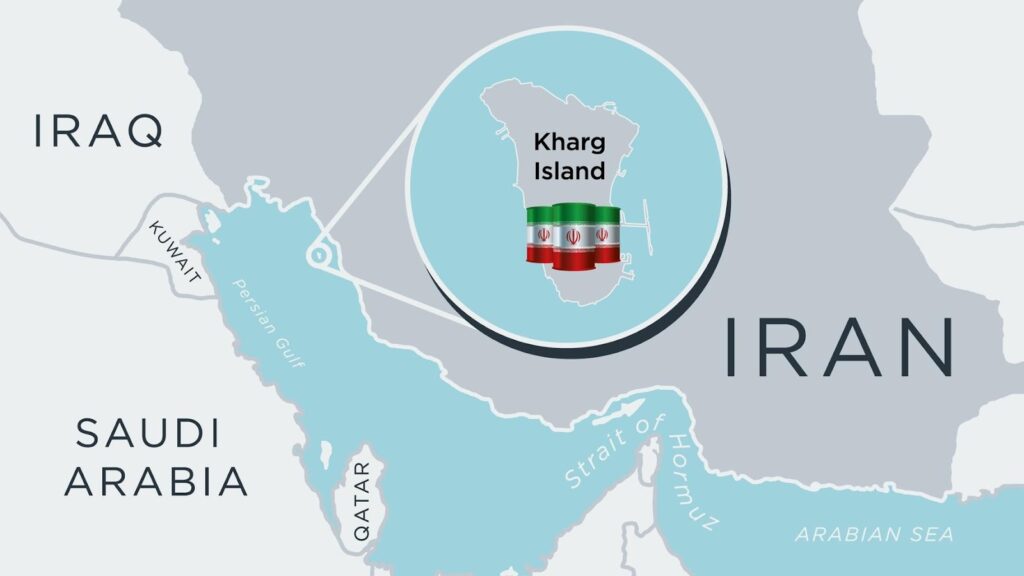
The United States launched airstrikes on military targets on Kharg Island during the ongoing US–Israel conflict with Iran. Although oil infrastructure was not targeted, the attack raises fears of disruption in global oil supply and a potential spike in crude prices.
What is Kharg Island?
A small 8-km-long coral island in the Persian Gulf.
Located about 50 km off Iran’s mainland coast.
Serves as Iran’s primary oil export hub.
Why Kharg Island is Strategically Important
Iran’s Main Oil Export Terminal: About 90% of Iran’s crude oil exports pass through Kharg Island. Pipelines from major Iranian oil fields terminate here before exports.
Massive Oil Infrastructure: Key facilities on the island include:
Falat Iran Oil Company producing around 500,000 barrels per day.
Kharg Petrochemical Company.
Large oil storage and LNG shipping facilities.
Suitable Geography for Large Tankers: Much of Iran’s coastline is too shallow for very large crude carriers (VLCCs). Kharg lies near deep waters, allowing large oil tankers to dock easily.
Oil Trade Through Kharg
Normally ≈1.5 million barrels of oil per day exported through the island.
Iran reportedly increased exports to ≈3 million barrels/day before the strike anticipating conflict.
About 18 million barrels of oil stored there as reserve capacity.
Why the Attack Matters
Impact on Oil Prices: If Kharg’s oil infrastructure were destroyed, 90% of Iran’s exports could stop. Global crude prices could surge towards $150 per barrel.
Strategic Signalling: The U.S. targeted military sites but avoided oil infrastructure, possibly to:
Avoid a major global energy shock.
Signal restraint while warning Iran against disrupting shipping.
Risk to Shipping Routes: The U.S. Navy plans to escort oil tankers through the Strait of Hormuz, which carries a large share of global oil trade.
[2012] To meet its rapidly growing energy demand, some opine that India should pursue research and development on thorium as the future fuel of nuclear energy. In this context, what advantage does thorium hold over uranium? Thorium is far more abundant in nature than uranium. On the basis of per unit mass of mined mineral, thorium can generate more energy compared to natural uranium. Thorium produces less harmful waste compared to uranium. Select the correct answer using the code given below: (a) 1 only (b) 2 and 3 only (c) 1 and 3 only (d) 1, 2 and 3
Experts have highlighted the importance of thorium-based nuclear energy in achieving India’s target of 100 gigawatts electric (GWe) nuclear power capacity by 2047, especially after the passage of the SHANTI Act 2025.
Why Thorium is Important for India
1. Largest Thorium Reserves
India possesses the world’s largest thorium reserves.
Thorium deposits are mainly found in monazite sands along the Indian coastline.
2. Energy Security
India’s current nuclear programme relies heavily on imported uranium because domestic uranium ores are low-grade.
A nuclear capacity of 100 GWe would require 18,000–20,000 tonnes of uranium annually, which may become difficult to secure globally.
3. Reduced Nuclear Proliferation Risk
Thorium fuel cycles produce less weapons-usable material, reducing proliferation risks compared to conventional uranium cycles.
India’s Three-Stage Nuclear Power Programme
The programme was designed to use India’s large thorium resources.
Stage 1: Thermal Reactors
Pressurised Heavy Water Reactor
Uses natural uranium as fuel.
Stage 2: Fast Breeder Reactors (FBRs)
Convert plutonium and fertile materials into more fuel.
India’s Prototype Fast Breeder Reactor (500 MWe) is nearing completion.
Stage 3: Thorium-Based Reactors
Thorium is converted into uranium-233, which becomes the main fuel.
Key Technologies for Thorium Deployment
Fast Breeder Reactors: Essential to generate uranium-233 from thorium.
Thorium Molten Salt Reactors (TMSR): Advanced reactors designed for thorium fuel cycles.
Small Modular Reactors (SMRs): Compact reactors that can produce electricity and green hydrogen.
HALEU Fuel: High-Assay Low-Enriched Uranium
Can be combined with thorium in existing reactors to accelerate the thorium fuel cycle.
Role of Nuclear Fuel Recycling
Nuclear recycling can increase the energy potential of fuel 50–100 times.
Countries such as France, Russia, and India already use such technologies
[2012] To meet its rapidly growing energy demand, some opine that India should pursue research and development on thorium as the future fuel of nuclear energy. In this context, what advantage does thorium hold over uranium? Thorium is far more abundant in nature than uranium. On the basis of per unit mass of mined mineral, thorium can generate more energy compared to natural uranium. Thorium produces less harmful waste compared to uranium. Select the correct answer using the code given below: (a) 1 only (b) 2 and 3 only (c) 1 and 3 only (d) 1, 2 and 3
The Government of India has introduced calibrated changes to its Foreign Direct Investment (FDI) policy for Land Bordering Countries (LBCs) to boost investment in key manufacturing sectors such as electronics components and rare earth magnets.
Background: Press Note 3 (PN3) – 2020
In April 2020, India introduced Press Note 3 (2020).
It mandated prior government approval for investments from countries sharing land borders with India.
Countries Covered
China
Pakistan
Bangladesh
Nepal
Myanmar
Bhutan
Afghanistan
Reason: Prevent opportunistic takeovers of Indian companies during the COVID-19 economic slowdown, particularly by Chinese investors.
Key Changes in the FDI Policy (2026)
Automatic Route for Small Indirect Ownership: Investments will be allowed under the automatic route if beneficial ownership from LBCs is below 10%.
This mainly benefits global private equity and venture capital funds with minor Chinese stakes.
Faster Approval Process: Investment proposals from LBCs in certain sectors must now be processed within 60 days.
Investment in “Specified Sectors”: Allowed sectors include:
Electronic components manufacturing
Electronic capital goods
Polysilicon and wafer manufacturing
Advanced battery components
Rare earth magnets and processing.
However, these investments must ensure Indian majority ownership (at least 51%).
Pakistan Exception: Investments from Pakistan will continue to require government approval and remain restricted.
Why the Policy Was Relaxed
The change follows recommendations from: NITI Aayog and Economic Survey 2023-24.
These reports argued that Chinese capital and technology could help India strengthen export competitiveness, particularly in electronics manufacturing.
Who Benefits?
Global Investment Funds: Funds like private equity and venture capital firms with minor Chinese ownership can invest without lengthy approvals.
Manufacturing Sector: Industries that depend on imported inputs such as: Electronics components, Rare earth magnets, and Semiconductor materials.
Indian Firms: Joint ventures with foreign companies while maintaining majority Indian control.
[2021] Consider the following: Foreign currency convertible bonds Foreign institutional investment with certain conditions Global depository receipts Non-resident external deposits Which of the above can be included in Foreign Direct Investments? (a) 1, 2 and 3 (b) 3 only (c) 2 and 4 (d) 1 and 4
The Union Public Service Commission has revised the procedure for empanelment of State Director-General of Police (DGP). States must now obtain approval from the Supreme Court of India if there is a delay in submitting names for the DGP selection process.
Key Provisions of the New Rule
Supreme Court Approval for Delays: If a State government delays sending the list of eligible DGP-rank officers, it must seek permission or clarification from the Supreme Court before the UPSC proceeds.
Advance Submission of Names: States must send proposals to UPSC at least three months before the retirement of the incumbent DGP.
No “Acting DGP” Appointments: The Court reiterated that appointing an Acting DGP is not permitted, as per earlier judicial directions.
Exceptional Situations: Delays may be allowed only in exceptional circumstances such as: Death of the incumbent DGP, Resignation, and Premature relieving from service.
Background: DGP Appointment Process
The UPSC prepares a panel of three senior IPS officers eligible for the post of State DGP.
The State government then selects one officer from the panel to become the Head of Police Force (HoPF).
Judicial Basis
The rules stem from the landmark police reform judgment in: Prakash Singh vs Union of India (2006)
This case mandated reforms to ensure professional and politically independent policing, including a fixed tenure for DGPs and a transparent selection process.
Reason for the Change
Several States had delayed sending proposals or appointed temporary/acting DGPs, bypassing the process.
The R. Venkataramani stated that UPSC cannot condone such delays without Supreme Court approval.
Significance
Strengthens transparency and uniformity in DGP appointments.
Ensures compliance with police reforms mandated by the Supreme Court.
Prevents political manipulation or temporary appointments in top police positions.
[2016] Consider the following statements: The Chief Secretary in a State is appointed by the Governor of that State. The Chief Secretary in a State has a fixed tenure. Which of the statements given above is/are correct? (a) 1 only (b) 2 only (c) Both 1 and 2 (d) Neither 1 nor 2
The Supreme Court of India asked the Union Government to reconsider agricultural policies and encourage farmers to shift from wheat and paddy cultivation to pulses.
Key Observations by the Court
A Bench headed by Surya Kant stressed the need for agricultural diversification, particularly in North India where paddy cultivation dominates.
The Court noted that excessive cultivation of paddy may not be necessary except for export needs, and land could instead be used for pulses.
Directions to the Government
Review the policy framework to promote pulse cultivation.
Convene a meeting of stakeholders, including experts and farmer representatives.
Address issues affecting pulse farmers such as:
Lack of adequate Minimum Support Price (MSP) incentives.
Ensuring guaranteed and timely procurement of pulses.
Fixing the cost price of imported yellow peas so imports do not harm domestic producers.
Relevant ministries expected to participate include:
Ministry of Agriculture and Farmers Welfare
Ministry of Commerce and Industry
Ministry of Consumer Affairs Food and Public Distribution
Context
The case was filed by the farmers’ organisation Kisan Mahapanchayat, which sought restrictions on yellow pea imports to protect domestic pulse farmers.
Significance
Promoting pulses could:
Improve soil health through nitrogen fixation.
Reduce water-intensive paddy cultivation.
Enhance India’s nutritional security, as pulses are a major protein source.
Reduce dependence on pulse imports.
[2020] With reference to pulse production in India, consider the following statements: Black gram can be cultivated as both kharif and rabi crop. Green-gram alone accounts for nearly half of pulse production. In the last three decades, while the production of kharif pulses has increased, the production of rabi pulses has decreased. Which of the statements given above is/are correct? (a) 1 only (b) 2 and 3 only (c) 2 only (d) 1, 2 and 3
PYQ Relevance[UPSC 2024] “The West is fostering India as an alternative to reduce dependence on China’s supply chain and as a strategic ally to counter China’s political and economic dominance.” Explain this statement with examples.Linkage: India-Canada cooperation on critical minerals, technology, and supply-chain diversification reflects the broader global strategy of reducing dependence on China and strengthening strategic partnerships with India.
Mentor’s Comment
India-Canada relations have witnessed a significant diplomatic reset after a prolonged period of political tensions. The recent visit of Canadian Prime Minister Mark Carney to India signals a shift from ideological disagreements toward pragmatic cooperation focused on economic partnerships, critical minerals, technology, and energy security. The developments highlight how middle powers are restructuring partnerships in response to shifting global supply chains and geopolitical fragmentation.
How does the diplomatic reset reflect a shift from political disagreements to pragmatic cooperation?
Pragmatic Diplomacy: Focuses bilateral engagement on economic outcomes rather than ideological disputes that previously strained ties.
Leadership Change: Transition from Justin Trudeau to Mark Carney enables recalibration of relations.
Strategic Engagement: Builds on earlier interactions between Narendra Modi and Canadian leadership during meetings in Kananaskis (G7 outreach) and Johannesburg (BRICS context).
Outcome-oriented diplomacy: Prioritizes agreements, investments, and technological collaboration rather than symbolic dialogue.
Why is economic cooperation emerging as the central pillar of India-Canada relations?
Trade Diversification: Reduces dependence on traditional markets amid global trade tensions.
Supply Chain Resilience: Addresses disruptions caused by tariff policies of Donald Trump and geopolitical conflicts affecting global trade networks.
Economic Complementarity: Combines Canada’s resource wealth with India’s manufacturing and technological capacities.
CEPA Negotiations: Establishes a framework for deeper trade integration through the Comprehensive Economic Partnership Agreement.
How does cooperation on critical minerals reshape strategic supply chains?
Critical Mineral Security: Strengthens supply chains for minerals required for semiconductors, batteries, and advanced technologies.
MoU on Critical Minerals: Enables collaboration in exploration, extraction, and processing of rare minerals.
China Dependency Reduction: Diversifies supply away from concentrated sources currently dominated by China.
Technology Collaboration: Aligns mineral supply chains with India’s electronics manufacturing and digital economy ambitions.
What role does technology and innovation partnership play in strengthening bilateral ties?
Technology Collaboration: Establishes an MoU under the Australia-Canada-India Technology and Innovation Partnership.
Research Cooperation: Expands academic and scientific collaboration between institutions.
AI and Semiconductor Cooperation: Strengthens joint work in emerging technologies.
Strategic Tech Alignment: Aligns with initiatives such as the Pax Silica coalition, which includes India and over ten other countries focusing on semiconductor supply chains.
How does energy cooperation shape the future trajectory of India-Canada relations?
Uranium Supply Agreement: Commercial contract between India’s Department of Atomic Energy and Canada’s Cameco for uranium ore concentrates.
Nuclear Energy Expansion: Supports India’s strategy to increase nuclear energy share in its energy mix.
Energy Security: Reduces dependence on volatile fossil fuel imports.
Policy Alignment: Complements India’s Sustainable Harnessing and Advancing Nuclear Energy for Transforming India (SHANTI) Bill, 2025, enabling long-term nuclear capacity growth.
How does the partnership address global geopolitical and economic disruptions?
Supply Chain Fragmentation: Responds to geopolitical conflicts affecting global logistics.
Economic Security: Recognizes resource access as a key determinant of strategic autonomy.
Indo-Pacific Engagement: Enhances Canada’s engagement with Indo-Pacific economies.
Strategic Middle Power Alignment: Strengthens cooperation among democratic economies facing global power competition.
Conclusion
The India-Canada diplomatic reset reflects a broader shift in international relations toward economic pragmatism and strategic supply-chain partnerships. Cooperation in critical minerals, technology, and nuclear energy demonstrates how middle powers are adapting to geopolitical fragmentation. Sustained progress will depend on insulating economic engagement from domestic political disruptions and translating agreements into long-term institutional partnerships.