💥Join UPSC 2027,2028 Mentorship (August Batch) + XFactor Notes & Microthemes PDF

Distribution: weekly

  • A Governor’s conduct and a judgment of significance

    Why in the News?

     In The State of Tamil Nadu vs. The Governor of Tamil Nadu and Another, a two-judge Bench of the Supreme Court of India, led by Justice J.B. Pardiwala and Justice R. Mahadevan, reaffirmed that Governors’ powers are limited and must follow constitutional boundaries.  

    What constitutional issue was addressed in the Tamil Nadu vs the Governor case?

    Aspect Details Example
    Limits of Gubernatorial Discretion (Article 200) The Governor cannot withhold assent to a Bill indefinitely or act independently of the elected State Cabinet, except in constitutionally specified situations. The role is largely ceremonial. Governor of Tamil Nadu withheld assent to 12 Bills, including those on the appointment of Vice-Chancellors to public universities.
    Constitutional Obligations of the Governor and State Executive The Governor is bound by the advice of the State Cabinet and cannot act on personal discretion unless explicitly permitted by the Constitution. This upholds representative democracy. Governor delayed referrals to the President without valid reasons, thereby undermining the democratic function of the State Legislature.
    Judicial Review of Governor’s Actions Article 361 gives personal immunity to the Governor but does not shield official actions from judicial review. Courts can check if actions comply with the Constitution and democratic norms. Supreme Court held that the Governor’s inaction violated the Constitution, and invoked Article 142 to deem the Bills as assented to, resolving the legislative deadlock.

    Why was the Governor’s inaction on Tamil Nadu Bills ruled unconstitutional?

    • Violation of Constitutional Duty under Article 200: The Governor is constitutionally bound to either assent to a Bill, withhold assent (and return it for reconsideration), or reserve it for the President. Indefinitely sitting on Bills without any action violates this mandate. Eg: The Governor kept 10 re-enacted Bills pending without any action or justification, undermining the role of the legislature.
    • Undermining the Principles of Representative Democracy: By not acting on duly passed Bills, the Governor disregarded the advice of the elected Council of Ministers, thereby disrupting the democratic process and the legislative will of the people. Eg: Despite the Tamil Nadu Assembly passing the Bills again in a special session, the Governor forwarded them to the President without consulting the State Cabinet, showing a lack of respect for democratic norms.

    When can a Governor use discretion under Article 200?

    • When a Bill Affects the Powers of the High Court: The second proviso to Article 200 allows the Governor to reserve a Bill that directly affects the powers of the High Court for the President’s consideration. Eg: If a State law tries to curtail the High Court’s jurisdiction or authority, the Governor can use discretion to reserve it.
    • When Presidential Assent is Constitutionally Mandatory: If a Bill falls under categories where presidential assent is specifically required (such as laws under Article 31C that seek immunity from judicial review), the Governor may reserve it. Eg: A Bill claiming protection under Article 31C, linked to Directive Principles, must be reserved for the President.
    • When a Bill Fundamentally Undermines Constitutional Values: The Governor can act without ministerial advice if the Bill threatens the basic structure or core values of the Constitution. Eg: A Bill that violates secularism or federalism in an extreme manner could justify the Governor’s discretionary action.

    How did the Supreme Court invoke Article 142 to resolve the constitutional deadlock in the Tamil Nadu Bills case?

    • Used Article 142 to Ensure Complete Justice: The Court exercised its special power under Article 142 to deliver complete justice by deeming the 10 re-enacted Bills as having received the Governor’s assent. Eg: Instead of waiting for further assent or action from the Governor, the Court directly validated the Bills to avoid further delays in governance.
    • Bypassed Unworkable Remedies Like Mandamus: Issuing a writ of mandamus (to compel the Governor to act) was seen as ineffective since the Governor is protected from personal liability under Article 361. Eg: Since the Governor cannot be punished for contempt, the Court chose Article 142 as a more enforceable solution.
    • Restored the Legislative Authority of the State: By invoking Article 142, the Court reinforced the principle that the Governor cannot override the will of an elected legislature through inaction Eg: This prevented indefinite delays in implementing laws passed by the Tamil Nadu Assembly, thus preserving democratic functioning.

    Why was issuing a writ of mandamus deemed inadequate?

    • Governor is Immune Under Article 361: The Constitution grants the Governor personal immunity from legal proceedings while in office, making it difficult to enforce any court directive. Eg: Even if the Court issued a mandamus to compel assent or action, the Governor could not be held legally accountable for ignoring it.
    • Mandamus Cannot Be Enforced Practically: Courts cannot force a Governor to exercise discretion in a particular way, only to consider doing so—making the remedy ineffective when deliberate inaction is involved. Eg: If the Governor simply delays action without giving reasons, courts have limited tools to compel a timely decision.
    • Could Cause a Constitutional Standoff: Forcing the Governor through judicial direction risks undermining the separation of powers and could lead to a deadlock between constitutional authorities. Eg: If the Governor resists the court order, it could trigger a conflict between the judiciary and the executive, weakening the constitutional balance.

    Way forward: 

    • Codify Time Limit for Assent: Amend the Constitution or enact a statutory framework to prescribe a reasonable time limit (eg: 30 days) within which the Governor must act on Bills to prevent indefinite delays.
    • Enhance Legislative Oversight: Establish a mechanism for State Legislatures to seek judicial clarification or initiate review when the Governor delays action, reinforcing accountability and upholding democratic norms.

    Mains PYQ:

    [UPSC 2022] Discuss the essential conditions for exercise of the legislative powers by the Governor. Discuss the legality of re-promulgation of ordinances by the Governor without placing them before the Legislature.

    Linkage: This question directly addresses the legislative powers of the Governor, a key aspect of their conduct. The second part specifically asks about the legality of re-promulgation of ordinances, which can be a contentious issue and often involves judicial scrutiny. This relates to the constitutional limits on the Governor’s powers, similar to the issues raised in the article.

  • APAAR ID and the Future of Student Data: Boon or Bane ?

    N4S: A digital identity for students: convenience or control? This article unpacks the APAAR ID, its benefits, and the privacy concerns it raises. UPSC often asks about Fundamental Rights in light of recent judgments (like the Right to Privacy ruling in Puttaswamy vs. Union of India, 2017). This year, it asked about DNA testing and privacy. The pattern is clear—questions link current policies to constitutional rights. Aspirants often struggle with applying theoretical knowledge to real-life scenarios. They memorize constitutional provisions but miss how policies challenge or reinforce them. This article helps by breaking down APAAR ID—not just its goal of digitizing student records, but also the hidden risks of forced compliance, data security loopholes, and Aadhaar-like concerns. It connects textbook concepts to ongoing debates, making your understanding more dynamic and exam-ready. One standout feature? It doesn’t just explain; it questions. “If saying no has consequences, is it really a choice?” This article teaches you to critically analyze government initiatives—just like UPSC wants.

    PYQ ANCHORING:

    1. Examine the scope of Fundamental Rights in the light of the latest judgement of the Supreme Court on Right to Privacy. [GS 2, 2017]
    2. Right to privacy is intrinsic to life and personal liberty and is inherently protect ed under Article 21 of the Constitution. Explain. In this reference discuss the law relating to D.N.A. testing of a child in the womb to establish its paternity. [GS 2,2024]

    MICROTHEMES: Fundamental Rights

    “We must ensure that we don’t stumble too much as the baby learns to walk.” This sentiment from policymakers reflects their cautious defense of APAAR ID, India’s ‘One Nation, One Student ID’ initiative. While the idea of a lifetime academic record seems promising, concerns over privacy, consent, and coercion are growing.

    Take the case of Rahul, a Class 10 student in Karnataka—his school warned that without an APAAR ID, he might lose scholarships and mid-day meals. His anxious parents rushed to register him, even though the government insists the ID is voluntary. If refusing has consequences, is it really a choice?

    As schools push for full enrolment, minority institutions face scrutiny, and parents feel pressured, key questions arise: Is APAAR truly voluntary, or is it Aadhaar 2.0 with forced compliance? What safeguards exist against misuse of students’ personal data? Have similar well-intentioned policies in the past led to concerns over privacy, surveillance, and coercion?

    About APAAR ID

    • The Ministry of Education introduced the APAAR ID, a unique 12-digit identification number under the ‘One Nation, One Student ID’ initiative of the National Education Policy 2020. 
    • Designed as a lifelong academic identity, it allows students to digitally store and access their educational records, including mark sheets, degrees, and certificates. 
    • APAAR also simplifies credit recognition and transfer, enabling smoother academic progression and recognition of prior learning.

    Significance of  APAAR ID

    • A Lifetime Academic Record: APAAR creates a digital vault for students, storing all their mark sheets, degrees, and certificates in one place, ensuring easy access whenever needed.
    • Easy Sharing & Transfers: No more running around for transcripts! Students can seamlessly share their academic records with schools, colleges, and employers without paperwork hassles.
    • Part of India’s Digital Ecosystem: APAAR connects with existing education databases like UDISE+ (Unified District Information System for Education Plus), helping improve how student data is managed and used for better governance.
    • Smoother Scholarships & Admissions: Whether applying for a scholarship, getting into college, or proving qualifications for a job, APAAR makes the process faster, easier, and more transparent.

    The Bumpy Ride of APAAR ID in Uttar Pradesh & Karnataka

    The rollout of the APAAR ID in Uttar Pradesh and Karnataka was meant to streamline student records, but instead, it’s causing a fair bit of chaos. Here’s why:

    1. Schools Under Pressure: The 100% Enrolment Race: Education authorities have set sky-high targets—every single student must be enrolled, no exceptions. Schools are being rushed to meet these deadlines, making the process feel more like a race to fill numbers rather than a well-planned initiative. In Uttar Pradesh, administrators are scrambling to comply, fearing backlash if they fall short.
    2. Parents Cornered: “No APAAR, No Benefits” Threats: In Karnataka, some schools are telling parents that their children might lose access to government benefits or even face roadblocks in future education if they don’t register. This has left many parents worried—is this an option or an ultimatum?
    3. Minority Institutions Feeling the Heat: Religious minority schools and their administrators are under heightened scrutiny. In Uttar Pradesh, authorities are cross-checking APAAR data with existing school records, raising concerns about bias and administrative overreach. Schools are now stuck between government mandates and the trust of their communities.

    APAAR ID: A Digital Leap or a Privacy Trap?

    While APAAR promises to simplify student records and integrate them into India’s digital education system, it also raises serious concerns. Without a strong legal framework, issues like data privacy, consent, and security remain unclear.

    Critics argue that what seems like a step toward efficiency might actually lead to forced enrollment, exclusion risks, and increased bureaucratic control. Is it truly for students’ benefit, or does it bring more challenges than solutions?

    The following table breaks down the key issues surrounding the APAAR ID :

    IssueWhy It’s a ConcernExample
    Accountability & TransparencyNo legal oversight makes data use opaque and vulnerable to misuse. Without independent supervision, transparency is hard to ensure.Germany regulates student data under GDPR, but India lacks similar safeguards for APAAR.
    Lawful Data ProcessingNo dedicated data protection law means student information could be misused or leaked. Aadhaar integration raises surveillance risks.In 2018, Aadhaar data leaks exposed millions of personal records, showing risks of weak data protection.
    Adaptability to New TechnologiesWhile APAAR integrates with digital platforms like UDISE+, it lacks safeguards against AI-driven profiling or misuse of student data.AI-based student tracking in China raised concerns about excessive surveillance and profiling of children.
    National Security vs. Individual RightsMandatory linking with Aadhaar may violate privacy rights, as ruled in past Supreme Court judgments.In 2017, the Supreme Court ruled Aadhaar cannot be forced for school admissions (Puttaswamy case). APAAR risks similar legal challenges.
    Consent & ControlDespite being called voluntary, schools pressure students to enroll, raising doubts about real choice.Parents in Karnataka reported being told that without APAAR, their children might lose scholarships and mid-day meals.
    Ethical ImplementationErrors in digital records can lead to exclusion from education benefits, with no clear way to fix mistakes.A name mismatch in DigiLocker once prevented a student from applying for a government scholarship.

    With growing public pushback and legal uncertainties, the APAAR ID needs stronger safeguards, clearer policies, and true voluntariness to prevent it from becoming another digital surveillance tool rather than an educational enabler.

    Global Best Practices in Student Identification and Education Records

    CountrySystemKey Feature
    European UnionECTS (Credit System)Enables seamless student mobility and credit transfer across EU countries, ensuring academic recognition.
    United StatesStudent ID + SSN (optional)Balances identification with strong education and privacy policies to safeguard students’ rights.
    EstoniaNational Digital IdentityOffers a fully digital education journey with a privacy-by-design model to protect student data.
    India (Future?)APAAR + DigiLocker + ABCRequires transparent, inclusive, and secure implementation to avoid privacy and consent concerns.

    Way Forward: Making APAAR Work Without Controversy

    India can turn the APAAR ID from a controversial mandate into a trusted educational tool by addressing its legal, ethical, and implementation challenges. Here’s what needs to change:

    1. Enact a Strong Legal Framework: Pass a comprehensive data protection law that clearly defines how student data will be stored, used, and safeguarded.
    2. Student-Controlled Access – Introduce a feature where students can grant and revoke access to their records for institutions and employers, ensuring greater control over personal data.
    3. Blockchain-Based Verification – Implement blockchain technology for secure, tamper-proof academic records, reducing fraud and ensuring transparency in credential validation.
    4. Offline Access for Underserved Areas – Develop a system where students in remote areas can access and update their APAAR records offline, syncing data when connectivity is available.
    5. Independent Grievance Redressal Portal – Set up an independent platform where students and parents can report data errors, privacy concerns, or coercion, ensuring accountability.
    6. Integration with Skill-Based Certifications – Expand APAAR beyond traditional degrees by integrating verified skill certifications, internships, and vocational training records, making it more comprehensive.

    APAAR ID has the potential to revolutionize academic record management, but its implementation without a robust legal framework risks privacy violations, exclusion, and governance inefficiencies. Strong data protection laws, independent oversight, and clear consent mechanisms are essential to balance efficiency with individual rights.

    #BACK2BASICS: INDIA’S TRYST WITH Centralization vs. Individual Rights

    ControversyObjective of the MeasureReason for ControversyOutcome
    Aadhaar (UIDAI)Unique biometric-based ID for targeted delivery of subsidies and servicesPrivacy concerns, potential surveillance, data breaches, exclusion of marginalized communitiesSupreme Court upheld Aadhaar but restricted private sector use; mandated data protection norms
    DigiLockerDigital storage for official documents to reduce paperwork and fraudData security concerns, limited awareness, fear of hackingWidely adopted but security enhancements introduced
    Aarogya SetuContact tracing and health tracking during COVID-19Lack of transparency, concerns over mass surveillanceGovernment later made it open-source to address concerns
    CoWIN PortalDigital vaccination record-keeping and managementData leaks exposing citizens’ personal informationGovernment denied major breach; security protocols strengthened
    National Digital Health ID (NDHM)Creating a unified digital health record system for individualsFear of medical data misuse, lack of clear opt-in consentImplementation slowed, stronger privacy measures introduced
    NATGRID (National Intelligence Grid)Integrated intelligence-sharing for counterterrorism effortsConcerns over mass surveillance and privacy invasionGradual implementation; oversight mechanisms proposed
    Social Media Rules (IT Rules 2021)Regulating digital platforms to curb misinformation and enhance accountabilityIncreased government control over digital platforms, potential censorshipOngoing legal battles; Supreme Court reviewing sections

  • Study finds a Shift in Peak Time of Maximum Rainfall

    Why in the News?

    A recent study published in Geophysical Research Letters revealed changes in the amount and timing of rainfall using GSMaP Data between 2001-2010 and 2011-2020.

    About Global Satellite Mapping of Precipitation (GSMaP)

    • GSMaP is a specialized precipitation product developed through collaboration between ISRO (Indian Space Research Organisation) and JAXA (Japan Aerospace Exploration Agency).
    • It provides high-resolution precipitation data with a 0.1° x 0.1° grid and one-hour temporal resolution, focusing on the Indian subcontinent since March 2000.
    • The data supports rainfall trend analysis, climate modelling, and water resource management.

    Study finds a Shift in Peak Time of Maximum Rainfall

    Key Findings of the Study:

    • Rainfall Trends:
      • West-Central India: Increased daily rainfall (2 mm/day) from 2011-2020 compared to 2001-2010.
      • Eastern India: A decrease of ~1 mm/day in rainfall during the same period.
      • Regional Shifts: Northeastern and eastern India saw decreased rainfall, while the Indo-Gangetic Plain and southern India experienced increases.
    • Vegetation & Soil Moisture:
      • West-Central India saw an increase in vegetation (NDVI from 0.2 to 0.4) and soil moisture linked to increased rainfall.
      • Eastern India had decreased soil moisture during the same period.
    • Shifts in Peak Rainfall Timing:
      • Indo-Gangetic Plain: Peak rainfall advanced by 2-4 hours.
      • West-Central India: Peak rainfall delayed by 1-2 hours.
    • Factors responsible for this Shift:
      • Higher soil moisture supports rainfall, while reduced moisture, particularly in eastern India, decreases rainfall.
      • Higher aerosol concentrations in polluted areas like the Indo-Gangetic Plain lead to earlier rainfall peaks.
      • Changes in atmospheric circulation, topography, and coastal influences also affect rainfall distribution and timing.
    [UPSC 2012] Consider the following statements:

    1. The duration of the monsoon decreases from southern India to northern India.

    2. The amount of annual rainfall in the northern plains of India decreases from east to west.

    Which of the statements given above is / are correct?

    (a) 1 Only (b) 2 Only (c) Both 1 and 2 (d) Neither 1 nor 2


  • Real Time LAMP Assay for Early Diagnosis of TB

    Why in the News?

    Researchers from Thiruvananthapuram have developed a cost-effective Real-Time LAMP (rt-LAMP) Assay for early Tuberculosis (TB) diagnosis.

    About the rt-LAMP Assay

    • The rt-LAMP assay (real-time Loop-mediated Isothermal Amplification) is a molecular diagnostic test designed to detect TB DNA with high precision.
    • It can detect TB DNA at concentrations as low as 10 copy numbers per microlitre, ensuring early detection even with low bacterial loads.
    • Developed by SCTIMST, Thiruvananthapuram, the rt-LAMP assay uses Syto 16, a fluorescent dye, to monitor DNA amplification in real time, addressing the limitations of traditional LAMP tests.
    • Working Principle:
      • It uses six primers for DNA amplification (compared to two in RT-PCR), enhancing amplification speed.
      • It operates at a single temperature, unlike RT-PCR, making it simpler and more cost-effective.
      • It monitors the amplification process continuously, providing faster results.

    Advantages Offered:

    • High Sensitivity and Specificity: Ensures accurate detection of TB DNA due to the use of six primers.
    • Cost-Effective: Uses affordable fluorescent dyes and primers, reducing diagnostic costs.
    • Speed: Produces results in just 10-20 minutes, faster than traditional tests.
    • Ease of Use: Compatible with existing RT-PCR machines, reducing the need for new infrastructure.
    • High Throughput: Can process 96-384 tests in one run, making it ideal for high-volume settings.
    [UPSC 2007] Which of the following types is used by computed tomography employed for visualization of the internal structure of the human body?

    (a) X-rays (b) Sound Waves (c) Magnetic Resonance (d) Radioisotopes


  • India-Middle-East-Europe-Economic Corridor (IMEEC)

    Why in the News?

    India and Italy have decided to enhance cooperation in trade, defence, clean energy, and high technology while working jointly on the India-Middle-East-Europe-Economic Corridor (IMEEC).

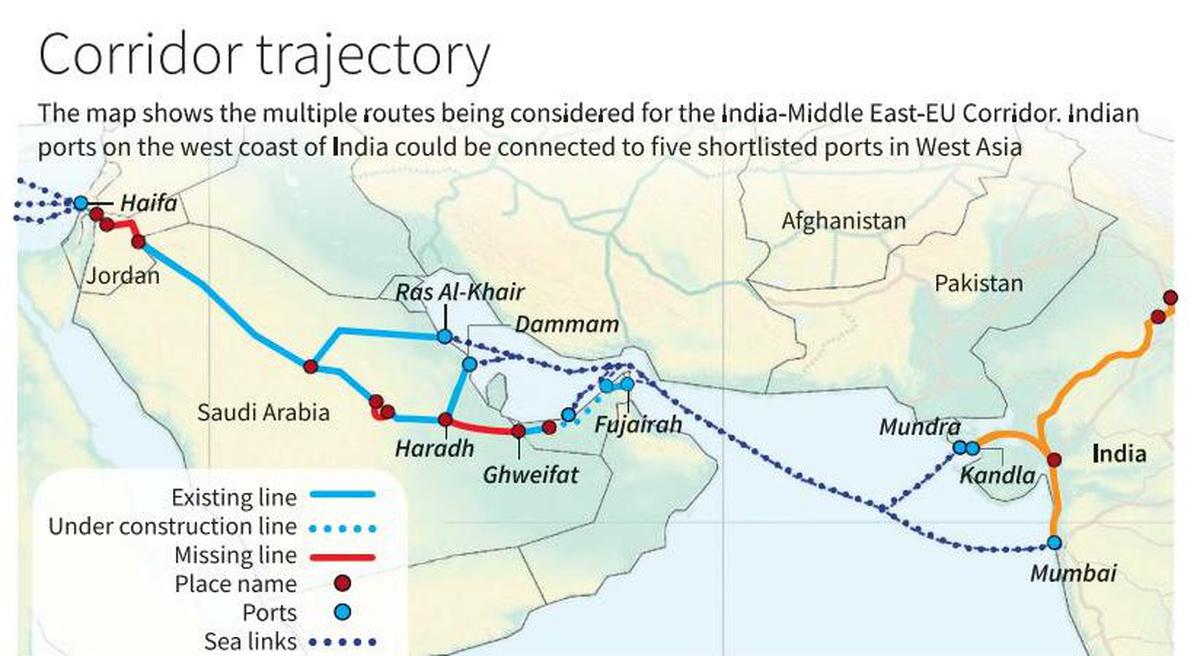
    imeec

    About IMEEC Project:

    • IMEEC is a key initiative under the Partnership for Global Infrastructure and Investment (PGII), aimed at infrastructure development in developing regions.
    • It was formally endorsed on September 10, 2023, during the 2023 G20 New Delhi summit.
    • Signatories include: India, United States, UAE, Saudi Arabia, France, Germany, Italy, and the European Union.
    • Objective: To integrate Asia, Europe, and the Middle East to boost economic cooperation, trade, and regional connectivity.
    • IMEEC consists of two main corridors:
      1. East Corridor: Connecting India to the Arabian Gulf.
      2. Northern Corridor: Connecting the Gulf region to Europe.
    • Key Ports to be Connected:
      • India: Mundra, Kandla, Jawaharlal Nehru Port Trust (Mumbai).
      • Middle East: Fujairah (UAE), Jebel Ali (Dubai), Dammam (Saudi Arabia).
      • Israel: Haifa Port.
      • Europe: Piraeus (Greece), Messina (Italy), Marseille (France).

    Significance of the Project:

    • IMEEC will create a cost-efficient ship-to-rail transit network, enhancing existing transport links.
    • The project will transform regional trade dynamics and foster sustainable economic growth.
    [UPSC 2023] With reference to India’s projects on connectivity, consider the following statements:

    1. East-West Corridor under Golden Quadrilateral Project connects Dibrugarh and Surat.

    2. Trilateral Highway connects Moreh in Manipur and Chiang Mai in Thailand via Myanmar.

    3. Bangladesh-China -India -Myanmar Economic Corridor connects Varanasi in Uttar Pradesh with Kunming in China.

    Which of the statements given above is/are correct?

    (a) 1 only (b) 2 only (c) Both 1 and 2 (d) Neither 1 nor 2


  • What is Atmospheric River?

    Why in the News?

    Earlier this month, severe weather in the United States, including heavy rainfall, strong winds, and thunderstorms, was caused by an Atmospheric River.

    What is an Atmospheric River?

    • An atmospheric river is a narrow, fast-moving band of moisture and wind that transports large amounts of water vapor across vast distances.
    • They form when large-scale weather patterns align, creating channels of moisture transport from tropical oceans, guided by low-level jet streams toward the coast.
    • They typically span 402-606 km in width and can extend over 1600 km in length.
    • The most powerful atmospheric rivers transport moisture equivalent to the Mississippi River’s flow.
    • Example: The Pineapple Express, a well-known atmospheric river, transports moisture from Hawaii to the West Coasts of the U.S. and Canada.
    • The intense rainfall from atmospheric rivers leads to flooding, mudslides, and infrastructure damage, with wind speeds comparable to hurricanes.

    Impact and Climate Change:

    • Rising global temperatures cause more water to evaporate, and warmer air can hold more moisture.
    • For every 1°C increase, the atmosphere can hold 7% more moisture, leading to stronger storms.
    • Research indicates such events will likely grow longer and more intense.
    [UPSC 2023] With reference to the Earth’s atmosphere, which one of the following statements is correct?

    (a) The total amount of insolation received at the equator is roughly about 10 times of that received at the poles.

    (b) Infrared waves are largely absorbed by carbon dioxide that is concentrated in the upper atmosphere.

    (c) Infrared waves are largely absorbed by water vapour that is concentrated in the lower atmosphere.  

    (d) Ultraviolet rays are absorbed by the ozone layer lying in the ionosphere.


  • [12th April 2025] The Hindu Op-ed: The Beijing India Report as milestone and opportunity

    PYQ Relevance:

    [UPSC 2019] What are the continued challenges for women in India against time and space?

    Linkage: The challenges that women still face are a major concern under the Beijing Platform for Action and are likely to be reviewed in the Beijing India Report. Pointing out these ongoing issues shows how much more needs to be done to reach the goals of the Beijing Declaration.


    Mentor’s Comment:  It’s been 30 years since the Beijing Declaration set a global plan for gender equality across areas like education, health, and politics. In India, it led to key laws like the Domestic Violence Act and the POSH Act, and encouraged women’s economic empowerment. However, poor implementation still creates a gap between legal rights and the real experiences of women.

    Today’s editorial discusses how gender inequality and climate change are interconnected. This topic is relevant for GS Paper 1 (Women’s Issues), GS Paper 2 (Policy Making), and GS Paper 3 (Impact of Climate Change). It highlights the challenges women face due to climate change and the need for better policies to address these issues.

    _

    Let’s learn!

    Why in the News?

    The report lacks a strong link between climate and gender, and this needs to be fixed through policy improvements and changes at the grassroots level.

    Why does this report lack a strong link between climate and gender?

    • Limited Focus on Gender-Specific Impacts: The report fails to adequately highlight how climate change specifically affects women, especially in rural areas. Eg: It doesn’t emphasize the extra burden women face in collecting water or gathering fuel during droughts, which worsens due to climate change.
    • Insufficient Data on Gendered Vulnerabilities: The report lacks comprehensive data on the gendered impacts of climate change, leaving out how women are disproportionately affected by disasters and resource scarcity. Eg: It overlooks how climate-induced migration increases women’s vulnerability to gender-based violence.
    • Absence of Gender-Responsive Climate Policies: The report doesn’t propose clear actions for integrating gender into climate policies, limiting women’s participation in climate adaptation and decision-making. Eg: There are no specific recommendations for promoting women’s leadership in local climate action plans or agricultural adaptation strategies.

    What challenges do rural women face due to gender inequality and climate change?

    Challenge Impact on Rural Women Example/Evidence
    Education Disruption Climate-induced migration and household burdens force girls to drop out of school. In Dhanelikanhar village, Chhattisgarh, girls are leaving school due to displacement caused by climate stress and migration.
    Unpaid Care Work Resource scarcity increases women’s burden of water, fuel collection, and caregiving, limiting their economic opportunities. Arsht-Rock report: Rural Indian women work over 8 hours daily, with 71% of their labor unpaid, deepening gender inequality.
    Health Vulnerability Malnutrition, anaemia, and reproductive health issues rise due to food insecurity and lack of healthcare access. Over 50% of pregnant women in India are anaemic; food-insecure women are 1.6x more likely to suffer from anaemia.
    Livelihood Loss Extreme weather reduces agricultural output and affects non-farm livelihoods where women are largely employed. Climate change causes up to 33% income loss in rural areas, with women in non-farm sectors most affected.
    Exposure to Violence and Safety Risks Climate stress and resource conflicts heighten risks of intimate partner violence and general insecurity. A study shows every 1°C rise in temperature leads to 8% more physical violence and 7.3% more sexual violence against women in India.

    Why is a gender-climate lens vital for India’s sustainable future, as per the Beijing India Report 2024?

    • Inclusive Policy Design: A gender-climate lens ensures that women’s specific vulnerabilities are addressed in climate policies. Eg: Only 6% of climate policies globally mention women, leading to gender-blind strategies in India’s rural development.
    • Strengthening Resilience: Recognizing women’s roles in natural resource management and agriculture strengthens community resilience to climate shocks. Eg: Rural and tribal women preserve climate-resilient seeds, essential for adaptive farming during droughts and floods.
    • Reducing Inequality: Targeted climate budgeting and gender audits help close gaps in access to resources, services, and decision-making power. Eg: Women’s unpaid work, like water and fuel collection, could rise to 8.3 hours/day by 2050 without gender-responsive policies.
    • Boosting Food Security: Closing the gender gap in agricultural resources increases productivity and national food security. Eg: Empowering women farmers can raise farm yields by 20%-30%, feeding up to 150 million more people.
    • Empowering Local Leadership: Women-led climate initiatives promote local innovation, disaster preparedness, and sustainability. Eg: Women’s self-help groups in climate-vulnerable areas act as first responders during disasters and promote eco-friendly practices.

    What are the steps taken by the Indian government?

    • Inclusion in National Climate Frameworks: The government has integrated gender concerns into major climate policies like the National Action Plan on Climate Change (NAPCC) and State Action Plans (SAPCCs). Eg: Some SAPCCs include women’s role in sustainable agriculture and water management initiatives.
    • Legislative and Policy Support for Women’s Empowerment: Laws like the Protection of Women from Domestic Violence Act and POSH Act strengthen the overall gender rights framework, which intersects with climate resilience. Eg: These laws provide safety nets that support women’s participation in community and environmental activities.
    • Promotion of Women-Led Livelihoods in Rural Missions: Schemes like the National Rural Livelihoods Mission (NRLM) support women’s Self-Help Groups (SHGs) to engage in sustainable practices. Eg: Women SHGs in Odisha and Chhattisgarh are trained in climate-resilient farming and forest produce collection.

    Where should policies and budgets focus to support gender-responsive climate action? (Way forward)

    • Gender-Responsive Climate Budgeting: Policies must ensure budgets address the specific climate vulnerabilities of women and prevent greenwashing. Eg: Creating separate budget lines for women’s disaster relief and climate-resilient livelihood schemes in rural areas.
    • Climate Education and Skill Building: Invest in capacity building for women to participate in climate action and green jobs. Eg: Training rural women in solar panel installation or eco-friendly farming techniques.
    • Support Hubs and Safety Services: Establish community hubs that offer healthcare, disaster relief, and protection from gender-based violence. Eg: Setting up women-centric climate support centers in flood-prone regions of Assam.
    • Non-Farm Livelihood Diversification: Promote alternative income sources for women affected by climate-related agricultural losses. Eg: Funding mushroom farming or tailoring units for women in drought-hit Bundelkhand.
    • Inclusion in Local Governance and Decision-Making: Ensure women’s representation in local climate planning and governance bodies. Eg: Mandating women’s participation in State and District Climate Action Committees in Madhya Pradesh.
  • The conservation argument for resurrecting dire wolf is not credible

    Why in the news?

    Colossal Biosciences is an American company that combines genetics and conservation in a unique way by bringing back species that have been extinct for thousands of years.

    What is the primary goal of Colossal Biosciences’ de-extinction project?

    Colossal Biosciences is a biotechnology company specializing in de-extinction projects, aiming to revive extinct species through advanced genetic engineering.

    • Woolly Mammoth De-Extinction: Colossal is working to resurrect the woolly mammoth by integrating mammoth genes into the Asian elephant genome using CRISPR technology. The goal is to create a cold-resistant elephant with traits characteristic of the woolly mammoth, such as a thick layer of fat and shaggy hair, to inhabit Arctic tundra regions and potentially combat climate change.
    • Dire Wolf Revival: In a groundbreaking achievement, Colossal announced the birth of three pups—Romulus, Remus, and Khaleesi—genetically engineered to resemble the extinct dire wolf. Using DNA from ancient dire wolf remains, scientists edited the genes of modern gray wolves, resulting in animals that exhibit traits such as larger size and distinctive fur color.

    Why do critics question the credibility of reviving extinct species for conservation purposes?

    • Lack of Scientific Proof: The actual success of reviving extinct species like the woolly mammoth has not yet been proven through rigorous peer review or established results.
    • Limited Genetic Editing: The extent of genetic editing in revived species often involves only a small number of genes, leading to incomplete or flawed replicas of the original species. Eg: In the case of the dire wolf, only 20 genes were edited, resulting in what critics describe as just a “strange-looking gray wolf” rather than a true de-extinct species.
    • Ethical Concerns: There are ethical debates over the potential consequences of creating species that may not thrive in the modern environment or might cause unforeseen ecological imbalances. Eg: The introduction of revived species like the woolly mammoth could disrupt current ecosystems in ways that may not be beneficial.

    How can bringing back the woolly mammoth help stop global warming?

    • Restoring Grasslands: The woolly mammoth can help restore Arctic grasslands by grazing on shrubs and plants, which would create open grasslands where permafrost can remain intact. Eg: By grazing, mammoths would prevent the growth of shrubs that trap heat, promoting the return of grasslands that are cooler and better at reflecting sunlight.
    • Slowing Permafrost Melt: Grasslands absorb less heat than shrub forests, helping to keep the permafrost cool. The return of woolly mammoths could help prevent the thawing of permafrost, which releases methane, a potent greenhouse gas. Eg: Mammoth grazing can keep the ground cooler and slow the thawing of permafrost, thus reducing the release of methane into the atmosphere.
    • Preventing Methane Emissions: As the permafrost melts, it releases large amounts of methane into the atmosphere. Woolly mammoths could help mitigate this by maintaining ecosystems that slow down the permafrost’s thaw. Eg: With mammoths grazing, the tundra could remain cooler and less prone to releasing methane.
    • Enhancing Carbon Sequestration: Grasslands are more effective at absorbing carbon than shrubbery or forested areas. By converting tundra back into grasslands, woolly mammoths could enhance carbon sequestration and help store more carbon in the soil. Eg: Woolly mammoths could help re-establish healthy grasslands, which would act as carbon sinks, absorbing more CO2 from the atmosphere.

    What is India’s situation in advanced genetic engineering?

    • Advancements in Agricultural Biotechnology: India has developed a structured regulatory framework for genetically modified organisms (GMOs) under the Environment (Protection) Act, of 1986. Eg: Recently, India initiated trials of CRISPR/Cas9-modified rice varieties in test fields, reflecting a surge in scientific research and innovation in plant genome editing.
    • Pioneering Genomic Research and Precision Medicine: India’s Genome India Project aims to sequence at least 10,000 Indian genomes to develop predictive diagnostic indicators for various diseases. Eg: Institutions like the Institute of Genomics and Integrative Biology (IGIB) have been instrumental in understanding genetic epidemiology, including the development of the FELUDA COVID-19 test based on CRISPR technology.

    Way forward: 

    • Strengthen Ethical and Regulatory Frameworks: India should establish robust regulations and ethical guidelines for genetic engineering, particularly for gene-editing technologies like CRISPR, to ensure safety and sustainability in areas such as agriculture and medicine.
    • Promote Collaborative Research and Innovation: Encouraging partnerships between academic institutions, the private sector, and the government will help accelerate research and application of advanced genetic technologies, positioning India as a global leader in biotechnology innovation.

    Mains PYQ: 

    [UPSC 2024] What strategies have been developed to prevent such a catastrophe [mass extinction of life]?

    Linkage: The article says we should focus more on saving the species that are alive today, rather than trying to bring back extinct ones. The debate about de-extinction raises the question of whether it’s better to spend resources on protecting current species instead.

  • Who was Mahatma Jyotiba Phule (1827-1890)?

    Why in the News?

    On April 11, 2025, the Prime Minister paid tribute to Mahatma Jyotiba Phule on his 199th birth anniversary.

    Who was Jyotiba Phule (1827-1890)?

    About Mahatma Phule

    • Jyotirao Govindrao Phule, born on April 11, 1827, near Pune, was from the Mali caste.
    • His father was a vegetable vendor, and his mother died when he was young.
    • He pursued education at the Scottish Mission High School in Pune despite caste-based discrimination.
    • He was inspired by Western thinkers like Thomas Paine and John Stuart Mill, fuelling his social justice dedication.
    • At 13, he married Savitribai Phule, who became his partner in social reforms, particularly promoting education for women and marginalized communities.

    His Contributions as a Social Reformer:

    Educational Reforms:

    • In 1848, Phule and his wife established India’s first girls’ school in Pune.
    • He focused on educating Dalits and lower-caste groups, traditionally excluded from education.
    • He founded night schools for working-class individuals, especially women.

    Fighting Caste Discrimination:

    • Phule criticized the caste system, calling it a means of oppression.
    • In 1873, Phule’s book Gulamgiri condemned caste discrimination, comparing Dalits’ plight to slavery.
    • Phule coined the term ‘Dalit’ to describe those outside the caste system.

    Women’s Welfare and Empowerment:

    • Phule advocated for widow remarriage and provided a dignified life for widows.
    • In 1863, he opened homes to help pregnant widows.
    • He co-founded an infanticide prevention center, tackling the killing of female infants.

    Social Justice and Equality:

    • Phule founded Satyashodhak Samaj in 1873 to promote social equality, rational thinking, and religious reform.
    • The Samaj rejected idolatry and supported a more rational spiritual approach.
    • He broke the social stigma of untouchability by opening his house and water-well to the oppressed.

    Religious and Philosophical Contributions:

    • Phule was an advocate for critical thinking of religion, rejecting superstition and blind faith.
    • He believed in equality and justice across religions and cultures.
    • He was influenced by Bhakti saints like Sant Kabir and Sant Tukaram in his fight against social oppression.

    His Literary Contributions:

    • Gulamgiri (Slavery) (1873): Critiqued the caste system and called for Dalit liberation.
    • Shetkaryacha Asud (Farmer’s Whip) (1881): Addressed the exploitation of farmers and advocated for land reforms.
    • Sarvajanik Satya Dharma Poostak: Promoted rationalist thought and social justice.
    • Tritiya Ratna (1855): A significant work in advocating for social equality.
    • Brahmananche Kasab (1869): Criticized the exploitation by the Brahmin class.
    • Powada: Chatrapati Shivajiraje Bhosle Yancha (1869): A work celebrating the legacy of Shivaji Maharaj.
    • Satsar Ank (1885): Another rationalist work addressing societal issues.
    • Akhandadi Kavyarachana: A literary contribution reflecting Phule’s thoughts on social justice.
    [UPSC 2016] Satya Shodhak Samaj organized:

    (a) a movement for the upliftment of tribals in Bihar’

    (b) a temple-entry movement in Gujarat

    (c) an anti-caste movement in Maharashtra

    (d) a peasant movement in Punjab


  • SAARC Development Fund (SDF)

    Why in the News?

    With recent cuts in USAID funding the South Asian Association for Regional Cooperation (SAARC) Development Fund (SDF), with a capital base of $672 million and $1.5 billion in authorized funds, is gaining attention.

    About the SAARC Development Fund (SDF):

    • The SDF was established in 2010 by SAARC member countries: Afghanistan, Bangladesh, Bhutan, India, Maldives, Nepal, Pakistan, and Sri Lanka.
    • It focuses on social, economic, and infrastructure development across SAARC countries.
    • It has evolved from SAARC Fund for Regional Projects (SFRP) and SAARC Regional Fund (SRF) proposed in 1990.
    • In 2005, the SDF was reconstituted as the umbrella financial mechanism for all SAARC projects.
    • Finally, it was endorsed in 2006; Charter signed in 2008 during the 15th SAARC Summit in Colombo.
    • Its permanent Secretariat opened in Thimphu, Bhutan, in 2010.

    Funding Mechanism:

    • The SDF has authorized funds of $1.5 billion, with a capital base of $672 million.
    • It aims to expand its credit portfolio to $300 million in the coming years.
    • Member countries contribute to the SDF’s capital, and the funds are allocated for regional projects based on proposals from member states.
    • It operates on a collaborative funding model, with contributions from both the government and development partners.
    [UPSC 2016] The term ‘Regional Comprehensive Economic Partnership’ often appears in the news in the context of the affairs of a group of countries known as:

    (a) G20 (b) ASEAN (c) SCO (d) SAARC