Since its launch, PM-AASHA has significantly benefitted farmers, contributing to the procurement of 195.39 lakh metric tonnes (LMT) of agricultural commodities, valued at ₹1,07,433.73 crore, from over 99 lakh farmers.
Procurement Details:
In the Rabi 2023-24 season, 6.41 LMT of pulses, valued at ₹4,820 crore, were procured from 2.75 lakh farmers. This included:
2.49 LMT of Masoor
43,000 metric tonnes of Chana
LMT of Moong
In addition, 12.19 LMT of oilseeds, valued at ₹6,900 crore, were procured from 5.29 lakh farmers.
In the ongoing Kharif season, the government has procured 5.62 LMT of Soyabean, valued at ₹2,700 crore, benefiting 2.42 lakh farmers.
About the PM-AASHA Scheme
Details
Launched in 2018, PM-AASHA is an umbrella scheme encompassing various components to ensure farmers receive fair prices for their produce.
Aims and Objectives
Ensuringfair pricesfor farmers by providing price support when market prices fall below the Minimum Support Price (MSP).
Stabilize the prices of essential commodities, benefiting both farmers and consumers.
Addressing price fluctuations and ensuring sustainable agricultural practices for crops like pulses, oilseeds, and copra.
Structural Mandate and Implementation
Type: Central Sector Scheme (Fully funded by the Centre).
Nodal Ministry: Ministry of Agriculture & Farmers Welfare.
Fund Allocation: Rs. 35,000 crore during the 15th Finance Commission Cycle (up to 2025-26).
Central Nodal Agencies (CNA):
Guarantees to lender banks for extending cash credit facilities to agencies like NAFED (National Agricultural Co-operative Marketing Federation of India Limited) and NCCF (National Co-operative Consumer’s Federation of India Limited) for MSP procurement.
Department of Consumer Affairs (DoCA) will procure pulses at market price from pre-registered farmers on eSamridhi Portal of NAFED and eSamyukti Portal of NCCF when prices exceed MSP.
Key Components:
Price Support Scheme (PSS):
The PSS is the core component of PM-AASHA, operating through state governments to procure notified commodities at the Minimum Support Price (MSP) levels.
It provides financial relief to farmers when market prices fall below MSP, offering remunerative prices and promoting investment in agriculture.
The government fixes the MSP for 24 crops at 1.5 times the Cost of Production (CoP) to ensure a fair income for farmers.
Price Deficiency Payment Scheme (PDPS):
Under PDPS, farmers are provided direct payments if the market prices of oilseeds fall below the MSP.
It helps bridge the gap between MSP and market prices, ensuring that farmers still get a fair return.
Market Intervention Scheme (MIS):
The MIS provides financial assistance to states for price stabilization of perishable agricultural commodities like Tomato, Onion, and Potato, which are not covered under MSP.
This scheme helps manage price volatility and benefits both farmers and consumers by stabilizing prices.
PYQ:
[2020] In India, the term “Public Key Infrastructure” is used in the context of:
(a) Digital security infrastructure
(b) Food security infrastructure
(c) Health care and education infrastructure
(d) Telecommunication and transportation infrastructure
The Comprehensive Telecom Development Plan for North Eastern Region (NER) funded from Digital Bharat Nidhi (DBN) aims to provide mobile coverage to uncovered villages and National Highways.
About theComprehensive Telecom Development Plan (CTDP):
Overview
CTDP aims to enhance telecommunications infrastructure in India’s North Eastern Region (NER) by improving mobile and broadband access.
The plan is funded by the Digital Bharat Nidhi (DBN) programme.
Digital Bharat Nidhi (DBN):
Established under the Telecommunications Act, 2023.
Replaces the Universal Service Obligation Fund (USOF).
USOF was created to provide telecom services in remote and rural areas at affordable prices.
Funded by a 5% Universal Service Levy on the Adjusted Gross Revenue (AGR) of telecom operators.
Aimed to expand telecom networks in low-profit remote and rural areas.
Statutory Status: Granted in December 2003 through amendments to the Indian Telegraph Act (now superseded by the Telecom Act, 2023).
Salient Features
Mobile Coverage Expansion: Extend mobile coverage to previously uncovered villages and National Highways in NER.
Enhanced Connectivity: Installation of 2,619 mobile towers, covering 3,223 villages and 286 highway locations.
4G Saturation: Providing 4G connectivity to remote villages.
Support for Socio-Economic Development: Empower citizens through ICTs for development.
Digital Inclusion: Help bridge the digital divide in NER.
Structural Mandate and Implementation
Funding: Primarily funded by the Digital Bharat Nidhi (DBN) programme.
Implementation: Coordinated through DBN-funded schemes focusing on mobile towers, 4G coverage, and broadband development.
Agencies Involved:
Ministry of Communication: Oversees implementation, ensures spectrum and policy approvals.
DBN: Provides funding and operational support.
Telecom Service Providers: Deploy infrastructure like towers and 4G networks.
State Governments of NER: Facilitate local implementation.
Project Management Agencies: Involved in setting up towers and maintenance.
PYQ:
[2018] Which of the following is/are the aims/aims of the “Digital India” Plan of the Government of India?
Formation of India’s own Internet companies like China did.
Establish a policy framework to encourage overseas multinational corporations that collect Big Data to build their large data centres within our national geographical boundaries.
Connect many of our villages to the Internet and bring Wi-Fi to many of our schools, public places and major tourist centres.
Select the correct answer using the code given below:
With Donald Trump potentially returning to the White House, OPEC+ delegates express concern over higher US oil production.
His administration’s focus on deregulating the energy sector could lead to increased oil output, contributing to a further erosion of OPEC+’s market share.
About ‘Organization of the Petroleum Exporting Countries’ Plus (OPEC+)
What is OPEC+?
Formation and Purpose:
OPEC+ is a coalition of OPEC members and non-OPEC oil-producing nations that work together to manage oil production and stabilize global oil prices.
The alliance was formed in 2016 in response to increasing oil production in the United States, particularly from shale oil, which led to falling oil prices.
OPEC Members:
OPEC was founded in 1960 and includes 12 member countries: Algeria, Angola, Equatorial Guinea, Gabon, Iran, Iraq, Kuwait, Libya, Nigeria, Saudi Arabia, United Arab Emirates (UAE), Venezuela.
Non-OPEC Members in OPEC+:
OPEC+ includes 10 non-OPEC members:
Azerbaijan, Bahrain, Brunei, Kazakhstan, Malaysia, Mexico, Oman, Russia, South Sudan, Sudan.
Global Influence:
OPEC+ countries together produce approximately 40% of the world’s crude oil and control about 80% of the world’s proven oil reserves.
Factors are influencing OPEC+’s oil production cuts
Rising US oil production: The shale boom in the US has increased its market share, impacting OPEC+’s influence.
Global price stability: OPEC+ implements production cuts to prevent oil prices from falling too low.
Weak global demand: Extended cuts due to low demand, especially in major economies.
Implications of OPEC+’s policies
Reduced market share: OPEC+’s global oil share dropped from 55% in 2016 to 48% in 2024.
Price volatility: OPEC+’s production cuts aim to stabilize prices, but increasing US production affects this goal.
Economic stability: Production cuts help sustain favorable prices for oil-producing economies.
PYQ:
[2009] Other than Venezuela, which one among the following from South America is a member of OPEC?
Sri Lankan President Anura Kumara Dissanayake’s visit to India, his first international trip as per tradition, underscores the continuity in India-Sri Lanka bilateral relations.
What are the current China-related challenges in India-Sri Lanka relations?
Geopolitical Tensions: Sri Lanka’s historical ties with China, particularly during the Mahinda Rajapaksa regime, have raised concerns in India regarding potential Chinese influence in the region.
China’s investment in Sri Lanka, particularly in the Hambantota Port, is closely tied to its broader String of Pearls strategy.
Economic Dependency: Sri Lanka’s reliance on Chinese investments has created a “debt trap” scenario, limiting its ability to align with Indian interests fully. The need for economic assistance from both nations complicates Sri Lanka’s foreign policy decisions, as it seeks support without alienating either side.
Balancing Act: Sri Lanka is attempting to navigate its relationships with India and China, which often puts it in a difficult position.
President Anura Kumara Dissanayake has expressed intentions to strengthen ties with India while maintaining relations with China, indicating a desire for a balanced approach. However, this balancing act is complicated by India’s concerns over Chinese influence and activities in the Indian Ocean.
How can India and Sri Lanka enhance their economic and strategic partnerships?
Trade Agreements: There is a push for an upgraded India-Sri Lanka Free Trade Agreement (FTA) to facilitate bilateral trade and investment. This could include provisions for Foreign Direct Investment (FDI) protection and expanded coverage of goods and services.
Production-Linked Incentive (PLI) Scheme: Implementing a regional PLI scheme could encourage Indian businesses to invest in Sri Lanka, particularly in sectors like renewable energy and electronics. This initiative would help build regional supply chains and reduce dependency on imports.
B2B Engagement: Strengthening business-to-business ties, especially between smaller enterprises, could enhance economic collaboration. This involves increasing participation in trade fairs and fostering connections between businesses in southern Indian states and Sri Lanka.
What role does regional stability play? (Way forward)
Security Cooperation: Regional stability is crucial for both nations as they address external threats, particularly from China. Dissanayake’s assurance that Sri Lankan territory will not be used against Indian interests is vital for maintaining security cooperation and trust between the two countries.
Economic Recovery: As Sri Lanka recovers from its recent economic crisis, stable relations with India are essential for securing ongoing support from international financial institutions like the IMF. Enhanced cooperation can serve as a model for regional partnerships that promote stability and economic growth across South Asia.
Geopolitical Balance: A collaborative approach can help mitigate risks associated with external influences and ensure that both nations can pursue their national interests without compromising sovereignty.
Mains PYQ:
Q What do you understand by ‘The String of Pearls’? How does it impact India? Briefly outline the steps taken by India to counter this. (UPSC IAS/2013)
Sovereign gold bonds provide a safer and more cost-effective alternative to holding physical gold, as they reduce risks and storage expenses. However, the central government is considering discontinuing the SGB scheme.
What is the Sovereign Gold Bond scheme?
About
GOI launched it on October 30, 2015.
Structural Mandate
Nodal Agency:Ministry of Finance;
Issued by RBI on behalf of the GOI.
Aims and Objectives
To reduce dependence on gold imports and shift savings from physical gold to paper form.
Targeted Beneficiaries
Residents of India, including individuals, HUFs, trusts, universities, and charitable institutions.
Funding Mechanism
The Sovereign Gold Bonds are issued by the Reserve Bank of India (RBI) on behalf of the Government of India. This ensures a sovereign guarantee for both the principal and interest payments.
The bonds are made available for subscription in tranches. The RBI notifies the terms and conditions for each tranche, including the subscription dates and issue price, which is based on the average closing price of gold of 999 purity published by the India Bullion and Jewellers Association (IBJA).
SGBs are sold through various channels, including scheduled commercial banks (excluding small finance banks), designated post offices, Stock Holding Corporation of India Limited (SHCIL), and recognized stock exchanges like NSE and BSE.
Features
Sovereign gold Bonds are issued in 1-gram denominations with an 8-year tenure and early exit from the 5th year.
The minimum investment is 1 gram, a maximum 4 kg for individuals, and 20 kg for trusts.
Benefits include security, interest, and loan collateral.
What are the concerns regarding sovereign gold bonds?
High Cost of Financing: The government perceives the cost of financing its fiscal deficit through SGBs as disproportionately high compared to the benefits provided to investors. This perception has led to a significant reduction in the issuance of SGBs, dropping from ten tranches annually to just two.
Limited Issuance in Current Financial Year: In the financial year 2024-25, no new sovereign gold bonds have been issued so far, and net borrowing through these bonds has been significantly reduced from previous estimates.
Market Competition from Physical Gold: The recent reduction in customs duty on gold from 15% to 6% has led to a surge in demand for physical gold. Investors may prefer holding physical gold over waiting for returns from debt securities like SGBs, which require maturity periods before realizing gains.
What are the challenges due to the import of Gold?
Impact on Trade Deficit: Gold imports are a major contributor to India’s trade deficit, with a record $14.8 billion spent in November 2024, which weakened the rupee. Between 2016 and 2020, gold imports made up 86% of the country’s gold supply, leading to significant foreign exchange outflows and economic instability.
Encouragement of Smuggling: High import duties on gold have driven a rise in smuggling, with 65% to 75% of smuggled gold entering India through air routes. This illegal trade undermines government revenue and complicates market regulation.
Way forward:
Increase Liquidity and Accessibility: Similar to gold-backed ETFs in the U.S. and Gold Bullion Securities in Australia, India can enhance the liquidity of SGBs by allowing them to be traded on stock exchanges, providing easy access and better market engagement for investors.
Encourage Regular Investments: Drawing inspiration from Germany’s gold savings plans, India can introduce flexible investment options such as monthly or quarterly contributions, enabling dollar-cost averaging and attracting retail investors over time.
Mains PYQ:
Q Craze for gold in Indian has led to surge in import of gold in recent years and put pressure on balance of payments and external value of rupee. In view of this, examine the merits of Gold Monetization scheme. (UPSC IAS/2015)
The 11th plenary of the Intergovernmental Science-Policy Platform on Biodiversity and Ecosystem Services (IPBES) took place in Namibia to discuss key scientific findings and evidence addressing the global biodiversity crisis.
About IPBES
IPBES aims to improve the interface between science and policy on biodiversity and ecosystem services.
Membership: Comprises over 130 member governments.
Purpose: Provides scientific assessments to guide governments, the private sector, and civil society in decision-making on biodiversity and ecosystems.
Establishment:
Formally established in April 2012 when 90 countries signed its founding statement.
Originated from a 2010 UN General Assembly resolution urging the UN Environment Programme to convene a meeting for its formation.
Structural Mandate:
Led by a Plenary (main decision-making body) with representatives from member states.
Operates on a consensus principle, meeting annually to decide on work programs, budgets, and reports.
Key Functions:
Assessments: Develop global and regional assessments on biodiversity themes.
Policy Support: Provide tools and methodologies for policymakers.
Capacity Building: Enhance knowledge and capabilities among members.
Outreach: Ensure effective communication and impact.
Notable Achievements:
2019: Released the Global Assessment Report on biodiversity and ecosystem services.
2020: Preliminary report on international cooperation to reduce pandemic risks.
2021: Co-sponsored a biodiversity and climate change workshop report with IPCC.
2022: Awarded the Gulbenkian Prize for Humanity, shared with IPCC.
Unique Contributions:
Introduced the term “Nature’s Contributions to People” (NCPs) as an alternative to ecosystem services.
Compiles knowledge from diverse sources, including scientific literature, indigenous knowledge, and local expertise.
Key Highlights on the Global Environment:
Biodiversity Loss: 1 million species face extinction due to habitat destruction, climate change, and pollution.
Climate Change Impact: Global warming is significantly threatening ecosystems and species.
Deforestation: Large-scale deforestation disrupts ecosystems and contributes to carbon emissions.
Water Scarcity: Freshwater ecosystems are under threat from pollution and over-extraction.
Ecosystem Services: Decline in vital services like clean air, water, and food.
Global Cooperation: Urgent need for global action to address climate change, biodiversity loss, and sustainable development.
Biodiversity and Health: Emphasis on the One Health approach to link human, animal, and environmental health.
Key Highlights on the Asian Region:
Biodiversity: Asia hosts half the world’s biodiversity but faces major threats from habitat loss and climate change.
Pollution and Urbanization: Rapid urbanization is increasing pollution, affecting health and the environment.
Climate Change: Vulnerable to floods, droughts, and rising sea levels impacting agriculture and settlements.
Forest Loss: Deforestation, especially in Indonesia, India, and Malaysia, threatens ecosystems.
Marine Biodiversity: Marine life is under pressure from overfishing and pollution.
Sustainable Agriculture: Promoting sustainable farming to reduce environmental impact.
Protected Areas: Despite progress, conservation management remains a challenge.
PYQ:
[2012] The Millennium Ecosystem Assessment describes the following major categories of ecosystem services-provisioning, supporting, regulating, preserving and cultural. Which one of the following is supporting service?
Bitcoin surged to a record high of over $107,000 after President-elect Donald Trump reaffirmed plans to create a US bitcoin reserve, boosting investor excitement.
Do you know?
The legal status of cryptocurrency in India is uncertain.
RBI has warned against cryptocurrencies, citing risks to investors and confirming they are not legal tender.
In 2018, the Supreme Courtoverturned an RBI ban on financial institutions dealing with cryptocurrencies.
In the 2022-23 Union Budget, the Government of India announced a 30% tax on cryptocurrency transfers.
A strategic reserve is a stockpile of critical resources, used in times of crisis or disruptions in supply.
Examples:
US Strategic Petroleum Reserve: Largest global emergency oil stockpile, created in 1975 after the 1973-74 oil embargo.
Canada’s Maple Syrup Reserve: The only global strategic reserve for maple syrup.
China’s Reserves: Includes resources like metals, grains, and pork.
How Would a U.S. Strategic Bitcoin Reserve Work?
Establishing the Reserve: Unclear if it would require executive powers or Congress approval. Some suggest an executive order to manage bitcoin through the U.S. Treasury’s Exchange Stabilization Fund.
Content of the Reserve: Includes seized bitcoin (200,000 tokens, worth approx. $21 billion).
Additional Purchases: Possible purchase of more bitcoin from the open market.
Benefits and Risks of a Bitcoin Reserve
Benefits:
Global Market Dominance: Could enhance U.S. control over the global bitcoin market, especially against competitors like China.
Economic Advantages: Could reduce U.S. fiscal deficit and strengthen the U.S. dollar.
Risks:
Volatility: Bitcoin’s value is uncertain due to volatility and lack of intrinsic use.
Security: Vulnerability to cyber-attacks and market fluctuations.
The Arctic Tundra, a frozen treeless biome, has traditionally served as a carbon sink, storing vast amounts of carbon for thousands of years.
However, recent changes in this ecosystem are turning it into a source of greenhouse gases (GHGs), primarily carbon dioxide (CO2) and methane (CH4) according to National Oceanic and Atmospheric Administration (NOAA).
What is Arctic Tundra?
Arctic Tundra is cold, treeless biome located in the northernmost regions of Earth, primarily within the Arctic Circle.
Climate:
Experiences long, harsh winters and short, cool summers.
Temperatures range from -28°C in winter to 3°C in summer.
Ground is permanently frozen, restricting plant root growth and shaping the ecosystem.
Experiences 24-hour daylight in summer and long polar nights in winter.
Biodiversity and Vegetation:
Limited to low-growing vegetation like mosses, lichens, grasses, and small shrubs, adapted to short growing seasons.
Hosts animals like Arctic foxes, polar bears, caribou, and migratory birds, though overall biodiversity is low.
Adaptations:
Animals: Thick fur and fat layers in species like polar bears to survive extreme cold.
Plants: Shallow roots for quick nutrient absorption during short summers.
How does the Arctic Tundra store Carbon?
The Arctic tundra stores carbon primarily through a process where plants absorb carbon dioxide (CO2) from the atmosphere via photosynthesis.
This carbon gets trapped in the soil and organic matter (plants and animals) that accumulate over time.
The cold Arctic climate slows the decomposition of plant and animal remains, meaning that organic materials, including carbon, remain locked in the permafrost.
This permafrost acts as a natural storage system, preventing CO2 from being released back into the atmosphere.
Scientists estimate that the Arctic tundra holds about 1.6 trillion metric tonnes of carbon, which is roughly double the amount of carbon in the Earth’s atmosphere.
Why is the Arctic Tundra emitting more carbon than absorbing it?
Rising temperatures in the Arctic are causing the permafrost to thaw at an accelerated rate.
When permafrost thaws, microbes in the soil become active, breaking down the organic material trapped in the frozen ground, which results in the release of carbon dioxide (CO2) and methane (CH4), two potent greenhouse gases.
The Arctic has been warming at a rate four times faster than the global average.
2024 was the second-warmest year on record for the region, contributing significantly to the thawing of the permafrost.
Wildfires in the Arctic have become more frequent and intense, further accelerating the thawing of permafrost. Wildfire smoke also contributes to the release of greenhouse gases.
Between 2001 and 2020, the combination of rising temperatures and increased wildfires led to the Arctic tundra releasing more carbon than it absorbed, marking a significant shift in its role from a carbon sink to a carbon emitter.
PYQ:
[2012] Climate is extreme, rainfall is scanty and the people used to be nomadic herders. The above statement best describes which of the following regions?
Q) “Besides being a moral imperative of a Welfare State, primary health structure is a necessary precondition for sustainable development.” Analyse. (UPSC CSE 2021)
Mentor’s Comment: UPSC mains have always focused on major issues like the Conflict of interest in the public sector (2017) and Life Expectancy (2022).
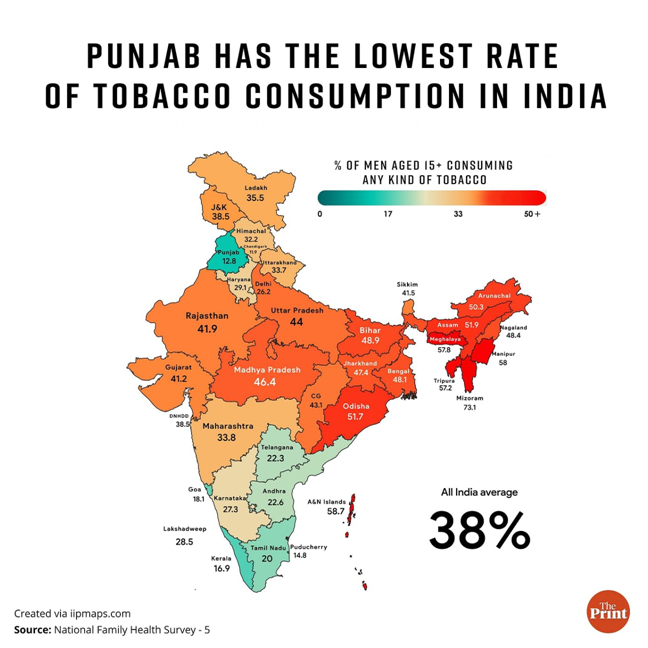
Tobacco is responsible for approximately 1 million deaths annually in India, accounting for about 17.8% of total deaths in the country. This includes deaths from both direct tobacco use and secondhand smoke exposure.
The proposal to levy a higher Goods and Services Tax (GST) rate on tobacco products and sugared beverages has sparked significant discussion in India. This editorial explores the implications of such a move, the current tax structure, and the anticipated outcomes of the proposed changes.
_
Let’s learn!
Why in the News?
The proposal to levy a higher Goods and Services Tax (GST) rate on tobacco products and sugared beverages has sparked significant discussion in India.
What is National Calamity Contingent Duty (NCCD)?
• It is a type of excise duty imposed by the Indian government on specific manufactured goods, particularly those considered harmful to public health, such as tobacco products and certain beverages. • Established under Section 136 of the Finance Act, 2001, NCCD is intended to generate revenue that can be utilized for disaster relief and other national calamity responses. • In the Union Budget for 2023-24, the government proposed increasing NCCD rates by approximately 16% for specified cigarettes, reflecting ongoing efforts to regulate tobacco consumption through higher taxation.
Background of the news:
Over the past seven years since the Goods and Services Tax (GST) was introduced in India, there have been a few significant increases in GST rates for harmful products like tobacco and sugar-sweetened beverages.
Apart from two small hikes in the National Calamity Contingent Duties (NCCD) on tobacco, the tax rates have largely remained unchanged. This lack of increase has made these products more affordable, which undermines efforts to reduce their consumption.
In this context, the recent proposal by the Group of Ministers (GoM) to raise the highest GST rate on tobacco and sugar-sweetened beverages from 28% to 35% is a positive development. This increase could help discourage the consumption of these harmful products.
However, it is important to note that additional tax reforms are necessary to effectively address the public health issues and fiscal challenges associated with tobacco and sugary drinks.
What is the current GST structure?
Under the existing GST framework, tobacco products and aerated beverages are taxed at a base rate of 28%, with additional cess rates that can range significantly.
For tobacco, these cesses can be as high as 290%, making it one of the most heavily taxed sectors in India.
Aerated beverages also face a 12% compensation cess on top of the standard GST rate, leading to a total tax burden that is among the highest globally.
What is the Rationale behind the recent Proposal?
Public Health Concerns: Higher taxes on tobacco and sugary drinks are often justified by their negative health impacts. Increasing GST rates could deter consumption and promote healthier choices among consumers.
Revenue Generation: The Indian government is looking for ways to bolster its revenue streams, especially in light of potential shortfalls from other sectors. By raising taxes on these “sin products,” it aims to offset losses from reductions in taxes on essential goods and services, such as health insurance premiums.
Alignment with Global Practices: Many countries impose high taxes on tobacco and sugary beverages as part of public health strategies. By following suit, India could align itself with global best practices aimed at reducing the consumption of harmful products.
What were the Market reactions to the potential GST Increase?
Stock Price Impact: Following the news, ITC’s shares fell by about 3%, while Varun Beverages dropped by 5%. This decline reflects investor concerns over how higher taxes might affect profitability.
Historical Performance: Both companies had previously enjoyed strong stock performance, with ITC’s stock rising 110% and Varun Beverages increasing by 424% in recent years.
However, the prospect of increased taxation has caused a correction, with both stocks down around 12% from their recent highs.
Analyst Insights: Analysts believe that while higher taxes could reduce sales volumes, they might also boost government revenues if managed well.
Way Forward:
Engage with Stakeholders: Regular consultations with industry stakeholders, including manufacturers and health experts, can provide valuable insights into the potential impacts of tax changes and help create balanced policies that consider both public health and economic factors.
Consider Broader Tax Reforms: The government could explore broader tax reforms that align with health objectives, such as revising tax structures for other products or services that impact public health, ensuring a comprehensive approach to taxation.
Implement the Proposed GST Increase: The government should proceed with the Group of Ministers (GoM) recommendation to raise the GST on tobacco and aerated beverages from 28% to 35%. This move aims to discourage the consumption of these harmful products while increasing government revenue.
Enhance Public Awareness Campaigns: Alongside tax increases, the government can launch public health campaigns to educate citizens about the dangers of tobacco and excessive sugar consumption. This could further support efforts to reduce demand for these products.