💥Join UPSC 2027,2028 Mentorship (August Batch) + XFactor Notes & Microthemes PDF

Distribution: weekly

  • [7th November 2024] The Hindu Op-ed: A West Asia under Donald Trump

    PYQ Relevance:
    Q) The question of India’s Energy Security constitutes the most important part of India’s economic progress. Analyze India’s energy policy cooperation with West Asian Countries. (UPSC CSE 2017)
    Q) In what ways would the ongoing US-Iran Nuclear Pact Controversy affect the national interest of India? How should India respond to its situation? (UPSC CSE 2018)
    Q) “What introduces friction into the ties between India and the United States is that Washington is still unable to find for India a position in its global strategy, which would satisfy India’s National self-esteem (UPSC CSE 2019)

    Mentor’s Comment:  The United States is a dominant global power with the largest economy and military. Its foreign policy decisions significantly shape international relations, impacting everything from trade agreements to military alliances and conflict resolutions.

    The U.S. has been instrumental in establishing and maintaining key international organizations like the United Nations, NATO, and the World Bank, which play crucial roles in global governance and stability.

    Donald Trump’s second term as President of the United States following his recent electoral victory refers to the anticipated policies and implications on global geopolitics especially in present West Asian crises.

    Today’s editorial discusses the implications of Donald Trump’s return to the U.S. presidency for the Middle East, particularly in light of recent conflicts and his previous foreign policy actions. 

    _

    Let’s learn!

    Why in the News?

    Donald Trump’s return to the presidency is making headlines for several reasons, reflecting both the implications of his policies and the broader impact on U.S. society and global geopolitics.

    Trump’s Past Foreign Policy Record in West Asia:

    Pro-Israel Stance: Trump’s first term was characterized by strong support for Israel, including: Moving the U.S. embassy to Jerusalem; Recognizing Israel’s annexation of the Golan Heights; Withdrawing from the Iran nuclear deal.

    Abraham Accords: Initiated normalization between Israel and several Arab nations, aimed at countering Iran.
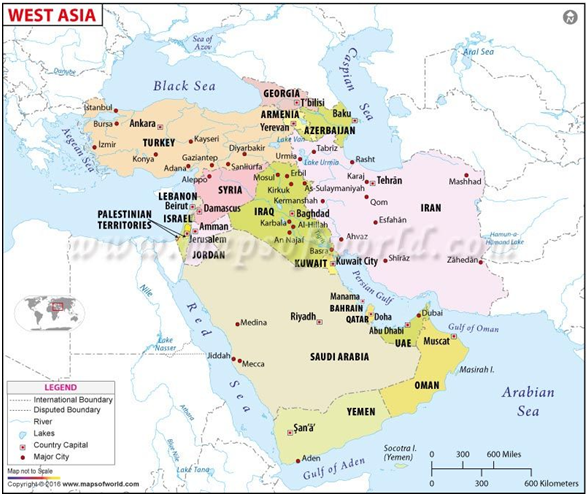
    What changes can be expected in U.S. foreign policy towards Israel and Palestine under Trump?

    • Strong Support for Israel: Trump is likely to continue robust Military and Diplomatic support for Israel. For example, he may endorse Israeli military actions in Gaza, similar to his previous encouragement for Israel to “finish the job” against Hamas during conflicts.
      • Trump may recognize sovereignty by reaffirming policies like recognizing Jerusalem as Israel’s capital and supporting Israeli claims over territories such as the Golan Heights.
    • Limited Engagement with Palestinians: The USA is expected for a continuation of the previous administration’s approach, which involved cutting funding to the Palestinian Authority and sidelining Palestinian voices in peace negotiations.
      • For example, a New Peace initiative (one-sided) is likely to favor Israeli interests, similar to the “Peace to Prosperity” plan released in 2020, which was criticized for not adequately addressing Palestinian rights.
    • Regional Relations and Normalization: Trump may push for more Arab nations to normalize relations with Israel, building on agreements with countries like the UAE and Bahrain by expanding Abraham Records. This could further isolate the Palestinian cause.
      • Secondly, we can expect an aggressive policy towards Iran, including sanctions and military support for Israel against Iranian influence, like Trump’s previous withdrawal from the Iran nuclear deal.
    • Domestic Politics and UN Considerations: While maintaining strong ties with Israel, we must remember that Trump may prioritize domestic concerns over international engagement, reflecting a growing isolationist sentiment within the USA’s Republican Party (particularly among Arab and Muslim communities).

    How will Trump’s policies affect U.S.-Iran relations and Regional stability?

    • Resuming Aggressive Policies: Trump is likely to reintroduce stringent economic sanctions on Iran, which previously led to a significant drop in Iranian oil exports.
      • Expect increased military readiness and potential strikes against Iranian nuclear facilities, similar to the targeted killing of General Qasem Soleimani in 2020.
    • Nuclear Program Implications: U.S. support for Israeli military actions against Iran could provoke retaliatory measures from Tehran.
      • For example, Iran may respond to renewed sanctions by further advancing its nuclear program, moving closer to weapons capability.
    • Shifts in Regional Alliances: Increased backing for Israel may lead to more aggressive actions and proxy conflicts against Iranian interests, heightening conflicts in Gaza and Lebanon.
    • Economic Consequences for Iran: Renewed sanctions could lead to further currency depreciation in Iran and increased public discontent due to economic instability. Iran may boost military spending, straining its economy further.
    Did you Know?
    Trump’s plans under “Project 2025” include significant rollbacks on climate change initiatives, stricter immigration enforcement, and potential restrictions on abortion and LGBTQ+ rights.

    What implications does Trump’s “America First” policy have for India-U.S. engagement?

    • Economic and Trade Policies: Trump’s protectionist “America First” agenda may lead to higher tariffs on Indian goods, particularly in textiles, pharmaceuticals, and automobiles. This could strain trade relations, as India relies heavily on exports to the U.S.
      • Stricter Immigration policy changes to H-1B visa regulations could significantly impact India’s IT sector, raising costs for Indian firms that depend on access to the American labor market.
    • Strengthened Defense Ties: Trump is expected to maintain strong defense cooperation with India through frameworks like the Quad (with Japan and Australia), and with India’s security needs against China. India may benefit from increased U.S. support in countering Chinese actions in the Indo-Pacific region.
      • Hence, Trump’s policies may create opportunities, but they also pose challenges due to potential economic friction from protectionist measures and immigration restrictions.
    • Relations with Russia: Trump’s pro-Russia stance suggests that India will face less pressure to distance itself from Moscow.
      • While previous U.S. administrations have criticized India’s defense ties with Russia, Trump may adopt a more pragmatic approach, focusing on other strategic aspects like defense cooperation without pressing India on Russian relations.

    Way Forward: India might need to navigate a complex landscape as it balances its longstanding ties with Russia against growing relations with the U.S., especially if Trump adopts a less confrontational stance towards Russia compared to previous administrations.

    https://www.thehindu.com/opinion/op-ed/a-west-asia-under-donald-trump/article68837509.ece

  • [6th November 2024] The Hindu Op-ed: Rising STEM research demands revitalized education

    PYQ Relevance:

    Q) National Education Policy, 2020 conforms with the Sustainable Development Goal-4 (2030). It intends to restructure and reorient education system in India. Critically examine the statement. (UPSC CSE 2020)

    Q) Besides the welfare schemes, India needs deft management of inflation and unemployment to serve the poor and the underprivileged sections of society. Discuss. (UPSC CSE 2022)

    Q) The quality of higher education in India requires major improvement to make it internationally competitive. Do you think that the entry of foreign educational institutions would help improve the quality of technical and higher education in the country? Discuss. (UPSC CSE 2015)

    Mentor’s Comment:  The SDG India Index, developed by NITI Aayog, reports an overall score of 71 out of 100, up from 66 in the previous edition, indicating progress in areas such as quality education (SDG 4), where the score improved from 66 to 75.  Despite progress, challenges remain, including disparities in educational quality across regions and inadequate infrastructure. 

    SDG 4.4 aims to substantially increase the number of youth and adults who have relevant skills, including technical and vocational skills, for employment, decent jobs, and entrepreneurship by 2030.

    Additionally, SDG 8 also plays a significant role in this context, as it promotes sustained, inclusive, and sustainable economic growth, full and productive employment, and decent work for all. 

    In light of the increasing global demand for skilled professionals in Science, Technology, Engineering, and Mathematics (STEM), today’s editorial focuses on the urgent need for revitalizing educational frameworks to better prepare students for future challenges. 

    _

    Let’s learn!

    Why in the News?

    The NITI Aayog reports highlight the need for increased investment in teacher training, digital resources, and facilities to enhance learning environments.

    What is the significance of STEM Education?

    Economic Growth and Competitiveness: STEM education equips students with essential skills such as critical thinking, problem-solving, and creativity, which are crucial for success in technology-driven industries. A strong foundation in STEM fields enables India to compete globally and contribute to the global talent pool in science and technology.This is vital for India’s economic expansion, as a skilled workforce can drive innovation and attract investments.
    Equity and Access: STEM education fosters a multidisciplinary approach, where students learn to apply scientific principles to develop innovative solutions for these challenges. Efforts to promote STEM education also focus on empowering women and marginalized groups, reducing gender disparities in these fields. 
    Curriculum Innovation: Integrating STEM into the curriculum encourages a shift from traditional rote learning to hands-on, project-based learning. Well-trained STEM educators are needed to implement these educational strategies effectively. 

    What are the key barriers to effective STEM education in current curricula?

    • School-Related Barriers: Many schools lack sufficient laboratory equipment and materials necessary for hands-on STEM learning, which limits practical experiences for students.
      • Secondly, high student-to-teacher ratios hinder personalized instruction and effective classroom management, making it difficult to engage all students in STEM subjects.
    • Teacher-Related Barriers: A shortage of qualified STEM teachers and inadequate professional development opportunities result in a lack of effective teaching methods in STEM education. 
    • Student-Related Barriers: Students often show low levels of motivation towards STEM subjects, which can stem from a lack of relatable content or perceived difficulty. Some educators need to be made aware that focusing on STEM will detract from traditional academic subjects, leading to resistance.
    • Curriculum and Instructional Barriers: Current curricula are rigid and do not integrate interdisciplinary approaches, limiting students’ ability to make connections between different fields.
    • Technology-Related Barriers: In many areas, particularly rural regions, students do not have adequate access to technology that supports STEM learning, such as computers and internet connectivity

    How can Educational Institutions adapt their teaching methodologies in STEM fields?

    • Project-Based Learning (PBL): PBL encourages students to work on projects that promote creativity, teamwork, and practical application of knowledge in real-world problems, as students take ownership of their learning from start to finish.
    • Problem-Based and Analytical Thinking (PBAT): In this approach, students are presented with complex problems that do not have straightforward solutions. They must analyze the situation, evaluate different perspectives, and devise solutions, thereby enhancing their critical thinking skills.
    • Encouraging Curiosity: This method allows students to ask questions and explore topics of interest through investigation and experimentation. It fosters a deeper understanding of STEM concepts and develops research skills, as students learn to seek out information independently.
    • Integration of Technology: Utilizing technology in the classroom—such as simulations, coding platforms, and digital collaboration tools—can enhance student engagement and provide access to a wider range of learning resources. 

    What role does industry collaboration play in enhancing STEM education?

    • Real-World Application of Knowledge: Industry partnerships help students see how STEM concepts apply to real-world challenges, making learning more relevant and engaging. This connection motivates students to pursue STEM subjects by illustrating their practical importance in various fields.
    • Access to Resources and Expertise: Partnerships with industry can supply schools with access to the latest technologies, enhanced research, and expert knowledge. This access ensures that students are learning with up-to-date tools and methodologies relevant to current market demands.
    • Authentic Assessment: Industry partners can provide valuable and experienced feedback on student projects and educational practices, helping educators refine their curricula to better meet industry standards and expectations.
      • They provide students with insights into various STEM careers through guest speakers, mentorship programs, skill development, and industrial visits.
    • Strengthening Industrial Community: They collaborate with local businesses foster community involvement in education, creating a supportive environment for students. These partnerships can also contribute to local economic development by preparing a skilled workforce
    A collaborative Project by UNESCO and Huawei on “Revitalizing STEM education to equip next generations with STEM competency” 

    Launched in March 2024, this initiative aims to enhance STEM education across Europe by focusing on several key areas:
    ○ To support innovative educational projects through a competitive selection process. For empowering girls and women in STEM fields, addressing gender disparities in these areas.
    ○ Initiates to integrate gender perspectives in Romania, support refugees in Germany, enhance earthquake engineering education in North Macedonia, and improve mathematics teaching in Malta.
    It aims to improve teaching practices, promote STEM research, and create a Regional STEM Clearinghouse for knowledge sharing, all while aligning with the United Nations’ Sustainable Development Goals (SDGs).

    Way Forward: By implementing these adaptive methodologies, educational institutions and Industries can create a dynamic learning environment that not only enhances students’ understanding of STEM subjects but also cultivates the critical thinking and innovative skills necessary for future success in these fields.

    https://www.thehindu.com/opinion/lead/rising-stem-research-demands-revitalised-education/article68833729.ece

  • Not all private property is ‘material resource of community’ for redistribution: Unpacking the SC verdict

    Why in the News?

    A  9-judge Constitution Bench of the Supreme Court, in a majority judgment (8:1), held that not every private resource can be considered a ‘material resource of the community’ to be used by the government to serve the ‘common good’ under Article 39(b).

    • This overturns the earlier interpretation formed in 1977 that has been followed by the Supreme Court till 1997.

    What are Constitutional Provisions?

    • Part IV of the Constitution contains the Directive Principles of State Policy (DPSP) where government should strive to achieve social and economic justice in our society.
    • Article 39(b) in Part IV provides that ‘ownership and control of material resources of the community are so distributed as best to subserve the common good.’
    • Articles 19(1)(f) and 31 originally guaranteed right to property and compensation for acquisition as a Fundamental Right respectively.
      • Article 31C that was added through the 25th amendment in 1971, provided an exception that laws made to fulfil the principles under Articles 39(b) and (c) shall not be void on the ground that it violated Fundamental Rights including right to property.
    • In the Kesavananda Bharati case (1973), a 13-judge Bench of the Supreme Court upheld the validity of Article 31C but made it subject to judicial review.
    • In 1978, the right to property was omitted from Fundamental Rights and made a constitutional right under Article 300A.
      • Any law to acquire private property by the government should only be for a public purpose with adequate compensation meted out.

    What were earlier judgments?

    • In the State of Karnataka vs. Ranganatha Reddy (1977) case, the Supreme Court upheld a law nationalizing private bus services, with Justice V.R. Krishna Iyer interpreting “material resource of the community” in Article 39(b) to include all national wealth.
    • This minority opinion influenced the Sanjeev Coke Manufacturing Company vs. Bharat Coking Coal Limited (1982) case, which also supported nationalization, and was referenced in Mafatlal Industries Limited vs. Union of India (1996).

    What is the current ruling?

    • The SC recently ruled in the Property Owners Association vs. State of Maharashtra case that not all privately owned properties qualify as “material resources of the community” under Article 39(b).
    • A 9 judge bench, stated that only certain properties, based on their nature and impact on public welfare, can be considered for state acquisition to serve the common good.
    • This decision marks a shift from earlier interpretations that emphasized that individual property rights are protected and not every private asset can be appropriated by the state.
    • The ruling also noted that the term “distribution” in Article 39(b) includes both state acquisition and redistribution to private entities when it benefits the community.

    What criteria should determine if a privately owned resource qualifies as a ‘material resource of the community’?

    • Purpose and Public Utility: Privately owned resources may be classified as “material resources of the community” if they are essential for societal welfare, addressing collective needs, or fulfilling significant public purposes, such as energy, water, or land critical for infrastructure.
    • Proportionality and Fairness: The court emphasized that any state action must be proportional, balancing public benefit with the impact on private owners.
    • Economic Impact and Control: Resources that substantially impact the national economy or are crucial for maintaining societal equity (such as natural resources) may be considered community resources, but this does not apply to general private property.

    How does this ruling impact the balance between individual property rights and the state’s ability to intervene for public welfare?

    • This ruling reinforces individual property rights, clarifying that private property cannot be arbitrarily acquired under the guise of benefiting society. The state must justify the acquisition based on substantial, verifiable public welfare needs.
    • Limitations on State Power: By rejecting an expansive interpretation of Article 39(b), the court limits state power, ensuring that only properties directly tied to public interest and welfare fall under this category.

    What are the potential economic implications of this ruling in India?

    • Investment Climate: This ruling strengthens protections for private property, likely improving investor confidence by assuring that property rights are safeguarded from excessive state intervention.
    • Economic Development and Social Equity: By narrowing the scope of Article 39(b), the ruling limits redistributive policies to sectors where public welfare is a clear priority, allowing economic resources to be distributed in a manner that considers social equity while respecting individual rights.
    • Real Estate and Industrial Sectors: The ruling could positively affect sectors with high-value assets, such as real estate and industry, as businesses will have greater certainty regarding property ownership and security.

    How might this decision influence future legal interpretations and legislative actions?

    • Refined Scope for Article 39(b) Applications: Future legislation under Article 39(b) must specifically justify how resources qualify as “material resources of the community,” likely limiting nationalization or acquisition to specific, strategically important sectors.
    • Increased Judicial Scrutiny on Property Rights: Courts are likely to more critically evaluate state actions that aim to redistribute private property, requiring robust evidence of public interest and alignment with constitutional principles.
    • Potential for Policy Revisions: Laws that invoke Article 39(b) and related provisions may need to be reviewed to ensure they comply with this interpretation, leading to a more nuanced application of public welfare policies.

    Way forward: 

    • Establish Clear Guidelines for Public Interest Acquisition: The government should define transparent criteria for categorizing “material resources of the community,” ensuring acquisitions serve substantial public welfare needs and align with societal priorities, especially in areas like infrastructure and essential services.
    • Strengthen Judicial and Legislative Safeguards: Introduce legal safeguards to protect individual property rights, allowing courts to rigorously assess state actions on property acquisition, ensuring proportionality, fairness, and adherence to constitutional principles.

    Mains PYQ:

    Q How did land reforms in some parts of the country help to improve the socio-economic conditions of marginal and small farmers? (UPSC IAS/2021)

  • Jagannath Puri Temple

    Why in the News?

    Odisha’s law minister recently clarified that there was no secret chamber inside the treasury of the Jagannath Temple in Puri.

    About Jagannath Puri Temple

    • The Jagannath Temple is an important Vaishnavite temple dedicated to Jagannath, a form of Sri Krishna in Puri in Odisha.
    • The present temple was rebuilt from the 10th century onwards, on the site of an earlier temple, and begun by Anantavarman Chodaganga Deva, the first king of the Eastern Ganga dynasty.
    • The Puri temple is famous for its annual Ratha Yatra, or chariot festival, in which the three principal deities are pulled on huge and elaborately decorated temple cars.

    It’s Architecture:

    • With its sculptural richness and fluidity of the Oriya style of temple architecture, it is one of the most magnificent monuments of India.
    • The huge temple complex covers an area of over 400,000 square feet and is surrounded by a high fortified wall.
    • This 20 feet high wall is known as Meghanada Pacheri.
    • Another wall known as kurma bedha surrounds the main temple.

    The temple has four distinct sectional structures, namely:

    1. Deula, Vimana or Garba griha (Sanctum sanctorum) where the triad deities are lodged on the ratnavedi (Throne of Pearls). In Rekha Deula style;
    2. Mukhashala (Frontal porch);
    3. Nata mandir/Natamandapa, which is also known as the Jagamohan (Audience Hall/Dancing Hall), and
    4. Bhoga Mandapa (Offerings Hall)

    PYQ:

    [2012] The Nagara, the Dravida and the Vesara are the:

    (a) Three main racial groups of the Indian subcontinent

    (b) Three main linguistic divisions into which the languages of India can be classified

    (c) Three main styles of Indian temple architecture

    (d) Three main musical Gharanas prevalent in India

  • First Asian Buddhist Summit

    Why in the News?

    The Government of India, in collaboration with the International Buddhist Confederation (IBC), held the first Asian Buddhist Summit (ABS) in New Delhi.

    About the Asian Buddhist Summit (ABS)

    • ABS is a high-level conference organized to bring together Buddhist leaders, scholars, and practitioners from across Asia.
    • The theme of the first summit was ‘Role of Buddha Dhamma in Strengthening Asia’.
    • It aligns with India’s Act East Policy, aiming to deepen cultural and spiritual ties across Asian nations.
    • Key topics discussed at the summit include:
      • The role of Buddhist art, architecture, and heritage.
      • The dissemination of Buddha Dhamma and its cultural influence across Asia.
      • The significance of holy Buddhist relics and their societal impact.
      • The relevance of Buddhist philosophy and literature in the 21st century.
      • Exploring the relationship between Buddhism and scientific research for health and well-being.


    About Buddhism:

    Details
    Origin of Buddhism • Originated in India over 2,600 years ago.
    • Founded by Siddhartha Gautama (the Buddha) around 563 BCE.
    • Born into the royal family of the Sakya clan in Lumbini, near the Indo-Nepal border.
    • At age 29, Gautama renounced a life of luxury and embraced asceticism.
    • Attained Bodhi (enlightenment) after 49 days of meditation under a pipal tree in Bodhgaya, Bihar.
    • Delivered his first sermon in Sarnath, known as Dharma-Chakra-Pravartana.
    • Died at 80 in Kushinagara (Mahaparinirvana) in 483 BCE.
    Tenets of Buddhism • Advocated the Madhyam Marg (Middle Path) between indulgence and asceticism.
    • Emphasized individual responsibility for happiness.
    Four Noble Truths (ariya-sachchani):
    1. Dukkha: Suffering is inherent.
    2. Samudya: Every suffering has a cause.
    3. Nirodha: Suffering could be extinguished.
    4. Atthanga Magga: Achieved through the Eightfold Path.
    Eightfold Path (astangika marg): Right view, intention, speech, action, livelihood, mindfulness, effort, concentration.
    • Ultimate goal: Attaining Nirvana (Nibbana).
    Five Precepts (Panchasil): Prohibitions against violence, stealing, sexual misconduct, lying, and intoxicants.
    Major Buddhist Texts • Initially oral teachings, memorized by the Sangha.
    • Written down around 25 BCE in Pali.
    Three Pitakas:
    1. Vinaya Pitaka: Monastic rules.
    2. Sutta Pitaka: Main teachings, divided into five Nikayas (Digha, Majjhima, Samyutta, Anguttara, Khuddaka).
    3. Abhidamma Pitaka: Philosophical analysis of teachings.
    • Other important texts: Divyavadana, Dipavamsa, Mahavamsa, Milind Panha.
    Role of the Buddhist Councils • Important turning points in early Buddhism, leading to sectarian clashes and the Great Schism.
    Four Major Councils:
    1. First Council (483 BCE): Presided by Mahakasyapa, aimed to preserve teachings.
    2. Second Council (383 BCE): Addressed monastic discipline.
    3. Third Council (250 BCE): Under Ashoka, focusing on spreading Buddhism.
    4. Fourth Council (72 CE): Led to division into Mahayana and Hinayana.
    Different Schools of Buddhism Mahayana: “Great Vehicle,” emphasizes Bodhisattva ideal and idol worship; spread to Central and East Asia.
    Hinayana: “Lesser Vehicle,” focuses on individual salvation and original teachings; Theravada is a major branch.
    Theravada: Closest to original teachings; dominant in Cambodia, Laos, Myanmar, Sri Lanka, and Thailand.
    Vajrayana: “Vehicle of the Thunderbolt,” complex rituals; developed around 900 CE.
    Zen: Focuses on meditation, developed in China and Japan.
    Spread of Buddhism in Ancient India • Monastic organization through Sangha for spreading teachings.
    • Rapid growth during Buddha’s lifetime.
    Ashoka’s influence post-Kalinga conquest; adopted Dhamma conquest, sending missions to various regions, including Gandhara, Kashmir, Greece, Sri Lanka, Burma (Myanmar), Egypt, and Thailand.


    PYQ:

    [2020] With reference to the religious history of India, consider the following statements:

    1. Sthaviravadins belong to Mahayana Buddhism.

    2. Lokottaravadin sect was an offshoot of Mahasanghika sect of Buddhism.

    3. The deification of Buddha by Mahasanghikas fostered the Mahayana Buddhism.

    Which of the statements given above is/are correct?

    (a) 1 and 2 only

    (b) 2 and 3 only

    (c) 3 only

    (d) 1, 2 and 3

  • Does the Sun rotate?

    sun

    Why in the News?

    Indian astronomers at the Kodaikanal Solar Observatory (KSO) have achieved a groundbreaking feat by mapping, for the first time, the variation in the Sun’s rotation speed from its equator to its poles.

    Sun’s Rotation: Key Facts

    • Unlike a solid body, the Sun exhibits differential rotation, meaning different parts of the Sun rotate at different speeds.
    • The rotation speed varies depending on latitude, with faster rotation near the equator and slower rotation toward the poles.
    • This variation is primarily due to the Sun’s composition of gaseous plasma rather than solid material.

    Rotation Period Variation by Latitude:

    • Equatorial Regions: The rotation period at the equator is the fastest, around 24.47 days (sidereal rotation).
    • Sunspot Zones (about 16 degrees latitude): Rotation slows slightly, with a period of about 27.3 days.
    • Higher Latitudes (up to 75 degrees): Rotation slows significantly; for example, at 75 degrees latitude, the rotation period is about 33.4 days.
    • Poles: The slowest rotation occurs at the poles, with a period around 31.1 days.

    Sidereal vs. Synodic Rotation Periods:

    • Sidereal Rotation Period: The time taken for the Sun to complete one full rotation relative to distant stars. It varies by latitude, from 24.47 days at the equator to around 33.4 days at higher latitudes.
    • Synodic Rotation Period: This is the time for a fixed feature on the Sun to appear in the same position when observed from Earth. It is longer than the sidereal period due to Earth’s own movement around the Sun, averaging around 26.24 days.

    Why Differential Rotation Occur?

    • Gaseous Plasma Composition: The Sun is composed of plasma—a hot, ionized state of matter—which allows its different regions to rotate at different speeds.
    • Convective Zone Dynamics: The outer convective layer of the Sun contributes to differential rotation. Plasma circulates, rising and sinking, which influences the rotational speed at different latitudes.

    Scientific Implications

    • Solar Dynamo Theory: The differential rotation of the Sun is central to theories about the solar dynamo—the process that generates the Sun’s magnetic field.
    • Mystery of Differential Rotation: Despite extensive research, the exact mechanism behind the Sun’s differential rotation remains an active area of investigation in solar physics.

    PYQ:

    [2013] Consider the following phenomena

    1. Size of the sun at dusk

    2. Colure of the sun at dawn

    3. Moon being visible at dawn

    4. Twinkle of stars in the sky

    5. Polestar being visible in the sky

    Which of the above are optical illusions?

    (a) 1, 2 and 3

    (b) 3, 4 and 5

    (c) 1, 2 and 4

    (d) 2, 3 and 5

  • Central Water Commission (CWC)

    Why in the News?

    Himalayan glacial lakes are expanding rapidly, posing greater risks to communities and ecosystems according to a Central Water Commission (CWC) report.

    Key highlights of the CWC report:

    • Rapid Expansion of Glacial Lakes: Glacial lakes across the Himalayan region expanded by 10.81% in surface area from 2011 to 2024. In India alone, glacial lakes grew by 33.7% over the same period, posing serious risks to local communities and ecosystems.
    • High-Risk Lakes: The report identifies 67 lakes in India with a more than 40% increase in size, placing them in the high-risk category for glacial lake outburst floods (GLOFs).
    • Regional Expansion Trends: The surface area of glacial lakes in the Himalayas grew from 533,401 hectares in 2011 to 591,108 hectares in 2024, largely due to accelerated glacier melt from rising temperatures.
    • Advanced Monitoring: The CWC is employing satellite technologies like Sentinel-1 SAR and Sentinel-2 multispectral imagery for precise, year-round data collection to monitor lake size and potential outburst risks.

    About Central Water Commission (CWC):

    Details
    Establishment
    • Established in 1945 as the Central Waterways, Irrigation and Navigation Commission (CWINC);
    • On the advice of Dr. B. R. Ambedkar (a member of the then Viceroy’s Executive Council).
    Nodal Ministry Ministry of Jal Shakti under the Department of Water Resources, River Development and Ganga Rejuvenation.
    Status Statutory body serving as an advisory entity to the GoI on water resources development and management.
    Headquarters New Delhi
    General Responsibilities
    • Initiating, coordinating, and furthering schemes for the control, conservation, and utilization of water resources.
    • Compiles and maintains nationwide National Register of Large Dams (NRLD).
    • Conducts hydrological surveys.
    Scope of Work CWC deals exclusively with surface water; the Central Groundwater Board (CGWB) manages groundwater resources.
    Chairman Chairman serves as the Ex-Officio Secretary to the GoI.
    Wings of CWC • Designs and Research (D&R) Wing
    • River Management (RM) Wing
    • Water Planning and Projects (WP&P) Wing


    PYQ:

    [2020] Consider the following statements:

    1. 36% of India’s districts are classified as “overexploited” or “critical” by the Central Ground Water Authority (CGWA).

    2. CGWA was formed under the Environment (Protection) Act.

    3. India has the largest area under groundwater irrigation in the world.

    Which of the statements given above is/are correct?

    (a) 1 only

    (b) 2 and 3 only

    (c) 2 only

    (d) 1 and 3 only

  • Forging a future of Self-sufficiency and Economic Resilience 

    Why in the News?

    Chhattisgarh, with its cultural richness and natural resources, is starting an industrial path with the 2024-29 policy.

    • This plan is part of “Amritkaal: Chhattisgarh Vision@2047” to grow self-sufficient.

    CASE STUDY: “Amritkaal: Chhattisgarh Vision@2047

    • This policy introduces special provisions for marginalized groups, including surrendered Naxals, women, and the third-gender community. This inclusivity aims to empower these groups socio-economically.
    • Specific packages are designed to support entrepreneurship among these communities through training and financial assistance, facilitating their integration into mainstream society.
    • The ‘Amritkaal’ policy classifies development areas into three groups based on their industrialization levels, ensuring that incentives are targeted towards backward areas to promote balanced growth across the state.
      • Focus on Sustainable Industries: There is a strong emphasis on promoting pollution-free industries, particularly in electric vehicle manufacturing and environmentally friendly products, ensuring sustainable growth.
      • Support for Start-ups: A dedicated fund of ₹50 crore has been allocated to support start-ups, encouraging innovation and entrepreneurship throughout the state.

    What strategies can be implemented to enhance economic resilience in communities?

    • For Targeted Training Programs: Implementing skill development initiatives tailored for marginalized groups can help them acquire the necessary skills for self-employment and entrepreneurship.
    • For Financial Assistance and Subsidies: Providing subsidized loans and financial incentives can lower barriers for starting new businesses, especially for women and the third-gender community.
    • For Establishment of Industrial Corridors: Developing industrial corridors can enhance connectivity and create a conducive environment for industries to thrive, leading to job creation and economic diversification.

    How does self-sufficiency contribute to overall economic stability?

    • Reduced Dependency: Self-sufficiency allows communities to rely less on external resources, making them more resilient to economic shocks and fluctuations in global markets.
    • Local Job Creation: By fostering local industries and entrepreneurship, self-sufficiency contributes to job creation within communities, enhancing overall economic stability.
    • Sustainable Growth: Emphasizing sustainable practices ensures that economic growth does not come at the expense of environmental degradation, promoting long-term stability.

    What role do various stakeholders play in fostering economic resilience?

    • Government: The government plays a crucial role by formulating policies that provide incentives and support for industrial development. It also facilitates training programs and infrastructure development.
    • Local Businesses and Entrepreneurs: Local businesses contribute by creating jobs and stimulating the economy. Entrepreneurs drive innovation and respond effectively to local market needs.
    • Community Organizations: NGOs and community organizations can assist in identifying the needs of marginalized groups and facilitate access to resources such as training and financial assistance.

    Way forward: 

    • Integrated Community Development Programs: Establish comprehensive programs that unite training, financial assistance, and mentorship specifically for marginalized groups.
    • Public-Private Partnerships for Infrastructure Development: Encourage collaboration between the government and private sector to develop industrial corridors and infrastructure that facilitate economic activities.

    Mains PYQ:

    Q Can the strategy of regional-resource-based manufacturing help in promoting employment in India? (UPSC IAS/2019)

  • Explained: The paradox of stagnant rural wages

    Why in the News?

    From 2019-20 to 2023-24, India’s economy grew at 4.6% annually, with the farm sector at 4.2%, yet rural wages remain stagnant.

    Disparity between Rural Wages and Economic Growth:

    • Divergent Growth Trends: While the Indian economy has experienced significant GDP growth (averaging 4.6% annually from 2019-20 to 2023-24), rural wages have stagnated, with real agricultural wages showing minimal growth and often negative real wage growth due to rising inflation.
    • Labor Supply Dynamics: The surge in female Labor Force Participation Rates (LFPR) in rural areas has increased the overall labor supply, exerting downward pressure on wages as more workers compete for the same or fewer jobs, primarily in low-productivity agricultural sectors.
    • Capital-Intensive Growth: Economic growth has become increasingly capital-intensive and labor-saving, leading to a disproportionate share of income going to capital rather than labour.
      • This trend results in fewer job opportunities in high-paying sectors, further exacerbating the stagnation of rural wages.

    What are the major factors behind the Stagnant Rural Wages?

    • Increased Female Labour Force Participation (Surplus of Labour): The rural female Labour Force Participation Rate (LFPR) has seen a sharp rise, particularly due to government initiatives that have freed up women’s time for outside employment.
      • However, this has led to a significant increase in the overall rural workforce, causing a surplus of labor that exerts downward pressure on wages.
    • Majority of choosing Agricultural Employment: Although more women are entering the labour force, the majority are finding employment in agriculture rather than in higher-paying non-farm sectors.
      • This results in a surplus of workers in an already low-productivity sector, which suppresses wages further.
    • Capital-Intensive Economic Growth: The Indian economy’s growth has increasingly come from capital-intensive sectors that require fewer workers.
      • Consequently, the share of income generated is shifting from labour (wages) to capital (profits). This trend limits demand for rural labour, leading to wage stagnation.
    • Low Demand for Non-Agricultural Labor: Wage growth in rural non-agricultural sectors has been even weaker, with real wages declining. This reflects limited job opportunities outside of agriculture, partly due to low demand for labour in industries that are more capital-intensive.

    What are the steps taken by Govt to address the issue of Low Rural Wages?

    • Income Transfer Schemes: Both central and state governments have introduced various income transfer schemes, like Pradhan Mantri Kisan Samman Nidhi (PM-KISAN) which provides an annual income support of Rs 6,000 to farmer households in rural areas.
      • Many states have launched income-support schemes specifically for women, such as Maharashtra’s Ladki Bahin Yojana, which provides Rs 1,500 per month to women from low-income households.
    • Employment Generation Programs: Schemes like the Mahatma Gandhi National Rural Employment Guarantee Act (MGNREGA) provide a safety net by guaranteeing 100 days of wage employment for rural households.
      • The government has also promoted rural entrepreneurship through initiatives like the Mudra Yojana, which offers micro-loans to rural businesses and enhance employment opportunities.
    • Skill Development Initiatives: The government has been investing in rural skill development programs to promote employability in non-farm sectors.
      • Programs under schemes like the Deen Dayal Upadhyaya Grameen Kaushalya Yojana (DDU-GKY) focus on upskilling rural youth and women to enable them to find better-paying, non-agricultural employment.
    • Rural Infrastructure Development: Initiatives to build rural infrastructure, such as the Pradhan Mantri Gram Sadak Yojana (PMGSY), create temporary employment in construction and improve access to jobs, markets, and services.

    Way forward: 

    • Diversification of Employment Opportunities: Enhancing support for non-agricultural sectors through targeted investments in skill development, vocational training, and entrepreneurship programs can create diverse job opportunities.
    • Strengthening Agricultural Productivity: Implementing policies that focus on modernizing agricultural practices and improving productivity can increase the income of rural labourers.

    Mains PYQ:

    Q  Though there have been several different estimates of poverty in India, all indicate reduction in poverty over time. Do you agree. Critically examine with reference to urban and rural poverty indicators. (2015)

    Q Examine the pattern and trend of public expenditure on social services in the post-reforms period in India. To what extent this has been in consonance with achieving the objective of inclusive growth? (2024)

  • What Australian varsity study says about impact of India’s Dedicated Freight Corridors

    Why in the News?

    Dedicated Freight Corridors are boosting India’s GDP and significantly enhancing Indian Railways’ revenue, according to a recent study by Australia’s University of New South Wales.

    What are dedicated freight corridors (DFCs)?

    Dedicated Freight Corridors (DFCs) are specialized railway tracks for freight transportation, designed to improve efficiency with faster, high-capacity trains like double-stack containers and heavy-haul freight trains.

    What is the Present Status?

    • India has two main DFCs:
      • Eastern DFC (EDFC): Spanning 1,337 km from Sonnagar (Bihar) to Sahnewal (Punjab). The EDFC is operational and includes feeder routes connecting coal mines and thermal plants.
      • Western DFC (WDFC): Extends 1,506 km from Jawaharlal Nehru Port (Mumbai) to Dadri (Uttar Pradesh). The WDFC is 93% complete, serving major ports in Gujarat. Full completion is expected by December 2025.
    • As of March 31, 2024, the project has incurred costs of ₹94,091 crore, excluding land acquisition.

    What does the Australian varsity study say?

    • Conducted by the University of New South Wales, this study used a Computable General Equilibrium model to assess the WDFC’s impact, specifically from FY 2019–20.
    • The study’s findings include:
      • Reduced freight costs and travel times have decreased commodity prices by up to 0.5%.
      • The DFCs contributed to a 2.94% increase in Indian Railways’ revenue between FY 2022–23 and FY 2018–19.
      • Western regions gained significantly from reduced freight costs, which had a “social-equalizing effect,” benefiting states with lower per capita GDP.
    • Published in Elsevier, the study integrated freight costs, industry inputs, population data, and rail and road data.

    What economic benefits do Dedicated Freight Corridors (DFCs) bring to India?

    • Improved Supply Chains: DFCs provide faster, efficient transit for freight, enhancing the supply chain for industries and logistics providers.
    • Cost Savings: Reduction in freight transport costs lowers overall logistics expenses, which can lead to price reductions for consumers.
    • Revenue Growth for Railways: DFCs have directly contributed to revenue increases, supporting the Railways’ finances.
    • Increased Freight Share: The corridors are key to meeting the National Rail Plan’s target of achieving a 45% rail share in freight by 2030.
    • Exports and Imports: Faster, dedicated freight routes boost export-import activities, as DFCs support port connectivity, particularly in the West.

    How do DFCs enhance the overall logistics and transportation infrastructure in India?

    • Decongested Rail Network: By shifting freight traffic off the main passenger routes (e.g., the Golden Quadrilateral), DFCs alleviate congestion, improving both freight and passenger rail reliability.
    • Regional Development: States along the DFC routes experience increased industrial activity due to improved logistics support, which can enhance local economies and job creation.
    • Future Corridors: Plans are underway for four additional corridors (East Coast, East-West I & II, North-South) to further expand the freight network, enhancing connectivity across the country.

    Current Operational Status and Future Outlook

    • As of now, 325 trains run daily on the DFCs, which is a 60% increase from the previous year.
    • DFC trains are faster, safer, and capable of carrying heavier loads, contributing to over 10% of Indian Railways’ total freight operations.
    • DFCCIL is conducting further research on DFCs’ economic impact, with results expected soon, which will provide deeper insights into their long-term contributions to India’s economic growth.

    Challenges related to the development of DFC: 

    • Land Acquisition Delays: Acquiring over 8,800 hectares, often privately owned and developed land, has caused setbacks, with disputes and legal cases prolonging the process.
    • Escalating Costs: Project costs have surged significantly, with Japan International Cooperation Agency (JBIC) noting that expenses have nearly doubled, raising concerns about financial viability and potential investor reluctance.
    • Technology Disputes: Differences over locomotive technology—diesel versus electric—pose delays, as stakeholders like Indian Railways and JBIC debate environmentally friendly solutions.
    • Utility and Infrastructure Challenges: Shifting utilities (power lines, water pipes) and constructing road overbridges and under-bridges add logistical complexities.
    • Funding and Financial Management: Reliance on external funding and the need for efficient resource management impact project timelines and execution stability.

    Way Forward: 

    • Streamlined Land Acquisition and Cost Management: Need to implement a centralized framework for faster land acquisition and cost oversight to mitigate delays and prevent cost escalations, ensuring project feasibility and investor confidence.
    • Technological and Funding Consensus: Need to establish clear technology standards (e.g., electric locomotives) for environmental benefits and secure diversified funding sources to reduce dependence on external financing, enabling timely completion and sustainable operations.

    Mains PYQ:

    Q “Investment in infrastructure is essential for more rapid and inclusive economic growth.” Discuss in the light of India’s experience. (UPSC IAS/2021)