💥Join UPSC 2027,2028 Mentorship (July Batch) + XFactor Notes & Microthemes PDF

Distribution: yearly

  • Why digitisation is not enough to reform land laws?

    Why in the News?

    India’s land governance system is a tangled web of laws that have significantly impeded the nation’s economic and social progress for many years.

    What are the limitations of digitisation in land law reform?

    • Failure to Address Legal Complexities: Digitisation alone does not resolve the underlying conflicts in land laws, such as unclear titles, insecure tenure, and legal ambiguities around land ownership and transfers.
    • Outdated Records: Even digitised land records may remain outdated or inaccurate, undermining the reliability of property titles and failing to improve access to formal credit.
    • Ineffectiveness in Fragmented Land Markets: Digitisation does not solve the issue of land fragmentation, which reduces agricultural productivity and hampers investment.
    • Limited Impact on Tenancy and Leasing Laws: Digitisation does not address restrictions on land leasing or tenancy, leaving land markets inefficient and informal.
    • Overreliance on Administrative Procedures: The complexities of legal and administrative frameworks still hinder land ownership, transfers, and use, despite digitisation efforts.
    • Political Exemptions from Judicial Review: The exclusion of land laws from judicial scrutiny through the Ninth Schedule limits accountability and the ability to challenge unjust political or administrative actions.

    How do socio-political factors influence the effectiveness of digitisation efforts?

    • Political Resistance: Local and state-level political interests may resist changes to land laws that could undermine entrenched power structures or vested interests, impeding the effectiveness of digitisation efforts.
    • Rent-Seeking Behavior: Complex land laws and administrative procedures encourage rent-seeking, making digitisation ineffective without legal reforms that simplify regulations.
    • Cultural Norms and Gender Disparities: Socio-political dynamics, especially regarding gender and caste, influence land ownership patterns, limiting the impact of digitisation in addressing social inequalities.
    • State Variability: Differences in state capacity, resources, and political will lead to uneven adoption and success of digitisation efforts across India.
    • Lack of Integration in Subsidy Targeting: Social and political factors, such as inefficient targeting of subsidies (e.g., fertiliser subsidies not linked to land records), limit the impact of digitisation on equitable resource distribution.
    • Exclusion from Judicial Review: The Ninth Schedule’s protection of land laws from judicial review allows political decisions to go unchallenged, reducing the long-term effectiveness of digitisation reforms.

    What additional measures are necessary for effective land law reform? (Way forward)

    • Comprehensive Legal Reforms: Overhaul conflicting land laws to ensure clarity, secure property titles, and strengthen property rights.
    • Tenancy and Leasing Reforms: Modernise and liberalise tenancy laws to formalise leasing arrangements and reduce the risk of expropriation.
    • Land Use Flexibility: Reforms allowing easier conversion of land use between agricultural, industrial, and residential sectors to ensure optimal land utilisation.
    • Land Consolidation Policies: Facilitate land consolidation to improve agricultural productivity and attract investment by reducing fragmentation.
    • Gender Equality in Land Ownership: Strengthen laws ensuring equal land and property rights for women, addressing gender-based inequalities in land ownership.
    • Judicial Oversight: Allow land laws to be subject to judicial review, ensuring fairness and protecting against arbitrary political and administrative decisions.
  • Places in news: Palk Strait

    Why in the News?

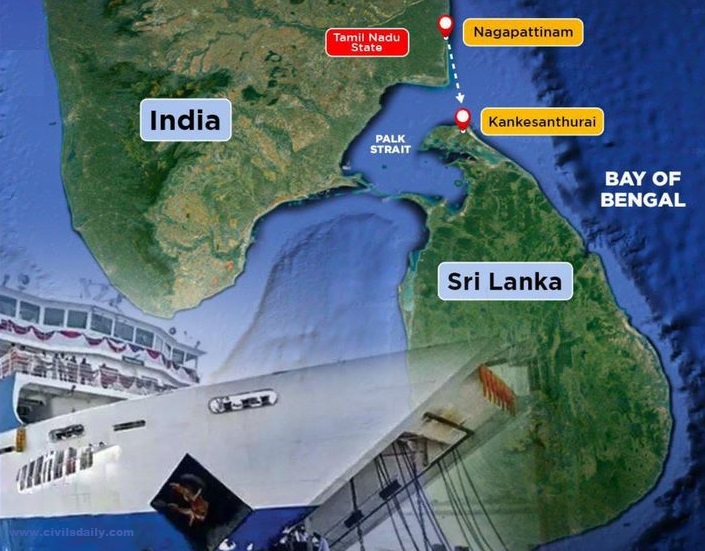
    The Nagapattinam-Kankesanthurai ferry service has been resumed along the Palk Strait between India and Sri Lanka after 40 years.

    About Palk Strait

    Location Narrow water body separating Tamil Nadu, India, and Sri Lanka.
    Name Origin Named after Robert Palk, a British Raj-era Governor of Madras Presidency (1755-1763).
    Geographic Boundaries Southern boundaries include Pamban Island (India), Adam’s Bridge (shoals), Gulf of Mannar, and Mannar Island (Sri Lanka).
    Connection Connects the Bay of Bengal in the northeast with the Gulf of Mannar in the southwest.
    Alternate Name Southwestern part of the strait is known as Palk Bay.
    Dimensions Width varies from 64 to 137 km, length is approximately 137 km, and depth is less than 330 feet (100 meters).
    River Inflows Vaigai River in Tamil Nadu flow into the Palk Strait.
    Historic Context
    • Key maritime link between India and Sri Lanka, facilitating trade, cultural exchanges, and religious pilgrimages.
    • Played a vital role in the British colonial trade routes, but ferry services were halted due to the 1964 cyclone and the Sri Lankan civil war in 1983.
    Present Significance Supports regional trade, tourism, and people-to-people connections, while fostering economic development in both India and Sri Lanka.
  • UK backs permanent seat in UNSC for India

    Why in the News?

    UK PM Keir Starmer has expressed strong support for India’s bid for a permanent seat at the United Nations Security Council (UNSC).

    About United Nations Security Council (UNSC)

    Details
    Establishment By the UN Charter in 1945 as one of the six principal organs of the United Nations.
    Other UN Organs General Assembly, Trusteeship Council, Economic and Social Council, International Court of Justice, Secretariat
    Primary Responsibility Maintaining international peace and security
    Headquarters New York City, USA
    Members 15 members: 5 permanent members (US, UK, Russia, China, France) and 10 non-permanent members (elected for two-year terms)
    Permanent Members US, UK, Russia, China, France
    Non-permanent Members 10 elected members; require two-thirds majority in the General Assembly to be elected
    Presidency Rotation Every month among the 15 members
    Voting and Veto Power Permanent members have veto power; non-permanent members have no veto but resolutions require at least 7 non-permanent members’ votes for approval, even with unanimous permanent support
    India’s Participation India has been elected as a non-permanent member of the UNSC eight times: 1950-51, 1967-68, 1972-73, 1977-78, 1984-85, 1991-92, 2011-12, 2021-22
    Responsibilities & Powers Mediation, dispatching UN missions, appointing envoys, issuing ceasefire directives, peacekeeping, sanctions, arms embargo, and issuing binding resolutions
    UNSC Reforms Process Stage 1: Requires a two-thirds majority (128 votes) in the General Assembly (193 member states) for approval.
    Stage 2: Amended Charter must be ratified by at least two-thirds of member states, including all five permanent members, who may exercise veto power. Their national parliaments also influence the ratification process.


    PYQ:

    [2009] The Security Council of UN consists of 5 permanent members, and the remaining 10 members are elected by the General Assembly for a term of:

    (a) 1 year

    (b) 2 years

    (c) 3 years

    (d) 5 years

    [2015] Discuss the impediments India is facing in its pursuit of a permanent seat in the UN Security Council.

  • Param Rudra Supercomputer

    Why in the News?

    PM has dedicated three “PARAM Rudra” Supercomputers along with High-Performance Computing (HPC) systems, ‘Arka’ and ‘Arunika’, to the nation.

    What are High-Performance Computing (HPC) Systems?

    • HPC systems are powerful computational systems that perform large-scale and complex computations at incredibly high speeds.
    • HPC Arka system at IITM has 11.77 Peta Flop capacity and will, for the first time, help improve the country’s horizontal resolution of its global weather prediction models to 6 km from the existing 12 km.
    • HPC Arunika comes with 8.24 Peta Flop capacity. This HPC will prove beneficial in upgrading weather forecast resolution at block levels.

    What is PARAM Rudra?

    • PARAM Rudra is a high-performance computing (HPC) system and part of India’s PARAM series of supercomputers.
    • It is developed indigenously by the Centre for Development of Advanced Computing (C-DAC) under the National Supercomputing Mission (NSM).

    Applications of PARAM Rudra

    • Astronomy: Used by the Giant Metre Radio Telescope (GMRT) in Pune to study Fast Radio Bursts (FRBs) and other astronomical phenomena.
    • Atomic Physics and Material Science: The Inter-University Accelerator Centre (IUAC) in Delhi uses PARAM Rudra for research in these areas.
    • Physics, Cosmology, and Earth Sciences: The supercomputer at the SN Bose National Centre for Basic Sciences in Kolkata supports advanced studies in these domains.
    • Weather Forecasting and Agriculture: The supercomputers enhance weather forecasting, benefiting industries like agriculture, where improved predictions help farmers make informed decisions.

    Back2Basics: National Supercomputing Mission (NSM):

    Details
    Launch Year 2015
    Objective
    • To enhance India’s research capacities by creating a Supercomputing grid supported by the National Knowledge Network (NKN)
    • To position India as a global leader in supercomputing technology by boosting research, development, and innovation
    Nodal Agency Department of Science and Technology (DST);

    Ministry of Electronics and Information Technology (MeitY)

    Implementation Agencies C-DAC, Pune  and IISc, Bengaluru
    Phases 1. Phase I: Assembling supercomputers
    2. Phase II: Manufacturing components in India
    3. Phase III: Designing an indigenous supercomputer
    Historical Context India’s supercomputer program began after the USA’s technology embargo in the late 1980s, leading to the creation of C-DAC and the unveiling of PARAM 800 in 1991 (second-fastest globally at the time)
    Notable Supercomputers AI Supercomputer’ AIRAWAT’ and PARAM Siddhi – AI are currently the fastest supercomputers in India.

    AIRAWAT has been ranked 75th in the world as of June 2023.

    Global Context Frontier (USA) is the world’s fastest supercomputer since December 2023.
  • Nanjangud Rasabale Banana

    Why in the News?

    The “Nanjangud Rasabale banana” has been revived after a drastic decline in cultivation, despite receiving Geographical Indication (GI) certification in 2006 for its unique taste and aroma.

    About Nanjangud Rasabale Banana

    Details
    Origin Devarasanahalli village near Nanjangud, Mysore district, Karnataka
    Unique Features
    • Unique taste, aroma, small size, buttery soft texture
    • 5-8 cm in length, 2-3 cm in diameter
    Cultivation
    • In 2006-07, 180 farmers cultivated on 100 hectares; dropped to 15 farmers on 10 hectares by 2019-20.
    • By the end of 2023-24, 200 farmers cultivating on 75 hectares.
    Soil  Black saline alluvial soil along the banks of the Kapila River
    Significance Popular in traditional festivals, religious ceremonies, and Kannada literature
    Cultural Reference Mentioned in Kayyar Kinhanna Rai’s poem, a notable Kannada literary work
    Challenges Decline in quality due to heavy use of chemical fertilizers
    Economic Impact Significant for local farmers, high demand due to limited availability


    PYQ:

    [2016] Recently, our scientists have discovered a new and distinct species of banana plant which attains a height of about 11 metres and has orange coloured fruit pulp. In which part of India has it been discovered?

    (a) Andaman Islands

    (b) Anaimalai Forests

    (c) Maikala Hills

    (d) Tropical rain forests of northeast

  • Philadelphi Corridor

    Why in the News?

    The Philadelphi Corridor is a key issue in ceasefire talks as Israel’s war on Gaza continues, with Palestinian deaths nearing 41,000.

    About Philadelphi Corridor

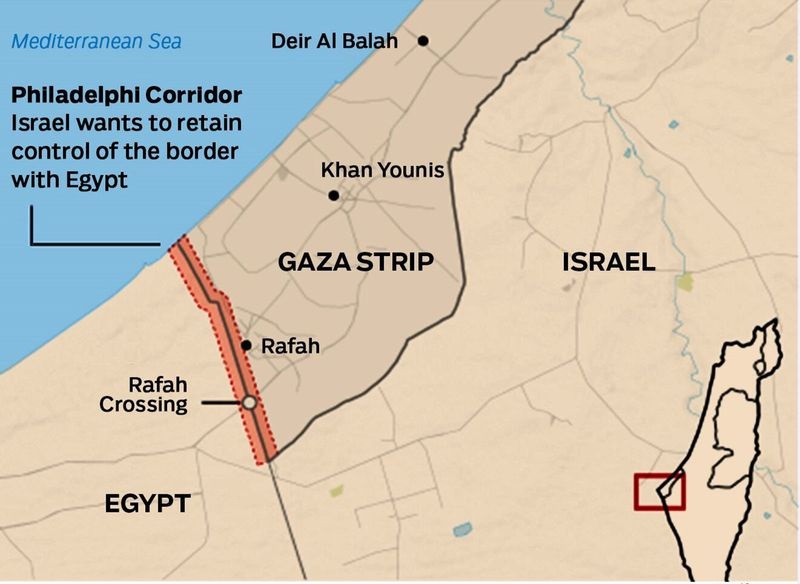
    • The Philadelphi Corridor is a strategically significant strip of land between the Gaza-Egypt border.
    • It spans about 14 kilometers in length and 100 meters in width.
    • This area plays a critical role in regional security and the geopolitics surrounding Gaza, Israel, and Egypt.
    • It runs from the Mediterranean Sea in the north to the Kerem Shalom crossing with Israel in the south.
    • It includes the Rafah crossing, the main border point between Gaza and Egypt.
    • It acts as a buffer zone between Egypt and Gaza, with control over it influencing security and smuggling activities in the region.

    Significance for Israel

    • The Corridor became significant after the 1979 Camp David peace treaty, allowing Israel to maintain a limited military presence.
    • In 2005, Israel withdrew from Gaza, including the corridor, leaving Egypt and the Palestinian Authority responsible for security.
    • In 2007, Hamas took control of Gaza, increasing smuggling activities through tunnels in the corridor.
    • Israel regained control of the corridor in May 2023 during a ground offensive in Gaza.
    • The corridor has since been central to Israel’s strategy for controlling arms smuggling and preventing Hamas from using it as a supply route.
  • Kolkata Tram

    Why in the News?

    West Bengal has announced the discontinuation of the iconic 150 year old Kolkata trams, India’s last functioning tram system.

    About Kolkata Tram

    • Introduced in 1873 in Calcutta (now Kolkata), the first trams were horse-drawn and operated along a 3.8 km route between Sealdah and Armenian Ghat Street.
    • In 1874, horse-drawn trams reached Bombay (now Mumbai), followed by their introduction in Nashik and Patna.
    • However, their dependency on horse labor made them unsustainable.

    Revival and Modernization of Kolkata’s Trams

    • Lord Ripon revived trams in Calcutta in 1880 by experimenting with steam locomotives.
    • While the steam-powered trams improved speed, they introduced issues like pollution, which discouraged other states from adopting this technology.
    • In 1895, Madras (now Chennai) launched the country’s first electric tramcars, reducing noise and pollution.
    • Following this, Calcutta also transitioned to electric-powered trams by 1902, with routes between Esplanade and Kidderpore, and Esplanade and Kalighat.

    Significance of Trams

    • Kolkata’s trams hold historical significance as India’s oldest running tram system, symbolizing the city’s colonial past and cultural identity.
    • They provide an environmentally friendly and affordable mode of transport, making them relevant even today.
    • As a symbol of resilience, Kolkata’s trams have survived while other cities phased them out.
    • They also serve as a unique tourist attraction, offering a nostalgic glimpse of the city.

    PYQ:

    [2020] Which of the following statements correctly explains the impact of Industrial Revolution on India during the first half of the nineteenth century?

    (a) Indian handicrafts were ruined.

    (b) Machines were introduced in the Indian textile industry in large numbers.

    (c) Railway line were laid in many parts of the country.

    (d) Heavy duties were imposed on the import of British manufactures.

  • In news: Dhanauri Wetland

    Why in the News?

    The NGT has ordered the UP government to remove water hyacinth from “Dhanauri wetlands” and questioned its failure to designate the wetland as a Ramsar site.

    Dhanauri Wetland

    About Dhanauri Wetland

    Details
    Location
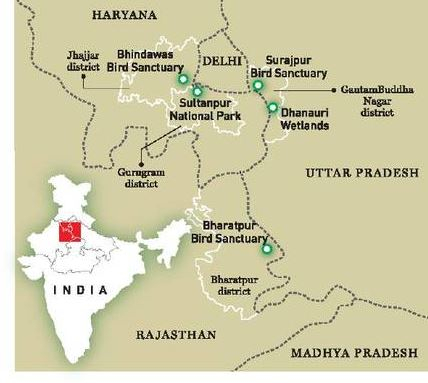
    • Dhanauri village near Dankaur, Uttar Pradesh;
    • Floodplains of Yamuna.
    Key Species Home to over 120 Sarus Cranes (state bird of Uttar Pradesh) and 217 bird species
    Ecological Significance Important birding and nesting site; recognized as an Important Bird Area by Bird Life International
    Bird Population Hosts over 50,000 waterfowls during migratory seasons (November to March)
    Ramsar Criteria Fulfills 2 Ramsar criteria:
    1. Hosts over 1% of biogeographic Sarus Crane population
    2. Congregation site for 20,000+ waterfowls
    Conservation Status Documented by BNHS (Bombay Natural History Society); crucial for supporting endangered species


    Ramsar Wetlands

    • The Ramsar Convention, also known as the ‘Convention on Wetlands,’ is an intergovernmental environmental treaty founded by UNESCO in 1971.
    • It derives its name from the city of Ramsar in Iran, where it was initially signed.
    • Ramsar sites are wetlands of global significance recognized under this treaty.
    • The Montreux Record is a register of wetland sites on the brink of ecological changes and in need of close monitoring under the Ramsar Convention.

    Ramsar Site Designation Criteria:

    Ramsar site designation hinges on several factors:

    1. Representing rare or unique natural wetland types.
    2. Supporting endangered species or threatened ecological communities.
    3. Maintaining biodiversity in specific biogeographic regions.
    4. Offering refuge during adverse conditions.
    5. Regularly accommodating 20,000 or more waterbirds.
    6. Sustaining 1% of a population of a single water-bird species.
    7. Serving as a critical source of food, spawning grounds, nurseries, and migration paths for fish.
    8. Regularly supporting 1% of a population of non-avian wetland-dependent animal species.
  • Bhagat Singh (1907-1931)

    Why in the News?

    September 28th marks 117th birth anniversary of the legendary freedom fighter “Bhagat Singh”.

    Who was Bhagat Singh?

    Details
    Birth  September 28, 1907; Banga, Punjab (now in Pakistan)
    Family  Came from a family involved in anticolonial activities; his father Kishan Singh and uncle Ajit Singh were active freedom fighters.
    Affiliations • Hindustan Republican Association (1924)
    • Hindustan Socialist Republican Association (1928)
    • Naujawan Bharat Sabha (1926)
    Revolutionary Actions • Played a key role in the Lahore Conspiracy Case (1928) by avenging Lala Lajpat Rai’s death and mistakenly killing J.P. Saunders
    • Threw a bomb in the Central Legislative Assembly on April 8, 1929, with B.K. Dutt, to protest oppressive British laws.
    Ideologies and Principles • Advocated Marxist and socialist ideologies
    • Rejected religion in his essay Why I Am an Atheist
    • Emphasized rationalism, equality, and justice.
    Arrest and Trial
    • Arrested in 1929 for throwing a bomb in the Central Legislative Assembly; later rearrested for the Lahore Conspiracy Case (murder of J.P. Saunders).
    • Jinnah opposed a 1929 Bill allowing trials in absentia, delivering a strong speech in the Central Assembly.
    Execution
    • Hanged on March 23, 1931, along with Sukhdev and Rajguru, in Lahore for his revolutionary activities.
    • Nehru and Subhash Chandra Bose visited Bhagat Singh in prison.
    Literary Works
    • Bhagat Singh was fluent in Urdu, Punjabi, Hindi, and English, and familiar with Sanskrit.
    • His jail notebook referenced thinkers like Karl Marx, Thomas Jefferson, Mark Twain, and others, reflecting his intellectual diversity.
    • At 17, he wrote Vishwa Prem (Universal Love), advocating for universal brotherhood and equality.
    • He urged the oppressed classes to rebel against the social order and spoke about the philosophy of revolution in his writings, such as What is Revolution? (1929).
    • In his series What is Anarchism? he described organized religion and the state as forms of mental and physical slavery.
    • He wrote about the power of love in a 1929 letter to Sukhdev, emphasizing its role in personal and political strength.


    PYQ:

    [2020] Since the decade of the 1920s, the national movement acquired various ideological strands and thereby expanded its social base. Discuss.

  • [26th September 2024] The Hindu Op-ed: China’s warning shots with minerals that run the world

    PYQ Relevance:

    Q). ‘China is using its economic relations and positive trade surplus as tools to develop potential military power status in Asia’, In the light of this statement, discuss its impact on India as her neighbor. (UPSC CSE 2017)
    Q). With respect to the South China Sea, maritime territorial disputes and rising tension affaire the need for safeguarding maritime security to ensure freedom of navigation and every flight throughout the region. In this context, discuss the bilateral issues between India and China. (UPSC CSE 2014)
    Q). The time has come for India and Japan to build a strong contemporary relationship, one involving global and strategic partnership that will have a great significance for Asia and the world as a whole. Comment. (UPSC CSE 2019)
    Q). Critically examine the aims and objectives of SCO. What importance does it hold for India? (UPSC CSE 2021)

    Mentor’s Comment:  China views its strength and diplomacy in critical minerals strategically, emphasizing its dominance and leveraging its resources as a political tool. China controls approximately 60% of global rare earth production and 80% of processing, positioning itself as a critical player in the mineral supply chain. This dominance allows China to exert significant influence over global markets. China perceives U.S.-led initiatives to diversify critical mineral supply chains as a containment strategy.

    On August 15, 2024, China announced restrictions on antimony exports effective September 15, citing national security concerns. In today’s editorial, we will observe how China aims to remind the West of its dependency on Chinese minerals, particularly for high-tech applications.

    _

    Let’s learn!

    Why in the News?

    On August 15, 2024, China announced it would restrict the export of antimony, a key mineral used in military equipment like missiles and ammunition. 

    • The Chinese government cited national security as the reason for this decision.  This follows earlier curbs on gallium and germanium.
    China’s Dominance in Critical Minerals

    China is a key player in the critical minerals market, controlling 60% of rare earth production and 80% of processing globally.
    China dominates all supply chain segments, including mining, extraction, refining, and processing.

    How do these export controls reflect China’s response to geopolitical tensions?

    • Response to U.S. Actions: China’s recent export controls are seen as retaliatory measures against U.S. restrictions on Chinese technology and trade practices. This reflects a broader geopolitical struggle between the two nations.
    • Strategic Leverage: By controlling the supply, China is asserting its influence and demonstrating its willingness to use economic tools as leverage in geopolitical conflicts.
    • Japan Precedent: The 2010 halt of rare earth exports to Japan following a maritime incident illustrates China’s readiness to employ export controls as a means of exerting pressure during diplomatic disputes.
    • Regional Security Dynamics: China’s export restrictions highlight the vulnerabilities of countries like the U.S., EU, India, and Japan, which rely heavily on Chinese minerals for their defense and technology sectors, prompting these nations to reconsider their supply chain dependencies.

    What was the objective behind this move?

    • Military Assertiveness: Alongside economic measures, China has increased military drills and assertive posturing in the Asia-Pacific region, particularly concerning Taiwan.
      • This dual approach of economic control and military readiness signals a comprehensive strategy to counter perceived threats from the U.S. and its allies.
    • Multipolarity Advocacy: China’s actions are part of a broader narrative promoting a multipolar world order that challenges U.S. hegemony.
      • By using export controls strategically, China aims to reinforce its position as a dominant power in global affairs while advocating for regional cooperation free from external interference.

    How China is turning its Foreign Policy Posture?

    • Future Ambitions: According to China’s Natural Resource Minister Wang Guanghua, China plans to enhance its mineral exploration and capacity over the next five years, signaling ongoing ambitions to consolidate its resource dominance.
    • Strategic Dependency Reminder: Restricting access to strategic resources is a traditional tactic in statecraft, similar to the U.S. oil embargo against Japan in 1940.
    • Weaponization of Resources: China has transitioned from politicizing critical minerals to weaponizing them, using export controls as a political tool against the West.
    • Targeting Dual-Use Applications: Critical minerals used in military applications, such as those needed for submarines and fighter jets, are prioritized in China’s export controls.
    • Shift from Cooperation to Coercion: The approach has shifted from cooperative strategies to aggressive and coercive tactics, indicating that export restrictions will likely increase as relations with the West deteriorate.

    India’s Vulnerability due to dependence on China

    • Strategic Dependence: India relies heavily on imports of critical minerals like lithium, nickel, cobalt, and copper from China, resulting in high costs.
      • The U.S. is actively seeking to reduce its dependence on Chinese minerals and is exploring domestic production options.
    • Call to Action: The situation serves as a wake-up call for Indian policymakers to take proactive measures, such as forming partnerships with allied countries and investing in alternative supply chains to reduce dependency on China.

    Conclusion: The ongoing geopolitical tensions suggest that China may continue to leverage its control over critical minerals as a tool for both economic gain and political influence, potentially escalating conflicts with Western powers if tensions persist.