💥Join UPSC 2027,2028 Mentorship (July Batch) + XFactor Notes & Microthemes PDF

Distribution: yearly

  • World Crocodile Day 2024: In 50th year of India’s saurian conservation 

    Why in the news?

    The successful Crocodile Conservation Project in Bhitarkanika National Park is escalating the human-crocodile conflicts affecting local communities.

    About the Crocodile Conservation Project

    • Launch and Objective: The Crocodile Conservation Project was launched in 1975 in Bhitarkanika National Park, Odisha. The main objective was to protect the crocodiles’ natural habitat and revive the population through captive breeding due to the low survival rate of hatchlings in nature.
    • Historical Context: Initiated barely three years after the Wild Life (Protection) Act, 1972. The project was launched due to the threat of extinction from indiscriminate killing for commercial purposes and severe habitat loss.
    • Implementation and Success: Centers for breeding and rearing saltwater crocodiles, muggers, and gharials were started in 34 locations across various states in India under the guidance of HR Bustard. The project in Bhitarkanika, started by Sudhakar Kar and HR Bustard, has been the most successful, increasing the population from 95 in 1975 to 1,811 in the latest reptile census.
    • Ongoing Efforts: Sudhakar Kar continues to provide technical expertise and methodology for the annual census of saltwater crocodiles even after retirement. Conservation of crocodiles is described as a lifelong mission by Kar.

    IUCN Status of Crocodiles of India

    • The three crocodiles of India, the Saltwater Crocodile, Mugger Crocodile, and Gharial, are listed as Least Concern, Vulnerable, and Critically Endangered respectively on the IUCN Red List of Threatened Species.

    Bhitarkanika National Park 

    • Bhitarkanika National Park is a 145 km² (56 sq mi) protected area in Odisha, eastern India. It was designated as a national park in 1998 and obtained the status of a Ramsar site in 2002.
    • The park is known for its unique mangrove ecosystem, which is the second largest in India. It is home to a variety of flora and fauna, including the endangered saltwater crocodile, Indian python, king cobra, black ibis, and darters.

    About the Issues Faced by Bhitarkanika

    • Human-Crocodile Conflict: The increasing crocodile population has led to rising human-crocodile conflicts. Sudhakar Kar expressed concern over the conflicts, warning locals to avoid entering rivers, creeks, and waterbodies inhabited by estuarine crocodiles.
    • Impact on Local Communities: Conflicts have led to 50 deaths since 2014. Local villagers have criticized politicians for not addressing the safety issues adequately, affecting political outcomes.
    • Preventive Measures: Forest officials have erected barricades around 120 river ghats in and around Bhitarkanika to prevent crocodile attacks on humans.
    • Political Implications: The human-crocodile conflict has influenced local political dynamics, with villagers expressing dissatisfaction with incumbents over safety concerns related to crocodile attacks.

    Conclusion: Construct and maintain more robust protective barriers around water bodies, such as reinforced barricades and secure river ghats. Additionally, create safe, designated areas for water-related activities to minimize the risk of crocodile attacks.

    Mains PYQ:

    Q How does biodiversity vary in India? How is the Biological Diversity Act,2002 helpful in the conservation of flora and fauna? (UPSC IAS/2018)

  • An Ageing India: The Magnitude and the Multitude 

    Why in the News?

    The phenomenon of ageing stands out as one of the most significant developments of this century, characterized by notable advancements in human longevity alongside historically low reproduction rates.

    About the Magnitude and Multiplication of the aged population

    • The magnitude of Aging Population: The 21st century is witnessing a significant demographic shift marked by a notable increase in human longevity.
      • Improved healthcare and living conditions have contributed to a rise in life expectancy, leading to a larger elderly population. By mid-century, India is projected to have around 319 million elderly people, growing at a rate of approximately 3% annually.
    • Multiplication of Aging Phenomenon: Despite longevity gains, there is a simultaneous decline in fertility rates, leading to an ageing population with a lower proportion of younger generations.
      • This demographic shift poses challenges related to healthcare, social security, and economic sustainability. The elderly population is becoming increasingly feminized, with a higher prevalence of elderly women due to longer life expectancy and higher widowhood rates.

    Aged Population as per the 2011 Census:

    • According to the 2011 Census of India, the population of people aged 60 and older in India was 104 million, which is 8.6% of the total population. This is an increase from 5.6% in 1961.
    • The census also found that 53 million of the elderly population were female and 51 million were male, with a sex ratio of 1033. 71% of the elderly population lived in rural areas and 29% lived in urban areas. Additionally, 5.18% of the elderly population, or 53,76,619 people, had some disability

    Issues and Challenges

    • Vulnerabilities of the Elderly: Many elderly individuals in India face significant vulnerabilities, including limitations in activities of daily living (ADL), multi-morbidity, poverty, and lack of financial security.
      • A substantial proportion of the elderly report poor health conditions, with a high prevalence of chronic diseases such as diabetes and cancer.
      • Mental health issues, particularly depression, are also prevalent among the elderly population.
    • Social and Economic Insecurities: Food insecurity affects a notable percentage of the elderly, with reports of reduced portions or skipped meals due to economic constraints.
    • Lack of legal protection: Awareness and access to welfare measures and legal protections for the elderly are low, with limited knowledge about schemes like IGNOAPS, IGNWPS, and Annapurna.
    • Abuse and Neglect: Elder abuse is a significant concern, especially for elderly women in rural areas who often experience neglect and mistreatment within their families and communities.
      • Social exclusion and limited opportunities for productive engagement exacerbate feelings of insecurity and marginalization among the elderly.

    Way Forward:

    • Enhancing Social Support and Welfare Measures: Strengthening awareness and accessibility of welfare schemes and legal protections for the elderly. Implementing social security measures to ensure financial stability and improve quality of life for ageing populations.
    • Healthcare and Mental Well-being: Prioritizing healthcare interventions tailored to the needs of the elderly, including preventive measures against chronic diseases and mental health support. Promoting healthy ageing through lifestyle interventions and healthcare policies that address the unique challenges of an ageing population.
    • Empowerment and Social Inclusion: Fostering social inclusion through community engagement and initiatives that empower the elderly to contribute actively to society. Developing innovative institutional frameworks that value the elderly as assets and promote their participation in societal development.

    Mains PYQ:

    Q. Critically examine the effects of globalization on the aged population in India. (UPSC IAS/2013)

  • EU Environmental Council adopts nature restoration law in historic win for continent’s environment

    Why in the news?

    On June 17, 2024, the EU Environmental Council approved the Nature Restoration Law (NRL), marking a significant victory for environmental conservation across the continent.

    Nature Restoration Law (NRL):

    • Objective and Scope: The NRL aims to restore and preserve biodiversity and ecosystem health across Europe. It targets a wide range of habitats including terrestrial, coastal, freshwater, forest, agricultural, and urban areas. Specific ecosystems such as wetlands, grasslands, forests, rivers, lakes, and marine environments like seagrass beds and coral reefs are covered.
    • Targets and Timelines: Member states are required to restore at least 20% of the EU’s land and sea areas by 2030. This includes all ecosystems identified as in need of restoration. The law sets a longer-term goal for the complete restoration of all degraded ecosystems in Europe by 2050.

    About the EU Biodiversity Strategy for 2030

    Objective:

    • The EU Biodiversity Strategy for 2030 aims to halt biodiversity loss and restore ecosystems across Europe. It sets ambitious targets to ensure that biodiversity is conserved, valued, and restored for its intrinsic value and for the benefits it provides to people and the planet.

    Targets and Actions:

    • The strategy includes specific targets for 2030, such as protecting at least 30% of EU land and sea areas, with 10% under strict protection, restoring degraded ecosystems, and integrating biodiversity considerations into agriculture, forestry, fisheries, and urban planning.
    • It emphasizes the importance of promoting green infrastructure, sustainable land use, and enhancing ecosystem services to support biodiversity.

    Policy Instruments and Implementation:

    • The strategy integrates biodiversity considerations into key EU policies and sectors, including agriculture, fisheries, forestry, climate action, and regional development.
    • It encourages the use of innovative financing mechanisms, partnerships with stakeholders, and international cooperation to achieve its goals.

    Monitoring and Review:

    • The EU Biodiversity Strategy for 2030 includes a robust monitoring framework to track progress towards its targets and assess the effectiveness of actions taken.
    • Regular reviews and updates are planned to ensure that the strategy remains relevant and adaptive to new challenges and scientific knowledge..

    Challenges in Nature Restoration Law (NRL)

    • Implementation Complexity: One of the primary challenges is the complexity of implementing the NRL across diverse ecosystems and landscapes within EU member states. Each country may have varying capacities, resources, and existing environmental conditions, making uniform implementation challenging.
    • Cost and Funding Requirements: Restoring 20% of the EU’s land and sea areas by 2030 requires significant financial resources. The NRL involves costs related to restoration projects, monitoring, enforcement, and stakeholder engagement. Securing adequate funding and ensuring sustained financial support over the long term is crucial but challenging.

    Conclusion: Create dedicated funding mechanisms or expand existing EU funds specifically for biodiversity restoration under the NRL. This could include grants, subsidies, and low-interest loans tailored to support restoration projects across member states.

    Mains PYQ:

    Q Environmental Impact Assessment studies are increasingly undertaken before a project is cleared by the Government. Discuss the environmental impacts of coal-fired thermal plants located at coal pitheads. (UPSC IAS/2014)

  • Valentina Tereshkova: The First Woman in Space

    Why in the News?

    On June 16, 1963, Valentina Tereshkova made history as the first woman to venture into space. Her achievement marked a significant milestone in the Space Race between the USA and the USSR during the Cold War.

    About Valentina Tereshkova’s Space Journey

    • In 1962, Tereshkova was selected among five women for the Soviet space program, aiming to achieve ‘gender equality’ in space exploration.
    • The USSR’s decision to send a woman into space was partly influenced by the success of Yuri Gagarin’s mission in 1961 and the desire to surpass the US in space achievements.
    • Tereshkova’s affiliation with the Communist Party and her skills as a parachutist were factors in her selection for the Vostok 6 mission.

    The Mission – Vostok 6

    • On June 16, 1963, Tereshkova piloted Vostok 6, becoming the first woman to orbit the Earth.
    • She spent 71 hours in space, completing 48 orbits around the Earth during her mission.

    Impact and Legacy

    • Tereshkova’s mission boosted Soviet prestige in the Space Race, following earlier successes like launching Sputnik-1 in 1957 and Yuri Gagarin’s historic flight in 1961.
    • Despite her pioneering role, the USA would later achieve milestones like the Apollo moon landings, surpassing Soviet achievements in manned space missions.
    • Tereshkova continued to advocate for women’s participation in space exploration and held prominent positions in Soviet politics and the Air Force.

    Indian Women in Space 

    Indian women have made significant contributions to space exploration, marking milestones and inspiring future generations. Here are notable Indian women who have ventured into space:

    • Kalpana Chawla: Born in Karnal, Haryana, Kalpana Chawla was the first woman of Indian origin in space. She flew on two Space Shuttle missions, including STS-87 in 1997. Tragically, she lost her life during the re-entry of the Space Shuttle Columbia in 2003.
    • Sunita Williams: An American astronaut of Indian-Slovenian descent, Sunita Williams has set records for spacewalks and served as a flight engineer on the International Space Station (ISS). She has logged over 322 days in space across multiple missions.
    • Sirisha Bandla: An aeronautical engineer and Vice President at Virgin Galactic, Sirisha Bandla became the second India-born woman to travel to space on the Virgin Galactic Unity 22 mission in 2021.

    Women Pioneers of ISRO:

    • Lalitha Ramachandran: Joined ISRO in 1969 as a technical assistant at Vikram Sarabhai Space Centre (VSSC), becoming one of the first female chemical engineers recruited by ISRO. She retired as associate project director of the Cryogenic Upper Stage Project.
    • J Geetha: Joined ISRO in 1972 after working at Bhabha Atomic Research Centre. She reminisces about the challenges of data gathering in the pre-internet era and the mentorship she received from stalwarts like Satish Dhawan and Vasant R Gowarikar.
    • Radhika Ramachandran: Joined ISRO in 1984 and served in various roles, including technical liaison officer at ISRO’s New Delhi office and director of the Space Physics Laboratory. She highlights the merit-based culture and the support for open discussions and suggestions.
    • T S Ramadevi: Joined ISRO in 1970 after completing her BTech from CET, Thiruvananthapuram. She was part of the communications unit and contributed to the growth of ISRO’s transmission technologies. She retired as deputy director of management systems.
    • Athula Devi: Joined ISRO in 1987 and retired in January, having been part of the team that developed base software systems for the Gaganyaan launch. She emphasizes ISRO’s growth through failures and the team’s dedication to projects above personal recognition.


    PYQ:

    [2017] India has achieved remarkable successes in unmanned space missions including the Chandrayaan and Mars Orbiter Mission, but has not ventured into manned space missions. What are the main obstacles to launching a manned space mission, both in terms of technology and logistics? Examine critically. (10)

  • Quantum Physics Behind Diapers: How they absorb so much Liquid?

    Why in the News?

    Understanding the absorbency of diapers through the Quantum physics of water absorption and contrasting materials that do or do not absorb water.

    Absorption in Diapers: How it works?

    • Absorption depends on Microscopic forces and Material properties. Water molecules are attracted to materials like cotton due to their structure.
    • Cotton, a network of polymers with ions, absorbs water effectively by attracting water molecules.
    • For large fluid absorption like in diapers, Super-Absorbent Polymers (SAP) are crucial.

    What are Super-Absorbent Polymers (SAP)?

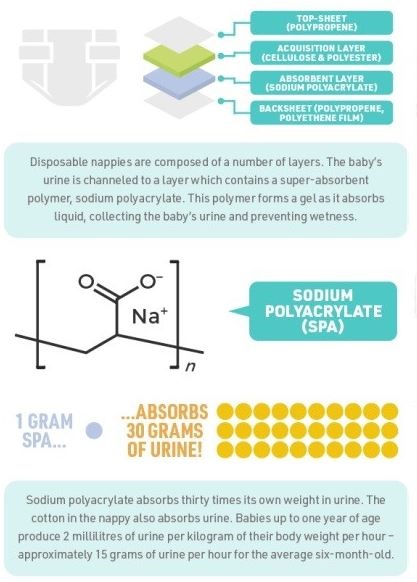
    • SAPs are synthetic materials with the ability to absorb and retain large amounts of liquid relative to their own mass.
    • They are commonly used in products like diapers, sanitary napkins, and other absorbent hygiene products.
    • SAPs are typically cross-linked polymers, meaning their molecules are bonded in a way that creates a network capable of absorbing water molecules.

    Examples:

    1. Sodium Polyacrylate: This is one of the most common types of SAP used in diapers. It forms a gel-like substance when it absorbs liquid.
    2. Polyacrylamide: Another type of SAP used in various applications, including agriculture and wastewater treatment, due to its high water-absorbing capacity.

    Quantum Physics Insight of SAP

    Quantum physics plays a fundamental role in understanding the behaviour of super-absorbent polymers (SAPs), particularly in how they interact with water molecules at the atomic level:

    1. Electron Sharing: SAPs contain ions like sodium, which have a strong affinity for water molecules. This attraction is based on the principles of quantum physics, where atoms like sodium and oxygen prefer to share electrons to achieve stability. This shared electron arrangement allows water molecules to bond with the ions in SAPs, facilitating the absorption process.
    2. Quantum Mechanical Properties: At the quantum level, electrons behave as waves and can exist in shared states between atoms. This phenomenon allows for the formation of stable bonds between water molecules and SAP ions, enhancing the SAP’s ability to absorb large amounts of liquid.
    3. Energy States: Quantum physics explains how SAPs manage energy states during absorption. As water enters the SAP, energy is released due to changes in the electron configurations and bonding energies of the ions involved. This process is crucial for maintaining the gel-like structure of the SAP and preventing leakage.

    PYQ:

    [2022] Which one of the following is the context in which the term “qubit” is mentioned?

    (a) Cloud Services

    (b) Quantum Computing

    (c) Visible Light Communication Technologies

    (d) Wireless Communication Technologies

  • Gandhi Sagar Wildlife Sanctuary: India’s New Cheetah Habitat

    Why in the News?

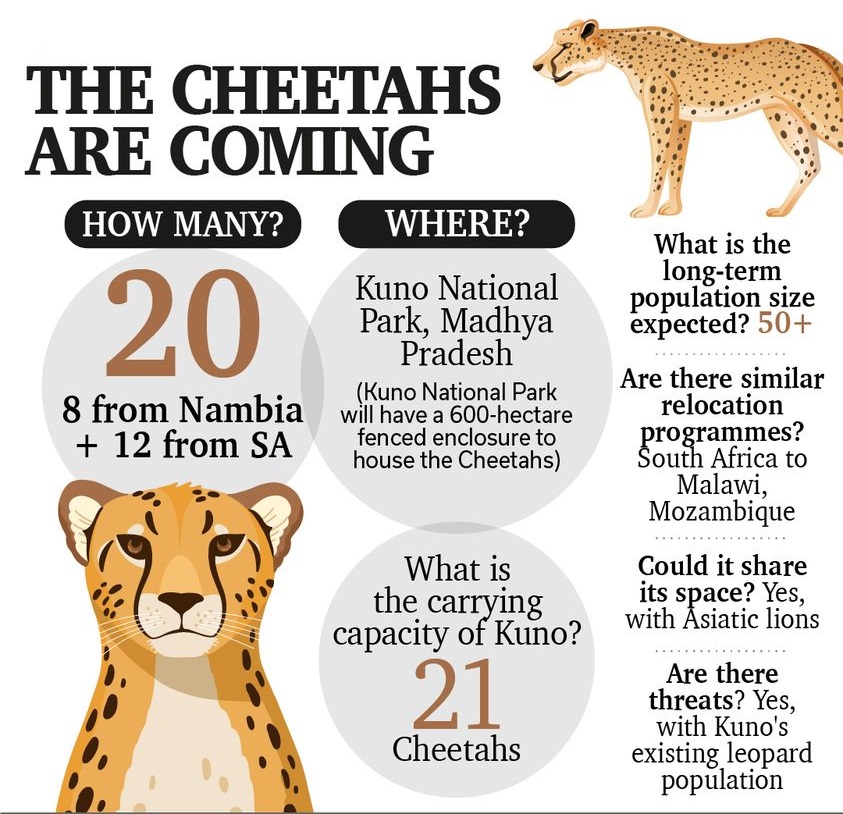
    • Gandhi Sagar Wildlife Sanctuary will become the second home for cheetahs in India, after Kuno National Park. The final decision on importing cheetahs from Namibia and South Africa will be made after the monsoon season to avoid infection risks.

    Cheetah Reintroduction in India:

    • In India, cheetahs disappeared in the early 1950s due to hunting and the loss of their habitat.
    • The ‘Action Plan for Reintroduction of Cheetah in India /Project Cheetah (2022)’ aims to bring cheetahs from African countries to various national parks.
    • It is spearheaded by the National Tiger Conservation Authority (NTCA).
    • Recently, cheetahs from Namibia were reintroduced in Kuno National Park, Madhya Pradesh.

    About Cheetah:

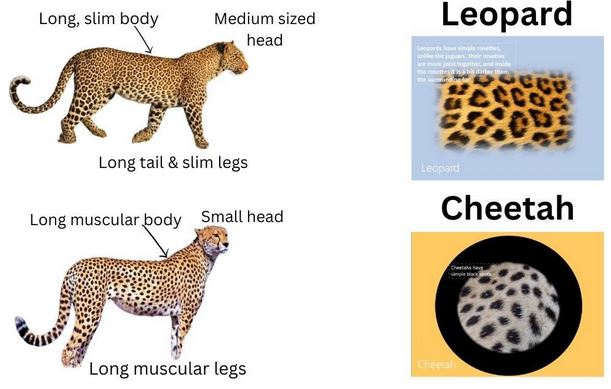
    • The cheetah is a fast-running big cat native to Africa and central Iran, capable of speeds up to 80 to 128 km/h.
    • They live in various habitats like savannahs, arid mountains, and hilly deserts.
    • Cheetahs live in three main groups: females with cubs, male coalitions, and solitary males.
    • They hunt during the day, preferring dawn and dusk.
    • The global cheetah population was 6,500 mature individuals, according to the most recent IUCN assessment in 2021.
    • They are listed as VULNERABLE by the IUCN.
    • The Asiatic Cheetah is one of the five subspecies of cheetah, critically endangered and found only in Iran.


    About Gandhi Sagar Wildlife Sanctuary

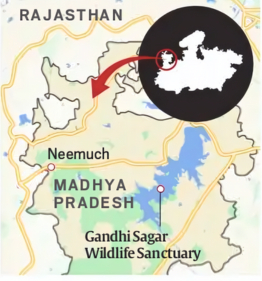
    • Located in western Madhya Pradesh, Gandhi Sagar Wildlife Sanctuary covers an area of 368.62 sq km.
    • It spans the Mandsaur (187.12 sq km) and Neemuch (181.5 sq km) districts, bordering Rajasthan.
    • Situated on a flat rocky plateau characterized by shallow topsoil and exposed sheetrock.
    • It is divided by the Chambal River, with the Gandhi Sagar dam and reservoir within its boundaries.
    • Flora and Fauna:
      • Flora: The sanctuary features a savannah ecosystem with open grasslands interspersed with dry deciduous trees. Riverine valleys within the sanctuary support evergreen vegetation.
      • Fauna: The sanctuary is home to a diverse range of wildlife, including species like leopards, sloth bears, striped hyenas, grey wolves, golden jackals, jungle cats, Indian foxes, and marsh crocodiles.

    Habitat Suitability for Cheetahs

    • Officials cite Gandhi Sagar as having an ideal habitat parallel to Maasai Mara (a National Park) in Kenya, suitable for cheetahs.
    • Plans include expanding the cheetah habitat to around 2,000 sq km, contingent upon cooperation with Rajasthan’s Bhainsrodgarh sanctuary.

    PYQ:

    [2024]  Consider the following statements:

    1. Lions do not have a particular breeding season.

    2. Unlike most other big cats, cheetahs do not roar.

    3. Unlike male lions, male leopards do not proclaim their territory by scent marking.

    Which of the statements given above are correct?

    (a) 1 and 2 only

    (b) 2 and 3 only

    (c) 1 and 3 only

    (d) 1, 2 and 3

    [2012]  Consider the following: (2012)

    1. Black-necked crane
    2. Cheetah
    3. Flying squirrel
    4. Snow leopard

    Which of the above are naturally found in India?

    (a) 1, 2 and 3 only
    (b) 1, 3 and 4 only
    (c) 2 and 4 only
    (d) 1, 2, 3 and 4

  • [17th June 2024] The Hindu Op-ed: High Court’s take on Marriage Act, an erosion of rights

    PYQ Relevance:

    Q Discuss the possible factors that inhibit India from enacting for its citizen a uniform civil code as provided for in the Directive Principles of State Policy. (UPSC IAS/2015)

    Customs and traditions suppress reason leading to obscurantism. Do you agree? (UPSC IAS/2020)

    Mentor comment: Interfaith marriages in India face legal and societal challenges despite protections under the Special Marriage Act, 1954. Recent judicial interventions have raised concerns about misinterpretations, impacting couples’ rights to choose partners freely. Such marriages often encounter opposition from families and communities, leading to social tensions. Efforts to protect couples through legal frameworks are crucial amid ongoing debates on religious and cultural sensitivities.

    Let’s learn!

    Why in the News?

    • A recent order from the Madhya Pradesh High Court has raised concerns about the interpretation of the law regarding inter-faith marriages and the scope of the Special Marriage Act, 1954.
    About Special Marriage Act, 1954:

    •The SMA was passed by the Parliament on October 9, 1954.
    •It governs a civil marriage where the state sanctions the marriage rather than the religion.
    The minimum age to get married under the SMA is 21 years for males and 18 years for females.
    Need for SMA:
    •Issues of personal law such as marriage, divorce, and adoption are governed by religious laws that are codified.
    •These laws, such as the Muslim Marriage Act,1954, and the Hindu Marriage Act, 1955, require either spouse to convert to the religion of the other before marriage.
    •However, the SMA enables marriage between inter-faith or inter-caste couples without them giving up their religious identity or resorting to conversion.

    Erroneous Considerations

    • Typical Assessment Under Article 226: When a petition for police protection is filed under Article 226 of the Constitution, the High Court usually assesses the violation of the petitioners’ rights and the threat they face.
    • Extended Protection Examples:
    • The Madras High Court granted protection to a lesbian couple, recognizing the dangers they faced.
    • The Punjab and Haryana High Court provided protection to a live-in couple, emphasizing the protection of their fundamental rights under Article 21 of the Constitution.
    • Contrasting Focus of Madhya Pradesh HC: Instead of focusing on the threats faced by the couple, the HC focused on the validity of the couple’s impending marriage, disregarding their right to life and liberty.
    What is Article 226 of the Constitution?
    Article 226 grants the High Courts of Indian states the power to issue writs. These writs are primarily meant for the enforcement of fundamental rights guaranteed under Part III of the Constitution or for any other legal purpose. The High Courts have the authority to issue writs such as habeas corpus, mandamus, prohibition, quo warranto, and certiorari.

    Dilution of the Special Marriage Act

    • Contradictory Order: The Madhya Pradesh High Court’s order contradicts the core principles of the Special Marriage Act.
    • Irrelevant Supreme Court Precedent: The court erroneously relied on a Supreme Court precedent related to property succession under Mohammedan Laws, which is irrelevant to the validity of inter-faith marriages under the Special Marriage Act.
    • Misinterpretation of Section 4: The court misinterpreted Section 4 of the Act, which excludes marriages between close relatives, not inter-faith marriages.
    • Act’s Purpose: The Act is designed to facilitate marriage between any two Indian nationals, regardless of their faith.

    Present status of Special Marriages:

    • Significance of the Order: The Madhya Pradesh High Court order is significant given the current social and political climate, where inter-faith and inter-caste marriages face vigilantism and right-wing propaganda.
    • Ongoing Petitions: There are ongoing petitions challenging unconstitutional provisions within the Special Marriage Act, such as the prior notice requirement, pending before the Supreme Court.
    • Supreme Court’s Ruling in Shafin Jahan Case:
    • Emphasized the protection of personal liberty and the right to choose a life partner, regardless of faith or caste.
    • Justice D.Y. Chandrachud’s judgment highlighted that intimate personal decisions do not require social approval and are protected by the Constitution.

    Way forward

    • Disregard of Shafin Jahan Judgment: The Madhya Pradesh High Court’s order disregards the spirit of the Shafin Jahan judgment, which prioritizes individual autonomy, privacy, and liberty.
    • Courts’ Responsibility: Constitutional courts must remember that jurisprudence favours autonomy and personal liberty.

    https://www.thehindu.com/opinion/op-ed/high-courts-take-on-marriage-act-an-erosion-of-rights/article68297655.ece

  • Under Kafala, workers are dispensable

    Why in the news?

    Shortly after a fatal fire claimed the lives of 49 migrant workers, predominantly Indians, in the Mangaf area of Al Ahmadi municipality, Kuwait

    About the Gulf Cooperation Council (GCC)

    • It is a regional intergovernmental organization that aims to promote economic, political, and cultural cooperation among its member states.
    • The GCC was established in 1981 and currently consists of six Arab countries: Bahrain, Kuwait, Oman, Qatar, Saudi Arabia, and the United Arab Emirates. The council’s main headquarters is located in Riyadh, Saudi Arabia.

    What is the Kafala system?

    • The Kafala system is a sponsorship system used in several Gulf Cooperation Council (GCC) countries, including Saudi Arabia, Qatar, Kuwait, Bahrain, Oman, and the United Arab Emirates. It governs the legal status of migrant workers, particularly those from other countries in Asia and Africa, who come to work in these countries. It binds migrant workers to a specific employer, known as the “kafeel,” who is responsible for the worker’s visa and legal status.
    • Note:  sponsorship by local sponsor or employer in West Asian countries

    Migrants’ Rights in GCC countries:

    • Vulnerabilities of Migrant Workers: Migrant workers in GCC countries face systemic vulnerabilities due to the Kafala system, tying their legal status to employers who control their accommodation, wages, and freedom of movement. Lack of independent legal status and dependency on employers make them susceptible to exploitation, poor living conditions, and arbitrary deportations.
    • Living Conditions and Safety: Many migrants live in crowded and substandard accommodations, which exacerbate risks during emergencies such as fires, as seen in the Mangaf tragedy. Safety standards in workplaces and living spaces often fall short, posing significant risks to migrants’ health and well-being.
    • Legal Protections and Access to Justice: Legal protections for migrant workers vary, with some categories like domestic workers often excluded from labor laws and protections. Limited access to justice and the ability to organize or unionize further restrict their ability to advocate for improved rights and conditions.

    India’s Relationship with GCC Countries:

    • Economic Dependence and Migrant Workforce: India has a significant economic relationship with GCC countries, with millions of Indian migrants working across sectors such as construction, healthcare, and services. Remittances from GCC countries contribute significantly to India’s economy, highlighting the mutual economic interdependence.
    • Diplomatic and Policy Engagements: India engages diplomatically with GCC countries to safeguard the interests and welfare of its migrant workers, advocating for better working conditions, legal protections, and safety measures. Bilateral agreements and negotiations focus on labour rights, remittance flows, and crisis management during emergencies affecting Indian migrants.

    What India can do? (Way forward)

    • Diplomatic Engagement and Advocacy: Strengthen diplomatic ties with GCC countries to advocate for better working conditions, legal protections, and safety measures for Indian migrants.
    • Consular Services and Support: Enhance consular services and support networks in GCC countries to provide timely assistance, legal aid, and emergency relief to Indian migrant workers.
    • Skill Development and Empowerment: Collaborate with GCC governments and employers to ensure skill development programs for Indian migrants, enhancing their employability and negotiating power.

    Mains PYQ:

    Q Indian Diaspora has an important role to play in South-East Asian countries’ economy and society. Appraise the role of the Indian Diaspora in South-East Asia in this context. (UPSC IAS/2017)

  • What is SWM Cess and Why is It Levied on Waste Generators?

    Why in the News?

    The Bruhat Bengaluru Mahangara Palike (BBMP) has proposed a Solid Waste Management (SWM) Cess of ₹100 per month for each household.

    What is Cess?

    • A cess is a form of tax or levy imposed by governments to fund specific services or purposes, such as waste management or infrastructure development.

    How has the SWM cess fared so far?

    • Purpose of SWM Cess: SWM Cess is intended to cover a portion of the costs incurred by Urban Local Bodies (ULBs) in providing SWM services, which are resource-intensive and crucial for maintaining cleanliness and health standards in urban areas.
    • Legal Provisions: According to the Solid Waste Management Rules, 2016, ULBs are mandated to collect user fees/cess for SWM services. The proposed increase reflects the rising costs and challenges faced by ULBs in managing solid waste effectively.

    Why has it hit the headlines suddenly?

    • Significant Increase in User Fee: The proposed SWM Cess represents a substantial increase from the previous user fees typically charged by ULBs (Urban Local Bodies) across India, which are generally in the range of ₹30-50 per month. Such a significant rise in fees has garnered attention and sparked debate among residents and stakeholders in Bengaluru.
    • Impact on Residents: The SWM Cess directly affects every household in Bengaluru, potentially adding financial burden on residents. This has led to widespread discussions and concerns among citizens about the affordability and justification of the proposed increase.

    Present Status in Bengaluru:

    • Bengaluru faces significant challenges in solid waste management (SWM) due to its large population and high daily waste generation of approximately 5,000 tonnes. Managing such volumes requires extensive resources and infrastructure.
    • The Bruhat Bengaluru Mahangara Palike (BBMP) primarily focuses its SWM efforts on the collection and transportation of waste. These activities are labor-intensive and consume a major portion of BBMP’s budget allocated for SWM services.
    • SWM services constitute a substantial portion of BBMP’s budget, with limited revenue generated from these services. This financial strain necessitates the proposal of initiatives like the SWM Cess to bridge the funding gap and ensure sustainable service delivery.

    What is about to change?

    • Proposed Changes: Going forward, Bengaluru plans to implement several changes in its SWM strategy.
      • These include revising user fees and potentially increasing charges on bulk waste generators to better cover operational costs and enhance service efficiency.
    • Strategies for Improvement: BBMP aims to enhance waste management practices through initiatives such as waste segregation at source, promoting decentralized composting centres, and launching public awareness campaigns. These efforts are aimed at optimizing resource utilization and improving overall SWM effectiveness in the city.

    Mains PYQ: 

    Q What are the impediments in disposing of the huge quantities of discarded solid wastes which are continuously being generated? How do we remove safely the toxic wastes that have been accumulating in our habitable environment? (UPSC IAS/2018)


  • PM-Kisan Samman Nidhi Yojana

    Why in the News?

    The Prime Minister will release the 17th installment of the Pradhan Mantri Kisan Samman Nidhi (PM-KISAN), amounting to over ₹20,000 crore, for 92.6 million beneficiary farmers across the country.

    About the PM-KISAN Scheme

    • The PM-KISAN is a Central Sector Scheme with 100% funding from the Government of India.
    • It is being implemented by the Ministry of Agriculture and Farmer’s Welfare.
    • Launched: In February 2019.
    • Aim: To help procure various inputs to ensure proper crop health and appropriate yields, commensurate with the anticipated farm income at the end of each crop cycle.
    • Objective: To provide eligible farmers with an annual financial assistance of ₹6,000.
      • This assistance is distributed in three equal instalments of ₹2,000 each every 4 months, via Direct Benefit Transfer (DBT) into beneficiaries’ bank accounts.
    • Beneficiaries:
      • Farmer families that hold cultivable land can apply for the benefits of this plan.
      • Small and Marginal Farmers (SMFs) (a farmer who owns cultivable land up to 2 hectare as per land records of the concerned State/UT.).
      • The entire responsibility of identification of beneficiary farmer families rests with the State / UT Governments.

    Do you know?

    The PM-KISAN scheme was first conceived and implemented by the government of Telangana as the Rythu Bandhu scheme.

    Rythu Bandhu Scheme

    • It is also known as the Farmer’s Investment Support Scheme (FISS).
    • It is a welfare programme for farmers started in 2018 by the Telangana government.
    • Under the scheme, the state government provided the 58 lakh farmers in Telangana with ₹5,000 per acre of their land as a farm investment for two crops.
    • There is no ceiling on the number of acres held by a farmer.
    • So, a farmer who owns two acres of land would receive Rs 20,000 a year, whereas a farmer who owns 10 acres would receive Rs 1 lakh a year from the government.
    • This investment is made twice a year, once for the kharif harvest and once for the Rabi harvest.
    • It is the country’s first direct farmer investment support scheme where cash is paid directly to the beneficiary.

    Impact of the Scheme

    • Beneficiaries outreach: Over 11 crore farmers (with more than 3 crore women farmers) across the country have availed of the PM-Kisan scheme, indicating its widespread reach and impact.
    • Financial Support: This financial aid helps farmers meet their agricultural expenses, purchase seeds, fertilizers, and other inputs, and support their families’ livelihoods.
    • Improved Agricultural Practices: This contributes to food security and boosts the agricultural sector’s growth.
    • Poverty Alleviation: The scheme plays a crucial role in alleviating poverty among small and marginal farmers by providing them with a steady source of income just like Universal Basic Income (UBI).
    • Enhanced Livelihoods: PM-Kisan supports farmers’ livelihoods, by providing a safety net during times of agricultural distress or economic uncertainties, ensuring a better quality of life for rural communities.

    PYQ:

    [2020] Under the Kisan Credit Card scheme, short-term credit support is given to farmers for which of the following purposes?

    1. Working capital for maintenance of farm assets.
    2. Purchase of combine harvesters, tractors and mini trucks.
    3. Consumption requirements of farm households.
    4. Post-harvest expenses.
    5. Construction of family house and setting up of village cold storage facility.

    Select the correct answer using the code given below:

    (a) 1, 2 and 5 only

    (b) 1, 3 and 4 only

    (c) 2, 3, 4 and 5 only

    (d) 1, 2, 4 and 5