💥Join UPSC 2027,2028 Mentorship (July Batch) + XFactor Notes & Microthemes PDF

Distribution: yearly

  • India Semiconductor Mission (ISM)

    Why in the News?

    The Union Cabinet has approved four new projects under the India Semiconductor Mission (ISM), adding to the country’s push for a robust semiconductor and display manufacturing ecosystem.

    About India Semiconductor Mission (ISM):

    • Overview: Launched in 2021; Operates under the Ministry of Electronics and Information Technology (MeitY)
    • Purpose: Develop a sustainable semiconductor and display manufacturing ecosystem in India.
    • Scope: Supports the entire value chain — from chip design to fabrication, assembly, testing, packaging, and display manufacturing.
    • Administrative Role: Receives and evaluates applications for schemes under the Semicon India Programme and engages with industry stakeholders to attract investment.

    Key Components:

    • Semiconductor Fabs Scheme: Fiscal support for setting up semiconductor wafer fabrication plants in India.
    • Display Fabs Scheme: Incentives for manufacturing TFT LCD and AMOLED display panels.
    • Compound Semiconductors / Silicon Photonics / Sensors Fab & ATMP/OSAT Scheme: Support for advanced semiconductor technologies and packaging facilities.
    • Design Linked Incentive (DLI) Scheme: Incentives and infrastructure support for IC, SoC, chipset, and semiconductor-linked design projects; administered by CDAC; includes support for startups.
    • Modernisation of Semi-Conductor Laboratory (SCL), Mohali: Upgrading as a brownfield fab.
    • Comprehensive Coverage: Includes manufacturing, R&D, packaging, and design support.
    [UPSC 2012] Recently there has been a concern over the short supply of a group of elements called rare earth metals. Why?

    1. China, which is the largest producer of these elements, has imposed some restrictions on their export.

    2. Other than China, Australia, Canada, Chile, these elements are not found in any country.

    3. Rare earth metals are essential for the manufacture of various kinds of electronic items and there is growing demand for these elements.

    Select the correct answer using the code given below:

    Options: (a)  1 only (b) 2 and 3 only (c) 1 and 3 only * (d) 1, 2 and 3


  • Muon g-2 Experiment

    Why in the News?

    Scientists at Fermilab in the USA have made an ultra-precise measurement of the muon’s magnetic behaviour, a finding that could hint at new physics beyond current laws.

    Muon g-2 Experiment

    Understanding Muon and G-2:

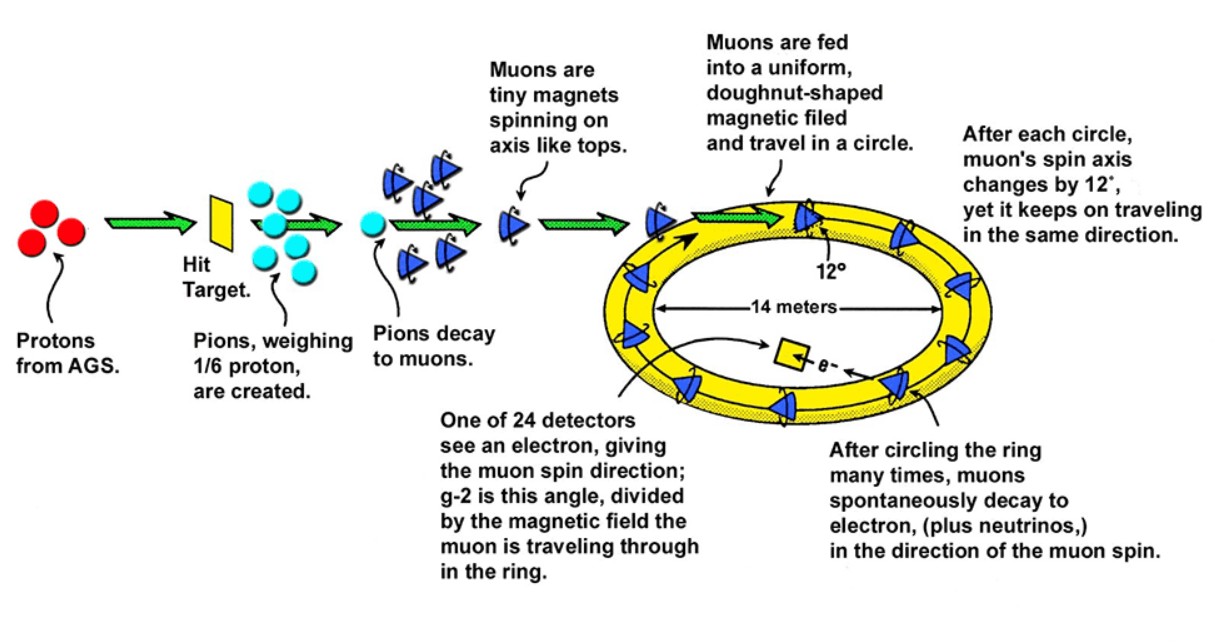
    • Overview: A muon is a subatomic particle like an electron but about 200 times heavier.
    • Behaviour: It has spin, making it act like a tiny magnet.
    • g-Factor: The magnet’s strength is measured by the g-factor. In simple theory, g = 2, but quantum effects make it slightly different — this difference is called g-2 (g minus 2).
    • Physics Relevance: Measuring g-2 can reveal unknown forces or particles beyond the Standard Model.

    The Fermilab Breakthrough:

    • Precision Record: Fermilab (USA) measured muon’s g-2 to an accuracy of 0.127 parts per million — comparable to detecting a 4-gram change on a 4-tonne elephant.
    • Method: Muons were sent into a large magnetic ring, measuring the gap between spin rate and orbital rate.
    • Results: Matches earlier experiments; disagreement with theory depends on calculation method used.
    • Next Steps: Japan’s upcoming experiment will independently test results.

    Significance:

    • Potential New Physics: If the gap is real, it may signal undiscovered forces or particles.
    • Refining Theory: If not, calculations will improve, sharpening known physics.
    • Broader Impact: Advances precision science and deepens global understanding of fundamental physics.
    • Lesson: Ultra-precise measurements can uncover hidden truths about nature.
    [UPSC 2013] The efforts to detect the existence of Higgs boson particle have become frequent news in the recent past. What is/are the importance/importances of discovering this particle?

    1. It will enable us to under-stand as to why elementary particles have mass.

    2. It will enable us in the near future to develop the technology of transferring matter from one point to another without traversing the physical space between them.

    3. It will enable us to create better fuels for nuclear fission.

    Select the correct answer using the codes given below.

    Options: (a) 1 only* (b) 2 and 3 only (c) 1 and 3 only (d) 1, 2 and 3


  • [pib] MSS+ Technology in Road Construction

    Why in the News?

    The CSIR–Central Road Research Institute, New Delhi, has developed MSS+ (Modified Mix Seal Surfacing Plus) technology for eco-friendly, durable, and low-cost road surfacing.

    About MSS+ Technology:

    • Developer: Council of Scientific & Industrial Research – Central Road Research Institute (CSIR–CRRI), New Delhi.
    • Year of Development: 2021 (in collaboration with J.M.V.D. Industries).
    • Pilot Project: First road in Uttar Pradesh built near Lucknow in 2022; Used for 202 km of roads under Pradhan Mantri Gram Sadak Yojana (PMGSY) in 2025.
    • Composition: Crushed natural aggregate, customised modified bitumen emulsion, mineral admixture.
    • Preparation: Mix made at ambient temperature, eliminating heating of aggregate or bitumen.
    • Laying: 25–30 mm thickness using conventional asphalt pavers.

    Benefits Offered:

    • Eco-Friendly: No thermal process → significantly reduces carbon emissions.
    • Durable: Provides strong wearing course, enhanced skid resistance, and prevents water infiltration.
    • Cost-Effective: Reduced energy requirement lowers construction costs.
    • All-Weather Use: Can be laid in varied weather conditions due to ambient temperature application.
    [UPSC 2020] In rural road construction, the use of which of the following is preferred for ensuring environmental sustainability or to reduce carbon footprint?

    1. Copper slag 2. Cold mix asphalt technology 3. Geotextiles 4. Hot mix asphalt technology 5. Portland cement

    Select the correct answer using the code given below:

    Options: (a) 1, 2 and 3 only * (b) 2, 3 and 4 only (c) 4 and 5 only (d) 1 and 5 only


  • Third United Nations Conference on Landlocked Developing Countries (LLDC3)

    Why in the News?

    The 3rd UN Conference on Landlocked Developing Countries (LLDC3) in Awaza, Turkmenistan, adopted the Awaza Declaration to boost investment, address challenges, and promote sustainable growth in 32 landlocked nations.

    Third United Nations Conference on Landlocked Developing Countries (LLDC3)

    About Landlocked Developing Countries (LLDCs):

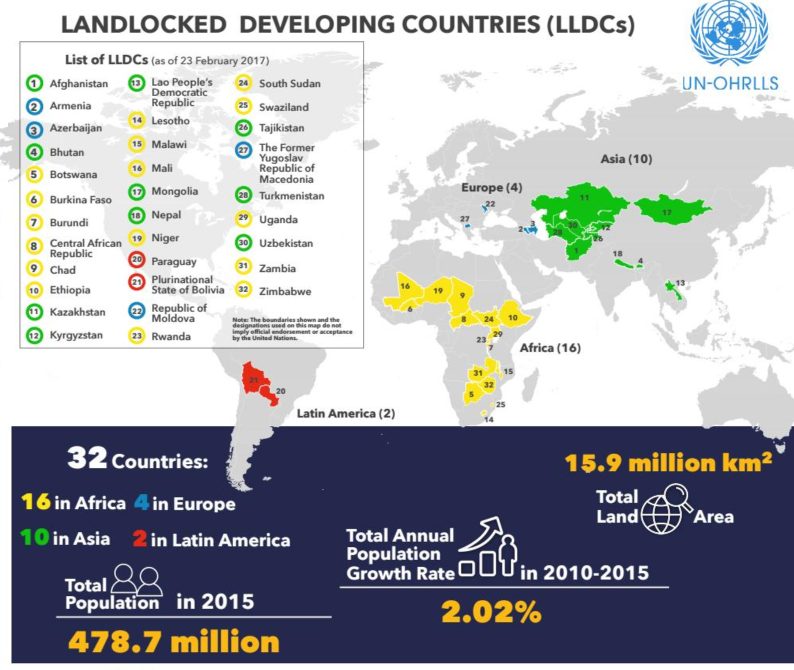
    • Overview: 32 UN-recognized countries with no direct access to the sea, collectively home to over 600 million people.
    • List of LLDCs:
      1. Africa: Botswana, Burkina Faso, Burundi, Central African Republic, Chad, Eswatini, Ethiopia, Lesotho, Malawi, Mali, Niger, Rwanda, South Sudan, Uganda, Zambia, Zimbabwe.
      2. Asia: Afghanistan, Bhutan, Kazakhstan, Kyrgyzstan, Lao People’s Democratic Republic, Mongolia, Nepal, Tajikistan, Turkmenistan, Uzbekistan.
      3. Europe: Armenia, Azerbaijan, North Macedonia, Moldova, Serbia.
      4. South America: Bolivia, Paraguay.
    • Challenges:
      • Dependence on transit countries for global market access.
      • Higher trade and transport costs (often twice those of coastal countries).
      • Limited connectivity, slower growth, and vulnerability to climate impacts.
    • Past Conferences:
      • 2003 (Almaty) – Almaty Programme of Action.
      • 2014 (Vienna) – Vienna Programme of Action (2014–2024).
      • 2025 (Awaza) – Awaza Programme of Action (2024–2034).

    Structure and Functioning:

    • LLDC Conferences: Held every 10 years to review progress and set a new action framework.
    • Awaza Programme of Action (2024–2034) – Priority Areas:
      • Structural transformation, science, technology, and innovation.
      • Trade facilitation and regional integration.
      • Transit, transport, and connectivity.
      • Climate resilience and adaptation.
      • Monitoring and implementation.
    • Stakeholder Participation:
      • UN member states, transit countries, donor agencies, NGOs, private sector, and academia.
    • Mechanisms:
      • UN-wide monitoring framework covering 323 initiatives.
      • Partnerships for infrastructure and digital connectivity.
      • Climate Negotiating Group under UNFCCC for LLDC-specific challenges.
    [UPSC 2013] Which one of the following countries is landlocked?

    Options:  (a) Bolivia* (b) Peru (c) Suriname (d) Uruguay


  • In news: Dardanelles Strait

    Why in the News?

    The Dardanelles Strait in northwestern Turkey has been temporarily closed to maritime traffic due to forest fires near Canakkale, prompting evacuations and firefighting operations.

    About Dardanelles Strait:

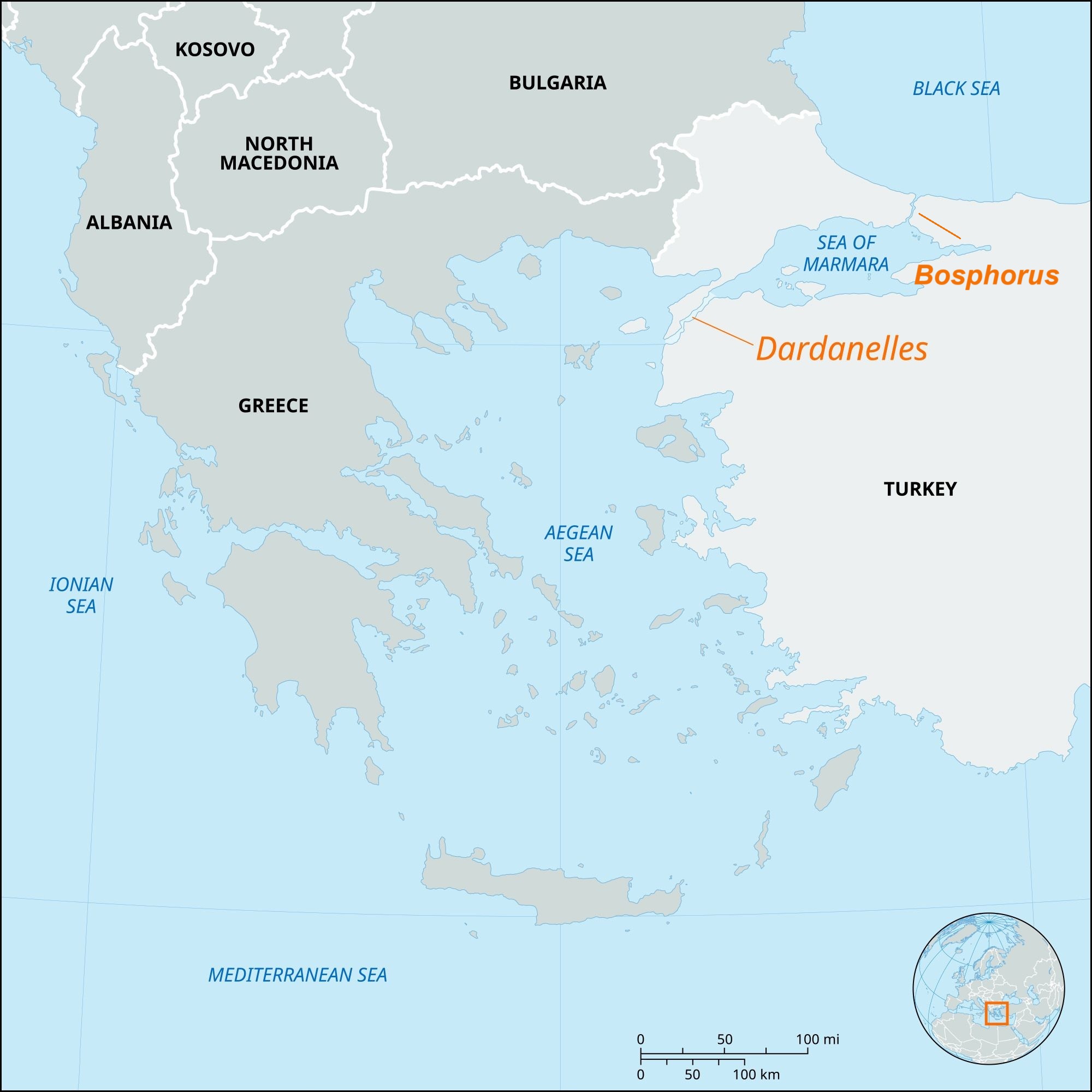
    • Location: Northwestern Turkey; separates Gallipoli Peninsula (Europe) from Troad/Biga Peninsula (Asia).
    • Connection: Links Aegean Sea → Sea of Marmara → Bosporus → Black Sea.
    • Dimensions: Length 61 km, width 1.2–6.5 km, average depth 55 m, max depth 103 m.
    • Historical Name: Hellespont, named after mythical princess Helle; current name from ancient city of Dardanus.
    • Currents: Surface current flows from Sea of Marmara to Aegean; saline undercurrent in reverse.
    • Ports: Gallipoli, Eceabat, Çanakkale.

    Strategic & Economic Importance:

    • Part of Turkish Straits system with Bosporus; only maritime link between Black Sea and Mediterranean.
    • Critical for Black Sea nations’ trade (Russia, Ukraine, Bulgaria, etc.).
    • Major route for grain, oil, energy shipments from Black Sea region to global markets.
    • Governed by Montreux Convention (1936) for warship passage.
    • Vital for NATO naval strategy and maritime security.
    [UPSC 2008] Through which one of the following Straits does a tunnel connect the United Kingdom and France?

    Options: (a) Davis Strait (b) Denmark Strait (c) Strait of Dover* (d) Strait of Gibraltar


  • In news: Kerala’s Muthuvan Tribe

    Why in the News?

    The Muthuvan Adivasi Samudaya Sangam organised a convention on the International Day of the World’s Indigenous Peoples.

    In news: Kerala’s Muthuvan Tribe

    About Muthuvan Tribe:

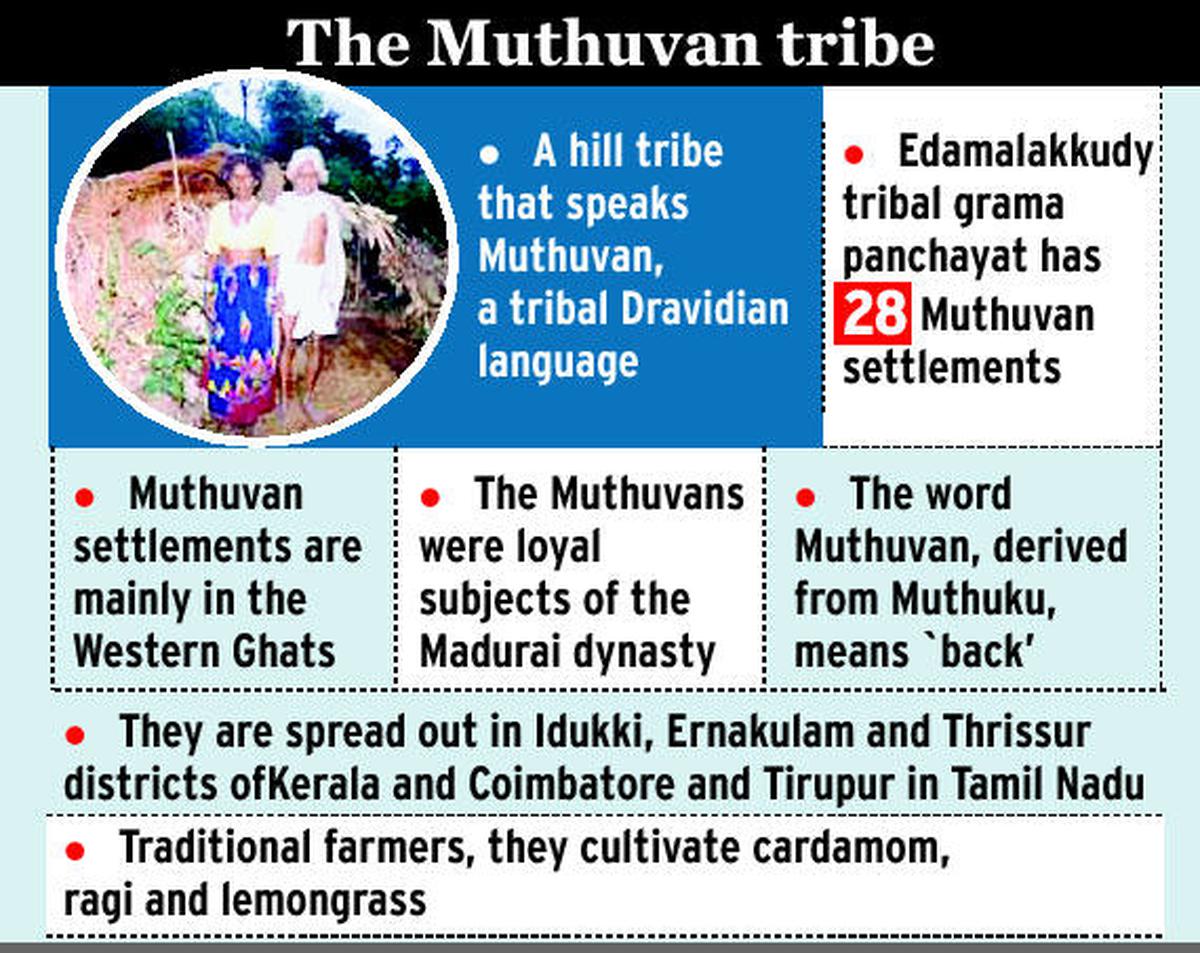
    • Location: Indigenous tribe recognized as STs of the Anaimalai Hills (Kerala & Tamil Nadu); concentrated in Idukki, Ernakulam, Thrissur districts.
    • Etymology: Name means “one who carries weight on the back”, linked to migration from Madurai carrying children and the king.
    • Origins: Traced to the Pandya Kingdom; divided into Malayalam Muthuvan and Pandi Muthuvan dialect groups.
    • Settlements: “Kudis” deep in hill forests; houses made from reeds, leaves, mud.
    • Population: Around 15,000–25,000; among Kerala’s least educated tribes.
    • Governance: Kani System (village headman) and Chavadis (dormitory for unmarried youth).

    Distinct Features:

    • Language: Tamil-related dialect; endangered; preservation efforts underway.
    • Livelihood: Traditionally shifting cultivation (“Virippukrishi”); now grow cardamom, ginger, pepper, lemongrass.
    • Religion: Animism & spirit worship; reverence for Subramanya, Hindu deities, and Kannagi tradition.
    • Customs: Matrilineal descent, tribe endogamy & clan exogamy; collective eating (“koodithinnuthu”); herbal medicine knowledge kept within tribe.
    • Culture: Distinct attire; strong ecological ethics, harmonious forest–wildlife coexistence.
    • Festivals: Thai Pongal is main religious & harvest festival.
    [UPSC 2014] Which one of the following statements is not correct about Scheduled Tribes in India?

    (a) There is no definition of the Scheduled Tribe in the Constitution of India. (b) North-East India accounts for a little over half of the country’s tribal population. (c) The people known as Todas live in the Nilgiri area. (d) Lotha is a language spoken in Nagaland


  • [11th August 2025] The Hindu Op-ed: Language Lessons

    [UPSC 2020] National Education Policy 2020 is in conformity with the Sustainable Development Goals-4 (2030). It intended to restructure and re-orient the education system in India. Critically examine the statement.        

    Linkage: NEP 2020 broadly supports SDG-4 through its focus on universal access, equity, and quality, but faces implementation challenges due to India’s socio-cultural diversity and federal structure. The NEP 2020’s emphasis on multilingualism aligns with SDG-4 goals of inclusive and equitable quality education, but the Tamil Nadu and Karnataka cases show that its three-language policy faces resistance where it clashes with local linguistic and cultural priorities. This highlights the challenge of balancing national education reforms with state-specific needs while still aiming for SDG-4 targets


    Mentor’s Note:

    India’s language debate tests the balance between national policy goals and state linguistic autonomy, a key aspect of federalism. While NEP 2020’s three-language formula aims at unity through multilingualism, southern states like Tamil Nadu and Karnataka favour a two-language model to protect cultural identity and shape education on their own terms. This is as much about governance and diversity as it is about language. This issue is highly relevant for UPSC GS Paper 2 – Governance, Constitution, Federalism, and Education Policy.


    Introduction:

    India’s education system is shaped not only by pedagogy but also by its multilingual and multicultural character. The NEP 2020 recommends a three-language policy, with at least two being native to India, aiming to promote linguistic diversity and national integration. However, Tamil Nadu’s State Education Policy (SEP) and Karnataka’s proposed SEP prioritize local languages + English over Hindi or any other third compulsory language, reflecting deep-rooted socio-political contexts. This ongoing debate exemplifies the delicate balance between national policy frameworks and state-specific educational priorities.

    The Two-Language Policy in Tamil Nadu and Karnataka:

    Tamil Nadu’s Approach

    1. Continues the two-language policy: Tamil + English.
    2. Makes Tamil compulsory up to Class 10 across all boards.
    3. Promotes critical thinking, digital literacy, climate education, and social justice.
    4. Focus on STEAM (Science, Technology, Engineering, Arts, Mathematics) education and special support for tribal, disabled, and first-generation learners.
    5. Seeks uniform, high-quality public education as a priority.

    Karnataka’s Proposed Approach

    1. Kannada (or mother tongue) + English as compulsory languages.
    2. Medium of instruction: Kannada or mother tongue up to Class 5, preferably till Class 12.
    3. Discontinuation of the three-language policy (Hindi as third language removed).
    4. Development of state-specific curriculum, moving away from NCERT textbooks.
    5. Bilingual teaching methods for better learning outcomes.

    National Education Policy (NEP) 2020 and the Three-Language Policy

    NEP’s Recommendation:

    1. Three-language formula at school level.
    2. Two local languages (mother tongue/regional language).
    3. One other Indian language (often Hindi, though not mandatory).
    4. Based on the Kothari Commission (1968) suggestion to encourage multilingualism.

    Intended objectives:

    1. Promote national unity by encouraging communication across linguistic regions.
    2. Preserve linguistic diversity by ensuring regional languages remain central to education.
    3. Enhance linguistic versatility to prepare students for mobility within India.
    4. Strengthen early learning through mother tongue instruction in primary classes, as supported by UNESCO research.

    Criticism and Challenges:

    • Perceived Hindi Imposition:
      • In non-Hindi speaking states like Tamil Nadu and Karnataka, the inclusion of Hindi as the third language is seen as a political and cultural imposition.
      • Historical background: Tamil Nadu’s anti-Hindi agitations (1960s) shape continued resistance.
    • Demand for English as a Medium:
      • Parents and students increasingly prefer English-medium education for global competitiveness.
      • Concerns that a strong emphasis on Hindi may reduce the focus on English proficiency, which is linked to employment and higher education abroad.
    • Federalism Concerns:
      • Education is in the Concurrent List; States argue they should have autonomy to design curricula and decide language policy.
      • Central guidance seen as overreach into state cultural identity.
    • Implementation Gaps:
      • Shortage of qualified teachers for multiple languages.
      • Logistical difficulty in providing quality instruction in three languages, especially in rural schools.

    Constitutional & Federal Dimensions:

    1. Education is a subject in the Concurrent List.
    2. Article 345: States can adopt any one or more languages for official use.
    3. Article 351: Directive for development of Hindi.
    4. 8th Schedule: Recognizes 22 languages, protecting linguistic diversity.
    5. Cooperative Federalism: Centre and States must align education policy without overriding local aspirations.

    Critical Issues Beyond Language:

    1. Equity in Public Education: Need to strengthen government schools for uniform quality.
    2. Access & Inclusion: Support for marginalized communities.
    3. Curriculum Modernization: Integrating digital skills, climate education, and critical thinking.
    4. Resource Allocation: Pending ₹2,152 crore education funds for Tamil Nadu highlight fiscal federalism concerns.

    Conclusion:

    Language policies should respect India’s diversity and focus on improving education quality. The Centre must work with states, not over them, to improve schools, modernize curriculum, and ensure equal opportunities.

    Value Addition:

    Examples for Enrichment

    1. Kothari Commission (1968) – promoted three-language formula but warned against imposition.
    2. Sri Lanka’s language policy conflict – example of risks in linguistic dominance.
    3. World Bank Learning Poverty Index – shows importance of mother tongue teaching.
    4. ASER 2023: Mother tongue learning helps early literacy.
    5. UNESCO 2023 Report: Supports teaching in the local language for better outcomes

    Mapping Micro-Themes:

    GS-I Cultural diversity, linguistic identity, regionalism

    • Cultural Identity: Language as a marker of state pride
    GS-II Federalism, education policy under Concurrent List, Centre–State relations, Constitutional provisions on language

    • Federalism: Illustrates cooperative federalism challenges
    • Equity in Education: Inclusion for marginalized groups
    • Policy Dispute: Example of Centre–State tension on education
    GS-III Human capital development, role of education in economic growth
    GS-IV Ethics in policy: respect for diversity, fairness, inclusion

    Practice Mains Question

    “Language in education is both a cultural right and a tool for development. Discuss the recent shift of Tamil Nadu and Karnataka towards a two-language formula in the context of federalism and inclusive education.” (250 words)
     

  • How is AI reshaping India’s infotech sector?

    PYQ Relevance:

    [UPSC 2023] Introduce the concept of Artificial Intelligence (AI). How does Al help clinical diagnosis? Do you perceive any threat to privacy of the individual in the use of Al in healthcare?

    Linkage: Artificial Intelligence (AI) simulates human intelligence to perform tasks like analysis, prediction, and decision-making, and in healthcare, it aids clinical diagnosis through rapid image interpretation, predictive analytics, and early disease detection. Linking to India’s evolving IT sector, AI’s role in data management and compliance can ensure safe healthcare adoption, but risks such as data breaches, misuse of personal health records, and algorithmic bias highlight the need for strong privacy safeguards and ethical standards.

    Introduction:

    The Indian IT industry, valued at $280 billion and employing over 5.8 million people, has been the backbone of India’s digital economy for decades. However, the rise of AI is reshaping business models, altering talent requirements, and compelling firms to rethink their role in the global technology ecosystem. Far from being a simple “job killer,” AI is redefining the industry’s competitive advantage.

    Why is the IT Industry in Restructuring Mode?

    1. Beyond the “AI kills jobs” narrative:
      1. The shake-up is not merely about replacing human workers with AI, but about re-engineering processes for efficiency and scale.
      2. AI is driving transformation across the entire software lifecycle — from coding to testing and maintenance.
    2. The TCS trigger:
      1. TCS’s freeze on experienced hires and planned removal of 12,000 employees has been interpreted as a signal to markets, clients, and employees:
      2. Markets: Cost optimisation and forward-looking adaptation.
      3. Clients: AI-powered efficiency.
      4. Employees: Need for continuous upskilling.

    Why is AI Gaining Momentum Now?

    • Cost-optimisation as a driver:
      1. AI-led productivity boosts (30%+) are critical in a cost-sensitive, investor-driven market.
      2. Examples: AI-powered coding assistants, intelligent debuggers, automated testing.
    • Investment surge:
      1. In 2025, $1 trillion+ expected global spending on AI infrastructure, training, and applications.

    Impact on Jobs and Skills

    1. Job contraction in some areas:
      1. Automation, low-code platforms, and AI reduce the need for large teams in certain roles.
      2. Example: U.S. firms openly using workforce attrition to streamline operations.
    2. Skills that remain resilient:
      1. Core coding in C++ (OS, gaming, security systems), robotics, embedded systems.
      2. High-value areas: product management, UI/UX, tech architecture.
    3. Traits that will rule: math skills, imagination, problem-solving.

    Opportunity for India’s IT Sector

    • Addressing global AI adoption barriers:
      1. Legacy systems, poor data quality, and compliance requirements are major bottlenecks abroad.
      2. Indian firms can: Modernise systems, Organise and clean data and Build compliant AI solutions (aligning with laws like EU’s AI Act).
    • Moving from “back office” to “AI innovation partners”:
      1. Future advantage lies with small, lean AI-native teams solving complex domain-specific problems (healthcare, defence, fintech, sustainability, education).

    From Scale to Specialisation:

    1. The traditional “IT park with thousands of coders” model is declining.
    2. A 50-member AI-focused team can outperform a 5,000-member legacy services team.
    3. Requires cultural shift in Indian IT firms from scale efficiency to innovation agility.

    Conclusion:

    AI is not the end of India’s IT story, but a call for reinvention. By leveraging its talent pool, improving innovation culture, and addressing global AI adoption barriers, India can position itself not just as a participant but as a shaper of the AI era. The challenge lies in embracing the shift from large-scale coding work to lean, high-value, AI-driven problem solving.

    Value Addition:

    Thinkers & Scholars on AI: 

    Andrej Karpathy

    • Background: Former Director of AI at Tesla, known for his work on deep learning and computer vision.
    • View: Describes the shift to Software 2.0 and 3.0, where AI models themselves become the primary source code, reducing the advantage of large coding teams.
    • Relevance: Highlights why India’s IT sector must shift from scale-based operations to innovation-focused, AI-native solutions.

    V. Balakrishnan

    • Background: Chairman, Exfinity Ventures; former CFO at Infosys.
    • View: AI is becoming the fabric of enterprise operations, shaping everything from customer service to boardroom decision-making; Indian IT firms can become enablers of global AI adoption.
    • Relevance: Emphasises India’s opportunity in data cleaning, system modernisation, and AI compliance.

    Extra Mile:

    AI Capitalism – Concept: It refers to an economic and social order where artificial intelligence technologies become a core driver of capital accumulation, market power, and social influence. In this system, AI is not just a tool but a means of consolidating wealth and control in the hands of a few global tech giants, venture capital firms, and AI infrastructure providers.

    Scholars and Thinkers

    1. Shoshana Zuboff (The Age of Surveillance Capitalism) – Warns that AI capitalism commodifies human behaviour through constant data extraction.
    2. Nick Srnicek (Platform Capitalism) – Argues AI platforms centralise power and reshape markets in ways that undermine competition.
    3. Kate Crawford (Atlas of AI) – Highlights the environmental, political, and ethical costs of AI capitalism.


    Mapping Micro-themes:

    GS PAPER II Governance in technology adoption, regulation, Tech policy & regulation, India as a global technology partner:

    • Regulatory dimension: Global AI governance (EU AI Act) influencing Indian compliance services.
    • Geopolitical angle: India’s role as a trusted AI partner amid U.S.-China tech tensions.
    GS PAPER III Economic growth, employment (AI & automation impact on employment ), AI innovation ecosystem (Innovation-driven economy), Start-up ecosystem in AI

    • Economic implications: Job losses in low-skilled IT roles vs. high-skilled job creation in AI.
    GS PAPER IV Ethical AI (fairness, transparency, bias mitigation)

    Examples:

    • TCS workforce restructuring as a market signal
    • EU AI Act influencing compliance-driven service demand
    • AI-native teams in healthcare and defence as future growth hubs


    Practice Mains Question

    1. Discuss how Artificial Intelligence is reshaping India’s information technology sector. In your answer, highlight both the challenges and opportunities this transition presents. (250 words)
  • COCO 4.9 Ocean Circulation Model

    Why in the News?

    Researchers used the COCO (Center for Climate System Research Ocean Component) 4.9 ocean model to predict how tritium from Fukushima’s 30-year wastewater release will spread across the Pacific under current and future climates.

    Tap to read more about the Fukushima Disaster.

    About COCO 4.9 Ocean Circulation Model:

    • Purpose: Computer-based ocean simulator to study how seawater moves, mixes, and changes over time.
    • Method: Divides oceans into layers and grids; calculates current flows and mixing patterns.
    • Resolution: Can run in low detail (large grid blocks) or high detail (small swirling eddies).
    • Climate Link: Can model impacts of warming oceans, altered currents, and changing circulation.
    • Fukushima Application: Created a “virtual Pacific Ocean” to track tritium spread over decades.

    Utility in Nuclear Waste Disposal:

    • Predicts where, how fast, and how much nuclear contaminants will disperse.
    • Maps dispersion pathways for radioactive materials like tritium.
    • Estimates arrival times to different ocean regions.
    • Models long-term concentrations under various climate scenarios.

    Key Findings – Fukushima Study

    • Tritium levels projected well below natural background radiation across the Pacific.
    • Global warming may speed up some currents, but levels remain undetectable.
    • Tritium’s natural 12-year half-life ensures minimal long-term impact.


    [UPSC 2024] With reference to radioisotope thermoelectric generators (RTGs), consider the following statements:

    1. RTGs are miniature fission reactors. 2. RTGs are used for powering the onboard systems of spacecrafts. 3. RTGs can use Plutonium-238, which is a by-product of weapons development.

    Which of the statements given above are correct?

    Options: (a) 1 and 2 only (b) 2 and 3 only* (c) 1 and 3 only (d) 1, 2 and 3


  • Kauzmann’s Hypothesis on Protein Core Structure

    Why in the News?

    Walter Kauzmann’s 1959 idea that protein folding relies on water-loving and water-avoiding parts has now been challenged by new research showing protein cores are more flexible than once believed.

    Protein and Protein Folding – Overview

    • Proteins: Biological macromolecules made of 20 amino acids in specific sequences.
    • Folding: Sequence dictates 3D shape, essential for function.
    • Water Interaction:
      • Hydrophilic (e.g., lysine) → outer surface.
      • Hydrophobic (e.g., tryptophan) → buried in core.
    • Kauzmann Hypothesis (1959): Proteins have a hydrophobic core and hydrophilic surface, guiding folding.
    • 1960s X-ray Evidence: Confirmed hydrophobic residues inside, hydrophilic outside.
    • Earlier Belief: Core was highly sensitive—small changes could destabilize protein.

    Recent Research:

    • Study Design: Tested 78,125 amino acid combos at 7 sites in cores of 3 proteins:
      • Human SH3 domain (FYN tyrosine kinase)
      • Barley CI-2A protein
      • E. coli CspA protein
    • Findings:
      • Many changes harmful, but thousands stable (e.g., SH3-FYN had 12,000+ stable conformations).
      • Machine learning accurately predicted stability even with <25% sequence similarity.

    Implications:

    • Protein Engineering: Core modifications may be possible without losing stability—beneficial for therapeutics.
    • Evolutionary Insight: Protein cores may have been more adaptable during evolution than once thought.
    [UPSC 2010] Which one of the following processes in the bodies of living organisms is a digestive process?

    (a) Breakdown of proteins into amino acids * (b) Breakdown of glucose into CO2 and H2O (c) Conversion of glucose into glycogen (d) Conversion of amino acids into proteins.