💥Join UPSC 2027,2028 Mentorship (August Batch) + XFactor Notes & Microthemes PDF

GS Paper: GS1

  • Somnath Temple: A Historical Perspective

    somnath

    Introduction

    • The inauguration of the Ram temple in Ayodhya on January 22, 2024, has sparked discussions about the role of politics and religion in India.
    • In this historical analysis, we delve into the lesser-known aspects of another significant temple, the Somnath Temple, to understand its complex historical background and the British influence on its perception.

    Somnath, Till 1947

    • Historical Significance: Located in Prabhas Patan, Veraval, Gujarat, Somnath is a revered Hindu pilgrimage site.
    • Temple’s Legacy: The temple is known as the “holy place of the First Aadi Jyotirling Shree Somnath Mahadev” and holds religious significance.
    • Maratha Queen’s Effort: In 1782, Maratha queen Ahalyabai Holkar built a small temple at the site, but the grandeur of the original was not restored.

    Somnath’s Decline

    • Historical Attacks: The temple faced numerous attacks throughout history, including the devastating raid by Mahmud of Ghazni in 1026 CE.
    • Diverse Rulers: While some Muslim rulers permitted worship at the temple, such as Akbar in the sixteenth century, others, like Aurangzeb, ordered its destruction in 1706.
    • Abul Fazl’s Remark: Historian Abul Fazl described Mahmud of Ghazni’s raid as “the plunder of the virtuous,” acknowledging the temple’s significance.
    • British Intervention: In 1842, British Governor General Lord Ellenborough used the “gates of Somnath” as a symbol of avenging an insult during an Afghanistan expedition.

    After Independence

    • Junagadh’s Accesion to Pakistan: After Independence, the Nawab of Junagadh attempted to accede to Pakistan, leading to unrest.
    • Sardar Vallabhbhai Patel’s Decision: On November 12, 1947, Patel announced the reconstruction of Somnath, endorsed by the Union Cabinet.
    • Mahatma Gandhi’s Suggestion: Gandhi proposed that the temple’s funding should come from the public, leading to the creation of a Trust under K M Munshi.

    Nehru’s Opposition to the Inauguration

    • Political Implications: Nehru opposed President Rajendra Prasad’s participation in the temple’s spectacular opening.
    • Concerns about Secularism: Nehru expressed reservations about the government’s involvement in a ceremony with potential political and revivalist implications.
    • Financial Concerns: He criticized the Saurashtra government’s contribution to the event, citing austerity measures and economic challenges.
    • Secular State: Nehru emphasized the importance of India being a secular state and not associating with religious events.
    • Opposition to External Affairs Circular: He objected to a circular requesting the collection of water, soil, and twigs from foreign countries for the ceremony.

    Conclusion

    • The story of Somnath temple’s revival encapsulates India’s complex journey through history, politics, and religion.
    • It highlights the delicate balance between preserving historical heritage and upholding the principles of a secular state.
  • In news: Thiruvalluvar Day

    Thiruvalluvar Day

    Introduction

    • Thiruvalluvar, an eminent figure in Tamil culture, has recently stirred controversy over the representation of his image and attire by TN Governor and the CM.

    About Thiruvalluvar Day

    • Thiruvalluvar Day is usually celebrated either on the 15th or 16th of January in the state of Tamil Nadu.
    • The day is quite similar to Raksha Bandhan where women pray for the well-being of their brothers.
    • The women perform the rituals in the morning. Rice is put at the centre of a leaf as a part of the ritual while the women ask for the well-being of their brothers.
    • This is followed by an Arati and turmeric water is sprinkled on the “kolam”.

    Who was Thiruvalluvar?

    • Thiruvalluvar, also known as Valluvar, is a revered Tamil poet-saint who holds a special place in the hearts of Tamils, transcending caste and religious boundaries.
    • The exact period during which he lived and his religious affiliation remain subjects of debate.
    • Some place him in the third or fourth century, while others date him to the eighth or ninth century.
    • His religious identity varies, with some considering him a Hindu, some associating him with Jainism, and Dravidian groups regarding him as a saint due to his rejection of the caste system.
    • Thirukkural, his principal work, consists of 1330 couplets (kurals) and is categorized into three parts, offering teachings on dharma (virtue), artha (wealth), and kama (love).

    Significance of Robes

    • Political Influence: Depictions of Thiruvalluvar, including his attire, have been molded by various political groups over time, despite limited historical information.
    • Scholar Insights: Scholars suggest that Thiruvalluvar’s affiliation was likely Jain, not Hindu or Dravidian. His appearance, including white robes, is a relatively recent interpretation.
    • Disputed Symbolism: The controversy surrounding the color of Thiruvalluvar’s robes stems from differing political agendas and interpretations of his verses.

    Thiruvalluvar’s Relevance Today

    • Archaeological Discoveries: Recent excavations at Keeladi near Madurai have pushed the history of Tamilagam (Sangam Era) back by at least 300 years, bolstering Dravidian historians’ assertions of their ancient heritage.
    • Keeladi Context: The Keeladi findings have ignited debates between supporters of Hindutva and those upholding the Dravidian perspective. While no Hindu idols were found at Keeladi, interpretations vary on the presence of ‘Hindu’ elements.
  • Atal Setu is bad for Mumbai — its people and ecology

    Atal Setu news: You will not be allowed on Mumbai Trans Harbour Link if you  are on… | Mint

    Central Idea:

    The article discusses the recent inauguration of Mumbai’s Atal Setu, the Mumbai Trans Harbour Link bridge, by Prime Minister Narendra Modi. However, it critically analyzes this development within the context of outdated urban planning principles from the 1960s. The slow implementation of city plans is viewed positively, as it has preserved essential open spaces and ecological features crucial for climate mitigation and adaptation.

    Key Highlights:

    • Inauguration of Mumbai Trans Harbour Link bridge, Atal Setu, symbolizing development.
    • Critique of urban development rooted in 1960s planning ideologies.
    • Slow plan implementation seen as advantageous, preserving open spaces and ecological features.
    • Rapid infrastructure construction causing environmental problems and neglect of urban ecology.
    • Failure to account for the city’s dependence on ecology leading to air quality and water runoff issues.

    Key Challenges:

    • Adherence to outdated planning ideologies despite advancements in urban ecology.
    • Rapid concretization and infrastructure projects causing environmental problems.
    • Lack of consideration for the city’s dependence on ecology in current infrastructure development.
    • Slow and contentious realization of development plans in Mumbai.
    • Air quality crisis and increased rainwater runoff due to insufficient planning for urban ecology.

    Key Terms:

    • Urban ecology
    • Concretization
    • Infrastructure construction
    • Climate crisis
    • Development plans
    • Slow plan implementation
    • Open spaces
    • Wetlands
    • Rapid urbanization
    • Ecological context

    Key Phrases:

    • “Dated and problematic mode of city-making.”
    • “Failures to account for the city and its citizens’ dependence on ecology.”
    • “Preservation of open spaces, wetlands, and gardens for climate mitigation.”
    • “Toxic air quality levels and increasing rainwater runoff as evidence of planning failures.”
    • “Reimagine infrastructure planning for the climate-changed city of the present and future.”

    Key Quotes:

    • “Planners and engineers alike have simply not accounted for the fact that the city and all its citizens depend on an ecology to live.”
    • “Rather than rush to complete these outdated intentions of the past… this is a good time to reimagine infrastructure planning for the climate-changed city of the present and future.”

    Key Statements:

    • The bridge and coastal road represent a dated mode of city-making from the 1960s.
    • Slow plan implementation has preserved open spaces and ecological features vital for climate mitigation.
    • Rapid concretization and infrastructure construction have led to environmental problems in the city.

    Key Examples and References:

    • Inauguration of Mumbai Trans Harbour Link bridge, Atal Setu.
    • Mumbai CityLabs event on January 13 highlighting slow and contentious realization of development plans.

    Key Facts and Data:

    • Completed 60 years after initial design, the Mumbai Trans Harbour Link bridge is portrayed as a symbol of development.
    • Preservation of open spaces, wetlands, and gardens due to slow plan implementation.

    Critical Analysis:

    The article criticizes the persistence of outdated planning ideologies, emphasizing the need for a shift towards contemporary urban ecology principles. It highlights the negative environmental impacts of rapid infrastructure construction and calls for a reimagining of infrastructure planning to address current and future climate challenges.

    Way Forward:

    • Reimagine infrastructure planning in line with contemporary urban ecology principles.
    • Prioritize the preservation of open spaces, wetlands, and green areas for climate mitigation and adaptation.
    • Consider the urban social and ecological context of the 21st century in planning.
    • Learn from past failures and avoid rushing into completing outdated infrastructure projects.
    • Encourage sustainable and ecologically sensitive development in Mumbai.
  • Shree Mandira Parikrama Project in Puri

    puri

    Introduction

    • In a bid to elevate the spiritual experience of devotees and bolster the infrastructure for pilgrims, the Odisha government is all set to inaugurate the grand Shree Mandira Parikrama project.

    What is Shree Mandira Parikrama Project?

    • This Rs 800-crore heritage corridor, encircling the iconic Jagannath Temple in Puri, is a pivotal part of a broader initiative aimed at rejuvenating this holy city.
    • It entails the creation of a 75-meter corridor that encircles the revered Jagannath Temple complex.
    • This designed corridor aims to provide pilgrims with a “visual connect” to the temple, enriching their spiritual journey.

    About Jagannath Puri Temple

    puri

    • The Jagannath Temple is an important Vaishnavite temple dedicated to Jagannath, a form of Sri Krishna in Puri in Odisha.
    • The present temple was rebuilt from the 10th century onwards, on the site of an earlier temple, and begun by Anantavarman Chodaganga Deva, the first king of the Eastern Ganga dynasty.
    • The Puri temple is famous for its annual Ratha Yatra, or chariot festival, in which the three principal deities are pulled on huge and elaborately decorated temple cars.

    Its architecture

    • With its sculptural richness and fluidity of the Oriya style of temple architecture, it is one of the most magnificent monuments of India.
    • The huge temple complex covers an area of over 400,000 square feet and is surrounded by a high fortified wall.
    • This 20 feet high wall is known as Meghanada Pacheri.
    • Another wall known as kurma bedha surrounds the main temple.

    The temple has four distinct sectional structures, namely:

    1. Deula, Vimana or Garba griha (Sanctum sanctorum) where the triad deities are lodged on the ratnavedi (Throne of Pearls). In Rekha Deula style;
    2. Mukhashala (Frontal porch);
    3. Nata mandir/Natamandapa, which is also known as the Jagamohan (Audience Hall/Dancing Hall), and
    4. Bhoga Mandapa (Offerings Hall)
  • Adi Shankara’s Legacy: Explained

    Adi Shankara

    Introduction

    • The four Shankaracharyas’ decision to abstain from the inauguration of the Ram temple in Ayodhya on January 22 has raised questions and garnered attention.
    • To understand this decision and the significance of Shankaracharyas, it’s crucial to delve into the context and explore the life of Adi Shankara, a pivotal figure in Hinduism.

    Who are the Shankaracharyas?

    • Religious Leaders: Shankaracharya, meaning ‘teacher of the way of Shankara,’ is a title held by the heads of four cardinal mathas or peeths, believed to be established by Adi Shankara (c 788 CE-820 CE).
    • Legacy of Adi Shankara: These religious teachers are said to belong to a lineage dating back to Adi Shankara, a revered scholar and philosopher.
    • Historical Context: The existence of these mathas before the 14th century CE is disputed, with evidence suggesting retrospective establishment to legitimize these centers of knowledge and learning.

    Adi Shankaracharya: A Brief Overview

    • Adi Shankaracharya was a prominent Indian philosopher and theologian, often referred to as Sankara (Jagatguru). He was a staunch advocate of ancient Hinduism.
    • His birthplace Kaladi in Ernakulam, Kerala, is poised to be declared a national monument.
    • He received guidance from his guru, Govinda Bhagavatpada, under whom he diligently studied texts like ‘Gaudapadiya Karika,’ ‘Brahmasutra,’ Vedas, and Upanishads.
    • Shankara propagated the philosophies of ‘Advaita Vedanta’ and ‘Dashanami Sampradaya,’ earning him the title ‘Shankaracharya’ among his disciples.

    His Philosophy: Advaita Vedanta

    • Non-Dualism: Shankaracharya’s philosophy, known as ‘Advaita Vedanta,’ espouses non-dualism.
    • Ultimate Reality: It asserts that the world exists due to the creative energy (Maya) of Brahman, the ultimate, transcendent, and immanent God of the later Vedas.
    • Identity of Self: In Advaita Vedanta, the transcendental self of the universe (Atman) and the experiencing self (Jiva) are both identical in truth – both are Brahman. However, the individual self appears different, akin to space inside a container seeming distinct from space as a whole.
    • Overcoming Error: Mistakes and ignorance lead to a plurality (Avidya), but understanding Brahman eliminates these errors, resulting in liberation from the cycle of reincarnation and worldly servitude.

    Disciples of Adi Shankaracharya

    Shankaracharya’s four closest disciples played pivotal roles in propagating his teachings:

    1. Padmapada: Known for his deep devotion and poetry.
    2. Totakacharya: Devoted to Shankaracharya’s mission and revered for his poetry “Totakashtakam.”
    3. Hasta Malaka: A child prodigy who astounded Shankaracharya with his understanding of Advaita philosophy.
    4. Sureshwara: Initially a householder, he became a disciple after losing a philosophical debate to Shankaracharya.

    Contributions of Adi Shankaracharya

    • Shankaracharya introduced the ‘Shanmata’ system, which emphasized worship of the five principal deities and restored the Dashanami structure.
    • He composed numerous devotional and meditative hymns and authored key texts on Advaita Vedanta, including commentaries on major scriptures.
    • Adi Shankaracharya revitalized Hinduism at a time when it faced challenges from Jainism and Buddhism, promoting unity and re-establishing traditions.
    • He established four monastic institutions (Mathas) in different corners of India, unifying the nation and codifying leadership roles:
    1. Sri Sringeri Sharada Peetam in Chikmaglur in Karnataka
    2. Jyotir Matha in the Garhwal region in Uttarakhand
    3. Kalika Matha in Dwarka in Gujarat
    4. Govardhana Matha in Puri in Odisha
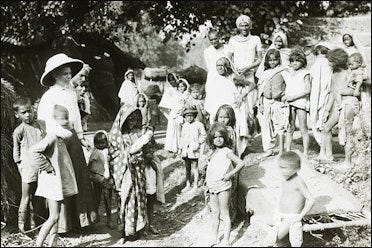
  • J Sai Deepak writes: How missionary work in Bharat birthed ‘caste’ and ‘Dravidian’ identity

    Missionaries and expansion of mass western education in India 1700–1813 |  by Shivakumar Jolad | Education Policy — FLAME | Medium

    Central Idea:

    The article explores the historical roots of the terms “caste” and the “Dravidian” identity in India, asserting that they were products of early Christian European missionary work during the colonial period. The focus is on missionaries’ documentation of Bharat’s social organization, their motivations, methodologies, and the impact of Christian theology on shaping their perspectives.

    Key Highlights:

    • The term “caste” in the context of Indian society is a modern concept introduced during the colonial period.
    • The Portuguese official Duarte Barbosa first used the term “casta” in the sixteenth century, based on his observations in the Vijayanagara Empire.
    • The Danish Protestant Mission in Tranquebar, founded in 1706, played a crucial role in shaping early missionary strategies, including translations of the Bible and running schools.
    • Bartholomeus Ziegenbalg, a German Lutheran missionary, contributed to the creation of the Dravidian identity by distinguishing the “Tamil Religion” from the “Brahminical” religion of the North.
    • The French Catholic Missionary Abbé Jean-Antoine Dubois’ work became influential in understanding caste, and it was largely based on an earlier work by French Jesuit Missionary Gaston-Laurent Coeurdoux.
    • Dubois’ work was acknowledged by William Bentinck, the Governor of Madras, as important for government servants to understand the customs of the Hindus.

    Key Terms:

    • Caste
    • Dravidian
    • Colonialism
    • Ethnocentrism
    • Missionaries
    • Vijayanagara Empire
    • Tranquebar Mission
    • Protestant Mission
    • Tamil Religion
    • Brahminical

    Key Phrases:

    • Colonial-missionary roots
    • Ethnography of Bharat
    • Protestant missionary strategy
    • Caste distinctions among converts
    • Sanskrit and Sanatan Dharma
    • Dravidianists
    • Christian evangelical motives
    • Anthropological service
    • British colonial apparatus
    • Independence India’s brand of secularism

    Key Quotes:

    • “The use of ‘caste’ to understand Bharat’s society is a modern phenomenon attributable to the colonial period.” – Nicholas B Dirks
    • “Tamil Saivism has nothing to do with Sanatan Dharma.” – Bartholomeus Ziegenbalg
    • “Dubois performed an anthropological service to the British rulers of India…in order to convert souls.” – Nicholas Dirks

    Anecdotes:

    • Bartholomeus Ziegenbalg’s understanding of the religion in the South, considering it distinct from the Brahminical/Vedic religion of the North.
    • The toleration of caste distinctions among converts by the Danish Protestant Mission in Tranquebar.

    Key Statements:

    • “The term ‘caste’ in the context of Indian society is a modern phenomenon attributable to the colonial period.”
    • “Indology has its foundations in Christian evangelical motives, aiming to understand the social lay of the land for soul harvesting and conversion.”
    • “Despite the history, it is deemed ‘anti-secular’ to draw attention to the continuity of thought between missionaries of the past and present-day Dravidianists.”

    Key Examples and References:

    • Duarte Barbosa’s observations in the Vijayanagara Empire.
    • Bartholomeus Ziegenbalg’s works – ‘Malabarian Heathenism’ and ‘The Genealogy of Malabarian Gods.’
    • Abbé Jean-Antoine Dubois’ work – ‘Description of the Character, Manners, and Customs of the People of India.’
    • William Bentinck’s acknowledgment of the importance of Dubois’ work for understanding Hindu customs.

    Key Facts and Data:

    • The term “caste” was first used by Duarte Barbosa in the sixteenth century.
    • The Tranquebar Mission was founded in 1706 by Bartholomeus Ziegenbalg.
    • The French Jesuit Missionary Gaston-Laurent Coeurdoux’s work influenced Abbé Jean-Antoine Dubois.
    • Dubois’ work was translated from French to English and formally published in 1816.

    Critical Analysis:

    The article convincingly argues that the understanding of “caste” and the “Dravidian” identity has roots in early Christian missionary work. However, a more explicit discussion of the consequences of this influence and a deeper exploration of the role of the native population in cooperating with the colonial exercise would provide a more comprehensive analysis.

    Way Forward:

    Further exploration is needed to understand the lasting impact of missionary influence on caste and identity in India. This includes examining the socio-cultural repercussions and the contemporary relevance of these historical developments. A nuanced analysis can contribute to a more comprehensive understanding of the complexities surrounding caste and identity in Indian society.

  • Extinction of Gigantopithecus Blacki: Environmental Adaptation Challenges

    Extinction of Gigantopithecus Blacki

    Introduction

    • A recent study published in Nature sheds light on the extinction of Gigantopithecus blacki, the largest known primate species.
    • This research provides crucial insights into the species’ inability to survive environmental changes, contrasting with the adaptability of other similar primates.

    About Gigantopithecus Blacki

    • Species Description: Gigantopithecus blacki was a great ape species that inhabited China between 2 million and 330 thousand years ago.
    • Physical Attributes: Estimated to stand 3 meters tall and weigh between 200–300 kg, it is considered the largest primate ever to have existed on Earth.
    • Geographical Range and Extinction: The species experienced a significant reduction in geographical range before its extinction, with the most recent fossils indicating a marked decline.

    Research Methodology

    • Fossil Analysis: Researchers analyzed fossils from 22 caves in southern China, focusing on dental samples of G. blacki and its closest relative, Pongo weidenreichi.
    • Environmental Reconstruction: The study employed pollen and stable isotope analysis to reconstruct the environmental conditions during the species’ existence.
    • Diet and Behavior Assessment: Changes in diet and behavior within the extinction window were inferred from dental analyses.

    Findings on Environmental Changes and Adaptation

    • Initial Habitat: Around 2.3 million years ago, G. blacki thrived in dense forests with heavy cover.
    • Transition in Environment: During the extinction window (295–215,000 years ago), there was a shift to open forests, indicating significant changes in forest plant communities.
    • Dietary and Stress Responses: Dental analysis revealed a less diverse diet and reduced water consumption for G. blacki, alongside signs of increased chronic stress. In contrast, P. weidenreichi showed better adaptation to these environmental changes.
    • Fossil Record Decline: The number and geographical spread of G. blacki fossils declined relative to P. weidenreichi by 300 thousand years ago, supporting the hypothesis of its struggle to adapt.
  • India’s Oldest Living City found in Vadnagar: IIT study

    vadnagar

    Introduction

    • A recent joint study by the Indian Institute of Technology (IIT) Kharagpur has uncovered significant findings in Vadnagar, PM Modi’s native village.
    • Contrary to the common belief of a “Dark Age” following the Harappan collapse, the study suggests a continuous cultural presence in the region.

    Vadnagar: Mysteries Revealed 

    • Historical Significance: The discovery is crucial as it fills a gap in Indian archaeological history between 1,500 BCE and 500 BCE, suggesting a continuous human settlement over 5,500 years.
    • Multicultural Settlement: Vadnagar was identified as a site with diverse cultural and religious influences, including Buddhist, Hindu, Jain, and Islamic.
    • Cultural Continuity: Evidence suggests that Vadnagar could date back to 1,400 BCE, aligning with the late phase of the post-urban Harappan period.
    • Archaeological Artifacts: The site revealed a variety of artifacts, including potteries, copper, gold, silver, iron objects, and intricately designed bangles.
    • Climatic Influence on History: The study indicates that climatic changes significantly influenced the rise and fall of kingdoms and invasions in India over a 3,000-year period.
    • Successive Rulers: Radiocarbon dating shows that Vadnagar was successively ruled by various kingdoms and empires, including the Indo-Greeks, Indo-Scythians (Kshatrapa kings), Maitrakas (Gupta kingdom), Rashtrakuta-Pratihara-Chawada kings, Solanki kings (Chalukya rule), Sultanate-Mughals, and Gaekwad/British.
    • Migration Trigger: The team inferred that cold arid/hyper-arid conditions might have triggered migration from central Asia.

    Challenging the “Dark Age” Narrative

    • Redefining Historical Gaps: The findings challenge the notion of a ‘Dark Age’ following the collapse of the Indus Valley Civilization around 4,000 years ago and before the emergence of Iron Age cities like Gandhar, Koshal, and Avanti.
    • Vadnagar’s Significance: Evidence from Vadnagar challenges this narrative, suggesting it as one of the oldest continuously inhabited cities within a single fortification in India.
    • Potential Harappan Continuity: Preliminary radiocarbon dating indicates that Vadnagar’s settlement could date back to 1400 BCE, aligning with the late phase of the post-urban Harappan period.
  • Ayodhya Grand Mosque to be ‘better than the Taj Mahal’

    Ayodhya Grand Mosque

    Introduction

    • The Indo-Islamic Cultural Foundation (IICF), entrusted with the construction of the mosque in Ayodhya, is embarking on a renewed effort to fund and develop the project.
    • The project’s scope has expanded significantly, with plans to build one of India’s largest mosques and other unique features, making it distinct from its initial design.

    Ayodhya Grand Mosque

    • From Modest to Grand: The original plan, conceived by Prof. S.M. Akhtar, included a hospital, community kitchen, library, and research center. However, the new vision aims to create one of India’s grandest mosques, surpassing the Taj Mahal in grandeur.
    • Redesigned Architecture: The earlier design was deemed inadequate for a mosque, and a new design by Pune-based architect Imran Shaikh will be revealed soon.
    • Five Minars: The Ayodhya mosque will boast five minarets, a distinctive feature among Indian mosques.
    • Water-and-Light Show: Plans include synchronizing water displays with prayer times and automated lighting that mimics sunset and sunrise.
    • Giant Fish Aquarium: A massive fish aquarium, larger than Dubai’s, will be added to attract youth and visitors.

    Project Background

    • Land Allocation: The mosque project was allocated a five-acre plot in Dhannipur, Ayodhya, in February 2020, following the Supreme Court’s decision allowing the construction of both the temple and mosque.
    • Cultural Significance: The mosque construction aims to promote harmony and cultural exchange, paralleling the construction of the Ram temple nearby.

    Path to Construction

    • Commencement Date: Construction is anticipated to begin in the second half of 2024, following the holy month of Ramzan.
    • Symbolic Brick: A brick inscribed with Quranic verses will travel to prominent dargahs in India and Madina, Saudi Arabia, before being placed at the construction site.
    • Media Campaign: Special songs and videos related to the mosque are being produced, featuring notable artists and voices to generate awareness.

    Fundraising Approach

    • Digital Fundraising: Instead of door-to-door fundraising, IICF plans to launch a website with QR codes for easy and convenient donations, aiming to replicate the success of the Ram temple fundraising campaign.
    • Broad Appeal: The goal is for Ayodhya to become a symbol of cultural diversity and coexistence, attracting visitors to both the temple and mosque.

    Conclusion

    • The Ayodhya mosque project is undergoing a significant transformation, evolving into a grand and iconic structure.
    • With a focus on architectural magnificence, innovative features, and a modern fundraising approach, the mosque aims to contribute to Ayodhya’s cultural richness and serve as a symbol of unity and harmony.
  • Nashik’s Kalaram Mandir: Religious and Social Significance

    Kalaram Mandir

    Introduction

    • The Kalaram Mandir, located on the banks of the Godavari in Nashik’s Panchavati area, has recently garnered attention with visits from prominent political leaders, including Prime Minister.
    • This temple, steeped in historical, religious, and social significance, has been a focal point for major political and social movements in India.

    Kalaram Mandir’s Legacy

    • Temple’s Name and Idol: The temple gets its name from the black statue of Lord Ram (‘Kala Ram’ means ‘Black Ram’). The sanctum sanctorum houses statues of Ram, Sita, Lakshman, and a black idol of Hanuman.
    • Construction and Features: Built-in 1792 by Sardar Rangarao Odhekar, the temple features 14 steps representing Ram’s years of exile and 84 pillars symbolizing the cycle of rebirth in Hinduism.
    • Historical Significance: The temple is renowned for its association with the epic Ramayana, where Lord Ram, along with Sita and Lakshman, is said to have spent time during their exile.

    Panchavati’s Role in the Ramayana

    • Significance in the Epic: Panchavati, the area where the temple is located, is significant in the Ramayana. It’s believed to be the site where Sita was abducted by Ravan, leading to the epic war in Lanka.
    • Name Origin: The name ‘Panchavati’ is derived from the presence of five banyan trees, making the region auspicious according to the epic.

    Temple as a Site of Social Reform

    • Dalit Satyagraha: In 1930, Dr. B.R. Ambedkar and social activist Pandurang Sadashiv Sane (Sane Guruji) led a historic agitation at the Kalaram Mandir, demanding temple entry rights for Dalits.
    • Ambedkar’s Protest: The protest involved a sit-in outside the temple, with participants singing songs and raising slogans for equality.
    • Continued Relevance: The temple remains a symbol of the struggle for Dalit rights, highlighted by Uddhav Thackeray’s plan to visit on the day of the Ram temple consecration in Ayodhya.

    Political Significance

    • Recent Political Visits: The temple has seen visits from major political figures, reflecting its continued relevance in contemporary politics and social issues.
    • Symbol of Unity and Equality: Leaders visiting the temple often emphasize its role in symbolizing unity and the fight for social justice in India.