Mains Ready By December. Smash Mains & Smash PYQ Admissions Open

GS Paper: GS2-18.Bilateral, regional and global groupings and agreements involving India and/or affecting India’s interests.

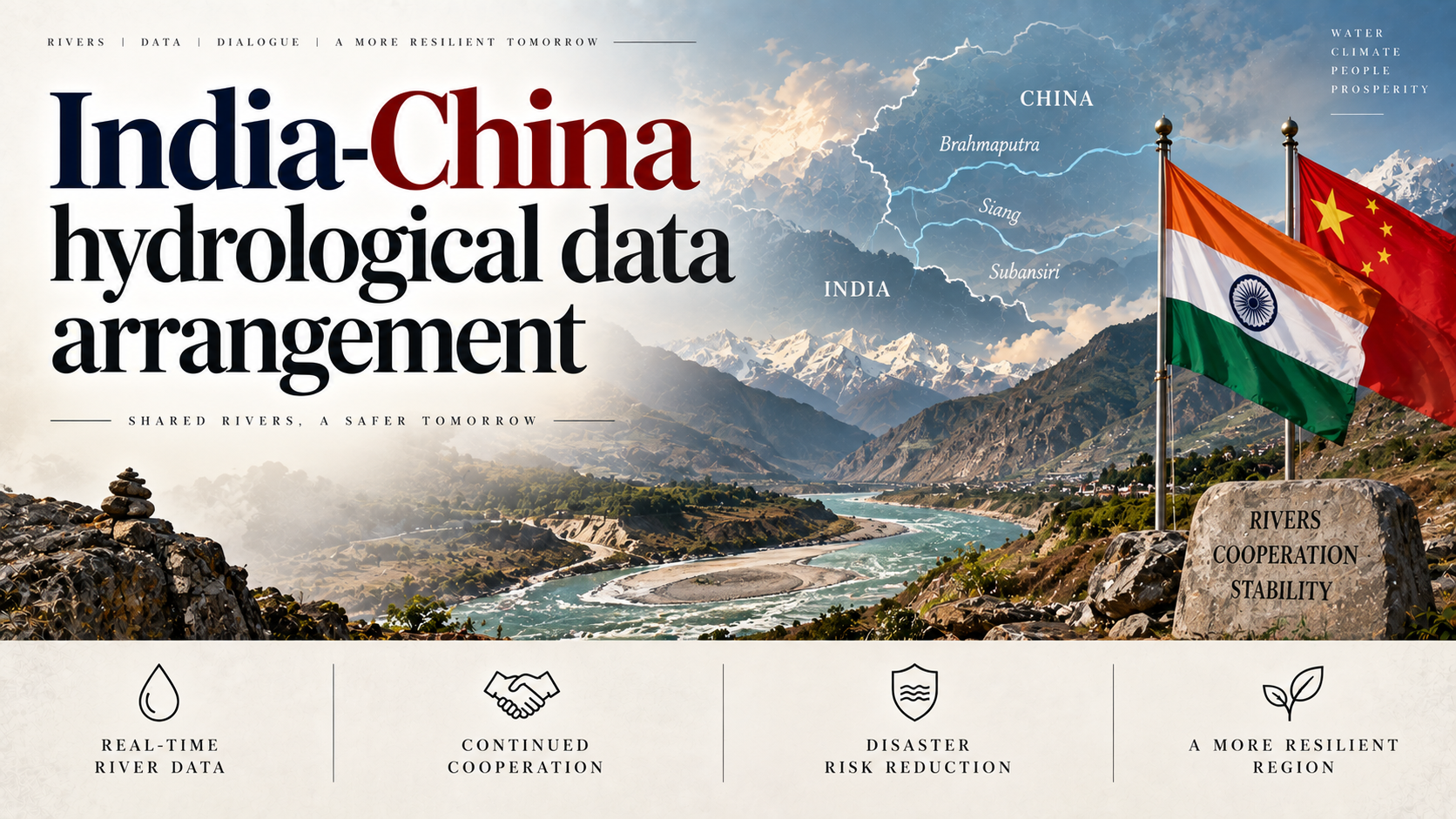
  • Two countries and a shared river: Mistrust is not inevitable

    Two countries and a shared river: Mistrust is not inevitable

    Why in the News

    India’s most important rivers rise in a region it cannot see into, controlled by China, which treats the data about them as an asset to switch on and off. The Brahmaputra rises as the Yarlung Tsangpo in Tibet and enters Arunachal Pradesh as the Siang, and the Sutlej and the Indus rise there too. The arrangement that governs what India learns about them, a pair of flood-season memorandums, lapsed in June 2025. China broke ground in July 2025 on the Medog project at the Great Bend of the Yarlung Tsangpo, immediately upstream of the point where the river turns towards Arunachal Pradesh. The tension is that hydrological data on rivers India depends on is a discretionary favour rather than a treaty right, and India practises the same discretion on the rivers where it sits upstream.

    What is the India-China hydrological data arrangement?

    1. No water treaty exists between the two countries: The relationship rests on two flood-season memorandums, one on the Brahmaputra signed in 2002 and one on the Sutlej signed in 2005.
    2. India pays for the data it receives: India pays roughly Rs 1 crore a year for the flood-season information supplied under those memorandums.
    3. A consultative body that convenes at China’s convenience: An expert-level consultative mechanism sits alongside the memorandums and meets when relations allow.
    4. The instrument is seasonal by design: The memorandums cover the flood season, so hazards arising outside that window carry no notification obligation at all.

    Why is there no legal floor under the arrangement?

    1. Both states sit outside the governing convention: The 1997 United Nations Convention on the Law of the Non-Navigational Uses of International Watercourses would oblige an upstream state to give prior notice of works and not to cause significant harm to those below. China voted against it and India abstained.
    2. A non-binding memorandum can be suspended without breach: Withholding data under such an arrangement carries no legal consequence, so there is nothing for India to invoke when supply stops.

    Why does shared data function as a lever rather than a right?

    1. Supply tracks the state of the boundary dispute: China stopped sharing Brahmaputra data during the Doklam standoff of 2017, blaming damaged collection sites, even as that summer’s floods killed scores in Assam.
    2. The pattern repeated and then ended the arrangement: Sharing resumed once relations thawed, dried up after the Galwan clash of 2020, and the memorandum lapsed in June 2025.
    3. Flood prediction data is not a neutral public good: It is released when ties are warm and withdrawn when they are not, which makes it a bargaining instrument rather than a technical input.
    4. Reassurances cannot be checked: Beijing attributes the stoppages to technical faults, calls the dam “fully within China’s sovereignty” and promises it will “prevent and mitigate disasters”. Those meant to be reassured cannot verify any of it, because the region is sealed and India, which hosts the Dalai Lama and the largest Tibetan exile community, is viewed with particular suspicion.

    What does the Medog project add to India’s exposure?

    1. The largest hydropower project in the world, at the worst possible point: The Medog project at the Great Bend will run to 60 GW, sited just before the Yarlung Tsangpo turns towards Arunachal Pradesh.
    2. It sits on the seam that generates the hazard: The site lies in one of the planet’s most seismically violent zones, the same tectonic seam that produces the outburst floods now hitting the border.
    3. Downstream states have been told nothing: Arunachal Pradesh’s Chief Minister has called the project an “existential threat” to the Siang valley. Bangladesh, at the river’s end, sought details in early 2026 and received none.

    Where does India’s own record cut against its demand?

    1. India settled for paid data instead of pressing for a right: Successive governments accepted the paid-data memorandum and did not push for the binding, basin-wide architecture that would make information an entitlement rather than a favour.
    2. India is an upstream withholder on its own rivers: It shares thinly with Bangladesh, and it has placed the Indus Waters Treaty, 1960 in abeyance following the Pahalgam terror attack.
    3. The same logic runs in both directions: The reasoning India faces on the Brahmaputra is the reasoning it practises on the Indus, which removes the ground from which it could demand a rule of general application.

    What do the Senegal and Mekong models show is possible?

    1. Poverty is not the constraint: On the Senegal River, four of the world’s poorest African countries jointly own their dams as “common and indivisible property”.
    2. Nor is conflict: That joint ownership was sustained even through a war between two of the member states, so mistrust between riparian governments does not by itself prevent pooled sovereignty over a river.
    3. China’s absence is a choice, not a limitation: Its neighbours built the Mekong River Commission and China stayed outside it, which shows the refusal to enter a basin institution is political rather than structural.

    Challenges to a binding India-China river arrangement

    1. Forecasting depends on a single unverifiable supplier: Flood forecasting for the Brahmaputra rests on upstream gauge readings that no Indian agency can independently audit, so a stoppage removes the input rather than degrading it. Eg. Central Water Commission forecasts for the Assam valley are built on flows measured at stations India cannot access.
      The Fix: Fund independent satellite-based flow and precipitation estimation for the upper basin, so a data cut-off reduces accuracy instead of ending the forecast.
    2. The hazards that kill fall outside the covered season: Glacial lake outburst floods and landslide-dam breaches occur without regard to the monsoon calendar the arrangement is built around. Eg. The South Lhonak glacial lake outburst flood of October 2023 destroyed the Teesta-III dam in Sikkim and killed dozens, outside any flood-season notification window.
      The Fix: Negotiate a year-round hazard-notification obligation covering lake formation, landslide damming and reservoir release, separately from seasonal flow data.
    3. Water has no forum of its own: The boundary question runs through the Special Representatives channel, and water sits in a separate expert mechanism with no power to compel a meeting or an answer. Eg. An interruption in data supply has no body before which it can be formally raised as a breach.
      The Fix: Give the expert mechanism a fixed annual calendar and a standing agenda item on notification failures, so a stoppage produces a documented exchange.
    4. The lower riparians negotiate separately on the same river: India, Bangladesh and China each deal bilaterally, so the basin’s downstream users never present a common position. Eg. India and Bangladesh’s Joint Rivers Commission covers 54 shared rivers and has produced only two water-sharing treaties in five decades.
      The Fix: Raise the Yarlung Tsangpo-Brahmaputra as a joint India-Bangladesh agenda item so notification is sought by the whole downstream reach at once.
    5. India’s own counter-project is contested at home: Storage proposed on the Siang as a strategic answer to Medog is opposed by the communities it would displace, which weakens the case India makes about consultation. Eg. Survey work for the Siang Upper Multipurpose Project has faced sustained local protest in Arunachal Pradesh.
      The Fix: Settle consent and compensation on the Indian side of the border before advancing a counter-dam as a security argument.

    Conclusion

    India cannot compel China to open the plateau, and the question is therefore not about leverage but about design. What is missing is an architecture that makes hazard information an obligation owed to everyone downstream rather than a concession granted when relations permit. Building it requires India to accept the same obligation on the rivers where it sits upstream, since a rule it will not apply to itself is not a rule it can ask for. The unresolved point is whether a shared river is treated as a common lifeline or as a weapon held in reserve, and neither government has yet chosen.

    Transboundary River Water Sharing in India

    1. About: A transboundary river crosses an international boundary, and its use is governed by bilateral treaties and memorandums between the riparian states rather than by a single binding global law.
    2. India’s position is both upstream and downstream: India is the lower riparian to China on the Brahmaputra, the Sutlej and the Indus headwaters, and the upper riparian to Pakistan on the Indus system and to Bangladesh on the Ganga and the Teesta.
    3. The dependence is agricultural: Around 45% of irrigation in the Indo-Gangetic plain depends on water from the Himalayan rivers, which is why control of the headwaters translates directly into food security.

    Laws and Agreements Governing Transboundary River Water Sharing

    1. Indus Waters Treaty, 1960 (India-Pakistan): Brokered by the World Bank, it assigns the Eastern Rivers (Ravi, Beas, Sutlej) to India and the Western Rivers (Indus, Jhelum, Chenab) to Pakistan, with run-of-the-river hydropower and limited storage permitted to India on the Western Rivers.
    2. Article XII: Termination is possible only through a ratified treaty between both governments, and the text carries no suspension provision.
    3. Ganga Waters Treaty, 1996 (India-Bangladesh): It fixes the sharing of dry-season flows at the Farakka Barrage and runs for 30 years, expiring in December 2026.
    4. Kushiyara River Treaty, 2022 (India-Bangladesh): It provides for withdrawal of an agreed quantum from the Kushiyara in the dry season, and is only the second water-sharing treaty between the two countries.
    5. Kosi Agreement, 1954 and Gandak Agreement, 1959 (India-Nepal): These provide for flood control, barrage construction and irrigation management on shared rivers, with India funding and operating the structures on Nepali territory.
    6. Mahakali Treaty, 1996 (India-Nepal): It covers the integrated development of the Mahakali river, including the Pancheshwar Multipurpose Project, which remains stalled over disagreement on benefit-sharing.

    Challenges in Transboundary River Water Sharing

    1. The customary principles bind weakly without a forum: Equitable and reasonable utilisation and the obligation not to cause significant harm are widely accepted in principle, and no standing tribunal exists to apply them to a river basin. Eg. The Mekong River Commission can review a member’s dam proposal and cannot stop it.
      The Fix: Build compulsory technical arbitration into each treaty at renewal, so a disputed project has a named forum rather than a bilateral stalemate.
    2. Treaties fix volumes that the climate then moves: Allocations negotiated on decades-old flow records become unworkable as glacier melt, monsoon variability and river morphology change the water actually available. Eg. Negotiations over the Ganga sharing formula are complicated by changing river morphology and by disagreement over water levels at Farakka.
      The Fix: Replace fixed quantum allocations with percentage-of-flow formulas carrying explicit dry-year and surplus-year rules.
    3. Domestic federal politics stalls bilateral agreements: A riparian State’s objection can hold up an agreement the two national governments have already negotiated. Eg. The draft Teesta agreement of 2011, providing for a 50:50 sharing arrangement, has never been implemented.
      The Fix: Include the riparian State in the negotiating delegation from the outset, rather than seeking its concurrence after a text is settled.
    4. Third parties build in the same basin without notice: A neighbour can bring in external financing and construction for a project on a shared river without consulting the other riparian. Eg. Bangladesh has re-engaged China on the Teesta River Management Project.
      The Fix: Write a prior-notification and joint-appraisal requirement for any new structure into every treaty renewal, applying to externally financed projects as well.

    [2016, GS1, 12 marks] Present an account of the Indus Water Treaty and examine its ecological, economic and political implications in the context of changing bilateral relations.
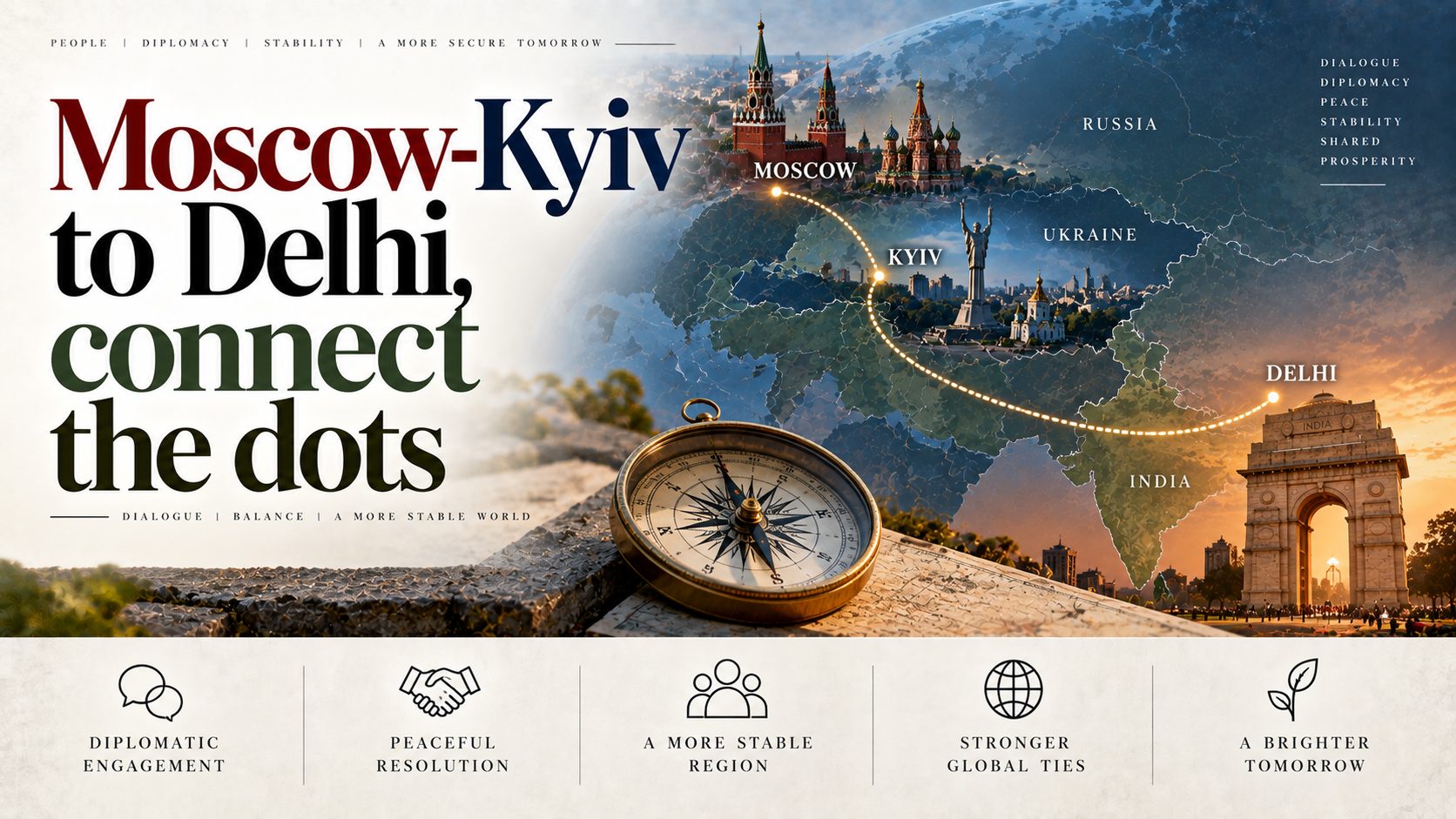
  • Moscow-Kyiv to Delhi, connect the dots

    Moscow-Kyiv to Delhi, connect the dots

    Why in the News

    India has stepped up its diplomatic engagement on the Russia-Ukraine war, holding senior-level meetings in both Moscow and Kyiv. The engagement follows an American track that has produced contact without a settlement. Negotiators for the United States President met the Russian President over the weekend, and the Director of the Central Intelligence Agency (CIA) travelled secretly to Moscow two weeks earlier to press the Kremlin to cut a deal. Neither belligerent has changed position on the ground, since each of the two great powers supplies the other’s adversary in a separate conflict. The tension is that India now holds access to both capitals at a moment when the mediator with actual leverage is stretched across two theatres.

    What access has India actually acquired?

    1. A meeting at the level of the Russian presidency: The External Affairs Minister met the Russian President directly rather than through the standing bilateral machinery.
    2. The war raised at a multilateral summit: The Prime Minister took up the war with the Russian President at the Shanghai Cooperation Organisation (SCO) summit, urging an end to it “for humanity’s sake”.
    3. A reciprocal opening in Kyiv: The External Affairs Minister travelled to Kyiv. The Ukrainian President thanked India for its “commitment to ending this unjust war”.

    Why has the American track not converted contact into a settlement?

    1. The intelligence channel has been reopened at the top: The last known visit to Russia by a serving CIA Director was nearly five years ago, made to warn the Kremlin that Washington knew of its plans to invade Ukraine. That deterrence effort failed, and the present visit was reportedly aimed at persuading Moscow to cut a deal.
    2. A reset announced more than a year ago has changed nothing: The two governments have talked since their summit at Anchorage and remain on opposing sides of two active conflicts.
    3. Each power arms the other’s adversary: The United States supplies Ukraine with intelligence to strike targets inside Russia. Russia does the same for Iran in the Gulf.

    What does the conduct of the war show about its direction?

    1. Neither side will back down under escalation: Russia has intensified drone and missile strikes on Ukraine. Ukraine has relentlessly targeted Russian energy infrastructure.
    2. The damage has reached Russian domestic supply: The disruption has been severe enough for Moscow to turn to India for petrol imports, and restrictions on fuel sales have been imposed across Russia.
    3. The war is leaking into third countries: A series of suspected acts of sabotage across Europe is being investigated for possible links to Russia. Any loss of life on European soil raises the risk of the conflict spilling further into the continent.

    What would a realistic first step look like?

    1. A ceasefire basis before a settlement: The immediate requirement is to bring Moscow and Kyiv back to the table and establish a basis for a ceasefire, rather than to open with terms neither will accept.
    2. A narrow opening ask rather than a comprehensive one: Protection of energy and civilian infrastructure, along with commercial shipping lanes in the Black Sea, is available as a first step because it serves both belligerents’ own interests.
    3. A collective call rather than an Indian one: New Delhi can use the BRICS summit it hosts, with the Russian and Chinese Presidents expected to attend, to build a collective call for confidence-building measures instead of a solitary appeal.

    Challenges to an Indian mediation role

    1. India is an interested party in the war’s economics: Discounted Russian crude has made Russia India’s largest oil supplier since 2022, so any Indian proposal is read in Kyiv and Brussels through the trade relationship. Eg. Moscow’s turn to India for refined petrol deepens the same commercial dependence.
      The Fix: Separate the commercial track from the diplomatic one by routing the peace effort through a designated special envoy rather than through the ministries that handle energy trade.
    2. No leverage exists over the party financing Ukraine’s defence: The war’s outcome turns on American intelligence and weapons supply, and India holds no instrument that touches that flow. Eg. Strike intelligence for targets inside Russia is supplied by Washington, not by any BRICS member.
      The Fix: Aim at a humanitarian and infrastructure truce that neither capital needs American consent to accept, rather than at a comprehensive settlement.
    3. BRICS is not a conflict-resolution forum: The grouping has no mediation machinery, no secretariat with a political mandate and no record of brokering a ceasefire. Eg. It issued no collective position when the war began in 2022.
      The Fix: Seek a narrow chair’s statement on infrastructure and shipping protection rather than a group position on the war itself.
    4. Both belligerents currently believe escalation still pays: A mediator arrives with nothing to offer when neither side has reached the point of exhaustion. Eg. Ukraine’s strikes on Russian energy infrastructure and Russia’s intensified missile campaign both increased through the current phase.
      The Fix: Hold an offer of monitoring and verification capacity in reserve, so India has something concrete to supply once a pause becomes attractive to both.
    5. India’s own track record is regional, not extra-regional: New Delhi has not brokered a ceasefire between two states outside its immediate neighbourhood, so its convening power rests on access rather than on precedent. Eg. Its wartime role so far has been the delivery of humanitarian consignments and the evacuation of students.
      The Fix: Build the role incrementally through technical facilitation, beginning with grain, nuclear-plant safety and prisoner exchange files.

    Conclusion

    Access to both capitals is a diplomatic asset that decays if it is not converted into a specific ask. The two governments that can end the war are simultaneously arming opposite sides of a second one, which is the ceiling any external mediator runs into. The concrete thing to watch is the BRICS summit in New Delhi from 11 to 13 September, and specifically whether its outcome document names infrastructure and shipping protection at all.

    Back2Basics

    1. Confidence-building measures: Reciprocal steps taken by adversaries to reduce the risk of accidental escalation and to make each side’s intentions readable, adopted without either side conceding its political position.
    2. Typical forms: Advance notification of military exercises, hotlines between commands, limits on deployments in a defined zone, and agreed exclusions of a category of target from attack.
    3. Why they precede a ceasefire: They require no agreement on the disputed issue itself, so they can be adopted while the war’s causes remain unresolved.
    4. Precedent in this war: The Black Sea Grain Initiative of 2022 allowed Ukrainian grain exports to resume under an inspection arrangement without either belligerent altering its war aims.

    [2019, GS2, 15 marks] “The long-sustained image of India as a leader of the oppressed and marginalised Nations has disappeared on account of its new found role in the emerging global order”. Elaborate.”

  • The house of multilaterals

    Why in the News

    The Shanghai Cooperation Organisation (SCO) has held its 26th summit at Bishkek in the Kyrgyz Republic, marking the completion of 25 years since its launch. The Bishkek Declaration expressed deep concern at and condemned the military strikes on Iran, and reaffirmed support for its sovereignty and territorial integrity. It named the United States and Israel as having violated the principles of international law and the UN Charter. The summit was the first since the U.S. and Israel began their war on Iran on 28 February 2026, which killed Iran’s Supreme Leader Ayatollah Ali Khamenei and a number of senior officials. The tension is that a grouping able to speak in one voice against outside powers closed the summit by handing its chair to Pakistan.

    What is the Shanghai Cooperation Organisation?

    1. Founding: The SCO was launched on 15 June 2001 by China, Russia, Kazakhstan, the Kyrgyz Republic and Tajikistan, together known as the Shanghai Five, as its founding members. India and Pakistan joined the group in 2017.
    2. Institutional machinery: The grouping has 29 charter bodies, including the Council of Heads of State, the Council of Heads of Government, the Council of Ministers of Foreign Affairs, meetings of heads of ministries and agencies, and the Council of National Coordinators, alongside over 40 working mechanisms.
    3. What the machinery is for: These bodies meet through the year and serve as formal channels of communication between member states. They give members a standing consultation route in a sudden conflict or a cross-border natural calamity.
    4. No collective defence: The SCO carries no collective defence component, and several of its members have disputes with one another.

    What did the declaration say on West Asia?

    1. Condolence and a peace process: Member states condoled the assassination of Ali Khamenei and welcomed the peace process supported and mediated by several countries, including SCO member Pakistan.
    2. Indirect backing on the nuclear question: The summit advocated the “inalienable right” of member countries to develop atomic energy for peaceful purposes, which reads as support for Iran in its nuclear negotiations with the U.S.
    3. Palestine named as the root question: The declaration asserted that lasting stability in West Asia can be secured only through a just settlement of the Palestine question.
    4. Silence on Ukraine: Member states maintained silence on Russia’s role in the Ukraine war.

    Where did the declaration push back against the prevailing order?

    1. Missile defence: The declaration held that the “unilateral and unlimited build-up of global missile defence systems by groups of states” has a negative impact on international security and stability.
    2. Satellite Internet: It stated that “unauthorised satellite Internet services on the territory of Member States” violate international law, an evident reference to Starlink supplying Internet services in parts of eastern Ukraine and in Iran.
    3. Trade in local currencies: SCO leaders have periodically called for greater use of local currencies in trade, a practice viewed with scepticism in the West and particularly by the current U.S. leadership.
    4. A bank of its own: The announcement of the establishment of an SCO Development Bank is a further step in that direction.

    What did India press at Bishkek, and where did it diverge?

    1. No double standards on terrorism: The Prime Minister, who led the Indian delegation, spoke on ensuring that there is “no double standards” in fighting terrorism and called for peace and stability in Afghanistan.
    2. India’s Afghanistan record: He highlighted India’s role in supplying relief materials to Taliban-controlled Afghanistan over the years, and the declaration separately called on Afghanistan to form an “inclusive government”.
    3. Connectivity with a condition: He spoke for greater connectivity between the markets of SCO members, and for respect for the sovereignty and territorial integrity of states. That formulation is an apparent reference to the China-Pakistan Economic Corridor (CPEC), which India has criticised for years.
    4. The Belt and Road split: India stayed away from endorsing the China-led Belt and Road Initiative (BRI). Other member states expressed support for it and advocated alignment between the BRI and the Eurasian Economic Union, a customs union of Russia and four post-Soviet states.
    5. The troika language: The declaration carried strong language on the troika of challenges, “terrorism, separatism and extremism”, and “strongly condemned” terrorism, reflecting India’s concerns and those of other members.

    Why does the next chair create a problem for New Delhi?

    1. Pakistan takes the chair: With the conclusion of the summit, Pakistan has assumed the chair of the SCO, and the group’s next summit will be held in that country.
    2. The level of attendance is undecided: The Ministry of External Affairs has not clarified whether the Prime Minister will travel to Pakistan for it. The External Affairs Minister had visited Islamabad in 2024 for the 23rd meeting of the SCO Council of Heads of Government.
    3. What has intervened since: The Pahalgam terror attack of 22 April 2025, the subsequent Operation Sindoor, and India’s decision to place the Indus Waters Treaty, the 1960 arrangement sharing the Indus system between India and Pakistan, “in abeyance” have further complicated relations.
    4. A decision, not a formality: These developments will be a factor in the level at which the government sends representatives to next year’s summit.

    What has India got out of the grouping since 2017?

    1. A route back to China after Galwan: India and China began to re-engage at the 2024 Kazan Summit in Russia, where the Prime Minister met the Chinese President.
    2. A concrete boundary outcome: A further meeting between the two leaders at Tianjin in 2025 produced an “Early Harvest” proposal on boundary delimitation and the resumption of border trade through three points.
    3. Political will survived a military crisis: The Tianjin meeting showed that both sides retained the will to meet despite the strain following Operation Sindoor in May 2025, when China supported Pakistan as India targeted terror camps in Pakistani territory.
    4. A multilateral setting for hard subjects: The SCO gives the world an opportunity to engage China multilaterally on issues such as freedom of navigation in the South China Sea, and gives India and Pakistan a platform for sustained engagement inside a broader framework.
    5. Leverage in an uncertain phase with Washington: With the U.S. President imposing punitive tariffs on Indian goods, the grouping let New Delhi engage all major stakeholders and maintain diplomatic dialogue.

    Challenges to the Shanghai Cooperation Organisation

    1. Consensus decision-making lets one member stall an agenda: Every substantive document needs unanimity, so an economic or connectivity text is reduced to language all ten members can sign. Eg. India declined to endorse the Belt and Road paragraph at successive summits, and the connectivity language in SCO declarations has stayed generic as a result.
      The Fix: Adopt a consensus-minus-one procedure for economic annexures, so a project document can proceed without binding a dissenting member.
    2. Enlargement has widened the internal contradictions: Membership has grown from the original five to include India and Pakistan in 2017, Iran in 2023 and Belarus in 2024, and each addition brings its own quarrels into the room. Eg. Two pairs of members, India and Pakistan and India and China, carry live disputes with each other.
      The Fix: Tier the agenda, so security cooperation runs among members with no active bilateral dispute and the full membership meets on economic and connectivity subjects.
    3. Members do not share a definition of terrorism: The counter-terrorism arm works from a list members interpret differently, so a summit can condemn terrorism in general and fail on any specific incident. Eg. The SCO defence ministers’ meeting at Qingdao in June 2025 ended without a joint communique after India refused to sign a text that omitted the Pahalgam attack.
      The Fix: Attach a standing annexure of entities already designated by the UN Security Council, so the counter-terrorism text is not renegotiated at every summit.
    4. Connectivity runs through bilateral corridors rather than a common framework: The grouping has no transit and customs instrument of its own, so trade routes are governed by separate bilateral or plurilateral agreements. Eg. The International North-South Transport Corridor, used by India, Iran and Russia, rests on a 2000 agreement signed outside the SCO entirely.
      The Fix: Bring the corridor’s customs, transit and insurance protocols under an SCO transport facilitation agreement, so members trade on one rulebook.

    Conclusion

    The grouping’s value to India has always been access rather than agreement. It is the one table where New Delhi can sit with Beijing and Islamabad without the meeting itself being the story. That access now comes attached to a host India has no ordinary diplomatic traffic with. The decision to watch is the level at which India is represented at the next summit, because it will show whether access is still worth the price of attending.

    Matching Previous Year Question

    “Critically examine the aims and objectives of SCO. What importance does it hold for India?”

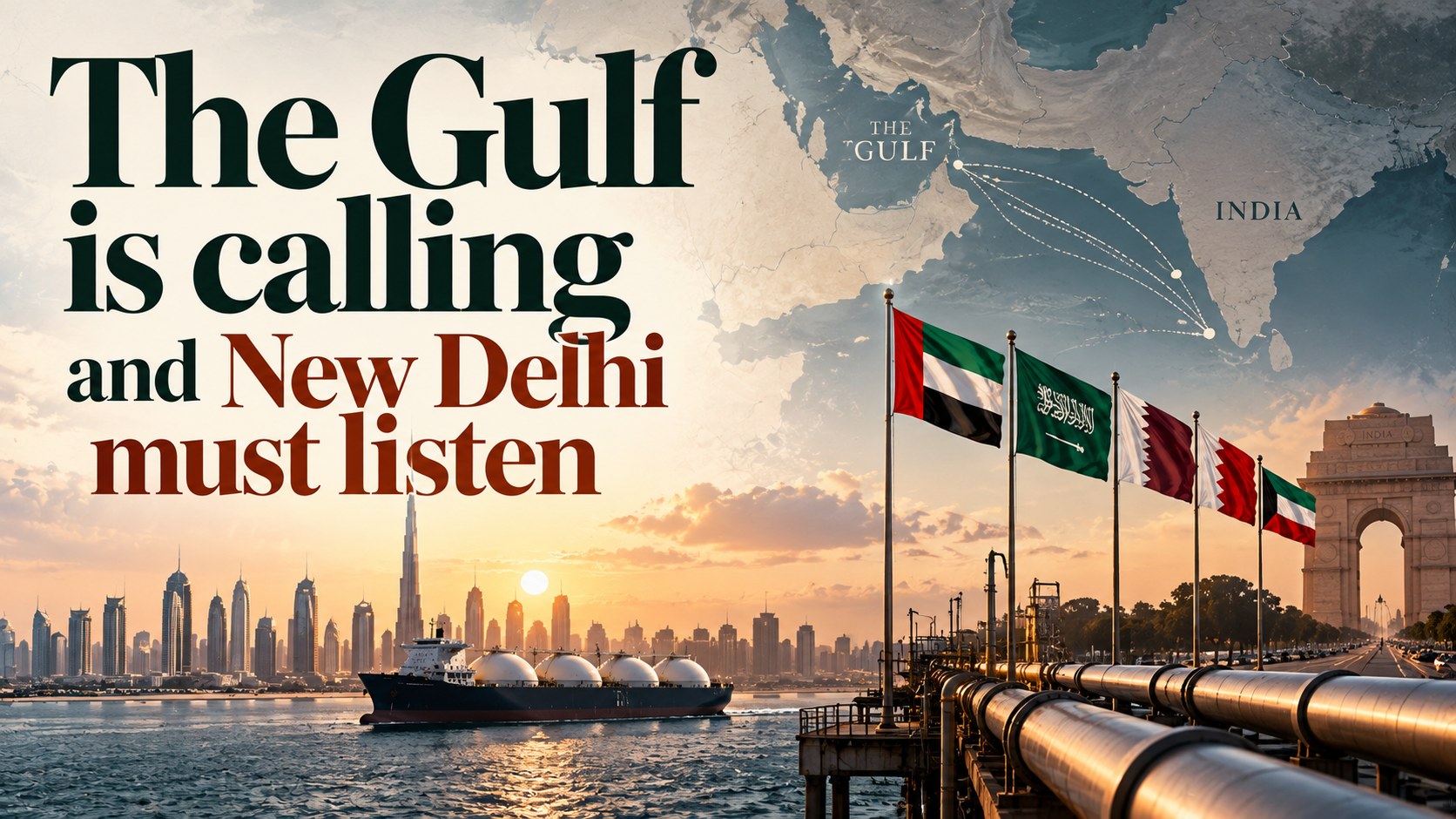
  • The Gulf is calling and New Delhi must listen

    The Gulf is calling and New Delhi must listen

    Why in the News

    Saudi Arabia, Türkiye and Pakistan have entered a collective defence arrangement, the Mecca Joint Defence Agreement, at India’s western maritime doorstep. The agreement follows an American retreat into an unpredictable “selective engagement” posture, which has opened a security vacuum that regional states are now filling with new partners. India’s West Asia policy was built for the opposite condition. The United States guaranteed regional security and kept sea lines of communication open, so India could hedge between Riyadh, Tehran, Tel Aviv and Abu Dhabi without accepting security obligations to any of them. That posture, called multi alignment, bought influence while the region wanted markets, labour and capital. The region now wants security guarantees, and India has none on offer.

    What is the Mecca Joint Defence Agreement?

    1. Three capabilities in one arrangement: It links Gulf capital to Turkish defence technology and to Pakistani military manpower and skill, inside a collective defence framework.
    2. It is framed as defensive: The pact is presented as a way of managing shared vulnerabilities among its members rather than as a bloc aimed at any particular state.
    3. Its significance is structural: It signals that West Asia’s security framework is being rewritten, and that the rewriting is being done by actors whose strategic interests run counter to India’s long term objectives.

    What did India’s multi alignment rest on?

    1. The region was read as an economic hinterland: West Asia was treated as a critical source of crude oil, a reliable destination for outbound labour and a vital conduit for remittances.
    2. Hedging was the default in a crisis: India balanced relations between competing power centres and declined security obligations to any single capital.
    3. The framing was macroeconomic: The region’s geography, oil and gas reserves, capital accumulation and appetite for imported labour and skills positioned it as the bridge between a debt burdened West and a rising Asia.
    4. Distance was itself the asset: Being friendly to all without being too friendly to any was the point of the policy, since an obligation to one power centre would have cost access to another.

    What has changed in the region’s security market?

    1. Distancing has lost its value: West Asian capitals no longer treat non alignment or multi alignment as a virtue, and are actively seeking dependable security partners.
    2. Diplomatic and commercial offers no longer buy influence: What is sought is naval patrols, intelligence sharing, defence industrial collaboration and credible counter terrorism capability, not platitudes and routine economic cooperation.
    3. The vacuum is filled by whoever arrives first: Türkiye has already converted the opening into a treaty commitment, and regional security arrangements will coalesce with or without Indian participation.
    4. The exposure is concrete: Hostile regional pacts and the growing influence of external powers bear directly on India’s trade routes, its energy security and the welfare of millions of Indian citizens in the Gulf.

    Why does economic infrastructure not buy security?

    1. Low cost weapons defeat capital intensive assets: The eruption of hostilities involving Iran showed that state of the art port facilities, energy networks and logistics corridors remain vulnerable to low cost drones in grey zone, asymmetric warfare, meaning attacks kept below the threshold of declared war and carried out by deniable or irregular means.
    2. A secure enclave is not secure: Hyper secure economic zones stay exposed to spillover from the instability around them, because the perimeter is not where the risk originates.
    3. The Gulf model is hostage to perception: The economy runs on foreign corporations and expatriate labour, so talent and capital exit as rapidly as they arrived once security risk crosses a psychological threshold.
    4. A corridor is only as strong as its worst link: Disruption at a narrow naval chokepoint or along an overland route stalls the whole supply chain, whatever the quality of the infrastructure at either end.

    What hard moves are available to India?

    1. Build presence at the chokepoints: The named priorities are the Strait of Hormuz, the Gulf of Oman, the Gulf of Aden, the waters off the Somali coast and the Bab el-Mandeb.
    2. Convert presence into standing arrangements: Joint maritime patrols, permanent logistics access arrangements and interoperable surveillance networks with friendly Gulf states are what turn deployments into a net security provider role.
    3. Sell capability rather than only buying it: India’s defence manufacturing base can offer West Asian states an alternative source of hardware and technology, with collaborative ventures, exercises carrying real operational content and deep intelligence sharing replacing procurement discussions.
    4. Use minilaterals rather than alliances: Security frameworks with the United Arab Emirates or Israel, and separately with Saudi Arabia, build a counterweight against hostile axes without the rigidity of a Cold War style alliance.

    Challenges to an Indian security role in West Asia

    1. India holds no base of its own in the region: Sustained naval presence at several chokepoints needs repair, replenishment and crew rotation ashore, which an access agreement does not guarantee during a crisis. Eg. India’s logistics in the western Indian Ocean rest on access to Port Duqm in Oman rather than on infrastructure it controls.
      The Fix: Convert existing access arrangements into pre stocked logistics hubs with agreed wartime access clauses, so replenishment does not turn on a host government’s decision mid conflict.
    2. A Gulf security partnership collides with the Iran relationship: Deeper security alignment with Riyadh and Abu Dhabi narrows the space for India’s connectivity investments in Iran. Eg. The Chabahar port project has already run into payment and equipment difficulties because of exposure to United States sanctions.
      The Fix: Keep the maritime role functional rather than political, built around freedom of navigation and anti piracy tasks from which Iran also benefits.
    3. Pakistan’s institutional depth in Gulf security cannot be matched quickly: Decades of troop deployments, training missions and personnel exchanges give it standing that a new partner cannot replicate through joint exercises. Eg. Pakistani personnel have served in Saudi Arabian training and internal security roles across successive decades.
      The Fix: Compete where the incumbent is weak, in maritime domain awareness, satellite surveillance and cyber defence, rather than in ground manpower.
    4. The defence export base is small relative to the offer: Supplying a serious regional partner requires sustained production, spares and lifecycle support, which the Indian ecosystem has demonstrated in a narrow band of systems. Eg. India’s defence exports remain concentrated in components, subsystems and a small number of complete platforms.
      The Fix: Anchor offers to systems with a proven service record and a committed spares chain, instead of promising a full spectrum supplier relationship the industrial base cannot yet sustain.
    5. A guarantor role imports the region’s own quarrels: Standing commitments make India a party to disputes among partners who are themselves in conflict with each other. Eg. Saudi Arabia and the United Arab Emirates backed rival factions in Yemen while both are named as prospective Indian partners.
      The Fix: Restrict commitments to maritime and counter terrorism tasks with defined geographic limits, excluding participation in intra regional ground conflicts.

    Conclusion

    The currency of influence in West Asia has changed from investment to protection, and India’s instruments were built for the older one. Trade volume and a large resident population do not translate into a seat in a security arrangement, which is what the region is now assembling. The marker to watch is whether the Mecca arrangement acquires operational content, meaning a joint command, basing rights or a published exercise calendar, since that is the point at which a signed pact becomes a standing capability. India’s answer will register in the same currency or it will not register at all.

    India and West Asia

    1. The policy has a named progression: A pro Arab, Non Aligned Movement era stance gave way to full diplomatic ties with Israel in 1992, a “Look West” policy in 2005 centred on the Gulf Cooperation Council, and a “Think West” approach from 2014 that added maritime security, counter terrorism and investment to oil and diaspora.
    2. Energy is the base of the relationship: The region supplies nearly 60 percent of India’s crude oil and about 70 percent of its liquefied petroleum gas and liquefied natural gas requirements.
    3. The Gulf is India’s largest trading bloc: India-GCC bilateral trade stood at $178 billion in FY 2024-25, making the Gulf Cooperation Council India’s largest trading partner bloc.
    4. The human link is the largest anywhere: About 10 million Indians live and work in West Asia, and the region contributes roughly 38 percent of India’s global remittances.

    Government Initiatives and Frameworks for India-West Asia Relations

    1. I2U2: A grouping of India, Israel, the United Arab Emirates and the United States, working on joint projects in food and energy security.
    2. India-Middle East-Europe Economic Corridor (IMEC): A rail and shipping corridor intended to link India to Europe through the Gulf, bypassing the Suez route.
    3. India-UAE Comprehensive Economic Partnership Agreement (CEPA): A bilateral trade agreement that removed tariffs across most trade lines and deepened investment flows between the two countries.
    4. Chabahar port agreement: A ten year contract signed in 2024 to operate the Shahid Beheshti terminal in Iran, giving India a land and sea route to Afghanistan and Central Asia that avoids Pakistan.

    Challenges in India’s West Asia Engagement

    1. Energy import concentration: A large share of India’s crude and gas comes from a single region whose export routes run through two narrow straits. Eg. Qatar supplies roughly 40 percent of India’s liquefied natural gas imports.
      The Fix: Expand long term contracts with West African, American and Australian suppliers, so no single region carries a majority of the import basket.
    2. Remittance dependence at the State level: Household incomes and State finances in parts of India rest on Gulf transfers that fall the moment the regional economy contracts. Eg. Kerala reported roughly a 20 percent decline in monthly Gulf inflows during the 2026 crisis.
      The Fix: Widen the destination mix for emigrant workers through skill mobility agreements with Japan, Germany and Australia, so remittance flows are not tied to one region’s business cycle.
    3. Fertiliser and food input exposure: Gulf sourced urea and phosphate underpin Indian crop cycles, so a shipping disruption reaches the farm within a season. Eg. Long term potash and phosphate supplies from Jordan and Oman are central to India’s fertiliser availability.
      The Fix: Hold buffer stocks timed to the Rabi and Kharif input calendars, and widen phosphate sourcing towards Morocco, so one corridor’s closure does not hit a sowing season.

    [2018, GS2, 15 marks] In what ways would the ongoing US-Iran Nuclear Pact Controversy affect the national interest of India? How should India respond to this situation?”

  • Rajnath releases new framework for defence diplomacy

    Rajnath releases new framework for defence diplomacy

    Why in the News

    The Defence Minister has released Raksha, a strategic framework setting out India’s road map for defence diplomacy and global defence partnerships over the next ten years.

    Pillars of the Raksha framework

    1. Bilateral and multilateral defence partnerships: Deepening defence relationships with individual states and within groupings is the first stated pillar.
    2. Joint military exercises: The framework provides for expanding the scale and range of joint exercises with partner forces.
    3. Capacity building with friendly countries: Training and capability assistance to partner militaries is treated as a distinct instrument rather than a by-product of exercises.
    4. Indigenous defence exports and maritime security: Promoting exports of indigenously developed systems under Make in India, and strengthening maritime security, complete the set of pillars.

    How does the framework use defence exports as a diplomatic instrument?

    1. The industrial objective is tied to the diplomatic one: Export promotion is placed inside a diplomacy document, so a sale is treated as a partnership rather than as a transaction.
    2. The positioning sought: The framework seeks to establish India as a reliable global defence manufacturing partner.
    3. The route named: International cooperation is to be expanded around indigenously developed defence technologies, rather than around licensed or assembled platforms.

    What does the net security provider role commit India to?

    1. A first responder duty: The framework places India as a net security provider and first responder in the Indian Ocean Region, which requires capacity to act before a partner state formally requests help.
    2. A stated regional commitment: The road map records a commitment to ensuring peace, stability and security across the region.
    3. Maritime security as the operating theatre: The Indian Ocean Region framing makes the maritime domain the principal arena in which the other pillars are exercised.
    4. A decade long planning horizon: A ten year design replaces case by case engagement, which changes what can be promised to a partner and over what period.

    Challenges to India’s defence diplomacy

    1. Exports remain concentrated in low value items: Much of India’s defence export value is components and subsystems supplied to foreign manufacturers rather than complete platforms. Eg. Aerostructures, forgings and subsystems account for a substantial share of the export figure India reports each year.
      The Fix: Set platform level export targets by category in the framework’s review, reported separately from the aggregate value.
    2. Capacity building commitments outrun training capacity: Offering training slots to partner militaries requires physical capacity at Indian institutions, which is finite and allotted well in advance. Eg. Foreign officer vacancies at Indian staff and war colleges are limited and booked years ahead.
      The Fix: Fund dedicated foreign trainee capacity at named institutions inside the framework, rather than from existing service training budgets.
    3. First responder assets are committed elsewhere: The same ships and aircraft carry out relief, escort and patrol tasking in overlapping waters. Eg. Naval units deployed for anti piracy escort in the western Indian Ocean are the units nearest to most regional relief tasks.
      The Fix: Ring fence a standing humanitarian assistance and disaster relief task group with pre positioned stores in the region.
    4. Export promotion collides with partner sensitivities: A sale to one regional state can strain relations with its rival, which turns a commercial decision into a political one. Eg. India’s supply of BrahMos missiles to the Philippines drew objections from China.
      The Fix: Publish a case by case political clearance process for defence exports, so industry can price the risk of refusal before bidding.
    5. A framework document carries no reporting duty: A ten year horizon with no interim review point cannot be tested against performance at any stage before it ends. Eg. The document states pillars without naming an annual reporting mechanism against them.
      The Fix: Fix a mandatory annual report against each pillar, carrying indicators for exercises held, officers trained and export value.

    Conclusion

    Defence diplomacy has been run through individual visits, exercises and agreements decided one at a time. A published decade long framework changes the planning horizon and states the objective, and it does not by itself create an institution to execute it. The marker to watch is whether the framework acquires a named owner and an annual review reporting against each pillar, or remains a statement of direction.

    Back2Basics: Net security provider

    1. What the term means: A state that supplies security to others in its region, rather than only securing itself, through presence, capability and assistance extended to partner states.
    2. How India uses it: The formulation entered Indian strategic vocabulary around 2009 and is applied to the Indian Ocean Region, where India’s navy is the largest resident force.
    3. What it involves in practice: Anti piracy patrols, humanitarian assistance and disaster relief, evacuation of nationals, hydrographic survey support and maritime domain awareness shared with partner states.
    4. The policy vehicles: The Security and Growth for All in the Region (SAGAR) vision, the Indian Ocean Naval Symposium, and coastal radar chains built for partner countries.

    [2025, GS3, 15 marks] Why is maritime security vital to protect India’s sea trade? Discuss maritime and coastal security challenges and the way forward.”

  • India and Belgium ramp up bilateral defence cooperation

    India and Belgium ramp up bilateral defence cooperation

    Why in the News

    India and Belgium have signed three government level defence agreements, ramping up a defence relationship that had carried no framework instrument.

    What was signed at the government level?

    1. A Letter of Intent on Defence Cooperation: Signed by the two defence ministries, it covers training, officer exchanges, research and development, seminars, joint exercises and maritime security.
    2. An industry to industry Memorandum of Understanding (MoU): It links the Belgian Security and Defence Industry association with the Society of Indian Defence Manufacturers.
    3. A law enforcement MoU: The Central Bureau of Investigation (CBI) and the Belgium Federal Police agreed to cooperate on transnational organised crime, cybercrime and related matters.

    Which capability areas does the defence cooperation target?

    1. Maritime and undersea systems: Mine countermeasures, autonomous maritime systems, underwater robotics and sensors are named focus areas.
    2. Critical infrastructure protection: The list extends to protection of ports, pipelines and subsea data cables.
    3. Conventional and emerging systems: Ammunition, radar, electro optical sensors, command and control, and counter drone systems are covered.
    4. The engagement machinery: The two Defence Ministers agreed to expand contact through a defence cooperation dialogue, high level visits, training and capacity building, and acknowledged the need for greater maritime security collaboration in the Indo-Pacific.

    What was announced alongside the signed instruments?

    1. A resident defence presence in Brussels: India announced the appointment of a Defence Attache at its Embassy in Brussels.
    2. A trade and investment channel: A fast trade mechanism was established to handle trade and investment, alongside a commitment to double bilateral trade over the next five years.
    3. A Consular Dialogue: A standing consular channel was established between New Delhi and Brussels.
    4. Private sector agreements: At least ten private defence agreements were sealed during the visit, including production of Belgian military items such as rockets in India.

    Where does the economic relationship currently stand?

    1. Merchandise trade: Bilateral trade stood at $13.01 billion in 2025-26.
    2. Investment: Belgian foreign direct investment into India was about $4.2 billion between April 2000 and December 2025.
    3. The Belgian trade position: The Belgian side described the global situation as turbulent and called for free trade and an end to the unilateral imposition of tariffs.

    What did the two sides agree on regional and global security?

    1. The Pakistan assurance: India raised concerns over Belgian defence technology or expertise reaching Pakistan, and received an assurance that there is no question of such cooperation.
    2. Terrorism: The Belgian side supported India’s campaign against cross border terrorism and condemned the Pahalgam terror attack.
    3. Maritime routes: The joint statement called for the safety and security of maritime routes and for safe and unimpeded maritime shipping, in the context of the conflicts in West Asia and Ukraine.
    4. Conflict resolution: Both sides supported efforts aimed at an early end to the conflicts in Ukraine and West Asia, and backed a just peace in Ukraine consistent with the United Nations Charter.
    5. A shared historical marker: The two leaders paid tribute to the more than 9,000 Indian soldiers who died at Flanders Fields during the First World War.

    Challenges to India Belgium defence cooperation

    1. A Letter of Intent creates no obligation: It records agreed areas of work and binds neither side to a contract, a value or a timeline. Eg. India’s defence industrial roadmaps with European partners have taken years to convert into signed production contracts.
      The Fix: Attach a dated work plan with a named nodal agency on each side, reviewed at every defence cooperation dialogue.
    2. Export clearance does not sit with the federal government alone: Belgian arms export licences are issued at regional government level and operate under the European Union common position on arms exports. Eg. Flanders and Wallonia license equipment produced in their own regions separately.
      The Fix: Negotiate a programme level licence assurance at the time of contract, instead of clearance obtained shipment by shipment.
    3. Joint production usually stops at final assembly: Technology transfer in Indian defence tie ups has historically covered assembly rather than the propellant, seeker or sensor core. Eg. Several ammunition and rocket partnerships have delivered kits assembled in India from imported subsystems.
      The Fix: Write a phased indigenous content schedule into each private agreement, measured at component level rather than by value.
    4. A political assurance is not a contractual clause: An undertaking on third country transfers given in a bilateral meeting is not enforceable in any signed instrument. Eg. The assurance on Pakistan was conveyed through officials rather than recorded as a treaty obligation.
      The Fix: Convert the undertaking into an end use and non transfer clause in every follow on agreement signed under the Letter of Intent.
    5. The trade base is narrow: The exchange is dominated by a single commodity group, so a doubling target rests on a thin sectoral spread. Eg. Antwerp’s diamond trade accounts for the bulk of India Belgium merchandise flows.
      The Fix: Set named non gem sectoral milestones under the fast trade mechanism, so the target is measured outside the diamond trade.

    Conclusion

    A relationship built largely on trade has acquired a defence framework in the space of a single visit. What has been signed is intent, an industry linkage and a police cooperation channel, and the substance now depends on what follows them. Two things are worth watching: whether the private production agreements reach contract, and whether the trade target is pursued in sectors outside the commodity group that currently dominates the exchange.

    Back2Basics: Society of Indian Defence Manufacturers

    1. What it is: The apex industry body representing Indian defence manufacturers, which acts as the single interface between the domestic defence industry and the Ministry of Defence.
    2. Origin: It was set up in 2017, promoted by the Confederation of Indian Industry.
    3. Membership: It spans defence public sector undertakings, large private manufacturers and micro, small and medium enterprises in the defence supply chain.
    4. What it does: It signs cooperation agreements with counterpart industry associations abroad, and represents industry positions on procurement policy and indigenisation.

    [2023, GS2, 15 marks] ‘The expansion and strengthening of NATO and a stronger US-Europe strategic partnership works well in India.’ What is your opinion about this statement? Give reasons and examples to support your answer.

  • India joins the 26th SCO Summit in Bishkek

    India joins the 26th SCO Summit in Bishkek

    Why in the News

    The Prime Minister participated in the 26th Shanghai Cooperation Organisation (SCO) Heads of State Summit in Bishkek, Kyrgyz Republic, on 1 September 2026.

    Core Facts

    1. Host: The Kyrgyz Republic hosted the summit at Bishkek, and it holds the rotating SCO chair for the 2025 to 2026 cycle.
    2. India’s status: India is a full member of the SCO.
    3. Focus areas: The SCO works on regional security, counter terrorism, and connectivity.

    Static Context

    1. Founding: The Shanghai Cooperation Organisation, a permanent intergovernmental security and economic bloc, was founded in 2001 at Shanghai, growing from the Shanghai Five grouping of 1996.
    2. Members: Members include China, Russia, Kazakhstan, Kyrgyzstan, Tajikistan, Uzbekistan, India, Pakistan, Iran and Belarus.
    3. India’s accession: India became a full member in 2017 at the Astana Summit.
    4. Institutions: The Secretariat is in Beijing, and the Regional Anti Terrorist Structure (RATS), the SCO body for security and counter terrorism coordination, is in Tashkent.

    Prelims Angle

    1. SCO founding year is 2001, the RATS headquarters is at Tashkent and the Secretariat is at Beijing.
    2. India joined as a full member in 2017.
    3. Membership of the SCO versus other bodies is a classic trap.

    Mains Angle

    1. GS2, groupings and agreements affecting India’s interests: A question can ask how India balances its role in the SCO amid China and Russia dominance.
    2. The functional side: It can probe counter terrorism cooperation and connectivity.

    “[2022] Consider the following :

    1. Asian Infrastructure Investment Bank

    2. Missile Technology Control Regime

    3. Shanghai Cooperation Organisation

    India is a member of which of the above ?

    (a) 1 and 2 only

    (b) 3 only

    (c) 2 and 3 only

    (d) 1, 2 and 3

  • Chinese overcapacity is a problem for the world

    Chinese overcapacity is a problem for the world

    Why in the News

    Chinese manufacturing overcapacity is being framed as a global structural challenge rather than a bilateral trade irritant. China is the world’s largest trade surplus economy, with a surplus valued at $1.2 trillion, and accounts for roughly 30 per cent of global manufacturing output. Cheap Chinese supply lowers input and consumer prices everywhere it lands. The same supply also removes the space in which importing economies would build their own manufacturing capability. What is contested is whether import dependence on the world’s most competitive producer thwarts capability building and upgradation in manufacturing value chains.

    What is Chinese overcapacity?

    1. Capacity built beyond profitable demand: Chinese industry carries production capacity well past what commercial returns justify, sustained by state support rather than by market profitability.
    2. The subsidy and credit mechanism: State backed industrial subsidies and a state directed financial system supplying cheap credit allow firms to expand without being concerned about profits and returns against their international competitors.
    3. How it shows up in prices: Firms operating on razor thin or negative margins run zero sum price wars at home and abroad to expand market share, producing a self defeating race to the bottom.

    How did China build an “absolute advantage” in manufacturing?

    1. The advantage is not price alone: China’s success reflects scale, supplier networks, infrastructure, technological capabilities and state supported industrial ecosystems, not only low cost production.
    2. Breadth of the product range: The same base manufactures textiles, machinery, electronics, solar photovoltaic (solar PV) modules, batteries and electric vehicles (EVs) at competitive prices.

    What does China’s low cost supply give the rest of the world?

    1. Gains accrue to rich and poor economies alike: China’s rise has produced significant economic gains for both developed and developing countries.
    2. Cheaper inputs, not only cheaper consumption: Low cost Chinese goods reduce the prices of consumer goods, machinery, clean technology products and intermediate inputs.
    3. A development effect: Those cheaper inputs support industrial transformation and infrastructure development in developing economies.

    Why does the same cheap supply weaken manufacturing in developing countries?

    1. Asymmetric competitive pressure: Producers in developing countries face difficulty competing with Chinese producers, creating what is termed a “late industrialisation dilemma”.
    2. Upstream capability erodes: The pressure gradually weakens both the incentives and the capabilities to foster domestic upstream industries.
    3. The question is dependence, not efficiency: The issue is not whether Chinese imports are efficient and competitive, but whether import dependence blocks capability building and upgradation in manufacturing value chains.

    How is China’s dominance reshaping global value chains?

    1. Control of critical nodes: In the EV sector China controls 65 per cent of lithium refining, 70 per cent of cobalt refining and over 80 per cent of battery manufacturing.
    2. A position across multiple stages: China occupies a dominant and critical position across multiple stages of manufacturing value chain networks, which is transforming the geography of those networks.
    3. The paradox of dominance: The most competitive supplier in the system is also the source of strategic vulnerability for every country that relies excessively on a single supplier.

    What does Chinese overcapacity mean for India’s self reliance?

    1. Import concentration: China accounts for roughly 17 per cent of India’s imports, with dependence concentrated in solar PV modules, telecom components, electronics and active pharmaceutical ingredients (APIs).
    2. The MSME layer takes the hit: Chinese imports have affected micro, small and medium enterprise (MSME) led domestic manufacturing, undermining India’s manufacturing imperatives.
    3. A component bottleneck: India’s electronics industry faces a shortage of printed circuit boards because of geopolitical headwinds and supply chain impediments, which affects downstream manufacturing.
    4. The pincer dilemma: Chinese export curbs could restrict India’s access to key inputs such as solar wafers, cells and batteries. India’s Production Linked Incentive (PLI) scheme for solar and EVs is at the same time challenged at the World Trade Organization (WTO) for violating local content rules.

    Challenges to rebalancing Chinese overcapacity

    1. No effective multilateral discipline on industrial subsidies: Trade rules reach export and local content subsidies, and reach unreported state support and cheap state bank credit only weakly. Eg. China’s subsidy notifications to the WTO have been repeatedly counter notified as incomplete by the United States, the European Union and Japan.
      The Fix: Negotiate a subsidy transparency code with automatic counter notification, so unreported support carries a rebuttable presumption of injury.
    2. Rebalancing depends on Chinese household demand, which stays weak: Household consumption remains under 40 per cent of Chinese output, so domestic absorption cannot take the place of exports. Eg. The property sector downturn after 2021 cut household wealth and pushed precautionary saving higher.
      The Fix: Tie any coordinated adjustment to verifiable social security and household income targets rather than to currency movement alone.
    3. Tariffs shift trade rather than retire capacity: Duties raise the price of arriving goods and leave the surplus plants that produced them in operation. Eg. Duties on Chinese solar cells were followed by assembly routed through Southeast Asia, later covered by circumvention findings.
      The Fix: Pair every trade remedy with rules of origin and value addition thresholds, so relief is not defeated by transshipment.
    4. Alternative suppliers do not exist at the required scale: Refining and processing capacity outside China takes years to build even where the ore is available. Eg. Indonesia’s nickel processing expansion was itself built largely with Chinese capital and technology.
      The Fix: Fund refining and processing capacity through pooled offtake guarantees among importing countries rather than through single country subsidies.
    5. No forum acts on the surplus itself: Existing instruments discipline individual programmes and individual shipments, not aggregate industrial capacity. Eg. WTO subsidy disputes are brought against named schemes one at a time.
      The Fix: Open a global dialogue on gradually rebalancing the Chinese economy in partnership with the United States and other major economies, on the pattern of the 1985 Plaza Accord.

    Conclusion

    The argument over Chinese overcapacity is not an argument about efficiency. Cheap supply and domestic capability building pull against each other, and no importing economy has yet found a way to hold both. The unresolved question is whether a surplus economy will accept an adjustment that no external rule obliges it to accept.

    What is Global Trade Governance?

    1. About: Global trade governance is the body of rules framing trade between nations, administered mainly through the World Trade Organization, founded in 1995 as successor to the General Agreement on Tariffs and Trade (GATT).
    2. Membership: The WTO has 166 members covering over 98 per cent of world trade.
    3. Rationale: The system exists to make market access predictable and to lower barriers. Average industrial tariffs fell from around 40 per cent in 1947 to about 4 per cent today.
    4. Core principles: Most Favoured Nation treatment requires favourable terms offered to one member to extend to all, and National Treatment bars discrimination against imported goods once they enter a market.

    Laws and Rules Governing Global Trade Governance

    1. Agreement on Subsidies and Countervailing Measures, 1995: Classifies subsidies and permits an affected member to impose countervailing duties where a subsidised import causes injury.
    2. Agreement on Trade Related Investment Measures, 1995: Prohibits investment conditions that discriminate against imports, including local content requirements.
    3. Customs Tariff Act, 1975: Sections 9 and 9A give India its statutory power to levy countervailing and anti dumping duties.
    4. Foreign Trade (Development and Regulation) Act, 1992: Provides the legal basis for India’s import and export policy and for the Director General of Foreign Trade.

    Challenges in Global Trade Governance

    1. The dispute settlement tier is paralysed: Appeals cannot be heard, so a losing member can appeal into a void and avoid compliance. Eg. The Appellate Body has been non functional since December 2019 after appointments were blocked.
      The Fix: Restore an automatic and binding two tier dispute settlement system with appointments delinked from any single member’s consent.
    2. Unilateral measures bypass the rulebook: Members increasingly act outside the agreed remedy process, which removes the predictability the system was built to supply. Eg. Sweeping reciprocal tariffs imposed in 2025 were applied without recourse to WTO procedures.
      The Fix: Strengthen the organisation’s standing to act against politically motivated tariff action rather than leaving each dispute to bilateral settlement.
    3. The negotiating function has stalled: Multilateral talks have produced little since 2008, so the rulebook does not cover the trade that has grown since. Eg. The 2026 ministerial conference closed without an overall declaration and the electronic commerce duty moratorium lapsed.
      The Fix: Modernise the rules to cover electronic commerce, digital trade and cross border data flows, and consider majority voting for defined categories of agreement.

    Back2Basics: Plaza Accord

    1. What it was: An agreement reached in 1985 among the United States, Japan, West Germany, France and the United Kingdom to act jointly on exchange rates.
    2. What it did: The five agreed to intervene in currency markets to depreciate the US dollar against the Japanese yen and the Deutsche Mark.
    3. Why it is cited: It remains the standard example of major economies coordinating to correct a large trade imbalance rather than each acting through tariffs.

    “[2025, GS3, 10 marks] What are the challenges before the Indian economy when the world is moving away from free trade and multilateralism to protectionism and bilateralism? How can these challenges be met?”

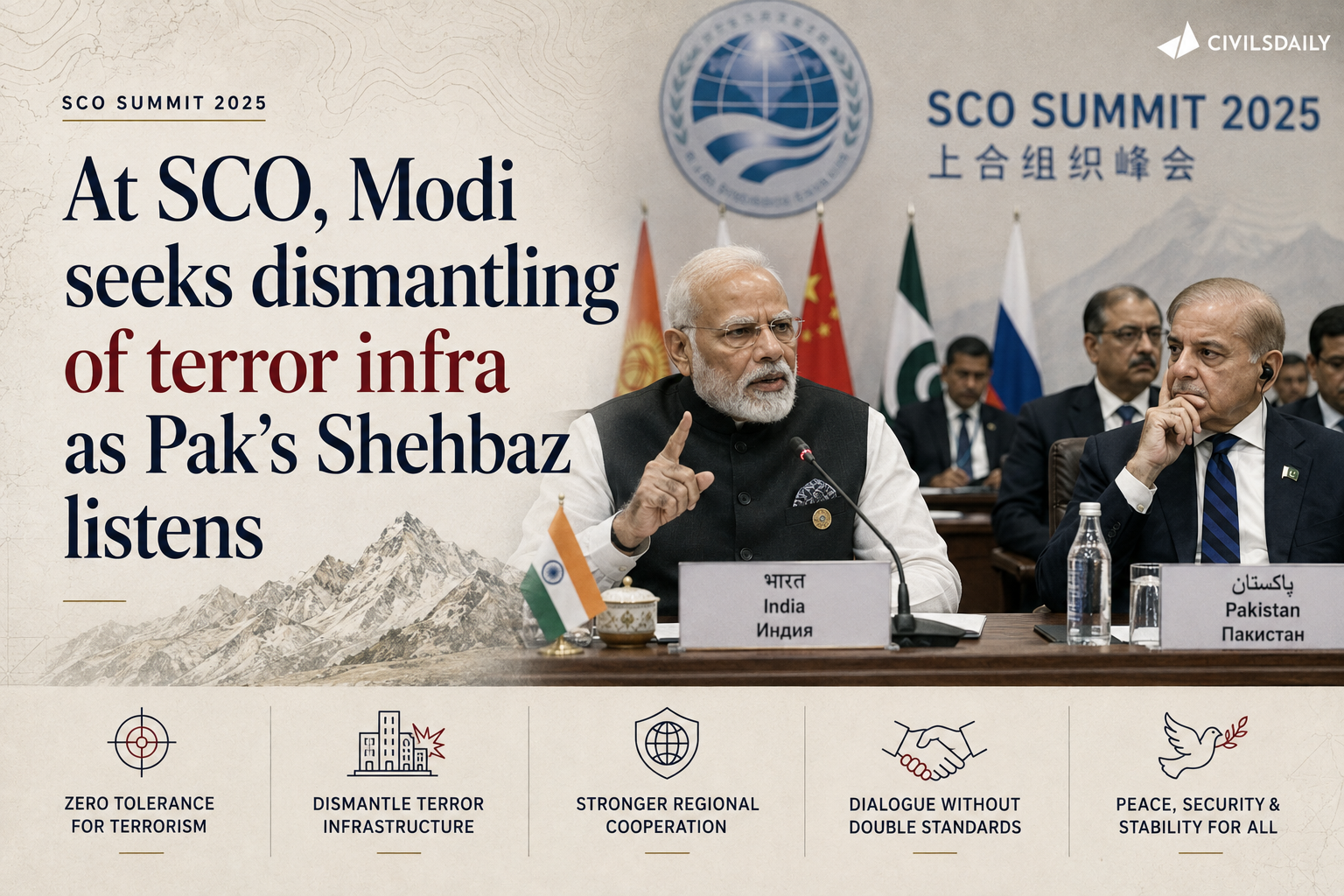
  • At SCO, Modi seeks dismantling of terror infra as Pak’s Shehbaz listens

    At SCO, Modi seeks dismantling of terror infra as Pak’s Shehbaz listens

    Why in the News

    The Prime Minister told the leaders of the Shanghai Cooperation Organisation (SCO) (the ten member Eurasian security grouping that includes India, Pakistan, China, Russia and Iran) that the crisis in West Asia demonstrates that a conflict in one region does not remain confined there. He said it impacts global energy security, maritime trade and supply chains, and that the Global South bears the brunt of the consequences.

    Why did India put the West Asia war at the centre of its SCO message?

    1. Security has widened: In an interconnected world the scope of security has expanded significantly, so a regional war becomes an energy, shipping and supply chain problem for every member.
    2. The meeting with Iran: Iran’s President was among the leaders at the summit. The Prime Minister met him on Monday, their first meeting since the start of the war.

    What did India demand on terrorism, and what gives the demand its weight?

    1. Beyond action and reaction: With Pakistan’s Prime Minister listening, the Prime Minister said terrorism remains a grave challenge for all of humanity and that the fight cannot be limited to a mere “action-reaction” mindset.
    2. Dismantle the whole ecosystem: He called for dismantling the entire ecosystem of terror financing, recruitment, radicalisation and safe havens, and for members to speak in one voice that there is no room for double standards.
    3. Terrorism as state policy: Countries that use terrorism as an instrument of state policy and shelter terrorists must be sent a strong message that terrorism cannot be a strategic asset for anyone.
    4. The Operation Sindoor antecedent: In May 2025, days after the Pahalgam terror attack, India launched Operation Sindoor, striking terror targets in Pakistan-occupied Kashmir and Pakistan. Four days of hostilities followed and ended with Pakistan seeking a ceasefire.
    5. The Tianjin precedent: At the SCO summit in Tianjin on August 31 and September 1 last year, the Prime Minister called the Pahalgam attack the “most heinous face of terrorism” and an open challenge to every nation, and said double standards on terrorism are unacceptable.

    What are the three pillars India set out for the SCO’s next 25 years?

    1. The framework: India’s vision for the SCO rests on three pillars, S for Security, C for Connectivity and O for Opportunity. Over 25 years the grouping built a tradition of dialogue across Eurasia, and the goal for the next 25 is to translate that cooperation into tangible results.
    2. Security: This pillar is the terrorism agenda set out above, carried as a demand on the grouping rather than as a bilateral grievance.
    3. Connectivity: Its scope must expand beyond roads, railways and air corridors to simplifying customs procedures, promoting digital documentation and enhancing the efficiency of logistics networks.
    4. Opportunity: The benefits of cooperation must directly reach people, with people-to-people ties at the heart of the next 25 years. The yardstick of success is new opportunities for youth, new markets for entrepreneurs, farmers benefiting from technology and improvement in citizens’ lives.
    5. Shared geography: As the world navigates uncertainty and instability, the task is to transform shared geography into shared opportunities.

    Why is connectivity the pillar that divides the members?

    1. Sovereignty as the condition: India supports all initiatives that connect markets, facilitate trade and open growth avenues, on the condition that respect for the sovereignty and territorial integrity of all nations is paramount, which it described as the core spirit of the SCO Charter.
    2. The Iran route: India wants to access Central Asia through Iran, since Pakistan has denied India overland transit to the region.
    3. The corridor objection: The China-Pakistan Economic Corridor is an irritant for India because it runs through territory India claims and so violates its territorial integrity and sovereignty.

    What follows the summit?

    1. The Delhi BRICS summit: The Chinese President and the Russian President attended, and the Prime Minister met them informally during the leaders’ group photograph. Both are expected at the BRICS summit in New Delhi on September 12 and 13.
    2. A Pakistan-hosted summit: Pakistan hosts the next SCO summit in 2027, and India’s participation will be watched closely by members of the grouping.

    Conclusion

    India has made no double standards on terrorism the price of its engagement with the SCO. The grouping’s next chair is the country that demand is aimed at. Two dates now test the position: the BRICS summit in New Delhi on September 12 and 13, where the same Chinese and Russian leaders reconvene, and the next SCO summit under the Pakistani chair, where India must decide whether and at what level to attend.

    [2026] Which of the following countries are members of the European Union?

    1. Belarus

    2. Poland

    3. Germany

    4. Switzerland

    (a) 1, 2 and 4 (b) 1 and 4 only (c) 2 and 3 (d) 2 and 4 only

  • Take Bishkek to BRICS

    Take Bishkek to BRICS

    Why in the News

    The Bishkek SCO summit offered India a preview of the challenges awaiting BRICS: balancing strategic autonomy, geopolitical rivalry, institutional cooperation and an increasingly diverse, difficult-to-align membership.

    Why is Central Asia’s diversification an opening for India?

    1. A region loosening one dependence: Central Asia was shaped by its Soviet past and still maintains economic links with Russia, but its five countries no longer treat Moscow as their sole partner.
    2. China, Iran and the Gulf as alternatives: The region now looks to China for trade, investment and infrastructure, and to Iran and the Gulf for access to the south. The ongoing conflict complicates the southern route.
    3. Shared security concerns: The region’s growing strategic importance and shared concerns, including terrorism, are what led India and all Central Asian states except Turkmenistan to establish strategic partnerships, which gives India standing before the summit began.

    How can India build connectivity without a land route?

    1. Geography blocks the direct routes: There is no overland access through Pakistan, and Afghanistan’s airspace remains beset by security risks. The absence of direct land access has constrained trade and wider economic and cultural engagement.
    2. Connectivity as strategic geography: Connectivity goes beyond roads and railways. It shapes the economic and strategic geography of Eurasia, so India must expand engagement in ways that overcome the limits geography imposes.
    3. Start with what does not travel by road: The starting point is products and services that do not depend on roads, namely services, digital systems and technological investments.

    Why is the SCO a weak platform for India’s terrorism agenda?

    1. What India asked for: The Prime Minister called on the international community to collectively dismantle the ecosystem of terror, including its financing and recruitment networks.
    2. The will has weakened: International political will against terrorism has weakened over the past year, and the forum reflects that shift.
    3. Pakistan’s recovered standing: Over the past year Pakistan has largely overcome its diplomatic isolation, and it is set to assume the SCO’s rotational chairmanship.
    4. A forum that could not agree on words: In June last year the SCO defence ministers could not agree on the references to terrorism in their joint statement.
    5. China’s financial weight: China possesses greater financial resources than any other member and is heavily investing in Central Asian infrastructure under the Belt and Road Initiative, which sets the forum’s centre of gravity.

    Why should bilateral ties be the objective inside a multilateral forum?

    1. Weight on individual partnerships: Given the forum’s limits, Delhi should place greater weight on its individual partnerships with member states.
    2. The Uzbekistan uranium agreement: The agreement with Uzbekistan on the long-term supply of uranium is a step in that direction.
    3. Multi-vector actors want options: Central Asian countries are emerging as multi-vector actors. They seek multiple options to improve market access rather than choosing between competing powers, and India should become one of those options.
    4. The forum as a venue: A multilateral forum like the SCO is best used to advance bilateral relationships, and that is the strategy to carry forward to BRICS as India prepares to host its 18th summit.

    Conclusion

    The SCO no longer delivers on India’s terrorism agenda, and geography limits what it can deliver on connectivity. What remains useful is the room the summit gives India to sign with individual member states. The test of that approach is whether the BRICS summit in New Delhi produces bilateral agreements of the Uzbekistan uranium kind rather than only a joint declaration.

    Back2Basics: Shanghai Cooperation Organisation

    1. Origin: Founded in 2001 in Shanghai, growing out of the Shanghai Five grouping of 1996 that settled border issues between China, Russia and three Central Asian states.
    2. Membership: Ten members, China, Russia, Kazakhstan, Kyrgyzstan, Tajikistan, Uzbekistan, India, Pakistan, Iran and Belarus. India and Pakistan joined in 2017, Iran in 2023 and Belarus in 2024.
    3. Structure: The Secretariat is in Beijing and the Regional Anti-Terrorist Structure is in Tashkent. The chairmanship rotates annually among members, and the chair hosts the next summit.

    “[2026, GS2, 10 marks] “IPMDA (Indo-Pacific Partnership for Maritime Domain Awareness) bridges the gap between India’s SAGAR (Security and Growth for All in the Region) vision and the Quad’s collective Indo-Pacific strategy.” Make a critical assessment of the statement focusing on IPMDA.”