Mains Ready By December. Smash Mains & Smash PYQ Admissions Open

GS Paper: GS2-18.Bilateral, regional and global groupings and agreements involving India and/or affecting India’s interests.

  • India seeks Tariff Elimination on key items in CEPA Talks with South Korea

    Why in the News?

    • India wants, South Korea to eliminate tariffs on items such as varieties of meat, milk, fruits, fish, stones, yarn, and petroleum products.
      • These items were previously exempted or protected against steep cuts in the India-Korea Comprehensive Economic Partnership Agreement (CEPA).

    What is CEPA?

    Details
    Definition A CEPA is a broad trade agreement that encompasses trade in goods and services, investments, intellectual property rights, and economic cooperation.
    Key Components
    • Trade in Goods: Reduction/elimination of tariffs and non-tariff barriers.
    • Trade in Services: Liberalization of service sectors.
    • Investment: Protection and promotion of investments.
    • Intellectual Property Rights (IPR): Strengthening protection of IPR.
    • Economic Cooperation: Collaboration on economic and technical aspects.
    • Dispute Resolution: Mechanisms for resolving disputes.
    Objectives
    • Enhance bilateral trade.
    • Promote investment.
    • Foster economic integration.
    • Encourage innovation and economic growth.
    Examples
    • India-Japan CEPA: Signed in 2011, focuses on tariff reduction, service trade liberalization, and investment promotion.
    • India-Mauritius CECPA: Effective from April 2021, includes provisions on trade in goods, services, and investment.
    • India-UAE CEPA: Entered into force on May 1, 2022
    Significance for India
    • Economic Growth: Provides new markets for Indian goods and services.
    • Job Creation: Increased trade and investment can create jobs.
    • Technological Advancements: Access to new technologies and best practices.
    • Strategic Partnerships: Strengthens economic and strategic ties.
    Challenges
    • Implementation Issues: Requires robust legal and institutional frameworks.
    • Domestic Industry Impact: Concerns about increased competition.
    • Regulatory Harmonization: Differences in regulatory standards can pose challenges.

    India-South Korea CEPA: A quick recap

    • The India-South Korea CEPA was signed in August 2009 and implemented in January 2010.
    • It covers trade in goods, investments, services, and bilateral cooperation.
    • Tariff Concessions:
      • India offered tariff elimination or concessions on 83.8% of tariff lines from South Korea.
      • While South Korea offered concessions on 93.2% of tariff lines.

    Upcoming Negotiations

    • Trade Deficit Focus: Narrowing the trade deficit with South Korea is high on India’s agenda.
    • Stakeholder Involvement: Indian industry stakeholders have been provided with a draft request list and asked to suggest more items for tariff cuts or propose deletions if needed.
    • Standards and Technical Barriers: The Department of Commerce has requested the industry to share issues related to SPS (Sanitary and Phytosanitary) and TBT (Technical Barriers to Trade) standards faced while exporting to South Korea.

    Back2Basics:

    Sanitary and Phytosanitary (SPS) Measures:

    • SPS measures are protocols implemented by countries to protect human, animal, and plant life from diseases, pests, and contaminants. 
    • These measures are primarily focused on ensuring the safety of food products and preventing the spread of diseases and pests across borders.
    • SPS measures must be based on scientific evidence and risk assessments to ensure they are appropriate and effective.
    • Examples: quarantine requirements for imported plants and animals, limits on pesticide residues in food, and import bans from regions affected by specific diseases.

    Technical Barriers to Trade (TBT):

    • TBT are regulations and standards related to product safety, quality, and environmental impact.
    • They aim to protect human health and safety, animal and plant life, the environment, and to prevent deceptive practices.
    • These measures should not create unnecessary obstacles to international trade and must be transparent and non-discriminatory.
    • Examples: Labeling requirements for food products, safety standards for electrical appliances, and environmental regulations for vehicle emissions.

    Major Issue: Trade Deficit Concerns

    • Trade Deficit Focus: Reducing the trade deficit with South Korea is a key discussion point for India.
      • Before CEPA (2007-09), India’s average exports to South Korea were $3.4 billion, with imports at $7.3 billion, leading to an average trade deficit of $4 billion.
    • Trade Statistics: In 2023-24, India’s imports from South Korea were $21.13 billion, while exports were only $6.41 billion.
    • Post-CEPA Data: After CEPA (2022-24), average exports increased to $7.1 billion, and imports surged to $19.9 billion, resulting in an average trade deficit of $12.8 billion.
    • GTRI Analysis: The Global Trade and Research Initiative (GTRI) report indicates a 220% increase in the trade deficit from the pre-CEPA period to the post-CEPA period.

    PYQ:

    [2015] The terms ‘Agreement on Agriculture’, ‘Agreement on the Application of Sanitary and Phytosanitary Measures’ and Peace Clause’ appear in the news frequently in the context of the affairs of the:

    (a) Food and Agriculture Organization

    (b) United Nations Framework Conference on Climate Change

    (c) World Trade Organization

    (d) United Nations Environment Programme

  • India achieves an ‘outstanding outcome’ in FATF mutual evaluation 2023-24 

    Why in the News?

    • India has achieved an outstanding outcome in the 2023-24 Mutual Evaluation by the Financial Action Task Force (FATF).
      • India is placed in the “regular follow-up” category, a distinction shared by only four other G-20 countries.

    FATF Evaluation:

    The reason behind India’s Achievements

    • High Level of Compliance: The FATF stated that India reached a high level of technical compliance with its requirements.
    • Effective Regimes: India’s AML (anti-money laundering), CFT (countering the financing of terrorism), and CPF (counter-proliferation financing) regimes achieved good results.
    • International Cooperation: Notable achievements include international cooperation, access to basic and beneficial ownership information, use of financial intelligence, and depriving criminals of their assets.

    Need Improvement

    • Non-Financial Sectors: The FATF noted that improvements are needed to strengthen the supervision and implementation of preventive measures in some non-financial sectors.
    • Prosecution Delays: India needs to address delays in concluding ML (money laundering) and TF (terrorist financing) prosecutions.
    • Non-Profit Sector Risks: Ensure CFT measures prevent the non-profit sector from being abused for TF, including conducting outreach to NPOs on their TF risks.

    Mitigation Efforts taken

    • Mitigating ML/TF Risks: FATF recognized India’s efforts in mitigating risks from ML/TF, including corruption, fraud, and organized crime.
    • Digital Economy Transition: Effective measures have been implemented to transition from a cash-based to a digital economy, reducing ML/TF risks.
    • JAM Trinity Implementation: The JAM (Jan Dhan, Aadhaar, Mobile) Trinity, along with stringent cash transaction regulations, has increased financial inclusion and digital transactions, making them more traceable.

    About Financial Action Task Force (FATF)

    • FATF was established in 1989 through the initiative of the G7 nations.
    • Its Secretariat is headquartered at the OECD headquarters in Paris, France.
    • FATF conducts 3 Plenary meetings during each of its 12-month rotating presidencies.
    • As of 2019, FATF consists of 37 member jurisdictions.

    India’s Engagement with FATF

    • Observer Status: India became an Observer at FATF in 2006, marking the beginning of its association with the organization.
    • Full Membership: On June 25, 2010, India officially became the 34th country to attain full membership in FATF, signifying its active participation and commitment to the organization’s objectives.

    Understanding the Mutual Evaluation Process

    • FATF’s mutual evaluation assesses countries’ frameworks against money laundering and terrorist financing, reviewing compliance with its 40 recommendations and effectiveness, resulting in a report with strengths, weaknesses, and improvement suggestions.

    FATF’s Evaluation of India

    • Comprehensive Assessment: FATF’s evaluation of India encompasses various aspects, including the nation’s legal framework, regulatory system, law enforcement efforts, and international collaboration.
    • Alignment with Global Standards: Central agencies in India have been actively working to ensure that the country’s anti-money laundering and counter-terrorism financing laws align with international standards and that their practical implementation is effective.

    Back2Basics: FATF Grey and Black List

    FATF maintains two primary lists to identify countries with deficiencies in their anti-money laundering and counter-terrorist financing (AML/CTF) regimes: the Grey List and the Black List.

    Grey List (Jurisdictions under Increased Monitoring): 

    It includes countries that have strategic deficiencies in their AML/CTF regimes but have committed to resolving these issues swiftly within agreed timeframes. These jurisdictions are subject to increased monitoring by the FATF. Ex. Turkey, Panama etc. (Pakistan and UAE have exited this list.)

    Impact:

    • Countries on the Grey List are required to work closely with the FATF to address the identified deficiencies.
    • Being on the Grey List can lead to economic repercussions such as reduced foreign investment and increased scrutiny from financial institutions and regulators globally.
    • The FATF regularly reviews the progress of these countries and updates the list accordingly.

    Black List (High-Risk Jurisdictions subject to a Call for Action): 

    It includes countries with significant strategic deficiencies in their AML/CTF regimes and have not made sufficient progress in addressing these issues. These jurisdictions are subject to a call for action to protect the international financial system from the risks emanating from these countries.

    Impact:

    • Countries on the Black List face severe economic and financial consequences. They are subject to enhanced due diligence and, in the most serious cases, counter-measures by FATF member states.
    • This listing can result in limited access to the international financial system such as IMF, World Bank; reduced foreign investment, and increased difficulty in conducting international business.

    Current Black List Countries:

    • North Korea
    • Iran
    • Myanmar (Burma) (added in February 2023)


    PYQ:

    [2021] Discuss how emerging technologies and globalisation contribute to money laundering. Elaborate measures to tackle the problem of money laundering both at national and international levels.

  • In great power rivalry across Eurasia, an opening for India 

    Why in the News?

    The significant upheaval caused by the increasing interdependence of European and Asian theatres is accompanied by the rise of influential middle powers. India can seize this opportunity to enhance its national power.

    Complex and Deepening Interconnections between European and Asian Security:

    • Asia’s Active Role in European Geopolitics: Unlike the colonial era, Asian states now actively influence the balance of power in Europe. Both Russia and Western Europe are engaging Asia to shape the narrative on the Ukraine war.
    • Asian Arms Supply to Europe: Asia has emerged as a major supplier of arms in European conflicts, with North Korea supplying ammunition to Russia and South Korean arms flowing to Ukraine.
    • Asian Agency in Great Power Dynamics: Putin’s visit to North Korea and Vietnam highlights the increased agency of Asian states in leveraging great power rivalries for their own strategic benefits.
    • Impact on Western Alliances: The increasing agency of Asian countries like North Korea and South Korea affects the dynamics of Western alliances, with the US seeking stronger ties with South Korea and Japan in response to Russia’s actions.

    Scope for a Strategic Window:

    • Increased Asian Maneuverability: Countries like Vietnam are skillfully balancing their relationships with China, the US, and Russia, enhancing their strategic autonomy and influence in the region.
    • Western Dilemmas: The US is facing challenges in balancing its strategic focus between Europe and Asia, with debates on whether to prioritize the Ukraine conflict or the challenge posed by China.
    • Europe’s Defence Responsibilities: Both Biden and Trump agree on the need for Europe to take greater responsibility for its own defense, urging Eurasian nations to balance Russia and China.
    • Opportunities for Middle Powers: Middle powers like India have a unique opportunity to enhance their national power and military capabilities through strategic partnerships with the US and its allies. This includes modernizing India’s defense industrial base and expanding arms production, crucial for achieving strategic autonomy.

    Way forward: 

    • Engage with Key Allies: India should Deepen strategic partnerships with the US, Japan, Australia, and South Korea to enhance security cooperation and joint defense initiatives. 
      • These partnerships can provide India with access to advanced military technology and training, as well as opportunities for joint exercises and intelligence sharing.
    • Leverage International Platforms: India must actively participate in international platforms like the Quad and the Coalition for Disaster Resilient Infrastructure (CDRI) to strengthen India’s role in regional security and disaster resilience efforts.

    Mains question for practice: 

    Q Discuss the complex and deepening interconnections between European and Asian security in the current geopolitical landscape. How can India leverage these dynamics to enhance its national power?  15M 

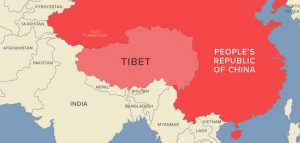
  • It’s time for India to reclaim its voice on Tibet

    Why in the News? 

    A U.S. lawmaker delegation’s visit to Dharamshala closely followed the passage of the ‘Promoting a Resolution to the Tibet-China Dispute Act’ in Congress, awaiting Biden’s approval.

    About the delegation on ‘Promoting a Resolution to the Tibet-China Dispute Act’ 

    • Legislative Background: The U.S. Congress passed the ‘Promoting a Resolution to the Tibet-China Dispute Act,’ emphasizing support for Tibetan autonomy and human rights. 
      • The delegation’s visit to Dharamshala, India, followed this legislative action to underscore U.S. commitment to Tibetan freedom.
    • Delegation Composition and Purpose: The delegation included bipartisan U.S. lawmakers who were co-authors of the Act, invited by the Central Tibetan Administration.
      • Their visit aimed to advocate for restarting dialogue between the Dalai Lama’s representatives and Beijing, stalled since 2010.
    • India’s Diplomatic Calculus: Hosting the U.S. delegation amidst ongoing tensions with China signals India’s nuanced diplomacy in managing its relations with both nations. 
      • It reflects India’s stance on Tibet as sensitive, balancing its traditional policy of non-interference with growing international scrutiny.
    • Geopolitical Implications: The delegation’s visit raises geopolitical questions about India’s sovereignty and diplomatic independence in the face of U.S.-China strategic competition.
      • It underscores India’s role in regional stability and global human rights discourse, impacting its strategic partnerships and international standing.

    Challenges and weaknesses involved        

    • Diplomatic Sensitivities: India faces challenges in balancing its historical support for Tibetan refugees with its current diplomatic relations with China, a crucial economic and strategic partner. 
      • Hosting U.S. lawmakers advocating for Tibetan autonomy could strain India-China relations, given Beijing’s sensitivity to international interference on Tibet-related issues.
    • Domestic Perception and Political Messaging: Allowing U.S. lawmakers to publicly advocate for Tibetan independence in India could be perceived domestically as compromising India’s stance on sovereignty and non-interference in internal matters. 
      • There is a risk of domestic backlash or political opposition questioning the government’s handling of sensitive foreign policy issues, particularly regarding Tibet and China.
    • Impact on Bilateral Relations: The visit and the Act may lead to diplomatic friction between India and China, potentially affecting bilateral cooperation in various domains, including trade, defense, and regional stability. 
      • China’s response to perceived foreign interference on Tibet could escalate tensions, impacting broader regional dynamics and India’s strategic autonomy.

    Future Scope (Way forward):

    • International Advocacy and Diplomatic Engagement: The U.S. delegation’s visit and advocacy for the Tibet-China Dispute Act highlight ongoing international interest and support for Tibetan autonomy. 
      • The future scope involves continued diplomatic engagement by global stakeholders to advocate for human rights and autonomy for Tibetans, potentially influencing China’s policies.
    • India’s Strategic Positioning: India may explore a nuanced approach to balance its historical support for Tibetan refugees with its current diplomatic relations with China. 
      • Future scope includes India asserting its stance on Tibet in international forums while managing bilateral relations with China to avoid escalation and maintain regional stability.

    Mains question for practice: 

    Q The recent visit of a delegation of U.S. lawmakers to Dharamshala, closely following the passage of the ‘Promoting a Resolution to the Tibet-China Dispute Act’ in the U.S. Congress, has brought forth significant diplomatic challenges and implications for India.15M

    Mains PYQ: 

    Q “The USA is facing an existential threat in the form of China, that is much more challenging than the erstwhile Soviet Union.” Explain. (UPSC IAS/2021)

  • US Seeks Accountability and Institutional Reforms from India Amid Pannun Issue

    Why in the News?

    India is considering potential institutional reforms in light of the Pannun issue and alleged assassination attempts.

    • The US Deputy Secretary emphasized the US seeks accountability from the Indian government and consistently requests updates on the investigation.

    What is the Pannun Case?

    The Pannun case involves an alleged foiled plot to assassinate Khalistani separatist Gurpatwant Singh Pannun on American soil. Here are the key points:

    Background:

    • Gurpatwant Singh Pannun, who holds dual citizenship of the US and Canada, is wanted in India on terror charges.
    • In November last year, US federal prosecutors charged Indian national Nikhil Gupta with working alongside an Indian government employee in the plot to kill Pannun in New York.
    • Following these allegations, India appointed a high-level inquiry committee to investigate the inputs provided by the US regarding the plot.

    US Position:

    • The US has consistently pressed India for updates on the investigation.
    • US Deputy Secretary of State emphasized seeking accountability from the Indian government and raised the issue directly at senior levels during discussions with Indian counterparts.
    • The US seeks transparency and accountability in the case.


    What is the Khalistan Conspiracy?

    • The Khalistan movement is a separatist movement aiming to establish a sovereign state called Khalistan (Land of the Khalsa) in the Punjab region of India and Pakistan.

    During the Khalistan movement, several significant events shaped its trajectory:

    1. Operation Blue Star (1984): The Indian government launched a military operation to flush out Sikh militants who had taken refuge in the Golden Temple complex in Amritsar. The operation resulted in heavy casualties and damage to the temple, leading to widespread anger among Sikhs.
    2. Assassination of Prime Minister Indira Gandhi (1984): In retaliation for Operation Blue Star, two Sikh bodyguards assassinated Prime Minister Indira Gandhi. This event triggered anti-Sikh riots across India, resulting in the deaths of thousands of Sikhs.
    3. 1985 Punjab Accord: The Indian government and moderate Sikh leaders reached an agreement known as the Punjab Accord. It aimed to address Sikh grievances by granting greater autonomy to Punjab and recognizing the Sikh identity. However, hardline separatists rejected this accord.
    4. Continued Violence (1980s): The 1980s witnessed violent clashes between Sikh militants and security forces. Bombings, assassinations, and attacks on civilians became common. The insurgency intensified, leading to a cycle of violence.
    5. Air India Flight 182 Bombing (1985): A bomb planted by Khalistani militants exploded on Air India Flight 182, killing all 329 passengers and crew. This remains one of the deadliest aviation-related terrorist acts in history.
    6. Decline and Suppression (1990s): By the early 1990s, the Khalistan movement lost momentum due to crackdowns by security forces, factionalism, and disillusionment among Sikhs. Many militants surrendered or were killed.


    Recent rise of events

    • Diaspora Influence: The Sikh diaspora, particularly in countries like the United States, Canada, and the United Kingdom, plays a significant role. These communities maintain strong ties to Punjab and actively advocate for Khalistan, using social media platforms to amplify their message.
    • Social Media: The widespread use of social media allows pro-Khalistan activists to connect, organize, and spread their ideology globally. Online platforms provide a powerful tool for mobilization and recruitment.
    • Leadership: Figures like Amritpal Singh have emerged as charismatic leaders, galvanizing support among disaffected Sikhs. Their influence extends beyond geographical boundaries, inspiring followers both in India and abroad.

    PYQ:

    [2016] Has the formation of linguistic states strengthened the cause of Indian unity?

  • ICC issues arrest warrants for Russian defence leaders 

    Why in the news?

    On Monday, June 24, the International Criminal Court (ICC) issued arrest warrants for former Russian Defence Minister Sergei Shoigu and current Chief of Staff of the Armed Forces Valery Gerasimov for “alleged international crimes” related to the Ukraine war.

    Who are the Russian leaders and what effect does the move have on them?

    • Sergei Shoigu: Former Russian Defence Minister, key ally of Putin, led the invasion of Ukraine in February 2022, removed from his post in May 2024.
    • Valery Gerasimov: Current Chief of Staff of the Armed Forces, Deputy Defence Minister since November 2012, seen as the most powerful man in the government after Putin and Shoigu.
    • Impact on Shoigu and Gerasimov: Both have suffered reputational damage since the war began, criticized by Russian nationalists for failing to swiftly win the war against Ukraine.

    What do the ICC charges say?

    • Charges Against Shoigu and Gerasimov: Directing attacks at civilian objects, causing excessive incidental harm to civilians or damage to civilian objects.
    • Responsibility: The two officials bear individual criminal responsibility for their actions, ordering the commission of crimes, and failing to exercise proper control over their forces.
    • Specific Acts: Missile strikes against Ukrainian electric infrastructure, constituting multiple acts against a civilian population.

    What is ICC?

    • Establishment: Headquartered in The Hague, Netherlands, established under the 1998 Rome Statute.
    • Purpose: Investigates and tries individuals charged with genocide, war crimes, crimes against humanity, and the crime of aggression.
    • Membership: 123 countries are party to the Rome Statute, including Britain, Japan, Afghanistan, and Germany. The USA, India, and China are not members.
    • Function: Prosecutes heinous offences when a country’s own legal system fails to act, unlike the ICJ which deals with inter-state disputes.
    • Jurisdiction: Limited to offences occurring after July 1, 2002, committed in a country that ratified the agreement or by a national of a ratifying country, or cases referred by the UN Security Council.

    Does ICC have the power to prosecute Russia?

    • Russia’s Stance: Kremlin spokesman Dmitry Peskov stated that any decision of the ICC was “null and void” due to Russia not being an ICC member.
    • Effect on Leaders: Putin and other leaders risk arrest if they travel to a state party to the ICC, which is obliged to arrest them under international law. This deepens Russia’s isolation from the West.
    • Ukraine’s Position: Ukraine is not a State Party to the Rome Statute but has accepted ICC’s jurisdiction over alleged crimes occurring on its territory under Article 12(3) of the Statute. This requires Ukraine to cooperate with the ICC without delay or exception.

    Conclusion: The ICC’s charges against Russian leaders highlight significant legal and geopolitical challenges, deepening Russia’s isolation and emphasizing the need for global accountability in addressing war crimes and international conflicts.

    Mains question for practice: 

    Q In light of the recent arrest warrants issued against Russian leaders, discuss the effectiveness and limitations of the ICC in prosecuting individuals from non-member states.15M

  • India- Bangladesh Bilateral Relations   

    Why in the news? 

    Shortly after Hasina commenced her two-day state visit to India, External Affairs Minister S. Jaishankar convened with her to discuss several bilateral matters.

    Bangladesh’s Prime Minister Sheikh Hasina’s Visit to India

    Purpose of Visit: To boost bilateral ties between India and Bangladesh.

    • Sheikh Hasina will hold talks with Prime Minister Narendra Modi.Meetings with President Droupadi Murmu and Vice President Jagdeep Dhankhar.
    • Bilateral cooperation in security, trade, commerce, energy, connectivity, science and technology, defence, and maritime affairs. Potential agreements in various sectors to enhance cooperation.

    India-Bangladesh Relations and the Teesta Water Dispute

    Bilateral Relations: 

    • Strategic Importance: Bangladesh is a key partner under India’s “Neighbourhood First” policy.
    • Trade: Bangladesh is India’s largest trade partner in South Asia. India is the second biggest trade partner of Bangladesh in Asia.
    • Connectivity: The Maitri Setu bridge over river Feni in Tripura and the Chilahati-Haldibari rail link are notable projects.
    • Development Partnership: Bangladesh is India’s largest development partner with significant commitments under the Line of Credit.
    • Border Cooperation: Active cooperation on police matters, anti-corruption activities, combating illicit drug trafficking, fake currency, and human trafficking.

    Teesta Water Dispute:

    • Controversy: The sharing of Teesta River water has been a contentious issue between India and Bangladesh, affecting bilateral relations.
    • Current Status: Discussions and negotiations are ongoing to reach a mutually acceptable agreement.

    Way Forward

    • Enhanced Bilateral Cooperation: Continue to strengthen ties through regular high-level visits and dialogues.
    • Resolution of Teesta Dispute: Focus on finding a fair and sustainable solution to the Teesta water-sharing issue to improve relations.
    • Economic Integration: Expand trade and investment opportunities to boost economic ties.
    • Infrastructure Development: Further develop connectivity projects to enhance trade and people-to-people exchanges.
    • Security Cooperation: Strengthen cooperation on security issues, including counter-terrorism and border management.
    • Cultural and Educational Exchanges: Promote cultural and educational exchanges to build stronger people-to-people ties.

    Mains PYQ:

    Q Critically examine the compulsions which prompted India to play a decisive role in the emergence of Bangladesh.(UPSC IAS/2013)

  • [21th June 2024] The Hindu Op-ed: The US-Saudi Agreement, from First-Bump to Embrace

    PYQ Relevance: 

    Q How will I2U2 (India, Israel, UAE and USA) grouping transform India’s position in global politics? (UPSC IAS/2022)

    Q Indian and USA are two large democracies. Examine the basic tenets on which the two political systems are based.(UPSC IAS/2018)

    Mentors’ comment: Over the past eight decades, the relationship between the United States and the Kingdom of Saudi Arabia has seen numerous highs and lows, from the 1973 oil embargo to the 2018 assassination of Jamal Khashoggi. Nonetheless, two iconic moments stand out in this history: the first is the meeting between U.S. President Franklin D. Roosevelt and Saudi King Abdul Aziz Al-Saud on Valentine’s Day 1945 aboard a U.S. cruiser, marking the start of seven decades of a steadfast bilateral relationship, grounded in a crucial “oil-for-security” arrangement. The second is the fist-bump on July 15, 2022, in Riyadh between U.S. President Joe Biden and Saudi Crown Prince Mohammed bin Salman (MbS), symbolizing a more balanced and largely transactional partnership.

    Let’s Learn!

    Why in the News?

    Riyadh and Washington are approaching a new and enhanced phase in their relationship, provisionally named the Strategic Alliance Agreement (SAA).

    Strategic Alliance Agreement (SAA): A move towards Reconciliation

    • Rumoured Agreement: Rumors suggest a new and enhanced U.S.-Saudi relationship is on the horizon, tentatively called the Strategic Alliance Agreement (SAA).
    • Objectives: This agreement aims to align MBS’s domestic and regional ambitions with the White House’s goal of securing a significant diplomatic achievement for President Biden’s re-election campaign.

    Components of the SAA

    • Bilateral Component: The SAA is expected to formalize the current alliance into a strategic defense pact, similar to the U.S.-Japan treaty, and include advanced military support such as F-35 fighters and nuclear technology for peaceful purposes.
    • Regional Component: Regionally, Saudi Arabia seeks a ceasefire in Gaza and progress towards a two-state solution to the Israel-Palestine conflict. In return, the U.S. wants Saudi Arabia to recognize Israel and limit its ties with Beijing and Moscow.
    • Global Component: The global aspect would likely involve cooperation on international security and economic initiatives.

    Economic Underpinnings

    • Economic Significance: While the U.S. is no longer reliant on Saudi oil, the economic aspects of the SAA are expected to be substantial. 
    • Aligning with MBS’s Vision: The agreement would likely ensure significant participation of American companies in Saudi projects under MBS’s Vision 2030.

    Strategic Motivations

    • Countering Chinese Influence: China’s increasing influence in Saudi Arabia, marked by President Xi Jinping’s 2022 visit, has prompted the U.S. to strengthen its ties with Riyadh.
    • Saudi Arabia’s Importance: Despite the changing dynamics, Saudi Arabia remains crucial due to its religious significance, economic strength, and MBS’s leadership.

    Challenges to the SAA

    • Mistrust and Policy Inconsistencies: A decade of growing mistrust between the U.S. and Saudi Arabia, exacerbated by perceived U.S. inaction and policy inconsistencies, poses a significant challenge.
    • Gaza Conflict: The ongoing Gaza conflict makes it politically challenging for Saudi Arabia to reconcile with Israel, a key condition for U.S. Senate approval of the SAA.

    Regional Dynamics

    • Recent Events: Recent regional events, including the Hamas attack on Israel and Saudi Arabia’s diplomatic moves, can be viewed through the SAA lens.
    • Potential Outcomes: The quest for the SAA is a race against time, with potential outcomes ranging from a full agreement reinforcing U.S. influence to a region remaining in turmoil.

    India’s Perspective

    • Significant Stakes: India has significant stakes in the region and needs to monitor the emerging SAA closely.
    • Enhancing Stability: A successful SAA could enhance regional stability, create economic opportunities, and support India’s strategic interests, including the India-Middle East-Europe Economic Corridor.
    • Independent Policy: India should continue to pursue its “Act West” policy independently of the developments in the U.S.-Saudi relationship.

    Conclusion: The potential Strategic Alliance Agreement (SAA) between the U.S. and Saudi Arabia represents a significant shift in international relations, reflecting evolving geopolitical dynamics and mutual strategic interests. This agreement could solidify a more transactional and pragmatic partnership, balancing regional stability and global security concerns.However, significant challenges remain, including deep-seated mistrust and the complex geopolitical landscape shaped by ongoing conflicts and rivalries. 

    https://www.thehindu.com/opinion/lead/the-us-saudi-agreement-from-fist-bump-to-embrace/article68312935.ece

  • In news: G-7 Outreach Summit Apulia, Italy 

    Why in the News?

    • PM Modi was placed at centre stage for a group photograph at the G-7 Outreach Summit held in Italy.
      • This marks India’s 11th participation in the G7 Summit and PM Modi’s fifth consecutive attendance.

    About G-7 (Group of Seven)

    • The G7 is an informal bloc of industrialized democracies comprising the United States, Canada, France, Germany, Italy, Japan, and the United Kingdom (UK).
    • It convenes annually to address global economic governance, international security, and more recently, issues related to artificial intelligence (AI).
    • Formation and Expansion:
      • Originally formed as the Group of Six in 1975 by the United States, France, Italy, Japan, the UK, and West Germany, with Canada joining in 1976.
      • It was formed as a result of the oil crisis to stabilize global economic policies and international relations.
      • The group’s formation coincided with the challenges of the Cold War era, aiming to address economic concerns such as inflation and recession exacerbated by the OPEC oil embargo.
    • Key statistics about G7 countries:
      • Wealth: They control 60% of the global net wealth.
      • Growth: They drive 46% of the global GDP.
      • Population: They represent 10% of the world’s population.

    Russia’s Joining and Suspension

    • Russia joined in 1998, transforming it into the G8, aimed at enhancing its international prestige and fostering closer ties with Western nations.
    • Russia was suspended in 2014 following its annexation of Crimea, leading to ongoing tensions and challenges with both Russia and increasingly, China.

    Functioning of the G7

    • Unlike formal institutions like the United Nations or NATO, the G7 lacks a charter and secretariat.
    • Its presidency rotates annually (Canada in 2025), responsible for setting the agenda and logistical arrangements for the summit.
    • Policy initiatives are crafted by ministers and envoys known as Sherpas, who prepare discussions and agreements before the annual gathering.
    • Non-member countries are occasionally invited to participate in G7 meetings.

    Why G7 needs India?

    • Economic Significance and Democratic Stability: India’s regular participation in G7 meetings highlights its economic importance and stable democratic framework.
    • Rising Economic Power: With India poised to become the world’s fourth-largest economy, its involvement in global issues is increasingly crucial.
    • Leadership in the Global South: Modi’s initiatives, such as the Voice of the Global South Summit, have bolstered India’s global standing.
    • G20 Presidency: India’s recent presidency of the G20 demonstrated its ability to build consensus on contentious global issues.
    • Neutrality and Strategic Partnerships: India’s neutral stance on Western concerns over China’s actions in the South China Sea and its economic policies enhances its partnership with G7 nations.
    • Balancing with Russia and the West: As the West confronts Russia over Ukraine, India’s neutral stance positions it as a key ally while maintaining diplomatic balance.

    Divergence within G7

    • Geopolitical Tensions: The G7 nations often face disagreements and tensions over geopolitical matters, such as responses to Russian aggression, conflicts in regions like Ukraine, and strategic alliances with emerging economies.
    • Economic Policies: Economic policies and trade relations are frequent topics of debate within the G7. Issues include trade tariffs, market regulations, financial stability, and economic cooperation in the face of global economic challenges.
    • Climate Change: Addressing climate change and achieving environmental sustainability are critical concerns for the G7. Discussions typically focus on climate action commitments, renewable energy investments, and international cooperation on climate policies.
    • Security and Defense: Security and defence cooperation, including responses to global terrorism, cybersecurity threats, and military alliances, are important agenda items for the G7.
    • Technology and Innovation: Managing technological advancements, including AI regulation, digital governance, cybersecurity standards, and technological innovation policies, is another area of focus.
    • Social Issues: Social issues such as gender equality, human rights, immigration policies, and global development aid are also part of the G7 agenda, reflecting broader societal concerns and international commitments.

    PYQ:

    [2020] In which one of the following groups are all four countries members of G20?

    (a) Argentina, Mexico, South Africa and Turkey

    (b) Australia, Canada, Malaysia and New Zealand

    (c) Brazil, Iran, Saudi Arabia and Vietnam

    (d) Indonesia, Japan, Singapore and South Korea

  • The last continent must remain a pristine wilderness

    Why in the news?

    The 46th Antarctic Treaty Consultative Meeting (ATCM-46), held in Kochi, Kerala last month, brought attention to the ongoing debate regarding Antarctic tourism.

    Highlights of the 46th Antarctic Treaty Consultative Meeting (ATCM-46) in Kerala

    • Focus on Developing a Regulatory Framework: ATCM-46 emphasized the need for a comprehensive, flexible, and dynamic framework for regulating tourism and non-governmental activities in Antarctica. A new working group was established to lead this effort over the next year, highlighting a renewed commitment to addressing tourism challenges in the region.
    • Recognition of Environmental Concerns: The meeting acknowledged the significant environmental impacts of increasing tourism, including disruptions to wildlife, ecosystem damage, and pollution. There was a consensus on the urgency of mitigating these impacts through stronger regulatory measures and enhanced monitoring programs.
    • India’s Proactive Stance: India played a crucial role in emphasizing the importance of monitoring tourism impacts on Antarctic research, conservation, and the environment. India supported measures against constructing tourism-related structures with significant environmental impacts and showcased its commitment by enacting its own Antarctic Law in 2022 to regulate activities and protect the Antarctic environment.

    Gaps in the Regulatory Framework

    • Lack of Specific Regulations: The current governance framework for Antarctic tourism is fragmented and lacks specific regulations. The Antarctic Treaty (1961) prioritises peaceful use and scientific research, while the Madrid Protocol offers broad environmental guidelines but lacks detailed tourism regulations.
    • Self-Regulation by IAATO: The International Association of Antarctica Tour Operators (IAATO), a self-regulatory industry body, is primarily responsible for the day-to-day management of tourism. Many believe that IAATO’s guidelines are inadequate to address the growing environmental pressures.
    • Consensus Rule Limitations: The requirement for unanimous agreement from all consultative parties often slows down decision-making and allows national interests to impede progress. This has resulted in non-binding guidelines rather than comprehensive regulation.
    • Failed to make consensus on tourism: Discussions on tourism regulation have been ongoing since the 1960s. A proposed tourism annexe in 1991 failed to gain consensus, leading to the current reliance on IAATO’s self-regulation. Despite the increasing frequency of discussions since a 2004 expert meeting, comprehensive regulation has remained elusive.

    India’s Stand on Tourism Issues

    • Emphasis on Monitoring: India has consistently emphasised the importance of monitoring the impacts of tourism on Antarctic research, conservation, and the environment. This was highlighted at ATCM 44 (2022) and reinforced at ATCM-46.
    • Opposition to Environmental Impact: India supported Resolution 5 (2022), which advised against building tourism-related structures with significant environmental impacts. This stance reflects India’s commitment to minimising the environmental footprint of tourism in Antarctica.
    • Call for Comprehensive Debate: Between ATCM 44 and ATCM 45, India continued to call for a comprehensive debate on Antarctic tourism, stressing the need for governance action.
    • Enactment of Antarctic Law: Despite the lack of international consensus, India took proactive steps by enacting its own Antarctic Law in 2022. This law aims to regulate activities and safeguard the Antarctic environment from the impacts of tourism.
    • Focus on Sustainable Future: At ATCM-46, India advocated for a multi-pronged approach to ensure a sustainable future for Antarctic tourism. This includes strengthening environmental protection, implementing robust monitoring programs, and fostering international cooperation to preserve Antarctica’s pristine wilderness.

    Conclusion: Countries need to work together to create a robust international regulatory framework that addresses the unique challenges of Antarctic tourism. This involves building on the efforts initiated at ATCM-46 and ensuring that the newly established working group develops comprehensive, binding regulations that all parties can agree upon and implement.

    Mains PYQ:

    Q The states of Jammu and Kashmir, Himachal Pradesh and Uttarakhand are reaching the limits of econological carrying capacity due to tourism. Critically evaluate.(UPSC IAS/2015)