💥Join UPSC 2027,2028 Mentorship (July Batch) + XFactor Notes & Microthemes PDF

GS Paper: GS1-02.Modern Indian History- Mid-18th century – Present (significant events, personalities, issues);

  • Karnail Singh Isru’s contribution in Goan Liberation

    karnail

    Central Idea

    • Karnail Singh Isru, a valiant activist, is remembered with reverence and admiration on India’s Independence Day.
    • He made the ultimate sacrifice while participating in the Goa Liberation Movement, striving for the state’s accession to India.

    Who was Karnail Singh Isru?

    • Birth and Childhood: Born on September 9, 1930, in Chak 30 village (now in Pakistan), Isru lost his father at a young age and was raised by his mother. His upbringing was marked by a strong sense of justice and a longing for freedom.
    • Inspired by National Heroes: Isru’s admiration for national heroes like Bhagat Singh and Udham Singh, along with their dedication to the freedom movement, ignited a fire within him. Their struggle against colonial oppression left a deep impact on his young mind.

    Joining the Goa Liberation Movement

    • Formation of Ideals: Isru’s involvement in student activism and his presidency of the student union highlighted his commitment to social justice. He joined the Communist Party of India (CPI) and embraced rationalist ideals.
    • Goa Liberation Movement: In the 1950s, despite India’s independence, the territories of Goa, Daman and Diu, and Dadra and Nagar Haveli remained under Portuguese rule. CPI sent Satyagarhis, followers of Gandhian principles, to Goa to hoist the Indian flag on Independence Day.

    His Fateful Journey

    • Sahodrabai Rai’s Leadership: Isru, alongside other Satyagarhis, embarked on the march towards Goa under the leadership of Sahodrabai Rai. They aimed to challenge colonial rule and establish India’s sovereignty in the region.
    • Tragedy Strikes: As they entered the Patradevi village in North Goa, Portuguese forces opened fire on the Satyagarhis. Isru’s unwavering determination led him to the forefront, but tragically, he was struck by a bullet in his chest. His sacrifice was a significant moment in the fight for Goa’s liberation.

    Legacy and Remembrance

    • Tributes in Punjab: Isru’s memory is etched in the heart of Punjab, where the government and political parties organize annual functions to honor his sacrifice. A statue, library, park, and school bear his name, reflecting the respect he commands.
    • Recognition in Goa: In Goa, a bronze bust of Isru was installed in the primary school of Patradevi village, commemorating his sacrifice. His bravery and dedication are a source of inspiration for generations.

    Also read:

    In news: Goa Liberation Day

  • IPC is history: In 1837, how Macaulay cracked the code

    What’s the news?

    • On the final day of the Monsoon Session, Home Minister Amit Shah unleashed a surprising and profound transformation of India’s criminal justice system.

    Central idea

    • The introduction of three key Bills in the Lok Sabha signals a pivotal departure from the colonial-era approach to criminal laws. The intent to supplant the archaic Indian Penal Code (IPC) of 1860, the Evidence Act of 1872, and the Code of Criminal Procedure (CrPC) of 1973 aims to usher in relevance, simplicity, and expedited justice.

    Three Key Bills

    • Bharatiya Nyaya Sanhita Bill:
    • This bill aims to replace the colonial-era Indian Penal Code (IPC) of 1860.
    • The IPC defines crimes, sets out their elements, and prescribes corresponding penalties.
    • The proposed Bharatiya Nyaya Sanhita Bill seeks to revamp the existing penal code to ensure it aligns with contemporary values and caters to the needs of modern society.
    • Bharatiya Nagarik Suraksha Sanhita Bill:
      • This bill is presented alongside the others and intends to replace the Code of Criminal Procedure (CrPC) of 1973.
      • The CrPC outlines procedures related to the administration of criminal justice, including aspects like investigation, arrest, bail, trial, and sentencing.
      • The Bharatiya Nagarik Suraksha Sanhita Bill’s primary objective is to streamline these procedures, enhance efficiency, and ensure the equitable treatment of all citizens under the law.
    • Bharatiya Sakshya Bill:
      • The third bill aims to replace the Indian Evidence Act of 1872.
      • The Indian Evidence Act governs the rules of evidence in legal proceedings, including what can be presented as admissible evidence and how it should be evaluated.
      • The proposed Bharatiya Sakshya Bill seeks to modernize and adapt the rules of evidence to current legal requirements, making the legal process more effective and transparent.

    The need for codification

    • Complex Legal Landscape: The intricate mix of legal sources—parliamentary charters, Acts, Regulations, customary laws, and religious laws—led to confusion, contradictions, and inconsistencies.
    • Administrative Challenges: The need for effective governance under expanding British colonial control was hindered by fragmented legal systems, causing disorder and unequal justice.
    • Clarity and Predictability: The absence of a unified legal framework caused uncertainty for citizens and administrators, lacking clear guidelines for legal matters.
    • Efficiency in Governance: Codification streamlined administration, enabling efficient enforcement, and consistent application of laws.
    • Enhancing the Rule of Law: Codified laws ensured fairness, transparency, and accessibility, upholding the rule of law more effectively.
    • Eliminating Contradictions: A uniform code resolved inconsistencies and conflicts among different legal systems, ensuring equitable treatment.

    Rationale behind the new bills

    • Eliminating Colonial Influence: The current laws, such as the Indian Penal Code (IPC) of 1860, carry a British colonial stamp. The new bills aim to discard this colonial legacy and establish laws that are truly representative of the needs and aspirations of the Indian population.
    • Relevance to Modern Society: The colonial-era laws were formulated in a different historical context and might not effectively address the complexities of contemporary Indian society. The new bills intend to update and adapt the legal framework to align with present-day realities.
    • Enhancing Justice for Citizens: The colonial laws were primarily designed to protect British interests. The new bills seek to prioritize the interests of common Indian citizens, ensuring that the justice system serves their needs and rights.
    • Simplification and Speedy Justice: The new bills aim to simplify legal procedures, making them more accessible and understandable. This simplification is expected to expedite legal processes, ensuring a quicker delivery of justice.
    • Adapting to Technological Advancements: Rapid technological progress has introduced new dimensions to crime and evidence. The new bills are likely to address cybercrime, digital evidence, and other technological challenges in the modern context.
    • Aligning with Contemporary Values: The bills aim to incorporate modern values, human rights principles, and global legal standards into the legal framework. This ensures that the laws are relevant, progressive, and in harmony with present-day societal values.
    • Removing Outdated Provisions: Over time, some provisions of the colonial laws might have become obsolete or irrelevant. The new bills aim to remove or modify such provisions to ensure a more coherent and effective legal framework.

    How did the rebellion of 1857 influence the fate of the IPC?

    • Initial Delays and Resistance: Despite Macaulay’s efforts to draft the IPC, its enactment faced hurdles. The project encountered governmental inertia, resistance from European residents who opposed having the same legal status as indigenous populations, and a loss of momentum for reform.
    • Governors-General’s Opposition: Governors-General like Auckland and Ellenborough opposed reforms, considering them unnecessary. This opposition reflected a reluctance to change the existing legal framework and resisted codifying the legal system.
    • East India Company Rule: The governance of India was under the control of the East India Company rather than the British Crown. This administrative structure affected the decision-making process and the pace of legal reforms.
    • Impact of the Rebellion of 1857: The Rebellion of 1857 (also known as the Indian Mutiny or the Sepoy Mutiny) was a widespread uprising against the East India Company’s rule. It challenged the authority of the Company and led to significant consequences.
    • Change in Ruling Authority: The Rebellion marked the decline of the East India Company’s control. In 1858, the British Crown assumed direct control over India, ending the Company’s rule. This transition from Company rule to direct Crown rule was a significant historical shift.
    • Crisis of Legitimacy: The Rebellion and its aftermath raised a crisis of legitimacy for colonial rule. The British claim to enlightened and just governance was seriously undermined by the harsh reprisals and brutal actions taken in response to the Rebellion.
    • Impact on British Perception: The British political classes became aware of the damage caused to the legitimacy of British rule due to the repressive responses to the Rebellion. The principles of constitutionalism and the rule of law, which formed the basis of British governance claims, were called into question.
    • Enactment of the IPC: In this context, the enactment of the IPC was seen as a means to address legitimacy concerns. The codification of laws was considered a step towards presenting a more just and orderly legal system, aiming to restore confidence in British rule’s claims of legality and fairness.

    Macaulay’s complex role in shaping India’s legal landscape

    • Macaulay’s Role in Charter Act Debates: During the deliberations of the 1833 Charter Act in the UK Parliament, Macaulay played a significant role in advocating for a uniform legal code for India.
    • Advocating Uniformity and Certainty: Macaulay passionately argued that India needed a legal system characterized by uniformity where possible; diversity where necessary, and certainty in all cases. This approach would provide clarity and consistency in legal matters.
    • Advantage of Absolute Governments: Macaulay believed that the ability to establish a comprehensive legal code was a distinct advantage of absolute governments over popular ones. This viewpoint underscored his belief in the efficacy of centralized legal reforms.
    • Desire for a Role in India: While advocating for the uniform code, Macaulay subtly indicated his interest in securing a role as a law member in India. He recognized the potential financial benefits that such a position could bring.
    • Financial Motivations: Macaulay’s interest in the law member role was driven by financial considerations. He anticipated a substantial salary and the prospect of accumulating wealth during his tenure in India, which would significantly improve his financial situation.
    • Impactful Arrival in India: Macaulay’s arrival in India in 1834 marked the beginning of his active involvement in the legal and legislative affairs of the country. His subsequent contributions and initiatives left a lasting impact on India’s legal landscape.

    Conclusion

    • While Macaulay’s legacy carries both praise and censure, his codification journey serves as a foundation for the ongoing transformation. As the new Bills navigate legislative processes, India must remain committed to justice that transcends punitive measures and embodies equity, accessibility, and modern relevance.


  • Quit India Movement Day on 9th August

    quit india

    Central Idea

    • On August 9, 1942, India embarked on a historic journey towards independence by launching the Quit India Movement.

    Genesis of Quit India Movement

    • Gandhi’s Ultimatum: On August 8, 1942, Mahatma Gandhi issued a powerful ultimatum to the British Raj, urging them to “Quit India.” With the entire Congress leadership imprisoned, the people were galvanized to take matters into their own hands.
    • People-Powered Movement: The Quit India Movement was an authentic display of people’s determination. The call for “Do or Die” echoed in the hearts of millions who rallied on the streets, marking a turning point in the struggle.
    • Massive Scope: The movement’s magnitude was unprecedented, surpassing previous uprisings. India’s masses united to demand complete freedom, showcasing their unwavering commitment to breaking free from colonial shackles.

    Birth of the Slogan ‘Quit India’

    • Yusuf Meherally’s Contribution: The catchphrase “Quit India” was coined by Yusuf Meherally, a socialist leader and Mayor of Bombay. He had earlier coined the slogan “Simon Go Back” in 1928 during another anti-colonial agitation.

    Precursors to the Movement

    • Failure of Cripps Mission: While factors leading to such a movement had been building up, matters came to a head with the failure of the Cripps Mission. With WW2 raging, the beleaguered British government needed the cooperation of its colonial subjects. With this in mind, in March 1942, a mission led by Sir Stafford Cripps arrived in India to meet leaders of the Congress and the Muslim League.
    • Betrayal on WW2 Promises: The idea was to secure India’s whole-hearted support in the war, and the return offer to Indians was the promise of self-governance. But things did not go that way.
    • No complete freedom: Despite the promise of “the earliest possible realisation of self-government in India”, Cripps only offered dominion status, not freedom.
    • Unviable partition plan: Also, there was a provision for the partition of India, which was not acceptable to the Congress.

    Outcomes: Gandhi’s Strategic Shift

    • From Non-Violence to Action: The failure of the Cripps Mission compelled Gandhi to shift from non-violent means to active resistance. The Congress, though initially hesitant to disrupt wartime efforts, embraced mass civil disobedience as a means to achieve freedom.
    • The “Do or Die” Call: On August 8, 1942, Gandhi addressed a massive gathering in Bombay’s Gowalia Tank maidan. He proclaimed the potent mantra of “Do or Die,” pledging India’s resolve to secure freedom at any cost.

    Course of Events and Popular Uprising

    • People’s Resilience: The arrest of Congress leaders failed to quell the movement. Ordinary Indians across cities and towns took charge, engaging in acts of civil disobedience, strikes, and protests.
    • Working-Class Participation: Railway tracks were blocked, students boycotted schools, and mill workers across cities joined the movement. Bridges were destroyed, and government symbols were targeted.
    • Violent Phase: The movement escalated to a violent phase, marked by the destruction of infrastructure and defiance of government authority. This time, Gandhi dint resist for violence.

    Suppression and Unyielding Passion

    • Brutal Crackdown: The British responded with violence, inflicting casualties, imprisoning thousands, and imposing severe fines. Villages were burned, and repressive measures were enforced.
    • Transformative Impact: Despite being suppressed, the Quit India Movement transformed the freedom struggle’s character. The masses’ fiery passion and unprecedented intensity illuminated the path to India’s imminent independence.

    Conclusion

    • The Quit India Movement remains etched in history as a symbol of India’s unyielding spirit and collective determination to overthrow colonial rule.
    • The movement’s legacy lives on, inspiring generations to uphold the ideals of freedom, justice, and national pride.

    Try this PYQ:

    Q. Quit India Movement was launched in response to:

    (a) Cabinet Mission Plan

    (b) Cripps Proposals

    (c) Simon Commission Report

    (d) Wavell Plan


    [wpdiscuz-feedback id=”x8jq58et8v” question=”Please leave a feedback on this” opened=”1″]Post your answers here.[/wpdiscuz-feedback]

  • History of Pepper Trade from India

    pepper

    Central Idea

    • Pepper, often referred to as the “king of spices,” played a pivotal role in driving exploration, colonization, and cultural exchanges between the East and West.

    Early Origins and Mystique of Pepper

    • Luxury Commodity: Pepper, once considered a luxury good, was produced predominantly along India’s Malabar Coast and was shrouded in secrecy and legend. European Christians believed it came from the mythical land of “Prester John,” while Arabs, who controlled the trade, believed it grew behind waterfalls guarded by fire-breathing dragons.
    • Ancient Trade: Archaeological evidence indicates that pepper was consumed in ancient India as early as 2000 BCE. It was exported to other parts of Asia and North Africa, with the mummified remains of Ramesses the Great from 1213 BCE found with peppercorns in Egypt.
    • Arab Dominance: By the 10th century, Arab traders held a virtual monopoly on the spice trade, connecting India with the Middle East, Africa, and Europe, controlling supply and prices.

    Pepper’s Role in Global Commerce

    • Currency and Rent: Pepper became so valuable that it was used as currency and rent in various parts of the world. For example, in 408 BCE, the King of Visigoths demanded 3,000 kilograms of pepper as part of the siege of Rome.
    • Spices and the Age of Discovery: The European craving for spices, particularly pepper, was a driving force behind the Age of Discovery. Christopher Columbus discovered the Americas in search of India, while Vasco da Gama found the route to India around the Cape of Good Hope.
    • Portuguese and Dutch Dominance: The Portuguese initially controlled the spice trade from the Malabar region but were unable to dominate the pepper-producing areas. The Dutch East India Company monopolized the sale of pepper and challenged Portuguese supremacy.
    • English East India Company: Queen Elizabeth I granted the English East India Company the right to trade in the East Indies in 1600. The Company’s expeditions marked the foundation of the English colonial presence in India.

    Cultural Exchanges and Islam’s Spread:

    • Malabar’s Trading Legacy: The Malabar Coast, known as “the city of spices,” served as a hub for international trade. The Zamorin welcomed traders from various cultures, including Jewish, Christian, and Muslim communities.
    • Islamic Influence: The pepper trade helped spread Islam across regions, extending from East Africa to southern China. Malabar witnessed a significant Islamic presence going back almost a thousand years.

    Pepper’s Evolution and Legacy

    • From Luxury to Staple: Improved production techniques and cultivation in tropical regions led to pepper becoming a household staple. Its significance in driving exploration and colonial empires remains a significant part of world history.

    Conclusion

    • Pepper’s journey through history reflects the transformative power of trade and the influence of commodities in shaping the world.
    • Once a prized luxury, pepper became a driving force behind exploration, colonization, and cultural exchanges between East and West.
    • Its significance as a global commodity and the desire to control its trade shaped the course of history, and its legacy as a vital spice endures in our daily lives.
  • Person in news: Anna Bhau Sathe

    anna bhau sathe

    Central Idea

    • Telangana CM has expressed a desire to see social reformer, writer, and folk poet Anna Bhau Sathe honoured with the prestigious Bharat Ratna award.

    Who was Anna Bhau Sathe?

    • Anna Bhau Sathe, born Tukaram Bhaurao Sathe on August 1, 1920, in Maharashtra’s Wategaon village, emerged as a prominent figure in the field of literature, poetry, and social activism.
    • His journey from humble beginnings in a Dalit family to becoming a prolific writer and folk poet is a testament to his indomitable spirit and commitment to social reform.

    Early Life and Struggles

    • Mumbai Sojourn: In 1930, Sathe’s family moved to Mumbai, where he worked as a porter, hawker, and cotton mill helper, enduring the hardships of working-class life.
    • Labour Activism: His participation in the 1934 workers’ strike, led by the Lal Bawta Mill Workers Union, marked the beginning of his engagement in labor and social issues.
    • Learning to Read and Write: Denied schooling due to his Dalit identity, Sathe joined labor study circles where he learned to read and write.

    Evolution as a Writer

    • Early Poetry: His first poem, focusing on the menace of mosquitoes in the labour camp, laid the foundation for his future creative endeavours.
    • Cultural Group: Sathe formed the Dalit Yuvak Sangh, a cultural group that composed poems reflecting workers’ protests and agitations.
    • Influence of Progressive Writers: The Progressive Writers Association’s national formation, with writers like Premchand and Faiz Ahmad Faiz, exposed him to translated Russian works, inspiring him to write plays, stories, and novels.

    Wide-ranging Impact of His Work

    • Spreading Awareness: Together with his group, Sathe travelled across Mumbai, raising awareness about workers’ rights and social issues.
    • Prolific Output: Over 49 years, he authored 32 novels, 13 collections of short stories, four plays, a travelogue, and 11 ballads (povadas).
    • Cinematic and International Recognition: Several of his works were adapted into films, and some were translated into other languages, including Russian. His “Bangalchi Hak” was presented at London’s Royal Theatre.
    • Depiction of Social Realities: Sathe’s literature delved into the caste and class realities of Indian society during his time.

    Left-leaning Ideology and Russian Connection

    • Influence of Marxism: While influenced by Marxism, he also depicted the harsh realities of the caste system in his work.
    • The Lal Bawta Kala Pathak: In 1943, Sathe founded this group, which toured Maharashtra, performing programs on caste atrocities, class conflict, and workers’ rights.
    • Dedication to Dr. Ambedkar: His most famous novel, “Fakira,” was dedicated to Dr. B.R. Ambedkar, reflecting his commitment to the Dalit cause.

    Russian Inspiration

    • Maxim Gorky’s Influence: Often referred to as the “Maxim Gorky of Maharashtra,” Sathe drew inspiration from Gorky’s work “The Mother” and the Russian Revolution, evident in his writings.
    • Visit to Russia: In 1961, Sathe travelled to Russia with a group of other Indians, fostering his connection with Russian culture.
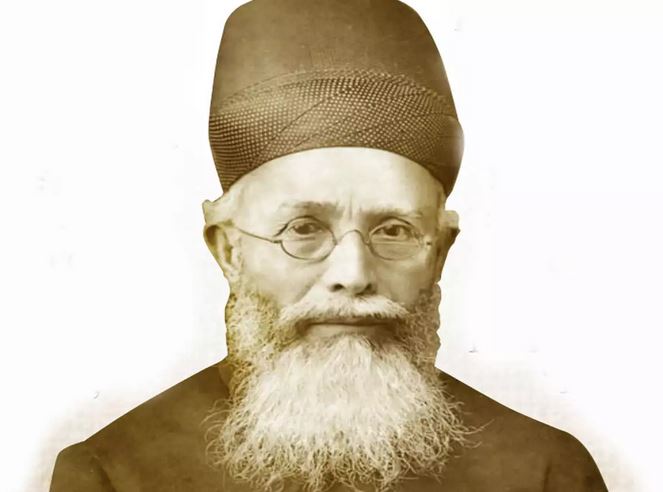
  • In news: Dadabhai Naoroji (1825-1917)

    dadabhai

    Central Idea

    • Dadabhai Naoroji, the first Indian member of the British Parliament, played a significant role in India’s anti-colonial struggle.
    • His scholarly work exposed the economic exploitation of India under British rule, emphasizing the drain theory.

    Who was Dadabhai Naoroji?

    • Early Life: Naoroji was born in Navsari, Gujarat, into a Parsi Zoroastrian family. He received his education at the Elphinstone Institute School.
    • Social Reforms: He founded the Rahnumai Mazdayasan Sabha and the Rast Goftar newspaper to promote Parsi social reforms and clarify Zoroastrian concepts.
    • Political Activism: Naoroji co-founded the London Indian Society and the East India Association, advocating for Indian political rights and countering negative stereotypes.
    • Indian National Congress: He played a crucial role in the Indian National Congress and served as its President on three occasions.
    • British Parliament: Naoroji became the first Indian MP in the British House of Commons, representing Finsbury Central from 1892 to 1895.
    • Economic Critique: His book “Poverty and Un-British Rule in India” exposed the drain of wealth from India to Britain and its impact on India’s development.

    His proposition of Drain Theory and Poverty

    • Naoroji’s Drain Theory: He identified six factors contributing to the wealth drain, including foreign governance, lack of immigration, and unequal employment opportunities.
    • Impact of Drain: Naoroji estimated a drain of 200-300 million pounds from India to Britain, which hindered India’s economic progress.
    • Railways and Tribute: Naoroji argued that India paid for services like railways, but the profits were drained out of the country, leading to economic imbalances.
    • Exploitative Trade: British workers in India were encouraged to repatriate their earnings, and Indian goods were undervalued, allowing for economic exploitation.

    Major works

    • Started the Rast Goftar Anglo-Gujarati Newspaper in 1854.
    • The manners and customs of the Parsees (Bombay, 1864)
    • The European and Asiatic races (London, 1866)
    • Admission of educated natives into the Indian Civil Service (London, 1868)
    • The wants and means of India (London, 1876)
    • Condition of India (Madras, 1882)

    Legacy and Views

    • Naoroji’s Significance: He is considered a crucial figure in India’s independence movement, advocating for responsible government and Indian autonomy.
    • Influence on Gandhi: Mahatma Gandhi was influenced by Naoroji’s writings and recognized him as a father figure for the Indian people.
    • Admirations: Bal Gangadhar Tilak praised Naoroji’s leadership and stated that Indians would unanimously elect him if given the chance.
    • Recognition: Naoroji’s contributions are honoured through various roads, streets, and awards named after him.
  • Who was Alluri Sitarama Raju?

    raju

    Central Idea

    • The President of India, Draupadi Murmu, honoured the freedom fighter Alluri Sitarama Raju during the closing ceremony of his 125th birth anniversary celebrations in Hyderabad.
    • The President highlighted the significance of Alluri Seetharama Raju’s struggle against injustice and exploitation in India’s freedom struggle.

    About Alluri Sitarama Raju

    • Raju was believed to be born in 1897 or 1898 in Andhra Pradesh.
    • He became a sanyasi (ascetic) at the age of 18 and gained a mystical aura among the hill and tribal people due to his austerity, knowledge of astrology and medicine, and his ability to tame wild animals.

    Revolutionary Activities of Alluri Sitarama Raju

    • Raju channelled the discontent of the hill people in Ganjam, Visakhapatnam, and Godavari into effective guerrilla resistance against the British.
    • The Forest Act of 1882 and other colonial policies threatened the tribals’ traditional podu cultivation and forced them into labor.
    • The tribals and muttadars (village headmen) who were affected by the curtailment of their powers by the British government joined together in armed resistance against colonial rule in August 1922.

    Contribution to the Freedom Struggle

    • Raju’s guerrilla war, known as the Rampa or Manyam Rebellion, continued until May 1924.
    • The rebellion coincided with Mahatma Gandhi’s Non-Cooperation Movement.
    • Raju admired Gandhi and promoted his ideas of wearing khadi (homespun cloth) and giving up alcohol.
    • However, Raju believed that India could only be liberated through the use of force, contrary to Gandhi’s principle of non-violence.

    Capture and Execution of Alluri Sitarama Raju

    • Raju’s resistance came to an end when he was captured by the British in May 1924.
    • He was executed for his involvement in the rebellion.
    • Raju became known as the ‘Manyam Veerudu’ or Hero of the Jungle, and his efforts are remembered as a significant contribution to India’s freedom struggle.

    Conclusion

    • Overall, Alluri Seetharama Raju played a crucial role in leading a guerrilla resistance against British colonial rule, fighting for the rights of tribal communities, and advocating for India’s independence through forceful means.
  • Hul Diwas: Remembering the Santhal Rebellion

    hul divas santhal

    Central Idea

    • Prime Minister commemorated Hul Diwas, honoring the sacrifice of Santhals in their fight against British colonial authorities.

    What is Hul Divas?

    • The Santhal rebellion, known as the ‘Hul,’ was an organized war against colonialism led by the Santhals, who stood against various forms of oppression inflicted upon them by the British.
    • This article explores the significance of the Santhal rebellion, their identity, the reasons behind the Hul, its organization, and its lasting impact.

    Santhals and their Migration

    • The Santhal people, or Santhalis, migrated from the Birbhum and Manbhum regions of Bengal to modern-day Santhal Pargana.
    • The British relocated the Santhals to the forested area of Damin-i-Koh, dislodging the indigenous Pahariya community, as part of their revenue collection strategy.
    • However, the Santhals faced severe colonial oppression, including exploitative moneylenders and the police.

    Reasons behind the Hul

    • The Santhals rebelled against the British due to extortions, oppressive extractions, dispossession of property, false measurements, and other illegalities.
    • Tribal councils and meetings discussed the possibility of rebellion, leading to a massive assembly of over 6,000 Santhals on June 30, 1855, marking the beginning of the rebellion.
    • Led by Sidhu and Kanhu, the Santhals rose against the British, attacking symbols of colonial rule and executing moneylenders and zamindars.

    Organization of the Hul

    • Contrary to popular belief, the Hul was a well-planned and organized political war.
    • Evidence from documents and historical accounts reveals preparations such as guerrilla formations, military teams, detectives, secret bases, logistics, and a network of message carriers for coordination.
    • Non-Adivasi Hindu castes also participated in the rebellion, highlighting the diverse nature of the movement.

    Lesser-Known Facts about the Hul

    • The rebellion saw participation from 32 communities, both tribals and non-tribals, challenging the notion that it was solely a Santhal rebellion.
    • Phulo-Jhano, two sisters, led an army of 1,000 women, playing crucial roles in providing food supply, gathering information, and attacking British camps.
    • The East India Company’s army was defeated twice during the rebellion, debunking the belief that they were invincible.

    British Narratives and Accounts

    • British reports and personal narratives provide insights into the causes of the Santhal rebellion, including excessive taxation, falsehood, and negligence of British officials, extortion by moneylenders, corruption, and oppression.
    • The sufferings inflicted by moneylenders or ‘mahajans’ on the Santhals were a primary cause of the uprising.

    Accounts from Prisoners and Divine Intervention

    • Similar to other tribal uprisings, accounts exist of deities appearing in dreams or before the rebels.
    • Judicial proceedings of captured Santhals revealed instances where deities instructed rebellion leaders to fight against the British and oppressors.

    Lasting Impact of the Hul

    • The Santhal rebellion did not end with its suppression in 1855; it continued to inspire future uprisings, such as the Santhal involvement in the 1857 mutiny.
    • The Hul rebellion symbolized resistance against British colonialism and laid the foundation for subsequent movements in Jharkhand.
  • In news: 1947 Partition of Bengal

    partition of bengal

    Central Idea

    • The recent controversy surrounding West Bengal’s ‘Foundation Day’ has brought attention to the partition of Bengal in 1947.
    • This event marked a significant chapter in the history of the state, leading to the creation of West Bengal and East Pakistan (later Bangladesh).

    Partition of Bengal in 1947: An overview

    • Demand for a separate Muslim nation-state: The partition of Bengal was a consequence of the Muslim League’s demand for a separate nation-state for Indian Muslims.
    • Communal violence in Calcutta: The society became deeply divided along religious lines, leading to severe communal violence, particularly in Calcutta in August 1946.

    Contours of East Pakistan’s Formation

    • Partition of India and Pakistan: In June 1947, it was decided to partition India into India and Pakistan. Punjab and Bengal, both with significant non-Muslim minorities, were also partitioned along religious lines.
    • Boundary Commission and the Radcliffe Line: A boundary commission, chaired by Sir Cyril Radcliffe, was established to demarcate separate districts with Hindu and Muslim majorities. The resulting boundary line is known as the Radcliffe Line.

    Concentration of Muslims in East Pakistan

    • Demographic composition: Bengal had a Hindu majority in the western districts and a Muslim majority in the eastern districts.
    • Grouping under East Pakistan: The eastern districts were grouped together to form East Pakistan, similar to how Muslims were concentrated in the western districts of Punjab.

    Precursor: Curzon’s Partition of Bengal in 1905

    • Historical context: Lord Curzon partitioned Bengal in 1905, aiming to break the unity of the Bengali-speaking population and create a separate province with a Muslim majority.
    • Reversal of partition: The partition of 1905 was withdrawn in 1911, restoring the linguistic unity of Bengal while separating Bihar and Orissa from Bengal.

    Aftermath of the 1947 Partition

    • Communal violence and Gandhi’s influence: Bengal witnessed significant communal violence in 1946, particularly in Calcutta and Noakhali. However, the presence of Mahatma Gandhi helped prevent large-scale violence during the partition.
    • Migration and displacement: Unlike Punjab, migration in Bengal occurred gradually over time, resulting in a continuous trickle of people moving from East to West and vice versa. This led to a large refugee population and the need for rehabilitation and settlements.

    Conclusion

    • The partition of Bengal in 1947 was a complex event with far-reaching consequences.
    • Understanding this historical context helps shed light on the impact it had on the population and the socio-economic landscape of West Bengal and todays Bangladesh.


  • Ram Prasad Bismil: A Revolutionary and a Poet

    ramprasad bismil

    Central Idea: This article revolves around the life, contributions, and legacy of Ram Prasad Bismil, a revolutionary figure in India’s freedom struggle against British colonial rule.

    Ram Prasad Bismil

    • Birth: Ram Prasad Bismil was born on June 11, 1897, in Shahjahanpur district, UP.
    • Revolutionary activities: He actively fought against British Raj and participated in notable events like the Mainpuri Conspiracy of 1918 and the Kakori Train Action of 1925.
    • Founding of Hindustan Republican Association: Bismil established the Hindustan Republican Association (HRA, later known as the Hindustan Socialist RA) and played a pivotal role in the organization.
    • Sacrifice and execution: Bismil was hanged for his revolutionary activities on December 19, 1927, at the age of 30.

    Early life and Arya Samaj connections

    • Upbringing and linguistic influences: Bismil was born into a Rajput Tomar family and learned Hindi from his father, Urdu from a nearby maulvi, and also studied in an English medium school in Shahjahanpur.
    • Association with Arya Samaj: Bismil joined the Arya Samaj during his childhood, becoming a prolific writer and poet. He used pen names such as ‘Agyat’, ‘Ram’, and the well-known ‘Bismil’.
    • Poem “Mera Janm”: At the age of 18, Bismil wrote the poem “Mera Janm” expressing his anger over the death sentence of Arya Samaj missionary Bhai Parmanand.

    Major events associated to Bismil

    (1) Mainpuri Conspiracy

    • Political disillusionment: Bismil became disillusioned with the moderate wing of the Congress Party and rejected negotiation or appeasement with the British.
    • Formation of Matrivedi: Bismil established the revolutionary organization Matrivedi and collaborated with Genda Lal Dixit, who had connections with dacoits and sought to utilize them in the armed struggle.
    • Mainpuri Ki Pratigya: Bismil’s famous poem, “Mainpuri Ki Pratigya,” was widely distributed in pamphlets across the United Provinces. He carried out acts of looting to gather funds for his organization.

    (2) Founding the Hindustan Republican Association

    • Return to Shahjahanpur: After being underground for several years, Bismil returned to Shahjahanpur in February 1920.
    • Formation of HRA: Bismil, along with Ashfaqullah Khan, Sachindra Nath Bakshi, and Jogesh Chandra Chatterjee, founded the Hindustan Republican Association. Later, Chandra Shekhar Azad and Bhagat Singh joined the organization.
    • Release of the manifesto: Bismil played a significant role in penning the manifesto titled “Krantikari,” which was officially released on January 1, 1925. The manifesto called for an organized and armed revolution to establish a federal Republic of United States of India.

    (3) Kakori Train Action

    • Objective and planning: The Kakori Train Action aimed to rob a train carrying treasury bags between Shahjahanpur and Lucknow.
    • Execution of the action: On August 9, 1925, around ten revolutionaries, including Bismil and Ashfaqullah Khan, stopped the train at Kakori station, overpowered the guard, and looted the treasury bags containing approximately Rs 4,600.
    • Consequences and crackdown: The action drew both British outrage and mixed responses from the Indian public. The misfiring of a gun resulted in the accidental killing of a passenger, Ahmad Ali, dampening public support. Subsequently, a violent crackdown led to the arrest of most involved, excluding Chandrashekhar Azad.

    Death and legacy

    • Trial and sentencing: Bismil, along with Ashfaqullah Khan and Rajendranath Lahiri, faced a long trial and were ultimately sentenced to death.
    • Execution and martyrdom: On December 19, 1927, Bismil was executed at the age of 30, leaving behind a legacy of sacrifice and dedication to the cause of freedom.
    • Enduring influence and remembrance: Bismil’s poetry continues to inspire and his call for Hindu-Muslim unity serves as a symbol of communal harmony. He is remembered for his revolutionary spirit and deep concern for society, justice, and equality.