Central Electricity Authority released midterm review of 20th Electric Power Survey (EPS).
About Central Electricity Authority:
The Central Electricity Authority of India advises the government on policy matters and formulates plans for the development of electricity systems.
It is a statutory organisation constituted under section 3 of Electricity Supply Act 1948, which has been superseded by section 70 of the Electricity Act, 2003.
Demand & Growth
Peak demand: 459 GW (2035-36)
Electricity need: 3,365 BU
Growth: ~5.6–6.4% CAGR
Capacity Expansion
From ~520 GW (2026) → 1,121 GW (2035-36)
Energy Mix:
Solar: 509 GW (45%)
Coal: 315 GW (28%)
Wind: 155 GW (14%)
Hydro: 77 GW
Others: small share
Non-fossil capacity ~70%
Key Insight
Solar leads in capacity
Coal dominates generation (51%) → ensures baseload power
Energy Storage Need
174 GW / 888 GWh
BESS: 80 GW
Pumped storage: 94 GW
Critical for renewable integration + grid stability
[2024] Recently, the term “pumped-storage hydropower” is actually and appropriately discussed in the context of which one of the following? (a) Irrigation of terraced crop fields (b) Lift irrigation of cereal crops (c) Long duration energy storage (d) Rainwater harvesting system
On World Frog Day (March 20), attention is drawn to India’s amphibians, where citizen science and conservation initiatives are helping address rising threats like climate change and habitat loss.
Ecological Importance of Frogs
Act as link between aquatic and terrestrial ecosystems
Control insect populations (pests)
Serve as food for higher vertebrates
Help convert: → Insect biomass → Vertebrate biomass
Global & Indian Status
As per International Union for Conservation of Nature:
Amphibians = most threatened vertebrates
37 species extinct globally
India:
450+ amphibian species
~25% threatened
~20% data deficient
Major Threats to Frogs
1. Disease (Historical Driver)
Chytridiomycosis caused by:
Batrachochytrium dendrobatidis
Batrachochytrium salamandrivorans
Affects frog skin (critical for respiration & ion balance)
Impact: → Affected >60% amphibians globally
2. Climate Change (Current Major Driver)
Impacts 39% species
Causes:
Mismatch in monsoon timing
Breeding failures due to: Early rains + prolonged dry spells
3. Habitat Loss
Impacts 37% species
Includes: Wetland loss, Deforestation, and Urbanisation.
[2024] Consider the following: 1. Butterflies 2. Fish 3. Frogs How many of the above have poisonous species among them? (a) Only one (b) Only two (c) All three (d) None
A study published in Ecology Letters (March 2026) by University of British Columbia and collaborators shows ringed seals risk predation to access diverse food in the Arctic.
Key Species Involved
Ringed seal: Primary prey species in Arctic marine ecosystems
Polar bear: Main predator dependent on sea ice for hunting
Study Area & Method
Location: Eastern Hudson Bay (Arctic region)
Tracked: 26 seals and 39 polar bears
Tools: GPS tracking, Dive data analysis and Sea-ice mapping + fish diversity models
Core Findings
1. Food vs Fear Trade-off
Seals avoid high-risk zones (areas with many polar bears)
BUT:
Enter these zones if food diversity is high
Stay longer underwater (long dives) even in danger zones
2. “Landscape of Fear” Concept
Animals modify behavior based on predator presence
Seals:
Move quickly through risky areas
Adjust diving patterns depending on threat level
3. Portfolio Effect (Very Important)
Seals prefer diverse prey instead of a single food source
Similar to financial diversification:
Reduces risk of food scarcity in changing environments
4. Behavioral Adaptations
Possible ability to: Detect predators (e.g., listening for polar bears on ice)
Limitation: Hard to scientifically capture such micro-behaviors
5. Climate Change Impact
Melting sea ice leads to:
Altered predator-prey interactions
Increased bear density in smaller ice areas
Entry of new predators like killer whales
Key Ecological Insight
Wildlife survival depends on dual factors:
Food availability
Predation risk
[2015] The term ‘IndARC’, sometimes seen in the news, is the name of: (a) an indigenously developed radar system inducted into Indian Defence (b) India’s satellite to provide services to the countries of Indian Ocean Rim (c) a scientific establishment set up by India in Antartic region (d) India’s underwater observatory to scientifically study the Arctic region
Scientists from CSIRO, RMIT University, and University of Melbourne developed the first proof-of-concept quantum battery (March 2026).
What is a Quantum Battery
A quantum battery is an energy storage device that uses principles of quantum mechanics instead of chemical reactions.
It can charge, store, and discharge energy like conventional batteries.
Key Quantum Principles Used
Superposition: A system can exist in multiple states simultaneously.
Entanglement: Particles become interconnected, enabling coordinated energy transfer.
Key Features of the Prototype
Built using multi-layered organic microcavity.
Wireless charging using laser.
Operates at room temperature.
Energy stored lasts much longer than charging time (very high efficiency).
Unique Property
Charging speed increases with size
Opposite to classical batteries.
Known as quantum advantage in charging.
Potential Applications
Ultra-fast charging of electric vehicles.
Wireless energy transfer over long distances.
High-efficiency next-generation energy storage systems.
Current Limitations
Still at proof-of-concept stage.
Major challenge: extending energy storage duration for practical use.
Significance
Confirms theoretical predictions in quantum thermodynamics.
Could revolutionize energy storage, transmission, and efficiency.
[2022] Which one of the following is the context in which the term “qubit” is mentioned? (a) Cloud Services (b) Quantum Computing (c) Visible Light Communication Technologies (d) Wireless Communication Technologies
PYQ Relevance[UPSC 2025] What is Carbon Capture, Utilization and Storage (CCUS)? What is the potential role of CCUS in tackling climate change?Linkage: The PYQ covers climate change mitigation and environmental technology (GS 3), especially emission reduction strategies like CCUS. The article applies this through India’s CCUS-focused carbon credit policy, highlighting tension with agriculture-based carbon markets.
Mentor’s Comment
India’s Carbon Capture, Utilization, and Storage (CCUS) initiative aims to reduce greenhouse gas emissions to meet 2070 net-zero targets, focusing on high-emitting industrial sectors. The Union Budget 2026-27 announced a ₹20,000 crore scheme to scale up CCUS deployment, specifically targeting power, steel, cement, refineries, and chemical industries. The Budget 2026 announcement highlights the tension between industrial decarbonisation via CCUS and nature-based carbon markets involving agriculture. This raises issues of policy clarity, sectoral prioritisation, and climate governance design.
What is the core objective of India’s carbon credit plan?
Industrial Decarbonisation Focus: Targets sectors like power, steel, cement, refineries, and chemicals where emissions are concentrated and difficult to eliminate.
CCUS Deployment: Ensures capture of CO₂ from industrial flue gases and its utilization or storage underground.
Technology-led Transition: Supports R&D roadmap released by Department of Science and Technology (Dec 2025).
Budgetary Commitment: ₹20,000 crore over five years for large-scale CCUS deployment.
Why is agriculture excluded from CCUS strategy?
Emission Characteristics: Agricultural emissions (methane, nitrous oxide) are diffuse and biologically mediated.
Technological Limitation: CCUS is suited for point-source emissions, not dispersed sources like farms.
Policy Segregation: Clear distinction between CCUS (industrial) and Carbon Dioxide Removal (CDR) via soil, biochar, agroforestry.
Role of Agriculture: Positioned under carbon sequestration pathways, not industrial capture.
What is causing confusion around ‘farmer carbon credits’?
Terminology Overlap: Use of “carbon credit programme” creates perception of inclusivity across sectors.
Parallel Narratives: Media and discourse suggest farmers can directly earn credits under Budget allocation.
Existing Voluntary Markets: Agriculture and forestry projects already generate credits for domestic and global buyers.
Policy Communication Gap: Lack of clear distinction between regulated compliance markets and voluntary carbon markets.
What are the implications of prioritising CCUS over agriculture?
Industrial Competitiveness: Supports decarbonisation of sectors contributing ~25% of India’s emissions.
Net-Zero Alignment: Essential for achieving India’s climate commitments.
Missed Rural Opportunity: Delays monetisation of agriculture’s carbon sequestration potential.
Fiscal Prioritisation: Directs public funds toward capital-intensive technologies instead of nature-based solutions.
Can agriculture-based carbon markets emerge as a parallel opportunity?
Soil Carbon Sequestration: Enhances carbon storage through regenerative practices.
Agroforestry Potential: Integrates trees into farming systems to generate carbon credits.
Private Sector Initiatives: Pilot programmes compensate farmers for sustainable practices.
Policy Requirement: Needs separate funding, institutional frameworks, and certification mechanisms.
What policy approach is required to resolve the ambiguity?
Dedicated Agricultural Policy: Establishes structured carbon farming programme with incentives.
Market Development: Creates trusted domestic carbon market for agriculture credits.
Communication Clarity: Ensures alignment between policy design and public narrative.
Conclusion
India’s carbon credit framework reflects a dual transition challenge: industrial decarbonisation through CCUS and agricultural transformation through carbon sequestration. Policy clarity, sector-specific instruments, and institutional coherence are essential to avoid misaligned expectations and unlock full climate and economic potential.
Authorities have planned to translocate ~50 Asiatic wild water buffaloes from Kaziranga National Park to Kanha Tiger Reserve in a phased manner, starting with a smaller group.
About the Species
Asiatic Wild Water Buffalo
Scientific name: Bubalus arnee
Status: Endangered (IUCN)
India holds major global population
Key Details of the Plan
Total planned: ~50 buffaloes
Initial phase: 5–15 individuals
Method:
Tranquilization and capture
Gradual relocation after feasibility checks
Why Translocation is Being Done?
Species Conservation: Avoids over-concentration in one area
Reduces risk from: Disease outbreaks and Natural disasters.
Kanha Tiger Reserve historically had wild buffaloes
Aim: restore lost populations
Genetic Diversity: Helps maintain: Healthy breeding populations and Reduced inbreeding.
Why Kaziranga?
Hosts 1000+ wild buffaloes
One of the strongest populations globally
Suitable as a source population
Why Kanha?
Suitable: Habitat (grasslands + water sources)
Part of central Indian landscape restoration
[2017] According to the Wildlife (Protection) Act, 1972, which of the following animals cannot be hunted by any person except under some provisions provided by law? 1. Gharial Indian 2. Wild ass 3. Wild buffalo Select the correct answer using the code given below: (a) 1 only (b) 2 and 3 only (c) 1 and 3 only (d) 1, 2 and 3
India has submitted its First National Report (NR1) on the implementation of the Nagoya Protocol (ABS) to the Convention on Biological Diversity (CBD) on 27 February 2026, fulfilling obligations under Article 29.
Key Highlights of the Report
1. Reporting Period
Covers 1 November 2017 to 31 December 2025
Earlier Interim Report submitted in 2017
2. Legal & Institutional Framework
Based on: Biological Diversity Act, 2002, Biological Diversity Rules, 2024 and ABS Regulations, 2025.
Three-tier structure:
National Biodiversity Authority (NBA)
State Biodiversity Boards (SBBs) / UT Biodiversity Councils
Biodiversity Management Committees (BMCs)
2,76,653 BMCs established → strong grassroots participation
3,556 IRCCs (Internationally Recognised Certificates of Compliance) published
Accounts for over 60% of global total
Shows leadership in transparency under Nagoya Protocol
5. Financial Benefits Generated
₹216.31 crore mobilised through NBA approvals
₹139.69 crore disbursed to: Local communities, Farmers, and Traditional knowledge holders
₹51.96 crore generated via SBBs/UTBCs
6. Non-Monetary Benefits
395 approvals included: Capacity building, Technology transfer, Training and Collaborative research.
7. Monitoring of Foreign Biological Resources
41 declarations received for use of foreign bioresources
Ensures compliance with international ABS norms
8. Capacity Building & Awareness
2,56,393 individuals trained
Through: 3,724 workshops and 600+ capacity-building initiatives
9. Strategic Contribution
Supports Target 13 of India’s NBSAP (National Biodiversity Strategy and Action Plan)
Strengthens: Biodiversity conservation, Livelihood security, and Community participation
[2025] Consider the following statements: 1. In India, the Biodiversity Management Committees are key to the realisation of the objectives of the Nagoya Protocol. 2. The Biodiversity Management Committees have important functions in determining access and benefit sharing, including the power to levy collection fees on the access of biological resources within its jurisdiction. Which of the statements given above is/are correct? (a) 1 only (b) 2 only (c) Both 1 and 2 (d) Neither 1 nor 2
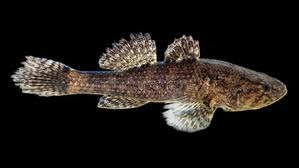
Scientists have discovered a new estuarine fish species, named Butis bargabhimae, in the Rupnarayan River near Tamluk.
About the Species
1. Classification
Family: Butidae (gudgeon gobies)
Habitat: Brackish water (estuaries)
Found where rivers meet the sea
2. Discovery Process
Time: 2022–2024
Institutions: Tamralipta Mahavidyalaya and Vidyasagar University.
Method:
Field collection by local fishermen
Morphological + DNA analysis
Unique Features
Presence of interorbital scales (between eyes)
Additional auxiliary body scales
Distinct light and dark bands on pectoral fins
DNA similarity only ~86% with closest relatives
Confirms it as a new species
Naming Significance
Named after Bargabhima, a local deity of Tamluk
Reflects link between biodiversity and cultural heritage
Scientific Importance
Taxonomic Clarity: Helped correct misidentification of similar species in:
India
Bangladesh
Role of DNA Barcoding: Shows importance of genetic tools in species identification
Hidden Biodiversity: Suggests many undiscovered species in Indian rivers and estuaries
[2022] DNA Barcoding can be a tool to: 1. Assess the age of a plant or animal. 2. Distinguish among species that look alike. 3. Identify undesirable animal or plant materials in processed foods. Select the correct answer using the code given below: (a) 1 only (b) 3 only (c) 1 and 2 (d) 2 and 3
Forecasters, including NOAA Climate Prediction Center, warn of a possible El Niño in 2026, with chances it could intensify into a “super El Niño”, potentially pushing global temperatures to new highs.
What is El Niño?
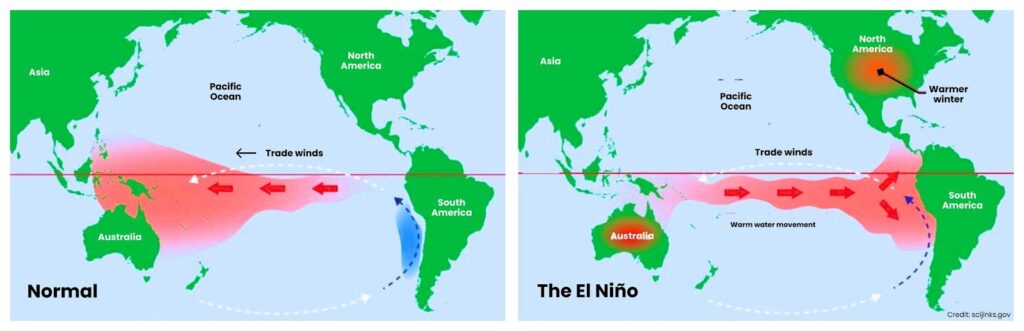
A warm phase of the El Niño–Southern Oscillation (ENSO)
Occurs when Pacific Ocean surface waters become warmer than normal
What is a “Super El Niño”?
When sea surface temperature rises ≥ 2°C above average
Much stronger than normal El Niño
Rare events: Last major one: 2015–16
Current Situation
Present phase: La Niña (cool phase) is ending
Forecast: ~62% chance of El Niño by mid-2026 and ~15% chance of super El Niño
How El Niño Works
Warm water shifts toward eastern Pacific
Weakens trade winds
Alters global weather systems
[2011] La Niña is suspected to have caused recent floods in Australia. How is La Niña different from El Niño? 1. La Niña is characterized by unusually cold ocean temperature in the equatorial Indian Ocean whereas El Niño is characterized by unusually warm ocean temperature in the equatorial Pacific Ocean. 2. El Niño has an adverse effect on the southwest monsoon of India, but La Niña has no effect on monsoon climate. Select the correct answer: (a) 1 only (b) 2 only (c) Both 1 and 2 (d) Neither 1 nor 2
The Government has announced the Biopharma SHAKTI Scheme with an outlay of ₹10,000 crore (5 years) to strengthen India’s biopharmaceutical ecosystem and enhance global competitiveness.
What is Biopharma SHAKTI?
A flagship initiative to:
Promote biologics and biosimilars manufacturing
Support R&D, clinical trials, and innovation
Goal: Make India a global biopharma hub and ensure affordable healthcare
Key Objectives
Build a self-reliant biopharma ecosystem
Reduce import dependence
Improve global competitiveness
Promote innovation-driven manufacturing
Major Components of the Scheme
Funding Support: Discovery Grant Fund and Equity Fund for drug development
R&D Ecosystem
Strengthening: National Institute of Pharmaceutical Education and Research (NIPER)
Develop ecosystem for: Drug delivery devices and Advanced packaging.
Biosimilars & Biologics Production: Biosimilars (cost-effective versions of biologics) and Emerging biologics like gene therapies.
Regulatory Strengthening: Strengthen Central Drugs Standard Control Organisation (CDSCO)
Create scientific review cadre
Faster and globally credible approvals
What are Biologics & Biosimilars?
Biologics: Medicines derived from living organisms (e.g., vaccines, monoclonal antibodies)
Biosimilars: Cheaper versions of biologics with similar efficacy
Not identical (due to complexity of biologics)
Must show no clinically meaningful differences in safety, purity, and effectiveness
[2025] With reference to monoclonal antibodies, consider the following: 1. They are man-made proteins. 2. They stimulate the patient’s immune system to fight the specific disease. 3. They are produced using animal cells only. Select the correct answer using the code given below: (a) I and II only (b) II and III only (c) I and III only (d) All the three