💥Join UPSC 2027,2028 Mentorship (August Batch) + XFactor Notes & Microthemes PDF

GS Paper: Social Empowerment

  • Death by suicide of a 16-year-old queer person: Why don’t you care when we are bullied?

    Being LGBT in India: Some home truths | Mint

    Central idea 

    Bullying is the lived reality of thousands of queer kids in this country and yet, we have no regimen in place to deal with it, both in schools and at an institutional level.

    Key Highlights:

    • Personal Experience: The author shares personal experiences of facing bullying for being effeminate during school.
    • Recent Tragedy: The article addresses the recent suicide of Pranshu, a sixteen-year-old queer teen, due to online bullying.
    • Nature of Bullying: Bullying of queer kids includes name-calling, physical violence, and sexual violence, impacting mental health.
    • Global Impact: Global data shows LGBTQ+ youth face higher health and suicide risks.
    • Systemic Deficiency: Lack of a comprehensive system to address bullying and support LGBTQ+ students.
    • Challenges in Communication: Efforts to address homophobia through communication with school management faced obstacles.
    • Initiative Opposition: The NCERT’s teacher-training manual for helping queer children faced opposition and was taken down.
    • NCPCR Critique: The National Commission for Protection of Child Rights (NCPCR) is criticized for not protecting queer kids.
    • Media Disparity: Limited media coverage and attention to the suicides of queer individuals compared to other LGBTQ+ issues.

    Key Challenges:

    • Bullying Complexity: Widespread bullying of queer kids in schools, including name-calling, violence, and sexual harassment.
    • Systemic Deficiency: Lack of a comprehensive system to address bullying and support LGBTQ+ students.
    • Initiative Challenges: Opposition and challenges faced by initiatives, like the NCERT’s teacher-training manual, aimed at helping queer children.
    • Media Disparity: Limited media coverage and attention to the suicides of queer individuals compared to other LGBTQ+ issues.

    Key Terms:

    • Queer
    • Bullying
    • Homophobia
    • LGBTQ+
    • NCERT
    • NCPCR
    • Suicide
    • Online Bullying

    Key Phrases:

    • “Mass online bullying”
    • “Name-calling, physical, and sexual violence”
    • “Systematic approach to address bullying”
    • “Teacher-training manual”
    • “National Commission for Protection of Child Rights”
    • “Media coverage for queer deaths”

    Key Examples and References:

    • Personal experiences of the author facing bullying.
    • Suicide of Pranshu, a sixteen-year-old queer teen.
    • NCERT’s teacher-training manual for queer children.
    • National Commission for Protection of Child Rights (NCPCR).

    Key Facts:

    • Global data indicates higher health and suicide risks for LGBTQ+ youth.
    • Lack of media coverage for deaths of queer individuals compared to other LGBTQ+ issues.
    • Initiatives, like the NCERT’s manual, face opposition and challenges.

    Key Data:

    • Specific data on the prevalence of bullying or suicide rates among queer youth is not provided.

    Critical Analysis:

    • The article highlights the urgent need for a comprehensive system to address bullying and support queer kids.
    • Criticizes the NCPCR for its perceived failure to protect queer children.
    • Raises questions about media coverage and societal attention to the suicides of queer individuals.
    • Emphasizes the importance of teacher training and institutional measures to combat homophobia.

    Way Forward:

    • Model anti-bullying programs after successful initiatives in countries like Canada and Sweden.
    • Allocate funds for the development and implementation of anti-bullying programs in collaboration with NGOs.
    • Adopt the approach taken by the United Kingdom, where teacher training includes LGBTQ+ inclusive education.
    • Introduce mandatory LGBTQ+ sensitivity training for teachers through national education boards.
    • Follow the success of LGBTQ+ awareness campaigns in cities like San Francisco. Sponsor and promote community workshops with the involvement of local leaders and LGBTQ+ activists.
  • Why are the Marathas mobilising now?

    The Marathas' Demand for Reservation: A Litigation History [2014-21] -  Supreme Court Observer

    Central Idea:

    • The Maratha community’s demand for reservation in education and employment stems from a crisis of dominance, influenced by urban and rural challenges.

    Urban Crisis:

    • Well-paid jobs in urban areas, historically held by Marathas, have rapidly disappeared since the late 1990s.
    • Large-scale manufacturing industries and establishments providing such jobs have closed or downsized, leading to increased competition for fewer opportunities.
    • Marathas, historically socially superior, used their dominant caste position to secure a significant share of jobs, particularly in the public sector.
    • Economic liberalization and the shrinkage of public sector jobs have intensified competition among Marathas for limited opportunities.

    Rural Crisis:

    • Closure of factories has led to the return of workers to villages, disrupting the pattern of workers retiring in villages and their offspring working in cities.
    • Rural youth face challenges migrating to urban areas for better-paying jobs, impacting the financial support they traditionally provided to family members in villages.
    • Informal sector jobs become the primary option for rural Maratha youth, diminishing their social standing and pride in rural settings.
    • The focus on secure public sector jobs, which have also decreased, becomes crucial for rural Maratha youth.

    Maratha quota agitation | OBC leaders warn Shinde govt. of trying to grab  their reservation - The Hindu

    Education Challenges:

    • Increased aspirations for higher education among Marathas face a decline in government institutions and a rise in private unaided colleges with exorbitant fees.
    • Marathas, with limited financial resources, compete for a limited number of open-category seats in public institutions.
    • Decrease in government-run educational institutions exacerbates the challenges faced by Maratha aspirants.

    Crisis of Dominance:

    • The combination of urban and rural crises contributes to a crisis of dominance for the Marathas.
    • Disturbance of caste hierarchy norms due to Dalit mobility and OBC economic and political assertion adds to Marathas’ anxiety.
    • The demand for reservation reflects the need for increased formal sector jobs and the expansion of public educational institutions to address the crisis.

    Key Highlights:

    • Maratha community demands reservation in education and public employment, intensifying since 2016.
    • Historically, Marathas dominated well-paid jobs, but recent urban and rural crises have led to increased competition and challenges.
    • Closure of manufacturing industries, decreasing public sector jobs, and rural youth’s struggles contribute to the crisis.
    • Educational aspirations face challenges with a decline in government institutions and increased private college fees.

    Key Challenges:

    • Disappearance of well-paid urban jobs, increased competition, and shrinking public sector employment.
    • Rural crisis disrupts the traditional pattern of workers retiring in villages and offspring working in cities.
    • Decline in government-run educational institutions, limited open-category seats, and rising private college fees.

    Key Terms and Phrases:

    • Urban crisis, rural crisis, crisis of dominance, economic liberalization, formal sector jobs.
    • Reservation, Maratha mobilization, well-paid jobs, private unaided colleges, public sector employment.

    Key Examples and References:

    • Maratha protests since 2016, closure of manufacturing industries, decreased public sector jobs.
    • Disturbance in traditional caste hierarchies due to Dalit mobility and OBC economic and political assertion.

    Key Facts and Data:

    • Marathas historically occupied over 29% of open-category jobs in government.
    • Jobs in the private formal sector increased from 2% to 3.5%.
    • Contractual government jobs increased from 0.7 million to 15.9 million in 2017-18.
    • Only 22.2% of colleges are managed by the government as of 2019.

    Critical Analysis:

    • Maratha crisis stems from economic shifts, urban-rural dynamics, and disturbance in caste hierarchies.
    • Limited opportunities, competition, and declining public sector jobs contribute to the community’s mobilization.
    • Educational challenges add to the complexity, demanding a comprehensive solution.

    Way Forward:

    • Address urban and rural crises by creating more formal sector jobs.
    • Expand public educational institutions and implement large-scale scholarship programs.
    • Focus on inclusive policies to reduce competition and restore traditional patterns of employment.

    Conclusion:

    • The Maratha mobilization for reservation is rooted in the challenges posed by the disappearance of well-paid jobs, urban-rural dynamics, and the disruption of traditional caste hierarchies. Addressing these challenges requires a focus on creating more opportunities in the formal sector and expanding accessible public education.
  • Why the tribal factor may hurt the BJP in Madhya Pradesh

    Election 2023: मध्य प्रदेश में 15 आदिवासी सीटों पर अधिक मतदान भाजपा ने माना  संजीवनी - Election 2023 More voting in 15 tribal seats in Madhya Pradesh  BJP considered it a lifeline

    Central idea

    The article explores the significant role of tribal votes in the 2023 Madhya Pradesh assembly election, focusing on the competition between Congress and BJP for tribal support. It traces the historical evolution of tribal politics in the region, highlighting key factors influencing tribal voting patterns. The central theme revolves around the ongoing battle for tribal empowerment, with promises and challenges shaping the political landscape in Madhya Pradesh.

    Key Highlights:

    • Tribal Electoral Battleground: The 2023 Madhya Pradesh assembly election is marked by a fierce struggle between Congress and BJP for the pivotal tribal vote, constituting 21% of the state’s population.
    • Political Activism: Over decades, tribal communities have become politically active, influencing electoral outcomes and reshaping the state’s political dynamics.
    • Historical Contestation: The political contest for tribal support intensified in the 1990s, with Congress historically dominant but facing challenges as the BJP strategically entered tribal areas.
    • Fluid Voting Patterns: Tribal voting, historically with Congress, has witnessed shifts, creating a dynamic landscape for both major parties.

    Challenges:

    • Shifting Political Alliances: Historical Congress dominance faces challenges, with BJP making strategic inroads, making the tribal vote a pivotal factor.
    • Unresolved Policy Demands: Tribals express concerns about autonomy, job creation, forest conservation, and access to government welfare schemes, posing challenges for effective electoral strategies.
    • Dynamic Tribal Voting: The fluid nature of tribal voting patterns adds complexity to electoral strategies, requiring adaptable and responsive political approaches.
    • Competing Electoral Narratives: The battle for tribal votes involves competing promises and narratives, with Congress emphasizing empowerment through policies like the Sixth Schedule and PESA, while BJP highlights welfare initiatives and cultural ties.

    Key Phrases:

    • Empowerment Pledges: Congress commits to implementing the Sixth Schedule, enacting PESA, and raising tendu patta rates. BJP emphasizes welfare initiatives and cultural connections.
    • Political Mobilization: Grassroots efforts by Vanvasi Kalyan Parishad and RSS play a pivotal role in BJP’s success in tribal areas.
    • Party Dynamics: The rise and decline of smaller parties like GGP and the emergence of JAYS signify the evolving political landscape in tribal-dominated regions.
    • Historical Turnovers: Post-Independence, Congress dominance in tribal areas faced challenges, with a bi-polar contest emerging in the 2003 elections and subsequent turnovers.

    Analysis:

    • Political Dynamics: The historical shift from Congress to BJP dominance in tribal areas reflects evolving political strategies and grassroots mobilization.
    • Voter Behavior: Grievances against the Shivraj Singh Chouhan-led BJP government and demands for autonomy, job creation, and forest rights significantly influenced tribal voting patterns in the 2018 elections.
    • Historical Voting Trends: The 2003 elections marked the beginning of a bi-polar contest, with Congress gaining ground in 2008 and 2018, showcasing the dynamic nature of tribal votes.
    • Influence of Grassroots Movements: The sustained efforts of organizations like Vanvasi Kalyan Parishad and RSS contributed to BJP’s success in entering tribal areas.

    Key Data:

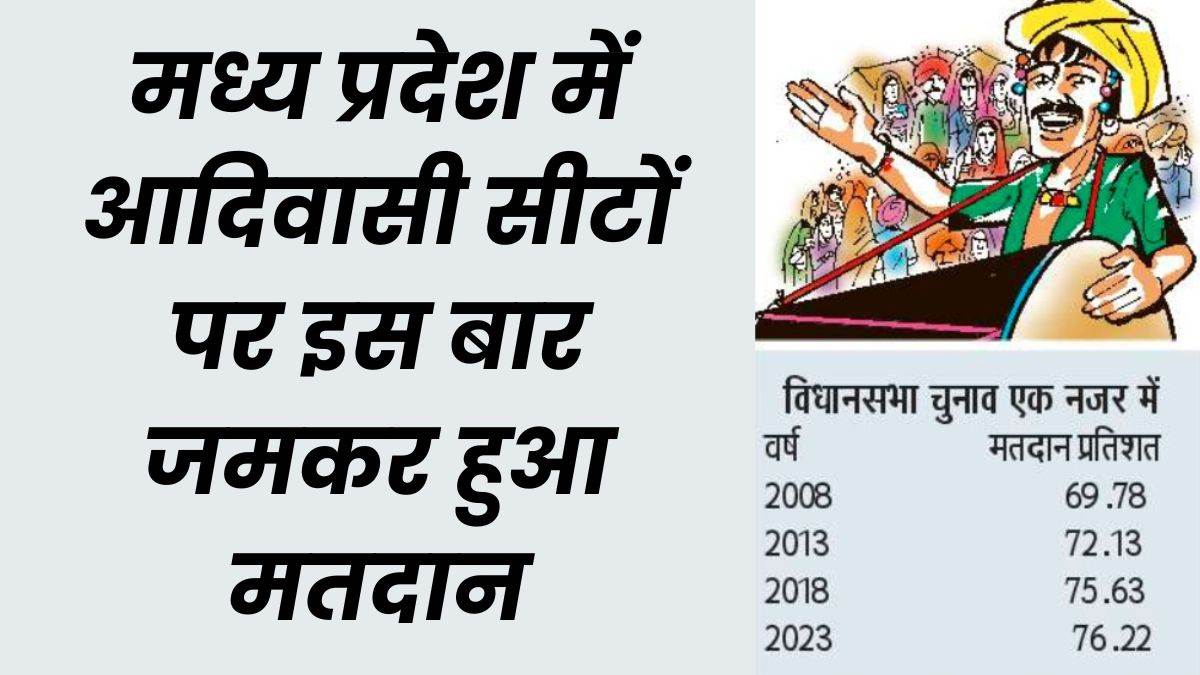
    • Tribal Population Impact: Constitutes 21% of Madhya Pradesh, with 48 out of 230 assembly seats reserved for tribal communities.
    • Voter Turnout Surge: Tribal voter turnout rises significantly, reaching 76.39% in the 2018 assembly elections, indicating increased political consciousness.
    • Party Strength: Congress relies on tribal leaders like Umang Singhar, Bala Bachchan, and Kantilal Bhuria for securing seats in tribal-dominated areas.
    • BJP Initiatives: BJP highlights the appointment of Droupadi Murmu as the first tribal woman president and announces a Rs 24,000 crore welfare program for tribal communities.

    Key Facts:

    • Prominent Figures: Congress relies on tribal leaders like Umang Singhar, Bala Bachchan, and Kantilal Bhuria to secure seats in tribal-dominated areas.
    • BJP Initiatives: BJP highlights the appointment of Droupadi Murmu as the first tribal woman president and announces a Rs 24,000 crore welfare program for tribal communities.
    • Shift in Voting Patterns: The 2018 elections witnessed a reversal, with Congress obtaining 32 seats and BJP 16, reflecting changing voter sentiments.
    • Role of Grassroots Movements: Organizations like Vanvasi Kalyan Parishad and RSS played a crucial role in BJP’s success in entering tribal areas.

    Way Forward:

    • Inclusive Policies: Future success hinges on inclusive policies addressing tribal demands for autonomy, job opportunities, and access to welfare schemes.
    • Collaborative Governance: A collaborative approach between mainstream parties and tribal communities is crucial to ensure effective representation and address long-standing grievances.
    • Responsive Electoral Strategies: Adaptable and responsive political approaches are essential to navigate the dynamic nature of tribal voting patterns.
    • Effective Policy Implementation: Resolving policy demands related to autonomy, job creation, forest conservation, and welfare schemes becomes pivotal in securing tribal votes.
  • What can a domestic violence survivor do when the justice system lets her down?

    What Is Domestic Abuse? | United Nations

    Central idea

    The article talks about how women facing domestic violence in India struggle to get justice due to biases in the legal system. It mentions challenges like police not taking complaints seriously and judges making unfair comments. To make things better, it suggests that judges should be fair, and the media should report responsibly to help women get the justice they deserve.

    Key Highlights:

    • Systemic Flaws in Legal Process: The study of 4 lakh FIRs in Haryana exposes inherent biases against women, revealing flaws from the filing of complaints to the conviction process.
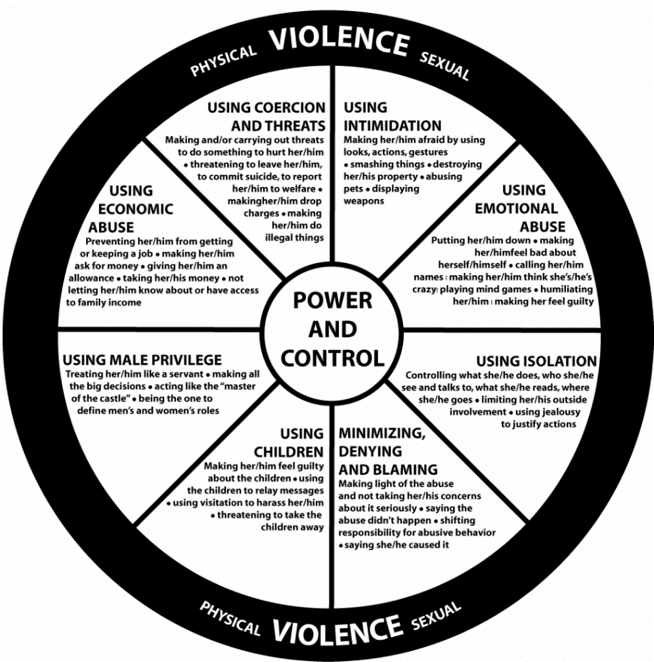
    • NGO’s Testimony on Domestic Violence: Majlis, an NGO in Mumbai, provides a firsthand account of the grave domestic violence faced by women, spanning physical, economic, verbal, emotional, and sexual abuse.
    • Alarming Crime Rates: India witnesses rising crimes against women, with 21 daily dowry-related deaths and 4 lakh cases under Section 498A of the IPC in 2019, emphasizing the urgent need for systemic change.

    Challenges:

    • Reluctance to File FIRs: Police reluctance persists despite legal provisions, steering victims towards counseling instead of criminal complaints, hindering justice for domestic violence victims.
    • Patriarchal Mindset Impact: The police’s apathy is rooted in a patriarchal mindset, exacerbated by demeaning comments from the judiciary, contributing to the perception that women misuse legal provisions.
    • Impact on Victim Hope: Women turned away by police often lose hope, leading to dire consequences, such as suicide or murder, highlighting the severity of the challenges in obtaining justice.

    Analysis:

    • Stereotype Reinforcement: Demeaning comments, accusing women of misusing Section 498A, perpetuate stereotypes and contribute to the reluctance of police in handling domestic violence cases.
    • Judiciary’s Role in Victim Perception: Judicial comments play a significant role in shaping public perception, impacting the willingness of women to seek justice for domestic violence.
    • Need for Judicial Sensitivity: Recognizing the need for sensitivity in judicial language and approach to avoid further victimization of women seeking legal recourse.

    Key Data for mains value addition:

    • Dowry-Related Deaths: NCRB reports highlight disturbing statistics, indicating 21 daily dowry-related deaths and 4 lakh cases under Section 498A in 2019, underscoring the urgency for intervention.
    • Prevalence of Domestic Violence: National Family Health Survey 5 (2019-20) data reveals that 30% of women (over 20 crore) experience physical violence, emphasizing the widespread nature of the issue.
    • Need for Data-Driven Interventions: Utilizing crime statistics to inform targeted interventions and policy measures is crucial for addressing the increasing rates of crimes against women.

    Way Forward:

    • Sensitization Programs: Implementing sensitization programs to eliminate the patriarchal mindset within the police force, fostering a more empathetic and proactive approach.
    • Legal Procedure Adherence: Ensuring strict adherence to legal procedures in handling domestic violence cases to prevent police reluctance and promote efficient and unbiased investigations.
    • Continuous Training: Continuous training programs for law enforcement officers to enhance their understanding of the complexities surrounding domestic violence cases.
    • Unbiased Judgment Enforcement: Establishing mechanisms to hold the judiciary accountable for unbiased judgments, discouraging sweeping generalizations and ensuring fair treatment of domestic violence cases.
    • Judicial Education Initiatives: Advocating for ongoing judicial education on domestic violence issues to keep judges informed and sensitive to the unique challenges faced by victims.

    Conclusion:

    The multifaceted challenges women face in obtaining justice for domestic violence necessitate a holistic approach involving legal reforms, sensitization programs for law enforcement, and responsible media reporting. Addressing systemic biases, legal loopholes, and societal perceptions is essential for meaningful change and ensuring justice for victims of domestic violence.

  • A former Police Commissioner writes: How the criminal justice system can serve women better

    Dr. Meeran Chadha Borwankar: IPS, Lawyer | India | Official Site

    Central idea

    The article highlights gender-based challenges in India’s criminal justice system, citing delays and discrimination against women complainants. Despite increased representation and specialized stations, the study in Haryana indicates persistent issues. The central idea emphasizes the need for reforms, gender sensitivity, and equal treatment within the justice system.

    Key Highlights:

    • Justice System Accessibility: Citizens face challenges accessing the criminal justice system in India due to police station unapproachability, court delays, and outdated forensic equipment.
    • Gender Disparities: The study reveals “multi-dimensional discrimination” against women in the justice system, with differential treatment at all stages and levels.
    • All-Women Police Stations: Despite efforts, the study, focused on Haryana, suggests that women face delays, dismissals, and lower conviction rates in cases where they are complainants.
    • Limited Representation: While more women are joining the justice system, the study emphasizes the need for increased sensitivity and recruitment drives for female officers.

    Challenges:

    • Police Station Atmosphere: Unfriendly police stations, especially for women, contribute to delays and hinder justice delivery.
    • Legal System Inefficiencies: Overworked prosecutors, court delays, and overcrowded prisons impact the overall efficiency of the justice system.
    • Gender Bias: Discrimination against women at various stages, including delayed investigations and dismissals, poses a significant challenge.
    • Recruitment Delays: Achieving the 33% reservation target for women in police stations may take another decade, delaying the improvement of gender sensitivity.

    India's Criminal Justice System is Failing Victims of Sexual Violence —  Global Issues

    Key Phrases:

    • Multi-dimensional Discrimination: The study identifies pervasive gender-based discrimination throughout the justice system.
    • All-Women Police Stations: Initially created to address women’s concerns, the study questions the effectiveness of this approach.
    • Delayed Investigations: Cases with women complainants experience longer waiting times and fewer registrations.
    • Lower Conviction Rates: Women complainants have a lower chance of seeing the accused being sent to prison.

    Analysis:

    • Insufficient Gender Sensitivity: Despite efforts to increase women’s representation, the study suggests that sensitivity and fair treatment are lacking in investigations and trials.
    • Systemic Inequalities: The research highlights systemic issues leading to dismissals, delays, and lower conviction rates for cases with women complainants.
    • Need for Effective Monitoring: Effective monitoring systems are essential to ensure equal treatment for all genders throughout the justice process.
    • Research Limitations: While the study raises crucial issues, the lack of validation from police or judicial officers in Haryana raises questions about the data’s accuracy.

    Key Data for answer enrichment:

    • Representation: Women constitute only around 12% of the police force, emphasizing the need for increased recruitment.
    • Conviction Rate: India struggles with less than a 60% conviction rate, reflecting inefficiencies in the justice system.
    • Reservation Target: Achieving the 33% reservation target for women in police stations may take another decade.
    • Haryana Sample: The study focuses on Haryana, providing insights into the state-specific challenges faced by women in the justice system.

    Way Forward:

    • Increased Recruitment: Urgent recruitment drives are needed to enhance gender diversity in police stations and improve sensitivity.
    • Efficient Justice System: Addressing inefficiencies, overhauling procedures, and providing adequate resources are essential for an accessible and fair justice system.
    • Effective Monitoring: Implementing robust monitoring systems ensures consistent and unbiased treatment for all genders.
    • Research Validation: Future research should involve direct interactions with police and judicial officers for accurate data validation and a comprehensive understanding of the issues.
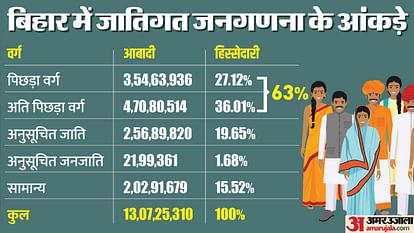
  • The Bihar caste survey and the social justice agenda

    Bihar Caste Census Report:जातीय जनगणना की रिपोर्ट जारी, राज्य में 63%  ओबीसी, कई चौंकाने वाले आंकड़े सामने आए - Bihar Caste Census: Nitish Kumar  Bihar Government Declared Bihar Caste Survey ...

    Central idea

    Bihar’s caste census is a significant step, yet modernizing caste politics faces hurdles with global economic changes, an authoritative government, and assertive Hindutva ideology. To lead in this complexity, Bihar can pioneer a nuanced, coalition-based approach, reshaping caste politics for the 21st century.

    Key Highlights:

    • Historic Steps: Bihar takes significant strides in social justice by conducting a caste census and revealing socio-economic data associated with different castes.
    • Leadership Challenge: The RJD-JD(U) coalition faces a critical juncture in utilizing caste survey data for an effective social justice agenda, beyond mere reservation expansions.
    • Global Economic Situation: Neoliberal policies demand innovative approaches for mass employment (decent work).
    • Authoritarian Regime: India experiences an authoritarian shift impacting constitutional norms and federal structures.
    • Upper-Caste Hegemony: A visible rise of aggressive north-Indian Hindu upper-caste dominance through Hindutva ideology.
    • Internal Differentiations: Complex internal variations within major caste groups challenge traditional one-dimensional caste politics.

    Key Data for enhancing answer quality:

    • “Formal Sector Jobs”: Despite market-friendly policies, the formal sector of the Indian economy offers less than 8% of all jobs.
    • “Reservation Expansion”: Bihar Chief Minister Nitish Kumar’s announcement of expanding reservations to 65%.
    • “Resistance Against Hindutva”: Bihar’s historical role in resisting Hindutva politics, along with other states like Karnataka, Kerala, and Rajasthan.
    • “Erosion of Indian Federalism”: The resistance against the erosion of Indian federalism, with Bihar contributing to the assertion of State rights.

    Key Terms for value addition:

    • Caste Census,
    • Neoliberal Policies,
    • Authoritarian Regime,
    • Hindutva Ideology,
    • Internal Caste Differentiations, 
    • Portrait vs. Proxy Model,
    • Evolution of Caste Politics, 
    • State Rights Assertion, 

    Challenges:

    • Neoliberal Constraints: Limited formal sector jobs despite market-friendly policies pose a challenge for reducing caste inequalities.
    • Authoritarian Shift: Constitutional norms, checks and balances eroded by an authoritarian regime, altering the Indian state’s shape.
    • Hindutva Ideology: Overt and aggressive upper-caste dominance through Hindutva challenges secularism, creating a one-dimensional Hindu identity.
    • Internal Caste Differentiations: Diverse class interests within castes require a coalitional approach, potentially leading to unpredictable consequences.

    Analysis:

    • Changing Caste Politics: The article highlights the need for evolving caste politics beyond automatic association with social justice, considering the complexities of the present context.
    • Role of Lower Castes: Lower caste politics can counter Hindutva, even when focused on community interests, offering resistance to the dominance of upper-caste neo-elites.
    • State Rights Assertion: Bihar’s resistance against Hindutva and the act of conducting a caste census assert State rights, contributing to the fight against the erosion of Indian federalism.
    • Portrait vs. Proxy Model: The caste survey raises questions about representation—whether elected representatives should resemble the population (portrait model) or act on their behalf (proxy model).

    The Way Forward:

    • Innovative Social Justice: Bihar has the opportunity to pioneer a new form of caste politics, adapting to the present context, breaking from past habits while upholding the core of the social justice agenda.
    • Political Representation: The article questions the idea that sharing the same identity is sufficient for representation, emphasizing the need for effective action on behalf of the represented.
    • Balancing Identities: Despite the census favoring larger numbers, Bihar can demonstrate that shared identity is a necessary but not sufficient condition for political representation.
    • Championing Federalism: Bihar, along with other states, can lead the resistance against the erosion of Indian federalism, emphasizing the importance of locally-relevant policies.


  • Impacting a woman’s freedom to reproductive choices


    women

    Central idea

    The recent Supreme Court decision in X vs Union of India has sparked a debate on the delicate balance between a woman’s right to choose and the viability of the fetus. Grounded in the Medical Termination of Pregnancy (MTP) Act, the judgment has faced criticism for not explicitly addressing the moral and legal status of the fetus, potentially overshadowing a woman’s rights to privacy and dignity.

    Key Highlights:

    • Denial of Termination at 26 Weeks: The Supreme Court, in its decision, denied permission for the termination of a 26-week pregnancy, citing limitations within the MTP Act. The judgment centers on the viability of the fetus, limiting a woman’s right to choose when the fetus becomes capable of surviving outside the uterus.
    • Omission of Crucial Questions: Despite the ruling’s focus on viability, the Court did not address vital questions surrounding the autonomous moral status, legal standing, and constitutional rights of the fetus.
    • Petitioner’s Plight: The petitioner, a 27-year-old woman battling post-partum depression, emphasized her inability to care for a third child, underscoring the complex interplay of mental health and reproductive choices.

    Challenges

    • Ambiguity in MTP Act: The judgment fails to assess whether the MTP Act serves merely as an enabling legislation or if it confers fundamental rights, leading to uncertainties in interpreting the law.
    • Overlooking Fetal Rights: The absence of consideration for the rights and status of the fetus within the constitutional framework raises concerns about inadvertently favoring fetal rights over a woman’s autonomy.
    • Hierarchical Rights: The Court’s decision may unintentionally establish a hierarchy of rights, potentially elevating the fetus above a woman’s right to make autonomous reproductive choices.
    Prelims focus


    MTP Act of 1971: The Medical Termination of Pregnancy (MTP) Act of 1971 was the foundational legislation that regulated abortion in India. It permitted abortions up to 20 weeks of gestation under specific conditions, such as the risk to the life or physical or mental health of the pregnant woman.


    Amendment in 2021: In 2021, the MTP Act underwent significant amendments to modernize and liberalize India’s abortion laws.


    The key changes included:

    Extending the permissible gestational limit from 20 to 24 weeks.

    Expanding access to abortion services by allowing a broader range of healthcare providers to perform abortions, including mid-level providers.


    Concerns

    • Establishing Fetal Constitutional Rights: The ruling’s potential implications on establishing constitutional rights for fetuses contradict existing jurisprudence, stirring concerns about the broader legal landscape.
    • Impact on Reproductive Autonomy: The judgment’s impact on a woman’s freedom to make reproductive choices without undue interference becomes a focal point of concern.
    • Enabling Legislation vs. Fundamental Rights: Potential conflicts between enabling legislation like the MTP Act and fundamental rights necessitate a reexamination of legal frameworks.

    Analysis

    • Gap in Addressing Evolving Dynamics: The Court’s decision reveals a gap in addressing the evolving dynamics of reproductive rights, especially in the context of mental health and socioeconomic factors.
    • Contradiction in Privacy and Dignity: Contradictions emerge when comparing this judgment with the Court’s recent stance on privacy and dignity, as seen in X vs The Govt. of Delhi, where autonomy over reproductive choices was emphasized.

    Way Forward

    • Reevaluate MTP Act: A comprehensive reevaluation of the MTP Act is imperative to address evolving societal and medical considerations in the realm of reproductive rights.
    • Dialogue on Fetal Constitutional Status: Initiating a broad dialogue on the constitutional status of the fetus is crucial, considering the potential ramifications on reproductive rights.
    • Amendments and Supplementary Regulations: Considering amendments or supplementary regulations becomes essential to bridge gaps in existing legislation and ensure a more nuanced approach to reproductive choices.

    This structured approach aims to simplify complex legal and ethical discussions while highlighting the key elements of the Supreme Court’s decision and its broader implications.

  • Women can make the world better

    Central idea

    The article highlights Arun Maira’s insights on the gender disparity in economic narratives, emphasizing the undervaluation of women’s contributions, the evolving challenges in global employment patterns, and the need for a more inclusive and care-focused approach to economic development, particularly in the context of India and the G-20’s call for a holistic vision beyond GDP

    Challenges in How We See Money and Work:

    • Not Enough Women Recognized: The Nobel Prize in Economics mostly goes to men, leaving out women’s important contributions. Only three women have won it so far.
    • Forgetting the Value of Care: The work women do at home, taking care of family and community, isn’t seen as important for the economy. This is a big problem.
    • Jobs Changing Globally: The way people work is changing worldwide. More jobs are now short-term or in the gig economy. This is a big challenge for India, which has a lot of young people.
    • Not Paying Enough for Important Jobs: Jobs like taking care of families or working in health and education are crucial, but the people doing these jobs, mostly women, are not paid well.

    India’s Economic Situation:

    • Problems for Young People: In India, even though the economy is growing fast, it’s hard for young people to find good jobs with good pay and security.
    • Need More Focus on Care: India ranks 132nd in human development, and we need to spend more on services that take care of people. But sadly, jobs like taking care of families or working in health and education are not paid much.
    • G-20’s Call for a Different Way: Our Prime Minister has asked the G-20 for a new approach, one that looks beyond just making money. He says it’s time to think of the world as one family.

    Checking How Well We’re Doing:

    • Progress Slow for Big Global Goals: The G-20 says we’re not doing great halfway to our big global goals. Only 12% of the things we wanted to achieve are on track.
    • Time for a Big Change: Arun Maira says we need to change how we solve problems. The usual way is not working, so we need to try something new.

    Seeing Economics in a New Way:

    • Thinking About Everyone: Maira says we need to change how we see our economy. It’s not just about making things and competing. It’s about taking care of people.
    • Looking at What Women Do: Women, according to Maira, do a lot of important work that isn’t always noticed. Nobel laureate Elinor Ostrom showed that when women are in charge, communities work well together.

    What Needs to Change:

    • Giving Women More Power: Maira says we need to let women shape how things work, not just follow what men have set up.
    • Letting Local Communities Decide: Instead of having big experts decide everything, Maira says we should let local communities come up with their solutions. What works in one place might not work in another.
    Unique phrases from article for upsc mains exam value addition


    “Tragedy of the Commons Revisited:”

    Referring to Nobel Laureate Elinor Ostrom’s insights, this phrase underscores the importance of cooperative governance, particularly led by women, in managing local resources sustainably.


    “Vasudhaiva Kutumbakam: One Family, One Earth, One Future:”

    This phrase encapsulates the Indian Prime Minister’s call at the G-20, emphasizing a vision that transcends traditional economic metrics and advocates for a global community approach.


    “Paradigm Change in Economics:”

    Arun Maira advocates for a fundamental shift in economic thinking, moving away from traditional models dominated by men and towards a more inclusive, caring, and community-driven perspective.


    “The Feminine Lens on Economics:”

    This phrase highlights the article’s exploration of a feminine perspective in economics, drawing attention to the undervalued contributions of women and the need for a broader understanding of economic dynamics.


    Conclusion:

    Changing how we think about our economy is not easy, but it’s important. Maira tells us that we should listen to regular people, especially women, and let them help make things better. This way, we can build a future where everyone is taken care of, and our world becomes one big family.


  • The present and future of Dalit politics


    Central idea:

    • The decline of independent Dalit political parties is linked to changing aspirations and a failure to address the rising class of politically aspirant Dalits, who seek economic mobility. The need for a shift from conventional identity-based politics to a more dynamic, economically focused approach is crucial for the survival of these parties. Ensuring democratic functioning and preventing dynastic tendencies is essential for relevance in the evolving political landscape.

    Who Are Dalits?

    • Dalits, historically known as untouchables, are marginalized and oppressed communities in India who have faced severe discrimination and social exclusion based on their caste. They constitute a significant portion of the Indian population.

    Dalits in India:

    • The latest data on the number of Dalits in India is from the National Sample Survey Office’s (NSSO) 75th Round Survey, which was conducted in 2017-18. The survey found that there are approximately 272 million Dalits in India, which is about 17% of the total population.
    • This means that the Dalit population has increased by about 3% since the 2011 Census. This increase is likely due to a number of factors, including population growth, improved census methodology, and increased awareness of Dalit identity.


    Dalit Movements in India:

    • 19th Century: The Self-Respect Movement, led by E.V. Ramasamy Naicker, challenged the caste system and advocated for social justice for Dalits.
    • Early 20th Century: The Depressed Classes Movement, led by B.R. Ambedkar, fought for the rights of Dalits, including education, employment, and political representation.
    • 1950s: The Indian government passed a number of laws to protect the rights of Dalits, including the Untouchability (Offences) Act of 1955 and the Scheduled Castes and Scheduled Tribes (Prevention of Atrocities) Act of 1989.
    • Late 20th Century: Dalit movements continued to fight for social justice and equality, including the Dalit Panthers movement in the 1970s and the Bahujan Samaj Party movement in the 1980s.


    Changing Political Landscape:

    • While dalit political parties played a crucial role in empowering Dalits, they are facing organizational challenges and a decline in electoral performance.
    • Some Dalit leaders are shifting to mainstream political parties, further weakening independent Dalit politics.
    • Rising aspirations among Dalit communities, driven by education and affirmative action, are leading to a quest for political space in other parties.
    • Social welfare schemes by major political parties are influencing Dalit voters, creating a new Dalit mentality.


    What Is the Need for Democratic Functioning of dalit parties?

    • Adapting to Changing Aspirations: Independent Dalit parties need to adapt to the evolving aspirations of Dalit communities, which now emphasize socio-economic mobility alongside identity politics.
    • Preventing Dynastic Tendencies: Ensuring democratic functioning within these parties is essential to prevent the growth of dynastic political culture, enabling grassroots leaders to have a say in the party’s direction.
    • Balancing Identity and Socio-economic Goals: These parties should develop a political agenda that combines the politics of identity with the economics of identity to cater to the new aspirations of the Dalit community.
    • Safeguarding Grassroots Participation: By allowing grassroots leaders to have a role in the party’s decision-making process, independent Dalit parties can ensure that the concerns and needs of the most marginalized Dalits are addressed effectively.


    Status of Dalit politics:

    • Weakening Independent Dalit Parties: RPI and BSP face declining influence and organizational challenges.
    • Fragmentation and Desertion: Internal divisions, leader departures, and shifting alliances affect party stability.
    • Loss of Base Voters: RPI, BSP losing votes to dominant parties like BJP and Congress.
    • Changing Aspirations: Dalits now seek meaningful political space due to education and affirmative actions.
    • Shift from Identity to Aspiration: Transition from identity politics to socio-economic mobility aspirations is challenging traditional modes.

    Decline in performance of Dalit political parties

    • Electoral Erosion: Dalit political parties, including the BSP and RPI, have experienced a decline in their electoral performance, losing ground to mainstream parties.
    • Loss of Base Support: Many Dalit parties have witnessed a loss of their core voter base to dominant regional and national parties like the BJP and Congress.
    • Changing Aspirations: Evolving aspirations among Dalit communities, driven by education and affirmative actions, are challenging the parties’ ability to connect with their constituents.
    • Shift to Socio-economic Focus: The traditional focus on identity politics is waning, and Dalit parties are struggling to adapt to the new emphasis on socio-economic mobility and development.

    Future of Dalit Politics:

    • Uncertainty for Independent Parties: Independent Dalit parties like RPI and BSP face an uncertain future due to internal issues and declining influence.
    • Deepening Democracy: Some believe that as Indian democracy matures, mainstream parties may better represent Dalit interests, diminishing the need for separate Dalit parties.
    • Aspiring Political Space: Dalits aspire for greater political participation, which could shape the future of Dalit politics.
    • Socio-economic Focus: The future may see a shift from identity-based politics to socio-economic goals, aligning with evolving Dalit aspirations.

    Significance of dalit politics:

    • Empowerment of Dalits: Independent Dalit political parties have played a pivotal role in raising the political consciousness of Dalits and advocating for their rights and dignity.
    • Political Representation: These parties have been instrumental in increasing the political representation of Dalits in India, giving them a platform to voice their concerns and grievances.
    • Awareness and Solidarity: The existence of independent Dalit political parties has created awareness about Dalit issues and fostered a sense of solidarity among marginalized communities.


    Challenges:

    • Electoral Erosion: Independent Dalit political parties are facing a gradual decline in their electoral influence, with many Dalit leaders defecting to dominant regional and national parties.
    • Shifting Aspirations: Rising aspirations among Dalit communities, driven by education and affirmative action, are causing a shift from identity-based politics to socio-economic mobility aspirations. This transition poses a challenge for Dalit parties that fail to adapt.
    • Competition from Mainstream Parties: Dominant national and regional parties are actively vying for Dalit voters, further challenging the influence of independent Dalit political parties.


    Initiatives and schemes by Indian Government for Dalits:

    • Reservation Policy: India implements reservations for SC, ST, and OBC in education and government jobs, aiming to provide opportunities for historically marginalized communities.
    • Scheduled Castes and Scheduled Tribes (Prevention of Atrocities) Act: Enacted in 1989, it legally protects Dalits and Adivasis from caste-based discrimination and violence, with strict penalties for offenders.
    • Ambedkar Post-Matric Scholarship: A financial support program for Dalit and economically disadvantaged students pursuing higher education, covering tuition fees, books, and related expenses.
    • Ambedkar Hastshilp Vikas Yojana (AHVY): Launched by the Ministry of Textiles, it aids Dalit artisans through training, market linkages, and financial support to promote their traditional handicrafts and skills.


    Way Forward:

    • Independent Dalit parties need to redefine their political agendas by integrating socio-economic mobility with identity politics.
    • Democratic functioning within these parties must be encouraged to give space to grassroots leaders.
    • A multi-polar Dalit politics may emerge as leaders, cadres, and Dalit masses disperse among different political parties, emphasizing their rising political values.
    • The government should continue its affirmative action policies and address the socio-economic disparities faced by Dalits.
  • The Court’s ‘no fundamental right to marry’ is wrong

    fundamental right to marry

    What’s the news?

    The Supreme Court of India’s line, with respect to same sex persons, that there is no fundamental right to marry, is incorrect.

    Central idea

    The Supreme Court’s decision in Supriyo Chakraborty judgement is unfair as it denies same-sex couples the right to marry. This reinforces discrimination and stigma against LGBTQI communities. It’s crucial to correct this for equal rights.

    Debate and controversy on Same-sex marriage

    • Same-sex marriage is the legal recognition of a marriage between two individuals of the same sex.
    • It grants same-sex couples the same legal and social recognition, rights, and privileges that are traditionally associated with marriage, including property rights, inheritance rights, and the ability to make decisions for each other in medical emergencies.
    • The recognition of same-sex marriage varies around the world, with some countries legalizing it while others do not.
    • The issue has been the subject of much debate and controversy, with arguments for and against same-sex marriage based on religious, cultural, social, and legal considerations.

    Same-sex marriage in India

    • Same-sex marriage is currently not legally recognized in India.
    • Section 377 of the Indian Penal Code, which criminalized homosexuality, was struck down by the Supreme Court of India in 2018, which was a landmark decision for LGBTQ+ rights in the country.
    • However, there is still no law that allows same-sex couples to legally marry or have any legal recognition of their relationships.

    Key Challenges and Legal Maze

    • Background and Section 377: The legal journey began with the Delhi High Court’s 2009 decision in Naz Foundation, striking down Section 377 of the Indian Penal Code. However, the Supreme Court’s 2013 ruling in Suresh Kumar Koushal reinstated the criminalization of non-heterosexual relationships, only to be overturned in 2018 with Navtej Singh Johar.
    • Stigmatization and Societal Perception: The LGBTQI communities faced severe challenges, including blackmail, torture, and violence, under the oppressive Section 377. The societal perception that a relationship less than marriage lacks legitimacy fueled strong demands for the right to marry.
    • Global Legal Shifts: The Supreme Court’s reluctance to consider foreign jurisprudence contrasts with global trends. Many countries, including the United States, have evolved their legal frameworks by drawing on international experiences and human rights principles to recognize same-sex marriage.


    Government Schemes and Initiatives

    • NALSA and Transgender Rights: The NALSA judgment recognized the right of individuals to identify their gender, paving the way for the Transgender Persons (Protection of Rights) Act. While this Act addresses gender identity, the recent judgment on same-sex marriage presents a contradiction in the application of rights.
    • International Commitments: India’s commitment to the Universal Declaration of Human Rights (UDHR) has been vital in shaping legislation. However, the recent verdict seemingly ignores India’s pledge to accord with international human rights standards.
    Highly important points for critical analysis in mains and essay


    ·         Pioneering Activism: The fight against Section 377 and for LGBTQI rights in India has a long history. The Lawyers Collective, led by activists like Anand Grover, initiated legal challenges against Section 377 as early as 2001, setting the stage for future legal battles.


    ·         Unique Transgender Recognition: While the recent judgment denies same-sex marriage, it recognizes the legality of marriages involving transgender individuals. This reveals an interesting legal nuance, emphasizing the evolving understanding of gender identity in Indian law.


    ·         Symbolism of Marriage: The demand for the right to marry goes beyond legal recognition. It symbolizes the quest for social acceptance, legitimacy, and equal standing in society. The denial of this right perpetuates stigmatization and reinforces societal prejudices.


    ·         Resilience of LGBTQI Community: Despite setbacks, the LGBTQI community has demonstrated remarkable resilience. The progression from challenging Section 377 to advocating for the right to marry showcases the community’s determination to overcome legal barriers and societal biases.


    Way Forward

    • Correcting the Legal Framework: There is an urgent need to revisit the foundational decision that there is no fundamental right to marry in India. Aligning the legal framework with the principles of equality and non-discrimination is paramount.
    • Incorporating International Jurisprudence: While the Court has rejected the use of foreign jurisprudence, there is a compelling case to reconsider this stance. Introducing global perspectives, such as the doctrine of intimate association, can enhance inclusivity and align Indian legal principles with evolving global standards.
    • Empowering LGBTQI Communities: Beyond legalities, empowering LGBTQI communities involves addressing societal perceptions. Recognition of same-sex marriage is crucial not only for legal rights but also for dismantling stigmas and prejudices.

    Conclusion

    The LGBTQI community’s call for equality in marriage is not just a legal battle but a societal transformation. A correction of the recent judgment is a step towards ensuring that no citizen is deemed “not fit for marriage” based on their sexual orientation.

    The journey involves falls and rises. Learning from past victories, the LGBTQI community must persist in the fight for equal rights, ensuring that the wrongs are corrected, and the path to equality is firmly established.