The Indian Army is conducting a high-intensity tri-services exercise named Poorvi Prahar from November 10 to 18 in Arunachal Pradesh’s forward areas.
About Exercise ‘Poorvi Prahar’
It is a joint effort of the Indian Army, Navy, and Air Force to improve combat effectiveness for Integrated Joint Operations in challenging mountainous terrain.
It features a broad range of advanced military platforms:
Aircraft and Helicopters: Includes fighter aircraft, reconnaissance platforms, Chinook helicopters, and the Advanced Light Helicopter (Rudra).
Artillery: Deployment of M777 Ultra-Light Howitzers.
Capabilities: These assets provide high mobility, firepower, and precision suited to the region’s tough terrain.
Significance:
It emphasizes the Indian Armed Forces’ readiness to conduct multi-domain operations across land, air, and sea, reinforcing India’s strategic deterrence capabilities in the region.
The Indian Navy conducted the 3rd edition of MAHASAGAR Initiative, a high-level virtual interaction led by the Chief of Naval Staff.
Theme: “Training Cooperation to Mitigate Common Maritime Security Challenges in IOR,” emphasizing the importance of training cooperation to address shared maritime challenges.
About MAHASAGAR Initiative:
Details
About
MAHASAGAR stands for “Maritime Heads for Active (MAHA) Security and Growth for All in the Region (SAGAR)”
SAGAR Doctrine was culminated out of PM’s vision in 2015.
Launched by Indian Navy in 2023 as part of India’s commitment to maritime security and regional cooperation.
Held bi-annually.
Aims
Training Cooperation: Collaborative training efforts among IOR nations.
Capacity Building: Developing skilled manpower to address maritime security challenges.
Members
Countries bordering the Indian Ocean, include Bangladesh, Comoros, Kenya, Madagascar, Maldives, Mauritius, Mozambique, Seychelles, Sri Lanka, and Tanzania.
Chief of Naval Staff of India leads the interactions.
Heads of Navies, Maritime Agencies, and Senior Leadership from each participating country.
PYQ:
[2017] Consider the following in respect of Indian Ocean Naval Symposium (IONS):
1. Inaugural IONS was held in India in 2015 under the chairmanship of the Indian Navy.
2. IONS is a voluntary initiative that seeks to increase maritime cooperation among navies of the littoral states of the Indian Ocean Region.
Which of the statements given above is/are correct?
The Indian Army contingent has departed for Cijantung, Jakarta, Indonesia to take part in the 9th edition of India-Indonesia Joint Special Forces Exercise GARUD SHAKTI 24.
Note:
Exercise Garuda is a bilateral air forceexercise between the Indian Air Force and the French Air and Space Force.
Exercise Shakti is a biennial training event conducted alternatively in India and France.
AboutExercise GARUD SHAKTI 24
Details
What is it?
A bilateral joint special forces exercise between India and Indonesia aimed at enhancing military cooperation.
Held alternatively in India and Indonesia.
History
Initiated in 2012 as part of defense cooperation between India and Indonesia.
Objectives
• Enhance mutual understanding and cooperation between special forces
• Share best practices and experiences in counter-terrorism
• Conduct joint operations and drills to improve interoperability
Activities
• Joint planning and execution of special operations
• Orientation on advanced special forces skills
• Sharing information on weapons, tactics, and techniques
• Operations practice in diverse terrains
• Cultural exchanges between troops
Significance
• Strengthens bilateral relations
• Fosters trust between India and Indonesia
• Contributes to regional security and addresses terrorism challenges
• Enhances operational capabilities of both armies
Recent Edition
Ninth Edition (2024): Scheduled from November 1 to 12, focusing on enhancing understanding, cooperation, and interoperability.
PYQ:
[2024] Which of the following statements about the Exercise Mitra Shakti-2023 is/ are correct?
This was a joint military exercise between India and Bangladesh.
It commenced in Aundh (Pune).
Joint response during counter-terrorism operations was a goal of this operation.
The 31st edition of the Singapore India Maritime Bilateral Exercise (SIMBEX) is being held at the Eastern Naval Command in Visakhapatnam.
AboutExercise SIMBEX:
Details
History
Initially known as Exercise Lion King.
The exercise has been held annually since 1994.
Evolution
Progressed from anti-submarine warfare to include maritime security, anti-air, and anti-surface warfare.
Objectives
• Strengthen strategic partnership between India and Singapore
• Enhance interoperability and maritime domain awareness
• Foster cooperation to tackle shared maritime challenges.
Phases
Harbour Phase:
• Subject Matter Expert Exchanges (SMEEs) for knowledge sharing
• Cross-deck visits and sports fixtures
• Pre-sail briefings between both navies Sea Phase:
• Advanced naval drills including live weapon firings
• Anti-submarine warfare (ASW) training
• Anti-surface and anti-air operations
• Seamanship evolutions and tactical manoeuvres.
Significance
SIMBEX-2019 was conducted in theSouth China Sea and involved various maritime combat exercises.
Recognized as the longest uninterrupted naval exercise that India conducts with any other country (Indian High Commission statement, 2019).
PYQ:
[2024] Which of the following statements about the Exercise Mitra Shakti-2023 is/ are correct?
This was a joint military exercise between India and Bangladesh.
It commenced in Aundh (Pune).
Joint response during counter-terrorism operations was a goal of this operation.
Q) Naxalism is a social, economic and developmental issue manifesting as a violent internal security threat. In this context, discuss the emerging issues and suggest a multilayered strategy to tackle the menace of Naxalism. (UPSC CSE 2022)
Q) What are the determinants of left-wing extremism in Eastern part of India? What strategy should the Government of India, civil administration and security forces adopt to counter the threat in the affected areas? (UPSC CSE 2020)
Q) Effective utilization of public funds is crucial to meet development goals. Critically examine the reasons for under-utilization and mis-utilization of public funds and their implications. (UPSC CSE 2019)
Q) Left Wing Extremism (LWE) is showing a downward trend, but still affects many parts of the country. Briefly explain the Government of India’s approach to counter the challenges posed by LWE. (UPSC CSE 2018)
Mentor’s Comment: Data indicates a decline in Naxal-related violence over the past decade, with a reported 76% decrease in incidents by 2022 compared to 2010. Yet, the ‘Naxalite’ issue in India represents a significant challenge to internal security, rooted in socio-economic disparities and historical grievances.
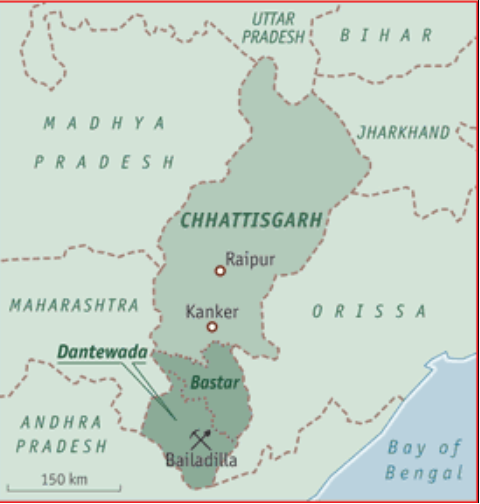
Bastar (Chattisgarh) has been a focal point of conflict due to ongoing violence between Security forces and Maoist insurgents. This conflict has led to numerous civilian casualties and widespread trauma among the local population. Without proper victims’ data/registry, many individuals suffer in silence, lacking access to necessary support and recognition.
Today’s editorial addresses the pressing need for a comprehensive victims’ register in the Bastar region, an area that is significantly affected by left-wing extremism (LWE). Today, we will study the significance of recognizing and documenting the experiences of victims to facilitate justice and rehabilitation.
_
Let’s learn!
Why in the News?
Union Home Minister has set a deadline of March 31, 2026, for the complete eradication of Naxalism in India, emphasizing the four districts of the Bastar region.
He also announced plans for a welfare scheme to support those affected by Naxal violence, aiming to assist in jobs and healthcare.
What is the purpose of the victims’ register in Bastar?
The purpose of the victims’ register in Bastar is to document and recognize individuals affected by violence, particularly those impacted by Maoist activities and state responses. This initiative aims to:
To provide formal recognition of the experiences of victims.
To enable victims and their families to receive reparations and government support inclusively ensuring no one is overlooked.
Serve as a foundation for dialogue and peace-building efforts in the region. (E.g., in Colombia).
How does the initiative draw from international examples, particularly Colombia?
The Colombian model has successfully aided in providing reparations and integrating victims (over 9 million) back into society.
The Bastar initiative seeks to establish similar mechanisms for compensating victims through financial aid, land, jobs, and healthcare support.
Mirroring Colombia’s inclusive approach that does not differentiate between types of victimization, register aims to include diverse narratives from various groups
The process in Bastar involves community participation, allowing victims to share their testimonies in local languages, akin to Colombia’s efforts to ensure that victims’ voices are heard and validated.
Colombia’s experience has been successful where such measures contributed to National unity post-conflict.
How can the government support the ‘New Peace Process’ initiative in Bastar?
Facilitating Dialogue: The government needs to actively engage in negotiations with both tribal leaders and Maoist representatives to foster an environment conducive to peace talks. For example, ‘Bastar Dialogues’ to bridge gaps between conflicting parties.
Collaborate with local organizations and community groups like the ‘Sarva Adiwasi Samaj’ to amplify grassroots efforts for peace.
Implement the Victims’ Register: Establish and maintain a comprehensive victims’ register that aligns with successful models from other countries, such as Colombia.
Enhance Rehabilitation Programs: Develop robust rehabilitation policies for both victims and surrendered like job training, education, and healthcare services tailored to their needs, ensuring they can reintegrate into society effectively.
By Monitoring the Progress: Establish mechanisms to monitor the progress of peace initiatives and community sentiments regarding the peace process, allowing for adjustments based on feedback from affected populations.
India and the US concluded a $3.5 bn deal for the procurement of 31 MQ-9B armed High Altitude Long Endurance (HALE) Remotely Piloted Aircraft Systems (RPAS).
About MQ-9B HALE UAV
The MQ-9B drone is a version of the MQ-9 “Reaper” and has two models: Sky Guardian and Sea Guardian.
It is built by the General Atomics.
This drone can fly over 40,000 feet high, making it useful for watching the Himalayan border areas.
It can stay in the air for up to 40 hours, perfect for long surveillance missions.
The MQ-9B has advanced features like automatic take-off and landing, a system to avoid other objects, secure GPS, and encrypted communications.
Deployment:
The MQ-9B drones are planned to be deployed at four places, including INS Rajaji near Chennai and Porbandar in Gujarat, by the Indian Navy.
The other two services will keep them jointly at two bases in Sarsawa and Gorakhpur in Uttar Pradesh at Air Force bases due to long runway requirements.
Details of the Procurement:
India is planning for 15 Sea Guardians for the Indian Navy and 16 Sky Guardians (eight each for the Indian Army and Air Force).
The Indian Navy has leased two MQ-9As with the maiden flight taking place on November 21, 2020.
As part of the deal, General Atomics will establish a Global Maintenance, Repair, and Overhaul (MRO) facility in India, contributing to offset obligations.
Significance of the deal
The SeaGuardian model can help the Navy patrol large areas more economically than manned aircraft.
For the Army and Air Force, these drones will help monitor movements along the borders, especially with China.
It can offer 80% of a manned aircraft’s capabilities at 20% of the cost per hour.
PYQ:
[2020] What is the significance of Indo-US defence deals over Indo-Russian defence deals? Discuss with reference to stability in the Indo-Pacific region.
The Ukraine war has highlighted the versatility of battle tanks, demonstrating that armor remains crucial on modern battlefields, alongside long-range firepower.
What are the difficulties in Ladakh due to high terrain and altitude?
High Altitude Challenges: At altitudes of 13,000-15,000 feet, oxygen levels are low, causing rarefied air, which affects the performance of engines and machines, including tanks. Temperatures can dip to as low as -40 degrees Celsius.
Logistics and Transportation: Transporting tanks and heavy machinery to these high-altitude regions is a Herculean task due to the terrain. Once deployed, they are kept operational throughout, with maintenance facilities set up in forward areas like Nyoma and Daulat Beg Oldi.
Threat from China:
Chinese Deployment: The Chinese People’s Liberation Army (PLA) has enhanced its firepower and mechanised units along the Line of Actual Control (LAC). This includes the deployment of the ZTQ 15 (Type 15) light tanks and Type 96A second-generation tanks.
Modernisation and Mobilisation: China has also introduced modern wheeled Armoured Personnel Carriers (APCs) and assault vehicles such as the CSK series to the region, indicating a significant military upgrade along the LAC.
Tactical Proximity: During the 2020 stand-off, Chinese and Indian tanks came within 100 metres of each other, demonstrating the heightened tensions and the tactical threats in Eastern Ladakh.
What are the Indian Army’s future plans to fortify the border areas?
Indigenous Development: The Indian Army is developing the Zorawar light tank, specifically designed for high-altitude warfare.
T-90 and BMP Upgrades: India is enhancing the capabilities of existing T-90 tanks and BMP-2 armoured carriers
Long-term Projects: Plans are underway for Future Ready Combat Vehicles (FRCV) and Future Infantry Combat Vehicles (FICV) to replace current tanks and BMPs, with induction expected by 2030.
Procurement Plans: The Army is also evaluating the U.S. Stryker infantry combat vehicle and has initiated the process to procure 100 more K9 Vajra Howitzers to bolster long-range firepower.
Enhancing Infrastructure: Since 2012, India has significantly improved its infrastructure along the LAC, enabling long-term deployment of troops, tanks, and artillery in the region.
Conclusion: The government should continue expanding logistical infrastructure along the Line of Actual Control (LAC), improving transportation, maintenance facilities, and supply chains to support long-term troop and equipment deployment in challenging terrain.
The second edition of Navika Sagar Parikrama, a global circumnavigation by sailboat was flagged off by Navy Chief at INS Mandovi in Goa.
AboutNavika Sagar Parikrama:
Details
Expedition
Navika Sagar Parikrama, a maritime expedition by the Indian Navy, aimed at circumnavigating the globe in a sailboat crewed by women officers.
Symbolizes women’s empowerment and Indian maritime traditions.
Objective
Promotes women’s empowerment, gender equality, oceanic research, and Indian maritime traditions.
First Edition
Began on September 10, 2017, with an all-women crew of six officers aboard INSV Tarini.
Completed on May 21, 2018.
Second Edition
Launched on October 2, 2024, with two women officers, Lieutenant Commander Dilna K. and Lieutenant Commander Roopa A., setting sail from INS Mandovi, Goa.
Agencies Involved
Indian Navy: Leading the initiative.
National Institute of Oceanography (NIO): Marine research on microplastics and ferrous content.
Wildlife Institute of India (WII): Research on large sea mammals.
Sagar Defence: Providing drones for documentation.
Defence Food Research Laboratory (DFRL): Supplying meals.
Transform Rural India Foundation (TRIF) and Piramal Foundation: Supporting logistics and research.
Route
Divided into five legs with four stopovers:
1. Goa to Fremantle, Australia
2. Fremantle to Lyttleton, New Zealand
3. Lyttleton to Port Stanley, Falkland Islands
4. Port Stanley to Cape Town, South Africa
5. Cape Town to Goa, India
PYQ:
[2016] Which one of the following is the best description of ‘INS Astradharini’, that was in the news recently?
The 8th edition of Exercise KAZIND-2024 has commenced in Uttarakhand.
About Exercise KAZIND-2024
Exercise KAZIND is an annual joint military exercise between India and Kazakhstan.
It was first initiated as Exercise PRABAL DOSTYK in 2016 and later renamed Exercise KAZIND after the second edition.
The exercise involves Army contingents from both countries and, since 2023, also includes Air Force personnel, making it a Bi-service Exercise.
Focus Areas:
It focuses on Counter Terrorism operations in sub-conventional environments under the United Nations mandate.
Tactical drills practiced include Raid, Search and Destroy Operations, Small Team Insertion and Extraction, and Counter Unmanned Aerial System Operations.
Significance:
The exercise aims to develop skills, resilience, and coordination for joint military operations in semi-urban and urban environments.
It allows both countries to share best practices, enhance mutual cooperation, and strengthen military ties.
PYQ:
[2024] Which of the following statements about the Exercise Mitra Shakti-2023 is/ are correct?
This was a joint military exercise between India and Bangladesh.
It commenced in Aundh (Pune).
Joint response during counter-terrorism operations was a goal of this operation.
The Indian Army is set to receive its first batch of three AH-64E Apache attack helicopters from Boeing in December.
About AH-64E Apache Attack Helicopters:
Details
Name and Origin
AH-64E Apache (Apache Guardian) is a highly advanced multi-role combat helicopter and lies in a heavy category.
Manufactured by Boeing, originating from the US.
India’s Acquisition
In February 2020, India signed a deal for six AH-64E helicopters, with an additional six contracted later.
Countries Operating
Operated by India, Egypt, Israel, Japan, South Korea, UAE, UK, and others.
Indigenous Production
Tata Boeing Aerospace Limited (TBAL), a joint venture, produces fuselages in Hyderabad, set to become the sole global producer, sourcing 90% of parts from India.
Combat Features
Features open architecture for advanced systems, enhanced thrust and lift, digital interoperability, improved survivability, and advanced infrared and night vision capabilities.
Deployment Plans for Apache
The Apaches are primarily suited for countering armour and will be deployed in desert regions.
However, due to their operational limitations at high altitudes, they won’t be used in regions like Ladakh.
Instead, the indigenous Light Combat Helicopter (LCH), manufactured by Hindustan Aeronautics Ltd., will be deployed in Ladakh by 2024-25.
The LCH is designed specifically for high-altitude conditions.
PYQ:
[2016] Which one of the following is the best description of ‘INS Astradharini’, that was in the news recently?