The US withdrawal from the JCPOA (Joint Comprehensive Plan of Action) in 2018 and subsequent reimposition of sanctions, has heightened tensions in West Asia.
Impact on India’s National Interests
Energy Security
Regional instability inflates global oil prices, aggravating India’s current account deficit and rupee depreciation.
Connectivity Challenges
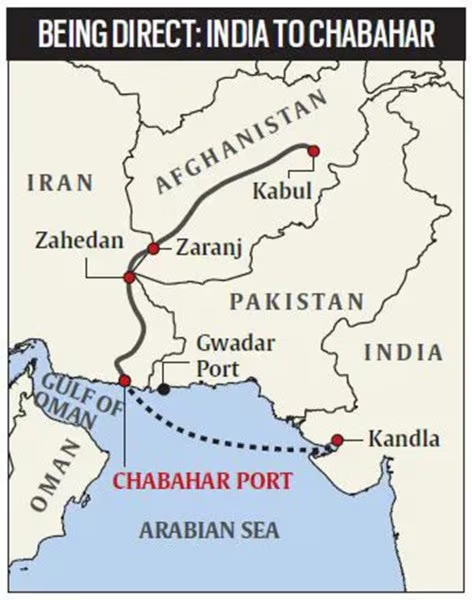
US sanctions complicate financing and insurance for the Chabahar Port and INSTC– critical to India’s access to Afghanistan, Central Asia, and Europe.
India’s exports to Iran (pharmaceuticals, rice, machinery) face banking restrictions.
Strategic and Diplomatic Dilemmas
Challenge of maintaining strategic partnerships with both Washington and Tehran, while avoiding diplomatic friction.
Security Concerns- Escalation in the Strait of Hormuz threatens India’s sea-borne energy supplies and security of Indian diaspora in the Gulf. Eg- Red sea crisis in 2024
How India Should Respond
Short-term Measures
Energy Diversification- Strengthen long-term import contracts with Saudi Arabia, UAE, Russia, and the US, and expand strategic oil reserves.
Protect Maritime Routes- Enhance naval surveillance in the Arabian Sea under SAGAR (Security and Growth for All in the Region).
Use rupee-rial trade mechanisms and alternate payment channels.
Medium to Long-term Strategy
Secure waivers for Chabahar Port and accelerate linkage with INSTC to strengthen access to Eurasia.
Energy Transition- Fast-track investments in renewables, LNG, and green hydrogen.
Regional Multilateralism- Promote India-GCC-Iran dialogue for maritime security and conflict de-escalation.
Supporting IAEA-based diplomacy for restoring JCPOA through peaceful dialogue and achieving Nuclear disarmament.
A balanced, multi-vector foreign policy is essential to safeguard India’s economic and security interests while sustaining its role as a stabilizing power in West Asia.