The WTO, established in 1995 under Uruguay Round of the GATT, was designed to promote rules-based multilateral trade and ensure that global trade flows as smoothly, predictably and freely.
Major Challenges Facing the WTO
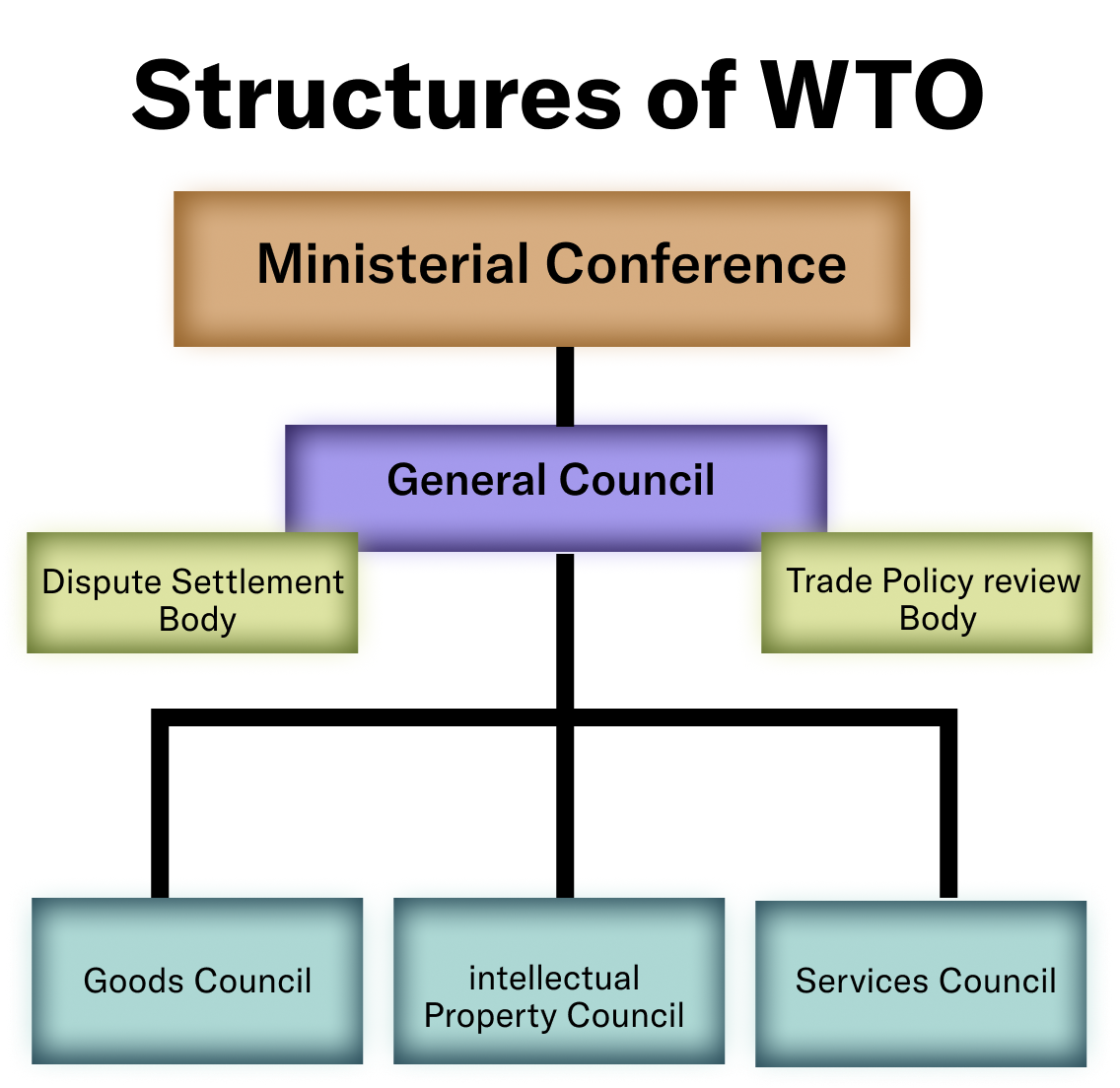
Since 2019, WTO’s dispute settlement system has been defunct due to US blocking judge appointments.
Deadlock over Doha Development Agenda and Agreement on Agriculture
Opposition of developing countries for ‘New Issues’
WTO rules lag behind in Digital Trade & E-commerce
Dispute over “Developing Country” Status – The US opposes self-declared developing status at WTO, arguing that countries like India and China should be treated as developed.
Mega-regional trade pacts like the TPP (Trans-Pacific Partnership), bypassing WTO norms.
Proposals by India in the High-Level Mini-Ministerial Meeting
Revival of the WTO Dispute Settlement System to maintain WTO’s credibility and rule-based order.
Institutional & Negotiation Reforms
Move from consensus-only decision-making to hybrid or majority-based models for efficiency.
Enhance voice of developing nations in agenda-setting and committee representation
Reform of Special and Differential Treatment – Retain S&DT as a core principle ensuring policy space for developing countries.
Agricultural Trade Reform
Rationalize domestic support and export subsidies in developed nations (EU, US).
Permanent solutions for public food grain stockholding programs
Ensure food security exemptions are protected under Article 18.4 of AoA.
Tackling Non-Tariff Barriers (NTBs) by ensuring transparency, science-based standards, and non-discriminatory application of NTBs.
Addressing Distortions by Non-Market Economies – Eg- China’s export quotas on rare earths
Develop balanced rules on data localization, digital taxation, and cross-border flows to prevent dominance of Big Tech
Prevent misuse of green trade barriers as disguised protectionism. Eg- EU’s Carbon Border Adjustment Mechanism
Permanent WTO Reform Council to propose systemic reforms every five years.
India must lead the Global South coalition to ensure reforms are inclusive, equitable, and development-centric.