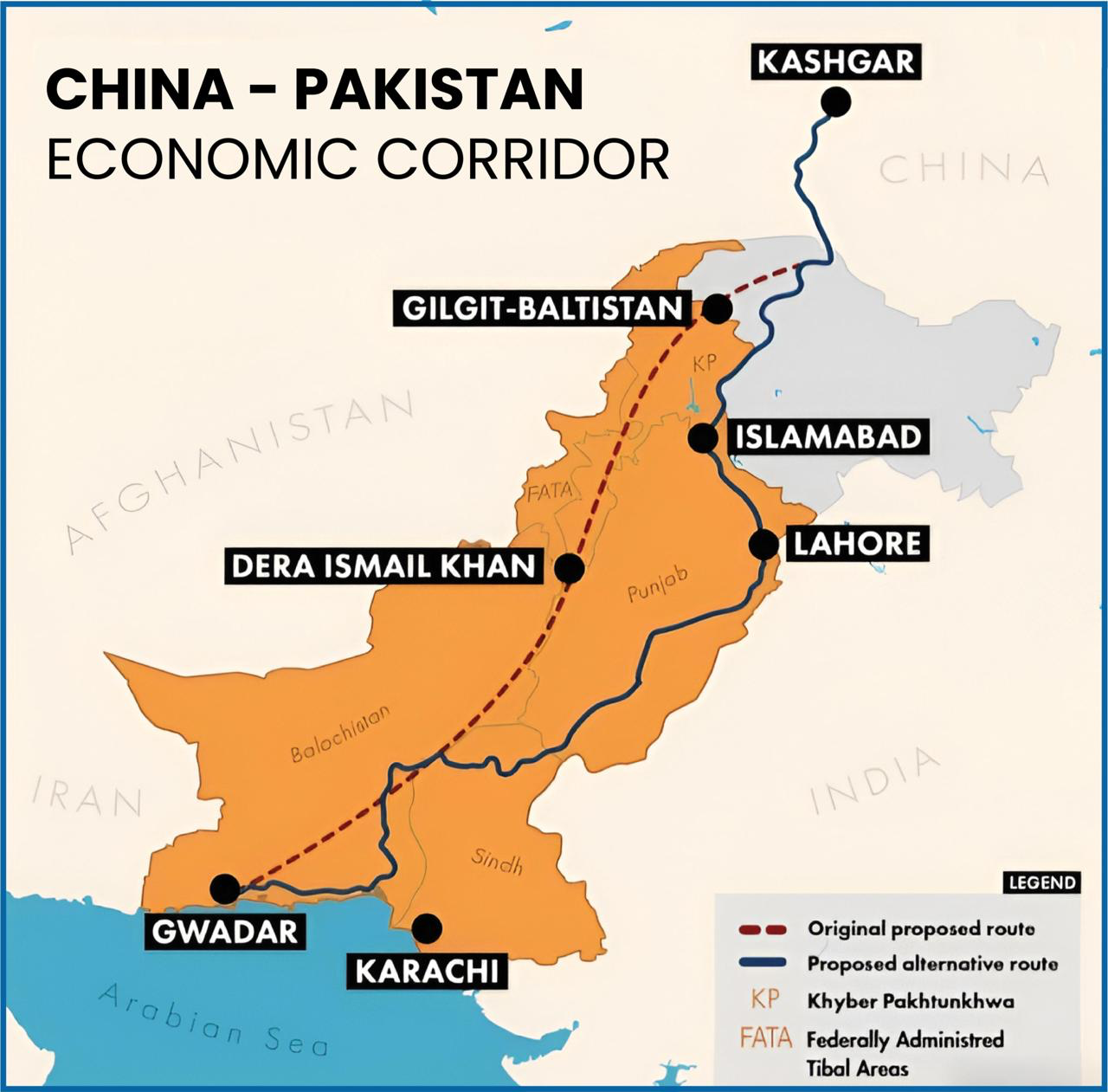
The CPEC is a flagship connectivity and infrastructure project linking China’s Xinjiang province to Pakistan’s Gwadar port through roads, railways, pipelines and industrial zones.
Description of CPEC
Around 3,000 km corridor from Kashgar (China) to Gwadar (Pakistan).
Investment Scale – over USD 60 billion across energy, transport and industrial sectors.
Infrastructure Focus – Roads, railways, ports, power plants and Special Economic Zones.
Solves ‘Malacca Dilemma’ of China – Provides access to the Arabian Sea, bypassing the Malacca Strait.
It is the link between the Silk Road Economic Belt and the Maritime Silk Road.
Reasons behind India distanced itself from CPEC
Strategic Encirclement Concerns (String of Pearls) – Eg- Chinese control and presence at Gwadar port.
Military and Security Implications – Dual-use infrastructure can support Chinese naval and military operations.
Economic Non-Viability – India has concerns regarding the “debt trap” nature of BRI projects. Eg- Sri Lanka’s Hambantota port experience.
Lack of Transparency and Consultation – CPEC and BRI lack open, multilateral consultation and standardised norms.
Undermines Rules-Based International Order – Projects ignore environmental, social and legal standards.
Geo-Strategic Marginalisation – Expansion of CPEC into Afghanistan could undermine India’s alternative connectivity initiatives like Chabahar Port and the INSTC.
Due to CPEC, China may emerge as a ‘direct party’ in the Kashmir dispute in future.
As Robert Kaplan observes, “Geography is the canvas on which history is painted.” By opposing CPEC, India seeks to uphold a rules-based approach to regional integration.