LWE refers to violent insurgency driven by Maoist or Naxalite ideologies, with an objective of overthrowing the government and establishing a communist society.
LWE showing downward trend
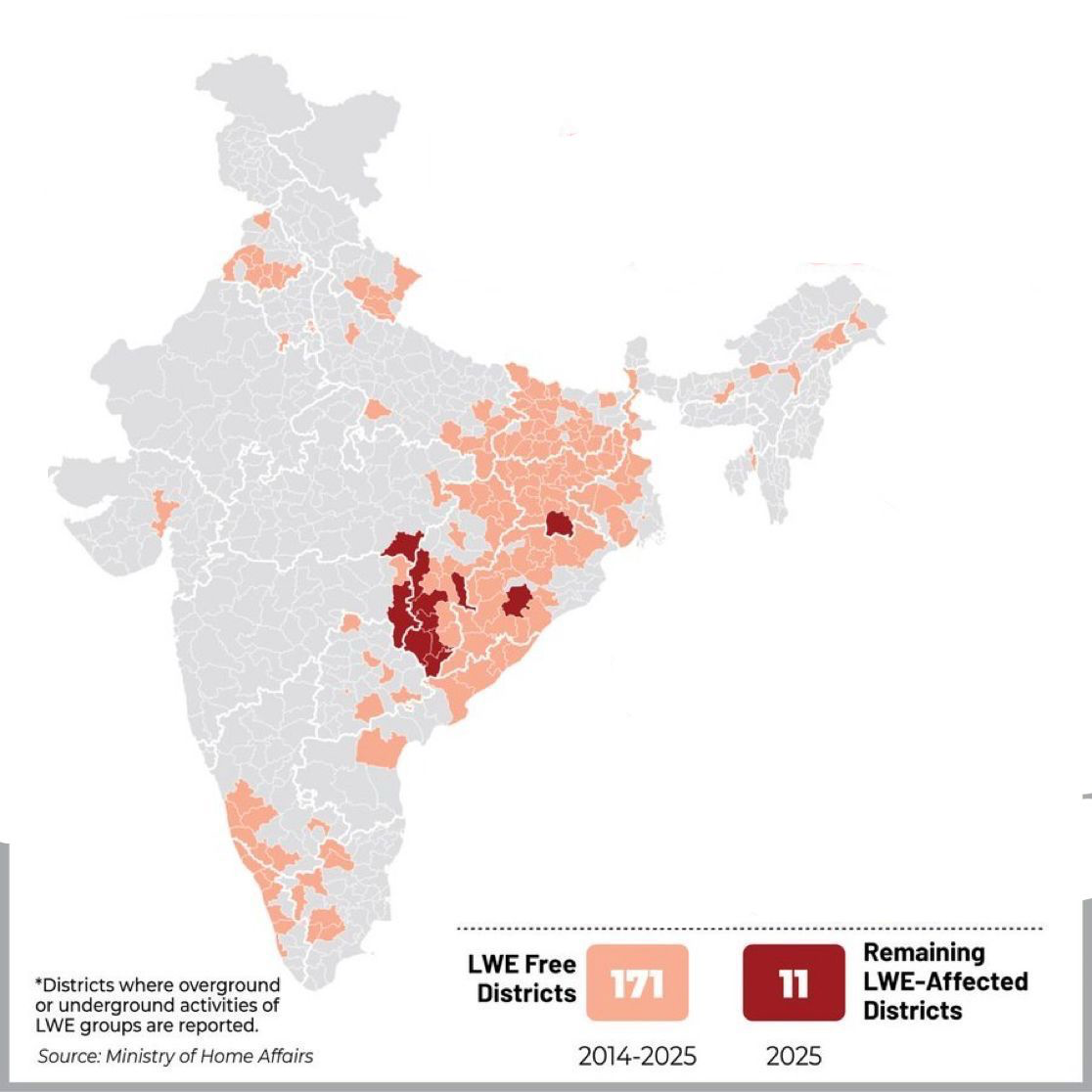
In 2025 alone, 317 Naxals neutralised (including top leadership), 800+ arrested, and nearly 2,000 surrendered
From 2004-14 to 2014-24
Violent incidents declined 53%
Security force deaths fell 73%
Civilian deaths dropped 70%
However, it still affects some part of country
Red corridor in 11 districts in Maharashtra, Chhattisgarh, MP and Andhra pradesh
Urban Front Strategy – Urban Naxals aim to gain legal and logistical support from cities-referred to as the “.”
Tactical Asymmetry and “Contactless” Warfare – Eg- use of Improvised Explosive Devices (IEDs) and drones
Dandakaranya region along Chhattisgarh-Maharashtra-Odisha remains a key guerrilla base due to its difficult terrain.
Government of India’s approach to counter the challenges posed by LWE
Security Measures
Operation Black Forest – killing 27 Naxals, including the top Maoist leader Nambala Keshav Rao
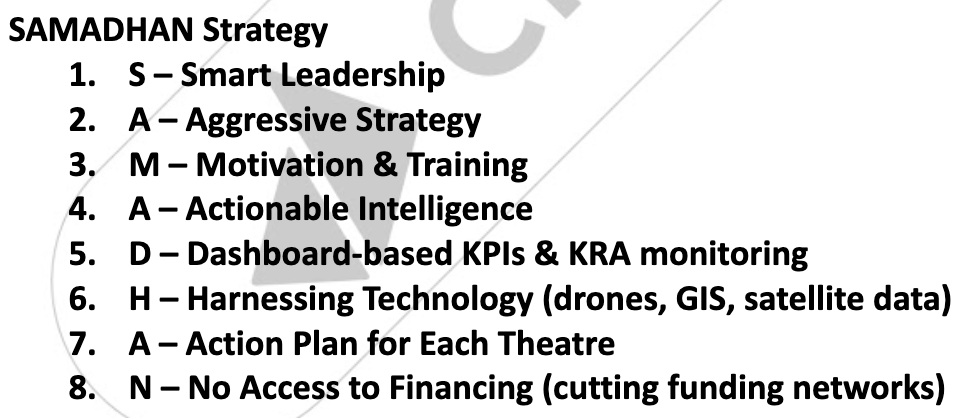
Naxal’s Financial chocking
Security Related Expenditure and Special Infrastructure Scheme for strengthening State Special Forces and Special Intelligence Branches
Technology Use – Use of UAVs/drones, AI-based tracking, GPS, satellite imagery, and modern communication systems to locate hideouts and camps.
Civic Action Programme (CAP) under ‘Modernization of Police Forces’ scheme to bridge the gaps between Security Forces and local people. Eg- community policing like “Jan Maitri”
Developmental measures
Building Critical Infrastructure in LWE Areas – Eg- Road Requirement Plan (RRP-I) constructing 14000 km of roads
Socio-economic development
Financial Inclusion- over 1,00 bank branches have been opened in LWE affected districts since April 2015.
Aspirational districts program
ROSHNI Scheme for skill development and employment-linked training for youth
Surrender and rehabilitation policy – attractive incentives and assured livelihood. Eg- stipend for professional training
Panchayat Extension To Scheduled Areas Act (PESA) and Forest Rights Act 2006 for strengthening tribal self-governance
To realise the goal of achieving a “Naxal-free Bharat” by March 2026, security measures need to go hand in hand with participatory and tribal led governance.