Post-1991 liberalisation transformed India’s economy from a state-controlled to a more market-driven system. This expanded public spending needs while simultaneously demanding fiscal discipline.
Need for Public Expenditure
Provision of Public Goods – Eg- spending on health, education
Social Welfare & Equity – Eg – Poshan 2.0, PM-Jan Arogya Yojana.
Infrastructure Development – Eg – National Infrastructure Pipeline.
Poverty Alleviation & Employment – Eg – MGNREGA wage payments.
Reducing Regional Imbalances – Eg – Aspirational Districts Programme.
Counter-cyclical spending during downturns. – Eg – Pandemic stimulus packages.
Human Capital Development – Eg – PM Kaushal Vikas Yojana.
Technological & R&D Support – Eg – Funding for ISRO, Digital India.
Major challenges in Public Expenditure management
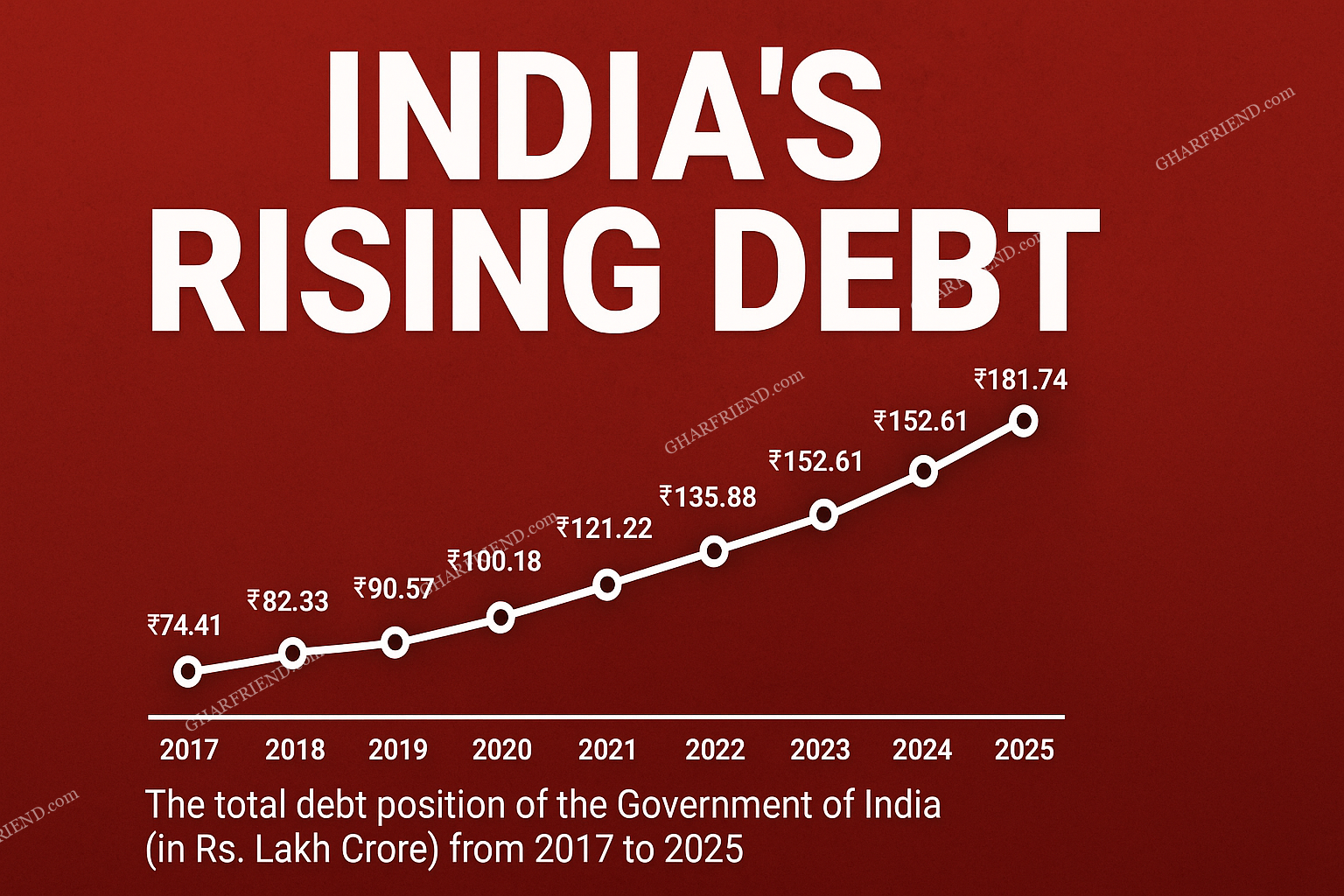
Interest Payment obligations – The budgetary estimate for 2025-26 – Rs 12.76 lakh crore on interest payments forming 25 % of the government’s total expenditure.
Low Tax Buoyancy: The tax-to-GDP ratio in India is around 10-12%, lower, while for OECD its 33%.
Expanding Welfare Commitments – Growth in health, education, pensions, MGNREGA raises recurring liabilities.
FRBM Constraints – FRBM mandates FD of 4.4% of GDP, limiting fiscal space.
Poor Budgetary Forecasting : Budgets often overstate revenue projections (15 out of 20 years since fiscal 1998) and understate expenditures (12 out of 20 years since fiscal 1998).
Fiscal Populism – eg loan waivers to farmers
Rise in Off-Budget Expenditure – Eg: Food subsidy via FCI, UDAY bonds by states.
Rise in Public Administration Costs – Eg: 8th Pay Commission can increase salary & pension burden.
Need for Infrastructure Investment in transport, energy, and urbanisation, but fiscal space remained limited. Eg- As per WB, $2.2 trillion by 2030 is needed
Public Sector Inefficiencies – Persistent losses in PSUs require budgetary support, reducing room for developmental expenditure.
External Challenges
Volatile Crude Oil Prices due to geopolitical instability. India imports 85% of its crude.
Rising International Commitments under Paris Agreement, SDGs, Sendai Framework etc. Eg- Renewable energy targets.
Rupee depreciation increases the cost of external debt servicing and capital imports.
Rising Protectionism and Trade Wars have impacted exports. Eg- Trump H1B visa restrictions
Increased Defence spending due to External Threat. Eg- 5% increase in defence spending in 2025 than 2024.
Way Forward for Effective Fiscal Policy in India
Establish an independent fiscal council to provide unbiased analysis of fiscal policy and enhance transparency and accountability. (15th FC Report)
Scrutiny of Populist Policies and Outcome-Oriented Budgeting (NITI Aayog)
Leveraging PPP for mobilizing private sector investment for infrastructure projects. (Economic Survey)
Reforming Social Welfare Programs: Eg- Shanta Kumar Committee estimated that reforms in PDS could
Cut down administrative costs by 10-15% through e-governance. (2nd ARC)
Enhance Tax Buoyancy – to achieve a medium-term growth trajectory of 6.5-7.0% and realize Viksit Bharat vision, tax buoyancy needs to be in the 1.2-1.5 range. (EY Report)
Improve Centre-State Fiscal Coordination – Encourage states through capex-linked incentives, as in Union Budget 2023-24’s 50-year interest-free loans.
Strategic Disinvestment – Use proceeds to fund infrastructure, logistics, transport, not for recurring expenditure. (NITI Aayog)
Efficient expenditure is critical for sustainable budgeting and Viksit Bharat 2047.